
The 10 Safest Neighborhoods to Live in Chicago
- Local Editor:Local Editor: The HOMEiA Team


Safest Neighborhoods to Live in Chicago: Chicago’s claim to fame includes deep-dish pizza, a vibrant music scene, The Bean and dying their river green on St. Patrick’s Day, and, above all, its distinctive neighborhoods. For most, choosing where to call home in The Windy City, safety tops the list of priorities.
The trend is encouraging. According to preliminary Chicago Police Department data, the city recorded 416 homicides in 2025, down 29 percent from 2024 and the fewest since the mid-1960s, while shootings fell about 35 percent. Still, crime varies across the city’s 77 community areas, so where you live matters.
This updated guide highlights seven Chicago neighborhoods that consistently rank among the city’s safest, followed by three nearby suburbs known for low crime and standout schools, analyzing housing, schools, and lifestyle in each, plus answers to common questions about crime data, property taxes, transit, and schools. Rankings draw on recent crime grades and police data, and home values come from Zillow, which vary by source and date. Zillow puts the typical Chicago home value at about $338,000 as of July 2026.
Key Takeaways
- Chicago recorded 416 homicides in 2025, the fewest since the mid-1960s, and shootings fell about 35 percent.
- Edison Park, Forest Glen, Mount Greenwood, Norwood Park, and Beverly consistently rank among the city’s safest areas.
- Lincoln Park and Lakeview offer lakefront energy, with typical big-city property crime.
- Buffalo Grove, Clarendon Hills, and La Grange Park add top-rated schools and very low crime.
- Check block-level crime data and a home’s recent property tax bills before you buy.
- Suburban living often means higher home prices, so weigh school quality, commute times, and taxes against the safety benefits you gain.
Related article
What to Know About Parking in Chicago, Illinois
Drivers need to know which options are available, what the rules and regulations say about parking, and where to go when traveling with a car. Knowing these things will mitigate any potential issues that arise. Luckily, Chicago has many options for people who know where to look…
1. Edison Park

- Area: Far Northwest Side
- Safety: Regularly ranked the safest community area in Chicago
Tucked against the city’s northwest edge, Edison Park offers a suburban feel within city limits, having tree-lined streets, single-family homes, and well-kept parks. Its small-town character comes alive along the restaurant and pub strip near the Metra station and during the annual Edison Park Fest.
Educational opportunities such as Edison Park Elementary, and the Metra Union Pacific Northwest line provides a straightforward commute downtown. Many city workers, including police officers and firefighters, live here, adding to the neighborhood’s stability.
2. Forest Glen

- Area: Far Northwest Side, including Edgebrook and Sauganash
- Safety: Crime rates far below the city average
Often called a “suburb in the city,” Forest Glen features winding streets, classic bungalows, and stately homes. Cook County forest preserves, including LaBagh Woods and the Edgebrook Woods, offer trails for hiking and biking.
Deeply-rooted neighborhood associations keep residents connected through events such as the Edgebrook Garden Walk. Wildwood IB World Magnet School is among the area’s well-regarded schools, and Metra stations at Forest Glen and Edgebrook connect residents to downtown.


Related article
7 Key Factors to Know About Living in Chicago, Illinois
Before you consider a move to Chicago, you should consider 7 key factors that will increase your appreciation for the city and guide you to the right neighborhoods and activities for you…
3. Mount Greenwood
- Area: Far Southwest Side
- Safety: Consistently ranked among the safest community areas
Mount Greenwood is a tight-knit neighborhood of brick bungalows and single-family homes, home to many city employees. Parks, local businesses along 111th Street, and a bustling parish and community tradition give it character.
The neighborhood is home to Saint Xavier University and the Chicago High School for Agricultural Sciences, a public magnet school with a working farm. Neighboring Beverly and nearby suburbs offer shopping and dining options.
4. Norwood Park
- Area: Northwest Side, near O’Hare
- Safety: Low crime rates and an A safety grade from several crime-ranking sites
Norwood Park provides quiet residential streets, a plethora of home styles, and convenient access to O’Hare and major expressways. The Noble-Seymour-Crippen House, built in the 1830s, is considered the oldest house in Chicago.
Taft High School and several neighborhood elementary schools serve local families, and the Norwood Park Metra station provides an easy ride downtown.
5. Beverly
- Area: Southwest Side
- Safety: Ranked among the city’s safest community areas
Beverly’s staples include its rolling hills, historic homes, and one of the largest collections of architecturally significant houses in the city. The most prominent are the Ridge Historic District. Spacious lots and mature trees grant a peaceful look.
The Beverly Arts Center and the annual South Side Irish Parade are community stalwarts, while the Metra Rock Island line offers several stations for commuters. Residents are deeply involved in civic groups and neighborhood events.
Recommended for you




6. Lincoln Park
- Area: North Side lakefront
- Typical home value: about $619,000 (Zillow, late 2025)
- Safety: Busier and more varied than the neighborhoods above, with property crime the main concern
Lincoln Park blends city energy with residential calm. Its namesake park, the city’s largest at about 1,200 acres, includes the free Lincoln Park Zoo, Lincoln Park Conservatory, beaches, and lakefront paths.
Brownstones and condominiums line its streets, and the Steppenwolf Theatre Company, DePaul University, and Kingston Mines blues club add culture and nightlife. Well-respected schools, including Lincoln Park High School, and excellent CTA access make it a favorite with professionals and families.
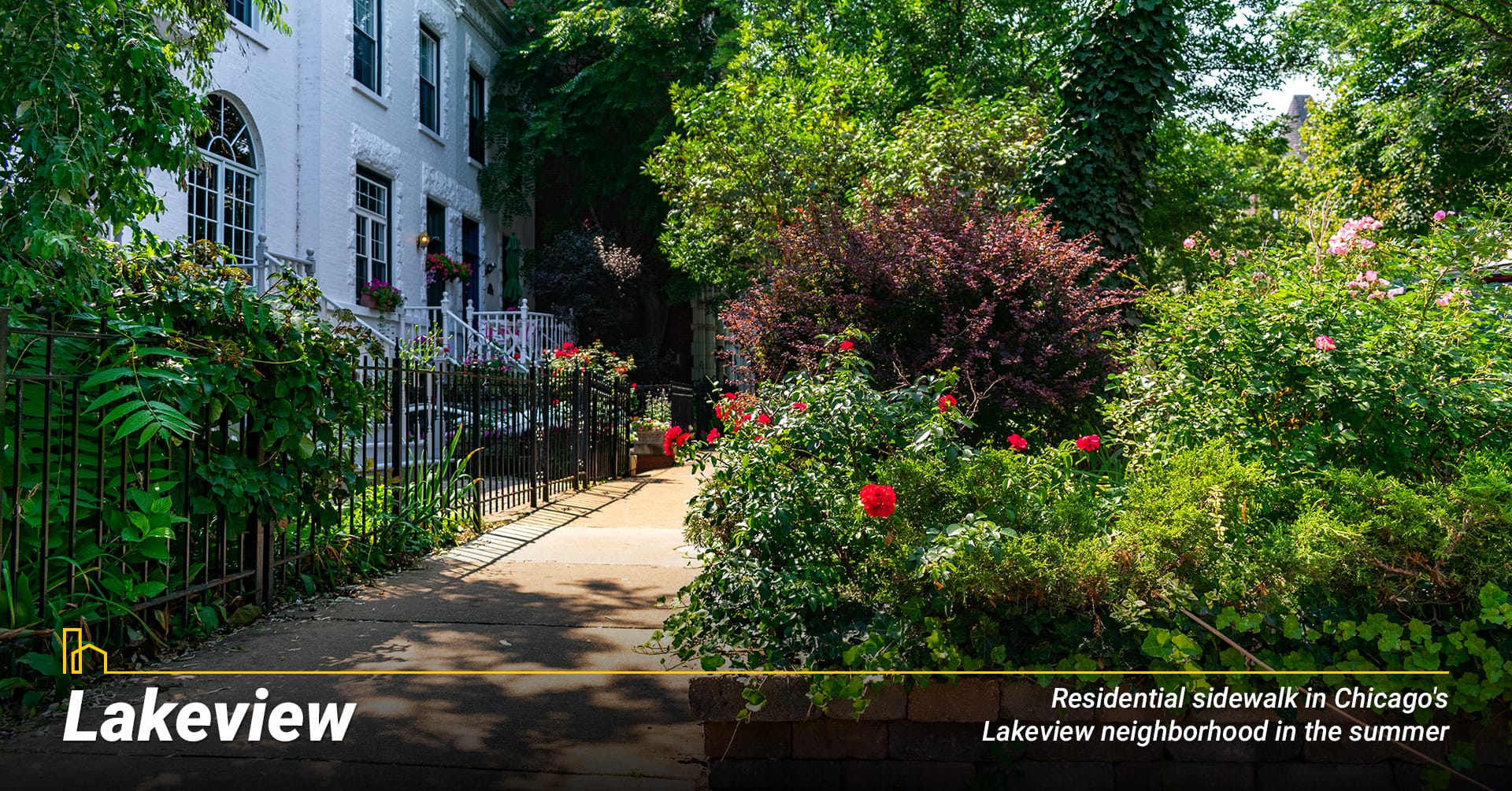
7. Lakeview
- Area: North Side lakefront
- Typical home value: about $409,000 (Zillow, late 2025)
- Safety: Generally safe for a dense urban area, with typical big-city property crime
Lakeview is an energetic neighborhood with something for everyone. This entails the bars and clubs of Northalsted, the city’s LGBTQ+ hub, to the family-friendly Southport Corridor. Wrigley Field, home of the Cubs, exemplifies Wrigleyville.
Belmont Harbor and the lakefront host greenery, and the Red, Brown, and Purple Line trains make commuting easy. Schools such as Nettelhorst Elementary are popular with families.
Related article
Moving to Illinois: The Complete Relocation Guide & Checklist
Illinois’ cost of living is 10% above the U.S. average, driven by housing, though utilities are cheaper. The state offers a diverse climate, strong economy across key industries, rich cultural variety from Chicago to small towns, and excellent transportation networks connecting its urban and rural communities statewide…
8. Buffalo Grove

- Area: Northern suburbs (Cook and Lake counties)
- Typical home value: roughly $400,000 to $450,000 (2026, varies by source)
- Safety: One of the safer suburbs in the region
Buffalo Grove contains apartments, townhomes, and single-family homes in quiet, well-maintained neighborhoods. The park district manages more than 50 parks and an extensive trail network.
Adlai E. Stevenson High School is among the top-ranked public high schools in Illinois, and events such as Buffalo Grove Days bring the community together. Metra’s North Central Service and nearby highways connect residents to the city.
9. Clarendon Hills

- Area: Western suburbs (DuPage County)
- Typical home value: about $681,000 (Zillow, September 2026), up 7.7 percent year over year
- Safety: Very low crime
Clarendon Hills has a small-town downtown with independent shops, plus parks including Prospect Park. The annual Daisy Days festival celebrates its community spirit.
Students attend highly rated schools, notably Hinsdale Central High School, and the Metra BNSF line offers a fast commute to downtown Chicago. It is the priciest community on this list.
Related article
The Pros and Cons of Living in Illinois (updated)
Illinois offers a diverse mix of urban and rural living, from Chicago’s skyline to peaceful farmland. The pros include culture, education, and location; cons include taxes and weather. This guide explores the pros and cons of living in Illinois to help you choose the best community for your lifestyle…
10. La Grange Park

- Area: Western suburbs (Cook County)
- Typical home value: roughly $480,000 (Zillow, ZIP-level estimate)
- Safety: Low crime and active community policing programs
La Grange Park is a primarily residential village of single-family homes and townhouses, with numerous parks and access to the Salt Creek forest preserves. Programs such as the Citizen’s Police Academy connect residents with local police.
Park Junior High and Lyons Township High School teach local students. Community events, from summer concerts to library book sales, keep neighbors connected. Nearby Metra stations in La Grange provide access to downtown.
Conclusion
Chicago is a mosaic of neighborhoods, each with its own personality. The safest areas tend to sit near the city’s edges, where single-family homes, celebrated block clubs, and active community policing are common, while lakefront neighborhoods such as Lincoln Park and Lakeview offer more energy with typical urban tradeoffs. Nearby suburbs add top schools and even lower crime, often at a higher price.
Whichever you choose, review current crime data, visit at different times of day, and talk with residents before you decide.
Recommended for you




FAQs About Living Safely in Chicago
1. How can I check crime for a specific Chicago address?
The City of Chicago Data Portal publishes reported crimes by location, and the Chicago Police Department’s CLEARMAP tool maps recent incidents. Compare 12-month trends for the block and the surrounding beat rather than one week. You can also attend a CAPS beat meeting, where residents and police discuss local issues, to get a firsthand sense of the area.
2. Why are so many of the safest neighborhoods on the city’s edges?
Neighborhoods like Edison Park, Mount Greenwood, and Beverly have mostly single-family homes, high homeownership, and long-time residents. Chicago requires city employees, including police officers and firefighters, to live within city limits, and many choose these areas. Strong block clubs and parish communities also play a role.
3. How do property taxes compare between the city and the suburbs?
Property taxes are a major cost in the Chicago area and vary widely by location. In late 2025, the median Chicago residential tax bill rose 16.7 percent, the largest increase in at least 30 years, as the burden shifted from downtown commercial property to homeowners. Suburban rates vary by county and school district and can be higher as a share of home value. Ask for a home’s recent tax bills and confirm you receive the homeowner exemption. Seniors and veterans may qualify for additional exemptions.
4. Is the CTA safe for daily commuting?
Millions of riders use the CTA safely. After a federal push in early 2026, the CTA added more police and sheriff’s deputies on trains, along with new fare gates, and the agency reported continuing declines in crime by mid-2026. Ride in busier cars, stay alert on platforms, and use the Ventra app to avoid long waits late at night. Metra commuter rail, which operates in several neighborhoods on this list, is another option for downtown trips.
5. Are Chicago public schools a good option in these neighborhoods?
Many neighborhood schools in these areas are well regarded, and Chicago Public Schools also offers selective enrollment and magnet programs through an application process. Suburban districts serving Buffalo Grove and Clarendon Hills rank among the state’s best, which is reflected in home prices. Visit schools and check the Illinois Report Card before choosing an address. Many families also consider Catholic and other private schools, which are common in Beverly and Mount Greenwood.
Share