





Living In Pennsylvania
Local Editor(s)

 Considering



 Verified
 The Complete Guide to Cost of Living and Lifestyle
Unveiling the Keystone State
A. Welcome to Pennsylvania: A Blend of History, Nature, and Opportunity
Pennsylvania offers an irresistible combination of American history, diverse landscapes, and thriving communities. From Philadelphia’s urban energy and Pittsburgh’s innovation hub to the Pocono Mountains and Amish farmlands, the Keystone State delivers exceptional value. Its nickname—the Keystone State—reflects its central role in U.S. history, economy, and geography. And while it boasts the cultural richness of its coastal neighbors, Pennsylvania’s living costs are notably more moderate.
B. What to Expect from This Guide
This comprehensive guide reveals the true costs of Pennsylvania living: housing markets, taxes, daily expenses, family considerations, transportation, and career opportunities. We’ll explore which cities match different budgets and lifestyles, providing the insights you need to determine if Pennsylvania aligns with your dreams.

Related article
7 Most Affordable Places to Live in Pennsylvania
Pennsylvania offers a compelling balance of affordability and quality of life, with housing costs and overall living expenses below the national average. For buyers priced out of neighboring states, it provides excellent value without sacrificing access to jobs, healthcare, or infrastructure. This guide highlights seven Pennsylvania communities that deliver the best combination of affordable housing, economic opportunity, safety, and long-term livability…
1. What Housing Really Costs in Pennsylvania—and Why

Pennsylvania’s real estate market ranges from affordable rural homes to premium urban centers. While more budget-friendly than New York or New Jersey, prices vary significantly by region, making it worth researching before you move. For a national comparison, see our list of the most affordable cities to live in the US.
A. Major Pennsylvania Cities Housing Costs
City | Median Home Price | 1-Bedroom Rent | 2-Bedroom Rent | 3-Bedroom Rent |
|---|---|---|---|---|
| Philadelphia | $265,000 | $1,820 | $2,100 | $2,000 |
| Pittsburgh | $240,000 | $1,630 | $2,040 | $1,978 |
| Allentown | $245,000 | $2,100 | $2,200 | $2,292 |
| Erie | $134,000 | $1,110 | $1,240 | $1,500 |
| Reading | $175,000 | $1,540 | $1,540 | $1,350-$2,000 |
| Scranton | $180,000 | $1,100 | $2,020 | $1,450 |
| Harrisburg | $148,000 | $1,275 | $1,480 | $1,770 |
| Johnstown | $90,986 | $707 | $797 | $964 |
Key Insight: Pennsylvania’s median home value ($265,021) sits well below the national median ($355,328-$428,000). Average rent ($1,490) also beats the national average ($1,645), making homeownership and renting more accessible.
B. Smart Ways to Save on Housing in Pennsylvania
- Go Small-City: Johnstown, Erie, and Scranton offer the lowest prices. Rural counties average 6.3% less than urban areas, with Forest County leading affordability.
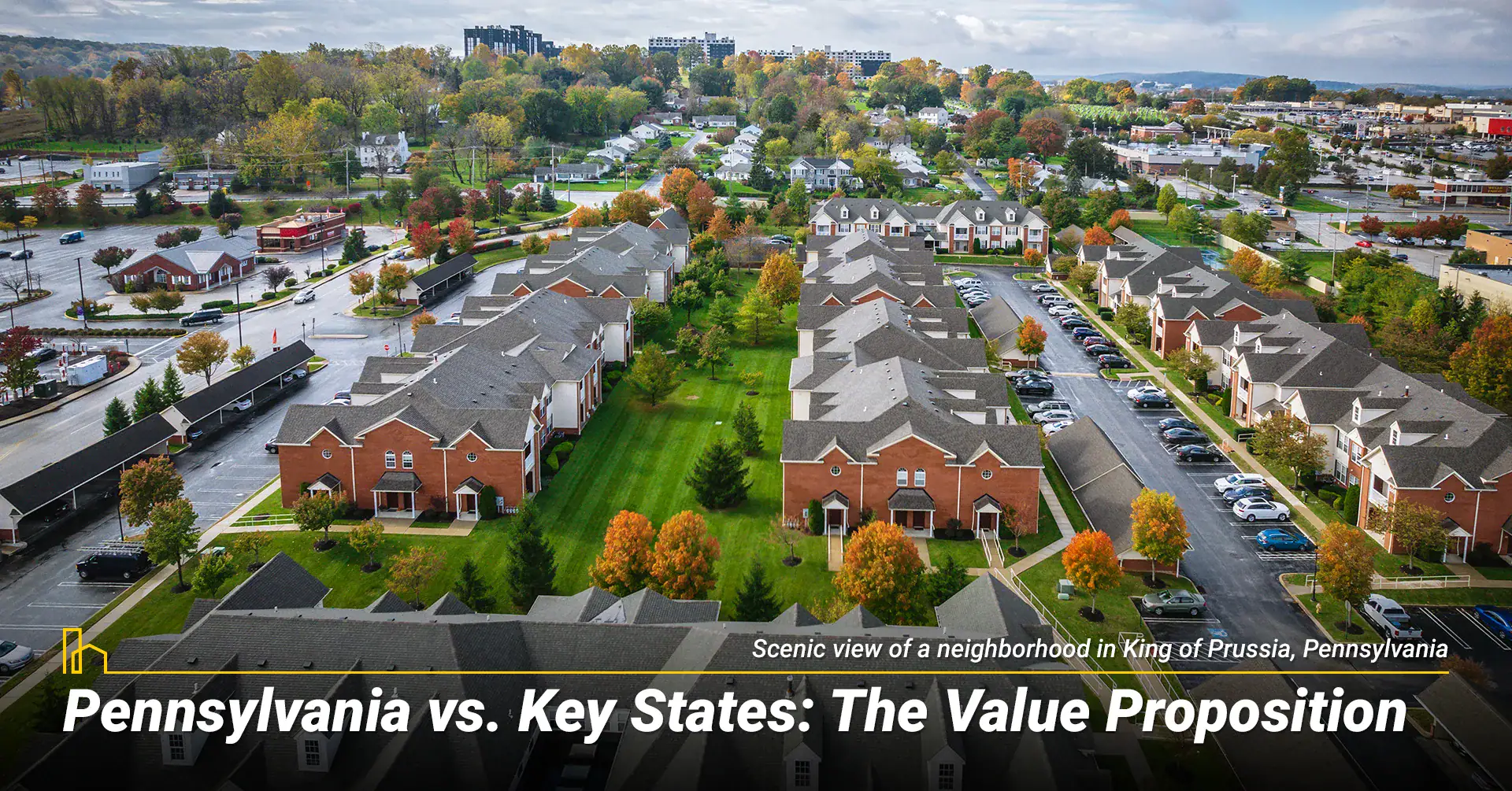
- Consider Strategic Suburbs: Near Philadelphia, towns like Conshohocken (townhouses $300K-$450K) and King of Prussia (homes around $315K) offer lower prices with quick city access.
- Know the Premium Zones: Villanova commands up to $1.68 million for luxury, while Berwyn, Bryn Mawr, and Haddonfield offer upscale living with top schools.
- Test Before You Buy: Affordable rents give newcomers flexibility to explore neighborhoods before committing to a purchase.

Related article
The Pros and Cons of Living in Pennsylvania
This comprehensive Pennsylvania guide examines both the advantages and disadvantages of living in Pennsylvania with updated data and insights. We’ll also highlight the best Pennsylvania cities for young professionals, families, and retirees to help you determine if the Keystone State aligns with your lifestyle and budget…
2. Pennsylvania State Taxes: What You’re Paying For

Pennsylvania uses a flat 3.07% income tax, good news for higher earners, but pairs it with above-average property taxes. This creates a nuanced picture where your total burden depends on income level and property ownership.
A. Tax Breakdown
Tax Type | Rate/Details | Key Notes |
|---|---|---|
| Income Tax | 3.07% flat rate | Local add-ons: Philadelphia 3.75%, Pittsburgh 3%. Retirement income often exempt. |
| Sales Tax | 6.00% statewide | Combined rates 6%-8% with local add-ons |
| Property Tax | 1.41% average | Ranges 0.83%-2.05% by county |
| Gas Tax | 58.7¢ per gallon | 3rd highest nationally |
B. Regional Comparison
Pennsylvania ranks 34th on the 2025 State Tax Competitiveness Index—the most affordable Northeast state and third-cheapest among border states.
Tax Type | Pennsylvania | New York | New Jersey | Ohio |
|---|---|---|---|---|
| Income Tax | 3.07% | Up to 10.90% | Up to 10.75% | Up to 3.50% |
| Sales Tax | 6.34% | 8.53% | 6.60% | 7.24% |
| Property Tax | 1.41% | 1.54% | 2.08% | 1.30% |
This competitive position makes Pennsylvania a strategic Northeast choice without prohibitive costs.
3. Daily Living Expenses Add Up Smartly

Pennsylvania’s cost of living is about 2% above the national average. Utilities run higher due to heating and cooling needs across four seasons.
A. Monthly Cost Snapshot
Expense Category | Pennsylvania Average | vs. National Average |
|---|---|---|
| Groceries (per person) | $278-$444 | Slightly Higher |
| Utilities (Total) | $443-$460 | Slightly Lower |
| Electricity | $149-$230 | 6% Higher |
| Healthcare (annual) | $8,641 | 3% Higher |
| Internet | $60-$80 | Comparable |
B. Smart Cost-Cutting Strategies
- Groceries: Shop farmers’ markets for local produce
- Utilities: Optimize heating/cooling seasonally
- Transportation: Use public transit in urban areas
- Location: Consider smaller cities for lower costs

Related article
Moving to Pennsylvania: THE Complete Relocation Guide & Checklist
This Pennsylvania moving guide offers key insights on cost of living, job opportunities, and top cities like Philadelphia, Pittsburgh, Lancaster, and State College—helping you plan a smooth relocation and choose the best place to live based on your goals, whether you seek urban life, innovation, charm, or a college-town feel…
4. Raising a Family in Pennsylvania: Education & Childcare

Pennsylvania ranks high in education spending and teacher pay but faces higher-than-average a childcare costs.
A. Education Excellence
Metric | Pennsylvania | National Average |
|---|---|---|
| Per K-12 Student Spending | $21,985 | $18,461 |
| Average Teacher Salary | $74,723 | N/A |
Strong per-pupil spending and quality institutions like University of Pennsylvania, Penn State, and Carnegie Mellon create excellent educational opportunities.
B. Childcare Reality Check
Childcare Type | Monthly Cost | Notes |
|---|---|---|
| Infant (Center) | $1,207 | 11.5% of average household income |
| 4-Year-Old (Center) | $1,008 | Varies by city: $19.76/hr Philadelphia to $14.72/hr Erie |
| School-Age (Center) | $642 | Family-based options typically 20-30% less |
Challenge: For single parents, infant care ($14,483 annually) can consume 42% of income, requiring careful budgeting.
5. Transportation: Getting Around Smart

Transportation costs vary dramatically between urban centers with robust public transit and car-dependent rural areas.
A. Car Ownership Costs
Vehicle Expense | Annual Cost | Notes |
|---|---|---|
| Auto Insurance | $2,503 average | Ranges from $1,980 (Harrisburg) to $2,981 (Philadelphia) |
| Registration | $39 | Plus $282 for new plates/title transfer |
| Gas Tax Impact | 58.7¢/gallon | 3rd highest nationally |
Reality Check: Pittsburgh ranks 15th most congested nationally, drivers spend 43 hours annually in traffic.
B. Public Transit Solutions
- Philadelphia SEPTA: $116-$255 monthly passes for comprehensive coverage
- Pittsburgh PRT: $97.50 monthly pass, free for seniors 65+
These systems offer genuine alternatives to car ownership in major urban areas.
Recommended for you




6. Job Market and Income Potential

Pennsylvania’s economy is diverse, with growth in tech, healthcare, life sciences, and energy.
A. Income Landscape
- Current minimum wage: $7.25/hour
- Planned increase: $10-$15/hour by 2028 (tiered by county)
- Median household income: $73,800-$74,952 (5% below national median)
B. High-Demand Career Opportunities
Industry | Salary Range | Growth Outlook | Major Hubs |
|---|---|---|---|
| Technology & IT | $47K-$106K | Excellent (13% by 2030) | Pittsburgh, Philadelphia, Lancaster |
| Healthcare | $39K-$129K | Strong (Nurse Practitioners: 45% growth) | Statewide |
| Life Sciences | $87K-$144K | Rapidly Growing ($50B sector) | Greater Philadelphia, Pittsburgh |
| Manufacturing | $52K-$97K | Stable (Modernization focus) | Philadelphia, Pittsburgh, Allentown |
| Energy | $40K-$115K | Growing ($3B+ investments) | Philadelphia, Cranberry Township |
7. Pennsylvania vs. Key States: The Value Proposition
Pennsylvania’s 102.1 cost of living index (2% above national average) breaks down strategically:
- Housing: 6% below national average (major advantage)
- Utilities: 6% above average (seasonal reality)
- Transportation: 7% above average (gas tax impact)
- Healthcare: 3% above average
Bottom Line: Pennsylvania ranks as the 25th-costliest state and the most affordable Northeast option.


Related article
11 Best Places to Live in Pennsylvania
Pennsylvania has it all: caves, mountains, waterfalls, culture and history. It is the 33rd-largest state by area and the fifth-largest by population. There are a lot of great places to live in the state. Below, you will find descriptions of 11 of them…
8. Pros & Cons: Pennsylvania Lifestyle in Balance

A. Compelling Advantages
- Rich History & Culture: Independence Hall, Gettysburg, vibrant arts scene
- Outdoor Recreation: 100+ state parks, 3,300 square miles of state forest
- Four Distinct Seasons: Dynamic environment with year-round activities
- Family-Friendly: Recognized as top state for raising families
- Professional Sports: Seven major league teams across all sports
- Strategic Location: Easy access to major East Coast cities
B. Realistic Challenges
- Weather Extremes: Harsh winters, hot humid summers
- Natural Disasters: Floods, winter storms, severe weather events
- Urban Issues: Philadelphia’s crime rates above national average
- High Specific Taxes: Property taxes in certain areas, nation’s 3rd highest gas tax
- Traffic Congestion: Significant in major urban centers
9. Best Pennsylvania Cities by Budget & Lifestyle

A. Budget Champions
City | Median Home Price | Key Benefits |
|---|---|---|
| Johnstown | $90,986 | Ultra-affordable, outdoor recreation |
| Erie | $134,000 | Lakeside living, low costs |
| Scranton | $180,000 | Cultural heritage, peaceful yet vibrant |
| Reading | $175,000 | Diverse community, regional value |
B. Balanced Options
- Harrisburg: $148K homes, state capital benefits, #1 retirement destination
- Lancaster: $254K homes, rural beauty meets urban attractions
- State College: College town energy, higher incomes offset costs
C. Premium Destinations
- Philadelphia/Pittsburgh: Major urban amenities, $240K-$265K median homes
- Villanova/Berwyn: Luxury suburbs, $500K-$1.68M homes, top schools
D. Retirement Hotspots
Pennsylvania offers exceptional retirement value with 3.07% flat income tax and retirement income exemptions. Top choices include Harrisburg (#1 nationally), Pittsburgh (urban amenities), and Lancaster (nature access).
Related article
The Pros and Cons of Living in New Jersey
The Pros and Cons of Living in New Jersey include excellent schools, access to NYC, beautiful beaches, and strong job markets. However, high property taxes and living costs can be challenging. This diverse state offers urban, suburban, and coastal lifestyles, making it appealing to families, professionals, and retirees alike…
Conclusion: Making Pennsylvania Work for You
Pennsylvania offers a rare combination: Northeast location without the sky-high price tag, a rich cultural and historical heritage, four beautiful seasons, and communities that feel like home. While living costs hover just above national averages, where you choose to settle can make all the difference.
The winning move is strategy. Decide what matters most, big-city energy or small-town peace, career growth or a relaxed retirement, top schools for your kids or a vibrant social scene for yourself. With its variety of regions and lifestyles, Pennsylvania likely has a perfect match for your priorities.
Whether you’re chasing career opportunities, excellent education, outdoor adventure, or simply seeking an authentic American experience, the Commonwealth delivers. Understanding the cost of living and lifestyle trade-offs ensures you’ll make a move that pays off in both comfort and quality of life.
The bottom line: Take advantage of Pennsylvania’s housing affordability, prepare for seasonal utility swings, explore your transit options, and choose a community that aligns with your goals. Pennsylvania isn’t just affordable, it’s strategically positioned for the life you want to build.
Recommended for you




FAQs About Living in Pennsylvania
1. How do I get a Pennsylvania driver’s license as a new resident?
New residents must obtain a PA Driver’s License within 60 days of establishing residency. Visit a Driver License Center with your out-of-state license (valid or expired within six months), completed Form DL-180R, and proof of identity, residency, and Social Security. You’ll need to pass a vision screening as well. If your license expired more than six months ago, you’ll need to apply for a Learner’s Permit and complete all knowledge and skills tests.
2. What professional sports teams are based in Pennsylvania?
Pennsylvania hosts seven major professional teams: Philadelphia Phillies and Pittsburgh Pirates (baseball), Philadelphia Eagles and Pittsburgh Steelers (football), Philadelphia Flyers and Pittsburgh Penguins (hockey), Philadelphia 76ers (basketball), and Philadelphia Union (Major League Soccer).
3. What’s the political landscape like?
Pennsylvania is a competitive swing state that often mirrors national election outcomes. Currently, the state has a Democratic Governor and State House, while Republicans control the State Senate. Urban areas (Philadelphia, Pittsburgh, Erie, Harrisburg) lean Democratic, while rural regions tend conservative.
4. Beyond the Philly cheesesteak, what unique Pennsylvania foods should I try?
Pennsylvania Dutch heritage brings specialties like scrapple (seasoned cornmeal mush with pork), shoo-fly pie (molasses-based), potpies, apple butter, birch beer, sand tarts, and Lebanon bologna. Farmers’ markets throughout the state offer exceptional local produce and regional specialties.
5. How much snow does Pennsylvania receive annually?
Statewide average is 38 inches annually, but snowfall varies widely. Erie receives over 100 inches due to lake effect, while Philadelphia typically sees around 20 inches. Snow season runs late November through March, with heaviest snowfall in January and February.
Local Editor(s)






7 Most Affordable Places to Live in Pennsylvania
Most Affordable Places to Live in Pennsylvania: With the U.S. median sale price of existing homes reaching $417,800 in April 2026 and the National Association of Realtors projecting a 4%…
-
The Pros and Cons of Living in Pennsylvania
The Pros and Cons of Living in Pennsylvania: When considering the best places to live in Pennsylvania, you might think of the iconic Liberty Bell in Philadelphia, the rolling farmland…
-
Moving to Pennsylvania: THE Complete Relocation Guide & Checklist
There's no place quite like Pennsylvania. With its rich history, diverse landscapes, thriving economy, and proximity to the ocean, the Keystone State is one I'm proud to call home—and I…

11 Best Places to Live in Pennsylvania
If you are looking for one of best places to live in Pennsylvania, we are here to give you a hand. Pennsylvania has it all: caves, mountains, waterfalls, culture and…
-
The Pros and Cons of Living in New York State
New York State is a land of dramatic contrasts, offering both the unparalleled energy of a global metropolis and the serene beauty of vast natural landscapes. From the iconic skyscrapers of New York City to…
Related Topics










-
The Pros and Cons of Living in Boston, Massachusetts
Considering moving to Boston in 2026? This historic yet innovative city offers a unique blend of old-world charm and modern opportunity. As New England's economic and cultural hub, Boston attracts residents with its world-class education, thriving job market, and vibrant…
-
The Pros and Cons of Living in California: Complete Relocation Guide
If you're considering moving to California, you're in luck. The Golden State offers attractive options for all ages, budgets, living situations, and preferences. From the beaches of San Diego to the tech hubs of the Bay Area and the agricultural…
-
The Pros and Cons of Living in Colorado
More than half of Colorado residents are transplants. If you do relocate to the Centennial State, don’t be surprised when the “natives” give you a hard time. Whether you settle along the Front Range or the Western Slope, you’ll enjoy…





-
Pros and Cons of Living in Georgia
Relocating to a new state is a significant decision, one that requires thoughtful consideration of both the state as a whole and the specific community you're considering. If you're thinking about moving to Georgia, you'll find the Peach State offers…
-
The Pros and Cons of Living in Florida
The Pros and Cons of Living in Florida: Relocating to a new state is a big move – pun intended! – and requires careful consideration of both the state as well as the specific community you're thinking to join. If…
-
The Pros and Cons of Living in Hawai’i (updated)
When picturing Hawai‘i, what often comes to mind are stunning beaches, lush tropical landscapes, and vibrant Polynesian culture. But the Aloha State holds more than what's apparent on the surface. It’s a place where ancient traditions, diverse communities, and island…




-
The Pros and Cons of Living in Iowa
When picturing Iowa, what comes to mind are vast cornfields, rolling hills, and an established agricultural heritage. But the Hawkeye State offers more than what you see on a farm; here lies a place where strong communities, affordable living, and…
-
The Pros and Cons of Living in Kentucky
When you think of Kentucky, you might conjure up images of fried chicken, bourbon, and horse racing. While you will find no shortage of those things in the Bluegrass State, it has so much more to offer. Kentucky is a…
-
The Pros and Cons of Living in Louisiana
When picturing Louisiana, vibrant jazz music, spicy Creole cuisine, and historic French Quarter architecture are what usually appears. But the Pelican State offers more than Southern clichés; here lies a place where unique cultures, standout cuisine, and relaxed pace of…

-
The Pros and Cons of Living in Minnesota
The Pros and Cons of Living in Minnesota: When picturing the Midwestern state of Minnesota, some might imagine a snowy blizzard, an afternoon at the lake, the bustling state fair, and a thriving hockey community. And while all of those…
-
The Pros and Cons of Living in Missouri
When picturing Missouri, what comes to mind are rolling hills, the mighty Mississippi River, and the Gateway Arch. But here offers more than Midwestern clichés; here lies a place where affordability, central location, and diverse landscapes define everyday living. Yet,…
-
The Pros and Cons of Living in Mississippi
The Pros and Cons of Living in Mississippi: Mississippi, located in the heart of the American South, is known for its low cost of living and laid-back way of life. Many people choose to call the Magnolia State home, but…



-
The Pros and Cons of Living in New Jersey
Considering a move to New Jersey? The Garden State offers a dynamic mix of urban energy, coastal charm, and suburban comfort. Home to nearly 9 million residents, New Jersey features vibrant cities, peaceful towns, stunning beaches, dense forests, and cultural…
-
The Pros and Cons of Living in New Mexico
When picturing New Mexico, what comes to mind are vast desert landscapes, adobe architecture, and vibrant chili peppers. But the Land of Enchantment offers more than meets the eye; here lies a place where ancient cultures, standout arts scenes, and…
-
The Pros and Cons of Living in New York State
New York State is a land of dramatic contrasts, offering both the unparalleled energy of a global metropolis and the serene beauty of vast natural landscapes. From the iconic skyscrapers of New York City to the tranquil shores of the Finger Lakes and the rugged…

-
The Pros and Cons of Living in Oregon
Relocating to a new state requires careful consideration of both the state as a whole, as well as the specific community you'll join. Oregon offers stunning natural beauty, vibrant cities, and a progressive culture with options for all ages, budgets,…
-
The Pros and Cons of Living in Parrish, Florida
The Pros and Cons of Living in Parrish, Florida: When picturing Parrish, rapidly expanding neighborhoods, newer master-planned communities, and a peaceful suburban-rural charm should come to mind. However, this unique town has all that and more. Seamlessly blending affordable Florida…
-
The Pros and Cons of Living in Pennsylvania
The Pros and Cons of Living in Pennsylvania: When considering the best places to live in Pennsylvania, you might think of the iconic Liberty Bell in Philadelphia, the rolling farmland of Lancaster County, autumn hikes in the Poconos, or the…


-
The Pros and Cons of Living in Tennessee
People have been migrating to the South at an unprecedented rate in recent years, making it the leading region for population growth in the United States. This historic pattern of migration is driven by a complex range of factors, including…
-
The Pros and Cons of Living in Texas
The Pros and Cons of Living in Texas: Howdy! Thinking about moving to the Lone Star State? You’re not alone. Moving to Texas is trending as the state continues to attract new residents with its economic opportunities, cultural vibrancy, affordable…
-
The Pros and Cons of Living in Utah
The Pros and Cons of Living in Utah: When picturing the State of Utah in the Mountain West, many imagine iconic red rock landscapes, world-class ski resorts, and a vibrant, family-oriented culture. And while all of those are essential pieces…



-
The Pros and Cons of Living in Washington
When picturing Washington State, what crosses one’s mind are lush evergreen forests, majestic mountains, and the tech hub of Seattle. But the PNW offers more than that; here lies a place where natural beauty, economic opportunity, and progressive values define…
-
The Pros and Cons of Living in Wisconsin
Relocating to a new state requires careful consideration of both the state as a whole and the particular community you choose to reside in. With its diverse landscapes, vibrant cities, and friendly communities, Wisconsin offers solid options for everyone. Whether…