






The Pros and Cons of Living in South Carolina
- Local Editor:Local Editor: Casey McKenna-Monroe
- Category: USA , South Carolina


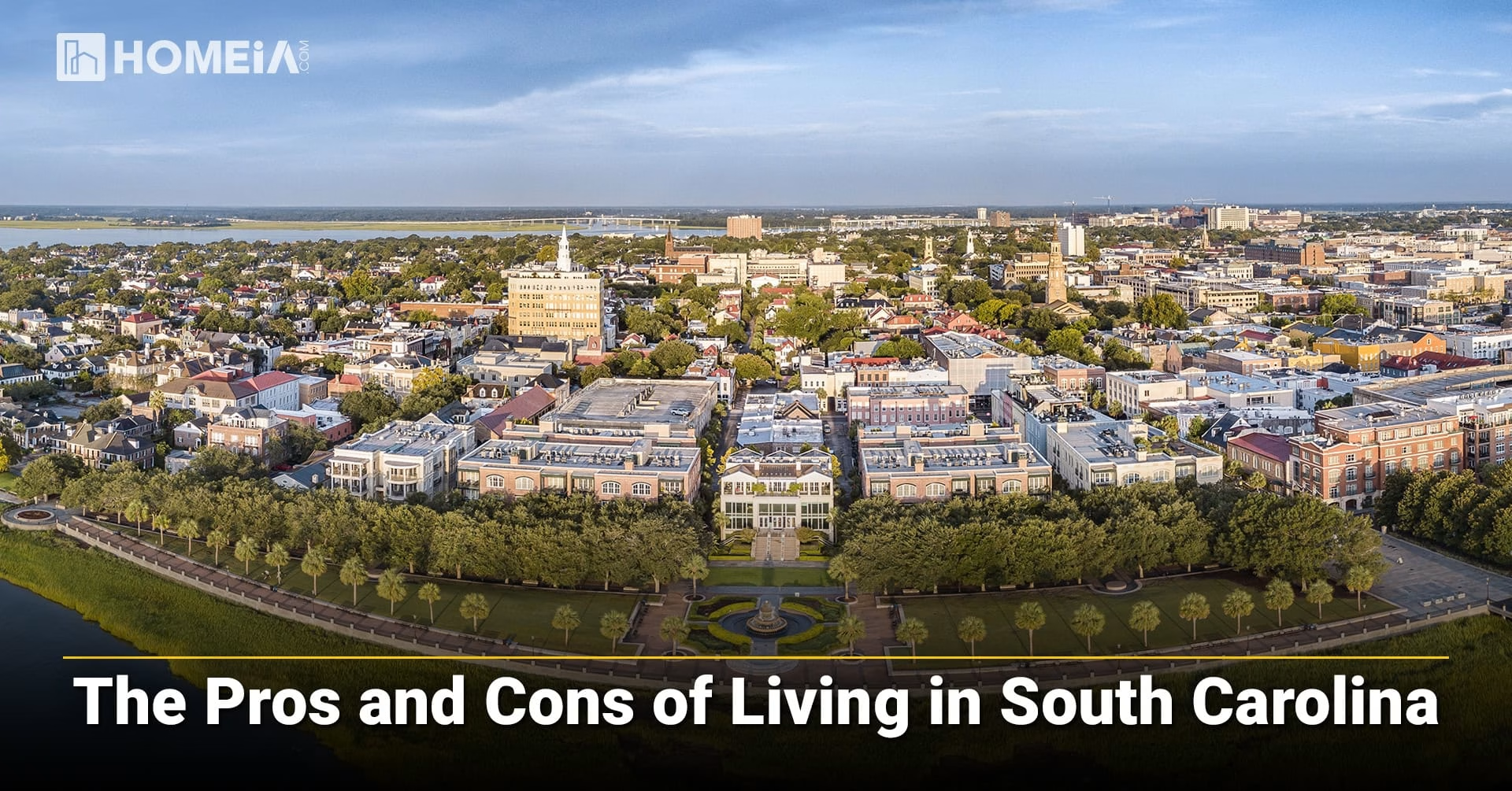
The pros and cons of living in South Carolina: When picturing South Carolina, the mind goes straight to shrimp and grits at a waterfront table in Charleston, azaleas in full bloom in Summerville, and a round of golf as the sun sets over Hilton Head Island. But the Palmetto State offers far more than Instagram-worthy Lowcountry scenery. Beneath the Spanish moss and Southern charm lies a state with one of the fastest-growing economies in the country, a generous tax policy, and remarkable weather.
Still, no place is perfect. Living in South Carolina comes with trade-offs worth knowing about before packing a moving truck for the Palmetto State. This guide’s balanced, honest look at the pros and cons of living in South Carolina draws on lived experience.
Key Takeaways
- Affordability With Coastal Appeal: South Carolina’s overall cost of living is approximately 6% below the national average, with housing 18–21% lower. It is one of the few states where you can enjoy waterfront living without a premium price tag.
- Fastest GDP Growth in the Nation: From Q3 2024 through Q3 2025, South Carolina’s real GDP grew 3.5%, the fastest rate in the country. Expansion of manufacturing, real estate, and professional services fueled its economic boom.
- Historic Tax Reform: Governor McMaster signed H. 4216 into law on March 30, 2026, creating a simplified two-bracket income tax system (1.99% and 5.21%) with a legislated path toward full elimination. It builds on landmark tax reductions that began in 2022 and includes this move and others, such as reducing taxes on boats.
- Hurricane and Flood Risk: Coastal and Lowcountry communities are vulnerable to severe weather. While SC was spared direct hurricane impacts in 2025, flooding, storm surges, and king tides remain regular concerns for coastal residents.
- Rural Healthcare Gaps: Over 32% of South Carolina’s population lives in rural areas, where access to specialists and hospitals remains a persistent challenge, though a $200 million federal grant program launched in 2026 is part of a larger effort to address gap.
I. Methodology: How We Evaluated South Carolina
This guide draws on a multi-factor review of the key elements that shape residents’ quality of life and long-term financial well-being. All data comes from verified sources for 2025 and 2026, including the U.S. Census Bureau, the Bureau of Labor Statistics, Zillow and Redfin housing reports, the SC Law Enforcement Division (SLED), and the SC Department of Employment and Workforce.
Our evaluation criteria are weighted as follows:
- Cost of Living (25%): Day-to-day expenses, including housing, utilities, transportation, groceries, and healthcare, benchmarked against national and regional averages to gauge true purchasing power.
- Economic Health and Opportunity (25%): Median household income, unemployment trends, GDP growth, wage trajectory, and the diversity of industries determine if a community can sustain long-term prosperity.
- Housing and Affordability (20%): Median home prices, rental rates, and home-price-to-income ratios reveal whether housing costs align with what local residents actually earn.
- Quality of Life and Community (20%): Cultural amenities, outdoor recreation, climate, public safety, and the strength of community identity that shape the experience of daily living.
- Access and Infrastructure (10%): Healthcare access, highway and airport connectivity, broadband infrastructure, and proximity to employers and commercial centers.

Related article
Our Methodologies to create HOMEiA Score Ratings for Each Group of Content
HOMEiA uses a consistent, data-driven methodology to evaluate U.S. states for livability, affordability, and long-term value. Our analysis centers on key factors such as Housing and Affordability, Cost of Daily Living, Access and Infrastructure, Community Strength, Safety and Quality of Life, Economic Resilience and Job Market…
II. Pros: Why South Carolinians Love Living Here
1. Affordability That Punches Above Its Weight
South Carolina’s cost of living index sits at 92.7, says the Missouri Economic Research and Information Center (MERIC). RentCafe found expenditures approximately 6% below the national average. Housing is 18–21% below the national average, depending on the local real estate market; transportation costs are 4% lower, and goods and services are roughly 1% cheaper. The median rent statewide is $1,623, compared to the national median of $1,639.
Even better? Median home prices across the Palmetto State stood at $339,975, reports the South Carolina Association of Realtors. This was a 1.5% year-over-year increase, well under the national median of $412,300 for the fourth quarter of 2025. Some areas of the state reported lower market prices, like the Central Carolinas at $246,945 and the Pee Dee Region at $229,900. Its most expensive market, Hilton Head Island, posted an annual median price of $545,000.
What makes South Carolina stand out is that this affordability coexists with coastal access. Just over half a million dollars puts you on or near Hilton Head Island, famous for its 12 miles of beaches and golfing resorts that host PGA Tour events. For $300,000, you can have a lakefront home in the Blue Ridge Mountain foothills. Communities like Summerville, Lexington, and Rock Hill offer suburban pricing and amenities while putting residents less than a day’s drive from beaches, lakes, and mountains. It’s a combination hard to find in places like Florida or coastal Virginia.
2. The Fastest-Growing Economy in the Country
South Carolina leads the nation in migration, but that population growth owes a lot to the state’s accelerating economic expansion. From Q3 2024 through Q3 2025, the state’s real GDP grew 3.5%, the fastest rate among all 50 states, according to the SC Department of Employment and Workforce. That compares to a national GDP growth rate of 2.3% over the same period. Personal income grew 6.0% year-over-year, the fastest in the Southeast and tied for fifth-fastest nationally.
The growth is broad-based, another indicator of economic strength. Primarily, manufacturing, real estate and leasing, healthcare, and professional and technical services reported the largest increase in jobs. South Carolina had 113,000 open job positions as of December 2025, with a job openings rate of 4.5%, higher than the national rate of 3.9%.
Among the places with the most rapid job growth are along the coastal metros. Hilton Head-Bluffton employment grew 1.8% year-over-year, ranking 25th fastest in the nation, while Myrtle Beach grew 1.7%.
Major employers include BMW, Michelin, Volvo Cars, Boeing, GE Vernova, Prisma Health, MUSC, and a growing cluster of financial services and tech firms in the Charlotte-adjacent suburbs of the central Upstate region.


Related article
3 Most Affordable and Safe Neighborhoods to Live in Columbia, South Carolina
Columbia, SC offers neighborhoods like Forest Acres, Rosewood, and Shandon that combine affordability, safety, and unique character. With strong community pride, accessible urban amenities, and reasonable housing costs, these areas appeal to families, professionals, and retirees alike, making Columbia a welcoming and practical choice for residents at every stage of life…
3. A Total Tax Advantage
Ask any South Carolinian what changed in 2026, and the big answer is the income tax. Governor McMaster signed H. 4216 on March 30, 2026, replacing the old three-bracket system with two simple rates: 1.99% on income under $30,000 and 5.21% on income over $30,000. It included a legislated path toward full elimination of the state income tax.
Low property taxes are another perk to living in South Carolina. As of 2024, the state ranked among the five lowest-property-tax states according to the Tax Foundation. The effective property tax rate is approximately 0.49%, which equates to about $997 a year on a $199,733 valued home. A state sales and use tax of 6% helps make South Carolina’s overall tax burden among the lightest on the East Coast.
For retirees, the picture is even brighter. Social Security income is fully exempt from state income tax, and residents 65 and older receive meaningful deductions on other retirement income. The state also has a homestead exemption up to $50,000 of property value for qualifying homeowners. Compared to a high-tax state like New York, the savings can be substantial — see our Cost of Living in New York vs. South Carolina analysis.
4. Year-Round Outdoor Living
South Carolina’s geography is nothing short of remarkable. Within a single state, residents can:
- kayak through ACE Basin wildlife preserves
- surf at Folly Beach
- fish on Lake Murray’s 700-plus miles of shoreline
- spot synchronized fireflies at Congaree National Park
- rock climb in Table Rock State Park
- hike the mountains of Oconee County
The Lowcountry’s tidal creeks, barrier islands, and salt marshes support one of the most biodiverse coastal ecosystems on the Eastern Seaboard. In the Midlands, scrub forests and swamps give way to broad lakes, river systems, and miles of greenways that keep boating, fishing, paddling, and hiking accessible nearly year-round. Upstate residents’ views span the Blue Ridge mountains and foothills, where hiking, cycling, and camping trips await.
The climate cooperates, too. Winters are mild across most of the state, averaging highs in the upper 50s from December through February. Springs and falls are spectacular. Even summers, while undeniably hot and humid, are tempered along the coast by sea breezes and inland by afternoon thunderstorms that cool things down by evening. Upstate summers have the coolest temperatures. The higher elevations allow for the occasional dusting of snow in winter.

Related article
7 Cheapest Places to Live in South Carolina
South Carolina offers an affordable lifestyle with low property taxes, living costs below the national average, and access to coastal charm and growing job markets. However, affordability varies widely across communities. This guide highlights seven budget-friendly cities and towns where residents can balance housing costs, quality of life, and long-term financial stability…
5. Outdoor Recreation
The state’s geographic diversity is a competitive advantage. ACE Basin National Wildlife Refuge, Congaree National Park, Table Rock State Park, Hunting Island State Park, and Lake Murray collectively showcase the Palmetto State’s world-class opportunities for hiking, fishing, kayaking, birdwatching, and camping.
South Carolina’s 187 miles of Atlantic coastline, more than 40 barrier islands, and hundreds of miles of inland waterways ensure that outdoor enthusiasts never run out of new territory to explore. In the Upstate, there are over 100 waterfalls ranging from 40 feet to cascading over 700 feet into gorges. Between awaits an extensive network of rail trails, mountain biking systems, public boat ramps, and state parks.
South Carolina’s mild winters empower residents to golf, paddle, hike, and bike during much of the year. Warm summers extend the boating and beach season beyond summer. The variety of environments and recreation is exceptional for a state of its size.
6. A World-Famous Food Scene
South Carolina’s culinary identity is among the most distinctive in the country. Lowcountry boils, shrimp and grits, oyster roasts, and barbecue (both the mustard-based Gold variety of the Midlands and the vinegar-pepper style of the Pee Dee region) reflect the state’s deep Gullah-Geechee heritage and agrarian roots.
Another surprise is South Carolina’s agricultural bounty. It produces the second-most number of peaches in the United States, and is a top grower of strawberries, watermelons, chickens, and collard greens. It’s also home to the only commercial tea plantation in North America.
Charleston regularly ranks among the top food cities in the United States, and Greenville’s Main Street restaurant row punches well above its weight nationally. Fresh-caught shrimp, oysters, and blue crabs from local waters are a genuine, everyday luxury. Experience it at one of South Carolina’s many food-themed festivals, like the Hilton Head Food & Wine Festival or the South Carolina Peach Festival in Gaffney.

Related article
Best Places to Live in South Carolina for Retirees
South Carolina continues ranking among the best retirement destinations in the country thanks to its affordability, mild climate, access to healthcare, and relaxed lifestyle. From coastal communities to quiet inland towns, retirees can find a balance of comfort, recreation, and financial stability suited to long-term living…
7. Arts and Culture Abound
South Carolina celebrates its unique cultural heritage through museums and its arts scene. One highlight is Charleston’s Spoleto Festival USA, a 17-day performing arts celebration each spring that draws world-class performers and audiences from across the country. Another is Artisphere, an award-winning outdoor arts festival and juried competition in Greenville.
The Greenville Peace Center, Gibbes Museum of Art, the Columbia Museum of Art, and Hilton Head’s arts community add depth statewide.
Gullah-Geechee culture, centered on the Sea Islands and Lowcountry coast, is one of the most unique and historically significant African American cultural traditions in the United States. Living artists, storytellers, and sweetgrass basket weavers carry the heritage forward. See the traditional arts during the annual Original Gullah Festival in Beaufort, SC.
South Carolina also has a rich array of cultural sites dating to the pre-Colonial era, such as those of the Catawba Indian Nation. Visit forts from the American Revolution, Civil War battlefields, and other heritage sites.
8. Southern Hospitality Is the Real Thing
This one is harder to quantify but impossible to overlook. South Carolinians are genuinely warm. Strangers wave from their porches. Neighbors bring food when you move in. Church communities, civic organizations, Friday night football games, and local festivals create a social fabric that transplants from larger, more anonymous cities consistently find surprising and deeply appealing.
Charleston and Greenville appeared on Southern Living’s list of the 15 friendliest cities in the South for 2024, with Charleston in first. Beaufort, SC, appeared third on World Atlas’ list in 2026.
The slower pace of life invites connection in a way that has become rare in much of the country.
Related article
Moving to South Carolina in 2026: Why It’s America’s #1 Relocation Destination
South Carolina continues leading the nation in inbound migration, attracting nearly two new residents for every one who leaves. Strong economic growth, tax reforms, affordability, and lifestyle appeal—from historic Charleston to vibrant Greenville—have made the Palmetto State one of America’s most desirable relocation destinations…
II. Cons: The Honest Trade-Offs
![Cons_ The Honest Trade-Offs_[]_Boiling Springs town in South Carolina USA_.jpg](https://homeia.com/wp-content/uploads/2026/05/Cons_-The-Honest-Trade-Offs__Boiling-Springs-town-in-South-Carolina-USA_.jpg.avif)
1. Crime Rates Remain Above National Averages
South Carolina made meaningful progress on public safety in 2024. SLED’s annual report showed that violent crime dropped by 8.4%, marking the fourth consecutive year of decline. It’s the lowest rate since 1995. Robberies hit a 30-year low, and property crime fell 11.8% for the thirteenth straight year. These sustained improvements worth acknowledging.
That said, South Carolina’s violent crime rate of 437 offenses per 100,000 residents still ranks 10th highest in the nation, 21.6% above the U.S. average. Property crime rates are 11.7% above the national benchmark.
Higher crime rates concentrate in specific urban pockets and rural areas with high poverty. In places like Myrtle Beach, a high volume of tourism increases reported property crimes and theft. Actual experiences vary by neighborhood. Some areas, like Tega Cay and Mount Pleasant, have low crime statistics. Research your specific target community carefully.
2. Hurricane and Flood Exposure
South Carolina was spared direct hurricane impacts during the 2025 season, but that good fortune should not breed complacency. The Lowcountry’s flat topography, tidal rivers, and proximity to the Atlantic make multiple popular communities at risk. These include Charleston, Summerville, Beaufort, Bluffton, and Myrtle Beach.
Anywhere at or near sea level is vulnerable to storm surge, flooding, and wind damage. A slow-moving coastal storm in October 2015 produced up to 26 inches of rain across the Midlands and coastal regions over a single day, flooding roads and requiring water rescues. Communities from well-inland Florence, and Columbia, SC to coastal Charleston, SC, experienced devastating damage to roads and properties.
Homeowners in flood-prone zones pay for federal flood insurance on top of standard homeowners’ coverage. It can add $1,000 to $3,000 or more annually to the cost of ownership. Inland communities, including Greenville, Lexington, Fort Mill, and Tega Cay, face a lower risk of flooding. It’s a geographic exchange for buyers weighing weather exposure and insurance costs.
Recommended for you




3. Rural Healthcare Access Gaps
Over 32.6% of South Carolina’s population lives in rural areas, according to the state’s 2026 Rural Health Transformation Program application. Those residents face disproportionate rates of chronic disease, maternal mortality, and limited access to specialists. It’s a combination of provider shortages, aging infrastructure, and geographic isolation. Many rural residents must travel longer distances to reach hospital-level care. For instance, residents in Greenwood or Saluda Counties have fewer than two maternity care providing hospitals or birth centers.
The good news is that the state is actively investing in solutions. South Carolina was eligible for a $200 million federal Rural Health Transformation Program grant for the fiscal year 2026. Initiatives include mobile health units, expanded telehealth infrastructure, and physician recruitment incentives for rural areas.
4. Summers Are Hot and Humid
A South Carolina summer is not for the faint of heart. Temperatures routinely reach the upper 90Fs, with humidity bumping feels-like temperatures to near 105F. The combination of heat, humidity, and intense afternoon sun from late May through September make it uncomfortable outdoors, particularly in inland areas away from coastal breezes.
Air conditioning is essential infrastructure. While South Carolina’s electricity rates per kilowatt-hour run below the national average, total utility costs run approximately 4% above the national average. Summer cooling demand drives the above-average consumption. In the Upstate, the script flips to winter heating. Heat pumps struggle in colder conditions, where temperatures frequently drop below freezing at night. Some properties turn to using furnaces with natural gas or propane, which come with their own energy costs.
5. Pest Problems
Mosquitoes, gnats, and the infamous palmetto bug (a cockroach by any other name) are unavoidable seasonal companions. Fire ants are a pesky problem in yards. Along the coasts, sand gnats and no-see-ums are invisible problems that bother locals. All these insects emerge in the late spring and stick around through the early fall.
The warm, wet climate encourages termite colonies, which can wreak havoc on homes. Termites can stay active longer during the year. Regular inspections and preventive treatments are common additional expenses for homeowners.
How persistent these pests can be compared to northern climates can be a wake-up call for newcomers. Routine pest control services, moisture management, and home inspections are standard parts of living in the Palmetto State.

Related article
3 Most Affordable and Safe Places to Raise a Family in Georgia
Georgia has earned its reputation as an ideal destination for families seeking safe, affordable, and welcoming communities. Throughout the state, numerous towns combine economic accessibility with strong community values, creating perfect environments for raising children…
6. Public Education Quality Varies Widely
South Carolina’s public education system has pockets of true rigor and excellence. These are concentrated in York County, where Fort Mill School District and Clover School District regularly rank in the top five. Lexington County School District One, Spartanburg School District One, parts of Charleston, and various Greenville metro schools usually compare favorably on national metrics.
However, the state as a whole faces funding disparities, inconsistent performance across districts, and below-average standardized test outcomes in many rural and lower-income communities.
Families considering a move to South Carolina should research district-level school ratings on GreatSchools.org and the SC Department of Education’s annual report cards before committing to a specific city.
7. Public Transportation: Few and Far Between
Compared to larger northeastern or West Coast metro areas, South Carolina residents rely heavily on personal vehicles to get around. Charleston, Columbia, and Greenville do run public services, but tend to have modest evening and weekend services.
Walkable neighborhoods exist in South Carolina’s historic downtowns and newer mixed-use developments. Look to the Charleston peninsula or downtown Myrtle Beach as examples.
Still, commuting without a car is a challenge in most of the state. Population growth is further adding to traffic congestion in the expanding region, particularly on the coast and in Upstate population centers. Commute times can be less predictable than newcomers anticipate.

Related article
10 Best Places to Live in Georgia in 2026
If you’re looking for some good old-fashioned Southern hospitality, look no further than Georgia. The Peach State has plenty of small-town charm to welcome you in, as well as big-city development, artistic expression and innovation…
III. Best South Carolina Communities by Life Stage
Best for Young Professionals
1. Charleston
HOMEiA Score: 92/100
Unmatched career diversity, a world-class food scene, and walkable neighborhoods make this the top destination for newcomers.
2. Greenville
HOMEiA Score: 90/100
A booming manufacturing and healthcare economy, below-average cost of living, and a downtown that rivals cities twice its size.
3. Fort Mill
HOMEiA Score: 89/100
Charlotte metro access at South Carolina tax rates, with some of the highest incomes in the state.
Related article
20 Exciting Things to Do in Greenville, North Carolina
Vacationers won’t want to waste one day of their trip taking in the sights and sounds of Greenville, so we’ve compiled 20 of the most exciting things to do while on vacation here. Read on and start to plan your itinerary!…
Best for Families
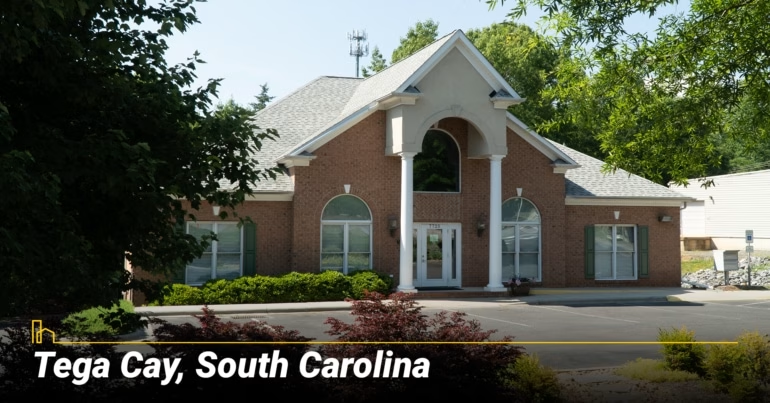
1. Tega Cay
HOMEiA Score: 92/100
Highest median household income in the state ($142,000), lowest poverty rate, Lake Wylie access, and top-ranked Fort Mill schools.
2. Mount Pleasant
HOMEiA Score: 93/100
Beach access, elite schools, and a close-knit feel just across the bridge from Charleston.
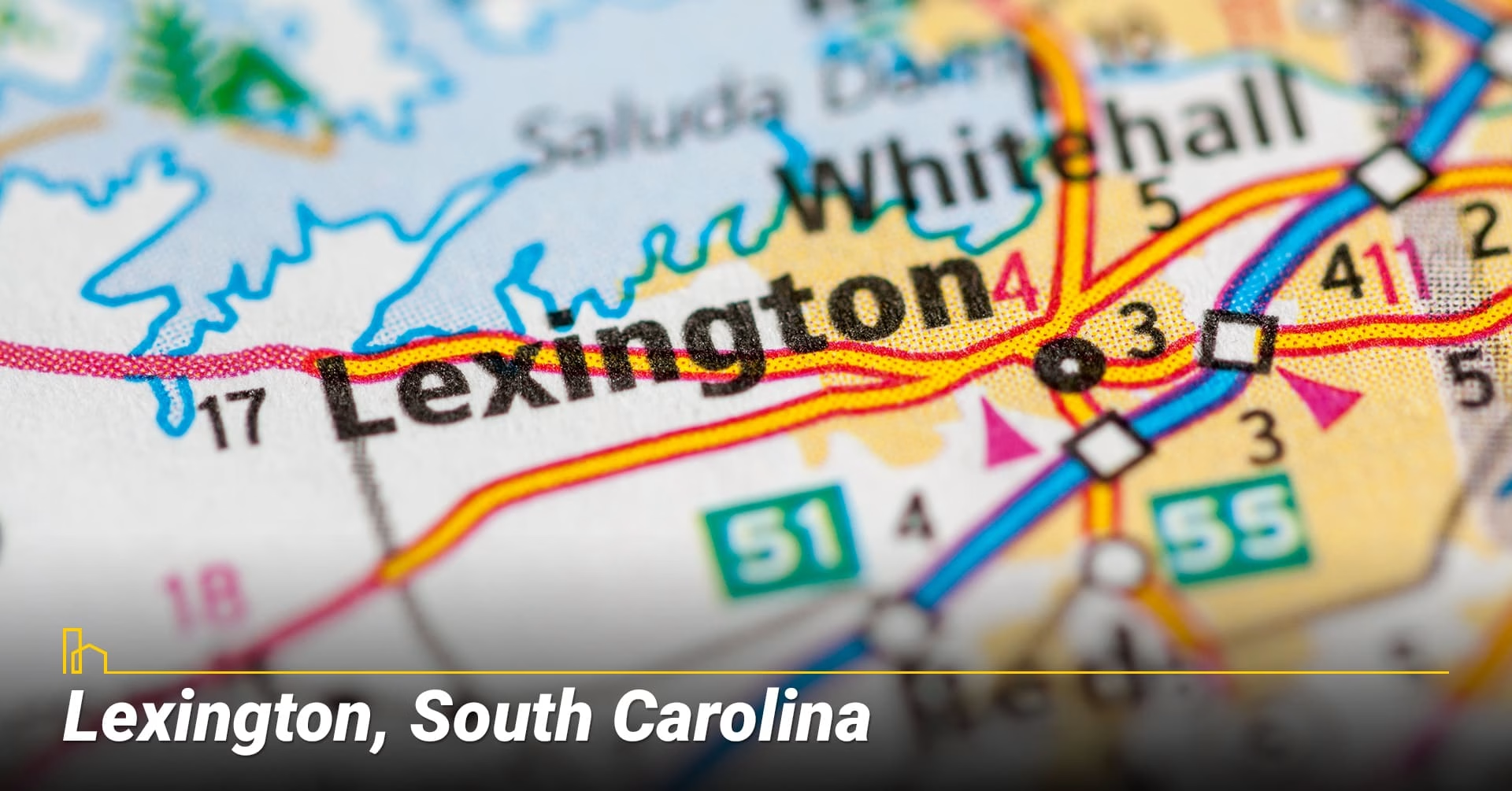
3. Lexington
HOMEiA Score: 87/100
Lake Murray lifestyle, strong schools, low unemployment, and one of the best rental affordability ratios in the state.
Related article
20 Family-friendly Things to do in Jacksonville, North Carolina
Overall, Jacksonville is an excellent place for families to find things to do. There’s good energy and lots of fun. We’ve compiled a list of the best family-friendly things to do in Jacksonville, NC. Here are 20 of the best…
Best for Retirees
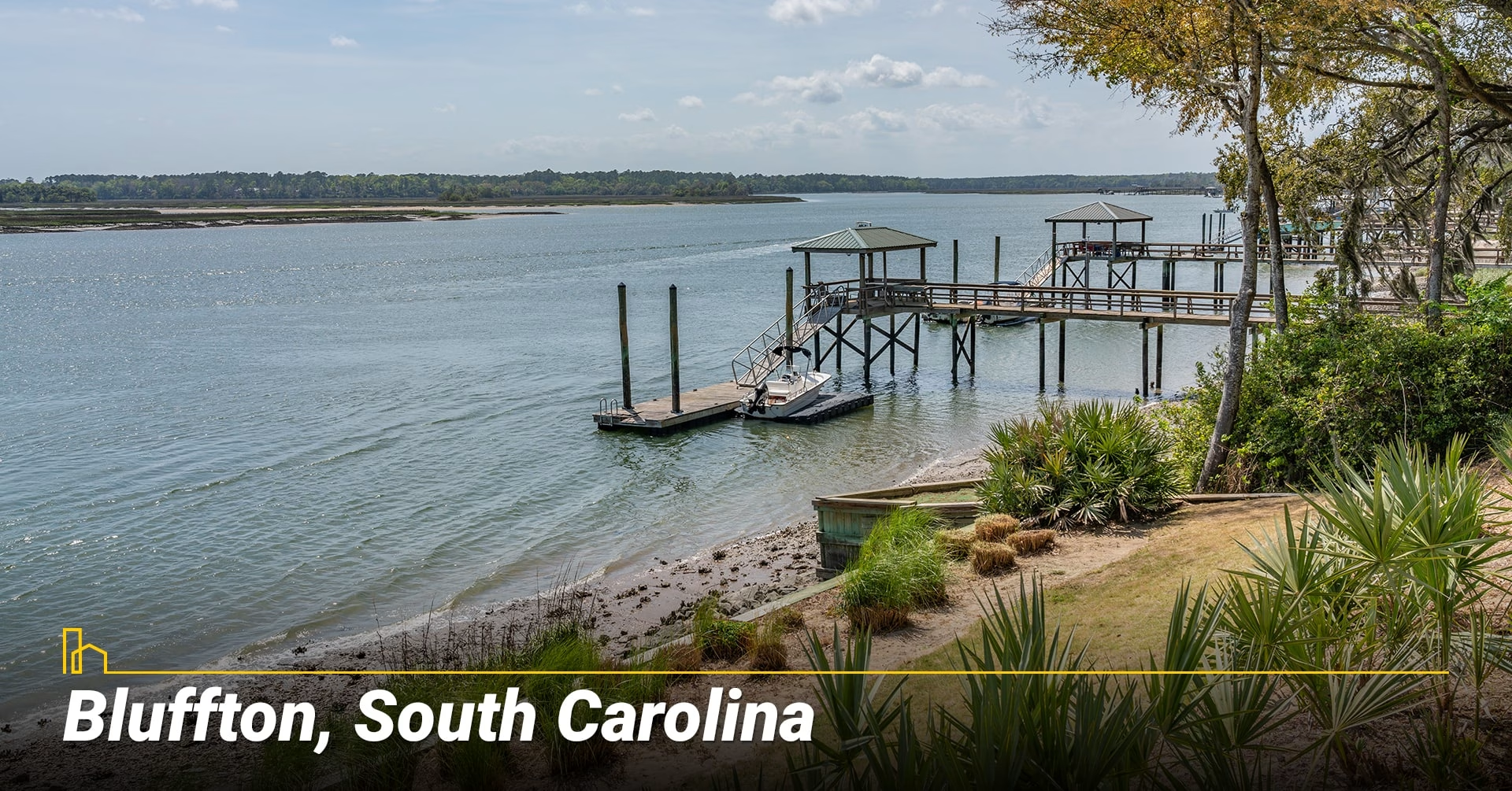
1. Bluffton
HOMEiA Score: 91/100
Mild climate, golf culture, Old Town charm, and 80% homeownership with a poverty rate of just 2.7%.
2. Hilton Head Island
HOMEiA Score: 90/100
Premier resort-island living, PGA-caliber golf, 12 miles of beach, and a full range of retirement-oriented services.
3. Summerville
HOMEiA Score: 87/100
Charleston access at a meaningful discount, strong schools for visiting grandchildren, and Flowertown’s authentic small-city soul.

Conclutions: Is South Carolina Right for You?
A combination of affordability, natural beauty, a warm culture, and an outperforming economy gives people a reason to move to South Carolina. The 2026 income tax reform makes it more attractive than ever for earners and retirees alike. The trade-offs, like hurricane risk in coastal areas, crime disparities in specific communities, and rural healthcare gaps, are manageable with smart location choices and proper planning.
If you want beaches, history, good food, low taxes, and a community that still waves from the porch, South Carolina deserves a serious look. The sweet tea is always fresh.
Recommended for you




FAQs About Living in South Carolina
1. Is South Carolina affordable compared to neighboring states?
Yes. South Carolina’s overall cost of living is approximately 6% below the national average, with housing 18–21% lower, depending on the market. Compared to North Carolina, property taxes are lower (approximately 0.49% vs. 0.66% effective rate per the Tax Foundation). Compared to Florida, most SC markets offer home prices that are comparable to or lower than those in southeast Florida, Naples, or Sarasota. For a direct breakdown of how the two states stack up on housing, taxes, utilities, and everyday expenses, see our Cost of Living in South Carolina vs. Georgia comparison.
2. How serious is the hurricane risk?
Coastal and Lowcountry communities’ seaboard location and low elevation increase the property damage risk from hurricanes, storm surge, and flooding. Homeowners in flood zones should budget for flood insurance in addition to standard coverage. Inland communities, including Greenville, Lexington, and York County suburbs, have lower exposure to extreme weather.
3. Is South Carolina a good state for retirement?
Yes, especially from a tax standpoint. Social Security income is not taxed, older residents receive deductions for other retirement income, and the 2026 tax reform further reduces the income tax burden. Hilton Head, Bluffton, and Summerville are consistently ranked among the best retirement destinations in the Southeast.
4. How does the job market look in 2026?
Strong and growing. South Carolina’s GDP grew faster than any other state from Q3 2024 to Q3 2025, with 113,000 open positions as of December 2025. Sectors at the forefront of expansion are manufacturing (BMW, Michelin, Volvo, Boeing), healthcare, logistics through the Port of Charleston, and financial services in the Charlotte suburbs.
5. What should families know about schools before moving?
School quality varies by district. Fort Mill School District, Clover School District, Lexington-Richland Schools, Lexington School District One, and Spartanburg School District One are consistently among the state’s strongest in its reporting system. Families should review individual district ratings on GreatSchools.org and the SC Department of Education’s annual report cards before choosing a neighborhood.
Share