







Delaware offers tax-free shopping, coastal beauty, and access to major East Coast cities, blending historic charm with corporate and beachside living. But moving here involves trade-offs, including higher housing costs, limited transit, and seasonal crowding. This guide outlines the key pros and cons and highlights the best cities for professionals, families, and retirees.
7 Most Affordable Places to Live in Delaware (updated)
- Local Editor:Local Editor: The HOMEiA Team

Most Affordable Places to Live in Delaware: In a small state where prices change quickly from one town to the next, Delaware still offers desirable value if you know where to look. The First State has no state or local sales tax, and while overall living costs now sit roughly in line with or slightly above the U.S. average, several inland communities remain more attainable than the beach market and much of the Northeast corridor. For families, retirees, and commuters, the goal is finding a town where housing, taxes, and daily convenience still line up.
This guide takes a grounded look at seven communities that still make sense for budget‑minded movers. It leans on current housing values, rental trends, local job anchors, transportation access, and the trade‑offs locals actually consider. If you are also weighing other regions, you might find our guide on the most affordable places to live in Ohio helpful for comparison.
Key Takeaways
- Widespread Affordability: Delaware is no longer uniformly affordable, and statewide cost of living measures now place it close to the national average or slightly above it. Inland communities in Kent and Sussex counties often remain more affordable than the beach towns and much of nearby Maryland, New Jersey, and southeastern Pennsylvania.
- Variety of Options: Affordable living is not limited to remote towns. It includes inland suburbs, beach‑adjacent communities, and towns with steady job markets, which gives residents options at different price points.
- Trade‑Offs Exist: The most affordable cities often come with trade‑offs including fewer job opportunities outside key sectors, higher crime in certain neighborhoods, or locations that require longer drives for major amenities.
- Beyond the Purchase Price: True affordability includes utility costs and transportation. Heating and cooling can be significant, and car costs matter most in communities where daily life depends on driving.
- Essential to Research: Safety, school ratings, and neighborhood character vary dramatically across the state, so it is important to research specific areas rather than relying on statewide averages.

Related article
I. Methodology: How We Chose the Most Affordable Places
The seven locations in this list are based on a weighted set of criteria reflecting how residents actually evaluate value. The focus is on places that balance affordability, access to essentials, and community rather than chasing the very lowest price.
- Housing & Affordability (30%): Median home price, typical monthly rent, and how both compare with state averages. Ratios such as home‑price‑to‑income help show whether typical households can realistically buy.
- Cost of Living (25%): Day‑to‑day expenses, including groceries, utilities, transportation, and healthcare relative to nearby parts of Delaware and neighboring states.
- Access & Infrastructure (20%): Proximity to groceries, healthcare, major employers, reliable internet, and practical transportation links. A lower mortgage matters less if basics are hard to reach.
- Community & Safety (15%): Crime rates, community engagement, and amenities that support quality of life, with an eye on how different parts of each town feel.
- Economic Resilience & Opportunity (10%): Economic diversity, key industries, and employment trends that support long‑term stability rather than short booms.
Data for this article is compiled from current sources available in 2026, including Zillow, the U.S. Census Bureau, rental market trackers, and local and regional market data.
Here is the same comparison table, properly formatted so you can drop it into your article and style it with borders in Word.

Related article
7 Delaware Communities Comparison Table
| City | HOMEiA Score | Cost of Living | Avg. Rent (2‑Bed) | Home Price to Income Ratio | Income to Rent Ratio | Safety Rating |
| Georgetown | 78/100 | Moderate for inland Sussex | ~$1,600 | ~7.4:1 | ~31.1x | Mixed by area |
| Milford | 80/100 | Moderate | ~$1,650–$1,780 | ~4.8:1–5.4:1 | ~33.4x–36.0x | Generally solid |
| Seaford | 81/100 | Moderate for Delaware | ~$1,600–$1,860 | ~5.9:1 | ~29.0x–33.8x | Mixed by area |
| Middletown | 82/100 | Higher than this list once implied | ~$1,620–$2,095 | ~4.6:1–5.1:1 | ~32.3x–41.7x | Above average |
| Newark | 84/100 | Near state average | ~$1,740–$1,800 | ~4.6:1–4.7:1 | ~42.6x–43.9x | Above average |
| Wilmington | 85/100 | Near or slightly above U.S. average | ~$1,766–$1,780 | ~4.6:1–5.8:1 | ~31.0x | Highly neighborhood specific |
| Dover | 87/100 | Near U.S. average | ~$1,600–$1,690 | ~5.0:1–5.7:1 | ~34.5x–36.5x | Mixed by area |
II. Detailed Community Analysis: Seven Affordable Enclaves
1. Georgetown: The Southern Delaware Value Hub

HOMEiA Score: 78/100
- Cost of Living: Near or slightly below coastal Delaware markets, but not dramatically inexpensive relative to current U.S. averages
- Monthly Rent: Around $1,600 for a 2‑bedroom apartment
- Home price to income ratio: About 7.4:1
- Income to rent ratio: About 31.1x
- Safety rating: 58/100
HOMEiA Score: 78/100
Cost of Living: Near or slightly below coastal Delaware markets, but not dramatically inexpensive relative to current U.S. averages
- Monthly Rent: Around $1,600 for a 2‑bedroom apartment
- Home price to income ratio: About 7.4:1
- Income to rent ratio: About 31.1x
- Safety rating: 58/100
A. Cost of Living & Housing: Georgetown is no longer a bargain, but it still tends to work better for buyers than the beach towns. Median sale and listing figures fall in the mid $400,000s, with typical values in the mid $300,000s. Neighborhood, age of housing, and whether you buy in town or in the surrounding area all matter.
B. Economy & Job Market: As Sussex County’s seat, Georgetown is tied to county government, courts, healthcare, legal services, agriculture, and poultry. It also benefits from jobs along Routes 9 and 113 that connect inland residents with beach‑area tourism and warehousing.
C. Access & Infrastructure: Georgetown remains a practical hub for inland Sussex, with US‑113 and US‑9 providing direct routes to jobs, shopping, and the beaches. Errands are straightforward, but most people still expect to drive.
D. Quality of Life & Culture: Georgetown keeps a courthouse‑town identity, with a historic center, local events, and a year‑round community that feels distinct from the seasonal beach economy. It appeals to residents wanting Sussex access without coastal prices, as long as they recognize that not every nearby area is still inexpensive.

2. Milford: The Riverfront Retreat

HOMEiA Score: 80/100
- Cost of Living: Moderate by Delaware standards, especially compared with the beach market
- Monthly Rent: Around $1,650 to $1,780 for a 2‑bedroom apartment
- Home price to income ratio: About 4.8:1 to 5.4:1
- Income to rent ratio: About 33.4x to 36.0x
- Safety rating: 68/100
HOMEiA Score: 80/100
Cost of Living: Moderate by Delaware standards, especially compared with the beach market
- Monthly Rent: Around $1,650 to $1,780 for a 2‑bedroom apartment
- Home price to income ratio: About 4.8:1 to 5.4:1
- Income to rent ratio: About 33.4x to 36.0x
- Safety rating: 68/100
A. Cost of Living & Housing: Milford remains one of the more balanced value plays in Delaware. Housing is not as much of a bargain as it once was, but prices still sit below Middletown and many coastal communities. Additionally, a mix of older in‑town homes, newer subdivisions, and nearby rural properties lets buyers shop across different price levels.
B. Economy & Job Market: Milford has a diverse local economy, with healthcare, manufacturing, retail, and public‑sector jobs. Bayhealth Sussex Campus has strengthened the city’s role as a medical and service hub for southern Delaware.
C. Access & Infrastructure: Along the corridor between Dover and the beaches, Milford provides residents practical access to central Delaware and the coast. Medical care, shopping, and highway connections are all in place, keeping commutes and errands manageable.
D. Quality of Life & Culture: Downtown Milford, the riverwalk, and a modest arts scene instills more character than a typical highway stop. It works well for residents needing a sense of community and amenities without paying resort premiums.
Recommended for you




3. Seaford: The Nylon Capital’s Comeback

HOMEiA Score: 81/100
- Cost of Living: Moderate for Delaware, with housing still below many northern markets
- Monthly Rent: Around $1,600 to $1,860 for a 2‑bedroom apartment
- Home price to income ratio: About 5.9:1
- Income to rent ratio: About 29.0x to 33.8x
- Safety rating: 60/100
HOMEiA Score: 81/100
Cost of Living: Moderate for Delaware, with housing still below many northern markets
- Monthly Rent: Around $1,600 to $1,860 for a 2‑bedroom apartment
- Home price to income ratio: About 5.9:1
- Income to rent ratio: About 29.0x to 33.8x
- Safety rating: 60/100
A. Cost of Living & Housing: Seaford earns its place on an affordability list because home values remain lower than in much of New Castle County and below many Sussex beach communities. Sub $200,000 prices are now mostly limited to older homes or properties needing renovations.
B. Economy & Job Market: The town’s manufacturing roots still show, but employment expanded to healthcare, education, retail, light industry, and poultry‑related work. It functions as a working town with everyday job access rather than a suburban bedroom community.
C. Access & Infrastructure: On the Nanticoke River and US‑13, Seaford offers dependable regional access for western Sussex and nearby Maryland. Residents can reach Dover, Salisbury, and other job centers by car, and the local network of stores and services covers most everyday needs.
D. Quality of Life & Culture: Seaford has a small‑city feel, river access, and a year‑round working‑class identity. It suits buyers who are comfortable trading beach proximity and polish for more attainable housing and straightforward day‑to‑day living.

Related article
3 Most Affordable and Safe Neighborhoods to Live in Wilmington, Delaware
Wilmington, Delaware’s largest city, is a wonderful mix of historic charm and urban renewal. Located 30 minutes outside of Philadelphia, some call it a “mini-Philly.” Home to around 72,000 people, Wilmington is part of the greater Delaware Valley metro area, the 8th largest metropolitan region in the United States…
4. Middletown: The Fast‑Growing Suburb

HOMEiA Score: 82/100
- Cost of Living: Above the original estimate and no longer especially cheap
- Monthly Rent: Around $1,620 to $2,095 for a 2‑bedroom apartment
- Home price to income ratio: About 4.6:1 to 5.1:1
- Income to rent ratio: About 32.3x to 41.7x
- Safety rating: 75/100
HOMEiA Score: 82/100
Cost of Living: Above the original estimate and no longer especially cheap
- Monthly Rent: Around $1,620 to $2,095 for a 2‑bedroom apartment
- Home price to income ratio: About 4.6:1 to 5.1:1
- Income to rent ratio: About 32.3x to 41.7x
- Safety rating: 75/100
A. Cost of Living & Housing: Middletown is a relative value story rather than a low‑cost one. Standard home values now sit above $520,000, and inventories lean heavily toward newer suburban houses. It belongs on this list because it delivers schools, newer housing, and amenities at lower prices than many similar communities in the wider Philadelphia corridor.
B. Economy & Job Market: Middletown’s growth is supported by retail, logistics, healthcare, construction, and commuting access to larger New Castle County employers. This fits households with strong incomes that want newer housing without moving to Wilmington or farther north.
C. Access & Infrastructure: Route 301 improved commuter access and helped attract new commercial development. Shopping, dining, schools, and services have expanded with the population, which keeps more basics within town limits.
D. Quality of Life & Culture: Middletown has become one of Delaware’s go‑to family communities, with parks, new neighborhoods, and an active calendar of events. It still contains traces of its modest past, but day‑to‑day life feels like an outer‑ring suburb.


Related article
What is It Like Living in Maryland Today?
From its bustling urban centers to tranquil coastal towns, from its rich historical tapestry to its vibrant arts and culinary scenes, Maryland offers a unique blend of experiences that cater to residents and visitors alike. Let’s take a look at some of Maryland’s most charming features, exploring the cities, natural wonders, cultural events and flavors that make it a must-visit destination…
5. Newark: The College Town Value
HOMEiA Score: 84/100
- Cost of Living: Near the state average, with housing and rent above Dover and Seaford
- Monthly Rent: Around $1,740 to $1,800 for a 2‑bedroom apartment
- Home price to income ratio: About 4.6:1 to 4.7:1
- Income to rent ratio: About 42.6x to 43.9x
- Safety rating: 70/100
HOMEiA Score: 84/100
Cost of Living: Near the state average, with housing and rent above Dover and Seaford
- Monthly Rent: Around $1,740 to $1,800 for a 2‑bedroom apartment
- Home price to income ratio: About 4.6:1 to 4.7:1
- Income to rent ratio: About 42.6x to 43.9x
- Safety rating: 70/100
A. Cost of Living & Housing: Newark provides solid value for northern Delaware but is not a low‑cost market. The University of Delaware keeps demand consistent for rentals and owner‑occupied homes, which supports firmer prices than in most of Kent or Sussex County.
B. Economy & Job Market: UDel, healthcare, research, retail, and nearby New Castle County employers give Newark a deep pool of jobs. For many, its main appeal is career and income opportunity rather than low housing costs.
C. Access & Infrastructure: Newark is one of the state’s best‑positioned cities for commuters, with I‑95 access, nearby rail service, and a dense cluster of shopping, healthcare, and educational institutions.
D. Quality of Life & Culture: Main Street, campus energy, parks, and an educated professional base keep Newark lively year‑round. It suits residents who value walkability and access more than the lowest possible housing price.

Related article
The Pros and Cons of Living in Pennsylvania
This comprehensive Pennsylvania guide examines both the advantages and disadvantages of living in Pennsylvania with updated data and insights. We’ll also highlight the best Pennsylvania cities for young professionals, families, and retirees to help you determine if the Keystone State aligns with your lifestyle and budget…
6. Wilmington: The Urban Value Proposition
HOMEiA Score: 85/100
- Cost of Living: Near or slightly above the national average, often still a value compared with larger Northeast cities
- Monthly Rent: Around $1,766 to $1,780 for a 2‑bedroom apartment
- Home price to income ratio: About 4.6:1 to 5.8:1
- Income to rent ratio: About 31.0x
- Safety rating: 55/100
HOMEiA Score: 85/100
Cost of Living: Near or slightly above the national average, often still a value compared with larger Northeast cities
- Monthly Rent: Around $1,766 to $1,780 for a 2‑bedroom apartment
- Home price to income ratio: About 4.6:1 to 5.8:1
- Income to rent ratio: About 31.0x
- Safety rating: 55/100
A. Cost of Living & Housing: Wilmington is not the most affordable place in Delaware, but it can be attractive for buyers and renters compared to Philadelphia suburbs, South Jersey, or other East Coast cities. Recent years have brought higher rents and notable shifts in several neighborhoods, so current data matters.
B. Economy & Job Market: This remains the state’s financial center, with banking, credit‑card, legal, healthcare, nonprofit, and government employers. Its longstanding role in corporate services still shapes the job market even as it diversifies.
C. Access & Infrastructure: Wilmington is Delaware’s greatest transportation hub, with I‑95, Amtrak, DART, nearby SEPTA connections, and quick access to Philadelphia International Airport. No other city in the state matches its level of regional connectivity.
D. Quality of Life & Culture: This area offers the deepest urban mix in Delaware, from the Riverfront and museums to neighborhood restaurants and historic blocks. Safety and livability vary widely by neighborhood. Affordability always needs to be weighed block by block.

Related article
Moving to New Jersey: The Complete Relocation Guide & Checklist
New Jersey attracts newcomers with strong job markets, excellent healthcare, top universities, and convenient access to both New York City and Philadelphia. From urban high-rises to suburban communities and outdoor recreation near the Delaware Water Gap, the Garden State offers diverse lifestyle options. This guide covers housing…
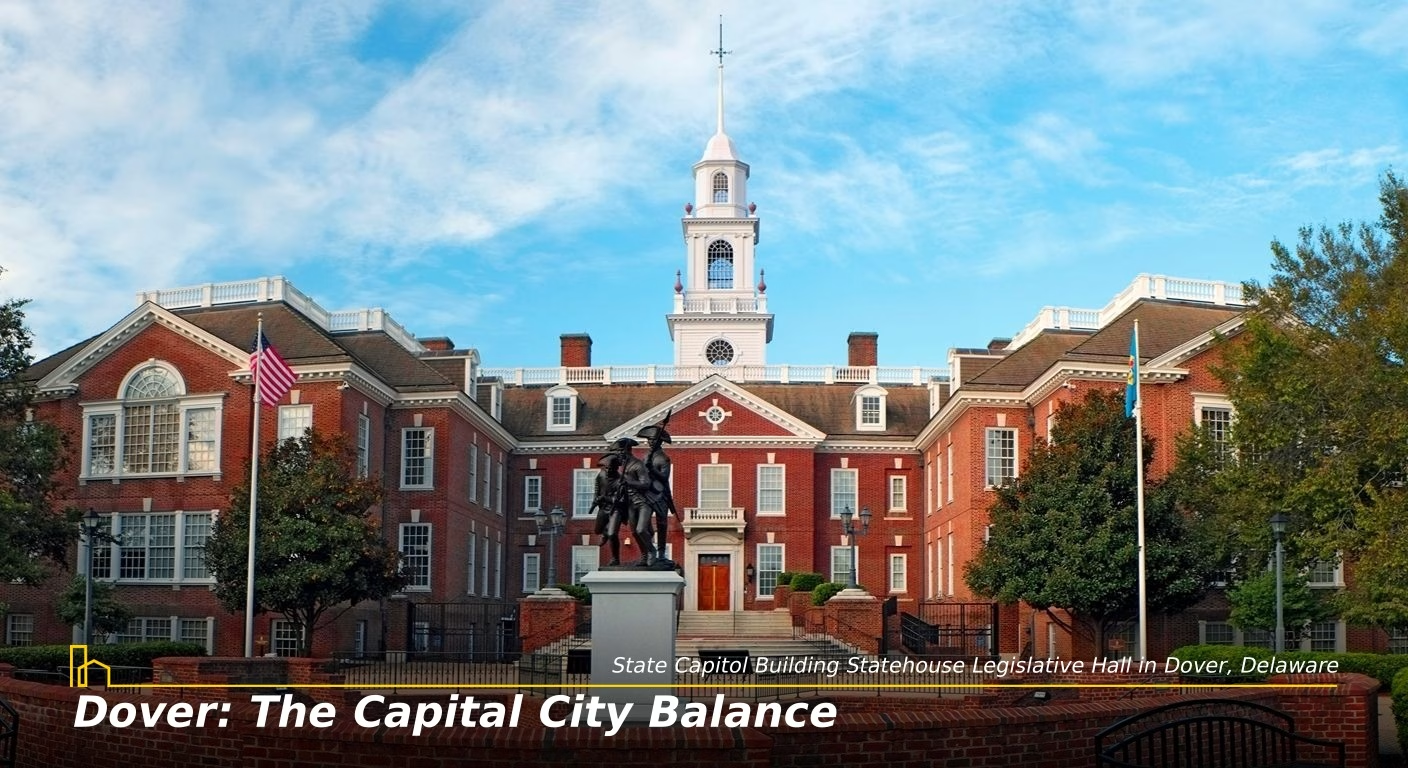
7. Dover: The Capital City Balance
HOMEiA Score: 87/100
- Cost of Living: Slightly below to near the U.S. average
- Monthly Rent: Around $1,600 to $1,690 for a 2‑bedroom apartment
- Home price to income ratio: About 5.0:1 to 5.7:1
- Income to rent ratio: About 34.5x to 36.5x
- Safety rating: 65/100
HOMEiA Score: 87/100
Cost of Living: Slightly below to near the U.S. average
- Monthly Rent: Around $1,600 to $1,690 for a 2‑bedroom apartment
- Home price to income ratio: About 5.0:1 to 5.7:1
- Income to rent ratio: About 34.5x to 36.5x
- Safety rating: 65/100
A. Cost of Living & Housing: Dover offers one of the more practical balances in Delaware for people who want city amenities without Wilmington‑area pricing. Housing has risen, despite remaining more approachable than in many New Castle County markets, especially for buyers open to older homes or townhouses.
B. Economy & Job Market: State government, Dover Air Force Base, healthcare, education, and service industries all bolster the local job market. That steady employment base helps support housing and keeps demand relatively stable.
C. Access & Infrastructure: Dover is well connected by US‑13 and Route 1. Residents have convenient access to shopping, healthcare, events, and state services, which makes it one of the few full‑service cities in Delaware that still feels reasonably priced.
D. Quality of Life & Culture: Here blends capital‑city formality with central Delaware practicality. Historic districts, local festivals, motorsports, and proximity to both the bay and the beaches give it broader appeal than many people expect.
For those considering other affordable options, you might explore the cheapest places to live in Massachusetts.

Related article
7 Most Affordable Places to Live in Maryland
Maryland may be known for its high housing costs, but affordable opportunities still exist beyond the Baltimore and Washington, D.C., metro areas. Smaller towns and revitalizing communities offer lower home prices, manageable living expenses, and access to essential services. This guide highlights seven Maryland communities that provide the best balance of affordability, employment, healthcare, and overall quality of life for budget-conscious homebuyers and renters…
III. A Relocation Checklist for Your Delaware Home
Budget for the True Cost: Delaware’s property taxes are low by regional standards but still vary by county, with New Castle generally highest and Sussex lowest. Transportation, insurance, utilities, and commuting can quickly change the math, especially for households that drive long distances.
Secure Employment First: Northern Delaware hosts the deepest job market, while central and southern areas can be more limited outside government, healthcare, education, agriculture, and tourism‑linked work. Lining up work before a move is especially important if you are heading inland mainly for lower housing costs.
Visit in Person: Communities can feel very different despite being close together. Visit your short list in person to see neighborhoods, traffic patterns, and local amenities, and to confirm that the price point matches the everyday experience.
Consider Seasonal Factors: Coastal Sussex County runs on a different rhythm than inland Delaware. Summer traffic, service demand, and pricing can all shift, even if you live a bit west of the main resort strip.
Research School Districts: School quality varies significantly between districts and individual schools. If you have children or plan to, research specific schools and catchment areas rather than relying only on district averages.
Conclusion: Your Affordable Delaware Future Awaits
From Dover and Milford to Seaford and Georgetown, Delaware still has places where housing costs make more sense than many outsiders expect, even with a tighter market. Affordability in 2026 is highly local. Middletown and Newark offer value mostly through schools, access, and income potential, while Seaford, Milford, Georgetown, and Dover still do more of the heavy lifting on housing affordability. If you match the town to the lifestyle you actually want, Delaware can remain a smart place to put down roots. For those considering a different region, you might also explore the most affordable places to live in Virginia.
Recommended for you




FAQs About the Most Affordable Places to Live in Delaware
1. Is it possible to find a home under $250,000 in Delaware?
Yes, but it is now more realistic in Seaford, parts of Milford, and select older housing pockets than in Middletown or much of the Georgetown market. Buyers with budgets sub $250,000 should expect older homes, smaller footprints, or properties needing updates.
Transportation is a significant hidden cost, especially if your job, school, or healthcare routine requires frequent drives. Property taxes are comparatively low, but county differences, insurance, utilities, and commuting can quickly add up.
3. Are these communities good for remote workers?
Generally yes. Newark and Wilmington offer reliable broadband and access to coworking‑style amenities. Dover, Milford, and Middletown are also workable for most remote setups, while more rural pockets outside town centers still deserve an address‑by‑address internet check.
4. What is the tax situation like in Delaware?
Delaware remains tax‑friendly in several important ways. There is no state or local sales tax, property taxes are relatively low compared with nearby states, and Social Security benefits are not taxed at the state level. Doing so helps keep the state attractive for retirees as well as working households.
5. How do I choose between these cities?
Prioritize your needs.
- For Jobs: Wilmington, Newark, and Dover provide the strongest employment bases.
- For Lowest Cost: Seaford, Milford, and parts of Georgetown usually stretch a budget furthest.
- For Families: Middletown and Newark stand out for education, amenities, and everyday convenience, while Dover remains a steady middle‑ground option.
- For Retirees: Milford and Dover often make sense for value, services, and a manageable pace.
- For Beach Access: Milford and Georgetown provide more realistic year‑round value than the resort towns themselves.
- For Urban Living: Wilmington holds the most authentic true city experience in Delaware.
Always research specific neighborhoods within these cities, since conditions can change street by street even in a small state.
Share