






Is It Cheaper to Rent or Buy Right Now?
- Local Editor:Local Editor: The HOMEiA Team
- Category: USA , Cost of Living



Is it cheaper to rent or buy: Buying a home was long considered the pinnacle of financial decisions over renting. The logic was simple. Why pay a landlord when you could build equity. Today, that assumption is no longer automatic.
With starter home prices near record highs and mortgage rates around the low 6 percent range, homeownership has become a complex calculation rather than a default rule of thumb. In most developed U.S. metros, renting these homes still costs less on a monthly basis, but equity building and appreciation can narrow that gap.
This article shows why the rent‑versus‑buy answer is a local, time‑horizon decision, not a universal rule.
Key Takeaways
- Renting costs less monthly in most major metros, but buying builds equity through principal reduction that narrows the true cost gap over time.
- The five to seven year rule still holds. It’s best to stay in a home for at least five years for buying to outperform renting financially after transaction costs.
- Location is decisive. Buying is more affordable than renting in a majority of counties analyzed, especially in the Midwest and South, while renting remains cheaper in most Western counties.
- Hidden costs matter. Maintenance, closing costs, property taxes, insurance, and association fees can erase apparent monthly savings if they are not accounted for.
- The opportunity cost of your down payment is real. An 80,000 dollar down payment could earn market returns elsewhere instead of sitting in home equity.

Related article
Rent vs. Buy Calculator Guide: 2026 Edition
Choosing between renting and buying involves far more than comparing a monthly mortgage payment with rent. Rising home prices, mortgage rates, property taxes, insurance, maintenance costs, and the opportunity cost of a down payment all influence the true financial picture. This guide compares the real cost of renting versus buying across states and cities…
1. The 2026 National Snapshot: Cash Flow vs Total Cost
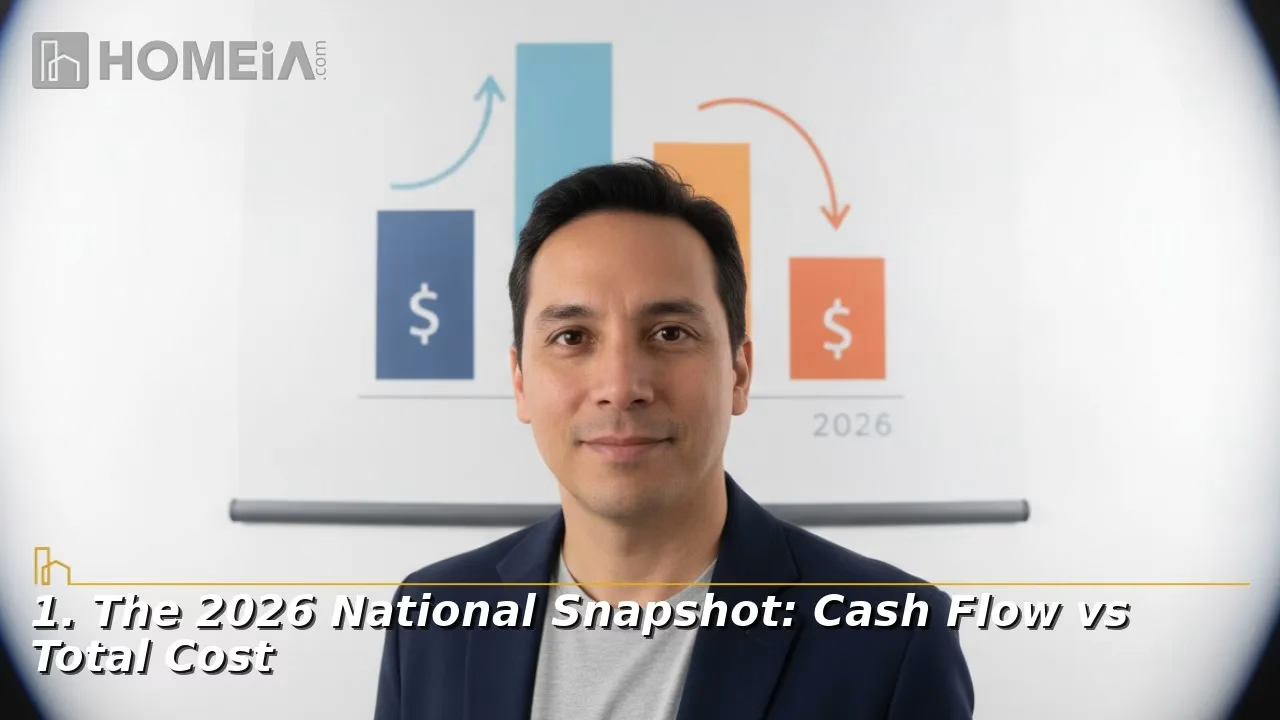
On a pure monthly cash flow basis across the 50 most expansive metros, recent analyses show that buying a starter home generally costs meaningfully more per month than renting.
One 2026 dataset found monthly rent around 1,670 dollars with the average monthly cost of buying a starter home around 2,589 dollars, a difference of roughly 920 dollars. This aligns with other reports showing buying in large metros is about 55 to 60 percent more expensive monthly than renting.
A. The Monthly Numbers
Median asking rent in the largest metros currently sits in the 1,670 to 1,900 dollar range. The median monthly cost to buy a starter home, including principal and interest on a 30 year fixed mortgage plus property taxes and homeowners insurance, often runs between 2,500 and 3,500 dollars depending on the metro.
That is a significant cash flow disadvantage for buyers, which is why renting appears cheaper when households compare monthly payments.
B. Why the Gap Is Shrinking
Mortgage rates have moderated from their 2023 and 2024 peaks above 7 percent to around the 6.0 to 6.3 percent range for many in 2026. This reduction lowers borrowing costs and has brought the cost of buying down relative to earlier years. Rents in several large metros have flattened or declined slightly, but the pace of change is slower than the shift in borrowing costs.
As a result, monthly gaps between renting and buying has started to narrow. In some mid priced markets, the crossover point where buying becomes competitive on monthly cost is imminent.
C. The Effective Cost Nuance
While buying has higher monthly out of pocket costs, part of each mortgage payment goes toward principal. This is forced equity building. For example, on a 2,800 dollar total monthly payment, perhaps 500 to 700 dollars is principal reduction in the early years, gradually increasing as time passes.
Rent, by contrast, includes no equity recovery. When you adjust for principal paydown and reasonable home appreciation, the effective cost of buying can sit closer to the cost of renting than the headline monthly payment suggests, especially over longer time horizons.
Table 1. Renting vs Buying, Typical Starter Scenario
| Metric | Renting | Buying (starter home) |
| Median monthly outlay | 1,670–1,900 dollars | 2,500–3,500 dollars |
| Equity built | 0 dollars | About 500–700 dollars per month in early years |
| Effective cost after equity | 1,670–1,900 dollars | Approximately 2,000–2,800 dollars |
| Typical 30 year fixed rate | Not applicable | Around 6.0–6.3 percent |
Related article
Total Cost of Relocating: Moving Budget Checklist
The cost of a long-distance move extends well beyond the moving company’s invoice. In addition to transportation, households should budget for security deposits, utility connection fees, temporary accommodation, vehicle registration, travel expenses, and the living costs of settling into a new location. This guide breaks down the full financial picture…
2. The Regional Divide: Location Is Everything
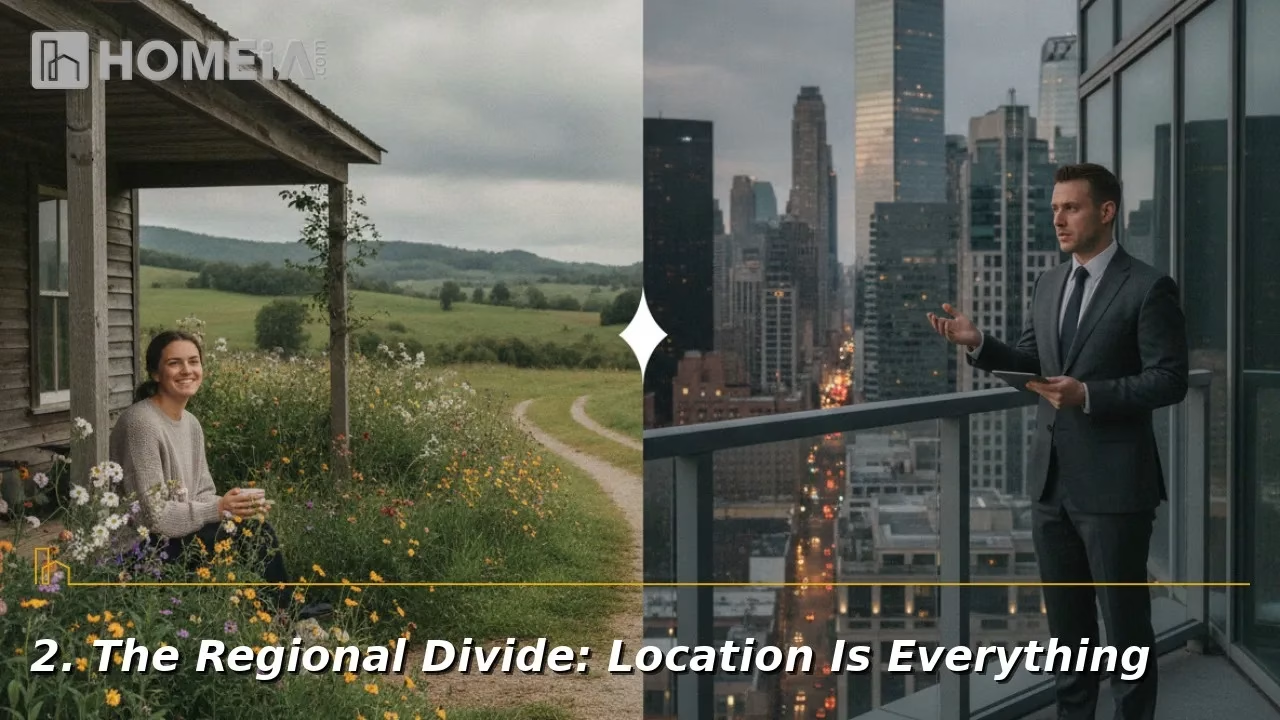
National averages hide dramatic geographic differences. Recent rental affordability reports highlight that owning a home is more affordable than renting in a majority of counties analyzed, especially in the Midwest and South, while renting remains more affordable in most Western and many Northeastern counties.
Midwest counties appear to show that buying is more affordable than renting for more than 80 percent of cases. Southern counties also favor homeownership in roughly two thirds of the markets studied.
In the West, buying is the better option in only about one sixth of counties, meaning renting has the advantage in the large majority of Western locations. The Northeast sits near parity, with buying more affordable in just under half of counties.
Table 2. Regional Rent vs Buy Patterns
| Region / Market type | Dominant advantage | Reason |
| West Coast and high cost metros, San Jose, San Francisco, Los Angeles, Seattle | Renting wins, often by hundreds or thousands per month | Very high price to rent ratios make mortgage payments far larger than local rents |
| Midwest and Rust Belt, Chicago, Cleveland, Detroit, Pittsburgh | Buying wins or near parity, sometimes with lower ownership outlay | Moderate prices allow mortgage payments to compete with or beat local rents |
| South and Sun Belt, Memphis, Orlando, San Antonio, Tampa | Mixed, many metros near parity | Rapid growth and new construction produce markets where buying is cheaper and others where renting still holds an edge |
In San Jose, for example, mortgage payments can be several thousand dollars higher than median rent for a comparable property, making renting substantially cheaper on monthly cost. In Chicago or Pittsburgh, by contrast, some analyses suggest mortgage principal and interest payments that are lower than local rents for comparable homes, meaning owners can simultaneously pay less monthly and build equity.
Sun Belt markets like Orlando, Tampa, and San Antonio sit between these extremes. Population growth has pushed home prices up, but new construction has added supply. In some of these metros, buying already beats renting on a monthly cost. In others, the rent versus buy crossover remains a few years away.
Recommended for you




3. The Unseen Costs: What Most Calculations Miss
Most simple rent versus buy comparisons ignore key hidden costs on both sides of the ledger. Renters face renewal risk and pass through costs when taxes and insurance rise. Owners face maintenance, property tax increases, homeowners association fees, and closing costs that can take years to recover.
A. For Renters
- Rent inflation risk. Rents are flexible in the short term but may rise at renewal. A 5 to 10 percent annual increase can quickly erode the initial savings from renting.
- Pass through costs. Landlords often pass rising property taxes and insurance premiums into rent increases over time. When owner costs go up, tenants pay more in subsequent leases.
B. For Buyers, the PITI Plus Factor
- Maintenance rule. Many advisors suggest setting aside at least 1 percent of home value annually for maintenance and repairs, and some recommend up to 2 percent. On a 350,000 dollar home, this implies 3,500 to 7,000 dollars per year that renters do not pay directly.
- Escrow creep. Property taxes and homeowners insurance increase over time. When they are escrowed, total mortgage payments rise even if the interest rate and principal schedule are fixed.
- HOA fees and closing costs. Upfront closing costs commonly range from 2 to 5 percent of the purchase price. On a 350,000 dollar home, that is about 7,000 to 17,500 dollars. It takes several years of equity building and appreciation to recover this.
- Major repairs. Roof replacement can cost 10,000 to 20,000 dollars. HVAC replacement often falls in the 5,000 to 10,000 dollar range. These are owner responsibilities that renters avoid.
These location-bound ownership costs are precisely the categories that shift most after a move; this breakdown of housing versus groceries costs explains which budget categories actually change and which stay close to national pricing.

Related article
Stuck With a Rent You Cannot Afford: Five Moves That Help
For many renters, the traditional recommendation of spending no more than 30% of income on housing is no longer realistic. Rising rents, taxes, and everyday living expenses have left millions of households financially stretched, with housing consuming a substantial share of their take-home pay. If your rent has become unaffordable, you may still have options…
4. Time Horizon and Opportunity Cost: The Five to Seven Year Rule

Since buying involves upfront costs and mortgages are interest heavy in the early years, the financial advantages of ownership appear only over multi year horizons. Five to seven year stays are a common benchmark for when purchasing begins to outperform renting, assuming stable prices and normal appreciation.
A. The break even timeline reflects several factors. Closing costs and early interest mean that owners build limited net equity in the first few years. If a homeowner sells after three years, transaction costs. notably commissions, transfer taxes, and moving expenses, can absorb much of the equity built. Staying five to seven years allows more principal reduction and appreciation to accumulate relative to costs.
B. The opportunity cost of a down payment is also an important consideration. Placing 80,000 dollars into home equity ties up capital that could otherwise be invested. At historical equity market returns of about 7 to 10 percent annually, 80,000 dollars could grow to roughly 112,000 to 129,000 dollars over five years. Standard home appreciation runs closer to 2 to 4 percent per year nationally, though local markets vary. The difference between potential investment returns and home appreciation is a real opportunity cost, even though home equity also carries benefits such as stability and potential tax advantages.
Table 3. Down Payment Opportunity Cost vs Home Appreciation
| Scenario | Five year outcome |
| 80,000 dollars invested at 7–10 percent return | About 112,000–129,000 dollars |
| 80,000 dollars used as home down payment | Equity growth from 2–4 percent annual appreciation plus principal paydown, depending on local market |

Related article
Should You Move for Lower Housing Costs or Stay for Higher Income?
A higher salary does not always translate into greater financial security. While major metropolitan areas often offer larger paychecks, higher housing costs and everyday expenses can significantly reduce purchasing power…
5. Decision Matrix: Should You Rent or Buy?
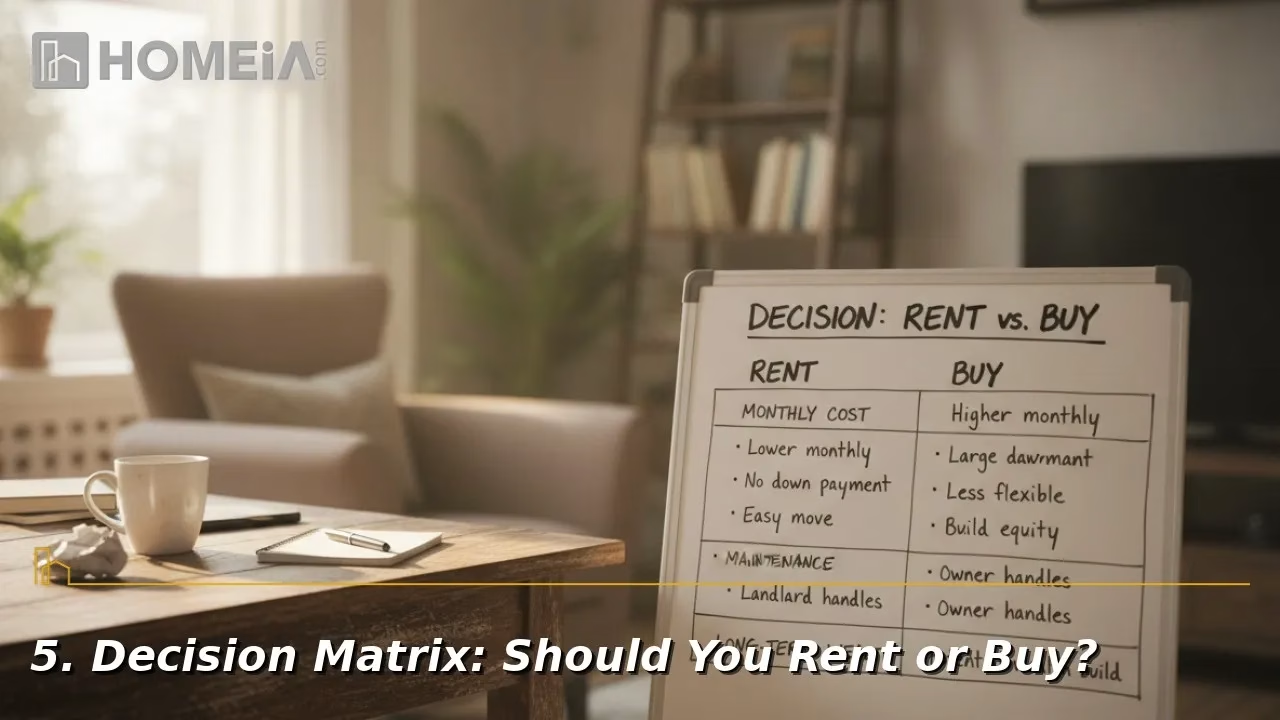
A. You Should Rent Right Now If:
- You expect to move or change jobs within the next three to five years.
- You live in a high cost coastal or Western metro where a mortgage payment is dramatically higher than rent.
- You would deplete your emergency savings to fund a down payment and closing costs, leaving less than three to six months of expenses in cash.
- You value flexibility and prefer to avoid responsibility for major repairs and maintenance.
B. You Should Buy Right Now If:
- You plan to stay in your home and community for at least five years.
- You live in a Midwest or Southern market where local price to rent ratios favor owners and ownership costs consume a smaller share of wages than rent.
- You want predictable long term housing costs via a fixed rate mortgage and benefit from forced savings through principal reduction.
- You have stable income, a solid emergency fund, and enough for a reasonable down payment plus closing costs.
Table 4. Rent vs Buy Decision Matrix
| Profile | Better choice now | Key reasons |
| Short term mover, next 3–5 years | Rent | Avoid transaction costs and equity risk |
| High cost coastal metro tenant | Rent | Mortgage payments far higher than rent |
| Midwestern long term resident | Buy | Ownership often cheaper and builds equity |
| Sun Belt buyer with stable job | Depends on local data | Some markets favor buying, others renting |
Conclusion and Actionable Next Steps
National headlines believing renting is cheaper do not capture the full picture. Renting often provides better short term cash flow flexibility and lower upfront costs, while buying remains a powerful wealth building tool in the right markets and over the right time horizon. The decision is less about which option is universally better and more about which aligns with your location, your expected stay duration, and your risk tolerance.
Ready to run your own rent-versus-buy comparison? Explore HOMEiA’s city-by-city housing cost data and connect with vetted local real estate professionals to find the right path for your financial future.
Recommended for you




FAQs About Is It Cheaper to Rent or Buy Right Now?
1. Is renting really cheaper than buying right now?
On a monthly cash flow basis in many booming metros, renting is still cheaper than buying. Analyses of the top 50 metros show renting a starter home can cost hundreds of dollars less per month than owning one. However, buying builds equity through principal reduction and may benefit from appreciation. When you factor these elements in, the effective long term cost gap becomes narrower, and in some mid priced markets ownership can be competitive or even cheaper.
2. How long do I need to stay in a home for buying to beat renting?
The common guideline is five to seven years. Closing costs and interest heavy early mortgage years mean owners build meaningful equity only after several years. If you sell sooner, transaction costs can offset much of the equity gained. Your break even point depends on appreciation, taxes, and your local market.
Maintenance is one of the biggest ongoing costs buyers underestimate. Using the 1 percent rule, a 350,000 dollar home implies about 3,500 dollars per year in maintenance alone. Larger repairs including roof or HVAC replacement can cost 10,000 dollars or more unexpectedly. These obligations can materially change the rent versus buy equation if not planned for.
4. What role does location play in whether renting or buying is cheaper?
Location is a significant driver of the rent versus buy decision because price to rent ratios vary widely by region. In many Midwest and Southern counties, owning is more affordable than renting, while renting tends to be cheaper in most Western and some Northeastern markets.
5. How should I factor my time horizon into the rent versus buy decision?
Due to high upfront costs and interest heavy early mortgage years, buying usually only makes financial sense if you plan to stay put for at least five to seven years. If you expect to move sooner, transaction costs and limited equity buildup often make renting the safer, more flexible choice.
Share