






Rent Burden in America: Why Nearly Half of Renters Are Stretched
- Local Editor:Local Editor: The HOMEiA Team
- Category: Cost of Living


Rent Burden in America: Traditionally, the thought is that housing should not exceed 30 percent of income. Today, that benchmark feels like an ancient relic of simpler times. In 2024, 22.7 million American renter households, roughly 49 percent of all renters, spent more than 30 percent of their income on rent and utilities, according to Harvard’s Joint Center for Housing Studies.
Of those, 12.1 million were severely cost burdened, paying over half their income for housing and middle income renters earning 45,000 to 75,000 dollars are increasingly affected as supply shortages and high homeownership barriers trap them in the rental market.
This article examines how rent burden reshapes household budgets and what it means for renters across every income tier today.
Key Takeaways
- Nearly half of U.S. renters are cost burdened. 22.7 million households spent over 30 percent of income on housing in 2024, a record high for the fourth consecutive year.
- Rent growth has outpaced income growth in recent years. Between 2019 and 2024, renters’ median housing costs rose about 38 percent while incomes rose about 28 percent.
- The low cost rental stock is vanishing. Between 2012 and 2022, the U.S. lost roughly 2.1 million units renting for under 600 dollars after adjusting for inflation.
- Middle income renters are a fast growing burdened group. Over 49 percent of those earning 45,000 to 74,999 dollars are now cost burdened, up significantly since 2001.
- Low income renters face severe strain. Households earning under 30,000 dollars have only a small amount left each month after paying rent, a marked decline from two decades ago.

Related article
Property Taxes by State: The Hidden Cost of Living Increase
Property taxes are one of the most overlooked costs of homeownership, yet they can have a significant impact on your long-term housing budget. While buyers often focus on home prices and mortgage rates, annual property tax bills can add thousands of dollars to the true cost of owning a home.
1. The Numbers Behind the Strain

The gap between rent and income has increased over six decades. Since 1960, inflation adjusted median rent has outpaced median renter income. This decoupling means people today are stretched thinner relative to income than in previous generations.
The historical data is stark. In 1960, the median renter household spent less than a fifth of its income on rent. Today, that person spends around 31 percent of income on rent and utilities, up from about 29 percent in 2019 and 27 percent in 2001. This trend accelerated after the pandemic, with median housing costs climbing roughly 38 percent between 2019 and 2024 while incomes rose about 28 percent over the same period.
A. Income Tiers Hardest Hit
| Income Bracket | Cost Burden Rate | Additional Detail |
| Under 30,000 dollars | Over 80 percent cost burdened; nearly 70 percent severely cost burdened | Median residual income after rent has declined sharply since 2001 |
| 30,000 to 44,999 dollars | 72 percent cost burdened in 2024 | Up several percentage points since 2019 |
| 45,000 to 74,999 dollars | Just over 49 percent cost burdened | Up substantially since 2001 and further since the start of the pandemic |
Cost burdens have risen across most states and a large majority of the 100 largest metro areas between 2019 and 2024. Some of the highest rates are found in Florida markets such as Miami, Orlando, and Tampa, along with Las Vegas. Rent burden is no longer a coastal problem alone. It has become an epidemic sweeping the nation. For households planning a move to reduce housing costs, this breakdown of which costs actually change after a move explains why housing drives most relocation savings while groceries barely budge.

Related article
Is It Cheaper to Rent or Buy Right Now?
The decision to rent or buy a home is no longer as straightforward as it once was. Rising home prices, higher mortgage rates, and changing market conditions mean the better financial choice depends on factors such as location, expected length of stay, and personal finances…
2. Why Is Renting So Expensive?
Several structural forces drive the rental affordability crisis. These include a housing supply deficit following the 2008 downturn, loss of low cost rental units since 2012, high homeownership barriers keeping renters in the rental pool, and rent levels remaining elevated even as growth slows.
A. The Supply Deficit and Zoning Barriers
Years of underbuilding following the 2008 housing collapse created a structural shortage of homes. Multifamily construction has remained meaningful by historical standards but below the peak levels seen in 2022. Construction material costs rose sharply between 2020 and 2025, far outpacing the growth seen in the prior five year period.
Restrictive local zoning, including single family zoning, parking minimums, and lengthy permitting processes, limits multifamily construction in many high demand areas.
B. Evaporation of Low Cost Housing
Between 2012 and 2022, the country lost roughly 2.1 million units renting for under 600 dollars after adjusting for inflation. The share of units with contract rents below 600 dollars fell from about 22 percent of the rental stock in 2012 to about 16 percent in 2022.
Meanwhile, shares of units renting for 1,400 dollars or more roughly doubled over the same period. Developers have increasingly focused new construction on higher end apartments to recoup elevated land, labor, and financing costs, leaving fewer options for low and middle income renters.
C. High Homeownership Barriers
High mortgage rates and elevated home prices have kept many potential first-time buyers in the rental pool longer than in previous cycles. Renter household growth accelerated in 2024 as affordability challenges kept more households from buying.
This sustained rental demand has absorbed new multifamily supply, keeping prices elevated even as construction increased.
D. Inflation and Lagging Residual Wages
Even as headline inflation cooled, rent levels remained sticky at elevated plateaus. Asking rents were only modestly lower year over year in late 2025. Slower rent growth does not translate to frugal fares. It means prices are rising less quickly from an already high base.
As JCHS managing director Chris Herbert has noted, headline numbers showing flat or falling rents can be misleading, because for many renters, especially those with lower and moderate incomes, housing remains deeply unaffordable.
Recommended for you




3. The Human and Economic Fallout

When 40 to 50 percent of a paycheck goes to shelter, households are often forced to cut healthcare, groceries, and retirement savings. Rent burden can lock families out of homeownership equity and is associated with higher rates of eviction and housing instability.
A. The Residual Income Crunch
When housing consumes 40 percent or more of gross income, the money left for everything else shrinks dramatically. For households earning under 30,000 dollars, median renters have next to nothing each month after paying rent and utilities. As food, healthcare, and transportation costs continue to rise, these families face difficult trade offs between essentials. Renters weighing a move to escape these pressures can use this analysis of geography as a cost-of-living lever to see how much purchasing power shifts across states and metros.
B. Inability to Build Wealth
Housing is a primary engine of wealth building in the United States. Prolonged rent burden can lock households out of homeownership equity, since saving for a down payment becomes far more difficult when a large share of income goes toward rent. This creates a vicious cycle in which rent burden limits saving, stalling the path to ownership, ultimately perpetuating the burden.
C. Rising Evictions and Housing Instability
Severe cost burdens are associated with higher eviction filings and housing instability nationwide. More than 12 million renter households are severely cost burdened, spending over half their income on housing, leaving many one missed paycheck or unexpected expense away from a housing crisis.

Related article
Should You Move for Lower Housing Costs or Stay for Higher Income?
A higher salary does not always translate into greater financial security. While major metropolitan areas often offer larger paychecks, higher housing costs and everyday expenses can significantly reduce purchasing power…
4. Why Safety Nets Are Not Keeping Pace
Federal rental assistance is not a guaranteed entitlement. Due to funding limits, roughly one in four eligible households receives Housing Choice Vouchers. Even with a voucher, source of income discrimination and administrative hurdles can prevent people from securing units before vouchers expire.
The National Low Income Housing Coalition reports a shortage of about 7.1 million affordable and available rental homes for extremely low income tenants nationwide, with only about 35 affordable and available units for every 100 extremely low income households. This shortage leaves roughly 87 percent of extremely low income renters cost burdened and about 75 percent severely cost burdened.
Recent federal policy changes, including funding adjustments affecting SNAP and Medicaid, have added further pressure on many households already stretched thin.

Related article
Stuck With a Rent You Cannot Afford: Five Moves That Help
For many renters, the traditional recommendation of spending no more than 30% of income on housing is no longer realistic. Rising rents, taxes, and everyday living expenses have left millions of households financially stretched, with housing consuming a substantial share of their take-home pay. If your rent has become unaffordable, you may still have options…
5. How Do We Fix the Rental Crisis?
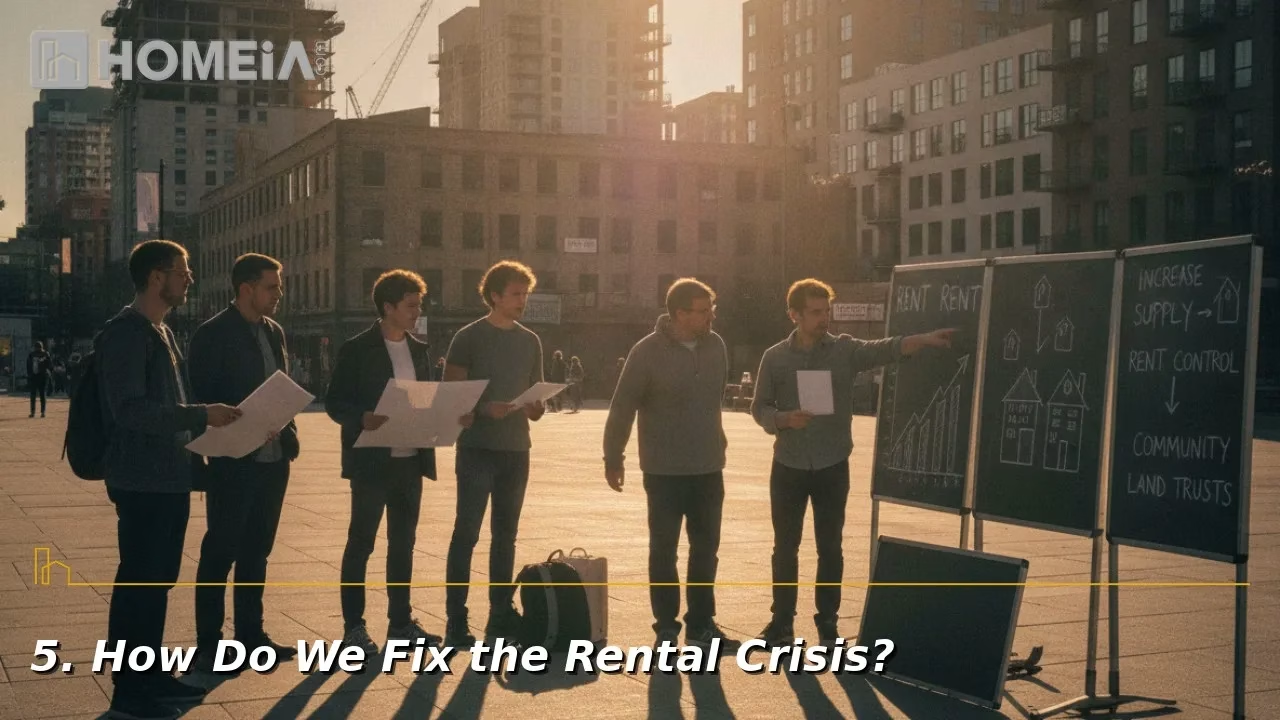
Addressing the rental crisis requires action at multiple levels. Local zoning reform to enable denser construction, state and federal expansion of housing vouchers and tax credits, and stronger tenant protections.
| Level | Policy and Structural Action |
| Local and municipal | Reform restrictive zoning, eliminate parking minimums, speed up permit approvals for dense and missing middle housing |
| State and federal | Expand Low Income Housing Tax Credits, fund Housing Choice Vouchers, support community land trust models, increase affordable housing production funding |
| Market and consumer | Support tenant protections such as transparent fee disclosures and just cause eviction standards, expand middle income workforce housing initiatives |
Harvard’s Joint Center for Housing Studies emphasizes that affordability challenges are structural, driven by a mismatch between rents and renter incomes, continued loss of lower cost rental units, and chronic underfunding of federal rental assistance. For renters considering a geographic solution, this comparison of moving states versus moving countries breaks down which path delivers more savings by income type.
Coordinated policy and funding actions across government and market participants are essential to addressing the housing challenges renters face.
Conclusion and Actionable Next Steps
The rental affordability crisis in America reflects a systemic mismatch between housing supply, rents, and incomes rather than individual budgeting failures. Nearly half of all renters are stretched beyond the traditional 30 percent threshold, and the pattern is worsening across most income tiers.
Meaningful zoning reform, expanded affordable housing production, and increased federal rental assistance would help ease pressure on renter households, though progress has been gradual.
Ready to evaluate your housing options? Explore HOMEiA’s city-by-city housing cost comparisons and connect with vetted local real estate professionals to find a market that fits your budget.
Recommended for you




FAQs About Rent Burden in America: Why Nearly Half of Renters Are Stretched
1. What percentage of American renters are cost burdened?
In 2024, 49 percent of U.S. renter households, or 22.7 million, were cost burdened, spending more than 30 percent of their income on rent and utilities. Of these, 12.1 million, roughly 53 percent of all cost burdened renters, were severely cost burdened, paying over half their income for housing.
2. How much has rent increased compared to wages?
Between 2019 and 2024, renters’ median housing costs rose roughly 38 percent while median renter income rose about 28 percent. Over a longer horizon, prices have generally outpaced income growth, contributing to worsening affordability across income tiers.
3. Why are middle income renters now struggling?
Cost burdens are increasingly climbing the income scale. Among renters earning 45,000 to 74,999 dollars, over 49 percent are now cost burdened, a substantial increase since 2001. This reflects a loss of low cost rental units, rising construction costs pushing up rents across tiers, and homeownership barriers keeping potential buyers in the rental pool.
4. What are the consequences of being rent burdened?
When households spend more than 30 percent of their income on rent, they often have to cut back on essentials like food, healthcare, and transportation, increasing financial stress and instability. For severely cost burdened those paying over half their income toward housing, a single missed paycheck or unexpected expense can trigger eviction and housing insecurity.
5. What policy changes could help reduce rent burden?
Reducing rent burden will require a mix of local zoning reform to allow more multifamily and missing middle housing, expanded production of affordable rentals, and stronger tenant protections. At the state and federal levels, increased funding for Housing Choice Vouchers and Low Income Housing Tax Credits, along with support for community land trusts and workforce housing, can make prices manageable for low and middle income renters.
Share