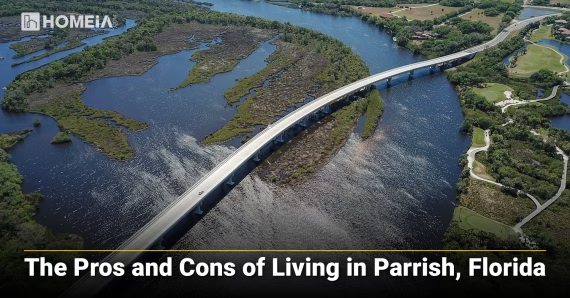







Roof Restoration: When It’s Worth It and When to Replace Instead
- Local Editor:Local Editor: The HOMEiA Team
- Category: Home Maintenance


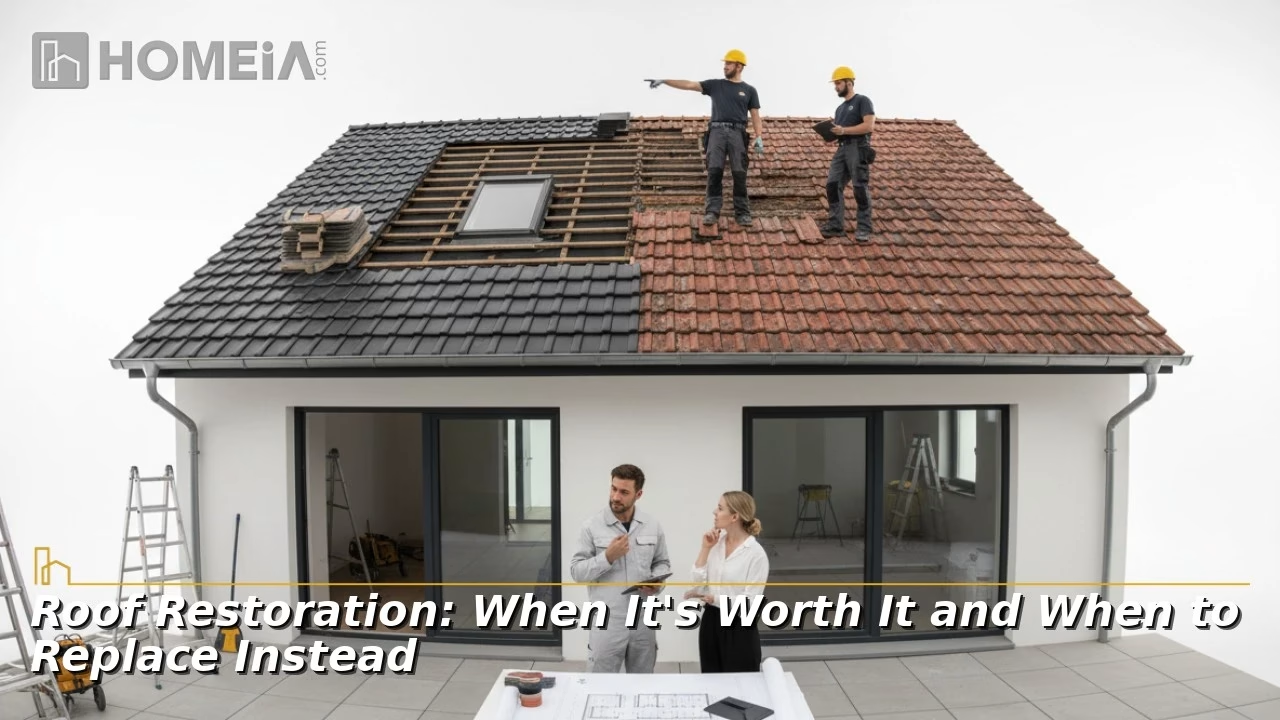
Roof Restoration: Residential roofing decisions represent some of the most expensive investments a property owner faces. Because costs are high, homeowners often seek alternatives to full replacement. However, confusion exists surrounding the distinction between basic repairs, comprehensive restoration, and complete replacement. Consumers mistake aesthetic coatings for true restoration, which is actually a systematic, engineered process designed to revitalize a structurally sound roofing system. This guide analyzes the technical, financial, and regulatory aspects of roof restoration to help property owners confidently determine the optimal path for their structures.
Key Takeaways
- Roof restoration is a proactive, system-wide rejuvenation saving property owners up to 70% of the cost of a complete roof replacement.
- Modern elastomeric coatings and plant-based rejuvenators can successfully extend roof lifespan by 5 to 20 years.
- Legally, a roof must have a dry, structurally sound decking substrate and fewer than two existing layers of material to qualify for restoration.
- Non-destructive moisture testing using infrared and electrical impedance is essential to ensure no water is trapped within insulation or sheathing.
- Always hire a licensed, manufacturer-certified roofing contractor to ensure valid, high-tier workmanship and material warranties that transfer to future owners.

Related article
What Type of Damage to a Roof Is Covered by Insurance?
Let’s take a closer look at what types of damage you can expect to have covered and a few tips in case you have to make a claim…
1. What Is Roof Restoration?
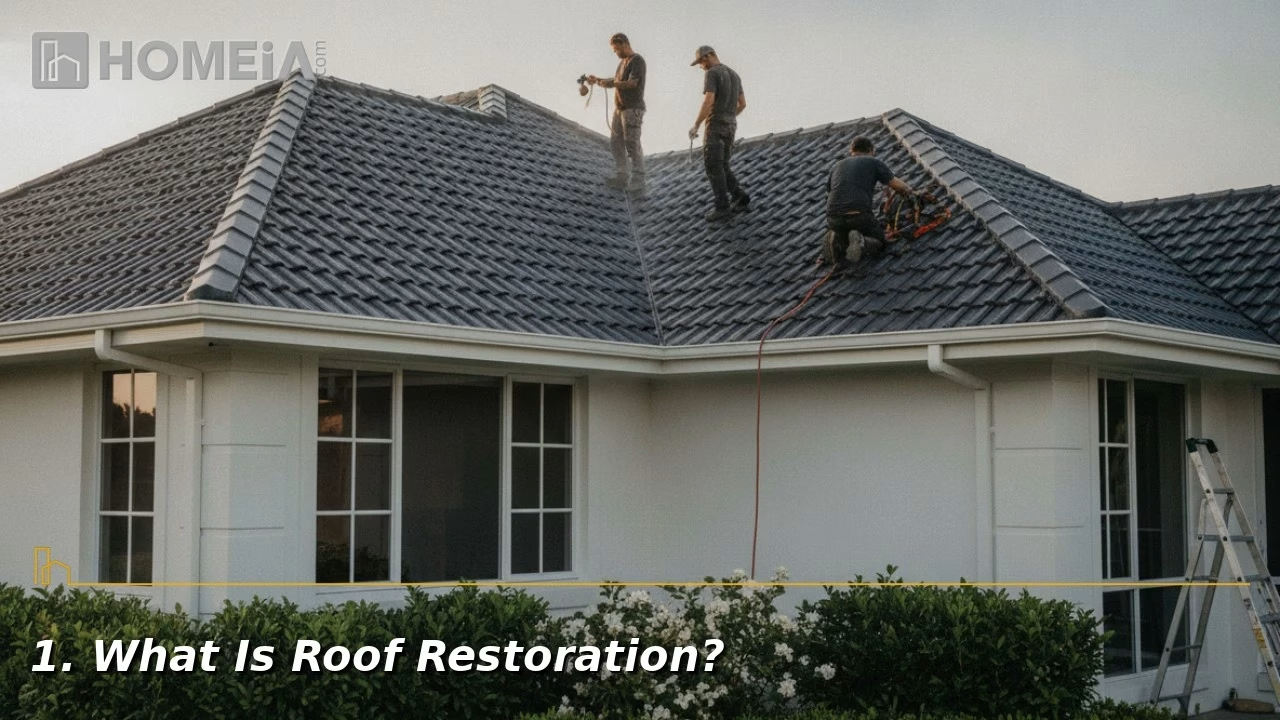
A localized roof repair is a reactive measure addressing isolated issues like sealing a leak around a chimney or replacing wind-damaged shingles. Generally, these cost $300 to $1,000 without addressing systemic aging. Roof restoration is a proactive, system-wide intervention designed to bring a structurally viable roof back to a clean, weather-tight, and highly maintainable standard. Rather than patching individual areas, restoration treats the entire surface through deep cleaning, reinforcing seams, upgrading perimeter flashing, and applying high-performance coatings or chemical rejuvenators.
Complete roof replacements are the most intensive option, requiring a full tear-off of all existing shingles, underlayment, and flashing down to bare wooden decking. Replacement is necessary when underlying structural sheathing is rotten or when the system is past its physical service life.
Restoration methods fall into two categories. These include liquid-applied roof coating systems for flat, low-slope, or metal roofs, utilizing fluid membranes that cure into seamless, self-flashing elastomeric barriers and asphalt shingle rejuvenation for pitched shingle roofs, using plant-based bio-oils to replenish volatile petrochemical binders. Compatible substrates include metal panels, single-ply membranes (TPO, PVC, EPDM), modified bitumen, concrete tiles, and asphalt shingles; however, natural slate, wood shakes, or severely degraded organic felt are not suitable candidates.

Related article
5 Common Types of Roof Repairs and The Pros & Cons of Repair vs Replace a Roof
When deciding between repair and roof replacement, consider your long-term objectives, budget, and the condition of your roof. Repairs might be quick and cheaper, but they can also result in recurring problems. On the other hand, replacement offers peace of mind and a long-term solution, but it also comes with a higher price.
2. Roof Restoration vs Roof Replacement
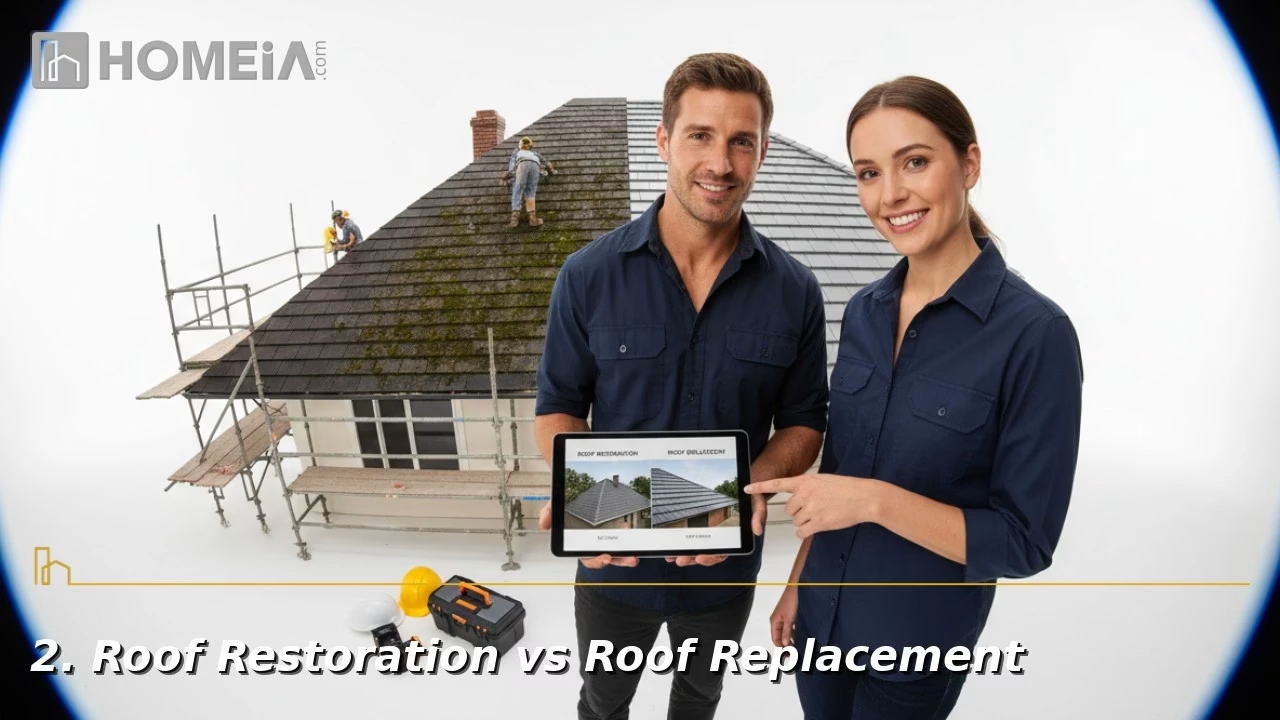
Roof restoration represents the superior investment when underlying structural decking is dry and sound, there exists a single layer of material, and deterioration is limited to surface weathering or minor leaks. In this scenario, owners secure equivalent weatherproofing performance at a fraction of replacement costs. A complete roof replacement is necessary when structural sheathing has rotted, water has saturated insulation, or the roof has multiple layers violating local building codes.
| Comparative Parameter | Roof Restoration | Roof Replacement |
| Average Cost | $2.00 to $10.00 per sq. ft. | $4.00 to $30.00+ per sq. ft. |
| Lifespan Impact | Adds 5 to 20 years | Resets system for 20 to 50+ years |
| Installation Time | Usually 1 to 2 days | Typically 1 to 3+ days |
| Site Disruption | Minimal: no heavy tear-off, dumpsters, or dust | High: significant noise, heavy waste, and yard debris |
| Primary Materials | Liquid acrylics, silicones, SEBS, or bio-oils | Decking sheets, underlayment, shingles |
| Warranties | 5 to 20 year material or NDL options | Up to 50 year non-prorated system protection |
| Maintenance | Annual visual inspections and debris clearing | Bi-annual inspections and clearing drainage valleys |
| Energy Efficiency | Extremely high: reflects up to 90% of solar heat | Variable: dependent on the reflectivity of shingles |
| Resale Value | Stabilizes value and prevents age-based discounting | Significantly enhances curb appeal and home value |
3. Signs Your Roof May Need Restoration
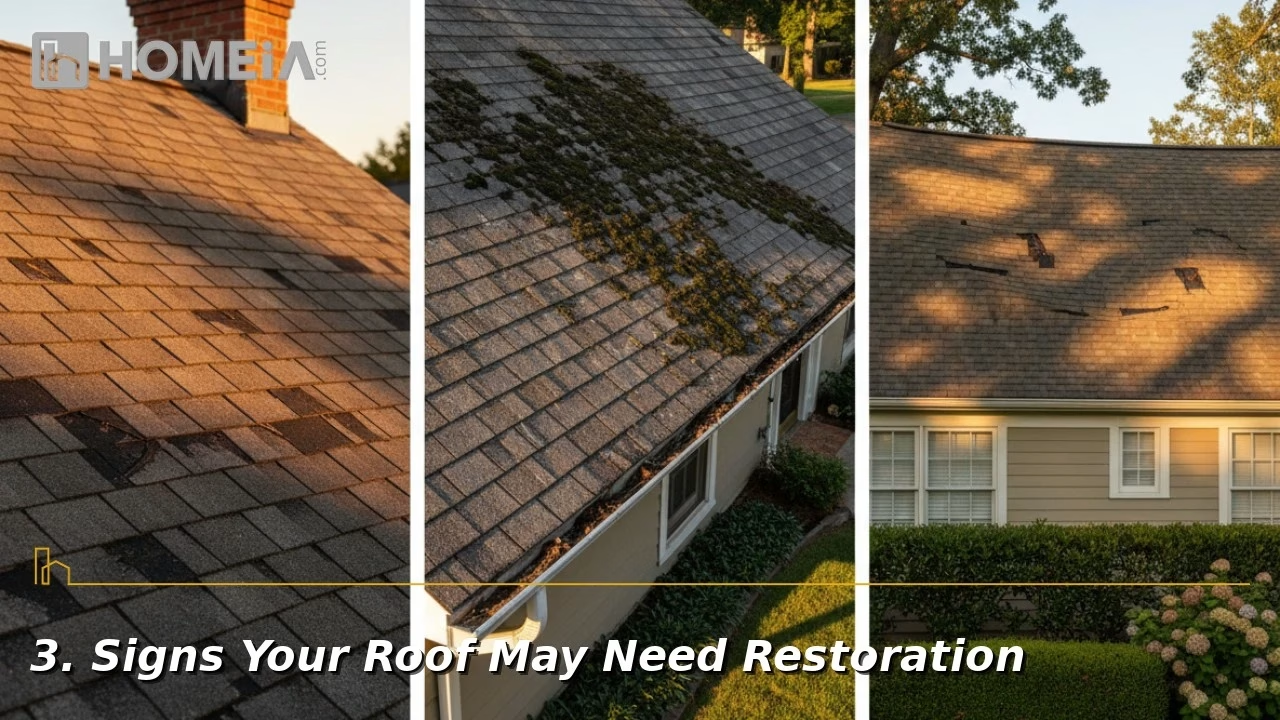
Common warning signs include aging shingles (8 to 15 years old becoming dry, brittle, and stiff), faded roofing indicating prolonged UV exposure, moss and algae growth holding moisture against the surface, cracked flashing around chimneys and vents, and small interior leaks suggesting sealant failure to name a few. If these signs begin appearing, consulting a roofing contractor in Noblesville can help determine whether the roof is still a strong candidate for restoration or if more extensive work may be necessary.
Restoration is appropriate when issues are limited to surface-level wear, minor granule loss, localized biological growth, or isolated perimeter leaks. However, if a roof exhibits structural sagging, soft or spongy decking, widespread internal leaks, or heavy storm damage, full replacement is necessary.
Recommended for you



4. When Roof Restoration Is Not Recommended
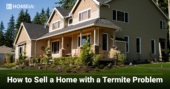
Roof restoration cannot resolve structural framework failures, rotten roof decking, or widespread moisture. When moisture penetrates the outer covering, it saturates underlayment and pools on wood sheathing, leading to rot and softening. Applying a non-breathable liquid coating over wet insulation traps moisture inside the building envelope, accelerating wood decay, promoting mold growth, and causing the coating to bubble and fail.
Building codes under IRC Section R908.3.1.1 strictly prohibit recovers if the existing roof already has two or more layers of roofing material. Roofs already undergone one recovery have reached the maximum legal limit and must be stripped to the bare deck before new materials can be installed. Adding a third layer creates excessive weight, potentially overloading residential framing and posing a structural hazard.

Related article
5 Easy Tips to Plan and Budget for a Roof Remodel
Remodeling or replacing a roof can cost a pretty penny. That’s one reason why you should start planning early for a remodel. But how can you go about budgeting for it? Here’re 5 tips on how to best prepare and plan financially for a roof remodel…
5. The Roof Restoration Process
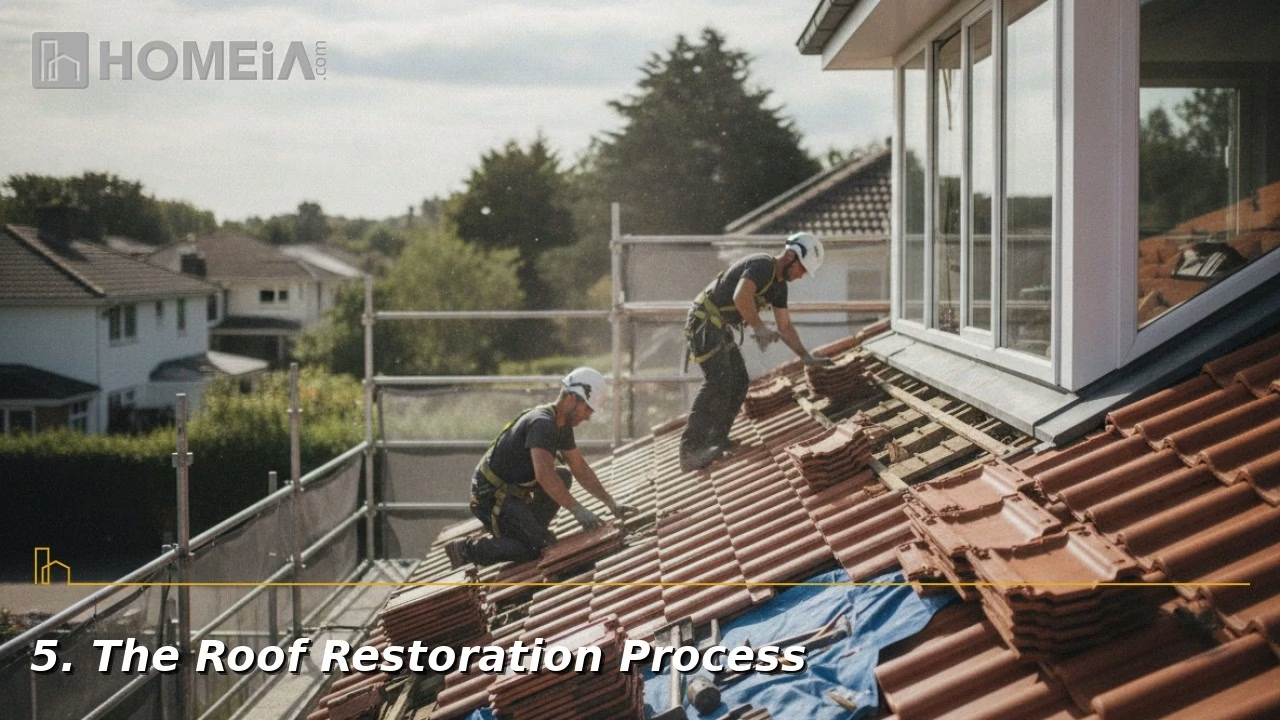
Step 1: Inspection. The contractor evaluates the entire surface to identify structural issues, assess attic ventilation performance, and map physical damage.
Step 2: Moisture Assessment. Non-destructive testing using infrared thermography (ASTM C1153), nuclear moisture testing (ANSI/SPRI/IIBEC NT-1), or electrical impedance scans (ASTM D7954) ensures no water is trapped within insulation.
Step 3: Roof Cleaning. Specialized cleansers lift grease, dirt, and biological growth, followed by low-pressure soft wash to prevent damage.
Step 4: Minor Repairs. Broken tiles are replaced, deteriorated shingles are swapped, loose fasteners secured, and rusted metal panels treated with neutralizing primer.
Step 5: Flashing Repairs. All critical transitions, including step flashing, wall joints, valleys, and plumbing boots, are reinforced or replaced.
Step 6: Replacing Damaged Materials. Saturated insulation sections or soft decking sheets are removed and replaced with dry, sound structural sheathing.
Step 7: Applying Protective Coatings. For low-slope roofs, a liquid elastomeric membrane is applied at manufacturer-specified thickness. For pitched shingle roofs, plant-based rejuvenators are sprayed to restore asphalt flexibility.
Step 8: Final Inspection. Once coatings have cured, the project undergoes final walkthrough and may require manufacturer representative inspection for premium warranties.

Related article
11 Signs Your Commercial Building Needs a New Roof
Roofing maintenance is overlooked until severe damage occurs, putting your business at risk and necessitating expensive repairs. For this reason, it is crucial to conduct routine roof inspections to protect your company. Read on for 11 signs that your commercial building requires a new roof…
6. Roof Restoration Costs
Typical price ranges include asphalt shingle rejuvenation at $1.40 to $2.00 per square foot installed while acrylic elastomeric coating is $1.50 to $3.00. For other options, silicone protective coating at $2.50 to $5.00, polyurethane/polyurea coating at $3.00 to $5.50, and SEBS roof coatings at $2.00 to $4.50 per square foot installed are common.
Key cost-driving factors include roof size, roofing material and pitch, accessibility, and regional labor costs to name a few. Extent of repairs (significant seam patching increases prep costs), and coating type (acrylic is affordable but shorter-lived, while premium silicone and polyurethane last longer but cost more upfront) are other examples.
7. Benefits of Roof Restoration
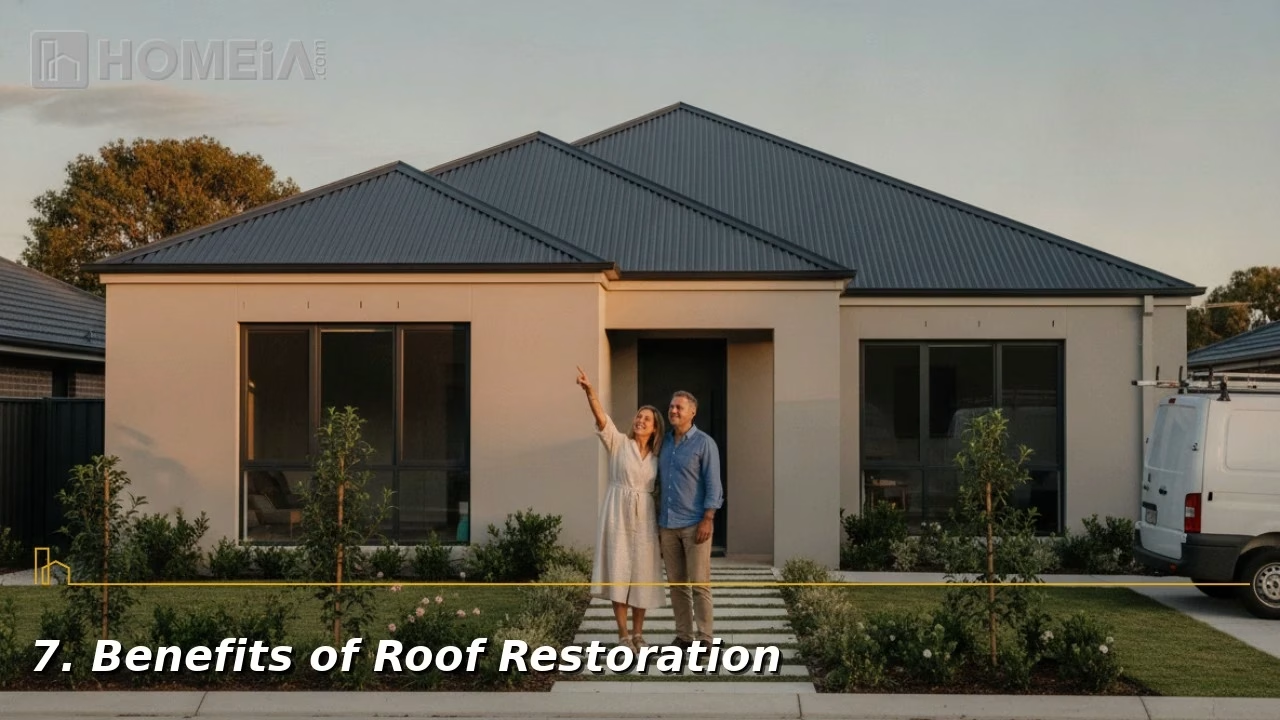
Roof restoration costs one-third to one-half the price of complete replacement, freeing capital for other improvements. Professional coating systems can extend roof lifespan by 5 to 20 years. Restorative treatments reverse weathering damage, eliminate algae streaks, and restore fresh appearance while improving waterproofing through continuous, monolithic membranes that eliminate seams where leaks develop. Reflective cool roof coatings can reflect up to 90% of solar radiation, reducing cooling costs by up to 25%. Restoration also keeps heavy shingles and scraps out of landfills and abstain from noisy, dusty tear-off, allowing occupants to remain inside with minimal disruption.

Related article
Essential Guide to Roof and Siding Repair: Key Factors You Need to Know
Understanding the nuances of roof and siding repair is essential for any homeowner looking to maintain or enhance the longevity and safety of their residence. This comprehensive guide will equip you with insights and practical roof and siding repair knowledge…
8. Potential Drawbacks

Restoration cannot resolve structural failures, rotten sheathing, saturated insulation, or roofs with more than two existing layers. While it adds 5 to 20 years, full replacement provides a complete reset lasting 25 to 50 years. Recoated surfaces require annual inspection and cleaning to clear debris and verify drainage paths. Contractor quality greatly affects results. Applying liquid membranes requires precise weather conditions and technical skill, meaning inexperienced contractors can cause premature peeling or bubbling.
9. How to Choose a Roofing Contractor
Confirm the contractor holds an active, state-issued residential roofing license. Request a Certificate of Insurance showing at least $300,000 in per-occurrence general liability coverage, $10,000 property damage, and active workers’ compensation coverage with a current $15,000 surety bond.
Seek out elite designations like GAF Master Elite, Owens Corning Platinum Preferred, or CertainTeed SELECT ShingleMaster; only these certified contractors offer premium, manufacturer-backed system warranties covering installation workmanship for up to 25 years. Request itemized estimates detailing specific brands, primer types, wet and dry mil thicknesses, cleaning agents, and municipal permits. Inquire about local project references and check independent reviews on Google, Yelp, and the Better Business Bureau.
Ensure you understand the distinction between standard material warranties (product defects only, prorated) and enhanced manufacturer-backed warranties (cover installation labor, non-prorated). Watch for high-pressure sales tactics or promises to waive insurance deductibles; under Minnesota Statute Section 325E.66, deductible waivers are illegal. Verify the contract grants a 72-hour right to cancel if insurance claims are denied.
Conclusion
Deciding between roof restoration and replacement requires careful evaluation of the roof’s structural condition, age, and layout. Non-destructive moisture testing allows accurate assessment of underlying decking and insulation health. If wooden sheathing is dry and structurally sound with a single material layer, restoration represents a cost-effective, sustainable, and energy-efficient alternative. Homeowners should schedule an inspection with a factory-certified, licensed roofing contractor to secure objective, professional evaluation and ensure a successful, long-lasting restoration project.
Recommended for you




FAQs About Roof Restoration: When It’s Worth It and When to Replace Instead
1. What are No Dollar Limit (NDL) warranties, and how do they apply to roof restoration?
An NDL warranty is a premium guarantee provided by major manufacturers like GAF or CertainTeed. Unlike standard material warranties capping payouts or prorate coverage, an NDL warranty has no financial limit. If a leak occurs from manufacturing defects or installation errors during the warranty period, the manufacturer covers all labor and material costs to resolve it. This premium coverage requires an approved, certified contractor to execute the restoration work.
2. How do wind limits affect restoration and recover warranties compared to full replacements?
While complete roof replacements can feature wind warranties up to 110 to 130 mph, roof restoration coatings carry significantly lower limits. For example, CertainTeed SMARTCOAT liquid-applied systems carry wind speed limits capping coverage at 38 mph. Review warranty documentation carefully to understand these restrictions, particularly when residing in a high-wind region or coastal area susceptible to hurricanes or severe storms.
3. What are the climatic and temperature requirements for applying elastomeric coatings?
Liquid-applied coatings are highly sensitive to weather during application. Acrylic coatings require a consistent temperature of at least 50 degrees Fahrenheit (10 degrees Celsius) to cure properly, and any rainfall, heavy dew, or high humidity within 24 hours of application can wash away the uncured liquid. Silicone is moisture-tolerant despite requiring a completely dry substrate for proper adhesion and optimal performance.
3. How does attic ventilation affect the validity of a restored roof’s warranty?
Proper attic ventilation is necessary by code and manufacturers to maintain warranties. Under IRC Section R806, homes must maintain a minimum of 1 square foot of net free ventilation area per 150 square feet of attic floor space, reducible to 1:300 under balanced intake-and-exhaust designs. Failing to meet these standards traps heat and humidity, which accelerates material decay and voids the warranty, making adequate ventilation essential for restoration success.
5. Can a flat roof with ponding water issues be restored using liquid-applied membranes?
It depends on the coating chemistry. Acrylic coatings are water-soluble and will break down rapidly if exposed to standing water, making them unsuitable for roofs with poor drainage. Premium high-solids silicone coatings (such as GAF High Solids Silicone or CertainTeed SMARTCOAT 450) are moisture-cure formulations highly resistant to ponding water, making them an excellent choice for low-slope roofs with minor drainage issues.
Share