






7 Most Affordable Places to Live in Hawai‘i (updated)
- Local Editor:Local Editor: Matthew Rott


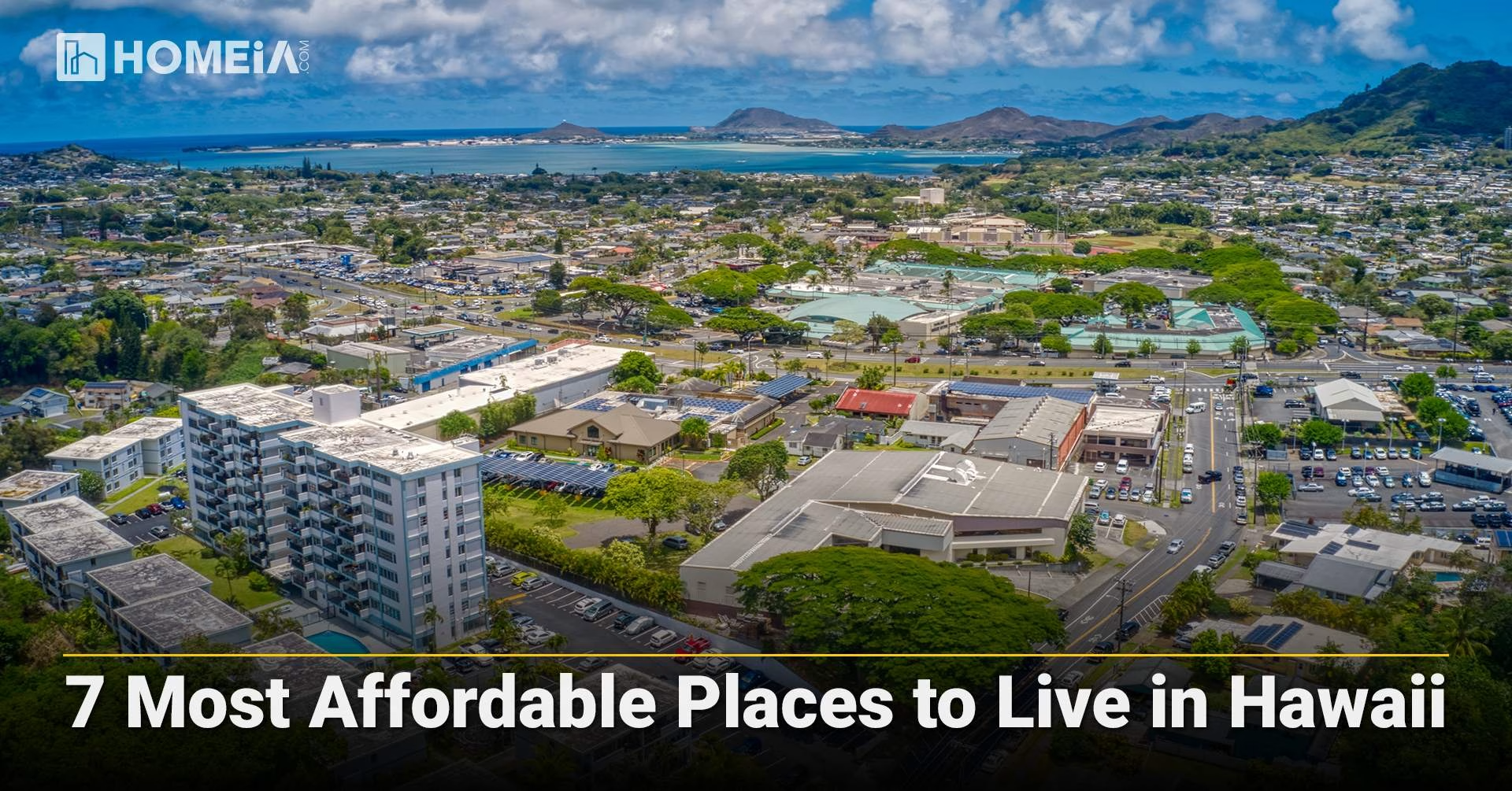
Although the state is known for its astounding beauty and high cost of living, Hawai‘i offers surprising pockets of affordability for those seeking island life without the premium price tag. Despite not being in the continental U.S., it is one of the most expensive areas in the country to live. This means financial planning is crucial for making life in paradise a reality.
With median home prices significantly above the national average but no state income tax on Social Security benefits, the Aloha State presents a unique financial landscape for families, remote workers, and retirees seeking tropical living. However, affordability varies dramatically across the islands, and finding the right community is key to balancing budget with lifestyle.
This guide moves past the postcard-perfect vistas to provide a detailed, data-driven analysis of the most affordable areas to call home in Hawai‘i for 2025. We’ve crunched the numbers on housing, utilities, transportation, and more to bring you seven communities where you can achieve financial stability while embracing the unique Hawaiian experience. If you’re also considering other regions, you might find our guide on the most affordable places to live in California helpful for comparison.
Key Takeaways
- Widespread Affordability Challenges: Hawai‘i’s overall cost of living is 88% above the U.S. average, but certain communities offer relative affordability, especially compared to Honolulu and the main resort areas.
- Variety of Options: Affordable living in Hawai‘i isn’t limited to remote locations. It also includes working-class towns, agricultural communities, and neighborhoods with established infrastructure, offering choices for every lifestyle.
- Trade-Offs Exist: The most affordable communities often come with trade-offs, such as fewer job opportunities outside key sectors, longer commutes, or more limited access to urban amenities.
- Beyond the Purchase Price: True affordability must also consider utility costs (which can be high in areas with extreme weather) and transportation expenses which are notable in isolated communities).
- Essential to Research: Safety and school ratings vary dramatically from community to community, making it crucial to research specific neighborhoods rather than relying on island-wide generalizations.
I. Methodology: How We Chose the Most Affordable Places
Our selection of these seven locations is based on a weighted set of criteria prioritizing key metrics relevant to residents seeking value. Our goal is to identify places that offer a harmonious balance of affordability, access to essentials, and community, not just the lowest price tag.
- Housing and Affordability (30%): This is the primary driver for relocation. We’ve examined median home price, average monthly rent, and overall affordability compared to state averages, using crucial ratios like home-price-to-income to gauge true accessibility in a high-cost environment.
- Cost of Living (25%): Beyond housing, this metric evaluates the day-to-day expenses that affect a budget, including the cost of groceries, utilities, transportation, and healthcare relative to other parts of the state.
- Access and Infrastructure (20%): Of course, affordability can be negated by isolation. This criterion assesses critical access to groceries, healthcare facilities, major employers, and reliable internet and transportation links.
- Safety and Community (15%): Both of these are fundamental needs. This criterion assesses crime rates and considers the strength of community engagement, social offerings, and amenities that contribute to a high quality of life.
- Economic Resilience and Opportunity (10%): For long-term financial viability, we evaluate economic diversity, key industries, and employment trends to ensure communities are conducive to a stable and prosperous future.
Data for this article is compiled from verified 2025 sources, including Zillow, the U.S. Census Bureau, the Bureau of Labor Statistics, FBI crime data, and local market reports.

Related article
Our Methodologies to create HOMEiA Score Ratings for Each Group of Content
HOMEiA uses a consistent, data-driven methodology to evaluate U.S. states for livability, affordability, and long-term value. Our analysis centers on key factors such as Housing and Affordability, Cost of Daily Living, Access and Infrastructure, Community Strength, Safety and Quality of Life, Economic Resilience and Job Market…
7 Communities, One State: A Quick Comparison Table
City | HOMEiA Score | Cost of Living | Avg. Rent (2-Bed) | Home Price-to-Income Ratio | Income-to-Rent Ratio | Safety Rating |
|---|---|---|---|---|---|---|
| Pahoa | 78 | 25% below average | $1,900 | 5.2:1 | 27.8x | 52 |
| Makawao | 81 | 5% below average | $2,800 | 7.8:1 | 39.1x | 78 |
| Kapaa | 82 | 10% below average | $2,900 | 6.9:1 | 34.5x | 70 |
| Wailuku | 84 | 12% below average | $2,900 | 7.1:1 | 35.2x | 68 |
| Kaneohe | 83 | 8% below average | $2,950 | 7.5:1 | 37.8x | 75 |
| Waianae | 85 | 20% below average | $2,300 | 5.9:1 | 30.1x | 58 |
| Hilo | 87 | 15% below average | $1,750 | 6.8:1 | 33.3x | 72 |
II. Detailed Community Analysis: Seven Affordable Enclaves
1. Pahoa: The Big Island Frontier

HOMEiA Score: 78/100
- Cost of Living: 25% below Hawaii average
- Monthly Rent: $1,900
- Home price to income ratio: 5.2:1
- Income to rent ratio: 27.8x
- Safety rating: 52/100
A. Cost of Living and Housing: Pahoa offers the lowest barrier to homeownership with significantly below-average housing costs. It attracts those seeking an alternative lifestyle and provides opportunities for land ownership and unique housing options at prices well below other Hawaiian communities.
B. Economy and Job Market: The local economy is diverse, with agriculture, small businesses, and an emerging wellness tourism sector. Many residents are self-employed or work in creative fields, while others commute to Hilo for employment. The area supports a vibrant counterculture community with farmers’ markets and local artisans.
C. Access and Infrastructure: As a more remote community, Pahoa has basic services but requires travel for major shopping and healthcare. It has historically faced challenges with infrastructure, but the tradeoff is that it offers a true off-the-grid island experience for those seeking independence from urban clutter.
D. Quality of Life and Culture: Locals in Pahoa love the unconventional lifestyle, complete with a vibrant counterculture community, farmers’ markets, and access to volcanic landscapes. While the area might feel less safe than others (for those who are unaccustomed to living in rural areas), it offers unparalleled affordability and natural beauty. The chances are, if a person is considering living in Pahoa, it is precisely because of the wilder, non-urban vibe.

Related article
Moving to Hawai‘i: The Complete Relocation Guide & Checklist (updated)
Hawaiʻi offers a lifestyle shaped by tropical beauty, deep cultural roots, and the spirit of aloha. Nearly 1.5 million residents enjoy island living across six main islands, from urban Honolulu to quiet coastal towns. This guide covers relocation essentials, including island life realities, living costs, and the legal steps to becoming a Hawaiʻi resident…
2. Makawao: The Upcountry Maui Gem

HOMEiA Score: 81/100
- Cost of Living: 5% below Hawaii average
- Monthly Rent: $2,800
- Home price to income ratio: 7.8:1
- Income to rent ratio: 39.1x
- Safety rating: 78/100
A. Cost of Living and Housing: Makawao offers upcountry living at more accessible prices than coastal resort areas. This historic paniolo (cowboy) town provides a unique lifestyle with relative affordability and pristine community amenities, though prices are still above national averages.
B. Economy and Job Market: Agriculture remains important in Makawao, where ranches and flower farms are a way of life. The town has developed a vibrant arts scene with galleries and boutiques. Many residents commute to central Maui jobs or work in the growing wellness and tourism sectors, providing diverse employment opportunities.
C. Access and Infrastructure: Located on the slopes of Haleakala, this town has essential services and is close enough to Kahului for additional amenities. Makawao benefits from reliable utilities and acceptable road access to other parts of Maui, making it convenient for commuters.
D. Quality of Life and Culture: Life in Makawao is defined by its cool upland climate, strong community spirit, traditional paniolo aesthetic, and artistic vibe. Residents benefit from quality schools, frequent community events, and access to Haleakala National Park. The town’s high safety rating makes it ideal for families seeking Maui living with mountain charm and authentic Hawaiian culture.
3. Kapaa: The Kauai Middle Ground

HOMEiA Score: 82/100
- Cost of Living: 10% below Hawaii average
- Monthly Rent: $2,900
- Home price to income ratio: 6.9:1
- Income to rent ratio: 34.5x
- Safety rating: 70/100
A. Cost of Living and Housing: Kapaa strikes a balance between Kauai’s high-priced north shore and remote west side. A range of housing options at more accessible prices are available, without sacrificing Kauai’s natural beauty and access to essential services.
B. Economy and Job Market: Tourism drives the local economy, with people working in hotels, restaurants, and retail along the Coconut Coast. Healthcare and construction also provide reliable employment in this growing community that is quickly becoming a commercial hub for Kauai’s east side.
C. Access and Infrastructure: Centrally located on Kauai’s east side, Kapaa is conveniently close to Lihue Airport (LIH) and the island’s major commercial centers. The town has essential services, and is a short drive from many of Kauai’s most famous natural attractions, including a scenic bike path connecting communities.
D. Quality of Life and Culture: Residents of Kapaa enjoy the classic Kauai experience, with beautiful beaches, hiking trails, and a laid-back lifestyle. Bike paths, local farmers’ markets, and community events create a lasting sense of place. The town’s respectable safety rating reflects a well-established community that balances tourism with local living.
Recommended for you




4. Kaneohe: Windward Oahu Value

HOMEiA Score: 83/100
- Cost of Living: 8% below Hawaii average
- Monthly Rent: $2,950
- Home price to income ratio: 7.5:1
- Income to rent ratio: 37.8x
- Safety rating: 75/100
A. Cost of Living and Housing: Kaneohe offers suburban living with better affordability than Honolulu proper. Single-family homes are available at more accessible prices, while community amenities and top-notch schools make the town ideal for families seeking Oahu living without the urban gridlock.
B. Economy and Job Market: Residents commute to work in Honolulu via the Likelike and Pali Highways. Local employment focuses on education (with several schools in the area), healthcare, and retail. The windward side has its own commercial centers, reducing some commuting needs for daily essentials.
C. Access and Infrastructure: Kaneohe is well-connected to Honolulu with multiple highway options, but also has its own shopping centers, medical facilities, and community resources. It benefits from established infrastructure while maintaining the incredible natural beauty that Oahu’s east side is known for.
D. Quality of Life and Culture: Life in Kaneohe is defined by its stunning location between the Koolau Mountains and Kaneohe Bay. The area offers top-tier schools, community parks, and access to water activities. Its high safety rating makes it ideal for families seeking Oahu living without urban sprawl, while still enjoying proximity to Town.
5. Wailuku: The Central Maui Anchor

HOMEiA Score: 84/100
- Cost of Living: 12% below Hawaii average
- Monthly Rent: $2,900
- Home price to income ratio: 7.1:1
- Income to rent ratio: 35.2x
- Safety rating: 68/100
A. Cost of Living and Housing: Serving as Maui’s county seat, Wailuku offers relative affordability compared to resort areas. The historic town features housing options well below Kihei and Lahaina prices, while maintaining access to Maui’s main job market and essential services.
B. Economy and Job Market: Government, healthcare, and education anchor the local economy. Most residents work in these sectors or commute to tourism jobs in west Maui. Wailuku benefits from stable employment without the seasonal fluctuations of resort areas, which provides added economic resilience.
C. Access and Infrastructure: Centrally located with access to Kahului Airport (OGG) and major highways, this is Maui’s administrative hub. All essential services are available locally, including medical facilities and shopping centers, making it convenient for daily living without premium costs.
D. Quality of Life and Culture: Residents actively maintain Wailuku’s historic plantation town character, while enjoying access to Maui’s famous beaches and the Iao Valley. The area balances urban convenience with small-town charm, providing a commendable safety profile for families and those seeking authentic Maui living.

Related article
The Pros and Cons of Living in Hawai’i (updated)
Hawai‘i offers breathtaking scenery, rich culture, and unique island living, but high costs, isolation, and limited jobs present challenges. Explore its advantages, drawbacks, and best islands…
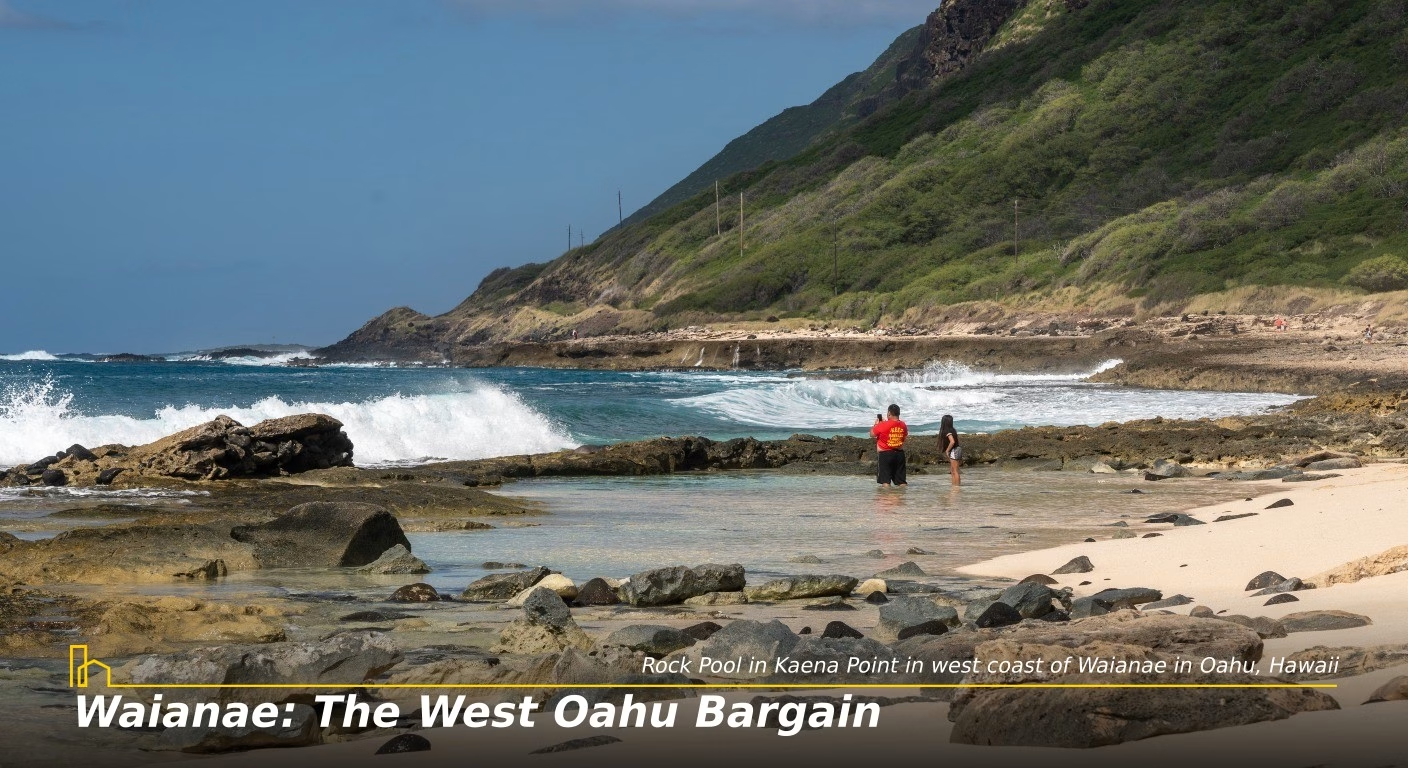
6. Waianae: Oahu’s West Side Bargain
HOMEiA Score: 85/100
- Cost of Living: 20% below Hawaii average
- Monthly Rent: $2,300
- Home price to income ratio: 5.9:1
- Income to rent ratio: 30.1x
- Safety rating: 58/100
A. Cost of Living and Housing: Waianae offers some of the most affordable housing on Oahu, with prices significantly below Honolulu averages. This working-class community provides access to Oahu’s job market without the premium costs, though it comes with a longer commute to urban centers, particularly when rush hour brings H1 to a virtual standstill.
B. Economy and Job Market: Many residents commute to Honolulu for work in tourism, military, and government jobs. Local employment focuses on small businesses, fishing, and agriculture. There’s potential for growth in renewable energy projects, providing additional economic opportunities.
C. Access and Infrastructure: Located on the leeward coast, Waianae has most essential services, despite requiring a commute for many higher-end amenities. The area has seen infrastructure improvements in recent years, but still faces challenges with transportation access to urban centers, making car ownership essential.
D. Quality of Life and Culture: Stunning beaches and a strong native Hawaiian community presence can be found here. While the west side faces socioeconomic challenges that affect its safety rating, Waianae provides authentic Hawaiian living with incredible ocean access and an intact community spirit for those who value cultural authenticity over urban convenience.
7. Hilo: The Rainforest Value Hub

HOMEiA Score: 87/100
- Cost of Living: 15% below Hawaii average
- Monthly Rent: $1,750
- Home price to income ratio: 6.8:1
- Income to rent ratio: 33.3x
- Safety rating: 72/100
A. Cost of Living and Housing: Hilo offers the best combination of affordability and urban amenities on the Big Island. While still above national averages, housing costs are significantly lower than in Kailua-Kona and on Oahu, with the median single-family home price around $550,000. Cost of living allows for a comfortable lifestyle by Hawaiian standards.
B. Economy and Job Market: As the county seat and home to the University of Hawai‘i at Hilo, the town’s economy is built on education, healthcare, and government. Agriculture (particularly macadamia nuts and flowers) remains important, while tourism centered around Hawai‘i Volcanoes National Park provides additional employment.
C. Access and Infrastructure: Hilo International Airport (ITO) provides interisland connections, and the town has all of the essential services, including a major hospital, big-box stores, and reliable utilities. As the largest city on the Big Island, Hilo provides residents access to amenities, but without the Oahu premium.
D. Quality of Life and Culture: Life in Hilo is defined by its lush rainforest setting, historic downtown area, and authentic Hawaiian culture. There’s a slower pace of life and access to world-class natural attractions, including waterfalls, black sand beaches, and active volcanoes. Hilo’s above-average safety rating reflects the tight-knit community vibe that makes it ideal for families and retirees.
III. A Relocation Checklist for Your Hawaiian Home
- Budget for the True Cost: Account for Hawaiʻi’s astronomical grocery prices (roughly 33% above the national average, the highest of any U.S. state) and utility costs. Factor in transportation expenses, especially if you’ll need to commute or live on a neighbor island.
- Secure Employment First: The various regional job markets can be competitive and localized. Secure employment before moving, especially if you’re not in high-demand fields like healthcare, education, or skilled trades. Consider the pros and cons of living in Hawai‘i before making your decision.
- Visit in Person: Microclimates and communities vary dramatically. Visit during different seasons to understand the weather patterns and community dynamics of your chosen area.
- Understand Island Life: Each island has its own local character and challenges. Research the specific infrastructure, healthcare access, and community resources before committing.
- Plan for Transportation: Unless you’re in downtown Honolulu, you’ll likely need a car. Factor in vehicle shipping costs, high gas prices, and potential commuting times.
Conclusion: Your Affordable Hawaiian Future Awaits
From the rainforest charm of Hilo to the suburban value of Kaneohe, these seven communities prove that you can access the Hawaiian dream without the premium price tag of resort areas. Hawai‘i offers a unique opportunity to build a life that blends tropical island living with modern amenities and a robust economy. By carefully considering what each of these affordable enclaves has to offer, you can find the perfect spot to plant your roots and thrive in paradise. For those considering other tropical options, you might also explore the most affordable places to live in Florida.
Recommended for you




FAQs About the Most Affordable Places to Live in Hawai‘i
1. Is it possible to find a home under $500,000 in Hawai‘i?
Yes, absolutely. Markets like Pahoa, Waianae, and Hilo regularly have homes listed below $500,000. These may require updates or be in more remote locations, but they represent significant value in the Hawaiian market.
Groceries and utilities. Hawai‘i imports roughly 85-90% of its food, leading to grocery costs that are around 33% above the national average, the highest of any U.S. state. Electricity rates are among the highest in the nation, and water costs can add up significantly.
3. Are these communities good for remote workers?
It varies. Urban areas like Hilo and Kaneohe have reliable high-speed internet, while the more remote communities may have limited options. Always confirm internet availability and speeds at your specific address before moving.
4. What about hurricane and tsunami risks?
All Hawaiian islands face natural disaster risks. More affordable coastal communities may be in tsunami evacuation zones. Research specific property locations and understand your insurance requirements and costs.
5. How do I choose between these communities?
Prioritize your needs!
- For jobs, look at Kaneohe (Honolulu commute) or Hilo.
- For the lowest cost, consider Pahoa or Waianae.
- For families, Kaneohe and Makawao offer excellent schools and safety.
- For retirees, Hilo and Kapaa provide great value and amenities.
- For culture and outdoor access, all of these options offer unique experiences, with Hilo and Pahoa having the added bonus of volcanic access.
Make sure to research specific neighborhoods within these communities, as conditions can vary dramatically, even within short distances.
Share