






Rent Growth Forecast 2026
- Local Editor:Local Editor: The HOMEiA Team
- Category: Rent



Rent Growth Forecast: After years of double-digit rent increases that pushed millions of households to the breaking point, the U.S. rental market is finally showing signs of stabilization. Zillow forecasts single-family rents to rise 1.1% annually by December 2026, while multifamily rents are expected to remain flat at -0.2%. The standard U.S. asking rent in January 2026 was $1,895, up 2% year over year, the slowest annual rent growth since December 2020.
But before you celebrate, consider the following, 22.7 million renter households, 49% of all renters, still spent more than 30% of their income on rent and utilities in 2024, according to the Harvard Joint Center for Housing Studies’ “America’s Rental Housing 2026” report. Cooling rent growth does not always translate to affordable rent.
Key Takeaways
- Zillow forecasts single-family rent growth of only 1.1% by December 2026, with multifamily rents flat at -0.2%.
- The typical U.S. asking rent was $1,895 in January 2026, the slowest annual growth since December 2020.
- Nearly 49% of renters (22.7 million households) are cost-burdened, spending over 30% of income on housing. 12.1 million are severely cost-burdened, spending over 50%.
- Apartment vacancies reached 5.2% by late 2025, giving renters more negotiating power than they have had in years.
- Nearly 40% of rental listings on Zillow included concessions like free months of rent or reduced deposits in January 2026, slightly below January 2025’s record 41.1%.
- The softening rental market shifts the rent-vs-buy calculation, but high home prices and mortgage rates still make buying unaffordable in many markets.

Related article
Total Cost of Relocating: Moving Budget Checklist
The cost of a long-distance move extends well beyond the moving company’s invoice. In addition to transportation, households should budget for security deposits, utility connection fees, temporary accommodation, vehicle registration, travel expenses, and the living costs of settling into a new location. This guide breaks down the full financial picture…
1. The National Rent Burden Picture
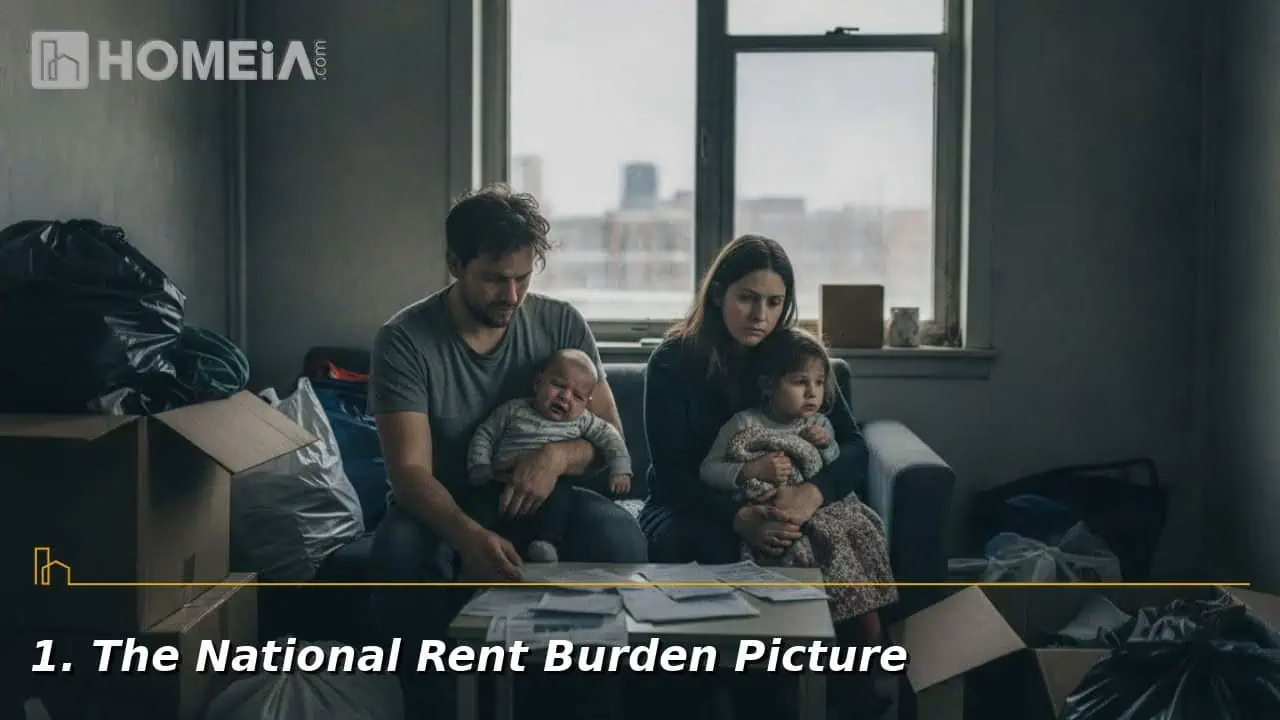
The Harvard Joint Center for Housing Studies’ “America’s Rental Housing 2026” report, released March 2026, paints a stark picture of the affordability crisis. In 2024, 22.7 million renter households spent more than 30% of their income on rent and utilities, 49% of all renters. Of those, 12.1 million were severely cost burdened, paying more than half their income for housing.
Cost burdens have risen in 44 states and 88 of the 100 largest metro areas over the past five years, with the crisis no longer confined to the lowest-income households. Growing cost burdens are popping up among renters earning $45,000 to $75,000 and even among higher-income renters, with nearly half of that middle-income band burdened in 2024.
The rental stock has shifted upward in price as the number of units renting for less than $600 (inflation-adjusted) declined by roughly 2.5 million, or 30%, between 2014 and 2024, squeezing middle-income renters who once had more options.
By the fourth quarter of 2025, asking rents for professionally managed apartments had declined roughly 0.6% year over year, consistent with the broader softening trend described throughout this report.
2. 2026 Rent Growth Forecasts: The Numbers
A. Zillow’s Forecast
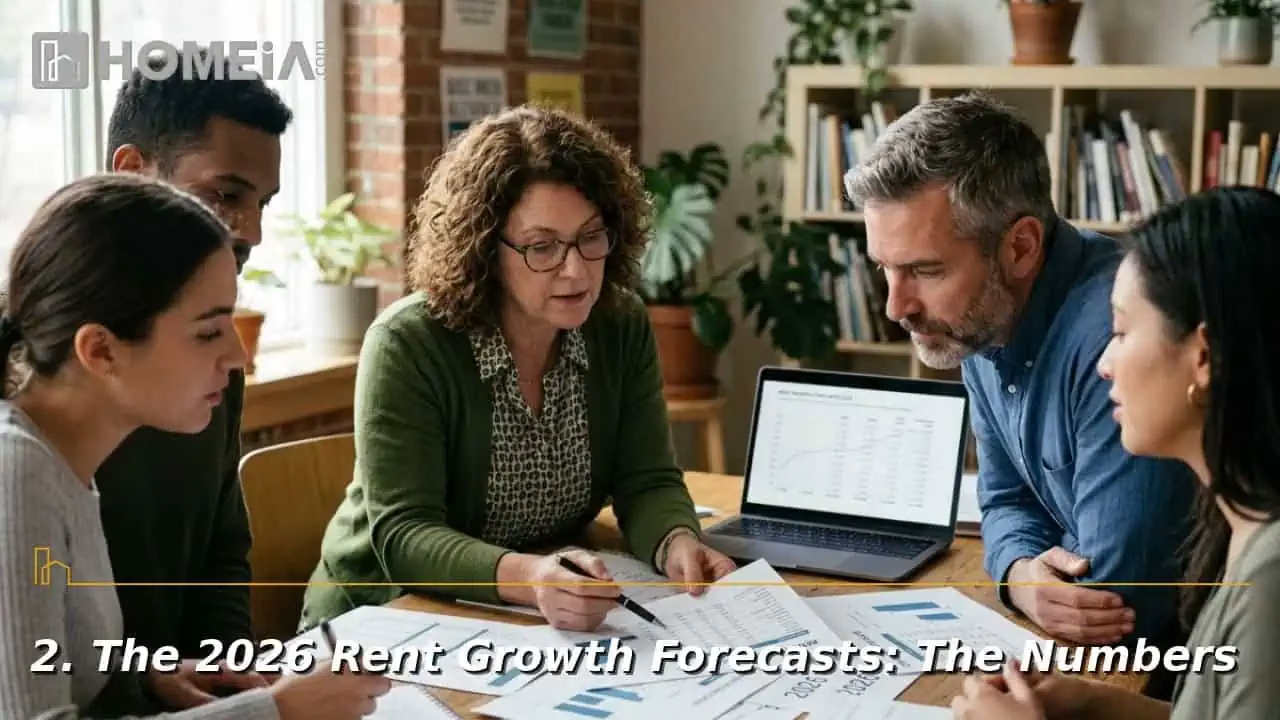
Zillow’s February 2026 report projects single-family rents up 1.1% annually and multifamily rents stagnant at -0.2% by December 2026. Standard asking rent in January 2026 was $1,895, up 0.1% month-over-month and 2% year-over-year, with renters now spending 26.4% of income on rent, the lowest share since August 2021.
Zillow senior economist Orphe Divounguy noted that when supply expands and vacancies rise, property managers adjust on both price and terms, keeping rent growth modest and creating opportunities for renters.
B. Other Forecasts
Other data providers forecast similar directional trends, with rent growth expected to remain modest by historical standards through 2026. Expect markets to see rents decline in inflation-adjusted terms.
These contrasts reflect different methodologies and data sources. However, the consensus is clear. 2026 rent growth will be muted.
Recommended for you




3. What’s Driving the Softening Market?

A. New Apartment Supply
Multifamily construction has cooled from its early-2020s peak. Multifamily units under construction fell from a record high in late 2023 to roughly 686,000-690,000 by late 2025, a pullback that left elevated levels of new supply working through the pipeline. Multifamily starts in 2025 increased year-over-year even as the under-construction pipeline shrank, reflecting a shift from completions toward new groundbreakings.
B. Elevated Vacancies
Vacancy rates reached 5.2% by late 2025, matching their level a year earlier as rental demand slowed. With more options available, renters now have more negotiating power for renewals and new leases than they have had in a long time.
C. Leasing Concessions
Nearly 40% of rental listings on Zillow included at least one concession in January 2026. These include a free month of rent or a reduced deposit. This ended up being slightly below January 2025’s record high of 41.1%.
4. Regional Variation: Where Rents Are Falling and Where They’re Still Rising
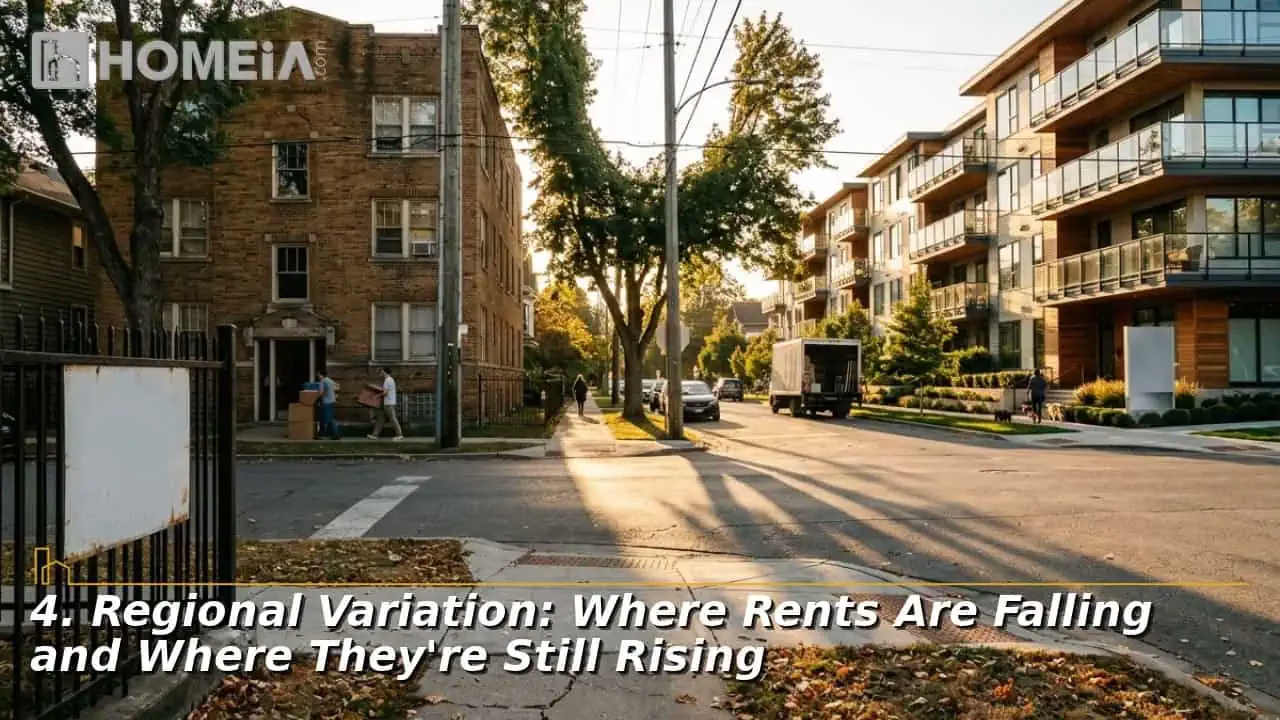
Markets with the most new apartment supply, particularly in the Sun Belt, like Austin, Phoenix, and Nashville, are seeing the softest conditions, with rents flattening or declining as supply catches up with demand. Meanwhile, markets like the Bay Area and Rhode Island,continue to experience above-average rent growth due to tighter local supply and bolstered job growth.

Related article
Emergency Fund Guide: How Much to Save Before Buying a Home
Buying a home requires far more than saving for a deposit and qualifying for a mortgage. Homeowners must also be financially prepared for unexpected repairs, maintenance, and other emergency expenses that can arise without warning. This guide explains why a strong emergency fund is just as important as your…
5. What Softening Rent Growth Means for the Rent-vs-Buy Decision
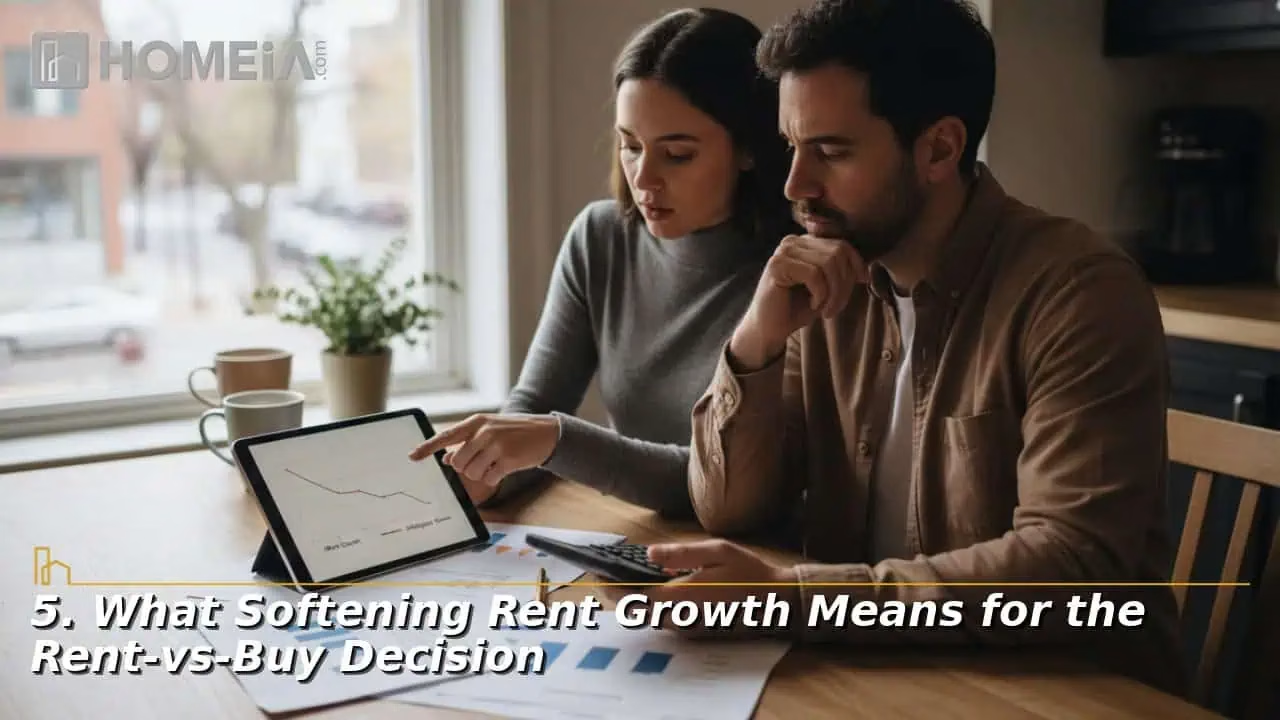
The softening rental market has shifted the rent-vs-buy calculation in favor of renting nationwide. The price-to-rent ratio, calculated by dividing the median home price by 12 months of median rent, is a useful metric. A ratio below 15 generally favors buying, above 21 favors renting, and anything in between is a toss-up. Across more than 80 U.S. markets, the national midpoint is close to 20.
In high-cost coastal markets like Anaheim, California, the price-to-rent ratio is roughly 47.8. This means buying costs thousands more per month than renting. But the rent-vs-buy decision is not only financial. Homeownership offers stability and appreciation potential, while renting offers flexibility and lower upfront costs.
6. Practical Guidance for Renters: Lease Negotiation in a Softening Market

In a softening market, almost everything is negotiable, whether it be rent price, lease term, concessions, and renewal notice periods. Zillow’s forecast of modest rent growth suggests the risk of significant rent increases is low in most markets. Essentially, a 12-month lease is a reasonable default unless you are in a hot market like the Bay Area or Northeast. Before speaking with a landlord, come with comparable pricing data, be specific in your intentions, offer a trade (like a longer lease), time your renewal for winter months when landlords are most flexible, and be willing to walk away if negotiations stall.
Conclusion: The 2026 rental market offers more breathing room than renters have seen in years. Keep in mind more affordable is not the same as affordable as 49% of renters remain cost-burdened, and the loss of lower-cost units has made the crisis structural, not cyclical.
Recommended for you




FAQs About The Rent Growth Forecast 2026
1. Are rents expected to go up or down in 2026?
Zillow forecasts single-family rents to rise 1.1% by December 2026 and multifamily rents to remain essentially flat, representing a sharp slowdown from recent years.
2. Which cities have the softest rental markets right now?
Sun Belt markets with heavy new supply, including Austin, Phoenix, and Nashville, are seeing the softest conditions.
3. Should renters lock in a longer lease in the current market?
In most markets, a 12-month lease is the sweet spot relative to modest forecasted rent growth. High-demand markets like the Bay Area may warrant a longer lease for protection.
4. How much negotiating power do renters have right now?
More than in years, with elevated vacancies near 5.2% and nearly 40% of listings including concessions.
5. Is it better to rent or buy in 2026?
The softening rental market favors renting in popular areas, but the decision depends on local price-to-rent ratios, planned length of stay, and personal finances.
Share