












Delaware offers coastal living, historic charm, and strong financial advantages, attracting nearly 950,000 residents. From Wilmington’s urban amenities to Rehoboth Beach’s resort lifestyle, the state combines tax-free shopping, low property taxes, and strategic Mid-Atlantic access…
7 Most Affordable Places to Live in Maryland
- Local Editor:Local Editor: The HOMEiA Team
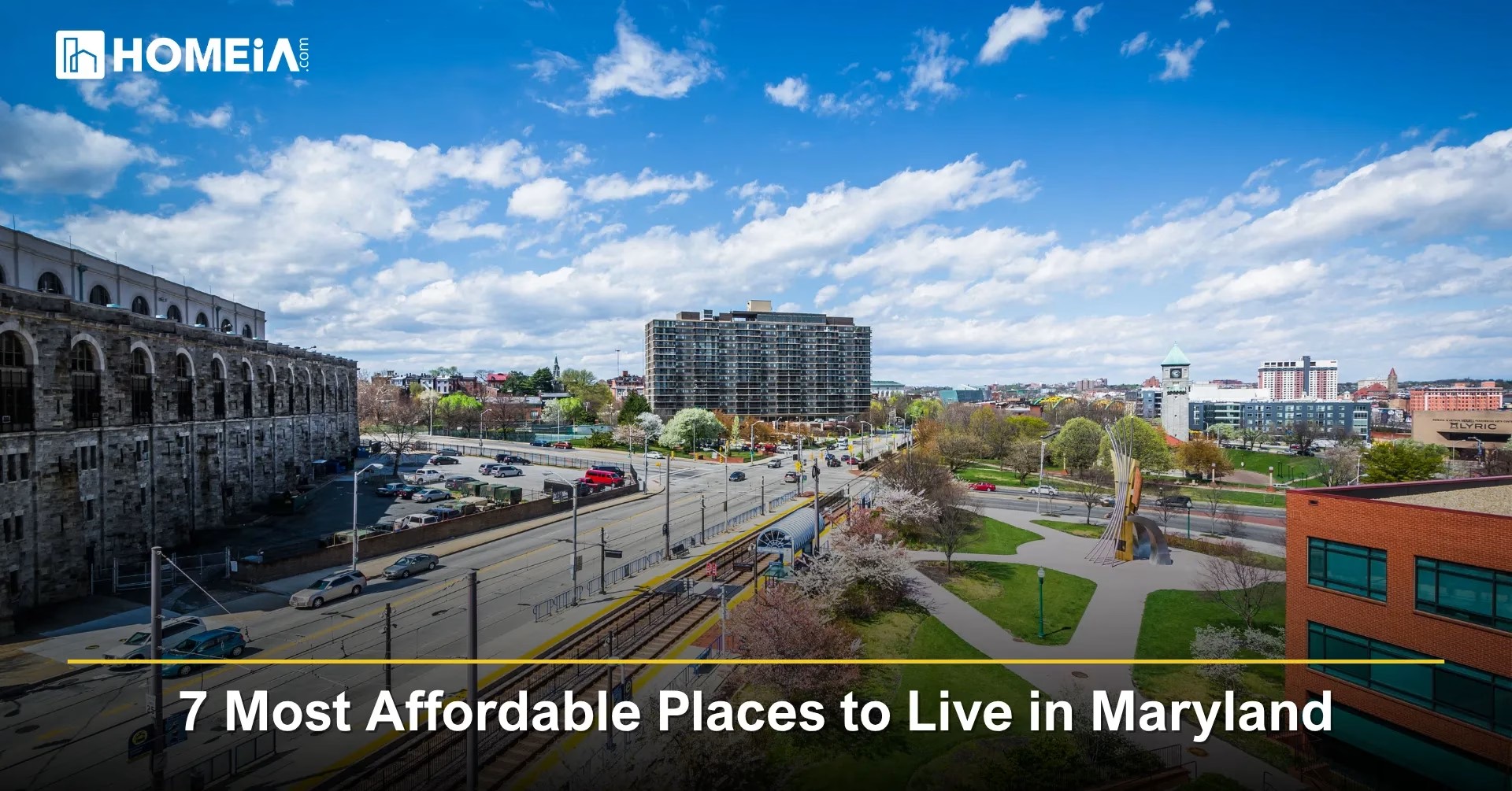
Most Affordable Places to Live in Maryland: This State remains a challenging state for affordable housing, with median home prices around $432,000, staying well above the national average. However, genuine affordability exists in select regions outside the Baltimore and Washington D.C. metro areas. The state’s lower-priced areas benefit from manageable property taxes and reasonable utility costs, particularly in smaller towns and former industrial centers embracing revitalization efforts. Affordability varies dramatically across their regions, from western mountain pockets to Eastern Shore waterfront towns. Some cities offer significantly greater value than others when factoring in housing, employment opportunities, healthcare access, and overall quality of life. This guide identifies seven communities where you can actually achieve financial stability without overextending your budget or compromising on essential services.
Key Takeaways
- Maryland’s median home price of approximately $432,000 far exceeds the national average, making these affordable communities significantly below state norms.
- Affordable living exists in western and eastern Maryland communities, offering college towns, industrial revival cities, and agricultural hubs with different lifestyle options.
- Crime rates, healthcare access, and employment opportunities vary dramatically between communities, requiring thorough research before relocation.
- Here the average effective property tax rate of approximately 0.95 percent is near the national average, though actual rates vary significantly by county.
- Winter heating costs, seasonal employment fluctuations, and proximity to major employers should factor into total affordability calculations beyond home prices.


Related article
What is It Like Living in Maryland Today?
From its bustling urban centers to tranquil coastal towns, from its rich historical tapestry to its vibrant arts and culinary scenes, Maryland offers a unique blend of experiences that cater to residents and visitors alike. Let’s take a look at some of Maryland’s most charming features, exploring the cities, natural wonders, cultural events and flavors that make it a must-visit destination…
I. Methodology: How We Chose the Most Affordable Places
Identifying the most affordable places goes beyond finding the lowest prices. Affordability must be evaluated holistically, considering whether residents can build sustainable lives in communities. Our methodology applied a weighted scoring system evaluating several critical dimensions.
- Housing & Affordability (30% weight): Housing dominates affordability calculations. We evaluated median home prices, rental rates, and price-to-income ratios, which highlight whether homes price affordably relative to local incomes. We prioritized communities where median home prices fell significantly below the statewide median and housing costs consumed reasonable portions of average household income. Price-to-income ratios below 3.5:1 received favorable scores.
- Cost of Living (25% weight): Housing is only one component of true affordability. We examined utility costs, grocery prices, healthcare expenses, and transportation. We reviewed current data on typical monthly expenses for families across these communities, compared to Maryland and national averages. Communities with cost of living indices 15 percent below national average received favorable ratings.
- Access & Infrastructure (20% weight): Affordability means little without access to essential services. We evaluated healthcare availability, shopping options, highway connectivity, and broadband access. Proximity to Baltimore and Washington D.C. employment centers influences community selection. Communities with reliable healthcare and broadband received favorable scores.
- Community & Safety (15% weight): Cost of living calculations ignore quality of life entirely. We reviewed crime statistics and considered community amenities, parks, recreation options, and the general atmosphere residents report in each community. Communities with safety ratings above 50/100 received favorable consideration.
- Economic Resilience & Opportunity (10% weight): An affordable spot becomes expensive if you cannot find employment. We identified major employers, economic diversity, and employment trends. Communities with diversified economies ranked higher than single-industry towns. Regional employment access through commuting corridors enhanced scores.
Data Sources: This analysis draws from 2024–2026 sources: Zillow, the U.S. Census Bureau, the Bureau of Labor Statistics, the Maryland State Police, Redfin, and local economic development reports. We prioritized current data with previous figures used only when current data is unavailable. Where sources conflicted, we applied most recent authoritative government data.

Related article
20 Hacks to Reduce Your Energy Bills in Maryland
With all these price hikes, it’s normal to feel overwhelmed by monthly bills. However, there are ways to alleviate the weight of these costs. In this article, consumers can learn smart ways to lessen their energy bills in Maryland. Applying these hacks not only lessens your expenses but can help save the environment as well…
7 Maryland Communities: Quick Comparison Table
| City | HOMEiA Score | Cost of Living | Avg. Rent (2-Bed) | Home Price to Income Ratio | Income to Rent Ratio | Safety Rating |
| Westernport | 72/100 | -28% | $725 | 2.8:1 | 51.7x | 58/100 |
| Cumberland | 75/100 | -23% | $741 | 3.2:1 | 54.1x | 35/100 |
| Dundalk | 75/100 | +5% | $1,895 | 3.2:1 | 31.8x | 25/100 |
| Frostburg | 77/100 | -24% | $945 | 3.5:1 | 50.8x | 48/100 |
| Hagerstown | 79/100 | -6% | $1,114 | 3.1:1 | 43.5x | 62/100 |
| Salisbury | 80/100 | -4% | $1,270 | 3.1:1 | 41.9x | 52/100 |
| Cambridge | 81/100 | -4% | $1,195 | 3.3:1 | 42.1x | 48/100 |
II. Detailed Community Analysis
HOMEiA Score: 72/100
- Cost of Living: -28% (28% below U.S. average)
- Monthly Rent: $725
- Home price to income ratio: 2.8:1
- Income to rent ratio: 51.7x
- Safety rating: 58/100
A. Cost of Living & Housing: Westernport claims the lowest median home price in Maryland at approximately $63,000–$91,000, making it an exceptional value for homebuyers prioritizing maximum affordability. Two-bedroom rentals average $725 monthly, among the lowest. Cost of living runs 28 percent below national average providing genuine savings across all expense categories. This former industrial town has stabilized and offers outstanding affordability without sacrificing access to essential services. Housing options include renovated period homes, newer construction, and traditional properties suitable for various family sizes.
B. Economy & Job Market: Their economy centers on small manufacturing, healthcare, retail, and local government employment. Nearby Frostburg State University provides regional job opportunities and cultural programming. Healthcare through local facilities and regional centers in Cumberland serves residents reliably. The town benefits from stable if modest employment opportunities with growing remote work accessibility. Median household income reflects working-class roots with manufacturing heritage.
C. Access & Infrastructure: Located in Allegany County in western Maryland near the Pennsylvania border. U.S. Route 40 provides access toward the Cumberland and Pittsburgh region. Proximity to FSU offers cultural programming and community events. Interstate 68 lies within commuting distance for those seeking regional employment access. Broadband availability has improved significantly in recent years through state investment initiatives.
D. Quality of Life & Culture: Offers authentic small-town character with river location and outdoor recreation opportunities throughout the year. Parks and community facilities serve residents effectively. Winter weather brings snow and requires heating system investment and vehicle preparation. Spring flooding has been managed through infrastructure improvements. Appeals to those prioritizing maximum affordability and small-town lifestyle with strong community bonds.

Related article
10 Best Places to Live in Maryland for Young Adults
Young adults just graduating college and looking to kick start their careers will find plenty to like about Maryland. With a focus on affordability, safety, and opportunity, here are the ten best places for young adults to live in Maryland…
2. Cumberland: Historic Mountain City with Affordable Revival
HOMEiA Score: 75/100
- Cost of Living: -23% (23% below U.S. average)
- Monthly Rent: $741
- Home price to income ratio: 3.2:1
- Income to rent ratio: 54.1x
- Safety rating: 35/100
A. Cost of Living & Housing: This option offers affordable housing with median home prices around $155,000–$167,000 depending on data source, representing roughly 63 percent below the state’s median. Two-bedroom rentals average $741 monthly. Cost of living runs 23 percent below national average providing substantial savings. The historic canal town has seen investment in downtown revitalization with restaurants, shops, and cultural venues. Housing stock includes restored Victorian properties alongside modern developments suitable for families and professionals seeking character homes.
B. Economy & Job Market: Economic prosperity centers on healthcare, education, retail, and manufacturing. UPMC Western Maryland serves as the primary employer with hundreds of positions across clinical and administrative roles. Frostburg State drives educational employment and brings research opportunities to the region. This area has experienced stable yet modest employment growth in recent years. Median household income reflects healthcare and education sector employment patterns.
C. Access & Infrastructure: Located on the Potomac River in Allegany County with significant historic significance. U.S. Route 40 and Interstate 68 provide connectivity to Pittsburgh, Baltimore, and Washington D.C. The C&O Canal provides historic and recreational significance with towpath access for biking and walking. Regional airports offer limited service. Healthcare access through UPMC facilities covers most medical needs.
D. Quality of Life & Culture: The historic downtown has undergone significant revitalization with restaurants, shops, galleries, and cultural venues. The C&O Canal National Historical Park hosts extensive recreation opportunities. Winter ushers in substantial snowfall requiring seasonal preparation and investment. Crime rates exceed state and national averages, requiring careful research by potential residents. Appeals to those seeking historic character with ongoing revitalization activity.

Related article
11 Best Places to Live in Pennsylvania
Pennsylvania has it all: caves, mountains, waterfalls, culture and history. It is the 33rd-largest state by area and the fifth-largest by population. There are a lot of great places to live in the state. Below, you will find descriptions of 11 of them…
3. Dundalk: Industrial Town with Affordable Housing
HOMEiA Score: 75/100
- Cost of Living: +5% (5% above U.S. average)
- Monthly Rent: $1,895
- Home price to income ratio: 3.2:1
- Income to rent ratio: 31.8x
- Safety rating: 25/100
A. Cost of Living & Housing: Dundalk offers homeownership affordability with median home prices around $224,000, representing approximately 48 percent below Maryland’s median. However, rental costs at $1,895 monthly exceed most affordable options substantially. Cost of living runs 5 percent above national average due to proximity to Baltimore and regional service costs. To live,working-class neighborhoods with older properties are options.
B. Economy & Job Market: The economy centers on maritime industries, manufacturing, retail, and services. The Dundalk Marine Terminal provides maritime employment and shipping center activity. Manufacturing facilities offer working-class positions. Employment diversity is limited compared to larger communities. General household income reflects working-class maritime and manufacturing heritage.
C. Access & Infrastructure: Located in Baltimore County near port facilities. Interstate 695 provides access to Baltimore and surrounding regions. The Port of Baltimore provides regional economic significance. Healthcare through regional Baltimore facilities covers needs. A maritime industry dominates character and employment.
D. Quality of Life & Culture: Industrial waterfront character with port activity defines the community. Maritime heritage is significant to local identity and employment. Safety concerns exceed Maryland and national averages substantially. Community revitalization efforts are limited. Appeals to those with nautical industry connections prioritizing home affordability over other factors.
Recommended for you
4. Frostburg: College Town with Mountain Setting
HOMEiA Score: 77/100
- Cost of Living: -24% (24% below U.S. average)
- Monthly Rent: $945
- Home price to income ratio: 3.5:1
- Income to rent ratio: 50.8x
- Safety rating: 48/100
A. Cost of Living & Housing: Frostburg offers respectable affordability with median home prices around $172,000–$177,000, representing approximately 60 percent below in-state median. Two-bedroom rentals average $945 monthly. Cost of living runs 24 percent below national average. The college town character attracts younger demographic composition and student-oriented housing options. Housing includes student-oriented apartments alongside established neighborhoods suitable for families and professionals.
B. Economy & Job Market: Frostburg State University anchors the local economy completely, employing hundreds directly while supporting countless service businesses. Healthcare, retail, and education provide additional employment. Academia instills cultural programming, athletic events, and community activities year-round. Typical household income reflects student-influenced demographics but benefits from stable university employment.
C. Access & Infrastructure: Located on the Old Line State’s highest elevation in Garrett County at 2,100 feet. U.S. Route 40 provides main connectivity through scenic mountain terrain. Proximity to Deep Creek Lake offers significant outdoor recreation including skiing, boating, and hiking. Interstate 68 enables regional access toward Pittsburgh and points beyond. Healthcare access through university and regional facilities.
D. Quality of Life & Culture: Home to college town characters with exceptional mountain recreation opportunities. Deep Creek Lake nearby provides skiing in winter and boating activities during summer. Parks and community facilities serve residents effectively. Young demographic composition creates a vibrant social atmosphere and events. Winter weather brings substantial snowfall requiring preparation. Appeals to students, young professionals, and those seeking mountain lifestyle with college amenities.
5. Hagerstown: Gateway City with Revitalization
HOMEiA Score: 79/100
- Cost of Living: -6% (6% below U.S. average)
- Monthly Rent: $1,114
- Home price to income ratio: 3.1:1
- Income to rent ratio: 43.5x
- Safety rating: 62/100
A. Cost of Living & Housing: This offers moderate affordability with median home prices around $252,000–$303,000 depending on data source, representing meaningful savings below the Terrapin State’s median. Two-bedroom rentals average $1,114 monthly. Cost of living runs 6 percent below national average. The city has experienced significant revitalization with downtown investment in recent years. Housing stock includes restored historic properties and newer suburban developments suitable for families.
B. Economy & Job Market: Hagerstown’s economy centers on the healthcare, manufacturing, retail, and transportation sectors. Major employers include Meritus Medical Center and various manufacturing facilities. The city benefits from Interstate 81 access providing logistics and transportation employment opportunities. Unemployment rates hover near the state average. Median household income reflects a diverse employment base across multiple sectors.
C. Access & Infrastructure: Located in Washington County at the intersection of major transportation corridors. Interstate 81 and U.S. Route 11 provide excellent regional connectivity. Proximity to Baltimore and Washington D.C. enables commuting for those with remote work or flexible schedules. Healthcare through Meritus Medical Center covers most medical needs. Broadband meets contemporary standards in developed areas.
D. Quality of Life & Culture: Downtown revitalization efforts have brought restaurants, galleries, shops, and cultural venues. City parks and recreation areas serve families effectively. Climate attracts typical mid-Atlantic four seasons. Safety ratings exceed state average. Appeals to those seeking affordable housing with urban amenities and excellent regional access.

Related article
21 Best and Fun Things to do in Morgantown, West Virginia
Whether you are visiting Morgantown on vacation, getting ready to attend WVU, or looking to settle down permanently, you’ll want to check out all of the city’s best attractions…
6. Salisbury: Eastern Shore Hub with Regional Opportunity
HOMEiA Score: 80/100
- Cost of Living: -4% (4% below U.S. average)
- Monthly Rent: $1,270
- Home price to income ratio: 3.1:1
- Income to rent ratio: 41.9x
- Safety rating: 52/100
A. Cost of Living & Housing: Salisbury offers moderate affordability with median home prices around $242,000–$265,000, representing approximately 40 percent below Maryland’s median. Two-bedroom rentals average $1,270 monthly. Cost of living runs 4 percent below national average. The Eastern Shore hub has steady residential appeal. Housing stock includes waterfront properties and traditional neighborhoods suitable for various lifestyles.
B. Economy & Job Market: Salisbury’s economy centers on healthcare, education, and agriculture. Salisbury University drives educational employment and research opportunities. TidalHealth Peninsula Regional (formerly Peninsula Regional Medical Center, rebranded in 2020) provides significant healthcare employment and serves the regional population as the largest tertiary care facility on the Delmarva Peninsula. The city benefits from regional agricultural industry and food processing. Median household income reflects healthcare and education sector employment.
C. Access & Infrastructure: Located on the Eastern Shore at the regional hub. U.S. Route 50 connects to Baltimore and Ocean City beach attractions. Regional airports provide limited service. Healthcare through TidalHealth Peninsula Regional covers comprehensive needs. Bay access provides water recreation opportunities including boating and fishing.
D. Quality of Life & Culture: Offers oceanic character with waterfront recreation opportunities and maritime heritage. University presence hosts cultural events and programming. Climate brings typical Atlantic coastal weather. Safety ratings meet state average. Appeals to those seeking moderate affordability with coastal lifestyle and educational opportunities.

Related article
3 Most Affordable and Safe Neighborhoods to Live in Wilmington, Delaware
Wilmington, Delaware’s largest city, is a wonderful mix of historic charm and urban renewal. Located 30 minutes outside of Philadelphia, some call it a “mini-Philly.” Home to around 72,000 people, Wilmington is part of the greater Delaware Valley metro area, the 8th largest metropolitan region in the United States…
7. Cambridge: Historic Waterfront Town with Renewal
HOMEiA Score: 81/100
- Cost of Living: -4% (4% below U.S. average)
- Monthly Rent: $1,195
- Home price to income ratio: 3.3:1
- Income to rent ratio: 42.1x
- Safety rating: 48/100
A. Cost of Living & Housing: Cambridge offers moderate affordability with historical significance on the Eastern Shore. Median home prices approximately $263,000 reflect the community’s working-waterfront heritage and recent appreciation. Two-bedroom rentals average $1,195 monthly. Cost of living runs 4 percent below national average. For where to live, restored waterfront properties and traditional neighborhoods undergoing revitalization efforts are options.
B. Economy & Job Market: This economy centers on healthcare, education, maritime heritage, and tourism. Dorchester Health System provides healthcare employment. Community college brings educational opportunities. Maritime heritage supports employment and tourism activities. Median household income reflects working-class roots with service sector growth.
C. Access & Infrastructure: Located on the Choptank River on the Eastern Shore with maritime heritage. U.S. Route 50 provides main connectivity. Regional water access provides recreation and heritage tourism opportunities. Healthcare through Dorchester Health System covers basic needs. Broadband availability is adequate in developed areas.
D. Quality of Life & Culture: Historic waterfront character with maritime heritage and tourism draw. Parks and recreation along the river provide outdoor activities. Climate experiences typical Eastern Shore weather. Community revitalization efforts are underway. Appeals to those valuing waterfront heritage and small-town character.

Related article
The Pros and Cons of Living in West Virginia
The Pros and Cons of Living in West Virginia include stunning natural landscapes, low cost of living, and a strong sense of community. However, challenges such as limited job opportunities, rural isolation, and infrastructure gaps make it important to weigh your priorities before relocating to the Mountain State…
III. A Relocation Checklist for Moving to Maryland
1. Budget for Winter Heating and Weather Preparation
Maryland winters range from moderate on the Eastern Shore to substantial in western mountain communities. Budget $100–$200 monthly for winter heating depending on location and heating fuel type. Snow removal costs and vehicle winterization require planning. Spring severe weather brings tornado and flooding risk particularly in piedmont regions. Property insurance must account for winter storm damage risk and regional weather patterns.
2. Understand Regional Property Tax Implications
Average effective property tax rate is approximately 0.95 percent, near the national average of 1.03 percent. However, actual rates vary significantly by county and municipality. This offsets some housing affordability gains compared to other states. Research specific county tax rates as they vary significantly by location. Property tax assessments in revitalizing areas may increase. Budget property taxes carefully into total housing cost calculations.
3. Confirm Employment Opportunities Before Relocating
Many affordable communities possess limited professional job markets with employment concentrated in healthcare, education, manufacturing, or government sectors. Research dominant employers’ financial health and industry trends carefully before committing. Remote work opportunities significantly expand housing options in smaller areas. Commuting to Baltimore or Washington D.C. for employment requires vehicle and time investment planning.
4. Check Broadband and Technology Infrastructure
Rural communities and older industrial towns sometimes lack reliable high-speed internet necessary for modern work and education. Confirm broadband access at your specific address before committing to relocation. Satellite internet options exist but carry latency issues for video conferencing. Technology investment may be necessary in some communities.
Conclusion: Finding Your Affordable Maryland Home
Seven Maryland communities demonstrate genuine affordability remains available in the state for those willing to research thoroughly and evaluate trade-offs honestly. Each community offers different balances of cost, employment opportunity, and lifestyle amenities. Western mountain towns provide deepest affordability while Eastern Shore communities offer maritime character and coastal lifestyle. Visit these areas in-person during different seasons, speak extensively with current residents, research employers thoroughly, and confirm employment stability before relocating. The state’s relative affordability in selected communities compared to state averages makes strategic choices possible for those seeking financial stability without complete geographic sacrifice.
Recommended for you




FAQs About Affordable Maryland Living
1. Is Maryland still affordable compared to regional neighbors?
Maryland’s median home price of approximately $432,000 exceeds most regional neighbors significantly. That is why prospective buyers frequently compare the cost of living in Maryland vs. North Carolina when deciding whether to stay in-state or move south. Research specific communities rather than state averages.
2. Which Maryland community has the lowest housing costs?
Westernport offers the lowest median home price at approximately $63,000–$91,000, followed by Cumberland at $155,000–$167,000. However, affordability includes rent, utilities, and employment factors. Evaluate the complete picture rather than housing price alone.
An average effective property tax rate of approximately 0.95 percent is near the national average of 1.03 percent, though rates vary substantially by county. Factor property taxes carefully into total housing cost calculations for each community.
4. Is Maryland safe in these affordable communities?
Safety varies dramatically by community. Hagerstown and Salisbury rank among Maryland’s safer affordable cities. Western communities like Cumberland show elevated crime. Research crime statistics and talk with residents carefully.
5. Which affordable Maryland city is best for different needs?
The best community depends on priorities: lowest costs (Westernport), college town character (Frostburg), urban revitalization (Hagerstown), Eastern Shore lifestyle (Salisbury), or maritime heritage (Cambridge). Consider employment, family needs, and lifestyle preferences.
Share