






7 Most Affordable Places to Live in Pennsylvania
- Local Editor:Local Editor: The HOMEiA Team
- Category: USA , Pennsylvania



Most Affordable Places to Live in Pennsylvania: With the U.S. median sale price of existing homes reaching $417,800 in April 2026 and the National Association of Realtors projecting a 4% increase for 2026 over 2025, Pennsylvania stands out as a compelling alternative to other states. Its cost-of-living index of 97.2 sits below the national baseline, housing runs measurably below the U.S. average, and buyers priced out of neighboring states; New York, New Jersey, Maryland, and semi-nearby Massachusetts, can often find comparable homes in Pennsylvania for half the cost.
This guide identifies the seven most affordable places to live in Pennsylvania. These communities are not the very cheapest, but rather they offer the strongest overall value when housing cost is balanced against employment, infrastructure, safety, and quality of life:
Key Takeaways
- Pennsylvania’s statewide cost-of-living index stands at approximately 97.2 (World Population Review/MERIC 2025 Annual Average), one of the few East Coast states below the national average of 100.
- Several Pennsylvania cities offer homeownership for well under $200,000 at a time when the national median price for existing homes reached $417,800 as of April 2026.
- Health care and manufacturing remain the dominant employment anchors, providing economic stability across most affordable communities.
- Some affordable towns deliver surprisingly strong amenities, from university medical centers to extensive outdoor recreation networks.
- Lowest home prices do not automatically signal the best value; affordability must be balanced against safety, employment, and infrastructure.

Related article
The Pros and Cons of Living in Pennsylvania
This comprehensive Pennsylvania guide examines both the advantages and disadvantages of living in Pennsylvania with updated data and insights. We’ll also highlight the best Pennsylvania cities for young professionals, families, and retirees to help you determine if the Keystone State aligns with your lifestyle and budget…
I. Methodology: How We Chose the Most Affordable Places
We evaluated each community across five weighted scoring categories to produce a composite HOMEiA Score out of 100. The HOMEiA score is calculated as follows:
- Housing & Affordability (30%): Median home price, average rent, home-price-to-income ratio, housing inventory, and affordability versus the state average.
- Cost of Living (25%): Utilities, groceries, health care, transportation, and tax burden. Pennsylvania’s flat 3.07% income tax and approximately 1.26% effective property tax rate are baseline inputs for all seven markets.
- Access & Infrastructure (20%): The presence of a robust health care system, broadband quality, highway connectivity, retail access, and regional airport proximity.
- Community & Safety (15%): Rates of violent and property crime versus national benchmarks, safety grades, parks, recreation, and school district performance.
- Economic Resilience & Opportunity (10%): Unemployment, employer diversity, growth indicators, and infrastructure for remote work.
Data sources include the U.S. Bureau of Labor Statistics, Zillow, Redfin, Realtor, RentCafe, Apartments.com, FBI Uniform Crime Reporting, and the Pennsylvania Department of Labor & Industry. Where multiple sources overlapped, the most recent consensus estimate was used.
Comparison Table: 7 Most Affordable Pennsylvania Communities (2026)
| City | HOMEiA Score | Cost of Living vs. U.S. Avg. | Avg. Rent (2-Bed) | Home Price-to-Income Ratio | Income-to-Rent Ratio | Safety Rating |
| Bradford | 68/100 | ~12% below | ~$750 | 1.9x | 18.2x | 74/100 |
| New Castle | 70/100 | ~16% below | ~$840 | 2.4x | 17.4x | 57/100 |
| Williamsport | 73/100 | ~2% below | ~$950 | 3.2x | 18.5x | 68/100 |
| Johnstown | 74/100 | ~7% below | ~$850 | 1.9x | 21.8x | 60/100 |
| Erie | 76/100 | ~8% below | ~$1,050 | 2.7x | 19.8x | 63/100 |
| Scranton | 77/100 | ~9% below | ~$1,050 | 3.1x | 20.3x | 65/100 |
| Altoona | 79/100 | ~10% below | ~$900 | 2.3x | 22.5x | 72/100 |
HOMEiA Scores reflect the composite weighted methodology described above. Safety ratings reflect aggregated FBI Uniform Crime Reporting data and crime index scores.

Related article
Moving to Pennsylvania: THE Complete Relocation Guide & Checklist
This Pennsylvania moving guide offers key insights on cost of living, job opportunities, and top cities like Philadelphia, Pittsburgh, Lancaster, and State College—helping you plan a smooth relocation and choose the best place to live based on your goals, whether you seek urban life, innovation, charm, or a college-town feel…
II. Detailed Community Profiles: Seven Affordable Pennsylvania Communities
1. Bradford: Affordable Mountain Town in the Pennsylvania Wilds
HOMEiA Score: 68/100
- Cost of Living: ~12% below U.S. average
- Monthly Rent: ~$750
- Home price to income ratio: 1.9x
- Income to rent ratio: 18.2x
- Safety rating: 74/100
A. Cost of Living & Housing: Bradford combines some of Pennsylvania’s lowest home prices with a strong safety profile. Redfin reports a three-month median sale price of approximately $82,000 through April 2026, with the Realtor median listing near $135,950 (June 2026). Two-bedroom rents average $750 to $845 per month. The overall cost of living runs approximately 12% below the national average.
B. Economy & Job Market: Bradford’s economy is rooted in petroleum history, but manufacturing and health care now dominate employment. The University of Pittsburgh at Bradford anchors both employment and workforce development. Geographic remoteness (on the border of New York State) and a small population (~7,500) require realistic expectations about local employment options.
C. Access & Infrastructure: U.S. Route 219 connects Bradford to Buffalo, NY (~75 miles) and, to the south, to I-80 and the Pennsylvania Turnpike, the two main east-west routes in the state. Bradford Regional Medical Center provides acute care, and the Allegheny National Forest, with over 1,000 miles of trails, is accessible within minutes.
D. Quality of Life & Culture: The 513,000-acre Allegheny National Forest surrounds Bradford, offering hunting, fishing, hiking, mountain biking, and snowmobiling. Kinzua Bridge State Park, with its picturesque collapsed bridge, lies to the east of the forest. One crime aggregator rates Bradford’s crime rate at 50% below the national average, though other sources show higher per-capita crime rates in the city proper, making neighborhood-level research advisable.
Strengths: Excellent safety rating (which may depend on the neighborhood), extreme affordability, access to Allegheny National Forest, strong remote-work appeal.
Trade-offs: Geographic remoteness limits access to employment and entertainment options; conflicting crime data warrants careful research about neighborhoods.


Related article
11 Best Places to Live in Pennsylvania
Pennsylvania has it all: caves, mountains, waterfalls, culture and history. It is the 33rd-largest state by area and the fifth-largest by population. There are a lot of great places to live in the state. Below, you will find descriptions of 11 of them…
2. New Castle: Industrial Roots, Great Housing Value
HOMEiA Score: 70/100
- Cost of Living: ~16% below U.S. average
- Monthly Rent: ~$840
- Home price to income ratio: 2.4x
- Income to rent ratio: 17.4x
- Safety rating: 57/100
A. Cost of Living & Housing: New Castle’s cost of living is approximately 16% below the national average. Zillow ZHVI shows average home values at $147,662 (April 2026, up 2.8% year over year), and Realtor lists a median home value of $136,719. Two-bedroom rents average $840 to $1,000 per month versus the national average of $1,930. Health care costs run 9% below the U.S. norm.
B. Economy & Job Market: UPMC Jameson and local government agencies are among the biggest employers in New Castle. Proximity to Pittsburgh (50 miles south) is the city’s strongest economic asset, giving residents access to a major metro labor market at a fraction of Pittsburgh housing costs. The city holds four federally designated Opportunity Zones. Unemployment in New Castle has historically run above state averages.
C. Access & Infrastructure: I-376 and the combination of U.S. Route 422 and I-79 both connect New Castle to Pittsburgh in 50 to 60 minutes’ driving time. UPMC serves local acute care needs.
D. Quality of Life & Culture: Suburban Lawrence County municipalities, particularly Neshannock Township, offer safer, more amenity-rich alternatives than New Castle proper within the same regional market. Moraine State Park and Lake Arthur provide outdoor recreation, and the Pennsylvania Bureau of Parks has named Moraine State Park one of 25 “must-see” state parks.
Strengths: Very affordable housing, reasonable commuter access to Pittsburgh, health care savings, Opportunity Zone investment incentives.
Trade-offs: Above-average unemployment, variations in levels of neighborhood safety, limited local entertainment options.

Related article
Cost of Living in New York vs Florida
New York and Florida represent two very different approaches to affordability and quality of life. While Florida attracts thousands of New Yorkers each year with no state income tax, lower housing costs, and a warmer climate, New York offers higher wages, stronger public services, and greater access to healthcare and education. This guide compares the true cost of living in both states, helping families, retirees, and professionals…
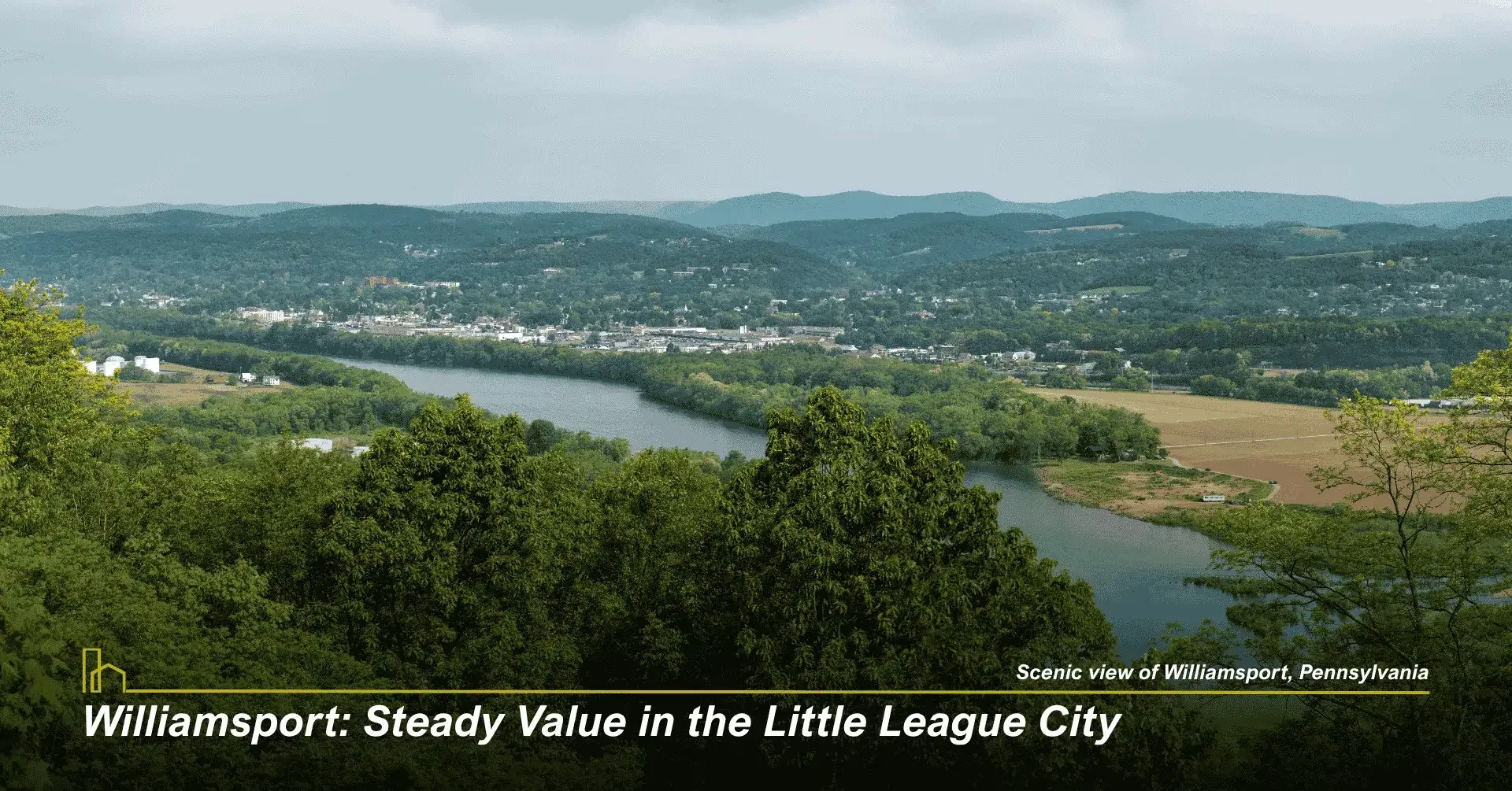
3. Williamsport: Steady Value in the Little League City
HOMEiA Score: 73/100
- Cost of Living: ~2% below U.S. average
- Monthly Rent: ~$950
- Home price to income ratio: 3.2x
- Income to rent ratio: 18.5x
- Safety rating: 68/100
A. Cost of Living & Housing: Williamsport’s overall cost of living sits approximately 2% below the national average, with housing costs roughly 9% below and health care costs 6% below the U.S. norm. The Zillow ZHVI average home value is $206,484 (April 2026, up 3.1% year over year), with a Redfin mid-tier median sale price near $204,088 (January 2026). Note: utilities run approximately 19% to 21% above the national average, partially offsetting housing savings.
B. Economy & Job Market: UPMC Susquehanna Williamsport anchors health care employment, while Pennsylvania College of Technology, a Penn State affiliate with 6,000+ students, serves as both a major employer and a workforce pipeline. The metro averaged 42 to 50 new jobs monthly over 2025 into early 2026.
C. Access & Infrastructure: U.S. Route 15 and I-180 connect Williamsport to the I-80 corridor (20 miles north). The median commute to work is 15.8 minutes.
D. Quality of Life & Culture: Home of the Little League Baseball World Series, Williamsport also offers recreation along the Susquehanna River, Loyalsock State Forest, and the “Pennsylvania Grand Canyon” at Pine Creek Gorge. Victorian-era architecture in older neighborhoods reflects the city’s roots in the prosperity of 19th-century lumber barons.
Strengths: Health care savings, Penn State as an employment anchor, short commutes, iconic outdoor and cultural identity.
Trade-offs: High utility costs (approximately 19% to 21% above the national average), modest incomes, limited retail variety compared to Erie and Scranton.
Recommended for you




4. Johnstown: Deep Affordability With Improving Stability
HOMEiA Score: 74/100
- Cost of Living: ~7% below U.S. average
- Monthly Rent: ~$850
- Home price to income ratio: 1.9x
- Income to rent ratio: 21.8x
- Safety rating: 60/100
A. Cost of Living & Housing: U.S. News & World Report ranked Johnstown 16th in its 2025–2026 “Best Affordable Places to Live in the U.S.” list, citing median rent and utility costs of $616 per month, roughly half the Pennsylvania state average. The Zillow ZHVI average home value is $100,454, down 3.4% year over year (April 2026), with mid-tier Redfin sale prices near $113,710 (January 2026). The home-price-to-income ratio of 1.9x is one of the most favorable in the state.
B. Economy & Job Market: Conemaugh Memorial Medical Center is the dominant employer. Pittsburgh is approximately 90 minutes away, enabling residents to access larger metro employment while maintaining Johnstown’s low housing costs. Population loss and limited organic job creation remain the city’s primary long-term challenges.
C. Access & Infrastructure: U.S. Routes 219 and 22, plus the Pennsylvania Turnpike (I-76), connect Johnstown to Pittsburgh and the I-80 corridor. Pittsburgh International Airport is 90 minutes away.
D. Quality of Life & Culture: The Johnstown Flood National Memorial and Ghost Town Trail define the city’s heritage and outdoor recreation offerings. Crime statistics show measurable improvement, with the city ranking in the 55th percentile for safety nationally. Johnstown appeals most strongly to retirees seeking strong affordability in a community-oriented setting.
Strengths: Among the lowest home prices in the Northeast, improving crime trajectory, low utility and rent costs.
Trade-offs: Limited employment base, ongoing population decline, modest entertainment options, long-term economic uncertainty.

Related article
3 Most Affordable and Safe Neighborhoods to Live in Wilmington, Delaware
Wilmington, Delaware’s largest city, is a wonderful mix of historic charm and urban renewal. Located 30 minutes outside of Philadelphia, some call it a “mini-Philly.” Home to around 72,000 people, Wilmington is part of the greater Delaware Valley metro area, the 8th largest metropolitan region in the United States…
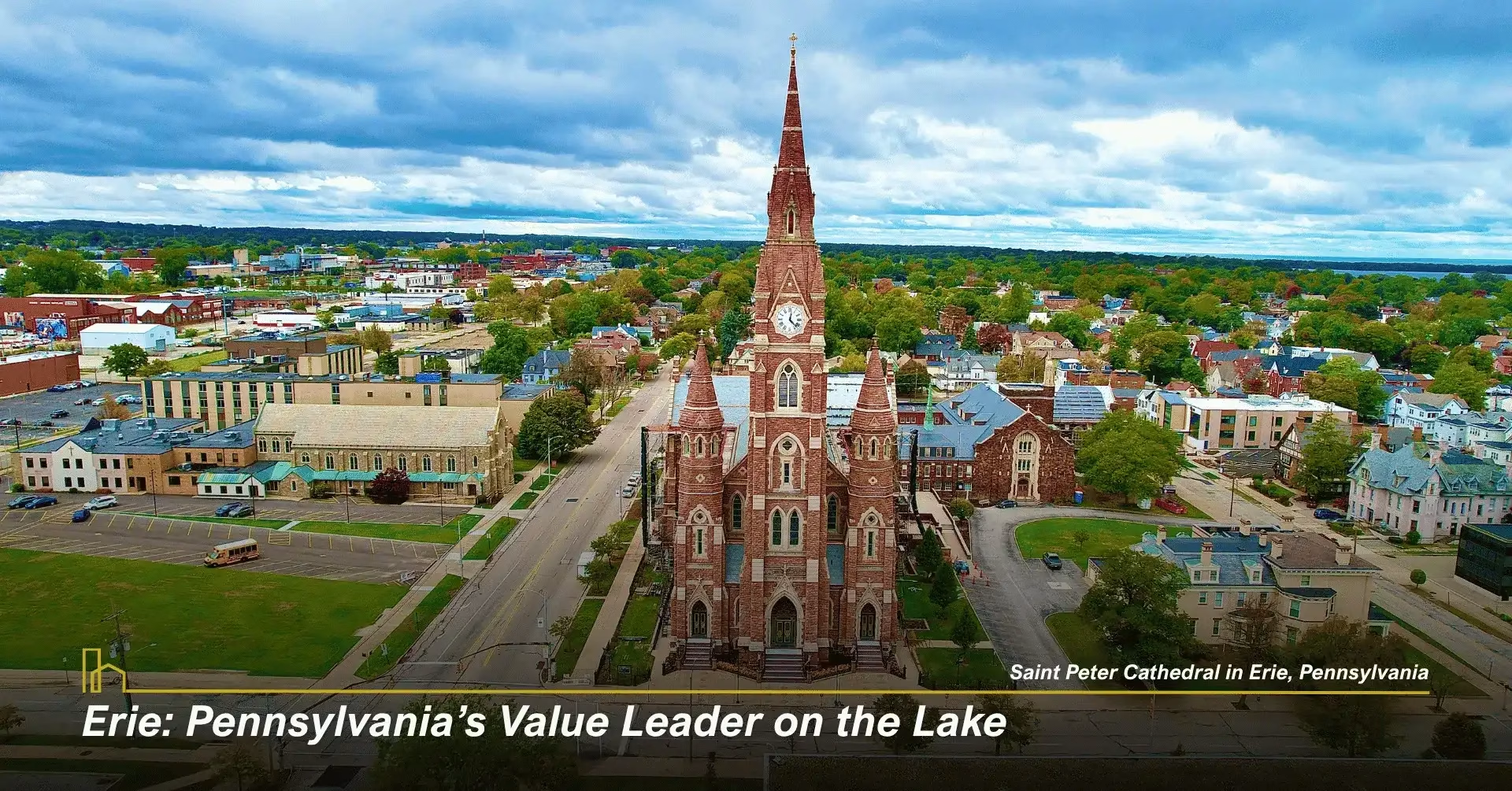
5. Erie: Pennsylvania’s Value Leader on the Lake
HOMEiA Score: 76/100
- Cost of Living: ~8% below U.S. average
- Monthly Rent: ~$1,050
- Home price to income ratio: 2.7x
- Income to rent ratio: 19.8x
- Safety rating: 63/100
A. Cost of Living & Housing: Erie’s Zillow ZHVI average home value is $202,235 as of April 2026, up 5.5% year over year, roughly 51% below the national median. Average rent sits at approximately $1,047 to $1,080 versus the national average of $1,930.
B. Economy & Job Market: Health care employs more than 9,000 Erie residents, led by UPMC Hamot, Saint Vincent Hospital, and Lake Erie College of Osteopathic Medicine. Erie incomes grew significantly faster than the national average in 2025, reflecting sustained economic modernization. Erie County’s unemployment level tracked near 4.6% in early 2026, close to state and national benchmarks. Manufacturing plus two universities, Gannon and Mercyhurst, round out the employer base.
C. Access & Infrastructure: Interstates 90 and 79 give Erie direct access to Cleveland (~100 miles), Pittsburgh (~125 miles), and Buffalo (~95 miles). Erie International Airport serves major hub cities, and multiple hospital systems provide strong health care infrastructure.
D. Quality of Life & Culture: Presque Isle State Park, a beautiful 3,200-acre sandy peninsula that reaches into Lake Erie, offers beaches, swimming, kayaking, cycling, and fishing within city limits. The growing Bayfront dining district and the 20-year Comprehensive Recreation Plan launched in 2025 reflect ongoing urban investment.
Strengths: Nationally recognized affordability, Lake Erie recreation, strong health care system, income growth outpacing national average.
Trade-offs: Heavy lake-effect snowy winters, crime variation by neighborhood, limited public transit outside the urban core.
Related article
7 Most Affordable Places to Live in West Virginia
West Virginia combines some of the nation’s most affordable housing with low property taxes, scenic landscapes, and close-knit communities. While living costs vary across the state, many towns offer exceptional value without sacrificing access to jobs, healthcare, or everyday amenities. This guide highlights seven of the most…
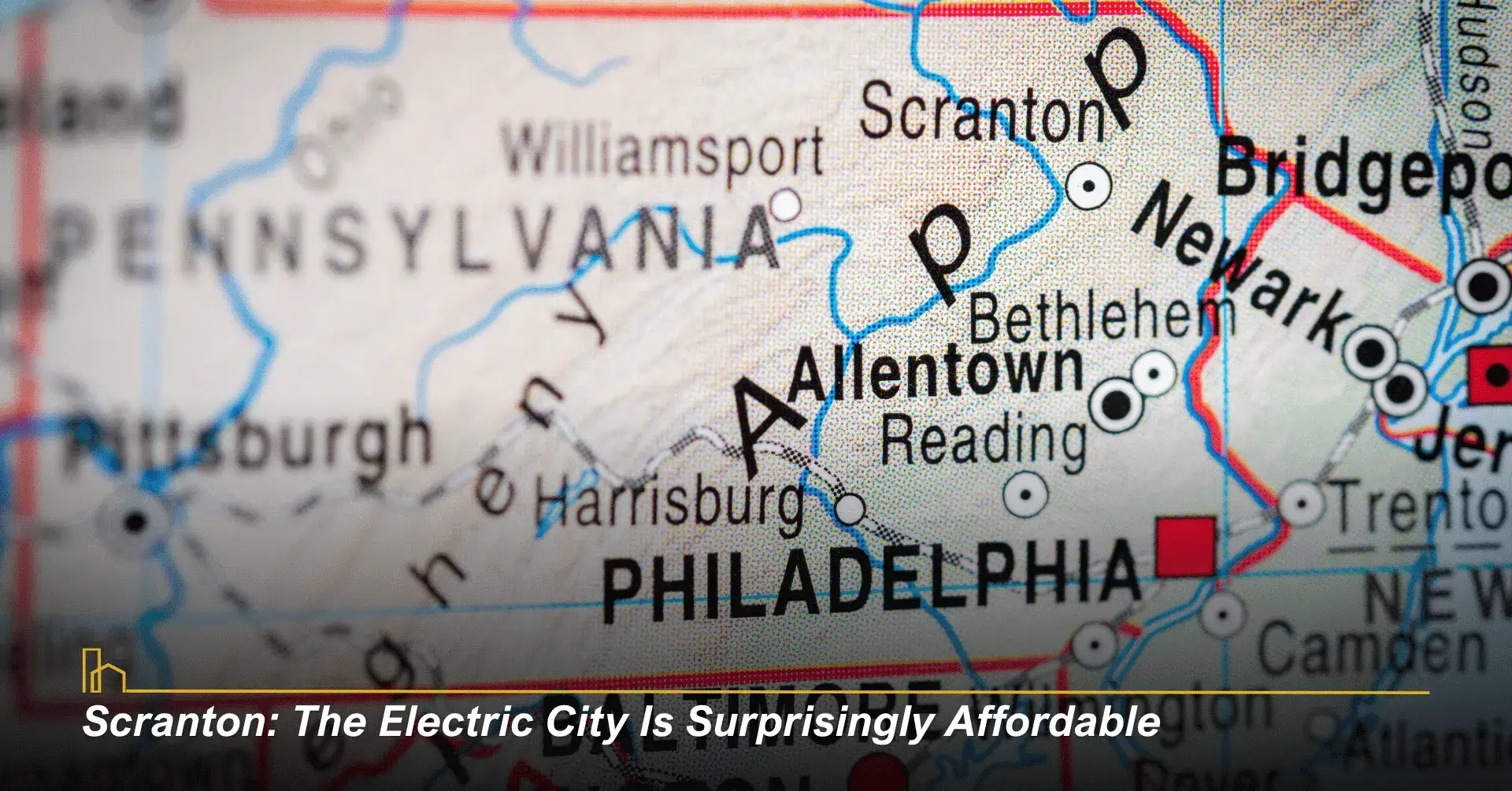
6. Scranton: The Electric City Is Surprisingly Affordable
HOMEiA Score: 77/100
- Cost of Living: ~9% below U.S. average
- Monthly Rent: ~$1,050
- Home price to income ratio: 3.1x
- Income to rent ratio: 20.3x
- Safety rating: 65/100
A. Cost of Living & Housing: Realtor ranked Scranton fifth among U.S. cities for lowest cost of living in late 2024, at $91.90 per $100 of necessary expenses. Housing runs 32% below the national average and health care 16% below the U.S. norm. The Zillow ZHVI average home value is $196,151 (up 3.9% year over year, 2026), with the Redfin median sale price reaching $221,885 for the three months ending April 2026, up 16.2% year over year. A median-income earner needs to earn only $58,532 annually to afford a median-priced home, far below the $100,925 national threshold.
B. Economy & Job Market: Lackawanna County’s top employers include Amazon, Lockheed Martin, Bank of America, Chewy Inc., Geisinger Community Medical Center, and the University of Scranton, covering logistics, defense, finance, retail, health care, and education. Scranton’s proximity to the Northeast Corridor (which stretches from Washington, D.C. to Boston) continues to attract national corporate investment.
C. Access & Infrastructure: Interstates 81, 84, and 380 place Scranton within two hours of New York City. Geisinger Community Medical Center and an upcoming Lehigh Valley Hospital campus ensure strong health care coverage.
D. Quality of Life & Culture: Historic brick rowhouse neighborhoods, a walkable downtown, and safe enclaves like Green Ridge and suburban Dunmore give Scranton an urban character unusual for its size. The Electric City Trolley Museum, Nay Aug Park, and access to Pocono ski resorts provide four-season recreation. Made famous by the TV comedy The Office, Scranton still benefits from its nine-year association with the show, which is still highly popular on streaming platforms in 2026. The show actually jumpstarted Scranton’s reputation from coal town in decline to cool midsize city. Tourists still come to visit Scranton landmarks that appeared on the show, like Cooper’s Seafood House, which still sells The Office merch in its gift shop.
Strengths: Best employer diversity in this guide, dramatic housing savings, health care cost advantage, excellent interstate access.
Trade-offs: Violent crime above the national average in some neighborhoods; income levels below state average. Researching individual neighborhoods is essential.

Related article
10 Most Affordable Places to Live in Ohio
Ohio is commonly referred to as “the heart of it all,” and for good reason. The state of Ohio sits centrally on the eastern side of the United States, and almost 50% of the United States’ population is within 500 miles of Ohio’s capital, Columbus.
7. Altoona: Central Pennsylvania’s Affordable Industrial Anchor
HOMEiA Score: 79/100
- Cost of Living: ~10% below U.S. average
- Monthly Rent: ~$900
- Home price to income ratio: 2.3x
- Income to rent ratio: 22.5x
- Safety rating: 72/100
A. Cost of Living & Housing: Altoona ranks among Pennsylvania’s most affordable midsize cities. The average home value on the Zillow Home Value Index (ZHVI) as of April 2026 is $143,468, up 4.2% year over year, with mid-tier median sale prices near $165,444 (Redfin, January 2026). Entry-level neighborhoods such as Dutch Hill post listings as low as $86,000. The home-price-to-income ratio of 2.3x is among the healthiest in the state, and the overall cost of living runs 10% below the national average.
B. Economy & Job Market: University of Pittsburgh Medical Center (UPMC) Altoona, a 390-bed acute-care teaching hospital, anchors health care employment. Manufacturing, logistics, and retail add diversity, while Penn State satellite programs and the I-99 Innovation Corridor initiative support long-term growth. The Altoona Blair County Development Corporation reported solid economic output in 2025.
C. Access & Infrastructure: U.S. Route 220 and I-99 connect Altoona to State College (45 min), Pittsburgh (113 min), and Harrisburg (130 min). The average commute to work is 14 minutes, among the shortest in the state.
D. Quality of Life & Culture: The Railroaders Memorial Museum anchors local identity rooted in Pennsylvania Railroad heritage. Canoe Creek State Park and an extensive rails-to-trails network offer accessible outdoor recreation. Retirees value the health care access; families appreciate short commutes and the genuine affordability of homeownership.
Strengths: Exceptional housing value, UPMC health care, short commutes, growing economic base.
Trade-offs: Limited nightlife, modest income levels, some blight in older parts of the city.

Related article
The 5 Best Places to Live in New Jersey: A City Comparison
New Jersey serves as a key corridor between New York City and Philadelphia, offering strong schools and a growing knowledge-based economy. Despite high costs, variation is significant, from expensive Princeton to more attainable Morristown, making location choice critical for residents…
III. A Relocation Checklist for Your Pennsylvania Move
1. Budget for the Full Cost of Living
Pennsylvania’s flat 3.07% income tax and approximately 1.26% effective property tax rate are your baseline inputs. Key items to factor beyond the home price:
- Property taxes: Request the actual millage rate and assessed value before making any offer.
- Utilities: Williamsport and Johnstown run measurably above the national average.
- Transportation: All seven communities are car-dependent; vehicle costs are nonnegotiable monthly expenses.
- Flood insurance: Relevant near Johnstown and along river corridors.
2. Secure Employment Before Committing
Pennsylvania ranked third nationally for job growth in 2025, adding more than 76,000 jobs (1.2% increase year over year vs. 0.4% nationally). Scranton and Erie offer the most diversified labor markets; Bradford and New Castle have thinner local pools. For remote workers, confirm broadband speeds at the specific property address, not just the ZIP code.
3. Visit Multiple Neighborhoods
Every city in this guide contains neighborhoods that vary dramatically in safety and living conditions. Use the Pennsylvania Uniform Crime Reporting System and CrimeGrade.org for neighborhood-level crime heat maps before committing to any address, and visit on both weekdays and weekends as well as during daytime and nighttime hours so you can make comparisons.
4. Verify Internet Access at the Property Level
Run a speed test at the property address before signing. Bradford and Johnstown have the most variable broadband landscapes. For remote workers, this single step can prevent a costly mistake.
5. Research School Districts
District boundaries may not align with municipal boundaries. Review PSSA and Keystone Exam scores through the Pennsylvania Department of Education portal; some affordable communities carry below-average ratings, a genuine trade-off families should evaluate honestly.
Conclusion: Your Affordable Pennsylvania Future Awaits
The affordability of Pennsylvania is the Northeast’s best-kept secret. Altoona and Erie offer the strongest overall balance; Scranton delivers a wider variety of employers within two hours of New York City; Johnstown, Bradford, and New Castle maximize housing value; and Williamsport pairs outdoor character with a solid employment base.
Each community has trade-offs, presented honestly here so readers can make informed decisions. Pennsylvania ranked third nationally for job growth in 2025, and these communities offer a real path to stable, meaningful lives at a fraction of coastal costs. The wisest next step: visit, walk the neighborhoods, and check the broadband.
Recommended for you




FAQs About the Most Affordable Places to Live in Pennsylvania
1. Can you still buy a home for under $200,000 in Pennsylvania?
Yes, and, in several markets, for well under $150,000. Altoona’s Zillow ZHVI averages $143,468; Bradford’s Redfin median sale hovers between $82,000 and $102,000; New Castle averages $147,662; and Erie averages $202,235. Johnstown’s values are lower still at $100,454. At the lowest price tiers, thorough home inspections and neighborhood-level research are nonnegotiable.
2. Which affordable Pennsylvania city has the best job market?
Scranton leads in employer diversity, spanning logistics (Amazon), defense (Lockheed Martin), finance (Bank of America), health care (Geisinger Community Medical Center), and education (University of Scranton). Erie is a strong second, with 2025 income growth outpacing the national average and a manufacturing-plus-health-care base supported by two universities.
3. Are these cities good for retirees?
Several are, with distinctions. Altoona, Erie, and Scranton are the strongest retirement candidates, offering UPMC or multisystem health care, reasonable living costs, and accessible amenities. Pennsylvania does not tax Social Security income and exempts many types of retirement income, with a flat 3.07% rate on remaining income. Health care access and tolerance for winter weather are the most important practical factors for retirees.
4. How high are Pennsylvania property taxes?
Pennsylvania’s effective property tax rate averages approximately 1.26%, higher than the national average of 0.89%. On a $150,000 home, that cost is roughly $1,890 annually. Rates vary by county, municipality, and school district. Always request the specific assessed value and millage breakdown before closing, since assessed value and market value are frequently misaligned in older Pennsylvania markets.
5. Which of these affordable Pennsylvania cities is best for families?
Altoona leads overall: affordable homeownership, UPMC health care, short commutes, and stable growth. Williamsport is the best choice for families that value outdoor access and community character. Scranton’s safest neighborhoods offer strong schools for families willing to do neighborhood-level research. In all three markets: verify school district PSSA scores, visit in person, and prioritize the block, not just the name of the city.
Share