






Moving to New Jersey: The Complete Relocation Guide & Checklist
- Local Editor:Local Editor: The HOMEiA Team
- Category: USA , New Jersey


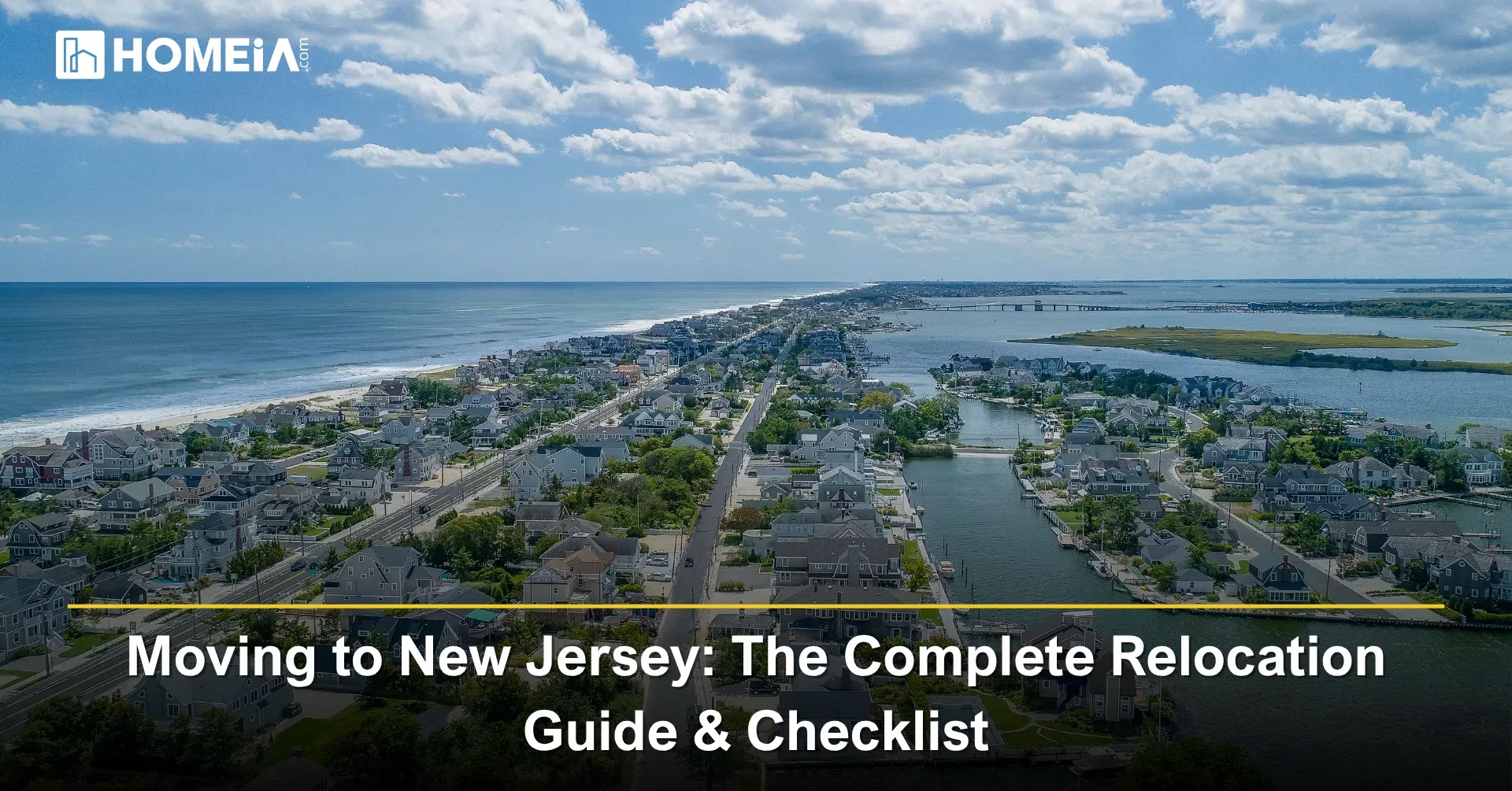
Moving to New Jersey: This State attracts professionals seeking proximity to New York and Philadelphia, advanced healthcare, pharmaceutical innovation, and established communities. The most densely populated state in the nation, NJ offers everything from Hudson River towers to suburban family neighborhoods and Delaware Water Gap hiking. With reputable employment in healthcare, tech, and finance, pristine universities, and transit connectivity, this state appeals to those prioritizing career opportunity and urban access. Our moving to New Jersey guide covers housing, climate, jobs, taxes, and legal requirements for relocating to the Garden State.
Key Takeaways
- Expensive Housing: New Jersey’s median sales price reached $525,000 statewide in 2025, with the Zillow average home value at approximately $571,000. Urban areas like Hoboken and Jersey City command premium prices. Interior and southern communities are more affordable.
- High Taxes: Hereholds the nation’s highest property tax burden with an average effective rate of approximately 2.23 percent and an average annual tax bill of $10,095 in 2024. Income tax ranges 1.4 to 10.75 percent. The tax burden is significant.
- NYC Proximity: North Jersey residents commute to Manhattan. NJ Transit provides rail and bus service. Many employment opportunities remain in-state.
- Strong Healthcare and Pharma: Johnson & Johnson, Merck, Novartis, Novo Nordisk, and Sanofi employ thousands. Healthcare and biotech dominate employment.
- Urban and Suburban Options: From Hudson River waterfront apartments to suburban family towns, there exists diverse living within commuting distance of two major metros.

Related article
Our Methodologies to create HOMEiA Score Ratings for Each Group of Content
HOMEiA uses a consistent, data-driven methodology to evaluate U.S. states for livability, affordability, and long-term value. Our analysis centers on key factors such as Housing and Affordability, Cost of Daily Living, Access and Infrastructure, Community Strength, Safety and Quality of Life, Economic Resilience and Job Market…
I. Methodology: How We Built This Guide
Our relocation recommendations are based on comprehensive analysis of factors impacting a move to New Jersey. We compiled data from verified current sources, including the U.S. Census Bureau, Bureau of Labor Statistics, Zillow housing reports, New Jersey Department of Taxation, and local economic development agencies.
Our evaluation criteria use the following weighted framework:
- Housing & Affordability (30%): Median home prices, rental costs, property taxes, and utility averages for accurate budgeting.
- Access & Logistics (25%): Proximity to NYC and Philadelphia, transit connectivity, and commuting realities.
- Legal & Administrative Requirements (20%): Driver’s licensing, vehicle registration, and voter registration.
- Community & Lifestyle Integration (15%): Urban culture, suburban family values, and professional networking.
- Economic Preparation (10%): Job search guidance for healthcare, pharma, finance, and tech sectors.
II. What Is It Really Like to Live in New Jersey?
1. Culture & Lifestyle
A. New Jersey Identity and Community: State identity can be described as pragmatic and hardworking. Residents are direct communicators focused on results. It balances urban sophistication with suburban family values. North Jersey works in New York while South Jersey gravitates toward Philadelphia. Neighborhoods often reflect immigrant heritage and cultural pride. Communities are ethnically diverse, particularly in urban centers. Newcomers are welcomed if they respect local values and engage with the community.
B. Arts, Sports, and Entertainment: Newark has revitalized its arts district with theaters, galleries, and museums. Jersey City’s waterfront hosts restaurants and cultural venues. Hoboken offers urban nightlife. Major sports teams serve the NY/NJ region with the Giants and Jets (NFL), Devils (NHL), and Red Bulls (MLS). Broadway is easily accessible by transit. College sports Rutgers and Princeton) inspire regional loyalty. Live music venues appear throughout from intimate clubs to larger arenas.
Related article
7 Most Affordable Places to Live in New Jersey
Despite its reputation for high taxes and expensive housing, New Jersey remains a state of distinct regional markets rather than a single housing landscape. While North Jersey commands premium prices driven by proximity to New York City, South Jersey offers significantly lower housing costs and a more affordable lifestyle. This guide highlights seven communities that deliver the strongest combination of affordability, value, amenities, and long-term livability…
2. Food Scene & Nightlife
The state’s food reflects its position between two major metros. Italian cuisine is iconic as Jersey Italian restaurants are legendary. Korean, Indian, Portuguese, and other cuisines reflect its diversity. Farmland produces fresh vegetables and dairy. Breweries have grown significantly. North Jersey nightlife centers on Manhattan as locals enjoy bars and restaurants. South Jersey has Philadelphia influence. Inland communities offer suburban dining.
3. Outdoor Recreation & Natural Beauty
Despite urban density, New Jersey offers substantial outdoor recreation. The Delaware Water Gap National Recreation Area spans 70,000 acres with 140 miles of trails along the Delaware River. Sandy Hook offers 2,044 acres with swimming, hiking, and biking. Island Beach State Park preserves a natural shoreline. The Jersey Shore extends 130 miles with beaches from Sandy Hook to Cape May. Hiking, fishing, kayaking, and biking are accessible within an hour of most locations.
- Summer: Beach season dominates. Swimming and shore recreation are central.
- Fall: Fall foliage in northern forests. Hiking improves with cooler weather.
- Winter: Skiing in nearby areas. Shore walks and winter hiking.
- Spring: Wildflower hiking and fishing season.
4. Climate & Weather
Their climate is humid continental in the northern part and humid subtropical in southern regions. The Atlantic Ocean influences coastal regions. Proximity to mountains provides slight moderation.
| Region / Season | Temperature | Precipitation |
| North Jersey: Spring | 45-65°F | Moderate rain |
| North Jersey: Summer | 75-90°F | Occasional storms |
| North Jersey: Fall | 50-70°F | Variable rain |
| North Jersey: Winter | 25-45°F | Snow and rain mix |
| South Jersey: Spring | 50-70°F | Light to moderate |
| South Jersey: Summer | 80-95°F | Thunderstorms |
| South Jersey: Fall | 55-75°F | Moderate rain |
| South Jersey: Winter | 30-50°F | Occasional snow |
This section of the Tri-state receives 40-51 inches of rain annually. Winters feature 9-12 days per month with measurable precipitation. Snow occurs between November and April but is variable. Summers are warm and humid with frequent thunderstorms. Spring arrives later in the north. Fall is warm but increasingly rainy.


Related article
The Pros and Cons of Living in New Jersey
The Pros and Cons of Living in New Jersey include excellent schools, access to NYC, beautiful beaches, and strong job markets. However, high property taxes and living costs can be challenging. This diverse state offers urban, suburban, and coastal lifestyles, making it appealing to families, professionals, and retirees alike…
5. Cost of Living & Affordability
A. Housing Market
| City | Median Home | 1-Bed Rent | 3-Bed Rent | Property Tax |
| Hoboken | $853,000 | $3,762 | $5,500 | 2.23% avg |
| Jersey City | $665,000 | $3,182 | $4,800 | 2.23% avg |
| Newark | $483,000 | $1,800 | $2,800 | 2.23% avg |
| Trenton | $215,000 | $900 | $1,400 | 2.23% avg |
| NJ avg | $571,000 | $2,084 | $3,200 | 2.23% avg |
Hoboken and Jersey City command premium prices for NYC proximity. Newark is more affordable. Trenton and interior South Jersey offer best value. New Jersey holds the nation’s highest property tax burden, with an average effective rate of approximately 2.23 percent and a record-high average annual bill of $10,095 in 2024. A $571,000 home costs approximately $12,740 annually in property tax at that effective rate.
B. Daily Living Expenses
| Category | Monthly Cost |
| Utilities | $250-380 |
| Internet | $60-100 |
| Groceries (single) | $350-450 |
| Transportation/Car | $150-300 |
| Healthcare | $150-350 |
The cost of living is approximately 15 percent above the national average. Utilities remain modestly above the national average. NJ Transit passes offer unlimited travel. Healthcare costs vary but are reasonable given overall quality.
6. Jobs & Economy
New Jersey’s economy is significantly diversified. Healthcare and pharmaceutical industries dominate. Johnson & Johnson, Merck, Novartis, Novo Nordisk, and Sanofi employ thousands. Cognizant Technology Solutions is among its largest private employers. Financial services, insurance, telecommunications, and manufacturing remain significant.
The job market is mixed. Unemployment was 4.8 percent in April 2026, above the national average. Six private industry sectors recorded employment gains. Before moving, secure employment or have substantial savings.
Recommended for you




7. Education & Schools
A. Higher Education
- Princeton University: An Ivy League member, it’s among the nation’s most selective. Tuition $65,210 (2025-26). Total cost of attendance approximately $90,718. Most families with incomes below $250,000 pay no tuition under Princeton’s financial aid programs.
- Rutgers University (New Brunswick): In-state $14,933; out-of-state $35,758 (2025-26 tuition). Flagship university with comprehensive programs. Note: 2025-26 tuition reflects a 5% increase for in-state students.
- Seton Hall University: Undergraduate tuition $54,455 (2025-26 flat tuition rate). Known for business and health professions.
NJ has numerous community colleges and smaller institutions throughout.
B. K-12 Education
K-12 education showcases significant variation. North Jersey suburban districts have exceptional ratings backed by consistent funding. Urban districts struggle with underfunding. South Jersey districts vary by community. School quality correlates with community property values. Top-ranked districts command premium housing. Research specific district ratings before choosing neighborhoods.
8. Tax Structure
| Tax Type | Rate | Notes |
| State Income Tax | 1.4-10.75% | 7 brackets, steep on high earners |
| State Sales Tax | 6.625% | Varies by county |
| Property Tax | 2.23% effective avg | Highest in the nation |
| Vehicle Registration | Variable | Based on vehicle value |
The Garden State has one of the highest overall tax burdens in the nation. Income tax ranges 1.4 percent to 10.75 percent. Sales tax is 6.625 percent. Their effective property tax rate of approximately 2.23 percent is the highest in the nation, with the median property tax bill reaching $9,590 in 2026. For a family earning $100,000, its tax burden is substantially higher than most states.

Related article
The 5 Best Places to Live in New Jersey: A City Comparison
New Jersey serves as a key corridor between New York City and Philadelphia, offering strong schools and a growing knowledge-based economy. Despite high costs, variation is significant, from expensive Princeton to more attainable Morristown, making location choice critical for residents…
9. Best Places to Live
| City | Population | Median Home | Best For |
| Newark | ~314,000 | $483,000 | Urban living, transit |
| Jersey City | ~306,000 | $665,000 | Waterfront, NYC proximity |
| Hoboken | ~59,000 | $853,000 | Young professionals |
| Trenton | ~91,400 | $215,000 | Capital, affordability |
| Princeton | ~30,000 | $1,400,000+ | University town |
- Newark: Largest city. Urban culture, transit access, diverse neighborhoods. Undergoing revitalization. More affordable than Hoboken or Jersey City.
- Jersey City: Waterfront development. Compounded yearly growth. NYC proximity. More expensive than Newark.
- Hoboken: Upscale urban living. Young professional demographic. Respectable nightlife. Premium prices. The population has declined modestly since 2020.
- North Jersey Suburbs: Communities like Montclair and Summit offer excellent schools and family communities. Premium housing.
- South Jersey: More affordable than North Jersey. Philadelphia influence.
10. Planning Your Move
| Timeline | Actions |
| 12-8 Weeks Before | Research neighborhoods and schools. Secure employment. House hunt online. Get mortgage pre-approval. |
| 6-8 Weeks Before | Visit neighborhoods in person. Schedule viewings. Meet agents. Get moving quotes. |
| 4-6 Weeks Before | Make offer or sign lease. Book movers. Declutter and pack. Gather documents. |
| 2-4 Weeks Before | Arrange utilities. Update address. Get DMV documentation. Mail forwarding. |
| 1-2 Weeks Before | Finalize moving details. Final walkthrough. Confirm utilities. Pack items. |
| Moving Day | Oversee movers. Turn off/on utilities. Unpack essentials. |
| Within 60 Days | Driver’s license and vehicle registration. Register to vote. Insurance. Healthcare providers. |
=> Get the Relocation Guide & Checklist PDF — prepared for both Desktop and Mobile devices.
11. Transportation
New Jersey has extensive transit unmatched in most states. NJ Transit provides bus, rail, and light rail statewide. The PATH train connects Jersey City and Newark to Manhattan. Commuter rail serves both New York and Philadelphia. North Jersey residents often commute by transit. Personal vehicles are necessary outside transit corridors. Driving in the Northeast requires defensive skills and winter preparedness. Newark Liberty (EWR0 and Atlantic City (ACY) airports serve the state.

Related article
20 Best Things to do in Montauk New York for Couples
Montauk is nestled within the town of East Hampton, one of the towns collectively known as the Hamptons. The area is famous for its affluence and ties to wealthy celebrity culture. Still, it has a lot to offer everyone. Montauk is bustling with fun and exciting activities for people to enjoy alone, in groups, and especially with couples…
12. Legal Requirements & Paperwork
- New Jersey Driver’s License: Apply within 60 days of establishing residency. Need proof of identity, residency, and Social Security card. Standard 4-year auto license fee is $24 (initial issuance). REAL ID requires an additional $11 fee at renewal.
- Vehicle Registration: Register within 60 days. New Jersey registers vehicles biennially. Cost varies based on vehicle value.
- Voter Registration: Register at DMV or online. Same-day registration available on election day.
- Address Changes: Update with USPS immediately. Notify institutions within two weeks.
13. Financial Planning for Your Move
Budget one month of expenses as an emergency fund. Get mortgage pre-approval if buying. Expect property and income tax to be significant. First-time homebuyer programs exist through nonprofits.
For rentals, expect credit checks and first month, last month, plus security deposit.
Budget $2,500-$6,000 for typical moves depending on distance. Employers sometimes offer moving assistance.
14. Insider Tips from New Jersey Residents
- Understand Property Tax Reality: Here holds the nation’s highest effective property tax rate. The average annual bill hit a record $10,095 in 2024. Budget this as a major expense. Top-rated schools command premium housing.
- Choose Your Commute Carefully: If working in New York, consider transit-accessible areas. NJ Transit offers reasonable options.
- Research School Districts: Housing prices correlate with school ratings. Prioritize district quality if children matter.
- Prepare for Humidity: Summers are hot and humid. Air conditioning is not optional. Allergies can be significant.
- Understand Regional Differences: North Jersey is different from South Jersey. Each has a distinct character.
- Embrace Diversity: New Jersey is ethnically diverse. Food and culture reflect immigrant heritage.
- Expect Urban Density: This is the most densely populated state in the nation. Expect neighbors and traffic.
Conclusion
Moving to New Jersey works well for professionals prioritizing career opportunity, healthcare advancement, and urban or suburban living. The state offers reliable employment in healthcare and pharma, excellent universities, diverse communities, and proximity to two major metros. However, housing is expensive, taxes are the highest in the nation, and pace is faster than many regions. Choose locations carefully. Newark offers urban living and relative affordability, Jersey City and Hoboken offer waterfront living, North Jersey suburbs offer standout schools and family communities, and South Jersey offers more space and affordability. Research neighborhoods thoroughly, understand property tax implications, and visit in different seasons. The Garden State rewards those comfortable with Northeast density, competitive pace, and deeply-rooted local community. For the right person, NJ offers professional opportunity and urban sophistication.
Recommended for you




FAQs About Moving to New Jersey
1. Is New Jersey a good state to move to?
Here is excellent for professionals prioritizing job opportunity, healthcare advancement, education, and urban access. It is less appealing for those seeking affordability, rural living, lower taxes, or slower pace.
2. What salary is needed to live comfortably in New Jersey?
In North Jersey near NYC, budget $75,000-$90,000 for a single person. In the central portion of the state, $60,000-$70,000 is adequate. In the south, $50,000-$60,000 is reasonable. Higher housing and tax costs require higher salaries.
3. What is New Jersey’s income tax?
There exists a progressive income tax from 1.4 percent to 10.75 percent on income over $1,000,000. For middle income earners, expect 5-6 percent.
4. What are the biggest pros and cons of living in New Jersey?
A. Pros: Excellent employment in healthcare and pharma, strong universities, diverse communities, urban amenities, transit access, beaches.
B. Cons: Nation’s highest property taxes, high income taxes, expensive housing, traffic, summer humidity, fast-paced culture.
5. What is the best city for newcomers to New Jersey?
Newark offers urban living and relative affordability. Jersey City offers waterfront living with NYC proximity. Hoboken offers a young professional lifestyle. North Jersey suburbs offer schools and family communities. South Jersey offers affordability and space. Consider your priorities.
6. Is New Jersey expensive compared to neighboring states?
Housing is comparable to parts of New York and more expensive than most of Pennsylvania. Property taxes are the highest in the nation. Income taxes are among the nation’s highest. Overall New Jersey is expensive, though salaries reflect this.
7. How long does it take to become a New Jersey resident?
You are legally a resident when establishing residency. For driver’s license and vehicle registration, obtain within 60 days. For taxes, you are a resident immediately.
Share