






Best Places to Live in South Carolina for Retirees
- Local Editor:Local Editor: Casey McKenna-Monroe
- Category: USA , South Carolina



Best Places to Live in South Carolina for Retirees: Choosing where to settle down once retired is certainly not easy. The right place needs to demonstrate affordability on a fixed income, high safety marks, easy access to healthcare, and a lifestyle that caters to your newfound freedom. For these reasons and more, South Carolina consistently ranks among the best places to retire in the United States.
Main Points for Retirees
- Tax-Friendly Status: Social Security is not taxed, and those aged 65 and older benefit from retirement income deductions and the Homestead Exemption.
- Affordable Living: South Carolina’s overall cost of living is below the national average, providing retirees with greater purchasing power.
- Mild Climate: Its subtropical climate has warm, humid summers and mild winters, perfect for year-round outdoor activities.
- Diverse Options: Pick between historic coastal cities through mountain-adjacent towns to suit individual preferences and budgets.
- Healthcare Access: Major metro areas feature top-tier medical facilities and research hospitals.

Related article
Our Methodologies to create HOMEiA Score Ratings for Each Group of Content
HOMEiA uses a consistent, data-driven methodology to evaluate U.S. states for livability, affordability, and long-term value. Our analysis centers on key factors such as Housing and Affordability, Cost of Daily Living, Access and Infrastructure, Community Strength, Safety and Quality of Life, Economic Resilience and Job Market…
South Carolina Resources for Retirees
The South Carolina Department on Aging provides a wealth of resources to support the state’s older residents. Programs like GetCareSC.com help seniors and caregivers locate local services. Gain one-on-one insurance counseling for Medicare beneficiaries from the State Health Insurance Assistance Program (SHIP) for free.
For those looking to stay active and engaged, the state’s Senior Community Service Employment Program (SCSEP) provides work-based training for eligible older adults. Many local institutions offer lifelong learning opportunities.
The statewide benefits South Carolina has for retirees help cement its place as one of the top states to settle down. Each of the six communities below goes above and beyond, offering a mix of affordability, excellent healthcare options, safety, and vibrant local culture.
It should be noted that all the communities below share specific characteristics that make them attractive to empty nesters and retirees. See below the top places for retirees in South Carolina:
Related article
The 9 Best Places to Live in South Carolina for Families
South Carolina offers far more than the coastal appeal of Charleston and Myrtle Beach. Across the Midlands and Upstate, families find affordable living, strong job markets, outdoor recreation, and welcoming communities. This guide explores the best places to live based on schools, lifestyle, opportunity, and overall quality of life…
1. Spartanburg
HOMEiA Score: 86/100
- Cost of Living: Below-average housing prices help it stay highly affordable
- Home price to income ratio: Very attractive, allowing for more house for the money.
- Income to rent ratio: Highly favorable for those looking to downsize.
Size and Population: Approximately 55,000 residents.
Safety/Crime Overview: Improving, with notably higher property crime than violent crime. Rates trend higher is specific areas like around Dorman Center.
Overview:
Known as “Hub City,” Spartanburg’s recent development is in part due to manufacturing expansion. Trendy breweries and an active arts community thrive in its revitalized downtown centered around Morgan Square. For retirees moving from high-cost states, Spartanburg’s affordability stands out — see our Cost of Living in New York vs. South Carolina comparison.
A. Median Household Income, Median Home Value, Annual Spend for Homeowners, and Annual Spend for Renters:
- Median Household Income: ~$48,000
- Median Home Value: ~$240,000
- Annual Spend (Homeowners/Renters): Lower compared to national and even state averages.
B. Employment Prospects: Primarily through manufacturing, logistics, and retail.
C. Healthcare: Home to Spartanburg Regional Healthcare System, a major regional employer and care provider.
D. Education: Home to Wofford College, Converse University, and five additional centers of higher education.
E. Unique Attributes and Lifestyle: Spartanburg’s rich history of producing textiles and music is evident today in its architecture and community events. It has beautiful public gardens, extensive senior-focused programs, and a local coffee and craft beer culture.
Related article
The Pros and Cons of Living in South Carolina
South Carolina offers more than coastal charm and Lowcountry scenery. From Charleston to Summerville and Hilton Head Island, the state combines economic growth, favorable taxes, and warm weather. This guide explores the real advantages and trade-offs of living in the Palmetto State.
2. Myrtle Beach
HOMEiA Score: 87/100
- Cost of Living: Expenditures vary based on distance to the ocean.
- Home price to income ratio: Balanced; plenty of options for retirees at different price points.
- Income to rent ratio: Competitive; seasonal demand impacts rental availability.
Size and Population: Approximately 38,000 residents (city proper); part of a larger metro area closer to 420,000 residents. About one out of every four is over 65.
Safety/Crime Overview: Tourist-driven crime is the primary concern; residential areas remain stable.
Overview:
Myrtle Beach is synonymous with fun in the sun. For retirees, buying here makes every day a vacation. Visit the 60 miles of beaches, world-class golf courses, or pickleball courts on your schedule. The boardwalk and downtown have entertainment and activities when family visits. This is an active community that celebrates a laid-back vacation lifestyle.
A. Median Household Income, Median Home Value, Annual Spend for Homeowners, and Annual Spend for Renters:
- Median Household Income: ~$55,000
- Median Home Value: ~$320,000–$350,000
- Annual Spend (Homeowners/Renters): Dependent on coastal proximity and community amenities.
B. Employment Prospects: Primarily tourism, service, and the hospitality sector.
C. Healthcare: Expanding Grand Strand Medical Center and additional healthcare infrastructure support the large retirement population.
D. Education: Access to Coastal Carolina University and various continuing education programs for seniors.
E. Unique Attributes and Lifestyle: Golfers’ paradise with over 80 courses in the greater region, miles of beachfront, and endless live entertainment options.
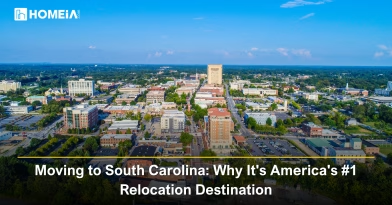
Related article
Moving to South Carolina in 2026: Why It’s America’s #1 Relocation Destination
South Carolina continues leading the nation in inbound migration, attracting nearly two new residents for every one who leaves. Strong economic growth, tax reforms, affordability, and lifestyle appeal—from historic Charleston to vibrant Greenville—have made the Palmetto State one of America’s most desirable relocation destinations…
3. Columbia
HOMEiA Score: 88/100
- Cost of Living: Among the most affordable cities in South Carolina.
- Home price to income ratio: Very low, making it ideal for those on a fixed income.
- Income to rent ratio: Excellent; highly accessible for renters.
Size and Population: Approximately 140,000 residents; the state capital.
Safety/Crime Overview: Crime is concentrated in specific urban pockets and is high for property crime; safe residential neighborhoods are plentiful.
Overview:
As the state capital, Columbia manages to capture quintessential Southern charm, political energy, and college-town vitality. It is affordable and culturally rich, with plenty to keep active retirees busy.
A. Median Household Income, Median Home Value, Annual Spend for Homeowners, and Annual Spend for Renters:
- Median Household Income: ~$52,000
- Median Home Value: ~$250,000
- Annual Spend (Homeowners/Renters): Well below the national average.
B. Employment Prospects: Major sectors include government, education (University of South Carolina), and professional services.
C. Healthcare: Three major regional healthcare facilities and a strong health-sciences network empower retirees with choices for their care.
D. Education: The home to the University of South Carolina has access to academic, Division I sports, and social events.
E. Unique Attributes and Lifestyle: The Broad and Saluda Rivers meet downtown, giving residents recreation choices right on the riverfront. Excellent park systems (such as Sesquicentennial Park and Finlay Park) enhance recreation access. Columbia has a thriving theater and museum scene. Commute times to downtown are typically 15-20 minutes from the suburbs.
Recommended for you




4. Beaufort
HOMEiA Score: 90/100
- Cost of Living: Moderate, with a coastal lifestyle at a more accessible price point than Charleston.
- Home price to income ratio: Balanced for those moving from higher-cost states.
- Income to rent ratio: Stable, with permanent residents and military personnel.
Size and Population: Approximately 13,000 residents; a charming, intimate small-town feel.
Safety/Crime Overview: Below the national average in reported crime, with a tight-knit community feel characteristic of the Lowcountry.
Overview:
Beaufort epitomizes the Lowcountry look with its Spanish moss-draped oak trees and pristine waterfront parks. Its landscapes have appeared in multiple film productions set in the South, including Forrest Gump. Historically, a fishing village, the slower, more deliberate pace of life is perfect for retirement. Gain access to waterfront and world-class golf at nearby Hilton Head Island.
A. Median Household Income, Median Home Value, Annual Spend for Homeowners, and Annual Spend for Renters:
- Median Household Income: ~$65,000
- Median Home Value: ~$424,000–$435,000
- Annual Spend (Homeowners/Renters): A cost of living below national averages allows for reasonable expenses for a coastal location.
B. Employment Prospects: Driven by tourism, the military (MCAS Beaufort), and the healthcare/service sectors.
C. Healthcare: Excellent local facilities, with the Beaufort Memorial Hospital right in town.
D. Education: Various community-based learning programs tap into your creative side and interest in new subjects.
E. Unique Attributes and Lifestyle: Ideal for boating, fishing, and exploring the Sea Islands. The downtown waterfront is the heartbeat of the community. The annual oyster and water festivals draw thousands in January and July, respectively.
5. Charleston
HOMEiA Score: 92/100
- Cost of Living: Slightly above the state average, but unmatched amenities.
- Home price to income ratio: High, reflecting the city’s popularity and historical status.
- Income to rent ratio: Competitive; rental demand is high in the peninsula and surrounding areas.
Size and Population: Approximately 160,000 residents.
Safety/Crime Overview: Crime rates vary by neighborhood; proactive community policing remains a priority in the metro area.
Overview:
Historic and humming with energy, Charleston is the crown jewel of the South Carolina coast. Famous for its cobblestone streets, horse-drawn carriages, and pastel antebellum houses, Charleston’s sophisticated lifestyle is filled with world-class dining and numerous recreational options.
A. Median Household Income, Median Home Value, Annual Spend for Homeowners, and Annual Spend for Renters:
- Median Household Income: ~$92,800
- Median Home Value: ~$557,500–$663,500
- Annual Spend (Homeowners/Renters): Varies by lifestyle, but costs are higher than the state median.
B. Employment Prospects: A robust and diversified economy benefits from tourism, the shipping industry (Port of Charleston), aerospace (Boeing), and healthcare (MUSC).
C. Healthcare: Home to the Medical University of South Carolina (MUSC) and Roper St. Francis, both ranked for top-tier specialized care.
D. Education: Strong presence of higher education institutions, including The Citadel and the College of Charleston.
E. Unique Attributes and Lifestyle: Residents enjoy world-famous culinary scenes, historic sites, frequent art festivals, and easy access to beaches like Folly Beach and Isle of Palms.
6. Greenville
HOMEiA Score: 94/100
- Cost of Living: Highly affordable, frequently cited as one of the best value cities in the Southeast.
- Home price to income ratio: Excellent; high affordability for retirees.
- Income to rent ratio: Favorable; strong rental market with diverse options.
Size and Population: Approximately 76,000 residents and growing.
Safety/Crime Overview: Reported crime has trended downward since 2023, particularly in the revitalized downtown and suburban neighborhoods.
Overview:
Situated at the foot of the Blue Ridge Mountains, Greenville is the Upstate’s cultural hub. With a booming walkable downtown, the 22-mile Swamp Rabbit Trail, a pervasive creative culture, and mountain views, it is a top choice for active retirees.
A. Median Household Income, Median Home Value, Annual Spend for Homeowners, and Annual Spend for Renters:
- Median Household Income: ~$58,000
- Median Home Value: ~$320,000
- Annual Spend (Homeowners/Renters): Manageable due to the low cost of living.
B. Employment Prospects: A diverse and strong job market featuring manufacturing, technology, and healthcare.
C. Healthcare: Served by the Prisma Health system and the Bon Secours Health System, with extensive regional coverage.
D. Education: Furman University and Bob Jones University provide retirees access to lectures, sporting events, and arts.
E. Unique Attributes and Lifestyle: Residents love the “walkable” downtown, Falls Park on the Reedy. Outdoor recreation in easy with multiple state parks, mountain hiking, and lake recreation. Its award-winning Artisphere is one of the South’s best arts and culture events.
Retiring to South Carolina
Retirement Living ranked South Carolina among the top five states to retire in the United States. Affordability is a part of that reason. So is its blend of coastal beauty, mountain charm, and unique culture. With its tax advantages, mild climate, and accessible cost of living, the Palmetto State is an exceptional choice for retirees looking to enjoy their best years.
You can also watch this YouTube video to further Understanding SC Retirement. This video provides a balanced, realistic perspective on the pros and cons of moving to South Carolina, helping you weigh factors beyond just the financial benefits.
Recommended for you




FAQs About The Best Places to Live in South Carolina for Retirees
1. Is South Carolina a tax-friendly state?
South Carolina is highly tax-friendly for retirees. Social Security benefits are not taxed, and individuals 65 and older can claim significant deductions on retirement income. The state also offers a Homestead Exemption, which can exempt taxes on the first $50,000 of your home’s value for those 65 and older. The state sales tax rate is 6%, with local option taxes potentially increasing the base. Local taxes averaged 7.43% across locations (as of May 2026).
2. What are the specific income tax deductions available to South Carolina retirees?
Residents aged 65 and older can deduct up to $10,000 on qualified retirement income, such as pensions, 401(k) plans, and IRAs. Additional age-related deduction can bring that total higher. It works well to lower their state tax burden compared to other states.
3. Are there any property tax breaks for seniors in South Carolina?
Yes, the South Carolina Homestead Exemption allows homeowners aged 65 and older to exempt the first $50,000 of their primary residence’s fair market value from all property taxes. You’ll have to live in South Carolina for one full year before you can claim.
4. Does South Carolina experience severe weather that retirees should worry about?
Coastal areas are susceptible to hurricanes and flooding between June and November. Living in a flood zone impacts insurance costs and home preparation. Inland areas are less affected by direct storm landfalls but can still experience heavy rain and wind events.
5. How does the public transportation system in South Carolina affect retired life?
Public transportation is relatively limited compared to larger northern metropolitan areas. Most residents rely on personal vehicles, particularly if they live outside Myrtle Beach, Charleston, or Columbia. Choosing a walkable community or one that with local senior transit services is recommended.
6. What should I know about healthcare access if I decide to retire in a rural South Carolina town?
While cities like Greenville and Charleston have world-class, university-affiliated healthcare, rural areas may have fewer specialized centers. Access to specialty medical care, and even general care, can be very limited in some locations. It is advisable to map out the distance to the nearest regional hospital before finalizing a move to a more secluded town.
7. Is South Carolina truly cheaper than Florida or North Carolina?
Generally, yes. Comparing the two depends heavily on the market, but on a broad picture look South Carolina consistently shows lower housing costs and property tax rates than Florida. It reports more favorable tax treatment for retirement income than in North Carolina, though specific costs will always depend on the exact city or town. Georgia is another state retirees frequently weigh against South Carolina — our Cost of Living in South Carolina vs. Georgia comparison breaks down housing, taxes, utilities, and everyday costs side by side.
No, Social Security benefits are not taxed at the state level in South Carolina, allowing retirees to keep the full value of these benefits for their living expenses.
Share