





Living In Kansas
Local Editor(s)

 Verified

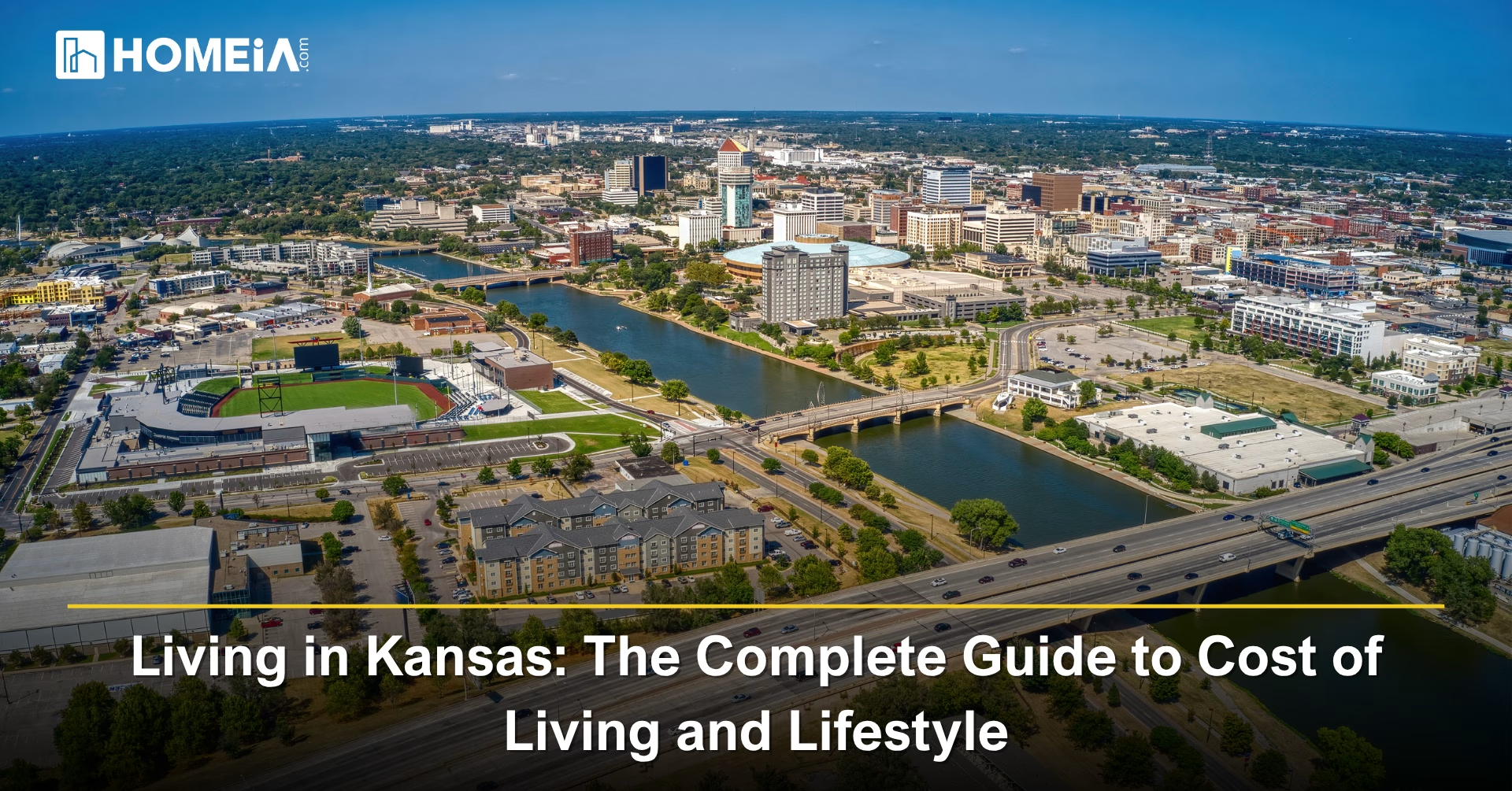
The Complete Guide to Cost of Living and Lifestyle
Having a place in the Sunflower State means you have heard every tornado and flat-land joke known to man and they have gone from mildly amusing to boring. People moving here from the coasts usually need six months to recalibrate their expectations, and then they stop moving back. Generally, the largest surprise is not the space or the sky: it is the math. A household income that feels tight in Denver or Austin goes far in Wichita or Lawrence, and the state has been quietly dismantling the taxes that used to complicate that story.
Kansas is also the aerospace capital of general aviation, with more aircraft rolling out of Wichita factories than anywhere else on earth. The Kansas City metro on the eastern edge is a two-state restaurant and arts scene with nothing to apologize for. Drive west from Wichita in August and the fields on either side of the highway are a solid wall of sunflower yellow. The state has range, in every meaning of the word.
Key Takeaways
- 5th most affordable state in the country: Kansas’s 2025 MERIC cost-of-living index is 88.4 (U.S. = 100), with housing at a sub-index of 76.9, nearly 24% below the national benchmark. The statewide Zillow Home Value Index is $240,057 (February 2026), up 3.3% year-over-year.
- Grocery tax fully eliminated as of January 1, 2025: The state sales tax was levied on food and food ingredients entirely, down from 6.5% in 2022 through a three-year phase-out. Local taxes may still apply, but the state share is zero. The average family of four saves approximately $500 per year.
- Income tax on a scheduled march downward: Two income tax rates (5.20% and 5.58%) are being reduced by law to a single flat rate of 4% through a phased schedule that began July 1, 2025. The state also cut the property tax mill levy by 1.5 mills.
- Low unemployment with aerospace anchoring the job base: The seasonally adjusted unemployment rate was 3.9% in January 2026. Spirit AeroSystems (Boeing) and Textron Aviation together employ approximately 18,500 workers in the Wichita metro alone.
- 26 state parks, 100-plus wildlife areas, and 90-plus reservoirs: Federally administered land is only 0.5% of the state’s acreage. The Kansas Department of Wildlife and Parks manages 26 state parks, more than 100 wildlife areas, and more than 90 reservoirs and lakes statewide.


Related article
8 Best Places to Live in Colorado
Colorado’s cities are just as varied as its landscapes, each offering distinct experiences. Some serve as energetic centers of innovation and technology, while others provide peaceful, close-knit communities that offer a welcome escape from the fast pace of modern life…
1. Snapshot of Kansas
Kansas’s estimated population reached 2,977,220 on July 1, 2025, growing at 0.4%, above the Midwest average of 0.35% for the same period. The two-metro structure matters: the Kansas City metro (Johnson County) on the east side and Wichita (Sedgwick County) anchor the state’s economic activity, while the rest is a mix of college towns, agricultural hubs, and smaller cities. Median household income is $75,500 in 2024, about 7.5% below the national median, but it pairs with a cost of living 11.6% below the national average. This makes the real purchasing power gap much smaller than the income figure alone suggests.
| Metric | Figure (2025-2026) | Source |
| Population estimate | 2,977,220 (July 1, 2025) | U.S. Census Bureau |
| Median household income | $75,500 (2024) | U.S. Census Bureau / USAFacts |
| Cost-of-living index | 88.4 (U.S. = 100, 2025 avg; 5th most affordable) | MERIC |
| Avg. home value (ZHVI) | $240,057 (Zillow, Feb 28, 2026, +3.3% YoY) | Zillow Home Value Index |
| Avg. rent (Wichita 2BR) | $1,139/month (Zillow ZORI) | Zillow rental trends |
| Unemployment rate | 3.9% (January 2026, seasonally adj.) | Kansas Dept. of Labor / BLS |
| Federal land share | 0.5% of Kansas acreage (2018 CRS data) | Congressional Research Service |
Sources: U.S. Census Bureau; MERIC; Zillow ZHVI (Feb 28, 2026); Kansas Dept. of Labor / BLS; Congressional Research Service
2. Housing Costs and Real Estate
Here ranks among the five most affordable housing states in the country. The statewide Zillow Home Value Index reached $240,057 as of February 28, 2026 (+3.3% YoY). The MERIC housing sub-index is 76.9 (U.S. = 100), meaning average home prices run approximately 30% below the national benchmark. Johnson County commands prices well above the statewide average; Topeka and Wichita remain among the most affordable mid-size cities in the country.
A. Kansas cities: typical home values and rent
| City | Typical Home Value | Avg. Rent (est.) | Local note |
| Kansas City (KS / Wyandotte Co.) | $180-$200K est. | $1,300-$1,500 est. | Most affordable KC metro entry; Wyandotte Co. avg. weekly wage $1,309 |
| Overland Park / Johnson Co. | $385-$430K est. | $1,600-$1,900 est. | Premium KC suburb; highest wages in state at $1,424/week |
| Wichita | $201,526 | $1,139 (Zillow ZORI) | Largest city; aerospace hub; most affordable major market |
| Topeka | $190,096 | $1,199 (Zillow ZORI) | State capital; government and healthcare anchor; steady market |
| Lawrence | $315-$350K est. | $1,300-$1,600 est. | University of Kansas town; competitive smaller market |
| Salina | $173,120 | ~$1,005 | Central Kansas hub; among most affordable markets in state |
| Manhattan | $260-$280K est. | $1,100-$1,300 est. | K-State college town; Fort Riley proximity; stable demand |
| Garden City | $231,471 | ~$900-$1,100 est. | Western Kansas meatpacking and agriculture hub |
Sources: Zillow Home Value Index and rental trend pages by city; BLS County Employment and Wages Q3 2025; March-April 2026
Related article
15 Best Places to Live in Oklahoma
Are you planning to relocate to Oklahoma? Whether you are drawn to the cosmopolitan vibes of the cities or the tranquility of rural life, we curated a list of 15 of the best communities to live in Oklahoma for those considering making the Sooner State their new home…
B. Ways to reduce upfront housing costs
The Kansas Housing Resources Corporation (KHRC) First-Time Homebuyer Program provides a soft second mortgage covering 15% to 20% of the purchase price (up to $40,000) in down payment and closing cost help, with no monthly payments. The balance is forgiven over time. Buyers at or below 50% of area median income qualify for up to 20% while those at 51%-80% qualify for up to 15%. A personal contribution of 1%-10% is required, with no minimum credit score.
For income-eligible homeowners already in their homes, the Kansas Homestead Refund (Form K-40H) provides a rebate of up to $700 on a portion of property taxes for residents with total household income of $43,389 or less and home value below $350,000. Low-income seniors age 65 and older with income below $24,500 can claim the K-40PT Property Tax Relief. This returns 75% of property taxes paid on the principal residence. Both are filed directly with the Kansas Department of Revenue. For a national comparison, see our list of the most affordable cities to live in the US.
3. Taxes and Credits
Income tax was on a two-bracket structure (5.20% / 5.58%) for 2025. The Legislature in 2025 overrode a gubernatorial veto to enact legislation reducing both rates to a flat 4% through a phased schedule beginning July 1, 2025. This also cut 1.5 mills from the property tax levy. State sales tax remains 6.5% on most goods, but effective January 1, 2025, tax on food and food ingredients drops to 0%.
A. Credits and programs most households use
- Zero state grocery tax: Effective January 1, 2025, the state sales tax on food and food ingredients is 0%, the final phase of a three-year reduction from 6.5%. Local city and county taxes may still apply, but the state share is gone. An average family of four saves approximately $500 per year.
- KHRC First-Time Homebuyer Program: 15% to 20% of the purchase price (up to $40,000) as a soft second mortgage with deferred, forgiven payments. No minimum credit score; income must be at or below 80% of area median income.
- Kansas Homestead Refund (K-40H): Up to $700 rebate on a portion of property taxes for homeowners with total household income of $43,389 or less and home value at or below $350,000.
- K-40PT Property Tax Relief for Low-Income Seniors: Returns 75% of property taxes paid for seniors age 65 and older with income below $24,500. Filed directly with the Kansas Department of Revenue.
- Topeka Opportunity to Own (TOTO): First-time buyers in Topeka are eligible to receive up to $5,000 in down payment assistance and up to $30,000 in home repair grants. These are fully forgiven after five years of residency, for homes priced at or below $75,000.
Related article
7 Most Affordable Places to Live in Missouri
Missouri stands out for its low cost of living, below-average home prices, and no state tax on Social Security income. Affordability varies by location, however. This 2026 guide analyzes seven of Missouri’s most affordable cities, comparing housing and living costs to help you balance budget and lifestyle.
B. How Kansas compares to neighboring states
| State | Individual income tax (2025/2026) | State sales tax | Groceries taxed? |
| Kansas | 5.20%-5.58% (2025); scheduled flat 4% | 6.5% | No; state rate 0% since Jan. 1, 2025 |
| Missouri | Top rate 4.7% (2025) | 4.225% + local | Yes (reduced rate) |
| Oklahoma | Top rate 4.5% (2026) | 4.5% state | No; eliminated 2024 |
| Nebraska | Top rate 5.20% (2025); drops to 3.99% by 2027 | 5.5% | No (most items) |
| Colorado | 4.4% flat | 2.9% + local | No |
| Iowa | Flat 3.8% (2025) | 6% state | No |
Sources: Kansas, Missouri, Oklahoma, Nebraska, Colorado, Iowa Departments of Revenue
4. Daily Living Expenses
MERIC reports the Jayhawk State’s cost-of-living index at 88.4 for 2025, the 5th lowest in the country. Housing: 76.9. Transportation: 90.7. Groceries: 95.9. Utilities run at 98.1, slightly above parity, driven by summer cooling costs. Johnson County runs higher than these statewide averages while metro-level data is the more relevant comparison for KC-area buyers.
| Household type | Living wage (hourly) | Required annual income (before taxes) |
| 1 adult, no children | $21.63/hr | ~$44,994 |
| 1 adult, 1 child | $36.07/hr | ~$75,036 |
| 2 adults (1 working), no children | $29.76/hr | ~$61,901 |
| 2 adults (both working), 2 children | $24.99/hr each | ~$103,975 combined |
Source: MIT Living Wage Calculator, Kansas, updated February 15, 2026
Kansas City single adults need a living wage of approximately $22.97 per hour, about $1.34 more than the statewide figure. This reflects higher housing and transportation costs in the metro. Kansas’s $75,500 median household income comfortably exceeds the single-adult threshold.
Key expense benchmarks: Electricity averages 15.25 cents per kWh as of April 2026, about 16% below the national average. It generates roughly 45% of its electricity from wind, helping keep residential rates below surrounding states. Gas averaged $3.490 per gallon on April 13, 2026, the 2nd cheapest in the country on that date, behind only Oklahoma, and more than 63 cents below the national average of $4.125. Sustained low gas prices are a durable feature of any budget, not a periodic anomaly.
Recommended for you




5. Job Market and Income
Unemployment hit 3.9% in January 2026, well below the 4.3% national rate. The statewide average weekly wage was $1,179 in Q3 2025 (37th nationally), ranging from $1,424 in Johnson County to $800-$900 in rural western counties. Average private-sector wages were $1,098 in January 2026, with purchasing power equivalent to about $1,219 adjusted for Kansas’s lower cost of living.
| Employer | Approx. employment | Sector |
| Spirit AeroSystems (Boeing, since July 2024) | 9,500 (Wichita) | Aircraft structures manufacturing |
| Textron Aviation (Cessna, Beechcraft) | 9,000 (Wichita) | Aircraft manufacturing |
| USD 259 (Wichita Public Schools) | 5,600 | Public education |
| Ascension Via Christi Health | 5,400 (Wichita metro) | Healthcare |
| McConnell Air Force Base | 3,500 (Wichita) | U.S. Air Force |
| Koch Industries | 3,300 (Wichita HQ) | Diversified private enterprise |
| University of Kansas Health System | Major Lawrence/KC employer | Healthcare and research |
| State of Kansas | ~2,100 (Topeka area) | Government |
Sources: Greater Wichita Partnership, Major Employers, April 2026; City of Wichita Major Employers list
Wichita is the undisputed center of U.S. general aviation manufacturing. Spirit AeroSystems (acquired by Boeing in July 2024), Textron Aviation, and Bombardier Learjet together make Wichita the city building more general aviation aircraft per year than anywhere else in the world. Johnson County’s technology corridor houses dozens of fintech, healthcare IT, and professional services firms, and the Kansas City metro startup ecosystem has grown steadily since 2020.

Related article
11 Key Factors to Know About Living in New Mexico
Is New Mexico right for you? Here is a comprehensive guide to life in the Southwest. Located in the southwestern part of the United States, and nestled between Arizona and Texas, New Mexico has a blend of history, culture and natural landscapes that have earned it the nickname “The Land of Enchantment.”
6. Lifestyle and Things to Do
Kansas has more recreational water than many are led to believe. The Kansas Department of Wildlife and Parks manages 26 state parks, more than 100 wildlife areas, and an additional 90+ reservoirs and lakes. Federal land is only 0.5% of the state’s acreage, one of the lowest shares in the country, meaning nearly all public recreation is managed at the state level. State park visitor traffic reached 8.6 million in 2020 and has remained elevated.
- Tallgrass Prairie National Preserve (near Strong City): One of the last remaining expanses of tallgrass prairie in North America, managed jointly by the National Park Service and The Nature Conservancy. The Flint Hills of east-central Kansas contain the largest block of unplowed tallgrass prairie remaining in the world. The Preserve offers 40 miles of hiking trails, guided bison tours, and a historic ranch complex. It is genuinely unlike anything else in the Midwest.
- Milford Lake: The largest lake at 15,700 acres, managed by the U.S. Army Corps of Engineers near Junction City. Milford is the flagship reservoir for sailing, powerboating, and camping, with Milford State Park directly adjacent. The drive from Wichita is about two hours.
- Sedgwick County Zoo (Wichita): Consistently ranked among the top 10 zoos in the United States, with more than 3,000 animals on 220 acres. A major anchor of Wichita’s family tourism economy and a flagship regional institution.
- Old Town Wichita and the Arkansas River Trail: A 12-mile paved trail system running through Wichita’s urban core along the Arkansas River, connecting Old Town’s restaurant and bar district to Keeper of the Plains, a 44-foot steel sculpture at the confluence of the Arkansas and Little Arkansas rivers, lit with fire at sunset every evening.
Best places to live: Overland Park / Leawood (Johnson County) have the highest wages in the state ($1,424/week Q3 2025) and nationally ranked schools. Wichita ($201,526 avg. home value, $1,139 2BR rent) has the deepest aerospace job market in the world. Topeka ($190,096) is one of the most affordable state capitals in the country. Lawrence (KU) and Manhattan (K-State) offer walkable college town quality: Lawrence runs $315,000-$350,000 in home values; Manhattan is more affordable and benefits from Fort Riley proximity.
Conclusion
The 5th-lowest cost of living in the country, a grocery tax at zero, electricity 16% below the national average, and gas routinely 2nd cheapest in the nation create a household spending environment difficult to replicate east of the Rockies. The income tax is on a legally scheduled path to a flat 4%. Which metro fits your career is the biggest variable: Johnson County for professional services depth, Wichita for aerospace purchasing power, Topeka for government and stability, and Lawrence or Manhattan for a college town lifestyle. Use KHRC assistance if you are buying for the first time, claim the Homestead refund if you qualify, and verify which side of the state line your employer sits on before signing in the KC metro.
Recommended for you




FAQs About Living in Kansas
1. What is the cost of living in Kansas compared to the national average?
Kansas’s 2025 MERIC cost-of-living index is 88.4 (U.S. = 100), making it the 5th most affordable state nationally. Housing runs at a sub-index of 76.9, nearly 24% below the national benchmark. Transportation (90.7) and groceries (95.9) also are below average. Utilities (98.1) are the one category close to national parity, driven by summer cooling costs. Johnson County runs above these statewide averages; Wichita and Topeka sit below them.
2. What happened to Kansas’s grocery and income taxes?
Effective January 1, 2025, the state sales tax was eliminated on food and food ingredients entirely, down from 6.5% in 2022, saving the average family of four approximately $500 per year. On income taxes, the Legislature in 2025 overrode a gubernatorial veto to gradually reduce both brackets (5.20% and 5.58%) to a flat 4% through a phased schedule starting July 1, 2025, while also cutting 1.5 mills from the property tax levy.
3. Is Kansas good for first-time homebuyers?
Yes. The statewide ZHVI of $240,057 (February 2026) is well below the national median, and KHRC’s program can cover 15%-20% of the purchase price (up to $40,000) as a soft second mortgage with no monthly payments. A personal contribution of as little as 1% is required in some cases. Wichita ($201,526), Topeka ($190,096), and Salina ($173,120) are the lowest-cost entry points among the region’s developed cities.
4. What is Kansas’s job market like right now?
The unemployment rate was 3.9% in January 2026, below the 4.3% national rate. Average private-sector weekly wages were $1,098 (January 2026), with purchasing power of about $1,219 adjusted for a lower cost of living. Johnson County led at $1,424 average weekly wage (Q3 2025). Spirit AeroSystems (Boeing, 9,500 employees) and Textron Aviation (9,000) anchor Wichita’s manufacturing base with the highest-paying production jobs in the region.
Local Editor(s)






Best Places to Live in the U.S.
The Best Guide to Help You Find Affordable Places to Live in the U.S. Relocating is more than searching for cheaper rent—it's a multi-factor optimization puzzle that balances finances, lifestyle,…
-
The Cheapest Way to Move Across the Country: 2026 Cost Comparison
Budget-Friendly Ways to Move Across the U.S.: A long-distance relocation can be the mark of a new chapter in any person’s life. It might mean a new job, a new…
-
Things to Consider When Choosing Neighborhood for Your House
Things to Consider When Choosing Neighborhood for Your House: We all love finding our dream home—a house that fits perfectly with what we wanted—but is that enough? There’s another factor…

Best Cities for Single Professionals: Dating, Careers & Nightlife (2026 Guide)
For today’s single professionals, choosing where to live is one of the most consequential career and personal decisions you can make. The old model of moving somewhere for a higher…
-
8 Types of Neighborhood: Choose What Fits Your Personality
When buying a new home, your first impulse might be to focus on finding a house that speaks to you. Like many buyers, you might go to an open house,…
Related Topics











-
The Pros and Cons of Moving to Arizona
If you are considering moving to Arizona, you’re in the right place! Known for its stunning desert landscapes, vibrant cities, and warm climate, Arizona offers a fantastic environment for living, working, and raising a family. State 48 has a diverse…
-
The Pros and Cons of Living in Ave Maria, Florida
The Pros and Cons of Living in Ave Maria, Florida: When picturing Ave Maria, what comes to mind are stunning basilica, perfectly manicured neighborhoods, and the Florida sun. However, this unique town has even more hidden inside. It blends master-planned…
-
The Pros and Cons of Living in Boston, Massachusetts
Considering moving to Boston in 2026? This historic yet innovative city offers a unique blend of old-world charm and modern opportunity. As New England's economic and cultural hub, Boston attracts residents with its world-class education, thriving job market, and vibrant…




-
The Pros and Cons of Living in Delaware
When picturing Delaware, what comes to mind are tax-free shopping, beautiful beaches, and proximity to major East Coast cities. But the First State offers more than financial advantages; here exists a place where historic charm, corporate headquarters, and relaxed coastal…
-
The Pros and Cons of Living in Denver, Colorado
Looking for stellar public schools, world-class ski resorts, and a thriving city all in one spot? Denver, Colorado, may be the place for you. The Mile High City offers a unique blend of outdoor adventure, economic opportunity, and urban convenience.…
-
The Pros and Cons of Living in Florida
The Pros and Cons of Living in Florida: Relocating to a new state is a big move – pun intended! – and requires careful consideration of both the state as well as the specific community you're thinking to join. If…





-
The Pros and Cons of Living in Illinois (updated)
Relocating to a new state requires careful consideration of both the state as a whole and the specific community you'll join. If you're considering Illinois, you'll find a state home to vibrant cities, charming small towns, and a diverse mix…
-
The Pros and Cons of Living in Indiana
When picturing Indiana, what comes to mind are rolling farmlands, basketball hoops, and the iconic Indianapolis 500. But the Hoosier State offers more than Midwestern clichés; here lies a place where affordability, tight communities, and an ideal central location define…
-
The Pros and Cons of Living in Iowa
When picturing Iowa, what comes to mind are vast cornfields, rolling hills, and an established agricultural heritage. But the Hawkeye State offers more than what you see on a farm; here lies a place where strong communities, affordable living, and…

-
The Pros and Cons of Living in Minnesota
The Pros and Cons of Living in Minnesota: When picturing the Midwestern state of Minnesota, some might imagine a snowy blizzard, an afternoon at the lake, the bustling state fair, and a thriving hockey community. And while all of those…
-
The Pros and Cons of Living in Maine
When picturing Maine, what one envisions are rugged coastlines, lobster shacks, and dense forests. But the Pine Tree State offers more than New England stereotypes; here lies a place where maritime heritage, outdoor adventure, and resilient spirit define everyday living.…
-
The Pros and Cons of Living in Michigan
Relocating to a new state requires careful consideration of both the state as a whole and the specific community you'll join. If you're considering Michigan, you're in luck---the Great Lakes State offers diverse options for all ages, budgets, family situations,…


-
The Pros and Cons of Living in Nevada
When picturing Nevada, what comes to mind are glittering casinos, vast desert landscapes, and the 24-hour energy of Las Vegas. But the 36th state offers more than entertainment clichés; tax advantages, outdoor recreation, and economic opportunity define everyday living. Yet,…
-
The Pros and Cons of Living in New Hampshire
When picturing New Hampshire, what comes to mind are picturesque New England villages, stunning White Mountains, and a fiercely independent spirit. But the Granite State offers more than colonial charm; here lies a place where low-cost living, outdoor adventure, and…
-
The Pros and Cons of Living in New Mexico
When picturing New Mexico, what comes to mind are vast desert landscapes, adobe architecture, and vibrant chili peppers. But the Land of Enchantment offers more than meets the eye; here lies a place where ancient cultures, standout arts scenes, and…



-
The Pros and Cons of Living in North Carolina
What does North Carolina have to offer? If you want one word to describe North Carolina, “varied” would be an excellent choice. Do you love the mountains or the beach? In this Southeastern state, you will find plenty of both.…
-
The Pros and Cons of Living in Ohio
On any given day in Ohio, you could find yourself in two completely different states of mind in a difference of an hour. One moment, you are looking at a beautiful view of snow-topped trees from a lookout point high…
-
The Pros and Cons of Living in Oregon
Relocating to a new state requires careful consideration of both the state as a whole, as well as the specific community you'll join. Oregon offers stunning natural beauty, vibrant cities, and a progressive culture with options for all ages, budgets,…


-
The Pros and Cons of Living in South Carolina
The pros and cons of living in South Carolina: When picturing South Carolina, the mind goes straight to shrimp and grits at a waterfront table in Charleston, azaleas in full bloom in Summerville, and a round of golf as the…
-
The Pros and Cons of Living in South Dakota
The Pros and Cons of Living in South Dakota: When picturing South Dakota, what comes to mind are vast prairies, Mount Rushmore, and the rugged beauty of the Badlands. But the Land of Infinite Variety offers more than Western clichés; here…
-
The Pros and Cons of Living in Tennessee
People have been migrating to the South at an unprecedented rate in recent years, making it the leading region for population growth in the United States. This historic pattern of migration is driven by a complex range of factors, including…

-
Pros and Cons of Living in Virginia
Virginia is a beautiful state with an abundance of opportunities ripe for discovery. From the Appalachian Trail to the Blue Ridge Mountains, coastal towns to small farming communities, Virginia has something for individuals and families of all ages and budgets.…
-
The Pros and Cons of Living in Washington
When picturing Washington State, what crosses one’s mind are lush evergreen forests, majestic mountains, and the tech hub of Seattle. But the PNW offers more than that; here lies a place where natural beauty, economic opportunity, and progressive values define…
-
The Pros and Cons of Living in West Virginia
The Pros and Cons of Living in West Virginia: Relocating to West Virginia is a major decision requiring careful consideration of both the state's overall character and the communities you might call home. If you're considering moving to West Virginia,…