






The Pros and Cons of Living in Alaska
- Local Editor:Local Editor: The HOMEiA Team
- Category: City Living Guide


When picturing Alaska, many think of vast, untamed wilderness, towering glaciers, and the mesmerizing Northern Lights. But look beyond the dramatic scenery of the 49th state; here lies a place where self-reliance, adventure, and a powerful sense of community define everyday life. Yet, moving to The Last Frontier isn’t all sunshine and rainbows; an extreme high cost of living, harsh winters, and profound isolation are common issues locals experience.
This guide provides a balanced, comprehensive analysis of the pros and cons of living in Alaska and offers detailed insights into the best cities for young professionals, families, and retirees.
Pros: Why Choose Alaska? Top Benefits
A. Unmatched Natural Beauty and Outdoor Recreation
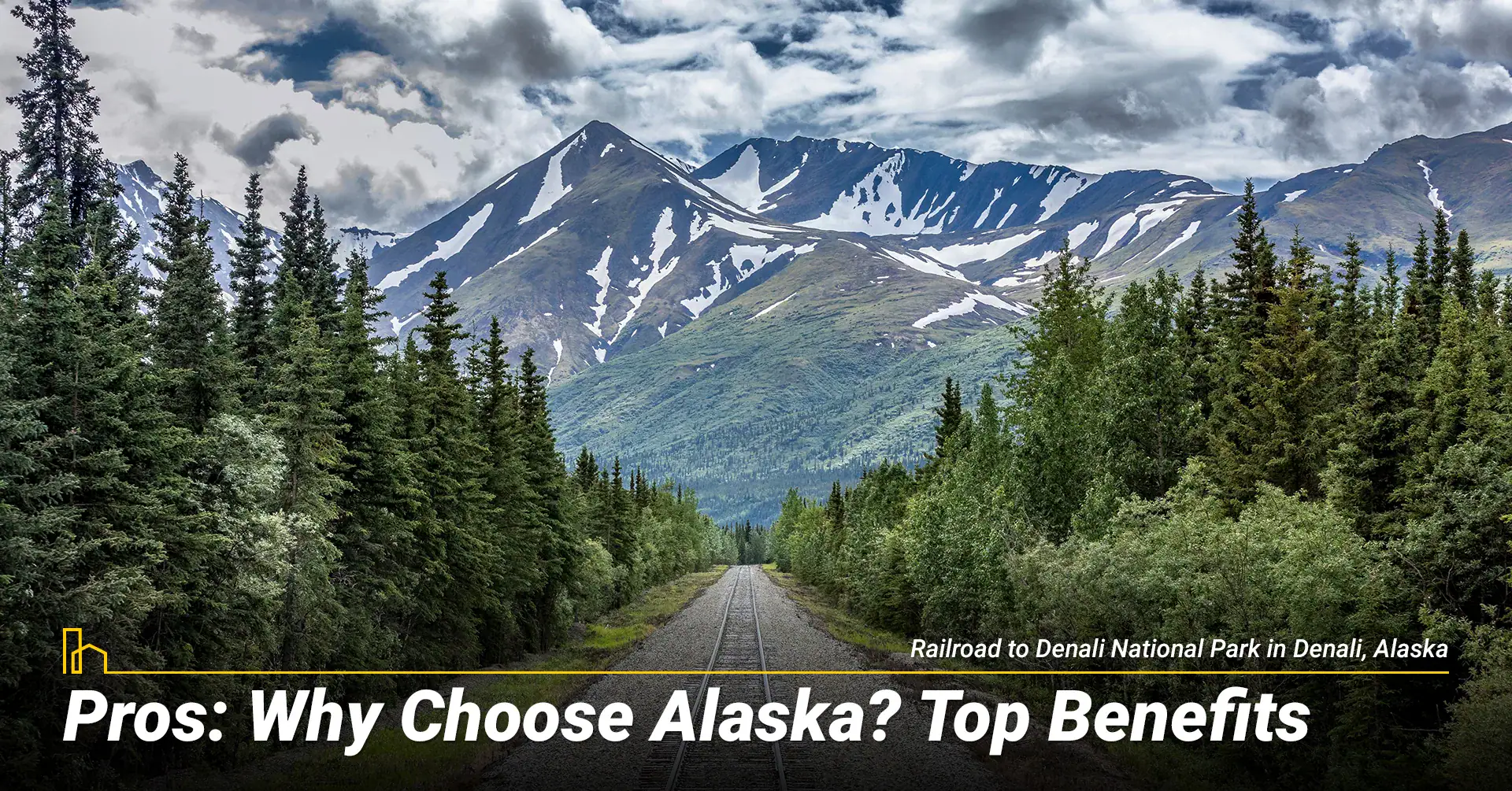
Alaska’s greatest asset is its raw, pristine wilderness. The state boasts 17 of the nation’s 20 highest peaks, including Denali and Mount Saint Elias, over 100,000 glaciers, and 34,000 miles of coastline. This creates a paradise for outdoor enthusiasts. Residents can hike in pristine national parks witnessing wildlife in their natural habitat, kayak among icebergs, fish for world-record salmon and halibut, and hunt in vast expanses of public land. Here, adventure truly never ends.
B. Financial Benefits: The PFD and Tax Advantages
One of Alaska’s calling cards is the Permanent Fund Dividend (PFD). Funded by the state’s oil revenues, nearly every eligible resident receives an annual payment. While the amount fluctuates yearly, it has often been over $1,000 per person, providing a helpful yearly bonus for families.
Furthermore, Alaska is one of the few states with no state income tax and no statewide sales tax which is an ideal financial situation. Alaskans can keep more of their paycheck in their pockets, despite some municipalities imposing local sales taxes.
C. Sense of Community and Adventure
Life in Alaska attracts independent, resilient, and adventurous people. It fosters a powerful sense of community where neighbors look out for one another, especially in smaller towns and remote areas. Inhabitants possess a shared understanding of the challenges in this slower pace of life and a collective appreciation for the rewards.
D. Unique Cultural Experiences and Midnight Sun
Alaska offers endemic cultural experiences, from rich Native Alaskan heritage to the modern frontier spirit. You can learn about indigenous art and traditions, attend unique festivals, and explore historic gold rush towns.
Additionally, summers bring the famous midnight sun. In places like Fairbanks, the sun doesn’t set for weeks. This creates long, energy-filled days perfect for late-night hikes, fishing trips, and other activities.
E. Economic Opportunities in Key Industries
For those in specific sectors, The Last Frontier offers lucrative career opportunities. Oil and gas are major economic drivers, offering high, stable salaries. The fishing industry is world-renowned, and tourism provides numerous jobs. Military bases also offer stable employment for thousands.
Related article
The 5 Best Places to Live in Alaska: A City Comparison
Alaska blends rugged wilderness with modern innovation, offering diverse lifestyles across its vast landscape. This guide spotlights the five best Alaskan cities to live in 2026, based on affordability, safety, opportunity, and quality of life. From Anchorage’s energy to Sitka’s island beauty, discover where your frontier future begins.
Cons: Alaska Living Challenges – What to Know
A. Extremely High Cost of Living
Alaska’s cost of living is notoriously high, often 20%-30% above the national average. For a full walkthrough of the move itself, including budgeting timelines and legal requirements, see this Moving to Alaska relocation guide and checklist. Because most goods must be shipped in, prices for groceries, household items, and building materials are significantly inflated. Housing costs, particularly in larger cities, are also well above the norm. This can be expected in remote states; for a comparison, see the pros and cons of living in Hawaii.
B. Harsh Winters and Long Periods of Darkness
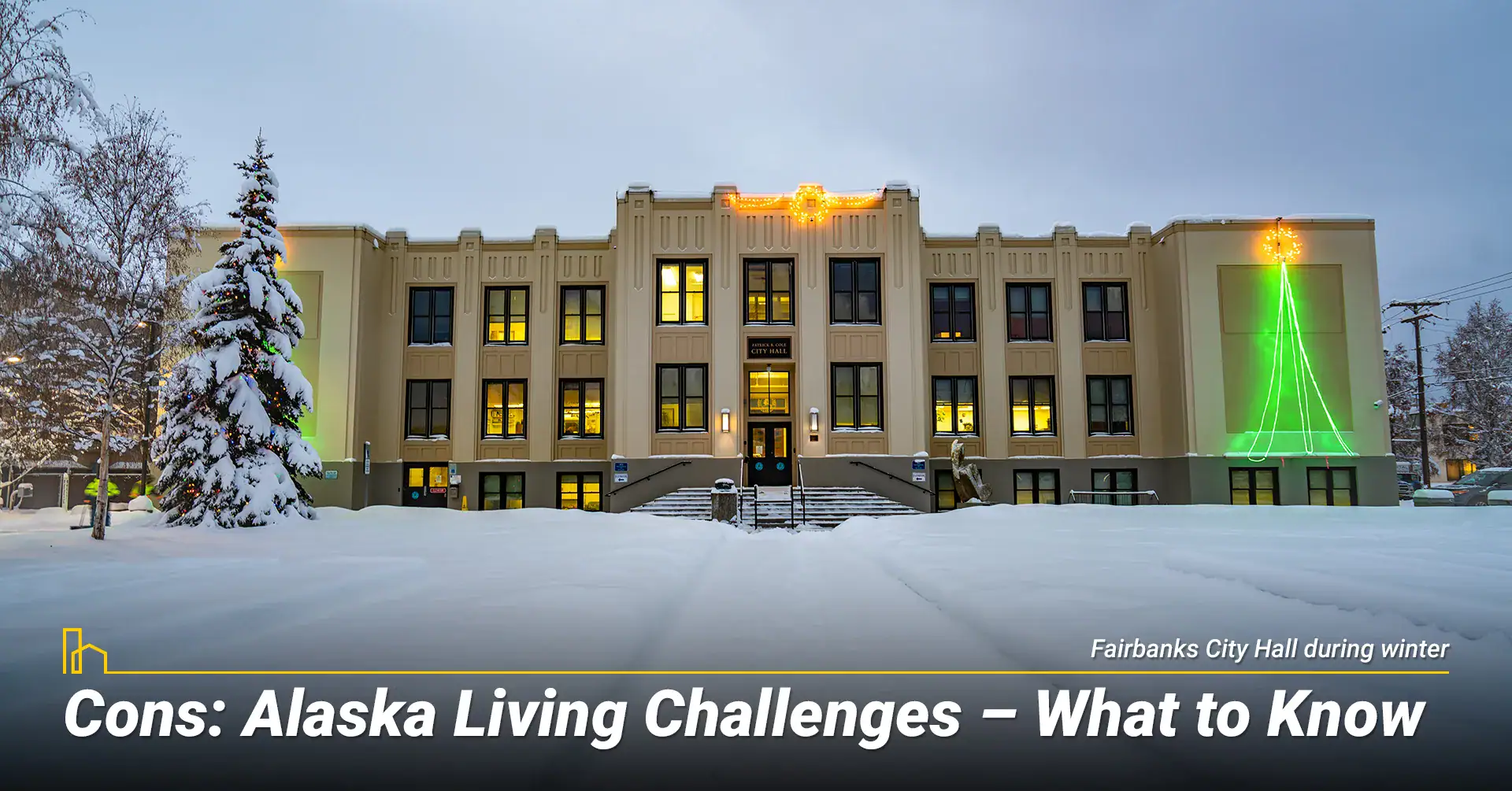
Residents will be the first to confirm how cold their winters are, but fail to mention the second brutal part about it; they’re also incredibly dark. From November to January, some cities receive only a few hours of dim daylight. A prolonged lack of sunlight can lead to Seasonal Affective Disorder (SAD) and vitamin D deficiency. Winters are long, and temperatures can plummet to -30°F (-34.4°C) or lower.
C. Isolation and Limited Accessibility
These communities are not connected to the road system and are only accessible by uncommon modes of transportation. This isolation can make travel to see family in the Lower 48 expensive and time-consuming. Having to travel by plane or boat can also mean limited access to specialized healthcare, certain retail stores, and everyday services.
D. Limited Infrastructure and Services in Rural Areas
Outside of major hubs, infrastructure can be sparse. Internet access in remote villages is generally slow and expensive. Road maintenance can be challenging, with some areas relying on well water and septic systems. Public services can be hours away, placing a greater emphasis on self-reliance.
E. Challenging Job Market Outside Key Industries
While oil, fishing, and government jobs are plentiful, the market for other professions can be less defined. If your work is in a specialized field unrelated to their core industries, a career change may be necessary. The economy can also be volatile, tied to the boom-and-bust cycle of oil prices.
Related article
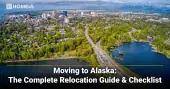
Moving to Alaska: The Complete Relocation Guide & Checklist.
Alaska, bordered by Canada and the Pacific and Arctic Oceans, offers stunning wilderness and modern living. Home to about 750,000 residents, it blends adventure and independence. With no state income or sales tax, the Northern Lights, and Anchorage’s urban charm, Alaska promises a rewarding frontier lifestyle for new residents.
Best Alaska Cities for Young Professionals
1. Fairbanks
HOMEiA Score: 80/100
- Cost of Living: ~22% above U.S. average
- Monthly Rent: $1,300
- Home price to income ratio: 3.8/1
- Income to rent ratio: 46.8x
- Safety rating: 52/100
Home to the University of Alaska Fairbanks, this Interior city is a center for research, engineering, and military operations. Young professionals are drawn to fields in arctic engineering, energy, tourism, and the sciences. Fairbanks offers more affordable housing options than coastal cities and is the best place in the world to witness the Northern Lights. The community is rugged, independent, and deeply connected to the surrounding wilderness. For those who can overcome extreme winter cold and cherish a true frontier spirit, they are rewarded with unique career and lifestyle opportunities.
2. Anchorage
HOMEiA Score: 82/100
- Cost of Living: ~20% above U.S. average
- Monthly Rent: $1,600
- Home price to income ratio: 4.1/1
- Income to rent ratio: 53.1x
- Safety rating: 45/100
As Alaska’s largest city, Anchorage is the undeniable economic hub, offering the most diverse job market in the state. Young professionals find opportunities in healthcare, transportation, logistics, the military, and a growing tech sector. It provides a unique blend of urban amenities—including a surprisingly vibrant restaurant scene, craft breweries (Midnight Sun, Glacial BrewHouse), and live music—with immediate access to world-class hiking (Harding Icefield), skiing, and wildlife viewing. With the state’s best networking events and a relatively short average commute, Anchorage is the best place to launch a career while enjoying the Alaskan adventure.
Related article
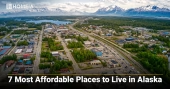
7 Most Affordable Places to Live in Alaska
Despite Alaska’s rugged beauty and higher living costs, several communities offer affordable ways to enjoy the Last Frontier. This guide highlights seven budget-friendly Alaskan towns for 2026, balancing cost, access, and lifestyle. Through data on housing, utilities, and transportation, discover where affordability meets authentic Alaskan living.
3. Juneau
HOMEiA Score: 84/100
- Cost of Living: ~25% above U.S. average
- Monthly Rent: $1,850
- Home price to income ratio: 4.8/1
- Income to rent ratio: 43.2x
- Safety rating: 62/100
The state capital offers a stable, government-centric job market largely immune to the oil industry’s boom-and-bust cycles. The youth are drawn to its stunning rainforest setting, incredible fishing, and access to the Tracy Arm Fjord. While housing costs are high, salaries for government, legal, and policy-related careers help offset these costs. There is a strong sense of community, excellent cultural amenities, and a spry energy fueled by the legislative session. Its isolation from the road system fosters a tight-knit, adventurous community.
Best Alaska Communities for Families with Young Kids
1. Palmer
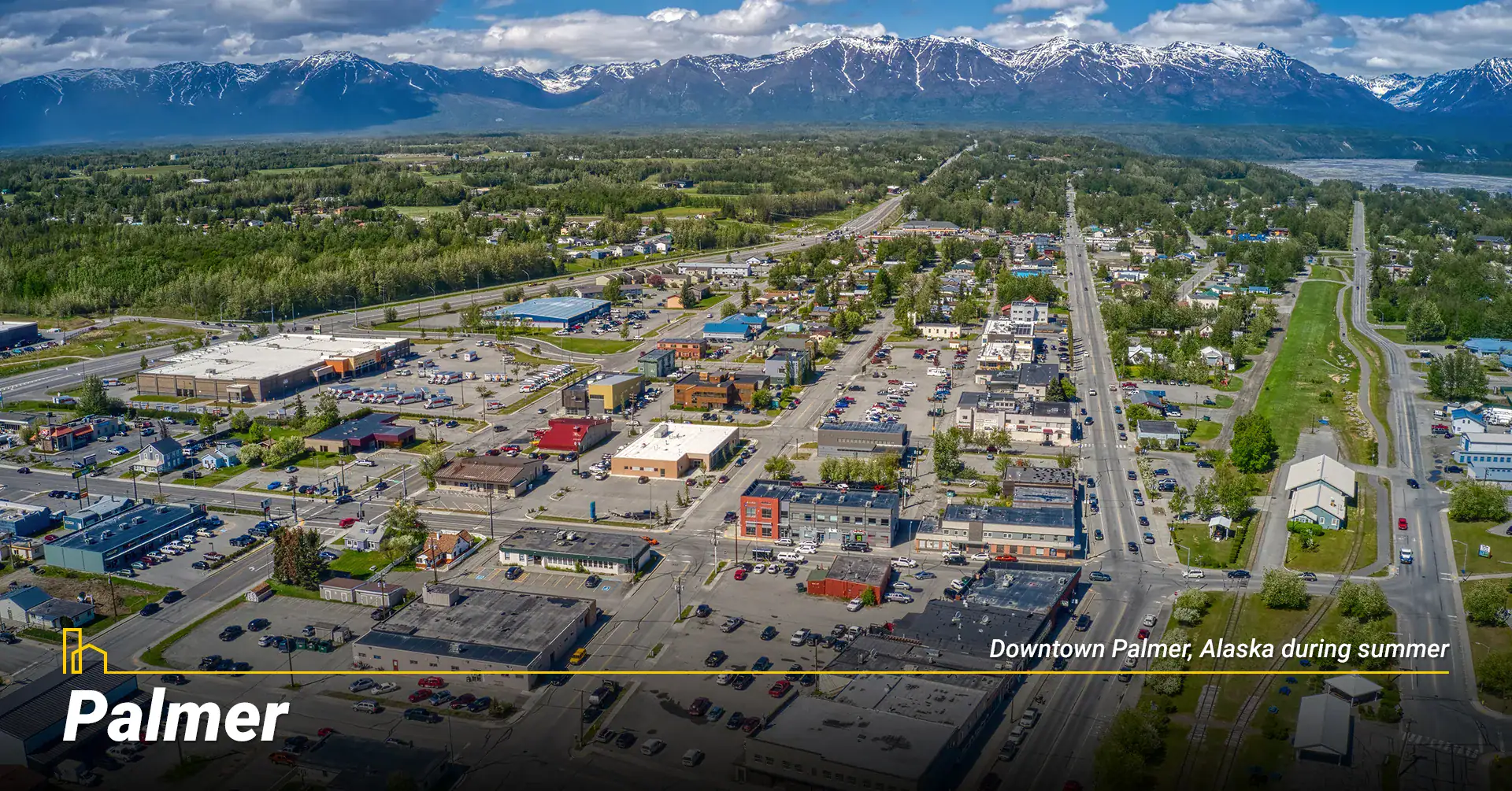
HOMEiA Score: 83/100
- Cost of Living: 20% above U.S. average
- Monthly Rent: $1,200
- Home price to income ratio: 3.6/1 (Calculated)
- Income to rent ratio: 61.1x (Calculated)
- Safety rating: 72/100
Nestled in the Mat-Su Valley, Palmer retains its agricultural roots while growing into a major family destination. Families are attracted to the distinguished school districts, large lots, and the famous Alaska State Fair. With an emphasis on outdoor activities such as the view of the Chugach Mountains and 4-H programs, it provides a wholesome environment for children. Alaska’s Garden is ideal for families seeking a tight-knit community with a strong connection to the state’s pioneering history.
Related article
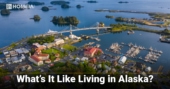
What is It Like to Live in Alaska?
If you’re someone from the lower 48 (or anywhere else for that matter), and you’re planning on making the move up to The Last Frontier, here are the top 19 things to know about what it’s really like living in Alaska…
2. Juneau (Mendenhall Valley area)
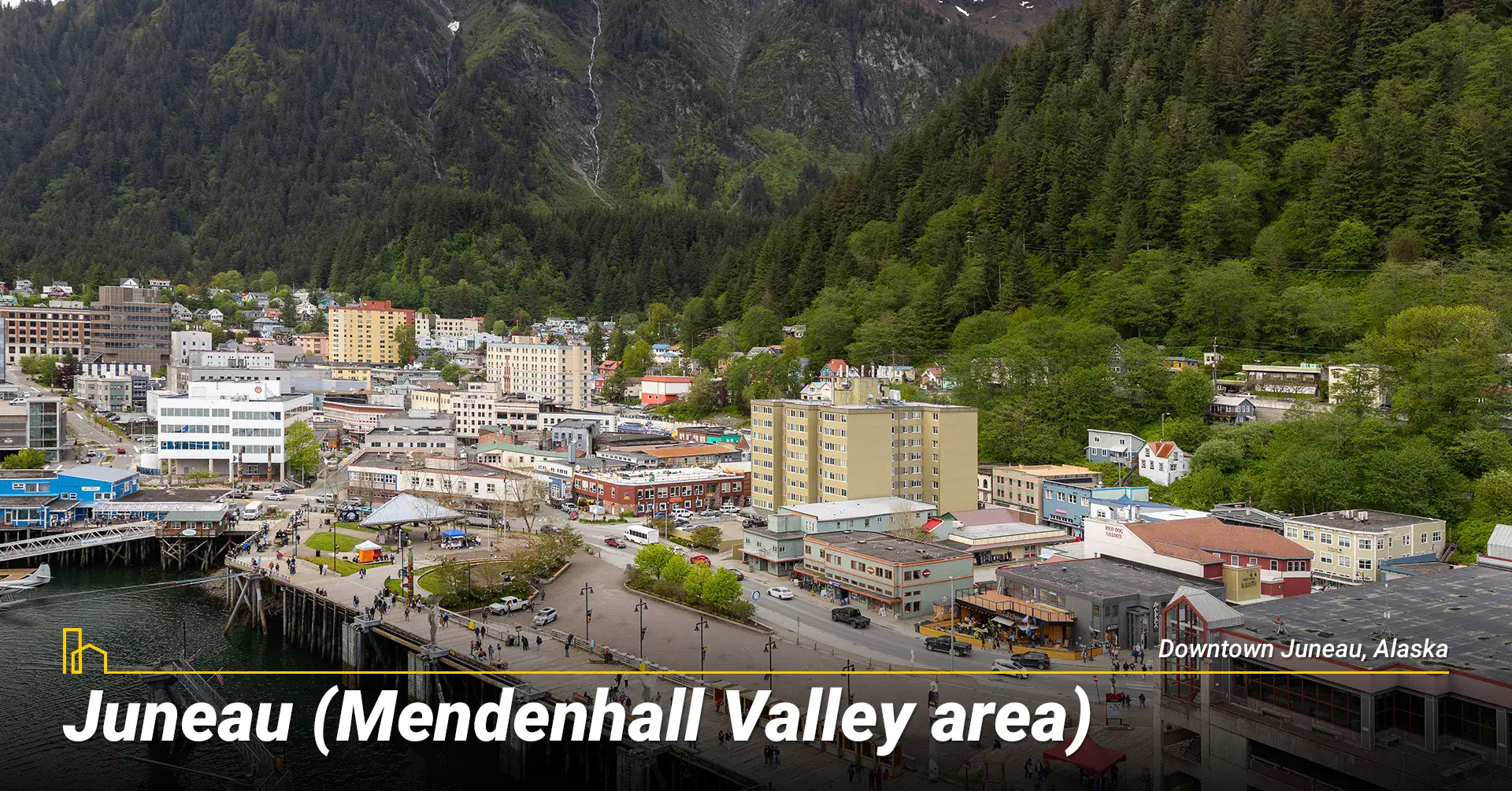
HOMEiA Score: 84/100
- Cost of Living: 25% above U.S. average
- Monthly Rent: $1,850
- Home price to income ratio: 4.3/1 (Calculated)
- Income to rent ratio: 56.8x (Calculated)
- Safety rating: 62/100
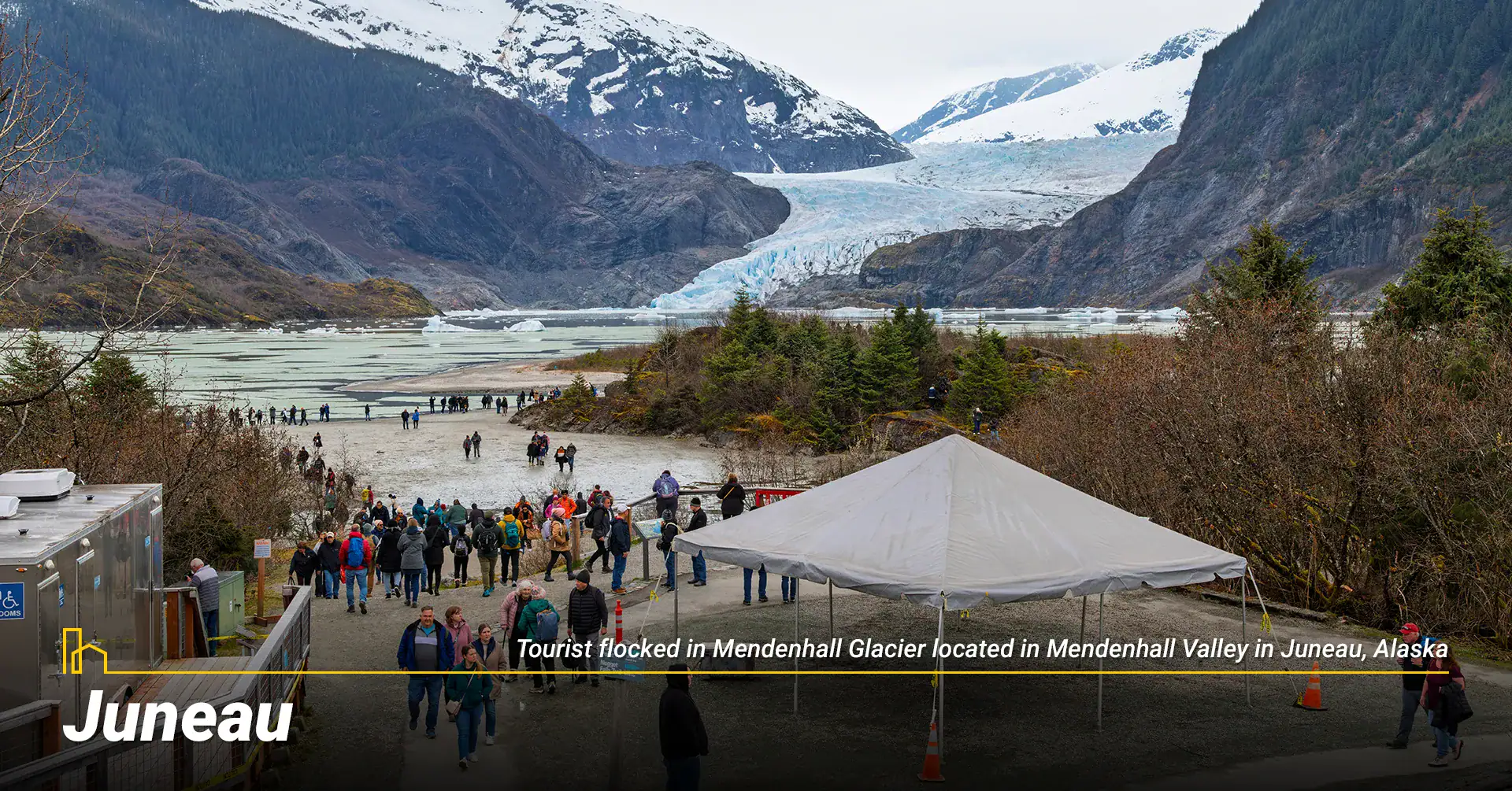
For families living in the capital city, the Mendenhall Valley area offers modern housing developments, top-rated schools, and flat, accessible terrain perfect for biking and walking. The area is home to the Mendenhall Glacier Visitor Center, numerous soccer fields, and community pools. The combination of stable government jobs, unparalleled natural science education at your doorstep, and a safe community environment makes Juneau a unique and rewarding place to raise a family, despite the higher costs.
3. Eagle River (Anchorage Borough)
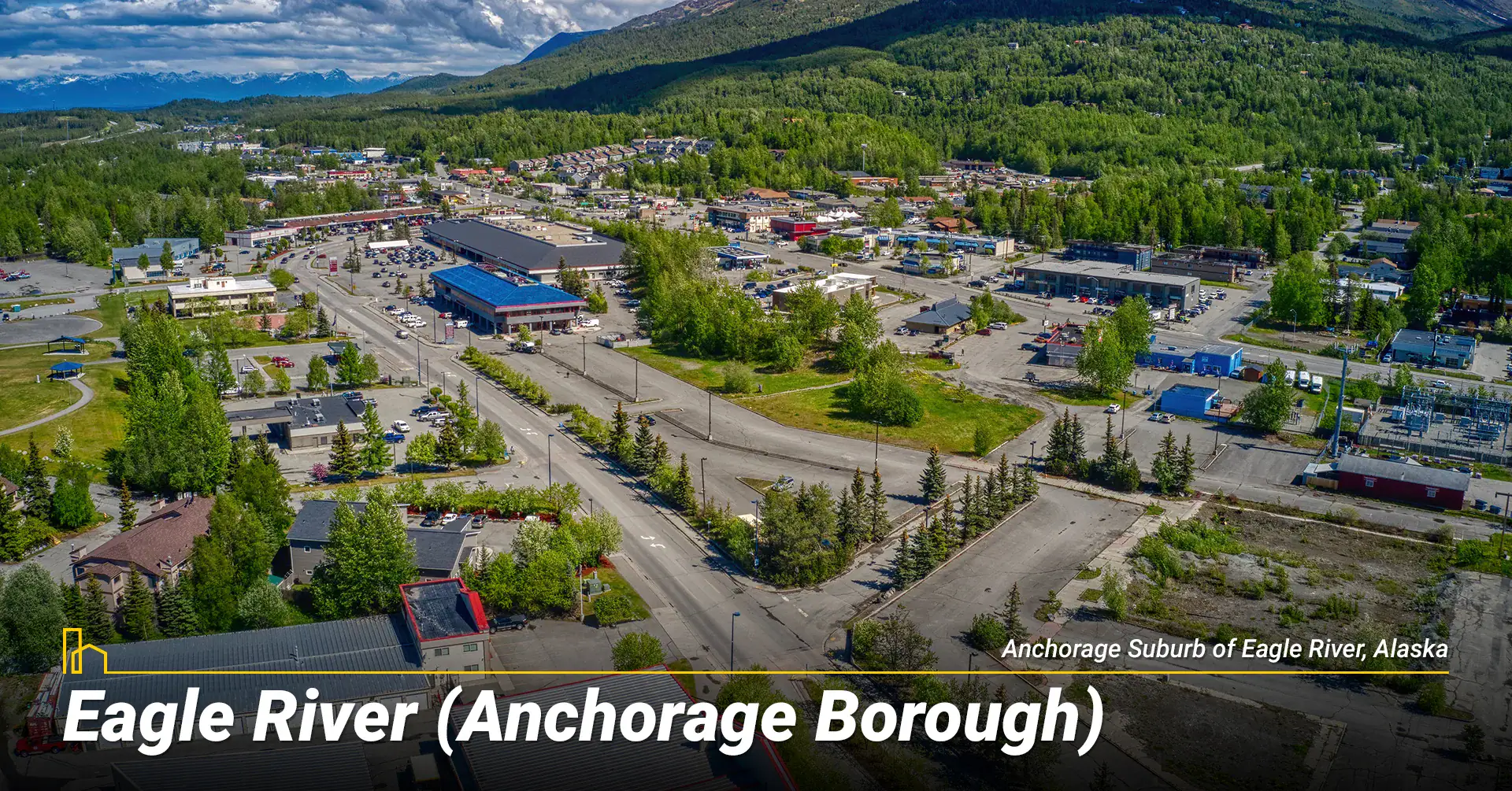
HOMEiA Score: 85/100
- Cost of Living: 18% above U.S. average
- Monthly Rent: $1,650
- Home price to income ratio: 3.3/1
- Income to rent ratio: 69.7x
- Safety rating: 78/100
Only a 20-minute drive from downtown Anchorage, Eagle River offers families the perfect balance of modern conveniences and stunning natural beauty. Revered for its highly-rated schools, extensive trail systems, it has family-oriented amenities like the Eagle River Nature Center and numerous parks. With lower crime rates than the city center and a strong sense of community identity, it’s a top choice for families who want access to urban jobs and amenities without sacrificing safety, space, and outdoor access.

Related article
15 Best Places to Raise a Family in the U.S.
Finding the right place to raise a family means balancing safety, education, affordability, healthcare, and long-term opportunity. With remote work expanding relocation options, more communities than ever offer an excellent quality of life for parents and children alike. This guide evaluates the best family-friendly cities using data on schools, crime, housing, employment, healthcare, and local amenities to help you make a confident, informed decision…
Best Places to Retire in Alaska
1. Ketchikan
HOMEiA Score: 83/100
- Cost of Living: 30% above U.S. average
- Monthly Rent: $1,450
- Home price to income ratio: 5.9/1
- Income to rent ratio: 40.0x
- Safety rating: 65/100
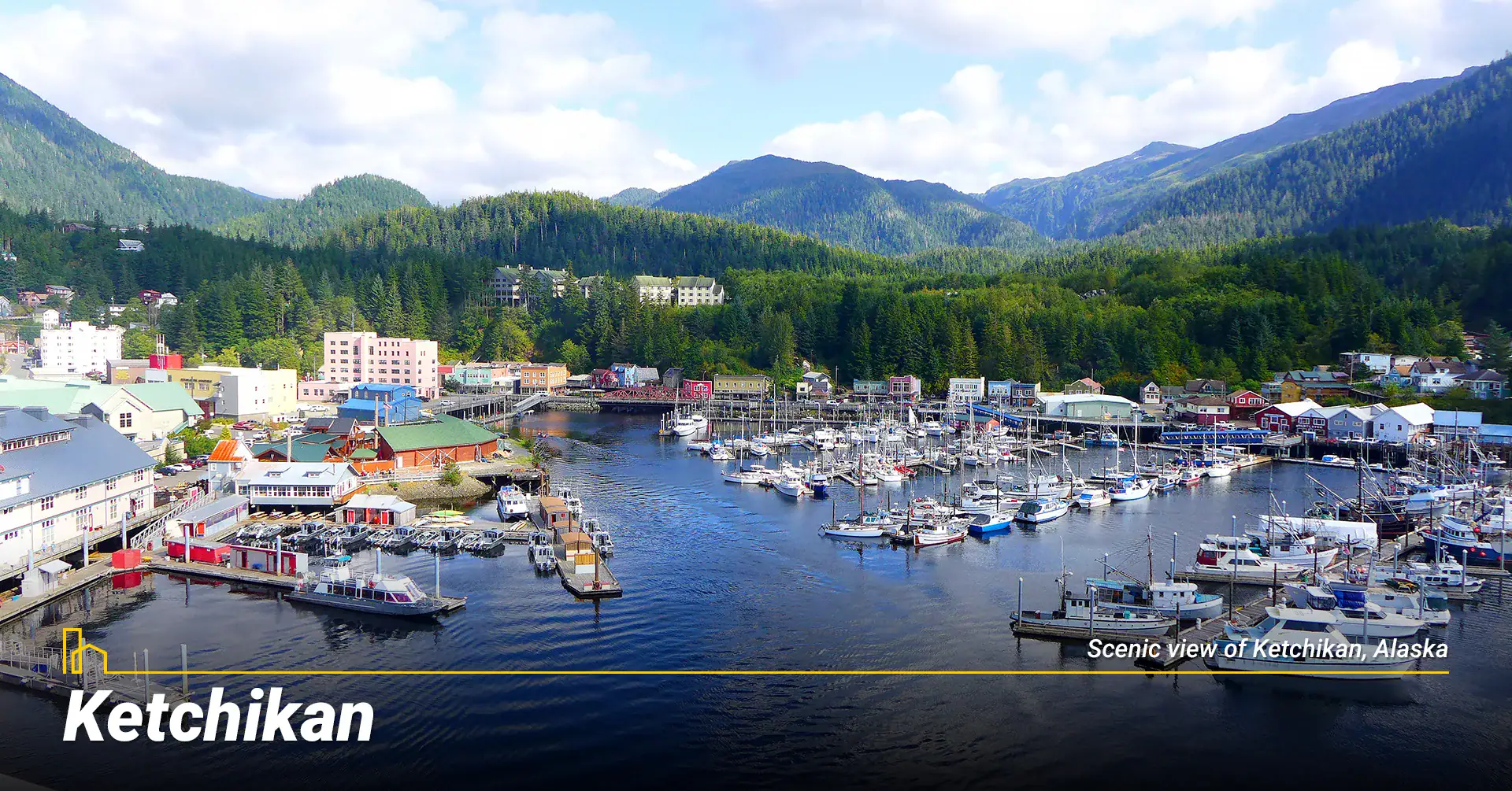
Known as Alaska’s “First City” due to its southern location, Ketchikan offers a rainforest climate milder than the interior. Retirees enjoy fishing, exploring the famous Creek Street boardwalk, and immersing themselves in Native Alaskan culture at places like Totem Bight State Park. The city possesses superb healthcare services and a dedicated senior community. While rainy, its beauty and accessibility (via regular ferry and flight service) make it an attractive spot for retirees.
2. Sitka
HOMEiA Score: 86/100
- Cost of Living: 28% above U.S. average
- Monthly Rent: $1,500
- Home price to income ratio: 6.5/1
- Income to rent ratio: 43.3x
- Safety rating: 70/100
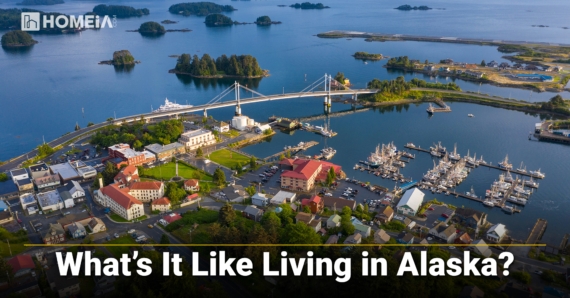
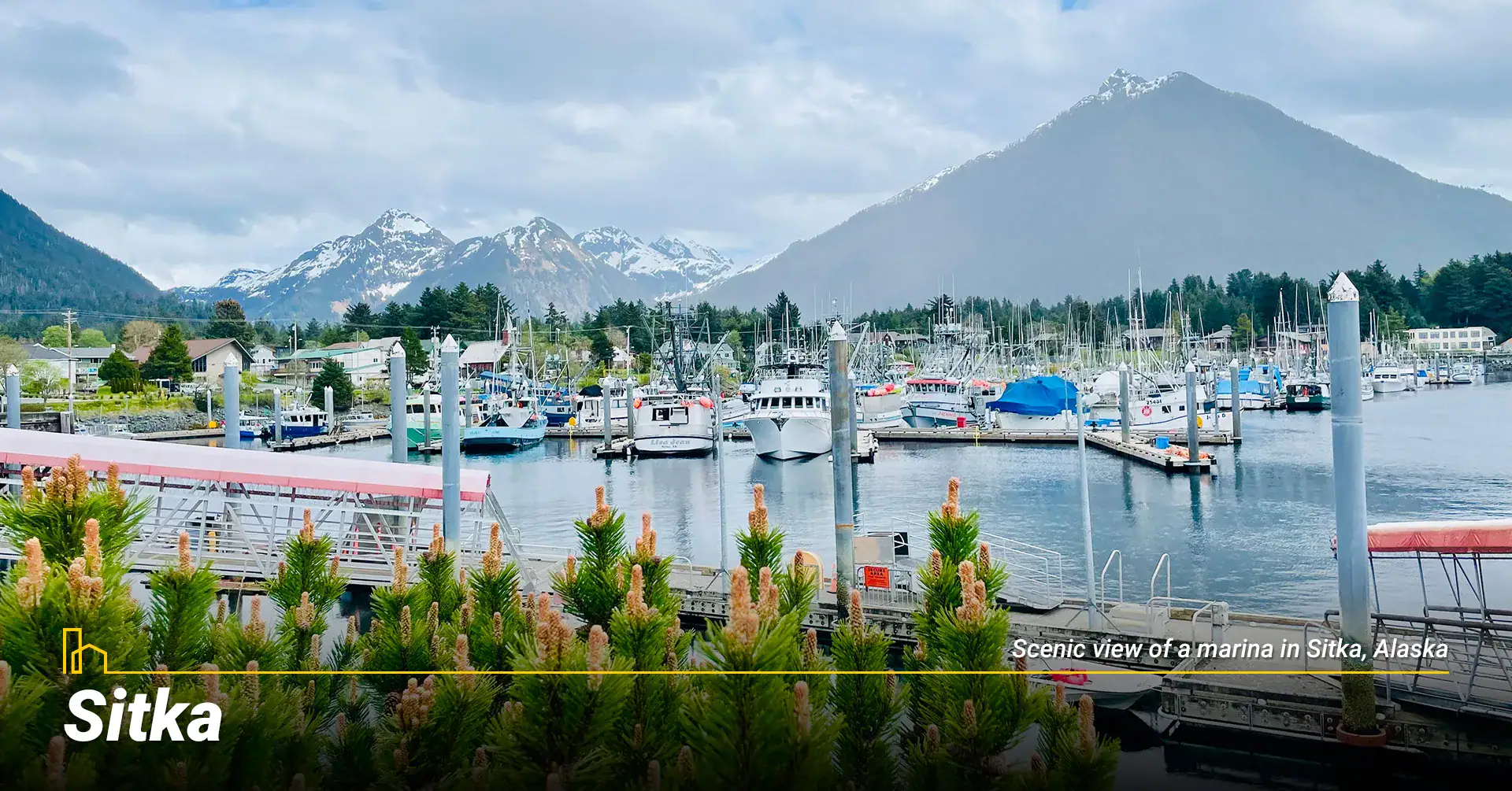
Accessible only through the sky or sea, Sitka offers a rich cultural history and breathtaking natural beauty. Retirees can explore Tlingit totem poles, Russian Orthodox churches, and world-class whale watching. There is an excellent hospital and a strong network of social and recreational activities for seniors. For retirees seeking a peaceful, culturally rich, and stunningly beautiful island retirement—and who are comfortable with a higher cost of living and relative isolation—Sitka is a perfect choice.
3. Homer
HOMEiA Score: 87/100
- Cost of Living: 20% above U.S. average
- Monthly Rent: $1,250
- Home price to income ratio: 5.9/1 (Calculated)
- Income to rent ratio: 48.0x (Calculated)
- Safety rating: 75/100
Known as the “Halibut Fishing Capital of the World,” Homer is a premier retirement destination on the Kenai Peninsula. Golden-ager are drawn to its mild coastal climate, stunning views of Kachemak Bay, and vibrant arts community. The town boasts excellent medical facilities for its size, a walkable downtown with galleries and restaurants, and a strong senior center. The peaceful, creative, and friendly atmosphere is perfect for active elders who want to spend their retirement fishing, birding, kayaking, and being part of a close-knit community.
Recommended for you




Alaska Lifestyle: Arts, Food, and Recreation
A. Arts and Culture
Alaska’s culture is a blend of indigenous heritage, Russian history, and modern frontier art. Major cities including Anchorage, Juneau, and Fairbanks boast impressive museums such as the Anchorage Museum and the Museum of the North, alongside thriving galleries like The Bear Gallery and Two Street Gallery, and theaters. Native cultural centers, such as the Alaska Native Heritage Center in Anchorage, offer deep insights into the state’s first peoples. Summer is filled with festivals, from the Sitka Summer Music Festival to Anchorage’s bustling weekend markets.
B. Food Scene
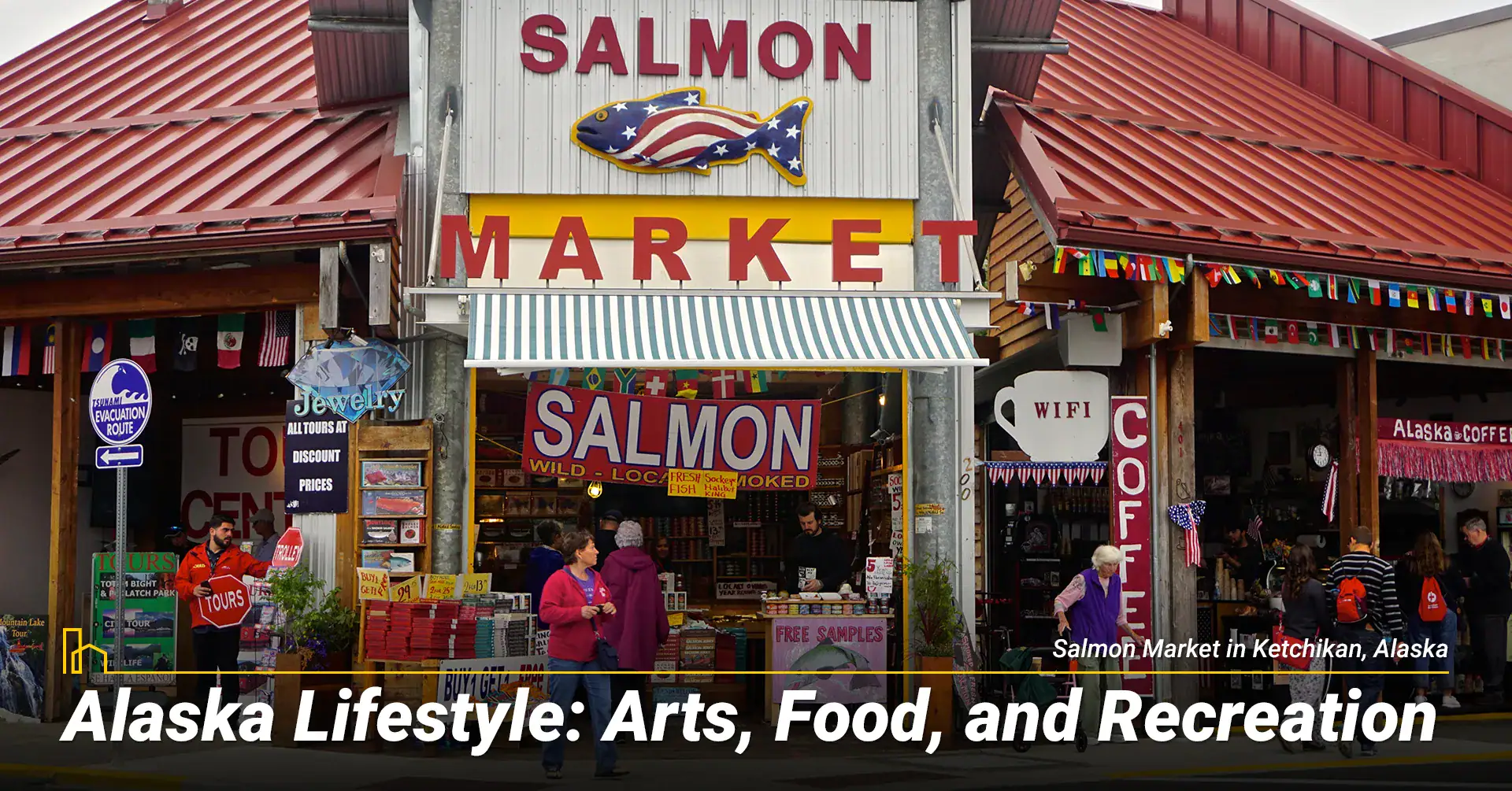
Alaskan cuisine is famously fresh and local. It’s common to come across wild-caught salmon, halibut, king crab, and reindeer on restaurant menus. Food trucks like The Flying Deckhand and Yeti Dogs have become staples in larger cities, serving everything from gourmet seafood to fusion cuisine. While rural areas rely more on shipped goods, farmers’ markets in towns like Palmer and Homer provide stunning local produce during the long summer days.
C. Outdoor Activities
Recreation is a way of life. Boating, hiking, fishing, hunting, dog mushing, skiing, and wildlife viewing are not merely hobbies but integral to the Alaskan identity. Its vast network of state parks, national parks like Denali and Kenai Fjords, and public lands allows for endless exploration for all ages and abilities.
D. Sports and Community Life
Community life often revolves around the outdoors and local events. High school sports are huge in smaller towns, and events like the Iditarod Trail Sled Dog Race capture the state’s attention. Hockey reigns supreme, with the University of Alaska Anchorage Seawolves and the University of Alaska Fairbanks Nanooks being the only NCAA Division 1 team programs and three junior teams competing in the North American Hockey League (NAHL). Summer brings community-wide festivals, fishing derbies, and farmers markets, and collegiate baseball with five teams competing in the Alaska Baseball League. Winters feature aurora viewing parties and winter sports competitions, creating a strong sense of regional identity.
Conclusion: Is Alaska Right for Your Lifestyle?
Alaska’s appeal lies in its unparalleled natural beauty, unique financial incentives, and the promise of a truly adventurous life. Whether you’re building a career in Anchorage, raising a family in Eagle River, or enjoying a peaceful retirement in Homer, the state presents a compelling case for those adaptable to its high costs, harsh winters, and remote rhythms. Weigh the benefits and trade-offs in terms of career, community, affordability, and personal resilience to decide if here is the right fit for your next chapter. For those still considering their options, our guide on essential steps for moving to a new city is a great resource.
Frequently Asked Questions About Living in Alaska
1. What is the cost of living in Alaska compared to other states?
Alaska’s cost of living is among the highest in the U.S., typically 20%-30% above the national average. This is driven by the expensiveness of housing, utilities, and shipped goods. However, the lack of a state income tax and the Permanent Fund Dividend help to offset these prices for residents.
2. How severe are Alaska winters?
Winters are long, dark, and frigid, especially in the Interior. Southcentral Alaska (Anchorage, Mat-Su) experiences milder but still snowy winters, while the Southeast panhandle (Juneau, Ketchikan) has cooler, rainier winters. Alaskans must prepare for short daylight hours, subzero temperatures, and significant snowfall.
3. Is Alaska a good place for families?
Yes, for families who value outdoor recreation, tight-knit communities, and a unique upbringing for their children. Communities like Eagle River and Palmer offer highly-regarded schools and safe neighborhoods. However, access to certain amenities, specialized healthcare, and extracurricular activities can be more limited than in the Lower 48.
4. What are Alaska’s job prospects?
Job prospects are bountiful within key industries like oil and gas, fishing, tourism, healthcare, transportation, and military/government work. The market for other professional fields is less straightforward. There is often a low unemployment rate, but it’s important to secure a means of income before moving.
5. How is healthcare access across the state?
Access to healthcare is excellent in major cities like Anchorage, which possess large, modern hospitals. It becomes increasingly limited in smaller towns and remote areas, where clinics may only have a physician’s assistant and medevac to a city is required for serious emergencies.
6. What are the best outdoor activities in Alaska?
Hiking, fishing, hunting, wildlife viewing, boating, skiing, dog mushing, and aurora viewing are top pastimes. Their national and state parks, along with its extensive public lands, provide endless opportunities for four-season recreation.
Alaskans are generally independent, resilient, and community-oriented. There is a strong “live and let live” attitude combined with a willingness to help neighbors in need. The culture is a unique blend of Indigenous traditions, old frontier spirit, and modern influences. Larger cities are a melting pot and liberal, while rural areas tend to lean right.
Share