






8 Types of Neighborhood: Choose What Fits Your Personality
- Local Editor:Local Editor: Bilal Sajjad
- Category: Buy House


When buying a new home, your first impulse might be to focus on finding a house that speaks to you. Like many buyers, you might go to an open house, tour the home, feel the ambiance, and see if it ticks all the boxes on your list of requirements.
If you really want to make the best decision, however, don’t forget to take time to tour the neighborhoods you’re considering and see if they meet your standards. When you buy a home, you are essentially purchasing a piece of that neighborhood. It should be a place that helps you cultivate your growth as a family and as part of society. Each neighborhood is unique, but most fall into general categories that can give you an idea of what to expect. Here are the 8 types of neighborhood that you need to know:
Here are eight neighborhood types you might see in your home search. Which one fits your personality?
1. Urban Core/Downtown Neighborhoods
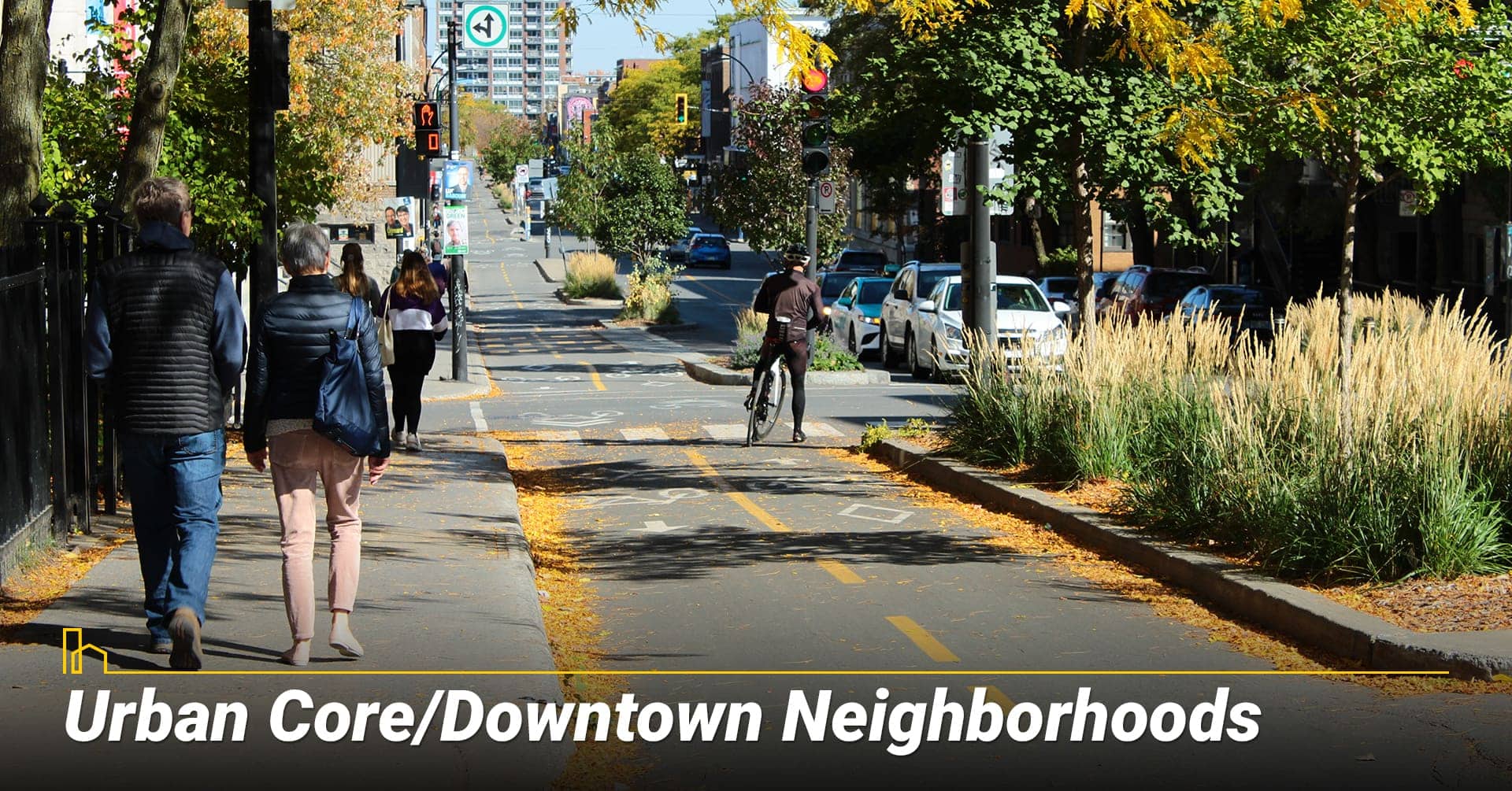
These neighborhoods are located in the heart of the metro. Homes you can find here are mostly multi-family buildings and apartments, though there may be some aging single-family homes, too.
Older buildings in the Urban Bore might have been converted—old warehouses converted into modern luxury lofts and condos, for example. Expect some homes to be located on top of businesses.
If you like an eclectic blend of high-end and modest housing close to many city attractions and nightlife, then a Downtown neighborhood could work best for your personality. It is also an excellent option for those who like interacting with a diverse mix of people.
Note, however, that when it comes to safety, these neighborhoods tend to post higher crime rates. Parking is usually an issue, too.


Related article
The 10 Best Places to Live in Oregon
Oregon is a study in contrasts. It has 363 miles of the most breathtaking coastline you’ll encounter anywhere in the world. But it also has dense forests, mountain ranges, and high desert country. Here are the 10 Best Cities to Live in Oregon…
2. Urban Pioneer Neighborhoods

If you don’t like the hustle and bustle of Downtown neighborhoods, you can opt to explore Urban Pioneer areas. They are close to the city center but nestled in suburban areas. Homes are typically older single-family homes, many of them fixer-uppers. Styles can range from modern to ranch; you may also find some garden-style apartments.
The people in this neighborhood are also a mix, including many younger adults (singles and couples), one-parent families, and retirees who have been living in the neighborhood for a long time.
If you have a tight budget and you want to remain close to the city, an Urban Pioneer neighborhood is a great option. You can buy a fixer-upper here, renovate it, and sell it for a mark-up later on, as these neighborhoods tend to increase in value after a few years. Since a lot of people are moving from Downtown to Urban Pioneer neighborhoods, expect ongoing construction and renovations.
Recommended for you




3. New Urban Neighborhoods
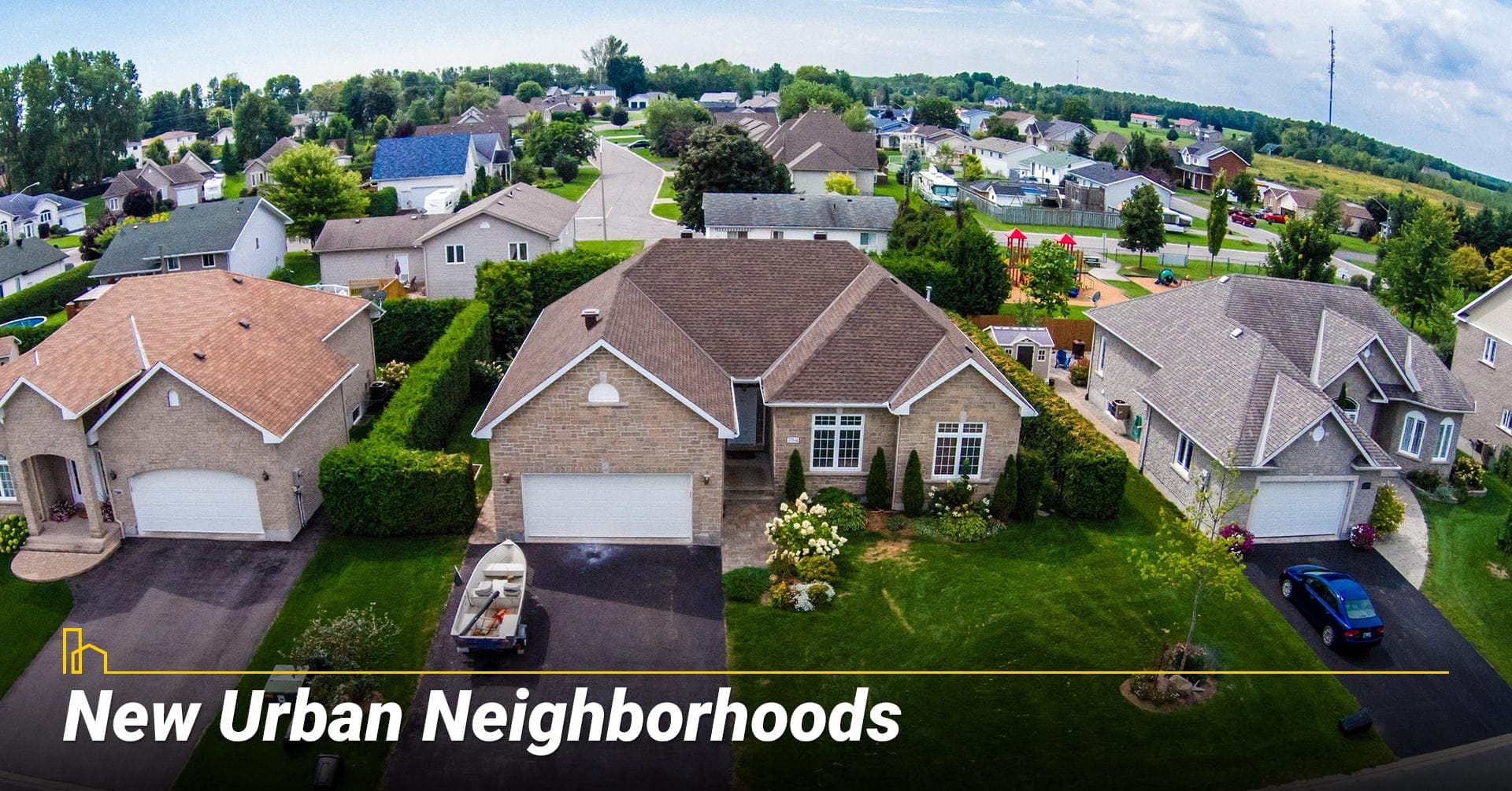
Away from the main Downtown area, but near other business hubs, you’ll find New Urban neighborhoods. Homes that you can typically find here include new single-family houses, condos, and upscale apartments. The style here may be a bit more retro and hipster.
Like Downtown neighborhoods, the limited space in New Urban neighborhoods encourages lofts above businesses. Most people you will meet here are young professionals and middle- to high-income couples, and relatively few children.
New Urban neighborhoods have nearby businesses, shopping malls, and clubs to cater to the community, making it unnecessary to leave the area most of the time.
One downside of New Urban neighborhoods is that most of the home prices are inflated due to high demand from affluent home buyers.

Related article
10 Most Affordable States to Buy a House
If you have the flexibility to move anywhere in the U.S., where could you buy the cheapest home? After examining data from Zillow and World Population Review. Here’re 10 most affordable States in the South and the Midwest to consider when buying a house…
4. Cul-De-Sac Neighborhoods
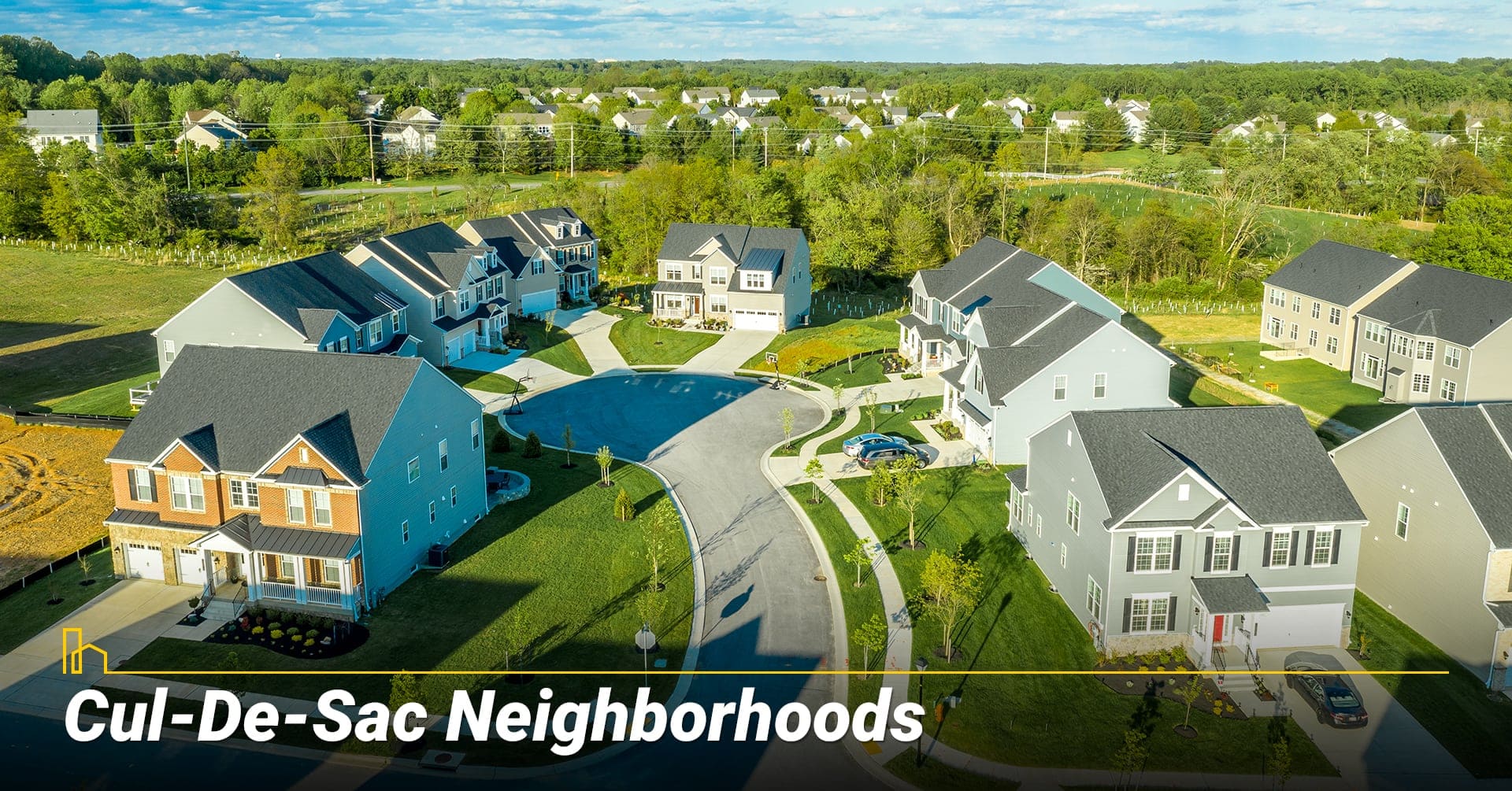
These are often located in gated subdivisions and are home to many families with kids.
Homes here are single-family homes with basements and well-maintained lawns. They are a great option if you have kids, because you can easily organize playdates with neighborhood families. They are also commendable for having active neighborhood associations that can help ensure your home and family’s safety.
Singles may feel out of place here, and these subdivisions are often far from city hotspots.
If you have a family and would appreciate some quiet time at home, cul-de-sac neighborhoods are worth a look.

Related article
10 Most Affordable Places to Live in Oregon
Oregon’s many cities and towns each offer something different, depending on each person’s lifestyle and preferences. In the state’s more prominent cities, you’ll find bustling streets full of shops and events. The smaller towns offer a quiet, quaint ambiance with close-knit communities, while its rural areas present lakes, rivers, wildlife, and miles of open land.
5. Pedestrian Neighborhoods

If you want to be able to get around every day without a car, consider living in a pedestrian neighborhood. These are where you can find condos and apartments that are often home to single professionals, hipsters, and others who appreciate that they can get everything they need on foot.
That said, if you have a car, parking can be problematic.
Choose a pedestrian neighborhood if you don’t mind the noise and the high density of people you may interact with.
Recommended for you




6. Resort Neighborhoods

Resort neighborhoods are those located in coastal cities where most homes are by the water.
You can find large single-family homes with modern architecture or upscale condos. You may also find luxury cabins that serve as retirement homes of affluent middle-aged adults and seniors.
If you are big on outdoor activities, resort neighborhoods provide plenty of options that allow you to live an active lifestyle. You can go hiking, fishing, boating, and sunbathing whenever you feel like it.

Related article
4 Best Places to Live in Minnesota
Bordering Canada and the Great Lakes is a state fondly dubbed as the “North Star State” and “Land of 10,000 Lakes.” The state has a lot of lakes sprawled across its more than 86,000 square mile area. In a comprehensive study of cities, Minnesota is the number one state for raising a family because of its high median income, affordable cost of living and exceptional education services…
7. Golf Neighborhoods

Golf neighborhoods are usually in gated and highly exclusive subdivisions. Homes in this type of neighborhood are often luxurious mansions and upscale condos. They are perfect if you love golf and appreciate not having to travel to practice your swings.
In addition to golf courses, residents can enjoy swimming pools, tennis courts, basketball courts, and clubhouse restaurants.

Related article
7 Key Factors to Know About Living in Boston, Massachusetts
Before considering your move to Boston, we have compiled a list of 7 key factors we put together for you. Boston life is about the best city life you can imagine. Relatively small, it’s often referred to as the walking city, with world-class museums, universities, theaters, and gourmet dining…
8. Historic Neighborhoods
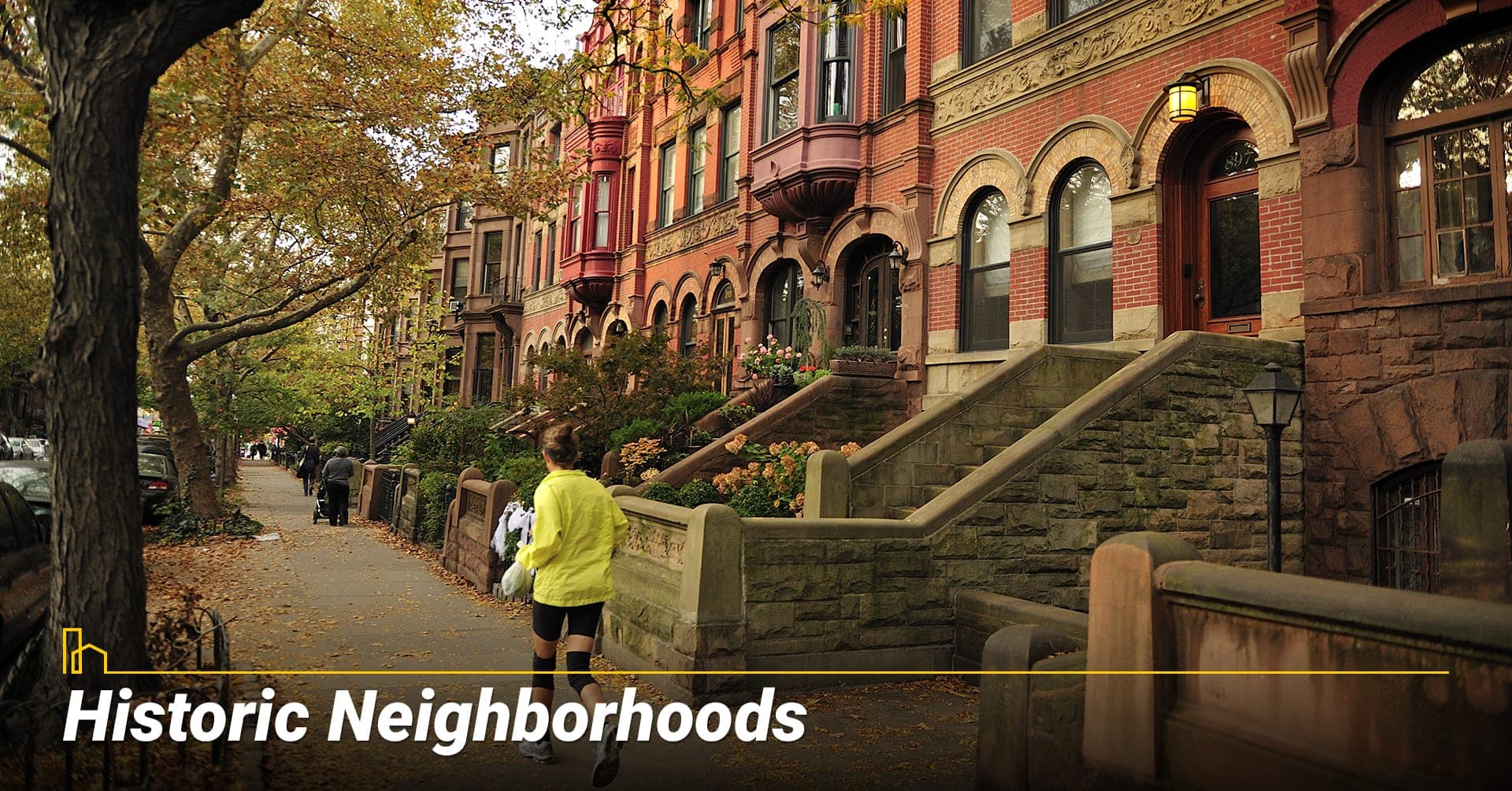
If you are an old soul, you might want to check out historic neighborhoods. They are mostly composed of homes with preserved architectural styles ranging from Victorian to Colonial Revival. Many of the residents living in these neighborhoods grew up in the area or have inherited their homes from their families. Since the homes are part of history, careful renovations are important (and can be rather expensive).
Now that you know about a few types of neighborhood, you can carefully consider them to see if one fits your personality and your requirements.
Of course, you also have to factor in your budget and the logistics of moving to a new home. Once you have a neighborhood in mind, you can start looking for listings of homes available for sale or rent. Plan your move carefully, and rely on professionals like Rainbow Movers to handle your belongings. This way, you can start a new chapter in your life without any hassle.

Related article
7 Key Factors to Know About Living in Chicago, Illinois
Before you consider a move to Chicago, you should consider 7 key factors that will increase your appreciation for the city and guide you to the right neighborhoods and activities for you…
FAQs About Choosing the Right Neighborhood Type
1. How do I decide which neighborhood type fits my lifestyle rather than just my budget?
Start by ranking how you actually spend time: commuting, socializing, exercising, and relaxing at home. Then compare those priorities to each neighborhood type’s daily rhythm. For example, downtown energy versus cul-de-sac quiet or resort-area leisure versus pedestrian hustle. An ideal fit is a place where the typical noise level, traffic, and social expectations line up with what you want most days, not just what sounds exciting on vacation.
2. What trade-offs should I expect between urban core, new urban, and pedestrian neighborhoods?
Urban cores and new urban areas often entail short commutes, walkable amenities, and diverse neighbors but come with higher noise, tighter parking, and generally higher housing costs. Pedestrian neighborhoods provide car-light living and convenience but can feel crowded and may have limited private outdoor space or fewer kid-oriented amenities. If choosing these areas, you are usually trading space and quiet for access, activity, and spontaneity right outside your door.
3. How can I tell if a cul-de-sac or golf neighborhood will actually feel welcoming if I don’t fit the “typical” resident profile?
Before committing, visit at different times of day and week, and pay close attention to who is outside, how people interact, and what rules or norms are emphasized by the HOA or community. If you are a single professional or a child-free couple, neighborhoods built mainly around kids’ schedules or golf memberships might feel socially narrow over time. Look for signs of diverse age groups, multiple types of community events, and flexible amenities that match specific interests.
4. What should families with young children weigh when choosing between cul-de-sac, urban pioneer, and historic neighborhoods?
Families often value low-traffic streets, parks, and nearby schools, which cul-de-sac and some historic areas can provide, but they should also consider commute times and access to everyday errands. Urban pioneer or historic neighborhoods may offer character, community activism, and shorter drives to city jobs, but are met with older infrastructure, renovation projects, or less predictable school zoning. A practical approach is to map school and work routes, visit playgrounds at peak times, and check how many other children you actually see outside in each area.
5. How do resort and golf neighborhoods work for full-time residents rather than just vacation or retirement living?
Resort and golf communities can feel like permanent getaway zones emphasizing recreation, views, and amenities, but daily life still involves groceries, medical visits, and school or work routines. Full-time residents should confirm year-round access to services, off-season traffic patterns, and how busy shared spaces feel when tourism peaks. It is also best to review association rules, dues, and guest policies to be sure the lifestyle and costs make sense beyond an occasional visit.
6. What extra due diligence is smart if I’m drawn to an urban pioneer or historic neighborhood that needs work?
If you like up-and-coming or historic areas, budget time and money for repairs, code compliance, and potential special rules for preserving older architecture. Walk the streets to understand where investments are already occurring and properties appear neglected, and learn about planned infrastructure improvements or zoning changes. You should also consider whether you are comfortable living through ongoing renovations, construction noise, and shifting property values over the next several years.
7. How can I “test-drive” a neighborhood type before making a long-term purchase decision?
One strategy is to rent in the neighborhood type you are considering (downtown, pedestrian, or resort areas) for at least a full cycle of seasons. During that time, track your commute experience, noise tolerance, social life, and how often you use nearby amenities versus driving elsewhere. If renting is not optimal, spend several full days in the area at different times, talk with residents, and be honest about whether the daily realities match the lifestyle you imagine.
Share