





Living In Oklahoma
Local Editor(s)

 Verified

The Complete Guide to Cost of Living and Lifestyle
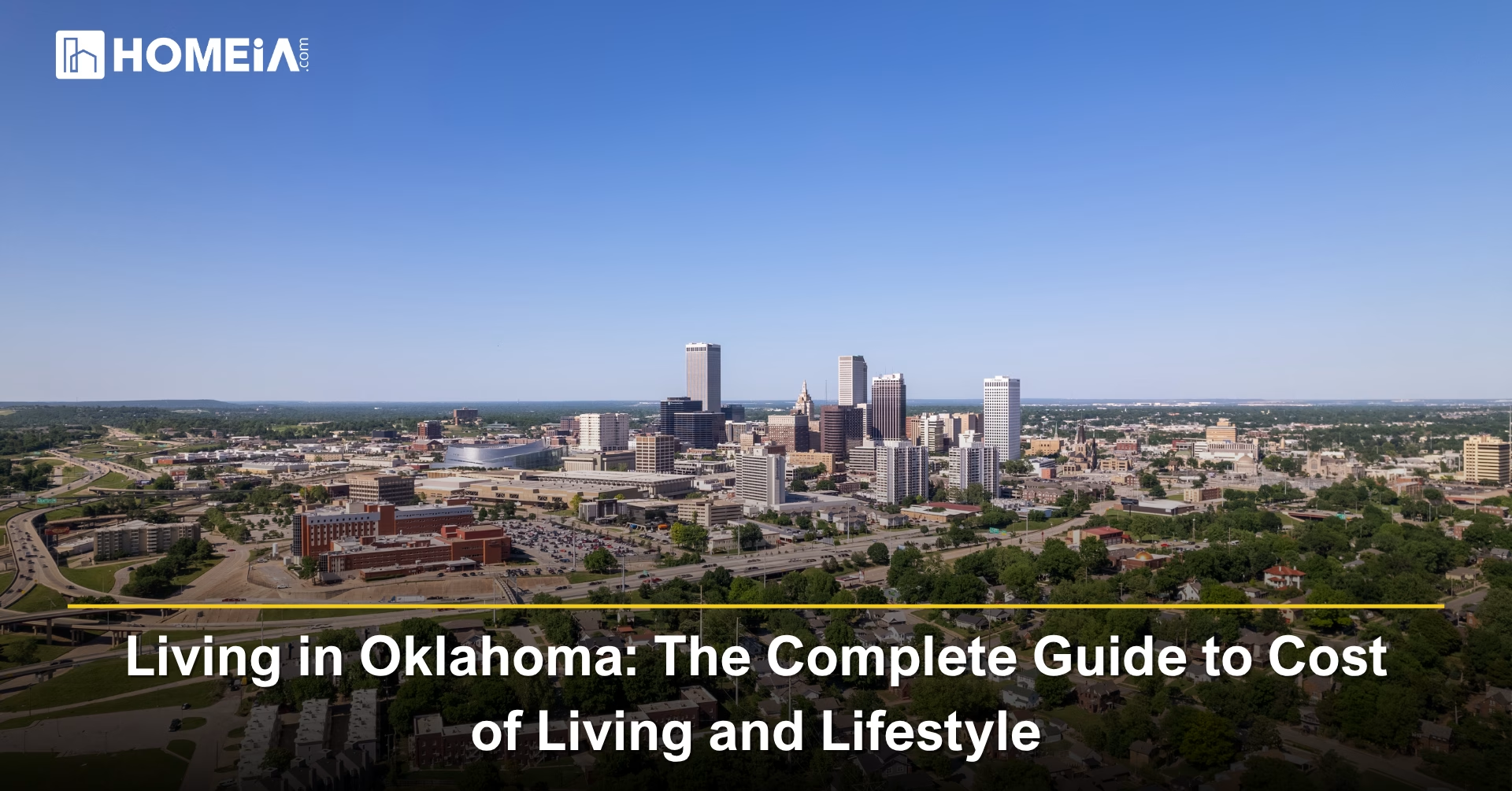
Living in Oklahoma feels like a secret the rest of the country isn’t in on. The wind really does come sweepin’ down the plain, and so does an electricity bill about 34 percent below the national average. A gallon of gas is consistently the cheapest in the nation, and a housing market where a solid three-bedroom house is still well within reach of a median-income household. The tradeoff is that distances are real, summers run hot, and the right budget depends on whether you land in the Oklahoma City metro, Tulsa corridor, or one of the smaller communities spread across the state.
People around here like to say OK is where the South meets the West, and they are right about both the culture and the weather. Tornadoes are a real threat come springtime, and investing in a storm shelter is standard practice in most neighborhoods. But the state compensates with one of the most affordable daily lives in America, a growing job market anchored by aerospace, energy, and tribal enterprise, and more outdoor recreation than most people expect when they picture the Sooner State.
Key Takeaways
- The most affordable state in the country: Oklahoma’s 2025 MERIC cost-of-living index is 84.7 (U.S. = 100), ranking it #1 most affordable nationally. Housing leads at a sub-index of 68.8, more than 31 percent below average. Oklahoma City’s C2ER composite score of 81.2 positions it as the most affordable large U.S. metro among cities with populations over 500,000.
- Home prices well below the national median: The statewide Zillow Home Value Index is $198,995 (February 2026), up 5.9% year-over-year. Regional variation is meaningful: Broken Arrow averages $287,000 while Lawton averages $139,000.
- Streamlined, declining income tax with no grocery tax: The state consolidated from six brackets to three in 2026, with a new top rate of 4.5%. It eliminated the 4.5% sales tax on groceries entirely, effective August 29, 2024.
- Healthy job market below the national unemployment rate: The seasonally adjusted unemployment rate was 3.9% in January 2026 (OESC), below the 4.3% national rate. Aerospace, energy, tribal enterprise, healthcare, and retail form the employment base.
- Low federal land share, 38 state parks: Only 1.5% of land is federally administered. The state parks system covers 38 parks across more than 60,000 acres, drawing roughly 12 million visitors per year.
Related article
7 Most Affordable Places to Live in Oklahoma
Oklahoma is one of the nation’s most affordable places to live, offering a low cost of living, below-average housing prices, and relatively low property taxes. However, affordability varies across the state. This guide highlights seven communities that combine attainable housing with strong employment opportunities, healthcare access, essential amenities, and a high quality of life—helping residents achieve long-term financial stability without sacrificing everyday convenience…
1. Snapshot of Oklahoma
Oklahoma’s estimated population reached approximately 4,123,288 on July 1, 2025, reflecting steady growth concentrated in the Oklahoma City and Tulsa metropolitan areas. It added more than 33,000 residents in 2024, a 0.77% increase driven by urban job growth and in-migration from higher-cost states. The ACS 2024 five-year estimate puts median household income at $65,039. The poverty rate was 14.9% in 2024, the 8th highest nationally, reflecting persistent regional income disparities particularly in the rural east.
| Metric | Figure (2025-2026) | Source |
| Population estimate | ~4,123,288 (July 1, 2025) | U.S. Census Bureau |
| Median household income | $65,039 (ACS 2024 5-yr estimate) | U.S. Census Bureau ACS |
| Poverty rate | 14.9% (2024, 8th highest nationally) | U.S. Census Bureau ACS |
| Cost-of-living index | 84.7 (U.S. = 100, 2025 avg; #1 nationally) | MERIC |
| Avg. home value (ZHVI) | $198,995 (Zillow, Feb 28, 2026, +5.9% YoY) | Zillow Home Value Index |
| Avg. rent (statewide) | ~$1,425/month | Zillow rental trends |
| Unemployment rate | 3.9% (Jan 2026, seasonally adj.) | Oklahoma Employment Security Commission |
| Federal land share | 1.5% of OK acreage (2018 CRS data) | Congressional Research Service |
Sources: U.S. Census Bureau; MERIC; Zillow ZHVI (Feb 28, 2026); Oklahoma Employment Security Commission; Congressional Research Service
2. Housing Costs and Real Estate
Here is one of the few states where homeownership remains genuinely accessible for middle-income families. The statewide Zillow Home Value Index sits at $198,995 as of February 28, 2026, up 5.9% year-over-year. Average rent runs $1,425 per month statewide. OKC ranked as the most affordable large metro in the country in the 2025 C2ER Cost of Living Index, with a housing sub-index of 58.7. This means housing costs more than 40 percent below the national average. For a national comparison, see our list of the most affordable cities to live in the US.
A. Oklahoma cities: typical home values and rent
| City | Typical Home Value | Avg. Rent (est.) | Local note |
| Oklahoma City | $240,734 | $1,379 | Largest city; #1 most affordable large U.S. metro; aerospace and energy anchor |
| Tulsa | $217,450 | $1,229 | Second city; growing arts district; lower prices than OKC; Blue Dome neighborhood |
| Norman | $262,839 | $1,100-$1,200 | University of Oklahoma college-town economy; strong suburban services |
| Broken Arrow | $286,846 | $1,200-$1,350 | Fastest-growing Tulsa suburb; top-rated schools; family base |
| Lawton | $139,275 | $900-$1,000 | Fort Sill military community; most affordable among Oklahoma’s larger cities |
Sources: Zillow Home Value Index and rental market trend pages by city, updated March-April 2026

Related article
15 Best Places to Live in Oklahoma
Are you planning to relocate to Oklahoma? Whether you are drawn to the cosmopolitan vibes of the cities or the tranquility of rural life, we curated a list of 15 of the best communities to live in Oklahoma for those considering making the Sooner State their new home…
B. Ways to reduce upfront housing costs
The Oklahoma Housing Finance Agency (OHFA) offers first-time buyers up to 3.5% of the total loan amount in down payment and closing cost assistance through the Gold and Dream mortgage programs. Specialized programs include OHFA 4Teachers for educators and OHFA Shield for firefighters, law enforcement, and EMS providers. Oklahoma City operates its own First-Time Homebuyers Program, providing up to $18,000 in zero-interest, deferred assistance for income-eligible buyers. This is structured as a forgivable loan conditioned on residing in the home for up to ten years.
Standard homestead exemption reduces taxable assessed value by $1,000 on owner-occupied primary residences, with additional exemptions available to veterans, seniors, and persons with disabilities. One practical note for new Okies is that even in Oklahoma City, which has reliable bus networks, most neighborhoods still require a personal vehicle. Factor commute miles into your monthly transportation budget when comparing communities.
3. Taxes and Credits
The state’s income tax underwent its most significant structural change in decades in 2026. Effective January 1, 2026, the state consolidated from six brackets to three and cut the top marginal rate from 4.75% to 4.5%. The state sales tax base rate is 4.5%, with local taxes adding between 0% and 7%, for a combined range of 4.5% to 11.5%. Property tax is administered at the county level and averages around 0.82% of home value statewide.

Related article
Moving to Arkansas: THE Complete Relocation Guide & Checklist
Arkansas combines natural beauty, community spirit, and affordability, making it a great place to live. This guide covers cost of living, job opportunities, and top places to settle. Whether you prefer Little Rock’s urban energy, Northwest Arkansas’s innovation, or Hot Springs’ charm, you’ll find the resources to relocate confidently…
A. Credits and exemptions most households use
- Grocery tax exemption: This eliminated the state’s 4.5% sales tax on food and food ingredients effective August 29, 2024, saving the average household approximately $104 per year. Local taxes may still apply depending on your municipality.
- Homestead exemption: Reduces the taxable assessed value of a qualifying primary residence by $1,000, available to all owner-occupants. Additional exemptions for seniors and veterans further reduce the property tax burden.
- Retirement income: Social Security income is fully exempt from state income tax for most filers. Pension income from federal, state, and local government sources receives a $10,000 annual exemption per person.
B. How Oklahoma compares to neighboring states
| State | Individual income tax | State sales tax | Groceries taxed? |
| Oklahoma | 0.25%-4.5% (3 brackets, 2026) | 4.5% state (up to 11.5% w/local) | No (state portion) |
| Texas | None | 6.25% state | No |
| Kansas | Progressive; top 5.7% | 6.5% state | No (since 2019) |
| Missouri | Progressive; top 4.7% | 4.225% state | No |
| Arkansas | Progressive; top 3.9% | 6.5% state | Reduced rate |
| Colorado | Flat 4.4% | 2.9% state + local | No |
Sources: Oklahoma Tax Commission; Texas Comptroller; Kansas DOR; Missouri DOR; Arkansas DFA; Colorado DOR
Recommended for you




4. Daily Living Expenses
MERIC reports an overall cost-of-living index at 84.7 for the 2025 annual average (U.S. = 100), the lowest of any state. Every major spending category runs below the national benchmark with housing at 68.8, transportation at 88.8, groceries at 95.4, healthcare at 97.1, and utilities at 98.2. A dollar stretches farther here than anywhere else.
A. Income needed to live comfortably
| Household type | Living wage (hourly) | Required annual income (before taxes) |
| 1 adult, no children | $20.73/hr | $43,119 |
| 2 adults (1 working), no children | $28.40/hr | $59,064 |
| 2 adults (both working), no children | $14.20/hr each | $59,064 combined |
| 2 adults (both working), 2 children | $25.47/hr each | $105,947 combined |
Source: MIT Living Wage Calculator, Oklahoma, updated February 15, 2026
B. Key expense benchmarks
- Electricity: Average residential electricity rate is approximately 12 cents per kWh as of April 2026, about 34% below the national average (EIA 2024: 12.24 cents/kWh). Monthly bills tend to run $125-$145, though summer cooling loads in a state with 100-plus-degree days push that to $175-$225 from June through September. Wind power now generates roughly 41% of the state’s electricity, helping stabilize rates.
- Gasoline: The lowest gas prices in the country are located here. The statewide average on April 12, 2026, was $3.454 per gallon compared to the $4.125 national average. On April 1, 2026, Oklahoma ranked first in the nation at $3.27 per gallon, roughly 19.5% below the U.S. average.
- Tornado preparedness: Storm shelter installation runs $3,000-$7,000 for an above-ground safe room and $5,000-$15,000 for an in-ground shelter. Most buyers treat it as a standard line item. FEMA Hazard Mitigation Grants and a state matching program help offset costs.

Related article
The 10 Cheapest Places to Live in Texas
They say everything is bigger in Texas, and for good reason. From some of America’s largest and active metropolitan cities to the host of recreational activities for people of all ages across the state to the many bigger-than-life personalities who call Texas home, Texas has plenty to offer for everyone. here’s the list of 10 lowest cost of living places…
5. Job Market and Income
The job market is one of the healthier ones in the South-Central region. Seasonally adjusted unemployment rate sits at 3.9% in January 2026, below the national rate of 4.3% that month. The Bureau of Labor Statistics reported Oklahoma’s average weekly wage at $1,088 in January 2026. While that ranks 48th nationally in nominal terms, the state’s cost-of-living adjustment provides purchasing power equivalent to approximately $1,239.
| Employer | Approx. employment | Sector |
| State of Oklahoma | ~37,600 | Government |
| Tinker Air Force Base | ~26,000 | Military / Federal |
| Walmart Inc. | ~33,500-37,500 | Retail trade |
| Chickasaw Nation | ~13,500 | Tribal enterprise |
| Oklahoma State University | ~13,940 | Higher education |
| Amazon | ~12,000-14,000 | Warehouse / distribution |
| Choctaw Nation | ~12,000 | Tribal enterprise |
| University of Oklahoma | ~11,530 | Higher education |
| INTEGRIS Health | ~10,000-11,400 | Healthcare |
Source: Oklahoma Department of Commerce; Greater Oklahoma City Chamber, April 2024
Beyond these anchors, their economy runs on aerospace and defense (Tinker AFB is the Air Force’s largest maintenance and logistics complex), oil and natural gas, tribal enterprise across the southeastern and central portions of the state, agriculture, and a growing technology sector that includes Paycom, ONEOK, and Devon Energy. The Chickasaw and Choctaw Nations together operate more than 200 businesses across hospitality, entertainment, gaming, and financial services, making tribal enterprise one of the most distinctive employer categories in the state.
6. Lifestyle and Things to Do
Here, outdoor and cultural life is regularly undersold. The eastern half contains the Ouachita Mountains, the Arbuckle Mountains, the Wichita Mountains Wildlife Refuge, thousands of miles of lake shoreline across 34 major reservoirs, and some of the best fishing, hunting, and kayaking terrain in the central United States. Only 1.5% of the state’s land is federally administered. This means most public recreation land is managed by state and tribal governments rather than federal agencies, with generally more accessible access and lower permit costs.
A. Place-based highlights
- Wichita Mountains Wildlife Refuge: One of the oldest federally managed wildlife refuges in the country, established in 1901. The 60,000-acre refuge in the southwest shelters roaming bison, Texas longhorn, and Rocky Mountain elk against a backdrop of ancient granite mountains reaching 2,464 feet at Mount Scott. Hiking, fishing, kayaking, wildlife photography, and camping are all available. Admission is free; it is about 90 minutes southwest of Oklahoma City.
- Oklahoma State Parks: The state manages 38 parks covering more than 60,000 acres, drawing nearly 12 million visitors per year. Notable attractions are Lake Murray State Park (12,496 acres), Beavers Bend State Park in the Ouachita highlands near Broken Bow, and Robbers Cave State Park near Wilburton. Many parks offer lodge accommodations, golf, and cabins.
- Route 66: Oklahoma contains the longest drivable stretch of original Route 66 in any single state, spanning more than 400 miles from the Kansas border to the Texas line. Stops include Tulsa’s Art Deco architecture, the Blue Whale of Catoosa, and the National Route 66 Museum in Elk City.
- Tulsa and Oklahoma City culture: Tulsa’s Gathering Place, a 100-acre riverfront park, opened to national acclaim and draws visitors from across the region. Oklahoma City’s Bricktown entertainment district, athletics (2025 NBA Champion Thunder), Deep Deuce jazz history, and the Oklahoma City National Memorial together form a cultural calendar that surprises most visitors.

Related article
Best Affordable Places to Live in Missouri for Retirees
The lower cost of living in Missouri is a big draw for retirees, but there is so much more this Midwestern state has to offer seniors including beautiful landscapes, a milder climate, thriving communities, and a vibrant cultural scene. Whether you seek a cheaper or finer option, or you want to live over or under the radar, the state of Missouri has certainly got you covered…
B. Best places to live for different priorities
- Career depth and city amenities: Oklahoma City and its suburbs (Edmond, Moore, Norman, Yukon). Metropolis offers the broadest job market, highest concentration of aerospace and energy jobs, and the widest retail, healthcare, and entertainment options in the state.
- Urban arts scene with lower rent: Tulsa. A resurgent music and arts culture, the Gathering Place, and lower average home prices ($217,450) and rents ($1,229/month) than OKC make Tulsa attractive for younger households and remote workers.
- Family suburbs with top schools: Broken Arrow and Owasso in the Tulsa metro, or Edmond and Mustang in the main metro. Home values run $260,000-$290,000, but school quality, parks, and walkability are among the best in the state.
- Lowest cost of living among larger cities: Lawton. With a typical home value around $139,000 and significant Fort Sill military infrastructure, Lawton offers the lowest entry point among Oklahoma’s mid-size cities. The trade-off is a smaller job market outside military and government work.
Conclusion
Oklahoma is not a cost-of-living story that requires fine print or regional caveats. It is the most affordable state in the country at the broadest measure, and that advantage holds across housing, fuel, groceries, utilities, and transportation simultaneously. The big budget decisions are which metro to plant yourself in and how to handle the summer cooling load. Use statewide benchmarks as a starting point, then price your specific city and neighborhood, because even within Oklahoma the difference between Broken Arrow and Lawton is the deciding factor between a Sunbelt suburb and one of the cheapest housing markets in the country. For new Sooners, the adjustment is less about what they give up and more about what they gain: a functioning household budget, manageable commutes, and outdoor recreation that needs no passport or plane ticket.
Recommended for you




FAQs About Living in Oklahoma
1. What is the cost of living in Oklahoma compared to the national average?
Oklahoma’s 2025 MERIC cost-of-living index is 84.7 (U.S. = 100), placing it #1 most affordable nationally. Housing drives the savings most (index 68.8), but transportation (88.8), groceries (95.4), and healthcare (97.1) are also incredibly economical Oklahoma City’s C2ER composite of 81.2 makes it the most affordable large metro in the United States among cities with populations over 500,000.
2. How much income do I need to live comfortably in Oklahoma?
MIT’s Living Wage Calculator (February 2026) estimates $20.73 per hour ($43,119 annually before taxes) for a single adult covering basic needs. Families of four need approximately $25.47 per hour each ($105,947 combined before taxes). Oklahoma’s average weekly wage of $1,088 (January 2026) carries purchasing power equivalent to about $1,239 due to the state’s low cost of living.
3. Is Oklahoma good for first-time homebuyers?
Yes. OHFA provides up to 3.5% of the loan amount in down payment and closing cost assistance. OKC’s local program offers up to $18,000 in zero-interest deferred loans for income-eligible buyers. With the statewide Zillow ZHVI at $198,995 (February 2026) and a price-to-income ratio well below the national average, homeownership is achievable for middle-income families at Oklahoma’s median household income.
4. What is Oklahoma’s job market like right now?
The seasonally adjusted unemployment rate was 3.9% in January 2026, below the 4.3% national rate. The largest private employer is Walmart (approximately 33,500-37,500 employees), followed by Amazon (approximately 12,000-14,000). Aerospace and defense (Tinker AFB), energy, tribal enterprise (Chickasaw and Choctaw Nations combined employ approximately 25,500), healthcare, and retail form the employment base.
5. What is the biggest lifestyle advantage of living in Oklahoma?
Accessibility and affordability stacking together in a way that gives households real budget flexibility. The Wichita Mountains Wildlife Refuge, 38 state parks covering 60,000-plus acres, Oklahoma’s 400-mile Route 66 corridor, and consistently the lowest gasoline prices in the country mean weekend plans are not breaking the bank. It is also among the least expensive places in America to drive, buy groceries, and heat or cool a home.
Local Editor(s)


7 Most Affordable Places to Live in Oklahoma
Most Affordable Places to Live in Oklahoma: This State ranks as the nation's most affordable state. A cost of living index of 86.0, 14 percent lower than the U.S. average,…
-
15 Best Places to Live in Oklahoma
Not to be overlooked, Oklahoma is so much more than a “flyover” state. Oklahoma, also known as the Sooner State, is located in the South Central region of the United…
-
Things to Consider When Choosing Neighborhood for Your House
Things to Consider When Choosing Neighborhood for Your House: We all love finding our dream home—a house that fits perfectly with what we wanted—but is that enough? There’s another factor…
-
An Ultimate Guide to Moving for Home Buyers and Sellers
An Ultimate Guide to Moving for Home Buyers and Sellers: The real estate is a booming industry which makes it easy for anyone to earn and mold their professional careers.…
-
8 Types of Neighborhood: Choose What Fits Your Personality
When buying a new home, your first impulse might be to focus on finding a house that speaks to you. Like many buyers, you might go to an open house,…
Related Topics









-
The Pros and Cons of Living in Arkansas
Considering a move to Arkansas? The Natural State offers a compelling blend of affordability and natural beauty that attracts new residents from across the country. Home to 3 million people, Arkansas features everything from vibrant cities to charming small towns,…
-
The Pros and Cons of Living in Ave Maria, Florida
The Pros and Cons of Living in Ave Maria, Florida: When picturing Ave Maria, what comes to mind are stunning basilica, perfectly manicured neighborhoods, and the Florida sun. However, this unique town has even more hidden inside. It blends master-planned…
-
The Pros and Cons of Living in Boston, Massachusetts
Considering moving to Boston in 2026? This historic yet innovative city offers a unique blend of old-world charm and modern opportunity. As New England's economic and cultural hub, Boston attracts residents with its world-class education, thriving job market, and vibrant…

-
The Pros and Cons of Living in Delaware
When picturing Delaware, what comes to mind are tax-free shopping, beautiful beaches, and proximity to major East Coast cities. But the First State offers more than financial advantages; here exists a place where historic charm, corporate headquarters, and relaxed coastal…
-
The Pros and Cons of Living in Denver, Colorado
Looking for stellar public schools, world-class ski resorts, and a thriving city all in one spot? Denver, Colorado, may be the place for you. The Mile High City offers a unique blend of outdoor adventure, economic opportunity, and urban convenience.…
-
The Pros and Cons of Living in Florida
The Pros and Cons of Living in Florida: Relocating to a new state is a big move – pun intended! – and requires careful consideration of both the state as well as the specific community you're thinking to join. If…



-
The Pros and Cons of Living in Illinois (updated)
Relocating to a new state requires careful consideration of both the state as a whole and the specific community you'll join. If you're considering Illinois, you'll find a state home to vibrant cities, charming small towns, and a diverse mix…
-
The Pros and Cons of Living in Indiana
When picturing Indiana, what comes to mind are rolling farmlands, basketball hoops, and the iconic Indianapolis 500. But the Hoosier State offers more than Midwestern clichés; here lies a place where affordability, tight communities, and an ideal central location define…
-
The Pros and Cons of Living in Iowa
When picturing Iowa, what comes to mind are vast cornfields, rolling hills, and an established agricultural heritage. But the Hawkeye State offers more than what you see on a farm; here lies a place where strong communities, affordable living, and…


-
The Pros and Cons of Living in Massachusetts
The pros and cons of living in Massachusetts: Moving to a new part of the US requires careful consideration of both the state itself and the specific community you'll join. If Massachusetts is your next destination, you'll find a state…
-
The Pros and Cons of Living in Michigan
Relocating to a new state requires careful consideration of both the state as a whole and the specific community you'll join. If you're considering Michigan, you're in luck---the Great Lakes State offers diverse options for all ages, budgets, family situations,…
-
The Pros and Cons of Living in Minnesota
The Pros and Cons of Living in Minnesota: When picturing the Midwestern state of Minnesota, some might imagine a snowy blizzard, an afternoon at the lake, the bustling state fair, and a thriving hockey community. And while all of those…
-
The Pros and Cons of Living in Nevada
When picturing Nevada, what comes to mind are glittering casinos, vast desert landscapes, and the 24-hour energy of Las Vegas. But the 36th state offers more than entertainment clichés; tax advantages, outdoor recreation, and economic opportunity define everyday living. Yet,…
-
The Pros and Cons of Living in New Hampshire
When picturing New Hampshire, what comes to mind are picturesque New England villages, stunning White Mountains, and a fiercely independent spirit. But the Granite State offers more than colonial charm; here lies a place where low-cost living, outdoor adventure, and…
-
The Pros and Cons of Living in New Jersey
Considering a move to New Jersey? The Garden State offers a dynamic mix of urban energy, coastal charm, and suburban comfort. Home to nearly 9 million residents, New Jersey features vibrant cities, peaceful towns, stunning beaches, dense forests, and cultural…


-
The Pros and Cons of Living in North Dakota
When picturing North Dakota, imagery commonly associated are vast prairies, oil fields, and harsh winters. But the Peace Garden State offers more than Midwestern stereotypes; here lies an area where flourishing communities, economic opportunity, and affordable living define everyday life.…
-
The Pros and Cons of Living in Ohio
On any given day in Ohio, you could find yourself in two completely different states of mind in a difference of an hour. One moment, you are looking at a beautiful view of snow-topped trees from a lookout point high…
-
The Pros and Cons of Living in Oregon
Relocating to a new state requires careful consideration of both the state as a whole, as well as the specific community you'll join. Oregon offers stunning natural beauty, vibrant cities, and a progressive culture with options for all ages, budgets,…


-
The Pros and Cons of Living in South Carolina
The pros and cons of living in South Carolina: When picturing South Carolina, the mind goes straight to shrimp and grits at a waterfront table in Charleston, azaleas in full bloom in Summerville, and a round of golf as the…
-
The Pros and Cons of Living in South Dakota
The Pros and Cons of Living in South Dakota: When picturing South Dakota, what comes to mind are vast prairies, Mount Rushmore, and the rugged beauty of the Badlands. But the Land of Infinite Variety offers more than Western clichés; here…
-
The Pros and Cons of Living in Tennessee
People have been migrating to the South at an unprecedented rate in recent years, making it the leading region for population growth in the United States. This historic pattern of migration is driven by a complex range of factors, including…
-
Pros and Cons of Living in Virginia
Virginia is a beautiful state with an abundance of opportunities ripe for discovery. From the Appalachian Trail to the Blue Ridge Mountains, coastal towns to small farming communities, Virginia has something for individuals and families of all ages and budgets.…
-
The Pros and Cons of Living in Washington
When picturing Washington State, what crosses one’s mind are lush evergreen forests, majestic mountains, and the tech hub of Seattle. But the PNW offers more than that; here lies a place where natural beauty, economic opportunity, and progressive values define…
-
The Pros and Cons of Living in West Virginia
The Pros and Cons of Living in West Virginia: Relocating to West Virginia is a major decision requiring careful consideration of both the state's overall character and the communities you might call home. If you're considering moving to West Virginia,…