





Living In Vermont
Local Editor(s)

 Considering


 Verified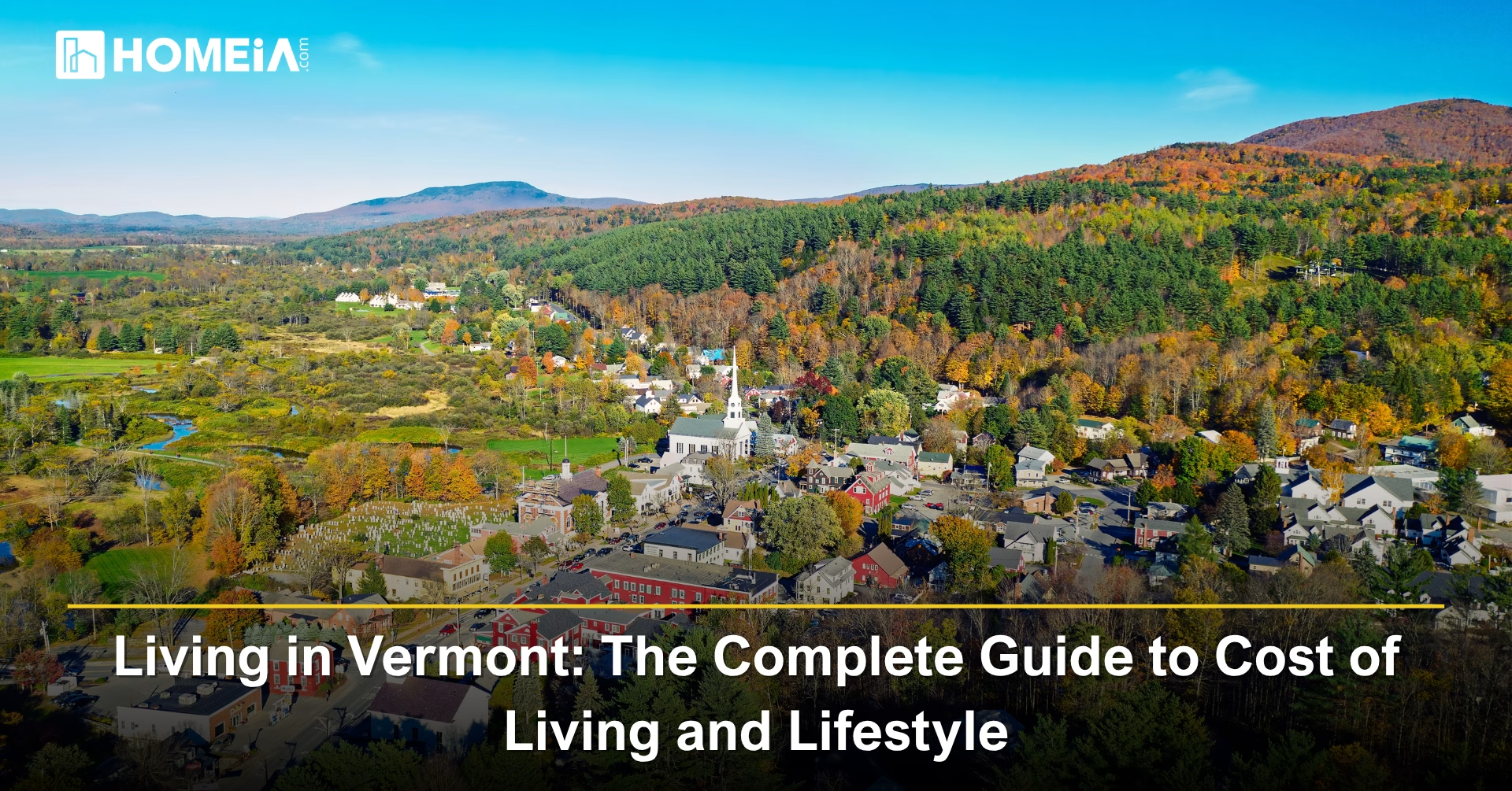
The Complete Guide to Cost of Living and Lifestyle
Vermont is known for its green mountains, autumn foliage, and covered bridges, but day-to-day life here is more complex than what it seems. This living in Vermont guide offers an honest look at what it costs to live in the Green Mountain State, where the jobs are, how the climate shapes daily routines, and what makes each region special. You’ll also find current data on taxes, tourism, housing, and the outdoor adventures that make it uniquely appealing and uniquely expensive.
Key Takeaways
- Smaller state, modest incomes: Vermont has a population of roughly 644,000. Median household income is $81,203 and the per-capita income is $46,500. About 10.1% of residents live below the poverty line, lower than the national average.
- Above-average cost of living: With a cost-of-living index of 113.6, it is about 14% more expensive than the national average. Housing and property taxes are the biggest drivers; Census median home values are $316,600, while the Zillow Home Value Index reached $393,838 in February 2026 (+3.8% year-over-year).
- Strong labour market: The state unemployment rate was 2.6% in late 2025, among the lowest in the nation and well below the 4.4% national rate. Tourism alone supports approximately 32,000 jobs (10% of the state’s workforce), and 2024 visitor spending hit a record $4.2 billion.
- Taxes: Progressive income tax of 3.35% to 8.75%, a 6% sales tax (groceries and clothing exempt), property taxes averaging 1.42%, and a gas tax of 31 cents per gallon. There’s an estate tax but no inheritance tax.
- Outdoor lifestyle and renewable energy: Four seasons of recreation, nearly 100% renewable electricity, and a commitment to reaching 90% renewable energy consumption by 2050 shows it champions sustainability.
Related article
7 Most Affordable Places to Live in Vermont
Vermont is known for its natural beauty and quality of life, but affordability has become increasingly challenging as housing prices continue to rise. While premium markets around Burlington dominate headlines, more affordable opportunities remain in central, southern, and northern parts of the state. This guide examines seven communities…
1. Overview and Demographics
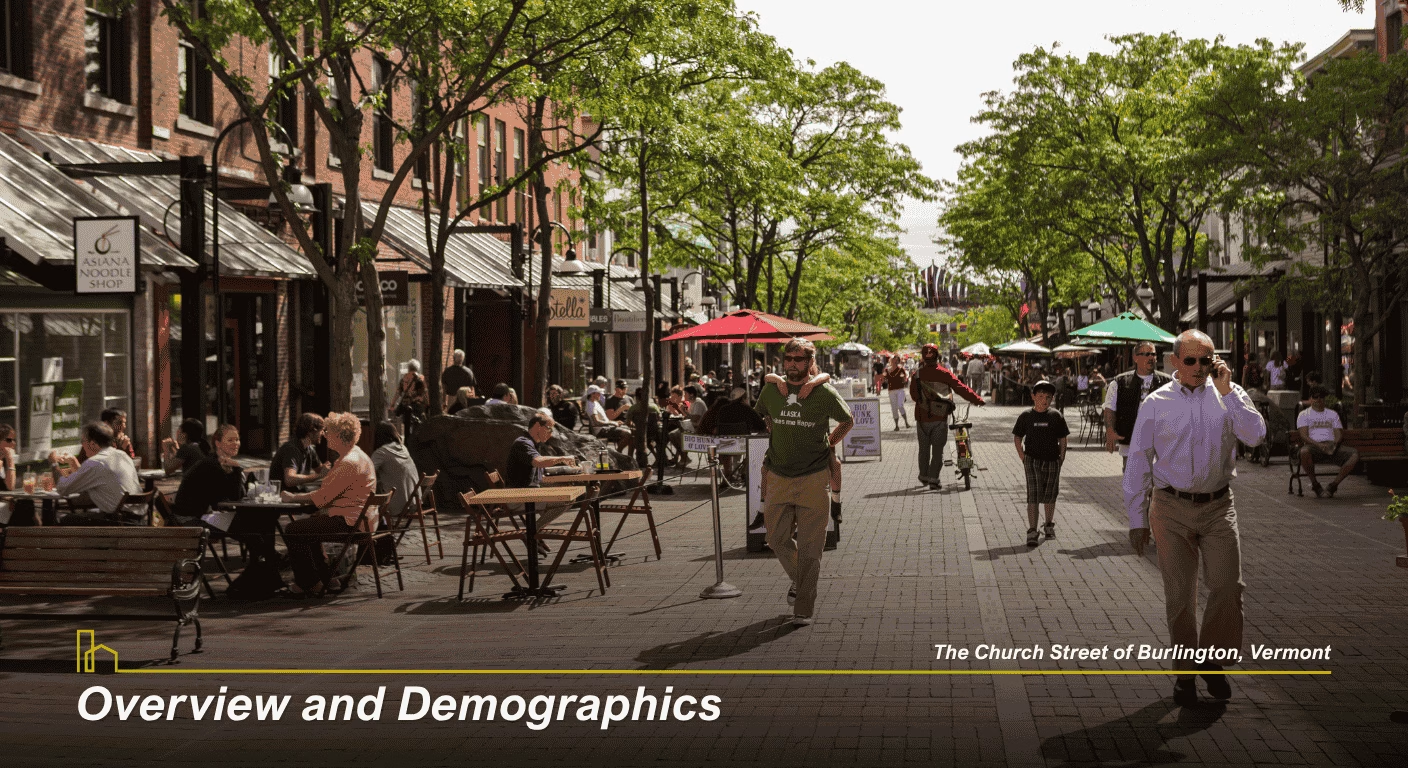
Vermont is one of the smallest and least populous states in the U.S. Its roughly 644,000 residents live amid forested mountains, fertile valleys, and historic village greens. About 73% of housing units are owner-occupied. The median household income is $81,203 and the per-capita income is $46,500. The poverty rate is 10.1%, lower than the national average. An unemployment rate of 2.6% (November 2025) is well below the national rate, reflecting a tight labour market even as the state faces long-term workforce challenges from an aging population.
Economic prosperity reflects its natural surroundings. Agriculture remains a backbone of rural life: the state produces more than 10% of U.S. dairy products and dominates maple-syrup production. About 78% of the state is forested, and forestry accounts for roughly 9% of manufacturing output. High-tech manufacturing is anchored by GlobalFoundries’ semiconductor plant in Essex Junction, which employs more than 3,000 people. Education and healthcare are other pillars, led by the University of Vermont and UVM Medical Center.
Tourism is Vermont’s economic superstar. In 2024, 16 million visitors spent a record $4.2 billion on goods and services, representing 9% of the state’s GDP, far above the national average of 3% for tourism’s share. The visitor economy directly supported nearly 32,000 jobs, or about 10% of total workforce. Visitors generated roughly $282 million in state and local taxes, equivalent to about $1,000 per Vermont household. Ski resorts like Killington and Stowe, combined with summer hiking, fall foliage, and agritourism, drive this outsized contribution year-round.
Related article
Moving to Vermont: The Complete Relocation Guide & Checklist
Vermont attracts newcomers seeking natural beauty, outdoor recreation, and a strong sense of community. From the slopes of the Green Mountains to the shores of Lake Champlain, the state offers a lifestyle centered on sustainability, local culture, and year-round adventure. With low unemployment, quality education, and close-knit towns, Vermont appeals to those prioritizing quality of life over urban pace…
2. Cost of Living
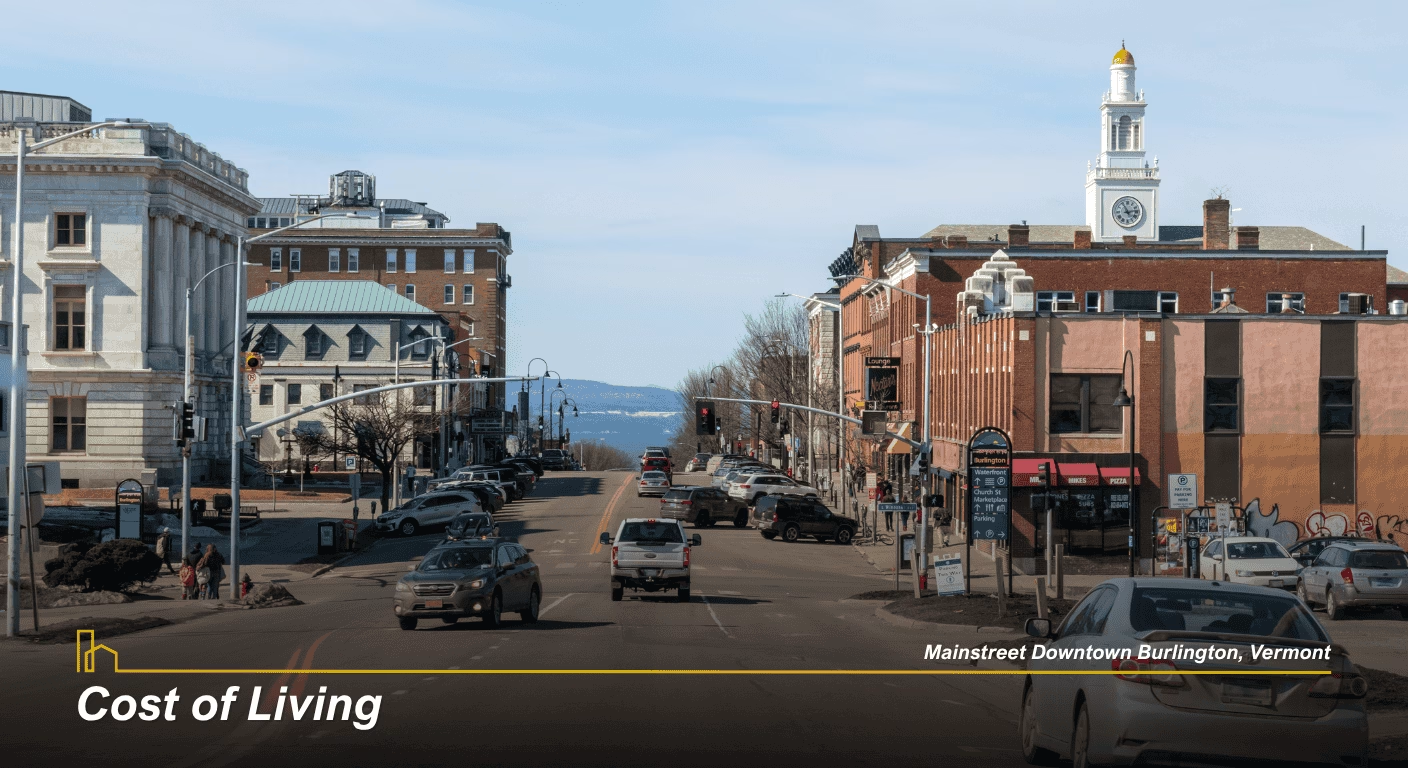
The cost-of-living index of 113.6 means goods and services cost roughly 14% more than the U.S. average. Housing, healthcare, and everyday expenses all contribute. The table below summarizes typical costs. For a national comparison, see our list of the most affordable cities to live in the US.
| Expense Category | Typical Cost | Notes |
| Housing (purchase) | Census median $316,600; Zillow ZHVI $393,838 | Median mortgage ~$1,877/month |
| Housing (rent) | $1,025 studio – $1,484 three-bedroom | Lower than many Northeast states |
| Utilities | ~$357/month | Electricity, gas, internet, water |
| Food & groceries | ~$425/person/month | Higher due to local production and transport costs |
| Transportation | $10,602–$19,729/year | Car essential outside Chittenden County; gas ~$4.02/gal (Apr 2026) |
| Healthcare | ~$10,438/person/year | Reflects robust services and older population |
| Taxes | Income: 3.35%–8.75%; sales: 6%; property: 1.42% | Groceries & clothing exempt from sales tax |
Sources: U.S. Census ACS 2024; Zillow ZHVI Feb 2026; Doxo 2025; AAA April 2026
A. Housing
Housing is Vermonters’ largest expense. The Census ACS median owner-occupied home value is $316,600, while the Zillow Home Value Index, which reflects current market transactions, stands at $393,838 as of February 2026, up 3.8% year-over-year. The Vermont Housing Finance Agency reported a statewide median sale price of approximately $385,000 for 2025. Mortgage payments average about $1,877 per month. Renters pay between $1,025 for a studio and $1,484 for a three-bedroom unit. Rural areas offer slightly cheaper housing, but property taxes at 1.42% of assessed value are among the highest in the country.
Here faces a structural housing deficit created by decades of underbuilding and an aging housing stock. Conversion of homes to seasonal or vacation use, about 15% of the state’s housing stock further limits inventory for year-round residents. Although gradually improving by rising 11.7% year-over-year in January 2026, affordability remains a pressing challenge.
B. Everyday Expenses
Monthly utilities, electricity, natural gas, internet, and water, average about $357. Cold winters drive heating costs higher, though many homeowners supplement with wood or pellets. The Marble State’s electricity grid is almost entirely renewable. Groceries run about $425 per person monthly, higher than the national average because much food is locally produced or transported long distances.
Transportation is a significant burden as households spend between $10,602 and $19,729 annually on car ownership and operation. Gas averages approximately $4.02 per gallon (AAA, April 2026), up sharply from about $3.18 a year prior due to global supply disruptions. Public transit is limited outside Chittenden County, making car ownership essentially mandatory for most residents. Healthcare costs about $10,438 per person annually, reflecting an older population and robust but expensive medical services.
C. Taxes
Boasting a progressive tax income, it runs from 3.35% to 8.75% depending on income. The state sales tax is 6%, with groceries and clothing exempt, a meaningful relief for lower-income households. Property taxes average an effective rate of 1.42% of assessed value, among the highest nationally. The gas tax is 31 cents per gallon and there is an estate tax. On the positive side, a net-metering program credits homeowners for excess solar power and Efficiency Vermont offers rebates for heat pumps, insulation, and efficient appliances.
Recommended for you




3. Job Market and Economy
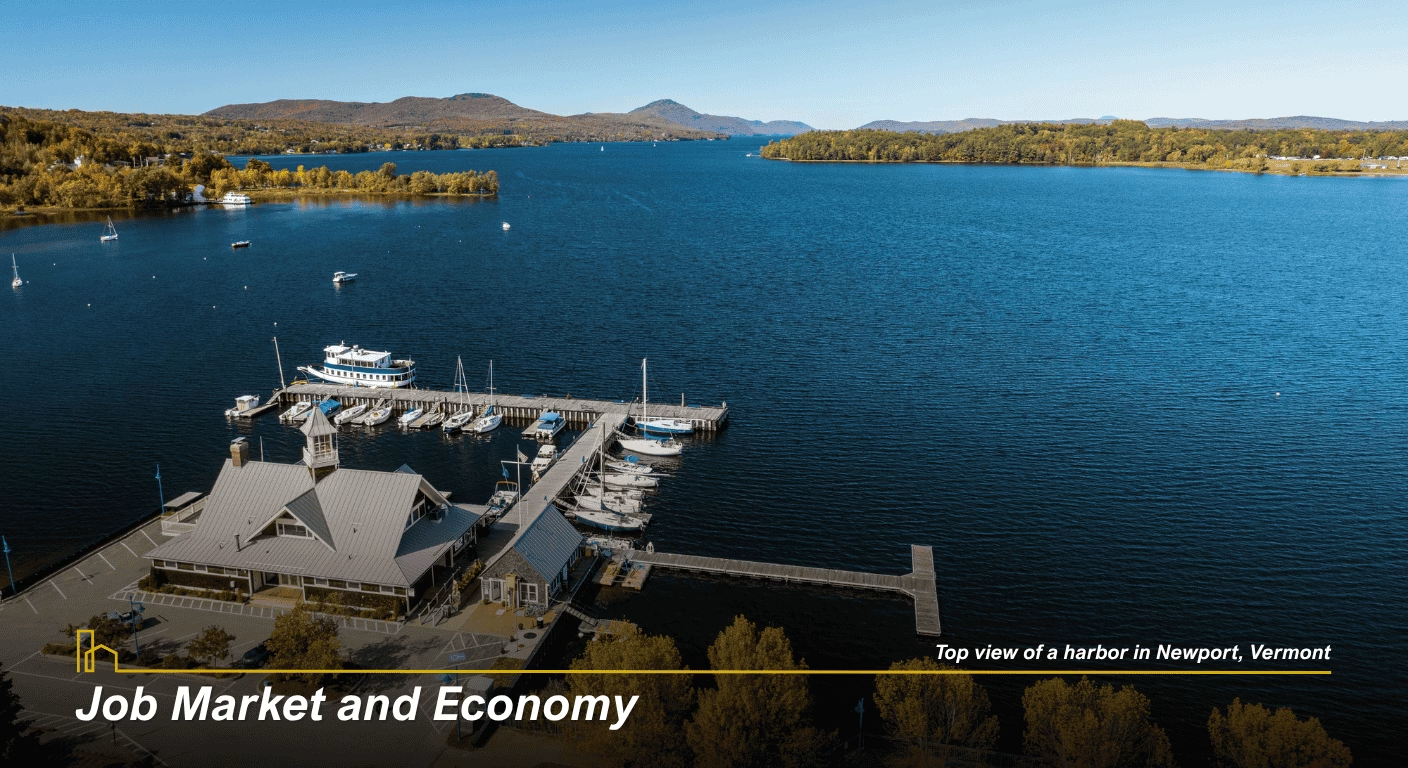
The economy found here is small but resilient. The unemployment rate of 2.6% in late 2025 is nearly two full points below the national rate, and the state’s labor force participation rate of 64.2% compares favorably to the national figure. That said, job growth is modest as the Vermont Department of Labor projects that the occupations generating the most openings through 2027 will be home health and personal care aides (rising from 8,042 to 8,439 positions, creating 1,407 openings), along with service roles like cashiers, fast-food workers, and retail salespersons. This pattern reflects an aging population requiring more care and a service-oriented economy. High-salary roles remain relatively scarce, and many young Woodchucks are swept away for higher wages elsewhere.
Key sectors: Healthcare and education are anchored by the University of Vermont and UVM Medical Center. High-tech manufacturing centers on GlobalFoundries’ Essex Junction semiconductor fab (3,000+ employees). Agriculture and forestry sustain rural communities, producing award-winning cheeses, maple syrup, and timber. Craft industries, breweries, cideries, and specialty food producers, have grown rapidly, tourism spending. Hospitality and retail surge during foliage and ski seasons, giving the state’s coastal towns and mountain resorts a pronounced seasonal character.
Many small businesses thrive, particularly in craft brewing, agriculture, and forest products. Remote work has brought new residents seeking improved quality of life, partially offsetting the long-running outmigration of younger workers.

Related article
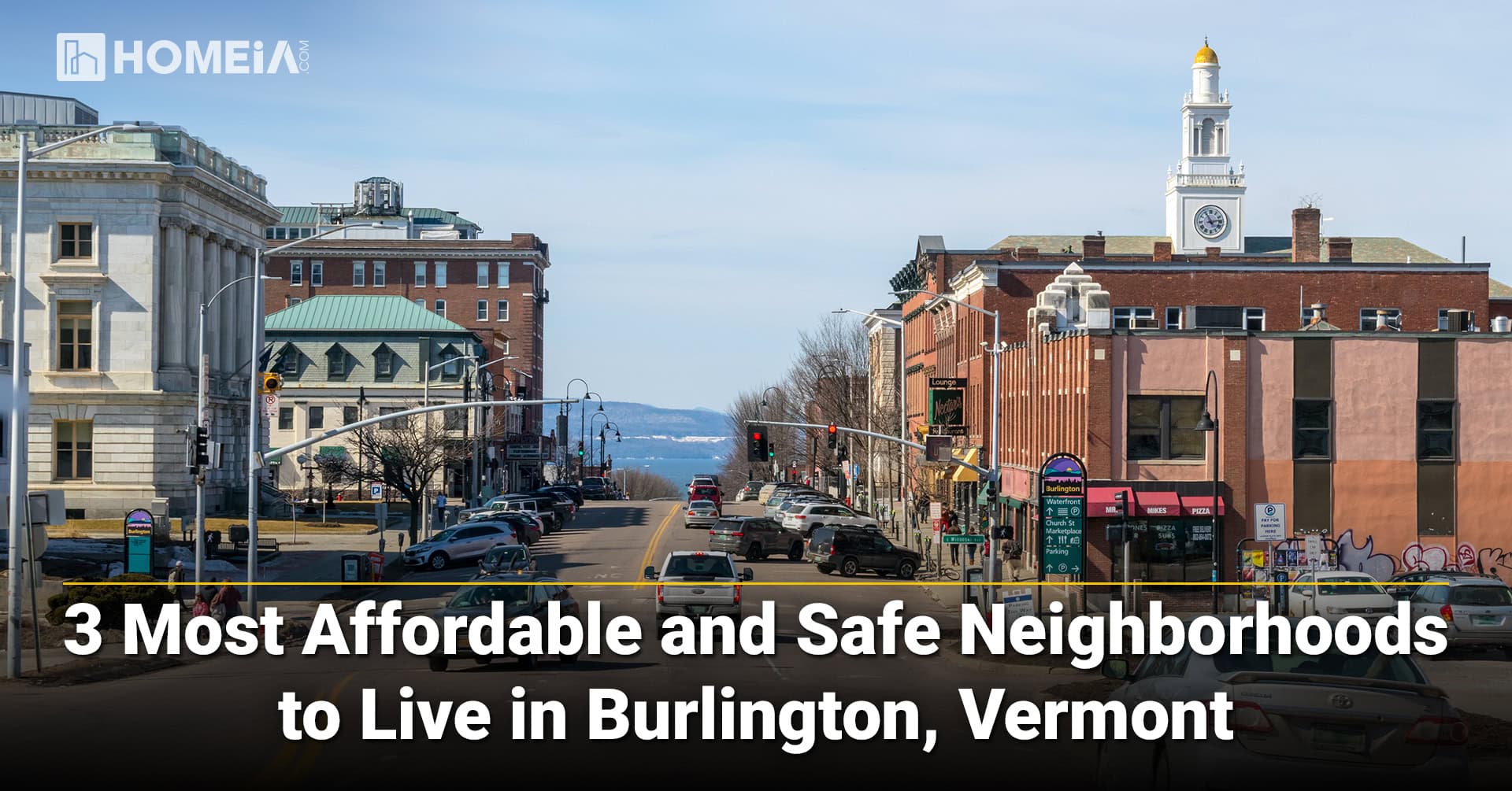
3 Most Affordable Places to Live in Burlington, Vermont
Burlington’s Old North End, South End, and Downtown offer a unique mix of culture, creativity, and affordability. From historic charm to urban convenience and housing programs, each neighborhood showcases the city’s progressive spirit, rural appeal, and commitment to accessible living—making Burlington a standout destination for those seeking vibrant community life…
4. Climate, Geography, and Lifestyle
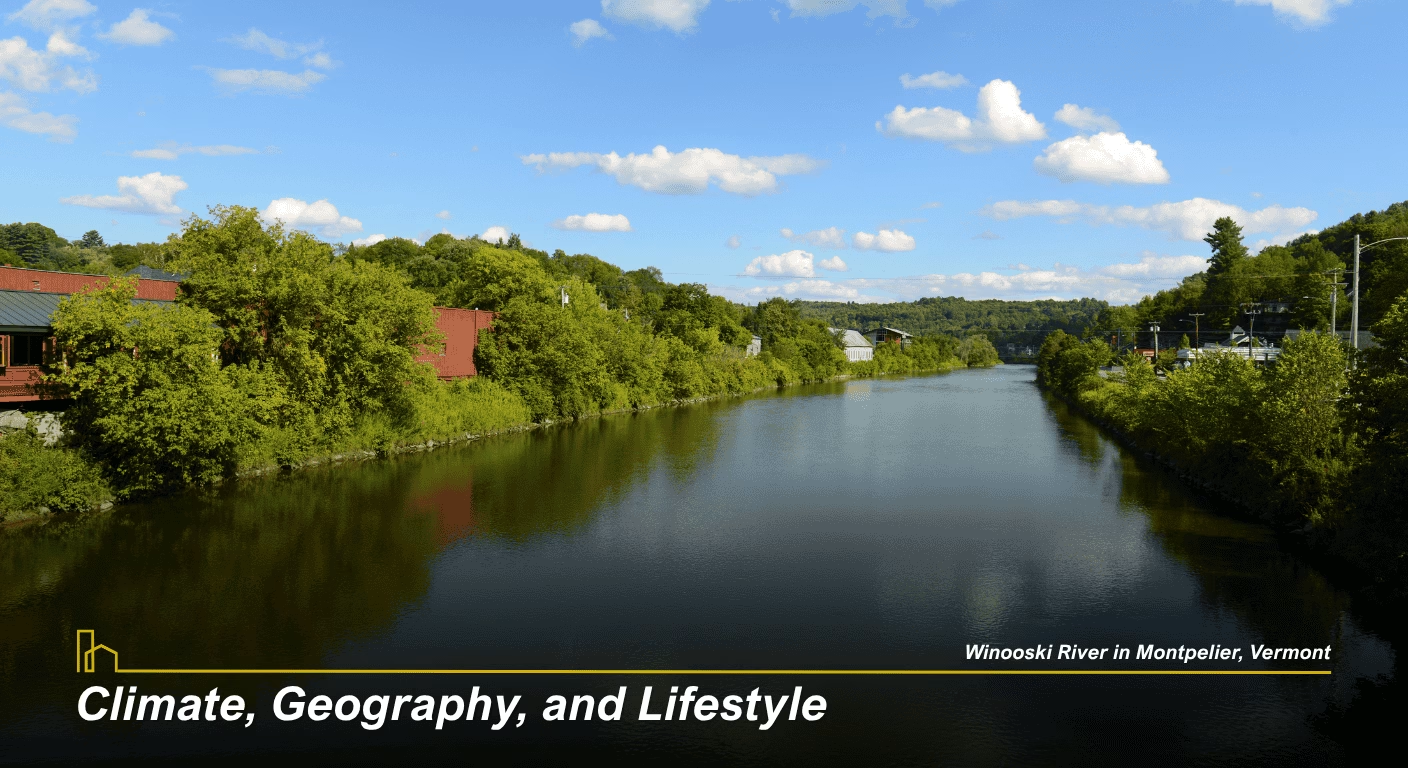
This portion of New England lies in the humid continental climate zone, with cold, snowy winters and warm, humid summers. Average temperatures have risen about 3°F since the early 1900s, winters and springs are getting wetter, and flood risk is increasing, as devastating floods in July 2023 and July 2024 demonstrated, causing significant damage to businesses and infrastructure across central Vermont. Summers remain mild, typically staying below 85°F, and the freeze-free season is lengthening. Snowfall supports a thriving ski industry, while autumn ushers in world-class foliage.
The Green Mountains run north to south through the heart of the state. Mount Mansfield, at 4,393 feet, is Vermont’s highest peak and a year-round recreation destination. To the west, Lake Champlain stretches 107 miles, reaches up to 14 miles wide, and is dotted with 80 islands. This moderates temperatures along its shores and offers sailing, fishing, and paddling. The Connecticut River traces the eastern border, while central Vermont features fertile valleys and working farms.
Lifestyle revolves around the outdoors and community. Residents hike, bike, ski, snowshoe, and paddle through the seasons. Farmers’ markets and maple sugarhouses are social hubs as much as commercial ones. Town meetings and village festivals reinforce civic ties uncommon in larger states. Burlington offers live music, craft breweries, and a college-town energy, while smaller communities emphasize volunteerism and local food. Energy efficiency is a cultural priority with wood heat, solar panels, and heat pumps being common household choices.
Related article
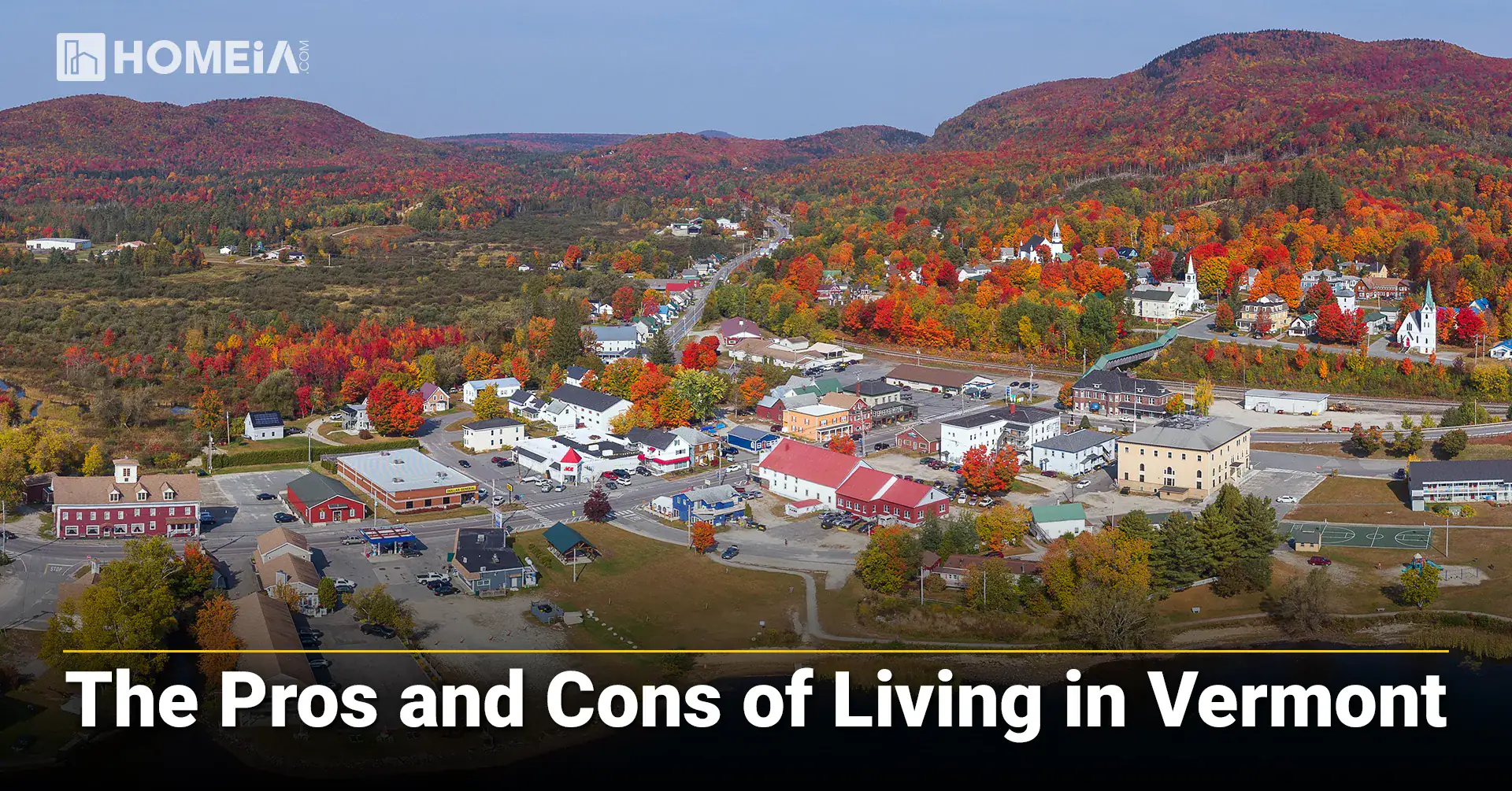
The Pros and Cons of Living in Vermont
If you’re considering relocating, this guide will help you weigh the pros and cons of living in Vermont, spotlight the best cities and towns to call home, and give you a feel for the Vermont lifestyle — from community life and cuisine to recreation and affordability…
5. Best Places to Live
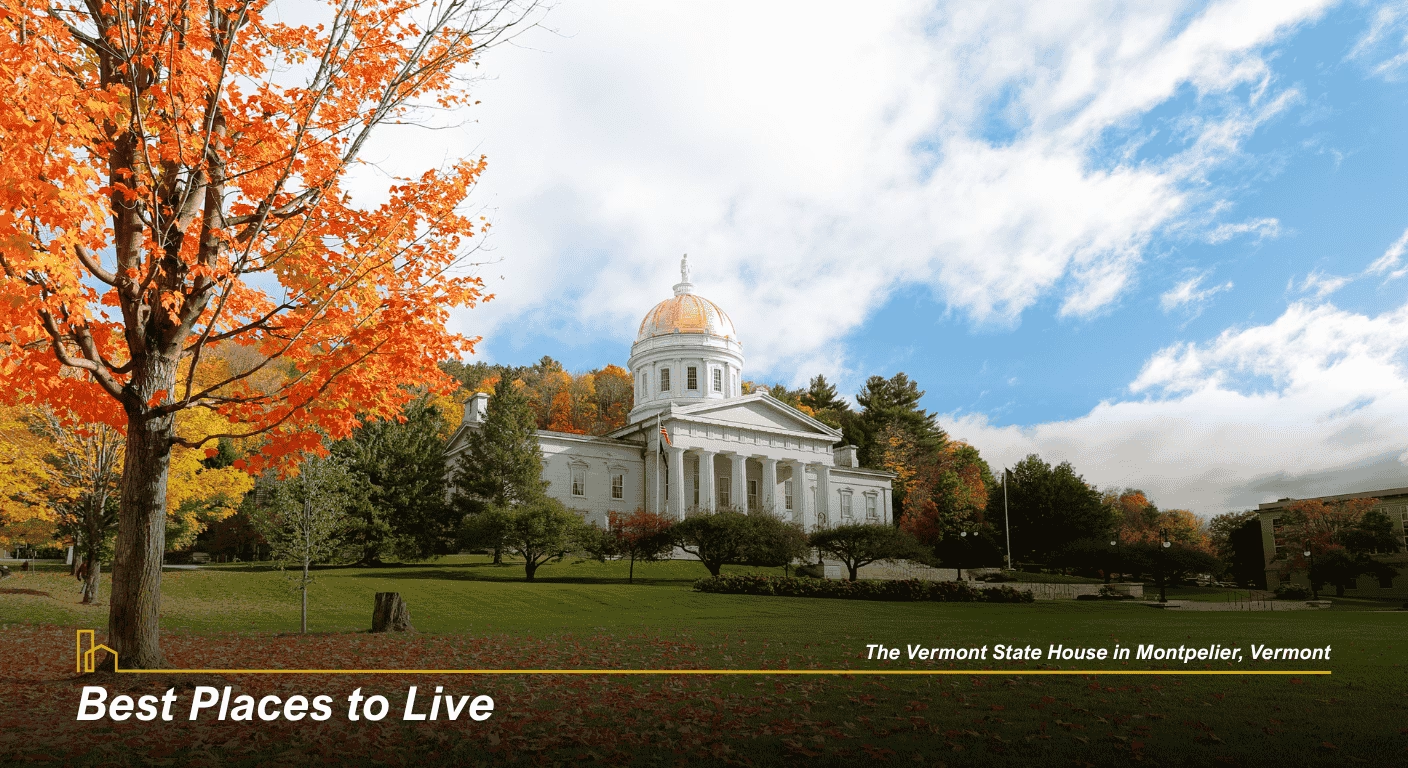
Vermont’s communities range from vibrant college towns to quiet mountain hamlets. The table below offers a snapshot of four popular destinations.
| Place | Population | Median Income / Home Value | Why Live There? |
| Burlington | ~44,400 | $71,109 / $444,800 (own); $1,649 (rent) | Vermont’s largest city; Lake Champlain waterfront; arts, breweries, UVM; walkable but windy winters |
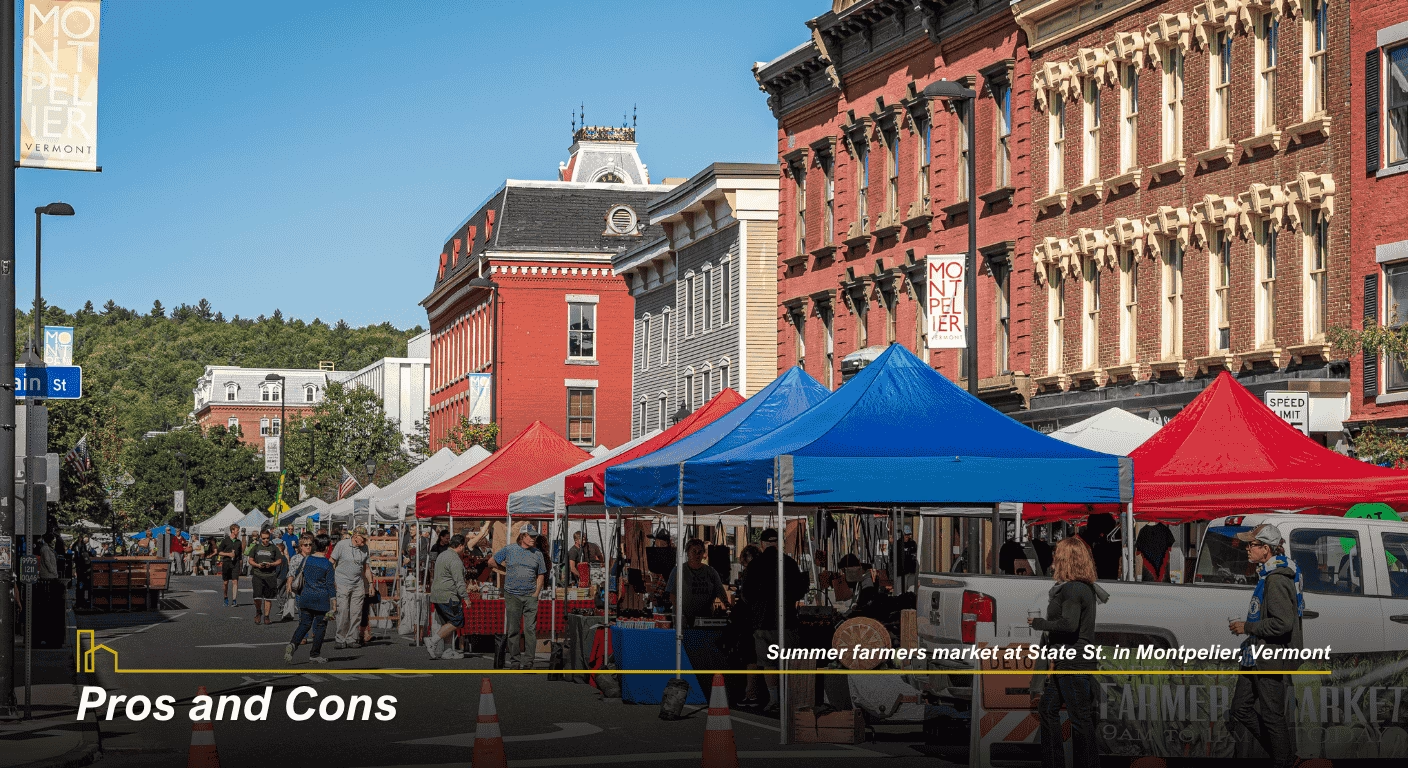
| Montpelier | ~7,900 | $81,030 / $375,100 (own); $1,302 (rent) | Nation’s smallest capital; charming downtown; State House; farmers markets; short commutes |
| Brattleboro | ~12,100 | ~$60,000 / below state median | Vibrant arts scene; co-ops; progressive vibe; more affordable; easy access to MA and NH |
| Stowe | ~5,400 | ~$92,000 / high (resort premium) | Base of Mount Mansfield; world-class skiing; year-round recreation; hospitality jobs |
Sources: U.S. Census ACS 2024; local market data
Looking beyond, Ashland-area readers often explore Woodstock for its historic charm and proximity to Billings Farm, while Middlebury combines a lively liberal-arts college with an affordable small-town lifestyle. Eastern Vermont’s White River Junction is growing as a remote-worker hub thanks to its arts scene and improved rail connections to Boston. When comparing options, weigh job availability, school quality, flood and wildfire risk, and proximity to essential services, distances can be deceptive in a rural state.
6. Things to Do and See

- Green Mountain National Forest: More than 400,000 acres of hiking, biking, camping, and skiing. The Long Trail, the oldest long-distance hiking trail in the U.S. at 272 miles, runs its entire length along the spine of the Green Mountains.
- Lake Champlain: 107 miles long with 80 islands. Ideal for sailing, fishing, paddleboarding, and beach days. Burlington’s Church Street Marketplace and waterfront park are popular gathering spots year-round.
- Mount Mansfield and Stowe: Vermont’s highest peak at 4,393 feet leads the state’s premier ski resort and offers hiking and mountain biking in warmer months. The Stowe Recreation Path is beloved by cyclists and joggers.
- Killington Ski Resort: New England’s largest ski area with a 3,050-foot vertical drop and 155 trails. Open from late October through May in good snow years, and now host to a World Cup ski racing event.
- Covered bridges and Quechee Gorge: More than 100 authentic covered bridges dot the state, many dating to the 19th century. Nearby Quechee Gorge plunges 165 feet, their answer to the Grand Canyon, and can be viewed from a highway bridge or hiked from below.
- Maple sugaring and farm tours: VT produces about 50% of U.S. maple syrup. Sugarhouse tours during mud season (late February to April) are a beloved local tradition, and farms like Shelburne Farms and Billings Farm & Museum offer year-round agritourism.

Related article
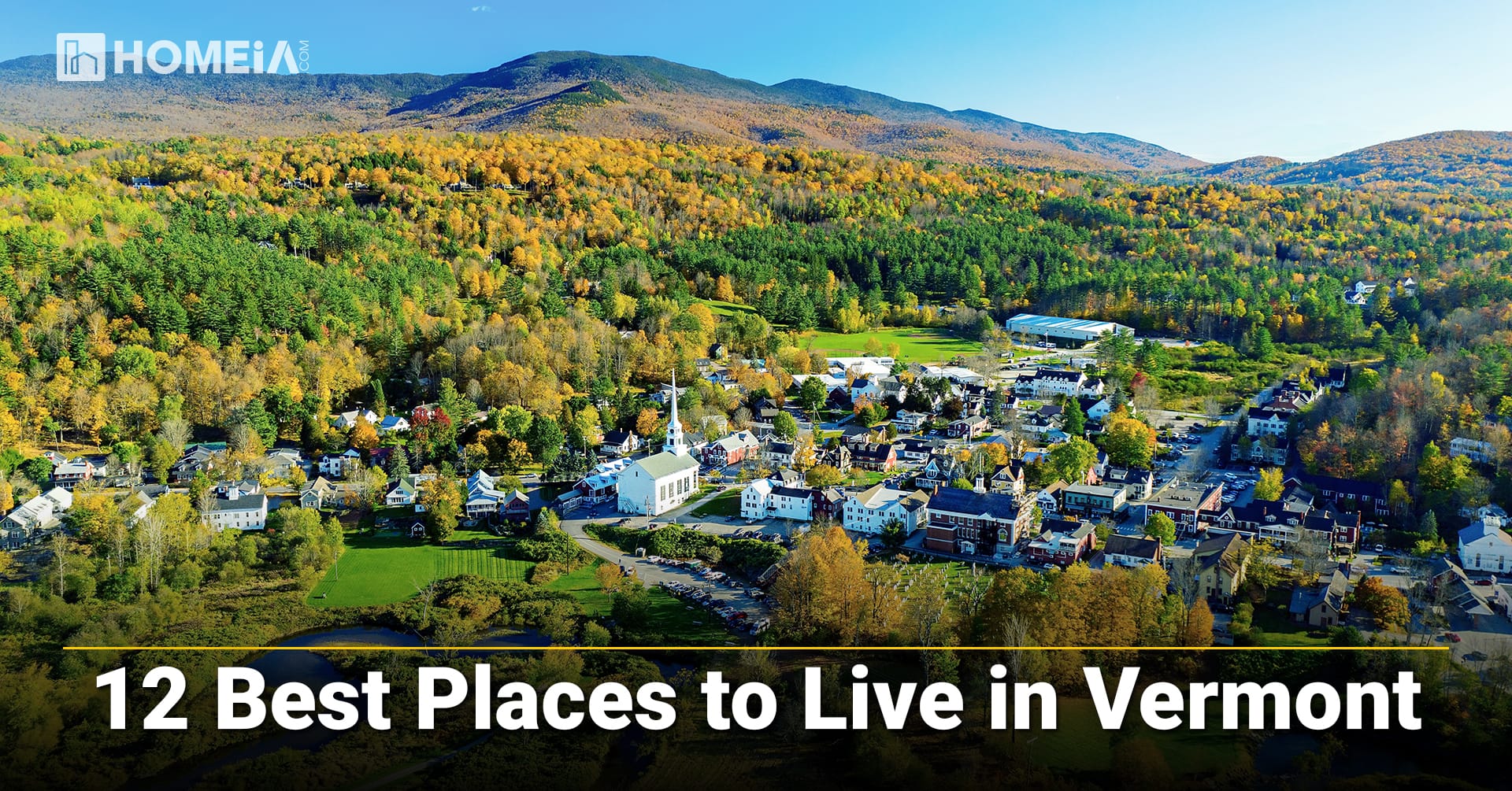
12 Best Places to Live in Vermont in 2026
We’ll take a closer look at some of the best places to reside in Vermont, considering factors such as cost of living, job opportunities and access to amenities. Whether you’re a lifelong resident of Vermont or looking for a change, keep reading to discover the best places to call home in this stunning state…
7. Pros and Cons
Pros
- Scenic beauty and four seasons: Mountains, lakes, and forests provide year-round recreation. Fall foliage is internationally renowned and ski resorts like Killington rank among the best in the East.
- Tight-knit, safe communities: Crime rates are consistently among the lowest in the nation. Town meeting democracy, farmers’ markets, and active volunteer networks create genuine community bonds that larger states rarely replicate.
- Strong labor market: An unemployment rate of 2.6% is nearly half the national average. The visitor economy alone supports 10% of the workforce, and healthcare and education provide stable year-round employment.
- Renewable energy leadership: The state generates almost all its electricity from renewable sources and is on track for 90% renewable energy consumption by 2050. Net-metering and Efficiency Vermont rebates reward energy-efficient homes.
- Retirement-friendly income tax treatment: Social Security benefits are exempt from state income tax for most retirees, and offers property-tax credits for lower-income seniors.
Related article
The Pros and Cons of Living in New York State
New York offers striking contrasts, from the energy of New York City to the calm of the Finger Lakes and Adirondacks. This guide examines the state’s opportunities, costs, and lifestyle trade-offs to help you decide if living in New York fits your goals…
Cons
- High cost of living: Home prices, property taxes (1.42% effective rate), and everyday expenses exceed national averages. Housing inventory is structurally limited while seasonal homes further constrain supply for year-round residents.
- Long, cold winters: Snow and cold persist from November through March. Heating costs, snow removal, and winter driving add real expenses and inconvenience, particularly in rural areas.
- Limited job growth and brain drain: Most job openings are in lower-paying service and care sectors. High-salary tech and professional roles are scarce, leading to newer working professionals to leave for ideal wages and career opportunities.
- Flood and climate risk: Back-to-back devastating floods in July 2023 and 2024 disrupted businesses and infrastructure statewide. Warmer, wetted winters are increasing flood risk, particularly in river valleys and low-lying communities.
- Limited public transit: Outside Chittenden County, a car is essentially mandatory. Rising gas prices, about $4.02/gallon in April 2026, combined with long rural commutes make transportation a significant budget item.
Conclusion
Vermont’s charm lies in its natural beauty, close communities, and commitment to sustainability. A low unemployment rate and record-breaking tourism economy showcase real economic vitality, even as high living costs and limited high-salary jobs present genuine challenges. If you value outdoor recreation, progressive values, and a slower pace of life, and can afford the entry price, the Green Mountain State offers a quality of life that is genuinely difficult to match. But if a thriving high-salary job market, warm winters, or affordable housing are deal-breakers, other regions will serve you better. Weigh your priorities carefully, and if possible, visit during mud season as well as peak foliage: seeing VT at its least photogenic helps you appreciate what daily life here actually looks like.
Recommended for you




FAQs About Living in Vermont
1. Is Vermont affordable?
No, relative to most U.S. states. Vermont’s cost-of-living index of 113.6 means prices run about 14% above the national average. High property taxes (1.42% effective rate) and housing costs are the biggest factors. That said, groceries and clothing are exempt from the 6% sales tax while the state offers energy-efficiency rebates that reduce utility bills for homeowners who invest in upgrades.
2. How is Vermont’s job market?
Surprisingly reliable by one measure: unemployment of 2.6% is among the lowest in the country, about half the national average. The visitor economy alone supports 32,000 jobs and generates $4.2 billion in annual spending (2024 data). Healthcare, education, and GlobalFoundries’ semiconductor operations provide stable employment. A challenge is that most available jobs, home health aides, cashiers, hospitality workers, pay modestly, and high-salary professional roles are scarce compared to major metro areas.
3. What are Vermont’s best features for retirees?
Vermont has several retiree-friendly features: Social Security benefits are exempt from state income tax for most recipients, property-tax credits help lower-income seniors, and crime rates are among the nation’s lowest. The state’s healthcare infrastructure, led by UVM Medical Center, and access to world-class recreation make it attractive for active retirees. The main drawbacks are high property taxes, frigid winters, and the need to own and maintain a car in most parts of the state.
4. How severe is the weather?
Winters are unforgiving while summers are mild. Average temperatures have risen about 3 °F since the early 1900s and winters are getting wetter.
5. Are there incentives for energy efficiency and renewable energy?
Yes. Net-metering credits homeowners for excess solar power and Efficiency Vermont offers rebates for heat pumps, insulation and efficient appliances.
Local Editor(s)


3 Most Affordable Places to Live in Burlington, Vermont
Life in Burlington, Vermont, is magical. You will enjoy quality of life: a tight-knit community, arts and culture, environmental stewardship, sustainability, multiculturalism, and a progressive atmosphere, plus affordability. Nestled between…
-
The Pros and Cons of Living in Vermont
The Pros and Cons of Living in Vermont: Tucked into the heart of New England, Vermont offers postcard-worthy landscapes, a relaxed pace of life, and a strong sense of community.…

12 Best Places to Live in Vermont in 2026
Vermont is an idyllic state known for its breathtaking landscapes, peaceful small towns and excellent quality of life. The rolling hills, serene lakes and quaint towns make Vermont an attractive…

Remote Work Relocation Tax Guide: Moving to Tax-Free States
The mass shift to remote work has fundamentally changed how professionals approach their living situations, untethering careers from specific geographic locations. Newfound flexibility allows for strategic decisions based on quality…
-
Things to Consider When Choosing Neighborhood for Your House
Things to Consider When Choosing Neighborhood for Your House: We all love finding our dream home—a house that fits perfectly with what we wanted—but is that enough? There’s another factor…
Related Topics











-
The Pros and Cons of Living in Arkansas
Considering a move to Arkansas? The Natural State offers a compelling blend of affordability and natural beauty that attracts new residents from across the country. Home to 3 million people, Arkansas features everything from vibrant cities to charming small towns,…
-
The Pros and Cons of Living in Ave Maria, Florida
The Pros and Cons of Living in Ave Maria, Florida: When picturing Ave Maria, what comes to mind are stunning basilica, perfectly manicured neighborhoods, and the Florida sun. However, this unique town has even more hidden inside. It blends master-planned…
-
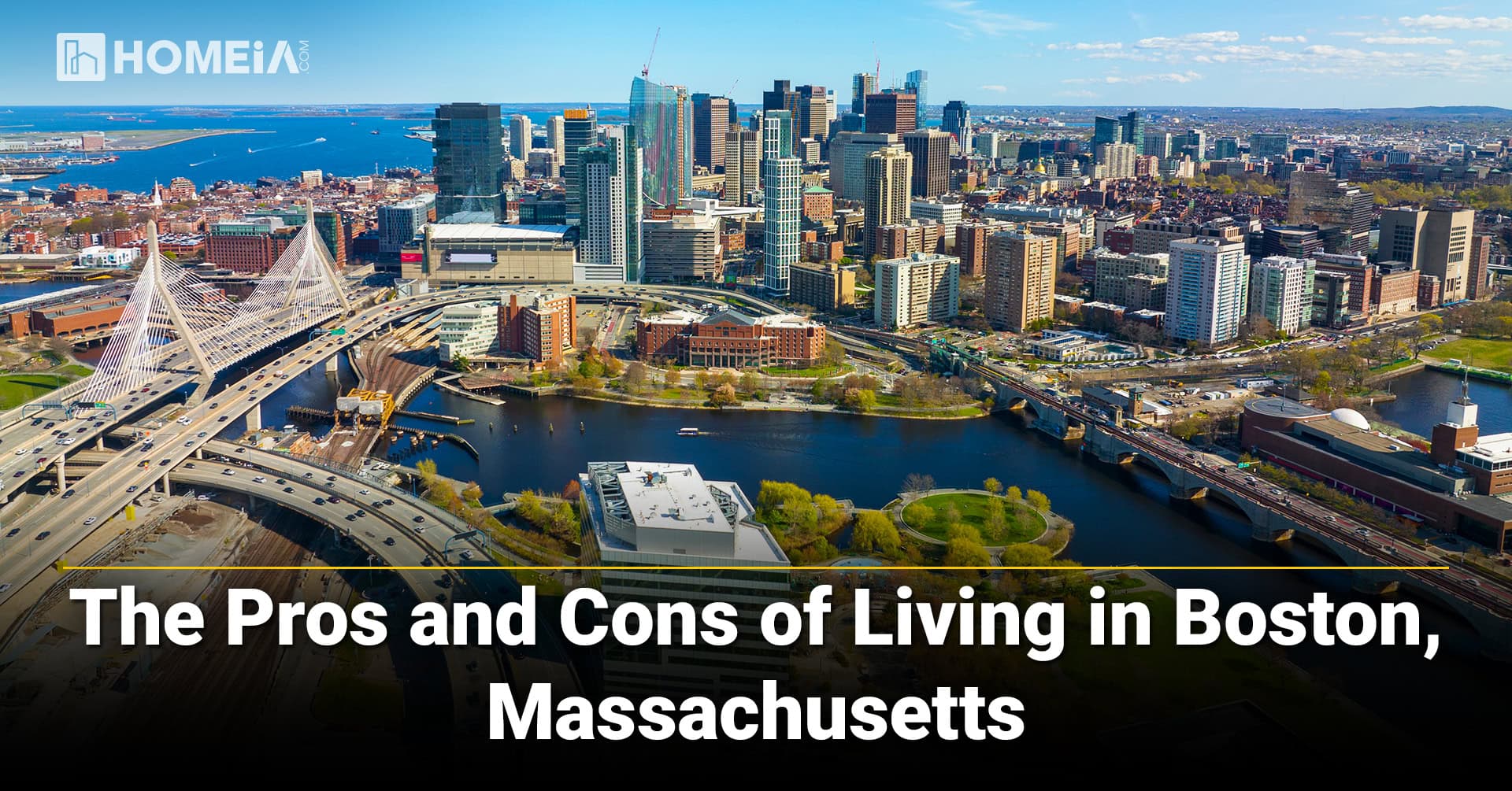
The Pros and Cons of Living in Boston, Massachusetts
Considering moving to Boston in 2026? This historic yet innovative city offers a unique blend of old-world charm and modern opportunity. As New England's economic and cultural hub, Boston attracts residents with its world-class education, thriving job market, and vibrant…

-
The Pros and Cons of Living in Delaware
When picturing Delaware, what comes to mind are tax-free shopping, beautiful beaches, and proximity to major East Coast cities. But the First State offers more than financial advantages; here exists a place where historic charm, corporate headquarters, and relaxed coastal…
-
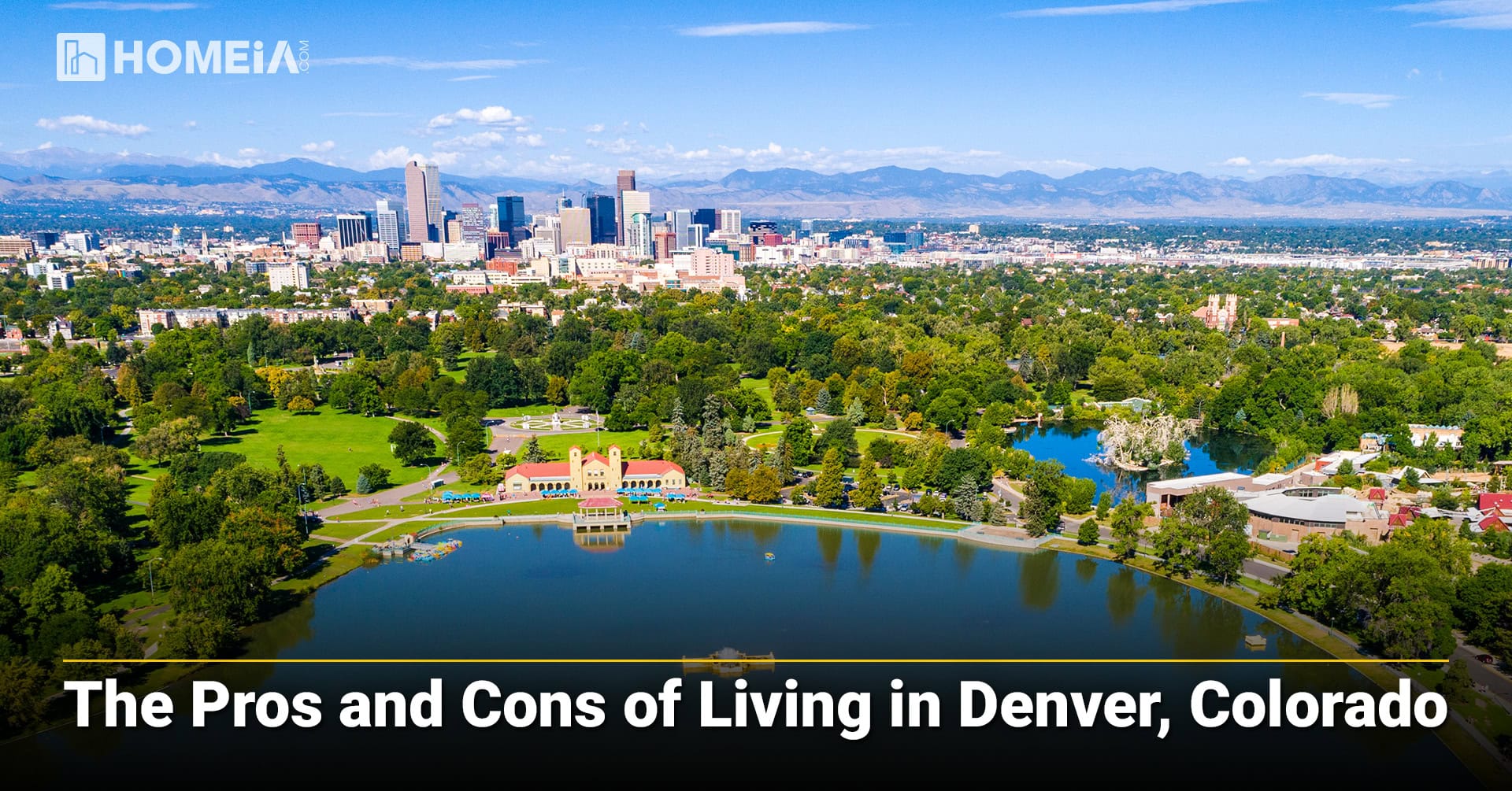
The Pros and Cons of Living in Denver, Colorado
Looking for stellar public schools, world-class ski resorts, and a thriving city all in one spot? Denver, Colorado, may be the place for you. The Mile High City offers a unique blend of outdoor adventure, economic opportunity, and urban convenience.…
-
The Pros and Cons of Living in Florida
The Pros and Cons of Living in Florida: Relocating to a new state is a big move – pun intended! – and requires careful consideration of both the state as well as the specific community you're thinking to join. If…



-
The Pros and Cons of Living in Illinois (updated)
Relocating to a new state requires careful consideration of both the state as a whole and the specific community you'll join. If you're considering Illinois, you'll find a state home to vibrant cities, charming small towns, and a diverse mix…
-
The Pros and Cons of Living in Indiana
When picturing Indiana, what comes to mind are rolling farmlands, basketball hoops, and the iconic Indianapolis 500. But the Hoosier State offers more than Midwestern clichés; here lies a place where affordability, tight communities, and an ideal central location define…
-
The Pros and Cons of Living in Iowa
When picturing Iowa, what comes to mind are vast cornfields, rolling hills, and an established agricultural heritage. But the Hawkeye State offers more than what you see on a farm; here lies a place where strong communities, affordable living, and…


-
The Pros and Cons of Living in Massachusetts
The pros and cons of living in Massachusetts: Moving to a new part of the US requires careful consideration of both the state itself and the specific community you'll join. If Massachusetts is your next destination, you'll find a state…
-
The Pros and Cons of Living in Michigan
Relocating to a new state requires careful consideration of both the state as a whole and the specific community you'll join. If you're considering Michigan, you're in luck---the Great Lakes State offers diverse options for all ages, budgets, family situations,…
-
The Pros and Cons of Living in Minnesota
The Pros and Cons of Living in Minnesota: When picturing the Midwestern state of Minnesota, some might imagine a snowy blizzard, an afternoon at the lake, the bustling state fair, and a thriving hockey community. And while all of those…
-
The Pros and Cons of Living in Nevada
When picturing Nevada, what comes to mind are glittering casinos, vast desert landscapes, and the 24-hour energy of Las Vegas. But the 36th state offers more than entertainment clichés; tax advantages, outdoor recreation, and economic opportunity define everyday living. Yet,…
-
The Pros and Cons of Living in New Hampshire
When picturing New Hampshire, what comes to mind are picturesque New England villages, stunning White Mountains, and a fiercely independent spirit. But the Granite State offers more than colonial charm; here lies a place where low-cost living, outdoor adventure, and…
-
The Pros and Cons of Living in New Mexico
When picturing New Mexico, what comes to mind are vast desert landscapes, adobe architecture, and vibrant chili peppers. But the Land of Enchantment offers more than meets the eye; here lies a place where ancient cultures, standout arts scenes, and…

-
The Pros and Cons of Living in North Dakota
When picturing North Dakota, imagery commonly associated are vast prairies, oil fields, and harsh winters. But the Peace Garden State offers more than Midwestern stereotypes; here lies an area where flourishing communities, economic opportunity, and affordable living define everyday life.…
-
The Pros and Cons of Living in Ohio
On any given day in Ohio, you could find yourself in two completely different states of mind in a difference of an hour. One moment, you are looking at a beautiful view of snow-topped trees from a lookout point high…
-
The Pros and Cons of Living in Oregon
Relocating to a new state requires careful consideration of both the state as a whole, as well as the specific community you'll join. Oregon offers stunning natural beauty, vibrant cities, and a progressive culture with options for all ages, budgets,…
-
The Pros and Cons of Living in South Dakota
The Pros and Cons of Living in South Dakota: When picturing South Dakota, what comes to mind are vast prairies, Mount Rushmore, and the rugged beauty of the Badlands. But the Land of Infinite Variety offers more than Western clichés; here…
-
The Pros and Cons of Living in South Carolina
The pros and cons of living in South Carolina: When picturing South Carolina, the mind goes straight to shrimp and grits at a waterfront table in Charleston, azaleas in full bloom in Summerville, and a round of golf as the…
-
The Pros and Cons of Living in Tennessee
People have been migrating to the South at an unprecedented rate in recent years, making it the leading region for population growth in the United States. This historic pattern of migration is driven by a complex range of factors, including…
-
The Pros and Cons of Living in Wisconsin
Relocating to a new state requires careful consideration of both the state as a whole and the particular community you choose to reside in. With its diverse landscapes, vibrant cities, and friendly communities, Wisconsin offers solid options for everyone. Whether…
-
The Pros and Cons of Living in Vermont
The Pros and Cons of Living in Vermont: Tucked into the heart of New England, Vermont offers postcard-worthy landscapes, a relaxed pace of life, and a strong sense of community. Known for its maple syrup, fall foliage, and progressive values,…
-
Pros and Cons of Living in Virginia
Virginia is a beautiful state with an abundance of opportunities ripe for discovery. From the Appalachian Trail to the Blue Ridge Mountains, coastal towns to small farming communities, Virginia has something for individuals and families of all ages and budgets.…