






Cost of Living in Arkansas vs. Texas
- Local Editor:Local Editor: The HOMEiA Team


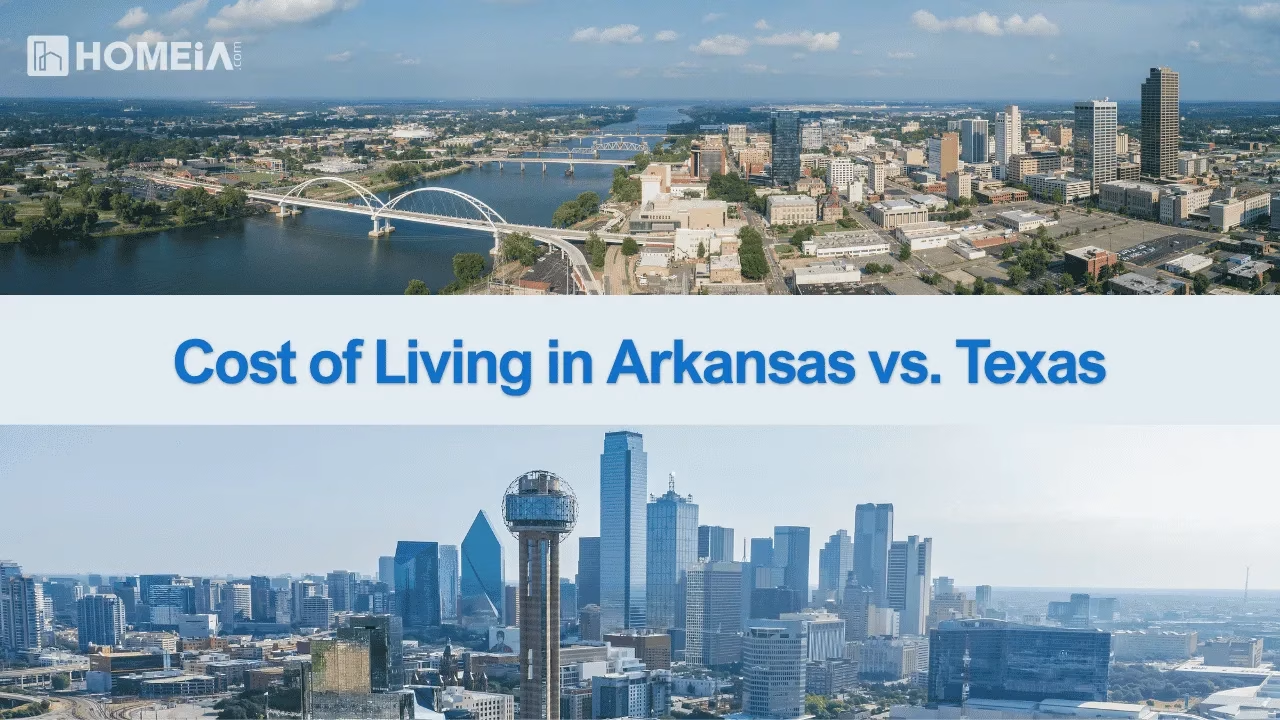
Cost of Living in Arkansas vs. Texas: Arkansas and Texas are neighbors in the South, yet, the two states diverge when it comes to affordability. Texas draws headlines for its powerhouse economy and enticing zero income tax. While Arkansas counters quietly by ranking among the most affordable states in the country across nearly every category. That contrast plays out differently depending on the household, because taxes, housing, and insurance don’t move together in either state. Property taxes end up being the largest wedge between the two.
This comparison draws on MIT Living Wage Calculator, Zillow, Tax Foundation, and Census Bureau data.
Key Takeaways
- Arkansas holds a meaningful cost-of-living edge, with an index of ~86–89 versus Texas’s 91–93.
- Texas homeowners face significantly higher property taxes (~1.40–1.74%), roughly triple Arkansas’s 0.56–0.57%.
- Arkansas home prices (~$226,000–$243,000) run well below Texas’s statewide median (~$328,000–$350,000).
- MIT’s living wage for a single adult is ~$40,500–$41,000 in Arkansas versus ~$45,290 in Texas.
- Texas has no state income tax; Arkansas levies a graduated tax up to 3.9%, though Texas’s higher property taxes and insurance often offset that advantage.
- Texas childcare runs notably higher: center-based infant care exceeds $11,000/year versus Arkansas’s ~$9,178.
- Arkansas has expanded Medicaid; Texas has not, leaving Texas with the nation’s highest uninsured rate (~16.6–16.7%) versus Arkansas’s ~9%.


Related article
Moving to Arkansas: THE Complete Relocation Guide & Checklist
Arkansas combines natural beauty, community spirit, and affordability, making it a great place to live. This guide covers cost of living, job opportunities, and top places to settle. Whether you prefer Little Rock’s urban energy, Northwest Arkansas’s innovation, or Hot Springs’ charm, you’ll find the resources to relocate confidently…
Arkansas vs. Texas at a Glance
| Category | Arkansas | Texas |
| Population (2025 est.) | ~3.1 million | ~31.7 million |
| Median Household Income (2024) | ~$62,000–$65,000 | ~$78,000–$81,500 |
| Median Home Price (2026) | ~$226,000–$243,000 | ~$328,000–$350,000 |
| Average Rent (1-BR) | ~$989–$1,046/mo | ~$1,095–$1,243/mo |
| Cost of Living Index | 86–89 | 91–93 |
| State Income Tax | 0%–3.9% graduated | None |
| Effective Property Tax Rate | ~0.56%–0.57% | ~1.40%–1.74% |
| Average Homeowners Insurance | ~$3,700–$5,000/yr | ~$4,085–$4,529/yr |
| Living Wage (Single Adult, annual) | ~$40,540–$41,000 | ~$45,290 |
| State Minimum Wage | $11.00/hr | $7.25/hr (federal floor) |
| Medicaid Expansion | Yes | No |
1. Living Wage Comparison
The MIT Living Wage Calculator, updated February 2026, measures what it costs to meet basic needs. A single adult in Arkansas needs around $19.70/hour (about $40,540–$41,000 annually), while someone in Texas should make approximately $21.77/hour (about $45,290). Housing and transportation costs drive Texas’s higher requirement.
The gap widens for families. A single parent with two children needs $42.19/hour in the Natural State versus $44.95/hour in the Lone Star State. Arkansas’s minimum wage of $11.00/hour, unchanged since 2021, sits well above Texas’s $7.25 federal floor, meaningfully benefiting lower-income workers. Neither’s minimum salary reaches the living wage threshold for a single adult, let alone a family.

Related article
5 Things That Make Houston, Texas Suited for Young Families
Known for its affordability, exceptional healthcare, diverse culinary scene, and a balance between urban and suburban living, Houston is a city that caters to a variety of lifestyles and preferences. Let’s explore what makes Houston a perfect choice for families…
2. Housing Costs
A. Home Prices
AR remains one of the most affordable housing markets in the country, with an average home value near $226,000 as of mid-2026, up modestly over the prior year, and a median sale price around $243,000. Little Rock’s median sits near $220,000, while rural areas often fall below $200,000. TX’s statewide median runs higher at $328,000–$350,000, with Austin averaging $415,000–$435,000, Dallas-Fort Worth $350,000–$395,000, and Houston $280,000–$295,000. Elevated inventory across many Texas metros in 2026 has given buyers more negotiating power than in recent years.
B. Renting
Arkansas’s average one-bedroom rent sits in the $989–$1,046/month range, while Texas one-bedroom units average $1,095–$1,243. Austin and Dallas command premium rents, while smaller Texas cities like Wichita Falls align with Arkansas’s averages. Rent growth has slowed or declined in many markets in both states, favoring renters in 2026.
C. Homeowners Insurance
Arkansas homeowners pay approximately $3,700–$5,000/year, depending on home value, roof age, and location. Texas homeowners face higher premiums, averaging $4,085–$4,529 annually, among the top five highest in the country, driven by hail, tornado, and Gulf Coast hurricane exposure. For comparable homes, the gap can reach $500–$1,000 per year.
D. Property Taxes
Arkansas’s effective property tax rate of 0.56–0.57% means a $250,000 home generates roughly $1,400–$1,425 in annual taxes. Texas’s effective rate of 1.40%–1.74%, among the highest in the nation, produces approximately $4,600–$5,700 annually on a $330,000 home. Over ten years, that gap compounds to $15,000–$25,000 in additional in-state costs. Texas voters approved Proposition 13 in November 2025, raising the school homestead exemption and expanding relief for seniors and disabled homeowners, though property taxes remain a substantial ongoing expense for most Texas homeowners.

Related article
3 Most Affordable and Safe Neighborhoods to Live in Fort Smith, Arkansas
Fort Smith experiences a humid subtropical climate typical of the region, with hot, humid summers and relatively mild winters. The city’s position in the Arkansas River Valley provides some natural moderation of extreme weather, though seasonal changes are distinct. This climate supports the area’s lush vegetation…
3. Economy and Taxes
A. Economic Landscape
Texas has one of the largest state economies in the world, with GDP reaching approximately $2.9 trillion in 2025, ranking second among states, spanning energy, tech, manufacturing, financial services, and aerospace, with a labor force exceeding 15.8 million and unemployment near 4.1%–4.3%. Arkansas’s smaller but steady economy reached nearly $190 billion in GDP in 2026, driven by retail (Walmart is headquartered in Bentonville), agriculture, healthcare, and manufacturing, with real GDP growth projected at 2.6% for fiscal 2026, slightly above the national average.
B. Tax Comparison
| Tax Category | Arkansas | Texas |
| State Income Tax | 0%–3.9% graduated | None |
| Sales Tax (state + avg. local) | 6.5% + ~2.96% local = ~9.46% | 6.25% + local (up to ~8.19%) |
| Effective Property Tax Rate | ~0.56%–0.57% | ~1.40%–1.74% |
| Capital Gains Treatment | 50% of gain taxed if held over 1 year | Taxed as ordinary income (no state tax) |
| Estate/Inheritance Tax | None | None |
At $100,000 of taxable income, a Texan pays no state income tax, while an Arkansan spends roughly $3,000–$3,500; at $150,000, that Arkansas bill rises to approximately $5,000. However, Texas’s higher property taxes offset this. On a $330,000 home, Texas property taxes of $4,600–$5,700 versus Arkansas’s roughly $1,400 create a gap of $3,200–$4,300 annually, cancelling Texas’s income tax savings for homeowners, particularly in higher-tax counties.
4. Safety
Arkansas’s violent crime rate runs approximately 5.3–5.8 incidents per 1,000 residents, above the national average of roughly 4.3, while Texas’s rate of about 4.44 per 1,000 sits closer to the national average. Property crime is also higher at approximately 23.4 per 1,000 residents versus Arkansas’s 19.3. Both states contain communities ranking among the nation’s safest alongside higher-crime urban areas. Frisco and The Woodlands in Texas and Bentonville and Rogers in Arkansas consistently perform among the safest in their states. Prospective movers should research specific cities and ZIP codes rather than relying on statewide averages.
Recommended for you




5. Climate and Geography
Arkansas features the Ozark and Ouachita Mountains, timberlands, and Mississippi River lowlands, with four distinct seasons, humid summers, and mild winters. It’s not all sunshine and rainbows as disaster risks include tornadoes and severe thunderstorms, but the state generally avoids the most extreme coastal weather events. Texas is vast and climatically diverse, from Gulf Coast hurricane exposure to Panhandle tornadoes and blistering summer heat statewide. For instance, the 2021 grid failure exposed vulnerabilities that ERCOT has since invested substantially to address. Regarding cost, Texas’s severe weather exposure drives higher insurance premiums in many areas, while Arkansas’s moderate climate provides financial breathing room on insurance and energy costs.

Related article
The 10 Cheapest Places to Live in Texas
They say everything is bigger in Texas, and for good reason. From some of America’s largest and active metropolitan cities to the host of recreational activities for people of all ages across the state to the many bigger-than-life personalities who call Texas home, Texas has plenty to offer for everyone. here’s the list of 10 lowest cost of living places…
6. Education
Arkansas ranks near the bottom nationally in K-12 outcomes, placing 47th among states, though districts in Northwest Arkansas perform well above state averages. Texas performs better overall, with the University of Texas at Austin ranked No. 30 among National Universities and No. 7 among Top Public Schools, and Texas A&M ranking No. 51 nationally. Arkansas offers lower in-state tuition at its flagship University of Arkansas compared to UT Austin, though both provide substantial financial aid. Families prioritizing K-12 quality may lean toward Texas, while those focused on affordability may prefer Arkansas.
7. Childcare
Childcare is one of the most underappreciated cost differences between the two states.
| Age Group | Arkansas Average (Annual) | Texas Average (Annual) |
| Infant (center) | ~$9,178 | ~$11,000+ |
| Toddler (center) | ~$9,200–$10,000 | ~$10,900+ |
| Preschool (center) | ~$9,000–$9,900 | ~$9,900–$10,500 |
For a family with one infant in full-time center care, Arkansas saves approximately $2,000–$3,000 per year. Increase that to two young children, and savings climbs to$4,000–$6,000 annually. Both offer subsidized childcare for income-eligible families, though waiting lists are common in major metros.

Related article
21 Exciting things to do in Fayetteville, Arkansas
With a highly educated population, a business-friendly atmosphere, and a very high quality of life, it’s no surprise that Fayetteville will have something for everyone. From big-city amenities to quiet natural parks, there’s bound to be something exciting to do here for everyone, no matter what their preferences might be…
8. Healthcare
Texas has the highest uninsured rate of any state, at approximately 16.6%–16.7% of residents, having declined to adopt Medicaid expansion. Arkansas’s uninsured rate is considerably lower at around 9%, aided by its Medicaid expansion covering low-income adults, though the rate has spiked in recent years. ACA marketplace premiums are broadly comparable between the states, though Texas’s larger uninsured population faces higher out-of-pocket costs. For Medicare-covered retirees, both states offer convenient access to medical facilities in most urban and suburban areas.
9. Additional Cost Considerations
- Utilities: Arkansas electricity rates average approximately 12.7–14.2 cents/kWh, among the lowest in the country, with monthly bills around $87–$130. Texas rates average roughly 13–14.6 cents/kWh, with bills ranging from $130–$150.
- Gas Prices: Arkansas consistently offers slightly lower gas prices, averaging nearly $3.42–$3.48/gallon in mid-2026 versus Texas’s $3.30–$3.57; over 15,000 annual miles, the difference amounts to roughly $100–$200 per year.
- Groceries: Arkansas ranks among the states with the lowest grocery costs, roughly 5.7% below the national average, about 5%–10% lower than Texas. Arkansas eliminated its state sales tax on groceries effective January 2026, further reducing food bills.
- Transportation: Arkansas’s lower gas prices, less congested roads, and lower vehicle registration fees produce modest savings, though Texas’s interconnected highway network and public transit options in major metros may offset costs for urban residents.
Related article
21 Affordable Things to Do in Midland, Texas
Midland offers many fun and affordable attractions for its residents. We took a closer look at these activities and put together a list of 21 popular, affordable things to do in Midland, Texas…
Conclusion
On pure affordability, Arkansas holds the advantage, with lower home prices, property taxes, childcare, and everyday expenses giving most households more disposable income. Texas makes a compelling case for high earners benefitting from zero income tax, those drawn to career opportunities in energy, tech, and finance, or its robust K-12 and higher academia. The most consequential variable in 2026 is property taxes, where Texas homeowners can pay $3,000–$5,000 more annually than comparable Arkansas owners. For buyers who want to see where Arkansas’s affordability advantage is strongest, this ranking of the most affordable places to live in Arkansas compares seven cities on rent, home prices, and cost-of-living ratios.
Recommended for you




FAQs About the Cost of Living in Arkansas vs. Texas
1. Is Arkansas really that much cheaper than Texas in 2026?
Yes. Arkansas’s cost of living index runs approximately 86–89 versus Texas’s 91–93, with Arkansas undercutting Texas in housing, property taxes, childcare, groceries, and utilities by roughly 5%–15%. The property tax gap is striking, at 0.56% versus 1.40–1.74%.
2. How much salary do you need in Arkansas to match a Texas lifestyle?
A household earning $80,000 in Texas would need approximately $72,000–$75,000 in Arkansas for comparable purchasing power, based on the roughly 8%–10% cost of living gap; at $100,000, the equivalent Arkansas figure is roughly $90,000–$92,000.
3. Which state is better for retirees in 2026?
Texas’s lack of income tax benefits retirees with substantial investment withdrawals, but its higher property taxes, even with 2025 senior exemptions, burden fixed-income homeowners. Arkansas offers lower property taxes and living costs and exempts Social Security income from state tax.
4. Are people still moving from Arkansas to Texas in 2026?
Migration has moderated in both states. Texas added approximately 391,000 net new residents in the year ending July 2025, while Arkansas continues attracting residents from higher-cost states, particularly California and the Northeast, drawn by its low housing costs.
5. Which state is better for remote workers in 2026?
Arkansas offers the significant financial case for most remote workers, given lower housing, rent, and property tax costs, with Northwest Arkansas emerging as a popular hub. Texas competes on urban amenities and no income tax, though higher metro housing costs reduce the net benefit for homeowners.
Share