








Alabama blends Southern charm, rich history, and diverse landscapes, making community choice essential. This guide ranks the state’s five best places to live using data on jobs, affordability, safety, amenities, and quality of life. From Huntsville’s innovation hub to Mobile’s historic coastal appeal, we highlight where you can build…
Cost of Living in Alabama vs. Tennessee
- Local Editor:Local Editor: The HOMEiA Team
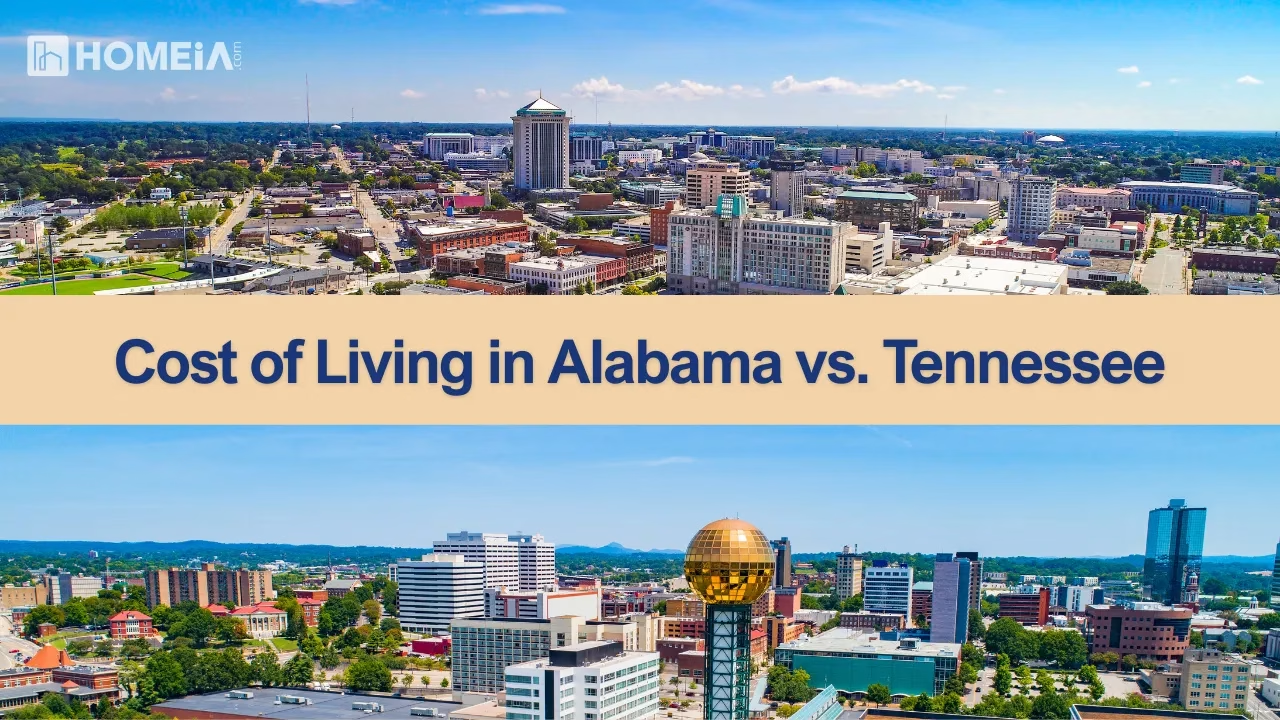
Cost of Living in Alabama vs. Tennessee: Alabama and Tennessee sit side by side in the Southeast, sharing warm summers, no inheritance tax, and metro economies providing steady employment. Viewing under the microscope, their approach to affordability splits in opposite directions.
Alabama wins on the basics, with some of the lowest home prices and property taxes anywhere in the country. Tennessee counters with no state income tax at all, a headline advantage that’s real, but one that gets chipped away by pricier homes and steeper insurance bills.
Housing ends up doing most of the work in this comparison. This analysis uses 2025–2026 data from Zillow, Redfin, MIT Living Wage Calculator, and the Census Bureau.
Key Takeaways
- Alabama holds an overall cost-of-living edge, with an index of ~85.0–87.9 versus Tennessee’s ~89–91, roughly 3–6% more affordable.
- Tennessee charges no state income tax, while Alabama’s graduated tax ranges 2–5%.
- Alabama’s median home price (~$279,000) runs well below Tennessee’s (~$384,000), a gap of roughly $105,000.
- Property taxes favor Alabama: effective rates of 0.37–0.38% versus Tennessee’s 0.52%.
- Insurance reverses the trend: Alabama averages $1,900–$3,400/year, versus Tennessee’s $3,000–$4,200, driven by storm and tornado risk.
- Childcare is meaningfully lower in Alabama, with infant care averaging ~$8,600–$10,000/year versus Tennessee’s ~$13,900–$14,000.
- Neither state has expanded Medicaid; median household incomes sit closer than often reported (Tennessee ~$72,000–$74,000 vs. Alabama ~$65,700–$66,700).

Related article
Alabama vs. Tennessee at a Glance
| Category | Alabama | Tennessee |
| Population (2025 est.) | 5.19 million | 7.32 million |
| Median Household Income (2024) | ~$65,700–$66,700 | ~$72,000–$74,000 |
| Median Home Price (2026) | ~$279,000 | ~$384,000 |
| Average Rent (1-BR) | ~$940/mo | ~$1,140/mo |
| Cost of Living Index | 85.0–87.9 | ~89–91 |
| State Income Tax | 2%–5% graduated | None |
| Effective Property Tax Rate | 0.37%–0.38% | 0.52% |
| Average Homeowners Insurance | ~$1,900–$3,400/yr | ~$3,000–$4,200/yr |
| Living Wage (Single Adult, annual) | ~$42,600 | ~$45,300 |
| State Minimum Wage | $7.25 (federal floor) | $7.25 (federal floor) |
1. Living Wage Comparison
The MIT Living Wage Calculator, updated February 2026, measures what it costs to meet basic needs in each state. A single adult in Alabama must earn approximately $21.06/hour ($42,600 annually) to cover basic expenses, while someone in Tennessee needs roughly $21.77/hour ($45,300 annually). The primary driver of Tennessee’s higher requirement is housing and childcare costs, significantly higher in the Volunteer State.
This gap widens for families. A single parent with two children in Alabama needs a wage of approximately $35.44/hour, while a single working adult with three children in Tennessee needs roughly $51.31/hour. Both maintain the federal minimum wage of $7.25/hour, remaining far below the living wage threshold for any household type. Here, minimum-wage workers in both states cannot cover basic living expenses without supplemental assistance.


Related article
11 Best Places to Live in Tennessee for Families
Tennessee is a great place to live, whether you’re looking for the busy city life of Nashville or the peace and quiet of a smaller suburb like Mount Juliet. Each of these best cities to live in Tennessee has something that will appeal to everyone…
2. Housing Costs
A. Home Prices
Alabama’s housing market remains among the most affordable in the nation, with a statewide median around $278,000–$279,000 as of early 2026, with prices ranging from approximately $220,000 in more affordable areas to higher figures in Huntsville’s aerospace corridor. Tennessee’s statewide median sale price reached around $384,000 in 2026, up modestly year over year, with growing inventory improving conditions for buyers.
| Market | Median Price |
| Huntsville, AL | ~$300,000–$340,000 |
| Birmingham, AL | ~$250,000–$290,000 |
| Montgomery, AL | ~$215,000–$250,000 |
| Mobile, AL | ~$220,000–$260,000 |
| Nashville, TN | ~$470,000+ |
| Memphis, TN | ~$216,000 |
| Knoxville, TN | ~$350,000–$400,000 |
| Chattanooga, TN | ~$320,000–$370,000 |
B. Renting
Alabamians pay approximately $1,047/month, with one-bedroom units averaging roughly $940 and financially generous. Tennessee’s rental market is pricier, with average rent ranging from approximately $1,354–$1,528/month and one-bedroom units averaging roughly $1,140; Nashville commands premium rents well above the state average.
C. Homeowners Insurance
Alabama homeowners pay an average of $1,900–$3,400/year, with properties in coastal and southern Alabama facing higher premiums due to hurricane and flood risk. However, the state’s FORTIFIED roof program can reduce wind insurance costs. Tennessee homeowners face higher average premiums, ranging from roughly $3,000–$4,200/year, driven by severe storms, tornadoes, and hail exposure.
This insurance premium, which can reach $1,000–$2,000 per year for comparable homes, means Tennessee’s total housing cost is higher than list prices alone suggest.
D. Property Taxes
Alabama’s effective property tax rate of 0.37%–0.38% ranks among the lowest in the nation. On a $279,000 home, annual property taxes run approximately $1,030–$1,060. Tennessee’s effective rate of 0.52% translates to higher costs, with a $384,000 home generating approximately $2,000 in annual taxes. Over a 10-year period, this difference can compound to several thousand dollars in additional Tennessee costs on similarly priced homes.

Related article
3. Economy and Taxes
A. Economic Landscape
Alabama’s economy continues to expand, with a GDP of almost $324 billion in 2026 and unemployment at an exceptionally low 3.0% as of May 2026. Key drivers include aerospace and defense, automotive manufacturing, and healthcare.
Tennessee’s larger economy, with a GDP of approximately $435 billion, recorded unemployment of 3.6%, with major industries spanning healthcare management, music and entertainment, and logistics. Both maintain robust job markets, though TN’s expansive population offers additional opportunities.
B. Tax Comparison
| Tax Category | Alabama | Tennessee |
| State Income Tax | 2%–5% graduated | None |
| Sales Tax (state + avg. local) | 4% + local (avg. ~8.9%) | 7% + local (avg. ~9.6%) |
| Effective Property Tax Rate | 0.37%–0.38% | 0.52% |
| Estate/Inheritance Tax | None | None |
For a household earning $100,000, AL’s state income tax burden runs roughly $2,200–$2,300 per year, which Tennessee’s zero income tax entirely avoids. However, Tennessee’s higher sales and property taxes offset this advantage, and at $150,000 of income, Alabama’s tax bite climbs to approximately $4,700, widening the income-tax gap further at higher earnings.
Recommended for you




4. Safety
Using 2024 FBI data, Alabama recorded a violent crime rate of close to 267 per 100,000 residents, compared to Tennessee’s roughly 389 per 100,000, and property crime in Alabama stood at about 1,420 per 100,000 versus Tennessee’s roughly 2,040. Statewide averages mask significant local variation, and suburban communities in both states, from Huntsville and Birmingham suburbs in Alabama to Franklin and Brentwood in Tennessee, consistently rank among the safest in the country.
5. Climate and Geography
Alabama features a humid subtropical climate with scorching summers, mild winters, hurricane risk along the Gulf Coast, and tornado risk in the northern and central regions. Tennessee hosts greater geographic diversity, from Mississippi River lowlands in the west to the Appalachian Mountains in the east, with tornado risk concentrated in Middle Tennessee and occasional winter storms in the eastern mountains. For cost purposes, their tornado and severe storm exposure drives higher homeowners insurance premiums than inland Alabama. Alabama’s coastal hurricane exposure pushes Gulf Coast premiums higher than Tennessee averages.

Related article
22 Fun Things to Do in Jackson, Tennessee
Today, Jackson offers an affordable cost of living and plenty of amenities for its citizens to enjoy. Whether you’re a young professional, a parent, or a retiree, the fun activities in Jackson are some of the bests in the entire state…
6. Education
Alabama’s K-12 system faces significant challenges, ranking near the bottom nationally for overall educational performance, though its high school graduation rate stands at an improved 89%–93%. Tennessee’s rankings vary. The state ranks around 31st in education quality but last in per-student spending, with a graduation rate of approximately 87%–90%. Higher education favors Alabama on cost: the University of Alabama and Auburn charge approximately $11,000–$12,000/year in-state, while Tennessee’s UT Knoxville runs roughly $13,800, with other campuses ranging from $9,860–$16,492.
7. Childcare
Childcare is one of the most underappreciated cost differences between these states, with Alabama’s costs substantially lower across most age groups.
| Age Group | Alabama Average | Tennessee Average |
| Infant (center) | ~$8,600–$10,000/yr | ~$13,900–$14,000/yr |
| Toddler (center) | ~$9,000–$10,000/yr | ~$7,500–$8,000/yr |
| Preschool (center) | ~$6,500/yr | ~$9,000–$10,000/yr |
For a family with one infant in full-time center care, Alabama saves approximately $4,000–$5,000 per year, and with two young children, annual savings can reach $8,000–$10,000. Each area provides subsidized childcare for income-eligible families, though waiting lists are common in major metros.

Related article
8. Healthcare
Neither Alabama nor Tennessee has adopted Medicaid expansion, leaving coverage gaps for low-income adults in both states. Alabama’s uninsured rate runs approximately 13%–16% of residents, while Tennessee’s overall uninsured rate is also elevated and among the higher rates nationally. Please note that a widely cited “21%” figure in some sources refers specifically to uninsured drivers, not the general uninsured population, and shouldn’t be conflated with the health-coverage rate. For ACA marketplace plans, monthly premiums run slightly above the national average, and low-income workers can fall into a coverage gap, earning too much for Medicaid but too little for marketplace subsidies.
9. Additional Cost Considerations
- Utilities: Electricity rates are lower in Tennessee, averaging approximately 12 cents/kWh, roughly 34% below the national average, compared to Alabama’s 16–17 cents/kWh; monthly bills run approximately $174 in Alabama versus roughly $140 in Tennessee.
- Gas Prices: Gas prices typically run slightly lower in Tennessee, with Alabama averaging roughly $3.62–$3.64/gallon versus Tennessee’s $3.36–$3.38, a difference of roughly $150–$250 per year over 15,000 miles of driving.
- Groceries: Grocery costs are comparable, with Alabama averaging roughly $120/week for a typical household versus Tennessee’s roughly $113, a modest difference of $300–$500 annually for a family of four.
- Transportation: Vehicle registration in Alabama costs approximately $225/year, compared to Tennessee’s roughly $65. Auto insurance rates in both states run above the national average due to elevated uninsured-driver rates.
Conclusion
On pure affordability, Alabama holds the advantage, with lower home prices, property taxes, childcare, and groceries granting most households meaningfully more disposable income. Tennessee makes a compelling case for high-income households, benefiting from zero state income tax, and for retirees drawn to its tax treatment of retirement income and cultural amenities in Nashville, Memphis, and Knoxville. The most consequential variable reshaping affordability in 2026 is homeowners insurance, where Tennessee’s higher premiums partially offset its income-tax advantage.
Recommended for you




FAQs About the Cost of Living in Alabama vs. Tennessee
1. Is Alabama really that much cheaper than Tennessee in 2026?
Yes, though by a more modest margin than sometimes claimed. The cost of living index runs approximately 85.0–87.9 for Alabama versus roughly 89–91 for Tennessee, a gap of about 3%–6%. Alabama consistently undercuts Tennessee in home prices, rent, childcare, and property taxes, though Tennessee’s lack of income tax and lower electricity rates offset some of that gap.
2. How much salary do you need in Tennessee to match an Alabama lifestyle?
A household earning $80,000 in Alabama would need anywhere from $82,000–$85,000 in Tennessee to maintain a similar standard of living. Renters need less additional income than homeowners since Tennessee’s insurance and property tax costs weigh more heavily on buyers.
3. Which state is better for retirees in 2026?
Tennessee generally appeals more to retirees given its lack of state income tax on Social Security, pensions, and retirement distributions. Alabama provides lower property taxes and insurance costs that can outweigh Tennessee’s tax advantage for retirees planning to buy a home, particularly those with more modest retirement incomes.
4. Are people still moving from Alabama to Tennessee in 2026?
Yes, though migration has moderated in both states. Tennessee added roughly 64,000 residents in 2025 driven largely by growth in the Nashville and Knoxville metros, while Alabama added a smaller number.
5. Which state is better for remote workers in 2026?
Alabama hosts the more reliable financial case for most remote workers, given its lower housing, rent, and childcare costs. Tennessee competes for remote workers prioritizing cultural amenities and proximity to the Smoky Mountains, though housing costs in desirable metros including Nashville run meaningfully above the national average.
Share