

How to Quiet an Attached Garage: Opener Noise, Vibration, and Shared-Wall Fixes
- Local Editor:Local Editor: The HOMEiA Team
- Category: Home Improvement


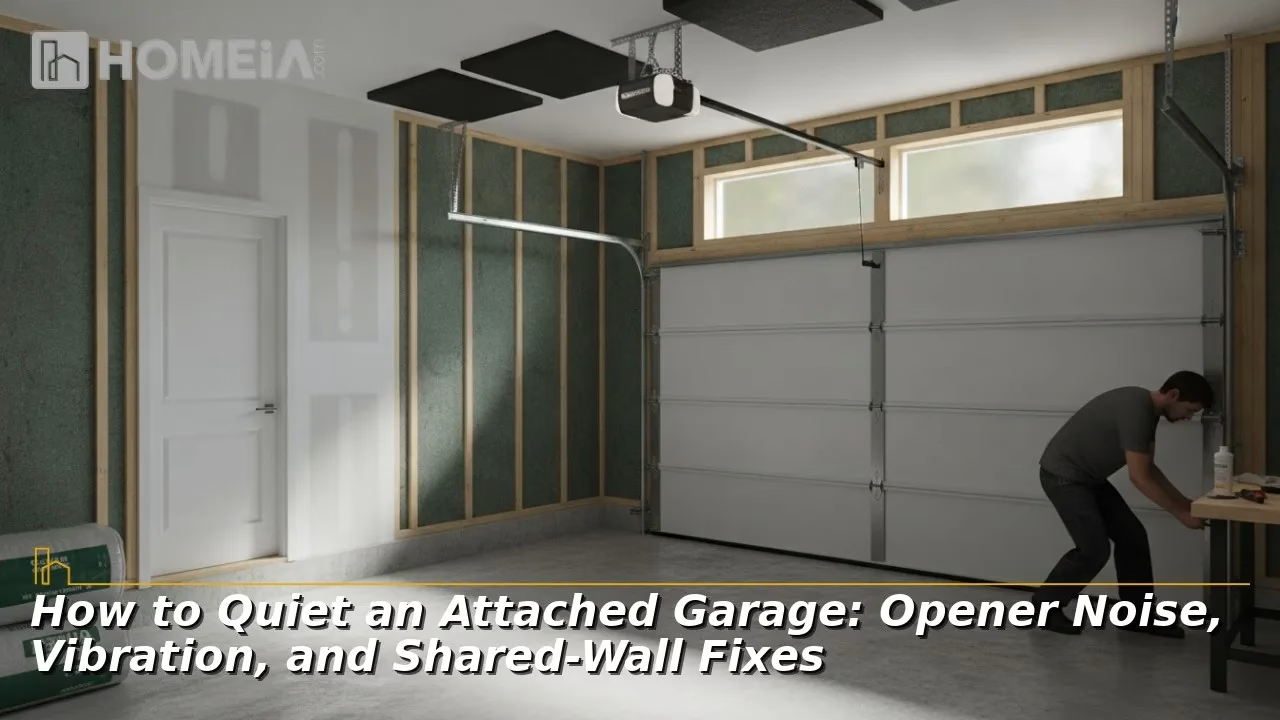
How to Quiet an Attached Garage: A noisy garage door can wake a sleeping child, interrupt a home office, or transmit a low rumble into an upstairs bedroom. The sound heard inside the house may originate with the opener, moving door parts, rigid mounting, or gaps in the shared wall and ceiling. Replacing the motor before identifying the path can be a waste of time and money.
A better plan starts with diagnosis. Before researching how to align garage door sensors or replacing an opener, determine whether the disturbance comes from the moving door, opener, rigid mounting, or gaps in a shared structure. Then, separate airborne sound from structure-borne vibration, complete safe maintenance, and choose targeted improvements. Mechanical problems must come first because sensor adjustment and acoustic products cannot correct damaged hardware, poor balance, or unsafe movement.
Key takeaways
- Identify whether noise comes from the door, opener, mounting hardware, or shared structure before buying upgrades.
- Squeaks may indicate dry moving points, while grinding, banging, jerking, or crooked travel requires professional attention.
- Belt-drive and wall-mounted openers generally suit garages beside bedrooms, offices, nurseries, and townhome living areas.
- Properly designed isolation mounts can reduce vibration transferred into joists, walls, and floors.
- Follow manufacturer instructions for lubrication and never adjust springs, cables, pulleys, or bottom brackets yourself.
- If mechanical fixes are insufficient, improve the shared wall, ceiling, penetrations, and connecting door as one continuous separation system.
Related article
How to Choose a Garage Door Opener: Match Door Weight, Drive Type, and Living Space
Choosing a garage door opener requires more than selecting a powerful motor. This guide explains how to assess door compatibility, drive types, mounting, noise, safety features, backup power, and warranties for reliable performance…
1. Identify the noise path
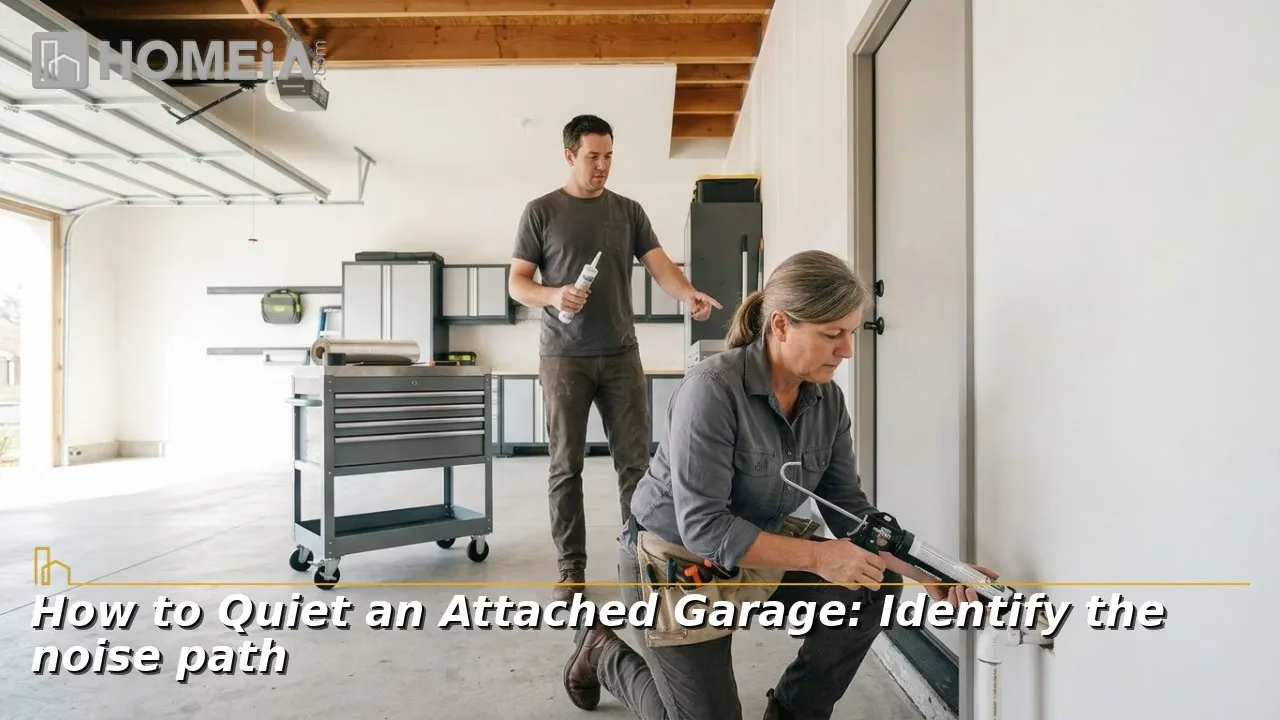
Listen during a complete opening and closing cycle from several safe locations. Stand inside the garage, then check the room above and the space beside the shared wall. Note whether the sound is a squeak, rattle, scrape, grind, pop, bang, or steady hum. Also understand whether it occurs at startup, throughout travel, or as the door reaches the floor.
Two sound paths often overlap:
- Airborne sound: Motor hum, chain movement, rattling panels, and roller noise move through the air and pass through openings, lightweight surfaces, and gaps.
- Structure-borne vibration: The opener and tracks shake their mounting points, transmitting energy through joists, studs, drywall, and floors.
In an attached garage, rigid connections between opener supports and floor framing can make a bedroom above seem louder than the garage itself. Noise can also pass through the shared door, electrical boxes, utility penetrations, and other weak points.
If the door appears intact, follow the manual to disconnect the opener with the door fully closed. Move the door manually. Noise continuing during manual movement points toward the door, rollers, hinges, tracks, or balance. A door going silent points toward the opener, rail, drive, or mounting.
Do not disconnect a damaged, crooked, or unusually heavy door. Stop operation and request service if a spring appears broken, cable is loose or frayed, or the door has come out of alignment.

Related article
6 Tips for Choosing the Best Garage Door for Your Home
When selecting a garage door, it is important to be cautious and thoughtful. Your choice can have significant implications for your home’s functionality and visual appeal. You will also want to prioritize safety, since your garage door acts as a vital barrier safeguarding your home and loved ones from potential intruders…
2. Correct mechanical causes first
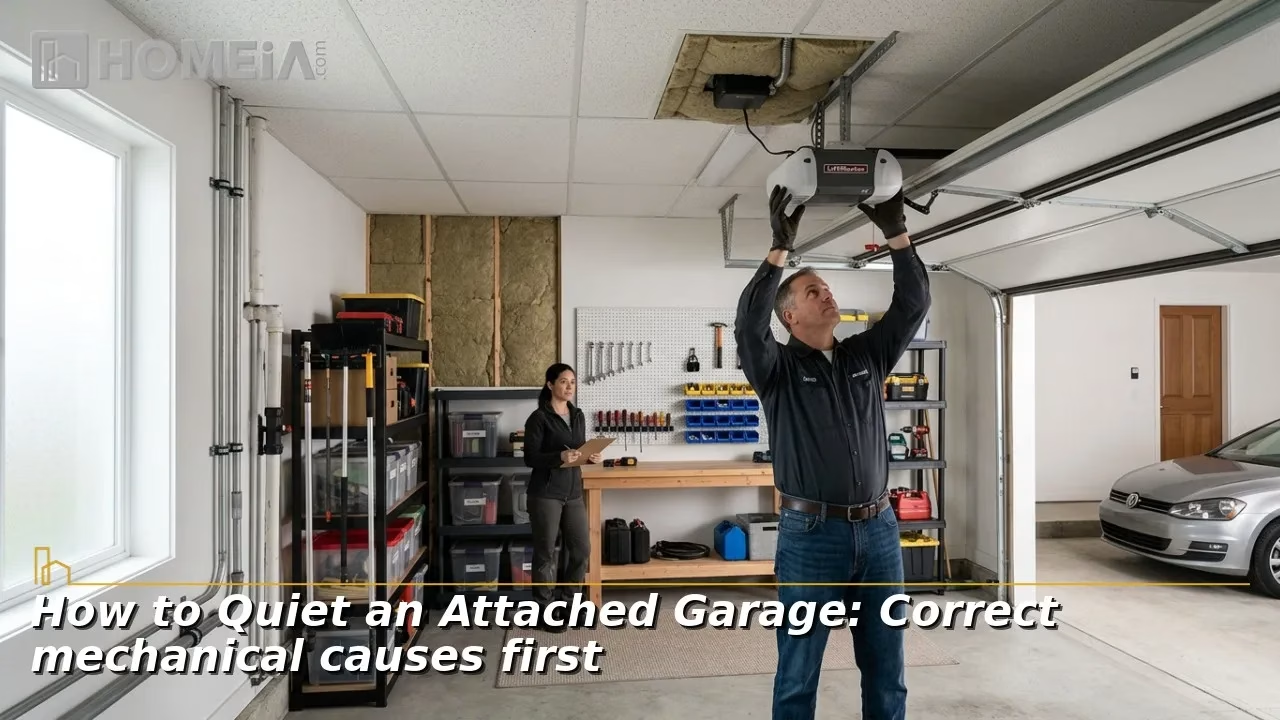
Inspect the system visually from a safe position. Look for cracked hinges, damaged rollers, loose-looking supports, bent tracks, frayed cables, crooked panels, or a visible gap in a torsion spring. Grinding, scraping, violent shaking, uneven travel, or sudden bang requires professional diagnosis.
For a system that otherwise operates normally, use the owner’s manual to guide maintenance:
- Clean dirt and debris from accessible areas.
- Lubricate only approved components and materials.
- Avoid coating the track surface with heavy grease.
- Wipe away excess lubricant that could collect grit.
- Check only accessible, non-tensioned fasteners permitted by the manual.
- Retest the safety systems after maintenance.
Never loosen springs, cables, pulleys, bottom brackets, or related tensioned hardware. These components can release stored force. Persistent noises may indicate wear that lubrication cannot repair.
The CPSC advises homeowners to look at the garage door and opener regularly and test reversal every month. If a system fails the test, disengage it until the opener is adjusted according to the manual, repaired, or replaced.
Recommended for you




3. Reduce opener noise
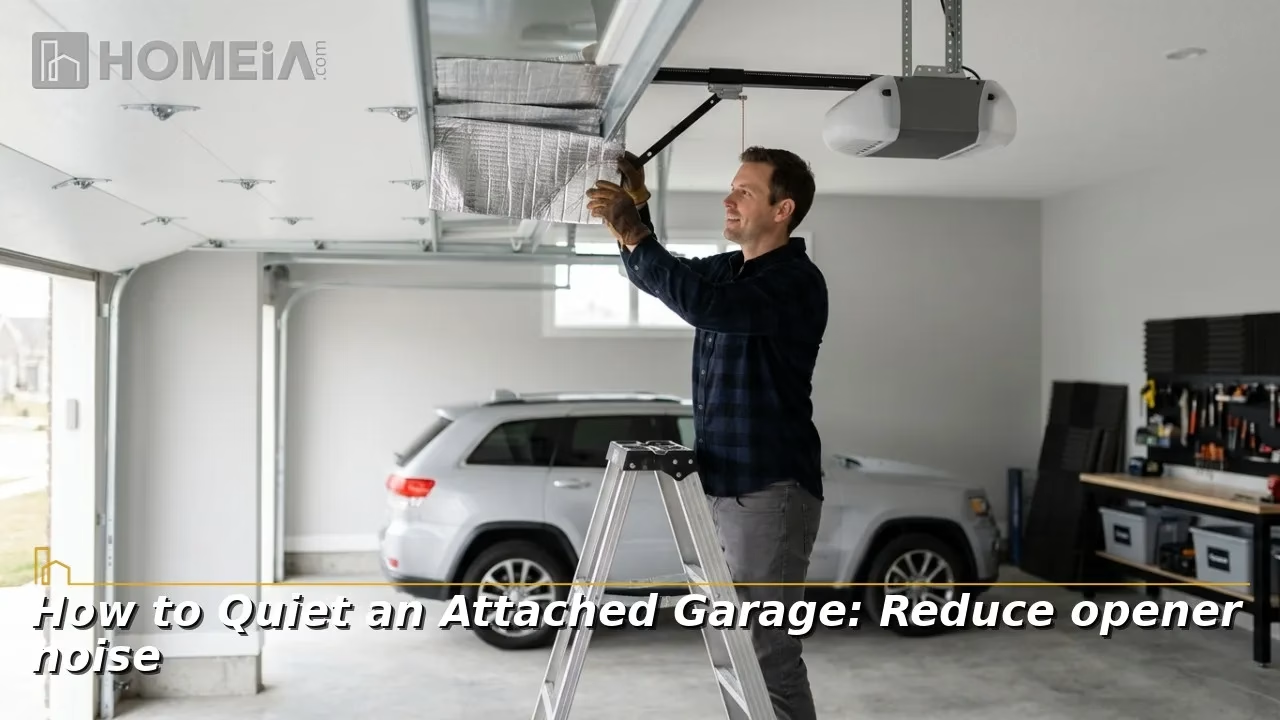
If the door moves smoothly and quietly by hand but becomes loud under power, compare the opener’s drive and mounting design.
- Chain drive: Usually durable and economical, but the chain and trolley can produce more mechanical sound.
- Belt drive: Replaces the chain with a reinforced belt, which can reduce metal-to-metal noise.
- Wall mount: Moves the motor from the ceiling to the side of a compatible torsion system, preserving overhead space and changing the vibration path.
If you’re still deciding which drive type fits your door and household, our guide to choosing a garage door opener covers door weight, clearance, capacity matching, and household needs alongside noise.
Belt-drive or wall-mounted units may be a sensible upgrade when a nursery, office, bedroom, or family room shares framing with the garage. A motor with gradual starting and stopping can also reduce abrupt movement. Yet an opener replacement cannot eliminate noise from worn rollers, loose panels, or an unbalanced door.
Check the supporting structure as part of the installation. The motor and rail must remain aligned, securely attached to adequate framing, and installed according to their listed instructions. Ohio residential code, for example, requires automatic garage door openers to be listed and labeled in accordance with UL 325. Local requirements vary, so electrical and structural work should comply with the applicable code.
Related article
How to Patch a Garage Floor to Make it Beautiful
The good news is that you can fix cracks and holes in your concrete flooring through patching. It is quite a simple task, and you can do it yourself if you love trying out new things. The tools and materials are readily available, and cheap, too…
4. Control mounting vibration
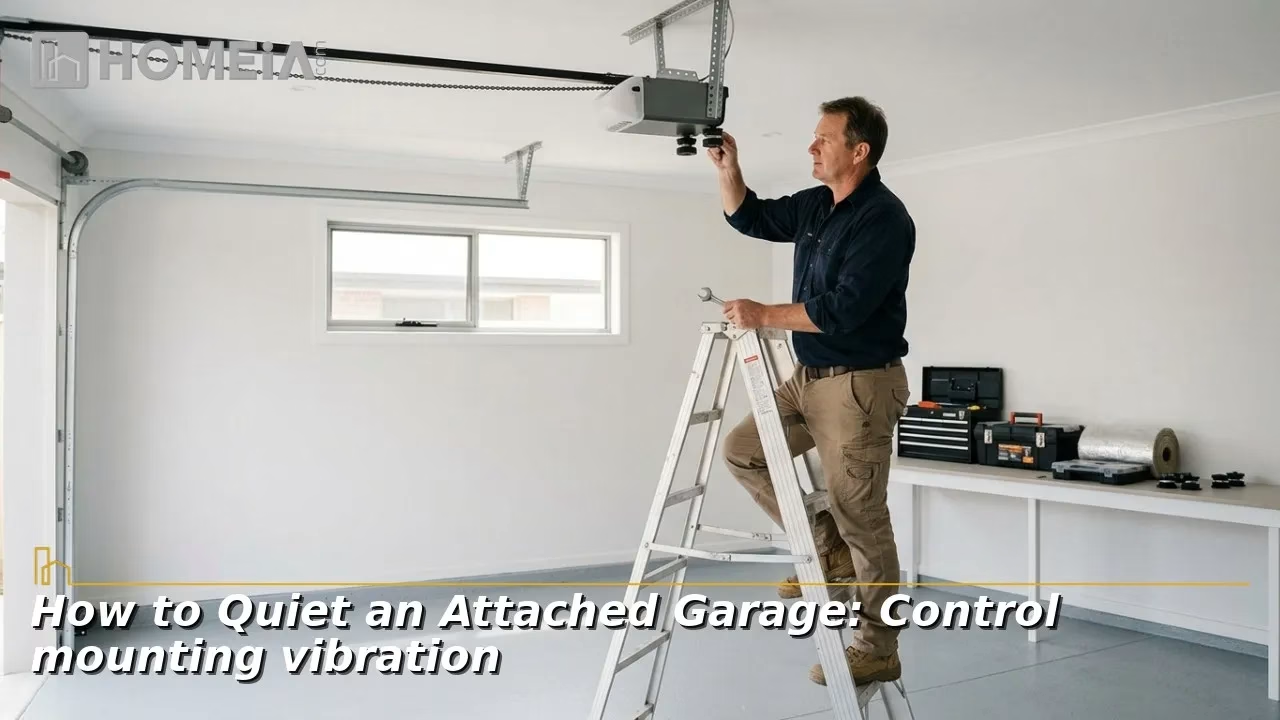
When the mechanism is sound but a low hum travels upstairs, the mounting system may be carrying vibration into the floor structure. A purpose-designed isolation assembly can place resilient material between selected components and framing. The aim is to reduce transmission without allowing the opener to sway, loosen, or move out of alignment.
Use these safeguards:
- Select components engineered for the opener’s load and mounting arrangement.
- Preserve the required motor and rail alignment.
- Fasten the supports to structural framing rather than drywall.
- Avoid improvised foam, rubber scraps, or undersized hardware.
- Confirm that brackets and fasteners remain secure.
- Retest travel, force, and reversal after mounting work.
Isolation is most appropriate when the door and opener are mechanically sound despite vibration remaining noticeable in an adjoining room. Grinding, clunking, jerking, and visible movement are service issues rather than acoustic problems.
A qualified installer can determine whether vibration originates at the motor bracket, rail support, header, track attachment, or door panels. Treating the wrong connection may provide little benefit and could introduce movement into a system that depends on precise alignment.

Related article
Garage Door Maintenance Checklist: 10 Simple Tasks to Avoid Costly Repairs
Your garage door works hard every day, yet maintenance is often overlooked until costly repairs arise. Regular upkeep improves safety, extends system lifespan, and prevents sudden breakdowns. This guide offers a simple, homeowner-friendly checklist of 10 quick maintenance tasks—most requiring minimal tools…
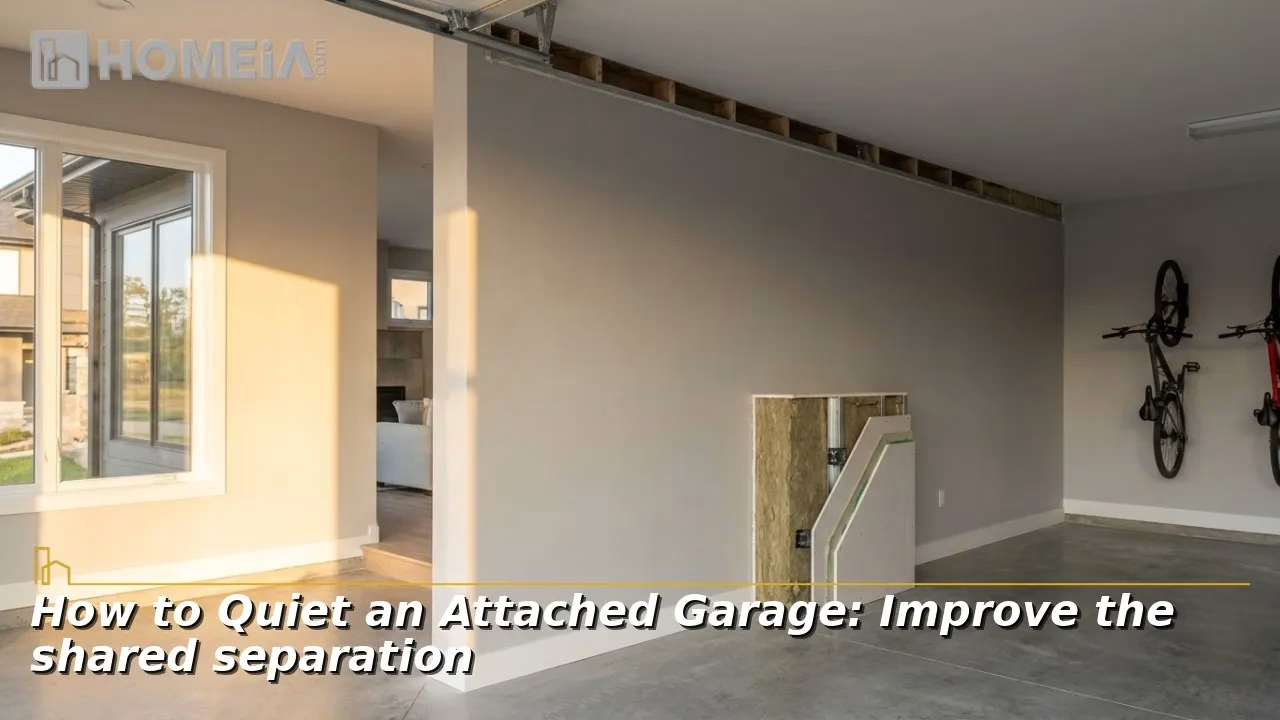
If maintenance and opener improvements do not solve the problem, examine the wall or ceiling between the garage and home. Sound passes through the connecting door, electrical boxes, utility penetrations, drywall gaps, duct paths, and framing transitions.
Treat the boundary as a complete assembly:
- Seal approved gaps and penetrations with materials suitable for the wall or ceiling.
- Weatherstrip the connecting door without interfering with required operation.
- Use appropriate electrical boxes and sealing details during renovation.
- Air-seal the shared wall and ceiling before installing cavity insulation.
- Preserve required fire separation throughout the project.
- Consult a building or acoustical professional before adding isolated framing, resilient channels, or extra drywall layers.
U.S. Department of Energy guidance calls for common walls and ceilings between attached garages and living spaces to be air-sealed before insulation is installed. It also recommends substantially airtight connecting doors with weatherstripping or gasket material. Closing leakage paths primarily protects indoor air quality. However, this can also reduce routes through which airborne sound travels.
The shared assembly may also have code-required gypsum, door, and penetration details. Department of Energy guidance notes that garage separation walls can be subject to insulation, air-barrier, bracing, and fire-separation requirements. Any acoustic renovation should preserve those functions.
Absorptive wall panels can reduce echo inside the garage, but they do not necessarily stop sound from passing into the house. Effective isolation depends on sealing, mass, cavity treatment, and structural decoupling working together.
Recommended for you




FAQs On How to Quiet an Attached Garage
1. Will an insulated garage door make the entire system quieter?
It may reduce panel vibration and some airborne sound, but it will not correct a loud drive, worn roller, poor balance, or rigid motor mount. Treat insulation as one part of the system.
2. Are nylon rollers always the best quiet upgrade?
They are often quieter than metal rollers, but replacements must match the track, stem, bearing design, and door load. Roller work near tensioned fixtures should be completed by a technician.
3. Why is the garage tolerable while the bedroom above is loud?
The opener or rail may be transferring vibration directly into shared joists. Structure-borne vibration can be more noticeable in the connected room than airborne sound is inside the garage.
Typical absorptive panels control echo within the garage. It provides limited isolation through a wall unless the larger assembly also addresses gaps, mass, cavities, and structural connections.
5. Should a quiet opener still receive monthly safety tests?
Yes. Quiet operation does not prove that the safety reversal works. The CPSC recommends monthly testing and professional inspection when the door cannot reverse.
Share