







Buying a Home in a Rural Area & Managing Its Infrastructure. A Modern Buyer’s Guide to Due Diligence
- Local Editor:Local Editor: The HOMEiA Team
- Category: Buy House



Buying a home in a rural area today is not passive homeownership, but rather, an active infrastructure management. Without municipal utilities, the rural buyer becomes their own manager, road commissioner, and environmental steward. Success hinges on a rigorous technical and legal audit before closing, not after. This guide consolidates the critical variables every buyer must evaluate.
Key Takeaways
- Audit the full decentralized utility stack: well yield, septic integrity, and high-speed connectivity feasibility.
- Analyze the legal bundle of rights (mineral, surface, and timber) to identify split estates that could allow third-party access to your land.
- Review all road access and private maintenance agreements before closing to avoid hidden fees or becoming landlocked.
- Leverage agricultural or wildlife management tax appraisals to reduce property taxes, but understand rollback tax exposure.

Related article
Seller Financed Homes: Key Factors to Consider and Top Buyer Benefits
Seller financing lets sellers act as lenders, helping buyers bypass banks. It offers flexibility, faster closings, and unique benefits for both buyers and sellers alike.
1. Telecommunications: Bridging the Rural Digital Divide
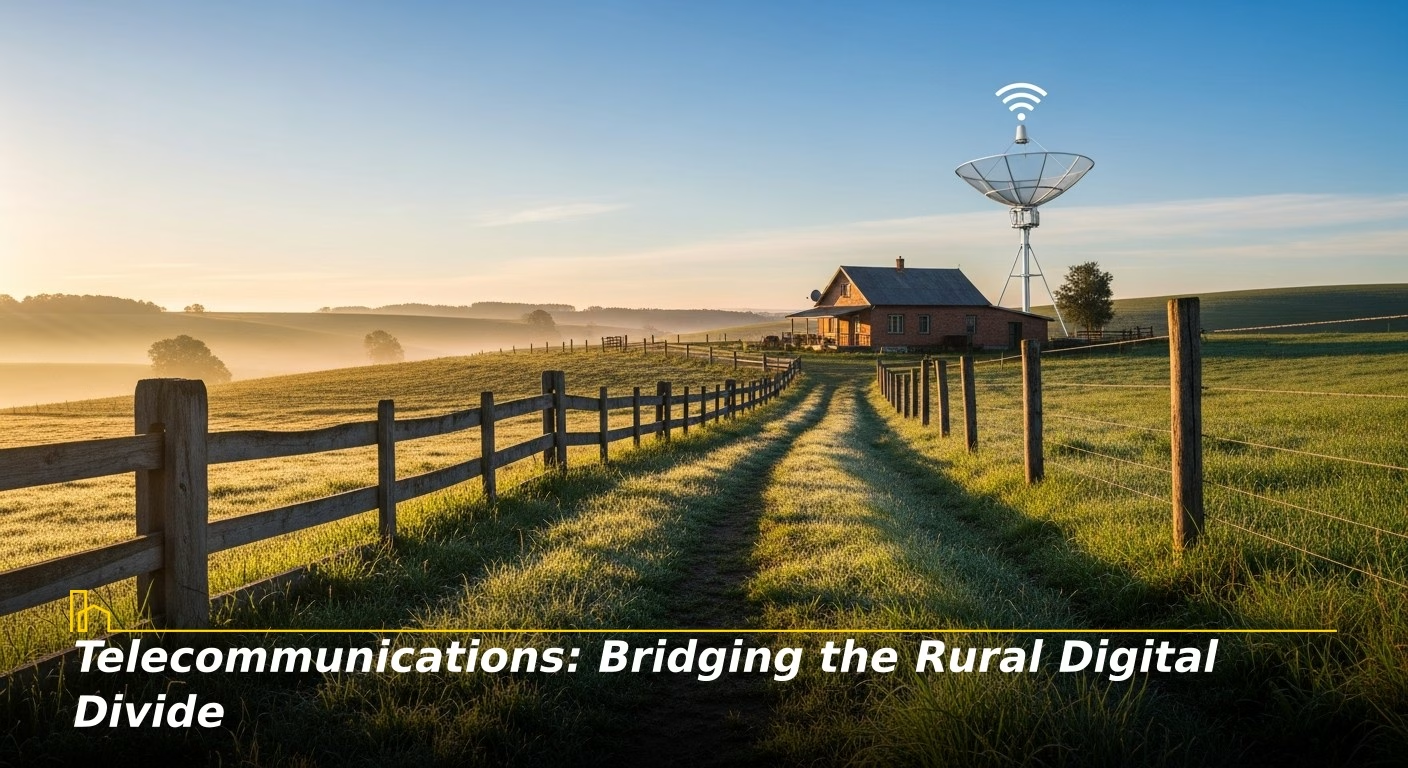
Digital connectivity is now a core utility in the modern world. Today’s rural internet landscape is shaped by competition between terrestrial 5G fixed wireless and Low Earth Orbit (LEO) satellite constellations. Buyers must conduct deep-site analysis, not just a phone signal check.
A. Comparing Rural Internet Technologies
Traditional geostationary (GEO) satellites like HughesNet and Viasat orbit at roughly 22,236 miles, producing latency of 500–700 milliseconds, too slow for modern video conferencing or cloud collaboration. LEO constellations like Starlink operate at 300–340 miles altitude, cutting latency to 20–40 milliseconds, similar to cable or fiber.
Starlink requires a clear, unobstructed sky view. In wooded areas, tower installation or tree removal are needed. SpaceX is actively lowering a portion of its constellation to approximately 298 miles to improve performance and space safety, which should further reduce latency for users.
| Technology | Latency (ms) | Speed (Mbps) | Key Limitation |
| Fiber Optic | < 10 | 300–5,000 | Extremely limited rural footprint |
| LEO Satellite (Starlink) | 20–40 | 100–300 | Requires clear sky view |
| 5G Fixed Wireless | 30–100 | 50–300 | Tower proximity & terrain dependent |
| GEO Satellite | 500–700 | 25–100 | Too high-latency for real-time use |
For properties near cellular towers, T-Mobile and Verizon 5G Home Internet offer a compelling low-cost alternative. Network Cell Info Lite or OpenSignal are apps to measure signal strength in decibels (dBm) rather than bars. Anything weaker than −110 dBm is generally unreliable for primary home internet.
B. Redundancy Planning
Rural utility fragility demands backup communication. Expert rural residents typically maintain a cellular hotspot or secondary satellite plan alongside their primary service. For spacious properties with significant topographic variation, two-way Motorola radios ensure communication when cellular signals are blocked by hills or dense vegetation.

Related article
Beach Home Buying in Texas: Important Things You Should Know
As with any home purchase, there are quite a few things to keep in mind prior to searching for your dream beach home and during the process. To make it easier, we’ve compiled a list of the most important things to know when buying a beach home in Texas…
2. Hydrological Infrastructure: Private Wells
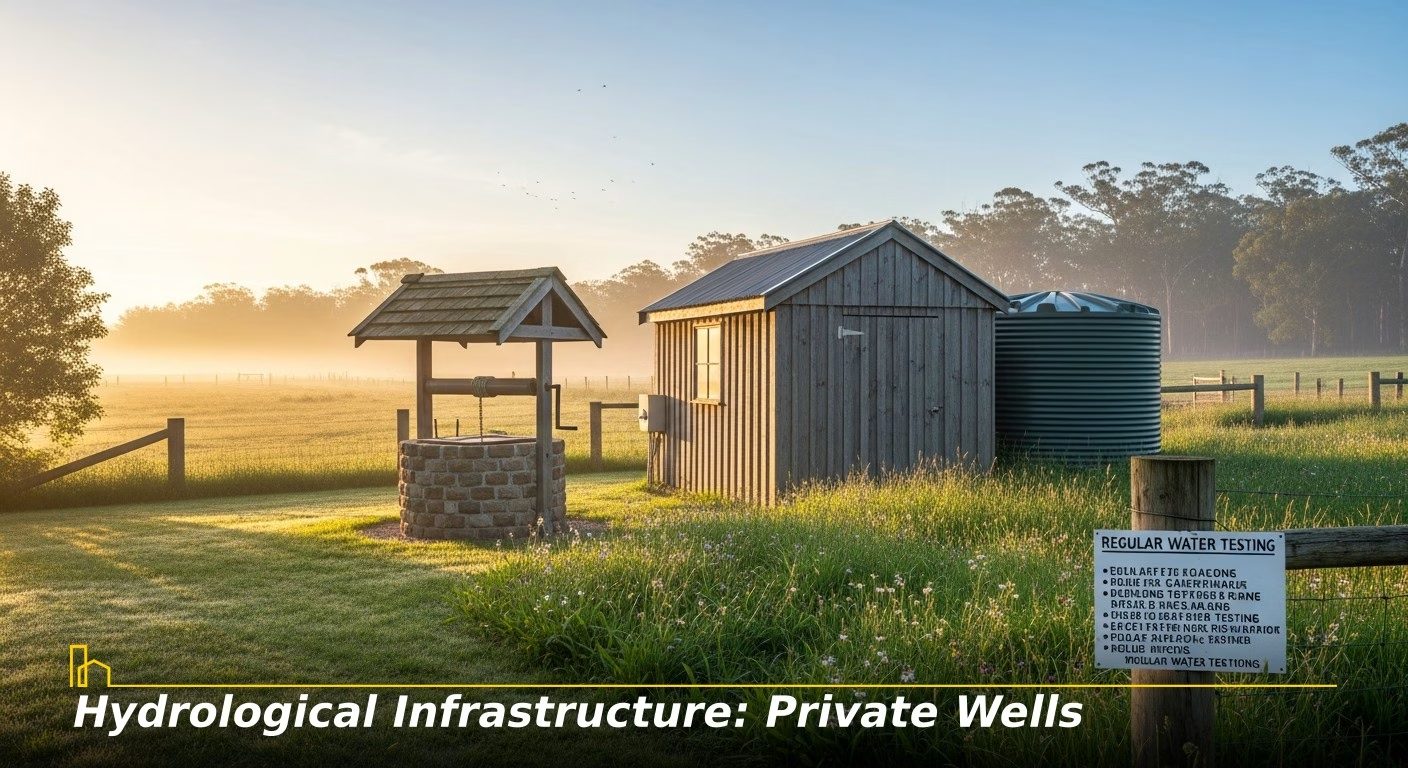
A private well makes the homeowner responsible for water safety. Two metrics define well value: yield (gallons per minute, or GPM) and recovery rate (how fast the water level rebounds after heavy use). A minimum of 3–5 GPM is standard for a single-family residence; properties supporting irrigation or gigantic households need more. Low-yield wells can be supplemented with atmospheric storage tanks.
Water Quality Testing
The EPA does not regulate private wells. Buyers must commission an independent laboratory analysis. Annual testing is industry standard for core contaminants:
| Contaminant | Source | Health Risk | Mitigation |
| Total Coliform Bacteria | Surface runoff, soil | Gastrointestinal illness | UV treatment or shock chlorination |
| Nitrates | Fertilizers, septic leaks | Blue Baby Syndrome (infants) | Reverse osmosis or distillation |
| Arsenic / Lead | Natural deposits, old pipes | Neurological damage | Specialized filtration media |
| pH Imbalance | Geological composition | Pipe corrosion, leaching | Calcite neutralizer filter |
Those near farmland should also test for pesticides and herbicides. Being near industrial sites means screening for Volatile Organic Compounds (VOCs) and heavy metals. Nuisance contaminants like iron and manganese require water softeners or oxidation filters.
3. Waste Management: Septic System Engineering
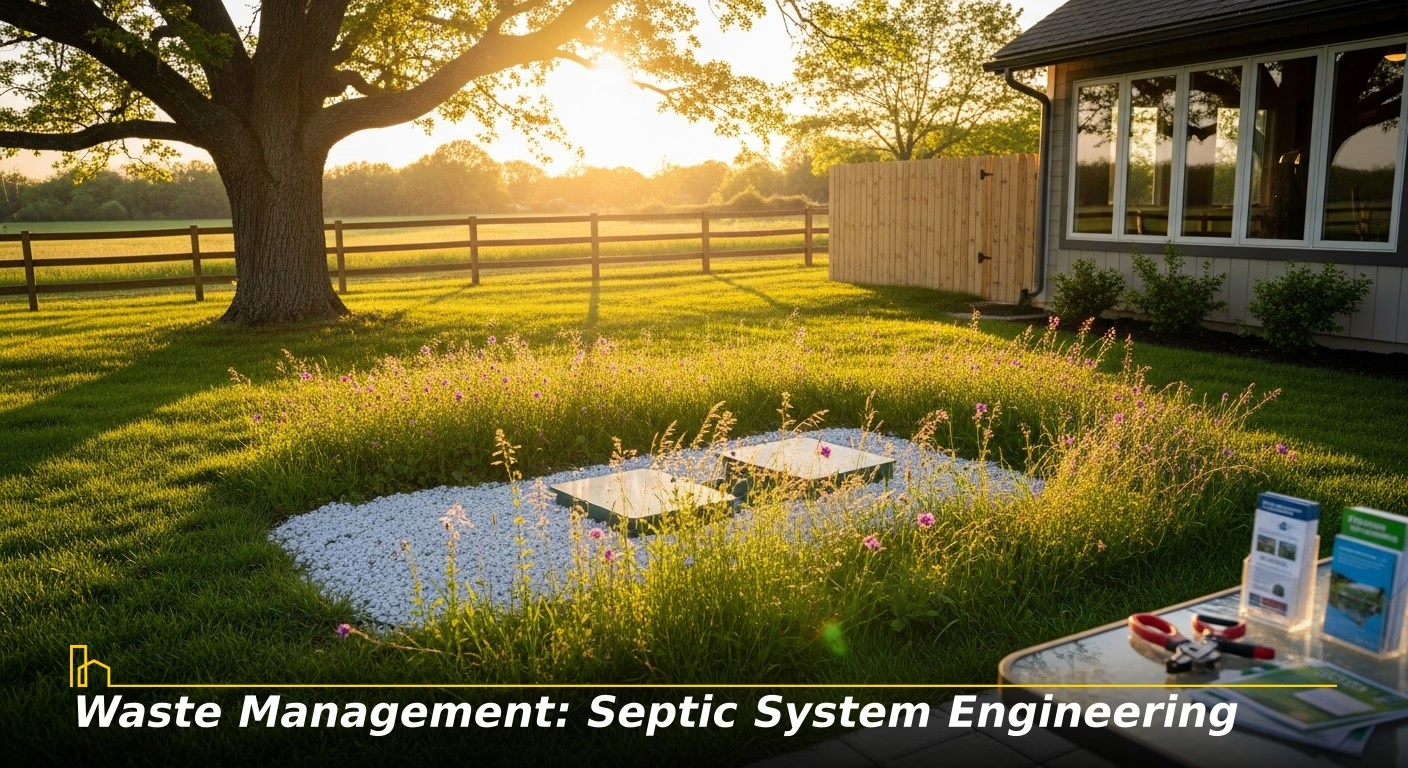
Septic systems use biological digestion and soil filtration to treat wastewater. Unlike municipal sewer connections, they have finite lifespans and significant replacement costs. Generally, they’re $3,500 to $12,000 for a standard anaerobic system, rising to $10,000–$20,000 for alternative systems, notably aerobic treatment units or mound systems required in high water table or poor-soil conditions.
How Systems Fail: and How to Prevent It
The drain field (leach field) is the most vulnerable component. Once solids clog soil pores, the field is dead and must be relocated to a designated reserve field. Prevention is straightforward: pump the tank every 3–5 years, inspect every 1–3 years, and avoid antibacterial soaps, bleach, and harsh chemicals that decimate the bacterial colony needed to digest waste. Never drive heavy vehicles over the drain field or build structures above it.
Recommended for you




4. Legal Landscape: Rights, Easements & Nuisances
Rural property law is deeper than suburban residential codes. The deed to the surface does not always convey rights to what lies beneath it or who may cross it.
A. Split Estates: When Mineral Rights Trump Surface Rights
In oil, gas, and mining regions, it is common for mineral rights to have been severed from surface rights decades ago. In most U.S. jurisdictions, the mineral estate is dominant, meaning a mineral rights holder can legally access your land to drill, build roads, or install pipelines, provided they grant reasonable accommodation and compensate for damages. Always commission a specialized title search to determine whether mineral rights are intact or severed. If severed, negotiate a Surface Use Agreement (SUA) before purchase.
B. Easements and Their Impact on Value
| Easement Type | Nature of Right | Estimated Value Impact |
| Utility (Above Ground) | Power poles, transmission towers | 5%–20% reduction |
| Conservation | Limits development to protect habitat | 30%–50% reduction |
| Right-of-Way | Road access for neighboring parcels | 5%–30% reduction |
| Utility (Underground) | Buried pipes or cables | 0%–5% reduction |
C. Right to Farm Laws
Each state has enacted Right to Farm legislation protecting established agricultural operations from nuisance lawsuits filed by new neighbors. If a farm was operating before you arrived, odors, noise, and dust from these activities are generally not actionable. Buyers near feedlots or commercial poultry operations must understand that they have limited legal recourse under the “coming to the nuisance” doctrine.

Related article
Important Things You Should Know Before Buying a Lakeshore Community Home
There’s something undeniably magical about waking up to glittering water views, enjoying sunset boat rides, and having immediate access to swimming, fishing, and water sports. Lakeshore living combines the tranquility of nature with the convenience of community living, but before you dive into this significant investment…
5. Access & Roads: Private Infrastructure Management
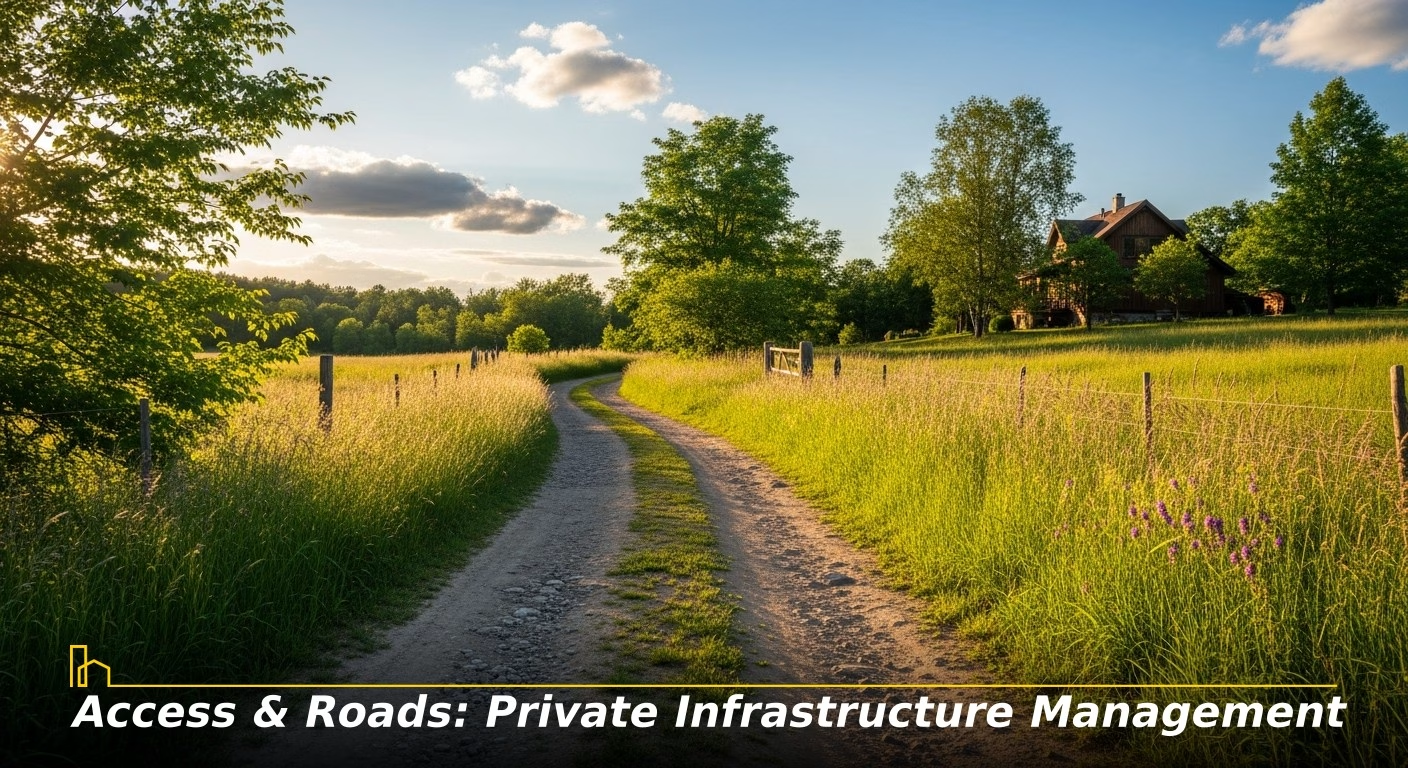
The road to a rural property maintains the same importance as the home itself. Many rural homes sit on privately maintained roads with no county or state upkeep obligations.
Maintenance Agreements and Cost Realities
Before closing, confirm the existence of a recorded Private Road Maintenance Agreement that defines each owner’s financial share for grading, snow removal, and repairs. Without one, disputes over cost-sharing are difficult to resolve in the eyes of the law.
| Road Material | Install Cost (per sq. ft.) | Maintenance Level | Estimated Lifespan |
| Gravel | $1.25–$3.00 | High: requires regular grading | Ongoing; prone to washouts |
| Asphalt | $7.00–$13.00 | Medium: requires periodic sealing | 15–20 years |
| Concrete | $4.00–$15.00 | Low: minimal upkeep | 30+ years; high initial cost |
| Stabilized Gravel | $2.00–$12.00 | Medium | Better load tolerance than plain gravel |
During spring mud season or after major winter storms, unpaved rural roads can become impassable for standard vehicles. Add the cost of a tractor with a plow or a snowblower for long driveways, and note the distance to the nearest paved road, which directly affects delivery services and emergency response times.
6. Emergency Services & Insurance: The ISO Fire Rating

Insurers use a Public Protection Classification (PPC) rating, commonly called an ISO rating, to set fire insurance premiums. Ratings run from 1 (excellent protection) to 10 (no recognized protection), determined by three factors:
- Distance to fire station: Generally within five road miles for a favorable rating.
- Water supply: Hydrants within 1,000 feet or a credible alternative source (large pond or tank).
- Department capacity: Equipment quality and training level of the responding agency (often volunteer in rural areas).
Properties rated Class 10 can be difficult to insure and may carry premiums three to four times higher than comparable homes in Class 3 or 4 areas. Confirm the ISO rating of any rural property before finalizing purchasing.

Related article
Evaluating the Impact of a Home Warranty on Home Value
A home warranty serves as a safety net, it covers the repair or replacement of many home appliances and systems that inevitably wear out over time — so you know you won’t be responsible for the full cost of replacing expensive equipment. In this article, we take a close look at home warranties – including what they are, and how exactly getting one could impact the value of your home…
7. Zoning, Tax Strategy & Productivity Appraisals
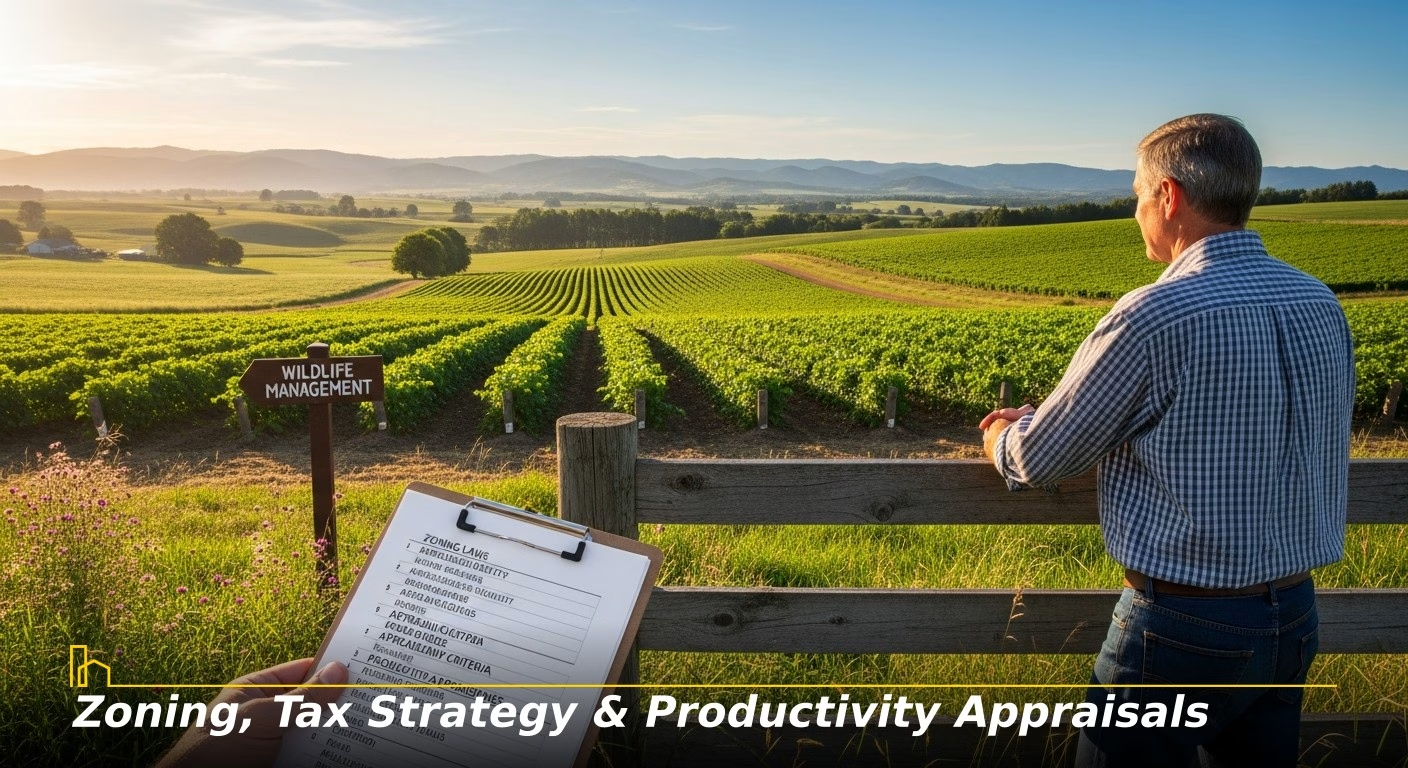
Many states offer productivity value appraisals for rural land, taxing it based on agricultural output rather than market value. This reduces property taxes by 90% or more. Common categories include:
- Agricultural Appraisal: Requires active use for farming, ranching, or timber production for five of the preceding seven years (requirements vary by state).
- Wildlife Management: A subcategory of agricultural appraisal requiring documented activities (supplemental water, shelter, or predator management) to sustain indigenous wildlife.
Important caveat: If land use changes, including ceasing farming or subdividing for residential development, rollback taxes are triggered. This collects the difference between market-value taxes and productivity taxes for the prior three to five years, plus interest. Verify rollback period and interest rates under your specific state’s statutes before acquiring land.
8. The Rural Property Inspection Protocol
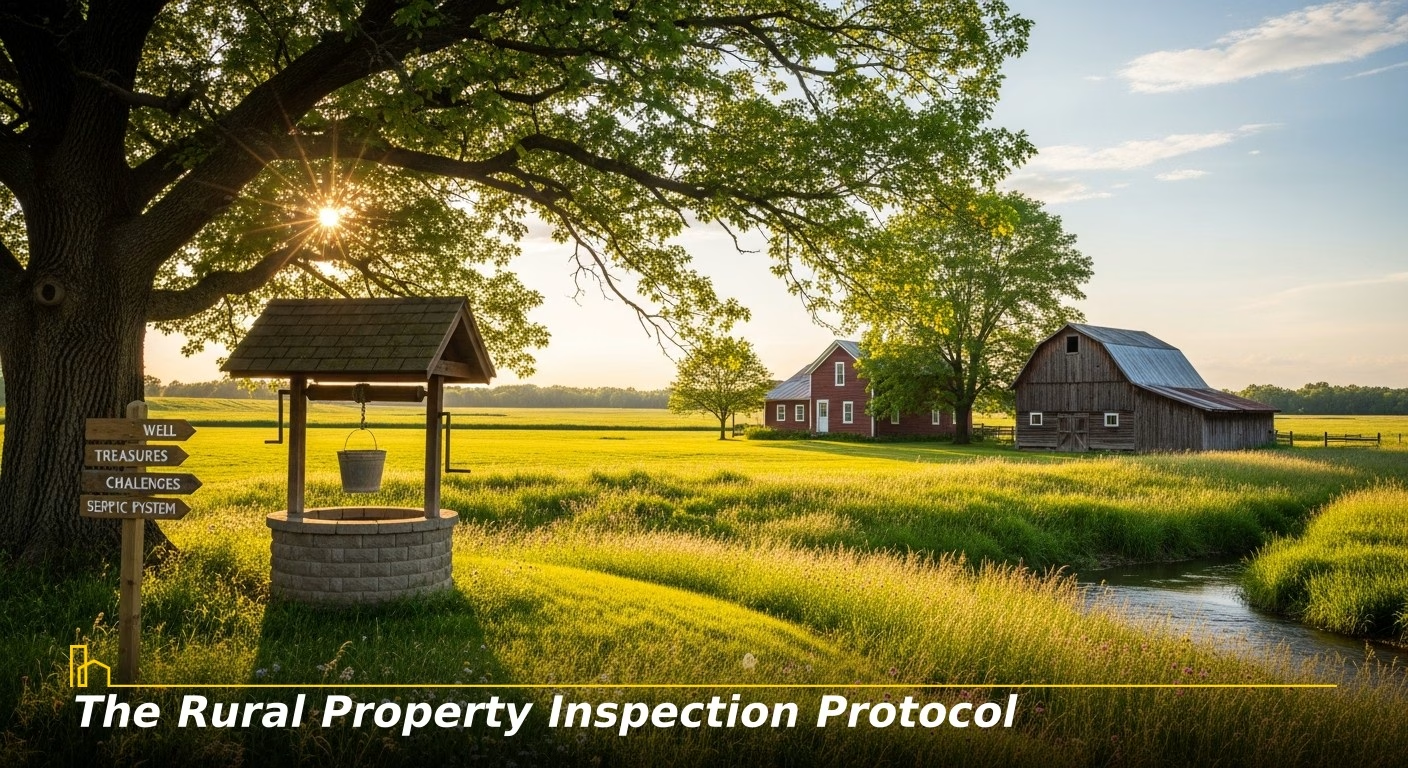
A standard home inspection is inadequate for rural property. Insist on these specialized evaluations from certified professionals:
- Comprehensive Well Test: Includes a recovery rate test (measuring GPM under load) and pump diagnostic to assess the electrical health of the well motor, not just a basic water quality screen.
- Septic Scope & Flow Test: Camera inspection of pipes plus a dye test to confirm the drain field absorbs liquid without surfacing.
- Soil Stability Analysis: Critical on slopes or if new construction is planned; verifies expansive soils and high water tables.
- Fuel Storage Integrity: Propane and fuel oil tanks must be inspected for corrosion, and lines pressure-tested for leaks.
- Pest & Environmental Audit: Rural properties hold higher exposure to termites, carpenter ants, and wood-destroying fungi than urban homes.
Conclusion: Rural real estate is a strategic investment rewarding preparation and penalizes passivity. Modern rural buyers must balance the emotional appeal of land and open space with a cold technical assessment of the systems delivering water, disposing of waste, connecting to the outside world, and organizing legal boundaries. By rigorously evaluating well yields, septic integrity, split estates, internet feasibility, and emergency service proximity, purchasers can convert a high-risk transition into a stable, sustainable lifestyle. In the country, due diligence is not a formality; it is the foundation.
Recommended for you




FAQs About Buying a Home in a Rural Area
1. How can I determine the exact boundaries of a rural property if the survey pins are missing?
Never rely on old fences or hearsay regarding property lines. Hiring a licensed surveyor is the only way to establish legal boundaries. This is crucial before building fences or structures, as encroachments onto a neighbor’s land can trigger costly disputes or trespass claims.
2. Does Starlink internet work during heavy rain or snow?
Like all satellite services, Starlink is subject to rain fade, where heavy precipitation temporarily degrades the signal. While it is considerably more resilient than older geostationary satellite technology, substantial heavy rain or dense snow accumulation on the dish can cause brief outages. Most current Starlink dishes include built-in heaters to melt snow automatically.
3. What is a “reserve field” in a septic system?
A reserve field is a designated area of your property with suitable soil where a second drain field can be installed as a backup. Many counties require a reserve field to be identified and protected from construction or soil compaction as a condition of the original building permit. Before purchasing, confirm whether a reserve field exists and that it has not been built over or compromised.
4. Can I drill a well anywhere on my property?
No. Well locations are governed by minimum setback distances from septic tanks, drain fields, property lines, and existing structures to prevent contamination and ensure safe maintenance access. These distances are set by local health departments and vary by jurisdiction. Always consult your county before planning a new well location.
5. What are rollback taxes and when are they triggered?
Rollback taxes are triggered when land receiving an agricultural or timber productivity appraisal changes to a non-exempt use, like being subdivided for housing or ceasing active farming. The tax authority collects the difference between what market-value taxes would have been and the reduced productivity taxes paid, typically covering the prior three to five years plus interest. The exact lookback period and interest rate vary by state.
Share