






The Pros and Cons of Living in Nebraska
- Local Editor:Local Editor: Jennifer Vig
- Category: Nebraska


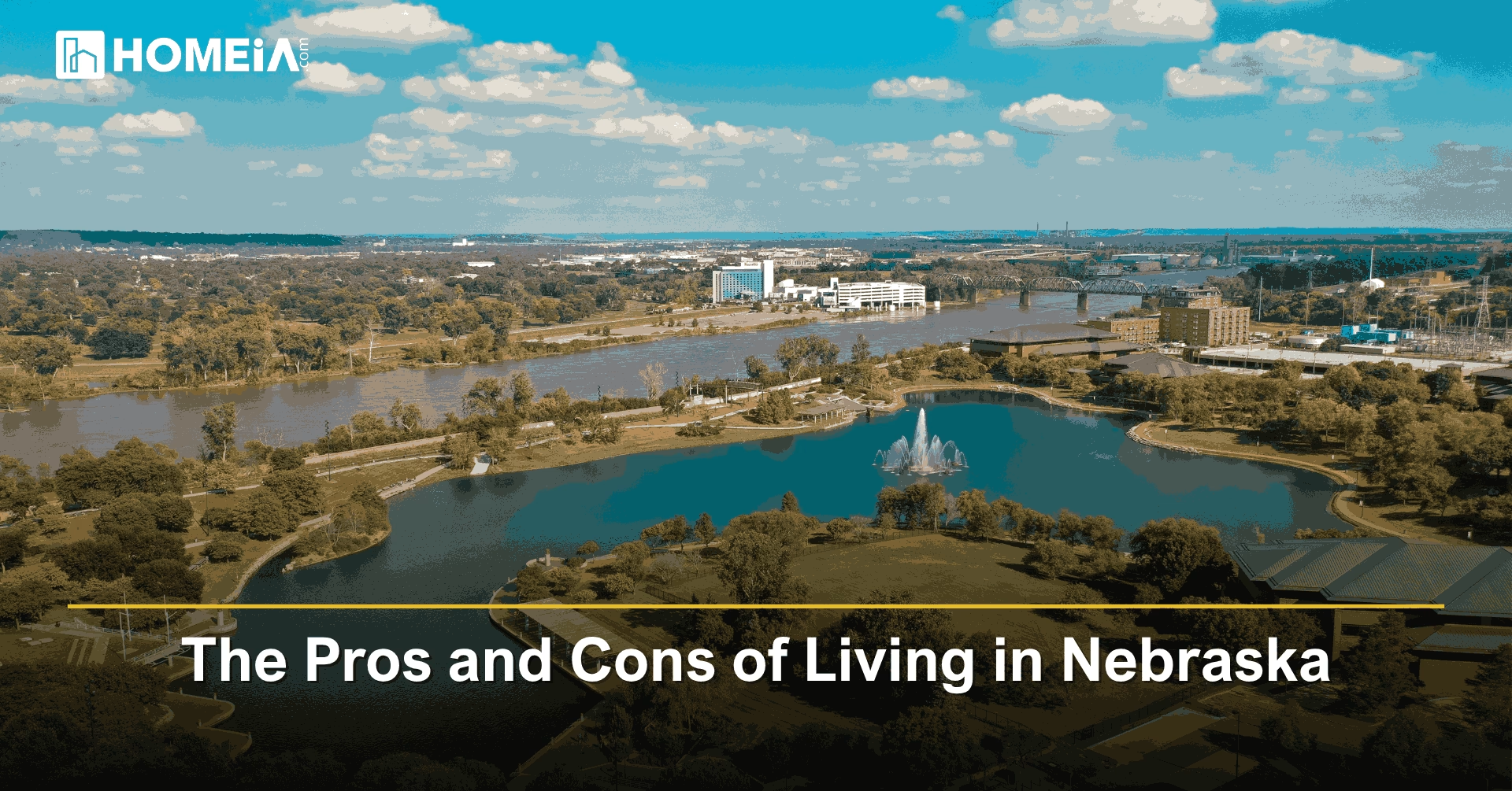
The pros and cons of living in Nebraska: Go Big Red. Spend more than a week in Nebraska and you will probably hear that phrase everywhere. Around here, it means more than football. It reflects the pride people have in the state itself. Whether someone is looking for a lower cost of living, strong job opportunities, or simply a place where neighbors still know each other by name, Nebraska has a lot more to offer than many people expect.
That said, Nebraska is not the right fit for everyone. The same wide-open spaces that appeal to some people can feel isolating to others. Property taxes remain higher than many residents would like, and tornadoes and hailstorms are simply part of life during certain times of the year. Homeowners insurance costs often reflect that reality as well. This guide breaks down both the pros and cons of living in Nebraska so you can get a clearer picture before deciding whether a move to the Cornhusker state makes sense for you.
Key Takeaways
- Affordable living: Nebraska’s MERIC cost-of-living index is 91.8 (U.S. average = 100), putting many everyday expenses below the national average. Housing remains one of the biggest advantages, and groceries are exempt from state sales tax.
- Strong job market: Omaha is home to four Fortune 500 companies: Berkshire Hathaway, Union Pacific, Kiewit, and Mutual of Omaha. Nebraska’s unemployment rate was 3.0% in January 2026, well below the national average of 4.3%.
- Outdoor recreation year-round: Nebraska Game and Parks manages 75 state park areas, which saw roughly 7 million visits in 2025. The spring sandhill crane migration along the Platte River also reached a record high that year.
- Higher property taxes: Property taxes remain one of the biggest drawbacks for many Nebraska homeowners. The state’s effective property tax rate averages about 1.61%, ranking among the highest in the country.
- Severe weather is part of life: Tornadoes, hailstorms, and winter blizzards are all regular parts of Nebraska weather. Homeowners insurance costs are often significantly higher than the national average because of storm-related risks.
Related article
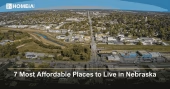
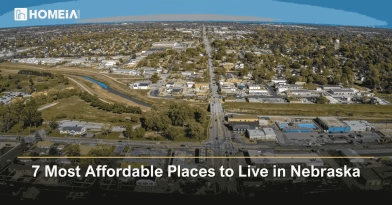
7 Most Affordable Places to Live in Nebraska
Nebraska remains highly affordable, with below-average living costs, manageable home prices, and short commutes. Beyond statewide trends, this guide highlights seven cities that balance affordability with jobs, healthcare, infrastructure, and quality of life—helping residents find places where long-term stability and everyday practicality truly align…
I. Nebraska’s Pros
A. Low Cost of Living and Affordable Housing: Nebraska’s biggest financial advantage is simple: everyday living tends to cost less here than it does in many other parts of the country. The state’s MERIC 2025 cost-of-living index came in at 91.8 (U.S. average = 100), ranking Nebraska among the more affordable states nationally. Housing is one of the biggest reasons why. Nebraska’s housing index was 78.7, more than 21% below the national average.
As of March 2026, the statewide Zillow Home Value Index was around $276,500, while average rent in April 2026 was approximately $1,300 per month. For many first-time buyers and families feeling priced out in other states, those lower housing costs can make homeownership feel much more realistic.
B. A Strong and Diverse Job Market: Nebraska has a stronger and more diverse job market than many people expect. Omaha is home to several major companies, including Berkshire Hathaway, Union Pacific Railroad, Kiewit, and Mutual of Omaha. Together, those companies generate hundreds of billions in annual revenue and help support a steady business and corporate presence in the state.
Nebraska’s unemployment rate was 3.0% in January 2026, well below the national average of 4.3%. Healthcare is also a major employer, with Nebraska Medicine, CHI Health, and Methodist Health System employing thousands across the region. Beyond healthcare, Lincoln continues to grow in areas like technology, government, and education, while agricultural processing and medical research help diversify the state’s economy even further.
C. Remarkable Outdoor Recreation: Nebraska’s outdoor recreation opportunities tend to surprise a lot of newcomers. The Nebraska Game and Parks Commission manages 75 state park areas along with hundreds of wildlife management areas across the state, attracting roughly 7 million visits in 2025 alone.
One of Nebraska’s most well-known natural events is the annual sandhill crane migration near Kearney. Each spring, more than one million cranes gather along the Platte River during their migration north, creating one of the largest wildlife migrations in the country. In 2025, the migration reached a record high, with 736,000 cranes counted during a single aerial survey.
The Nebraska Sandhills offer a completely different landscape than many people expect from the state. Spanning nearly 20,000 square miles, the region includes thousands of lakes and wetlands that attract hunters, anglers, birdwatchers, and outdoor enthusiasts throughout the year.
D. Rich Culture, Sports, and Community: Nebraska’s cultural scene often surprises people who expect the state to feel quiet or limited to small-town life. In Omaha, the Old Market district serves as a major hub for restaurants, nightlife, local shops, and live entertainment. Attractions like the Joslyn Art Museum, the Henry Doorly Zoo, and the Holland Performing Arts Center also give the city a stronger arts and entertainment scene than many newcomers expect.
Sports are deeply woven into Nebraska culture as well. Omaha has hosted the College World Series every year since 1950, while Memorial Stadium in Lincoln has sold out every Cornhuskers home game since 1962, creating one of the longest sellout streaks in college football history. For many newcomers, those shared traditions help make it easier to feel connected to the community.
E. A Tax Structure That Is Actively Improving: Nebraska’s tax situation has slowly been improving over the past few years, especially when it comes to state income taxes. Under LB 754, the top income tax rate dropped from 5.2% in 2025 to 4.55% in January 2026, with another reduction planned for 2027 that would lower the rate to 3.99%. Groceries also remain exempt from state sales tax, which helps reduce some everyday expenses for families.
The state also offers property tax relief programs for certain residents, including eligible seniors, veterans, and individuals with disabilities through the Nebraska Homestead Exemption. In addition, Nebraska’s minimum wage increased to $15 per hour in 2025, while lawmakers added new truth-in-taxation protections aimed at limiting future property tax increases at the local level.
Related article
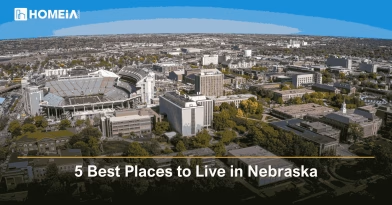
5 Best Places to Live in Nebraska
Nebraska offers affordability, strong job markets, quality healthcare, and solid schools, with a cost-of-living index below the national average. This guide highlights five top cities that balance housing costs, employment, safety, education, and overall livability—helping you find a community where daily life is both practical and rewarding…
II. Nebraska’s Cons
A. Property Taxes That Keep Rising: Property taxes remain one of the biggest frustrations for many Nebraska homeowners. The statewide effective property tax rate averages around 1.61%, with Douglas County (Omaha) averaging 1.66% and Lancaster County (Lincoln) around 1.45%.
The bigger concern for many residents is how quickly those taxes have continued to rise over time. Since 2000, statewide property taxes have increased much faster than household income growth. Although lawmakers passed new collection caps during the 2026 legislative session, property taxes are still an important factor for homebuyers to consider before moving to Nebraska.
B. Weather Extremes and High Insurance Costs: Nebraska experiences all four seasons, and each can bring serious weather at different times of the year. Tornadoes are a real concern during the spring and early summer months, especially across eastern Nebraska. Severe hailstorms are also common, with some storms producing baseball-sized hail that can cause expensive damage to roofs, siding, and vehicles. For many homeowners, storm-related repairs become a regular part of life over time.
Those weather risks also help explain Nebraska’s high homeowners insurance costs. Depending on the location and coverage level, annual premiums for $300,000 in dwelling coverage often range from roughly $4,800 to more than $6,500 per year, well above the national average. Multiple reports now rank Nebraska among the most expensive states in the country for homeowners insurance, which can offset part of the state’s overall cost-of-living advantage.
C. Economic Growth Concerns Outside the Major Cities: While Omaha and Lincoln still have fairly solid economies, the overall picture across Nebraska is a little more mixed. A 2026 analysis found Nebraska missed the top 10 development states for the second year in a row and may have lost roughly 70,000 jobs compared to its earlier growth path. Job growth in both major cities has also fallen behind some similar regional cities in recent years.
Outside Omaha and Lincoln, career opportunities can become much more limited depending on the field. Rural Nebraska tends to have higher unemployment and fewer professional jobs, especially in industries like technology, finance, and law. For people who are not working remotely, finding long-term career opportunities outside the larger metro areas may be more difficult.
D. Limited Public Transit and Car Dependency: Outside of Omaha’s Metro Transit and Lincoln’s StarTran system, public transportation options in Nebraska are fairly limited. The state also ranks among the lower states nationally for per-capita transit spending. Even in Omaha, the bus system mainly serves the central part of the city, while most suburban areas, shopping centers, and employers still require a personal vehicle.
For most Nebraska residents, having a reliable vehicle is more of a necessity than a convenience, especially during the winter months. Fuel costs, insurance, and winter vehicle maintenance should all be factored into the overall cost of living from the beginning.
E. Rural Healthcare Access and Broadband Gaps: Healthcare in Nebraska can vary quite a bit between the larger cities and more rural parts of the state. Omaha is home to major healthcare systems like Nebraska Medicine, CHI Health, Methodist Health System, and UNMC, giving residents access to strong specialty and advanced medical care.
Outside the larger metro areas, however, healthcare access becomes more limited. Many rural hospitals operate as critical access facilities with fewer specialists available, and residents in areas like the Sandhills or the Panhandle often travel long distances for specialty appointments and advanced care.
Internet access tends to follow a similar pattern. Omaha and Lincoln generally have strong fiber and cable coverage, while some rural areas still face noticeable broadband and connectivity gaps. Anyone considering a move to a more rural part of Nebraska should research both healthcare access and internet availability before buying or renting a home.
Recommended for you




III. Cost of Living in Nebraska: A Detailed Breakdown
Nebraska’s overall cost of living is still lower than in many parts of the country, especially when it comes to housing and everyday expenses. At the same time, higher property taxes and homeowners insurance costs can offset some of those savings, so both are important to factor into the budget before making a move.
Statewide Cost of Living Overview (2025-2026)
| Category | Nebraska vs. National Average | Typical Cost | Notes |
| Overall | 8% lower (index 91.8) | ~$52,177/year avg. | Ranked 14th most affordable; tied with South Dakota |
| Housing (Buy/Rent) | 21% lower (index 78.7) | ZHVI $276,500; avg. rent $1,300/mo | Rent is 35% below national avg. |
| Utilities | 11% lower (index 89.6) | Electricity ~11.8 cents/kWh | 100% publicly owned power utilities statewide |
| Groceries | 1.4% lower (index 98.6) | State sales tax-exempt | Significant ongoing savings vs. states that tax food |
| Transportation | 6% lower (index 93.8) | Avg. commute 18 minutes | Car essential outside Omaha core |
| Property Tax | Among highest in nation | ~1.61% eff. rate statewide | 241% increase since 2000; up 5.39% in 2025 alone |
| Homeowners Insurance | Among highest in nation | $4,785-$6,587/year for $300K coverage | 2nd most expensive state; 172%+ above national avg. |

Related article
Moving to Nebraska: The Complete Relocation Guide & Checklist
Nebraska offers affordable living, steady job growth, and connected communities across its cities and open landscapes. Around 2 million residents benefit from opportunities in hubs like Omaha and Lincoln, where healthcare, jobs, and entertainment continue to expand, making Nebraska an increasingly attractive place to call home.
Cost of Living by Major Nebraska City
| City | Compared to U.S. Avg. | Housing Cost Driver |
| Omaha | ~10% lower | Fortune 500 demand; Midtown and West Omaha vary widely |
| Lincoln | ~10% lower | University and state government anchor steady demand |
| Bellevue | ~8% lower | Offutt AFB proximity; Sarpy County school premium |
| Grand Island | ~18% lower | Manufacturing and agriculture base; strong value |
| Kearney | ~17% lower | University of Nebraska Kearney; I-80 corridor hub |
| Norfolk | ~22% lower | Regional service economy; among the most affordable |
Conclusion: Nebraska can be a great fit for the right person at the right stage of life. The overall cost of living remains below the national average, income taxes have been moving in a better direction, and cities like Omaha offer more career opportunities, entertainment, and growth than many outsiders expect.
At the same time, the trade-offs are important to understand before making a move. Property taxes continue to rise, homeowners insurance costs are much higher than the national average, and job opportunities outside Omaha and Lincoln can be more limited depending on the industry.
For people who take the time to research different communities and understand both the benefits and challenges, Nebraska often ends up offering a slower pace, lower everyday costs, and a strong sense of community that many residents genuinely appreciate.
Recommended for you




FAQs About Living in Nebraska
1. What salary provides a comfortable living in Nebraska?
A single adult can usually live comfortably on around $43,000 to $50,000 per year, while a family of four will generally need a combined income closer to $100,000 to $110,000 to comfortably cover expenses and still have room for savings. Property taxes and homeowners insurance should also be budgeted separately since both tend to run higher than national averages.
2. Are Nebraska winters as bad as people say?
Nebraska winters can definitely be challenging at times, but most residents adjust with the right preparation. January lows in Omaha typically average around 12 to 14 degrees Fahrenheit, and ice storms are fairly common alongside regular snowfall. Western Nebraska can experience more severe blizzard conditions during the winter months.
Anyone moving from a warmer climate should plan for winter-rated tires, higher heating bills during January and February, and a noticeable adjustment to colder weather overall.
3. What are the biggest industries for jobs in Nebraska?
Healthcare remains one of Nebraska’s largest employment sectors, led by systems like Nebraska Medicine, CHI Health, and UNMC. Other major industries include finance and insurance through companies like Berkshire Hathaway and Mutual of Omaha, railroad logistics through Union Pacific, engineering and construction through Kiewit, defense and military operations connected to Offutt Air Force Base, and agricultural processing.
Technology continues growing in Omaha and Lincoln as well, although the sector is still smaller than what is seen in larger coastal markets.
4. Is Nebraska a good state for retirees?
For many retirees, yes. Nebraska’s lower overall cost of living and grocery sales tax exemption can help retirement income stretch further, and the Homestead Exemption may help reduce property taxes for eligible seniors.
At the same time, higher property taxes and homeowners insurance costs can put pressure on fixed-income budgets over time. It is important to factor those long-term costs into retirement planning and choose a location with reasonable access to healthcare and specialists.
5. How do I choose the right Nebraska city for me?
- For career opportunities and larger-city amenities: Omaha. It has the state’s broadest job market, strongest healthcare systems, and largest entertainment and cultural scene.
- For a college-town atmosphere and more walkable areas: Lincoln. The University of Nebraska-Lincoln and the Haymarket District give the city a more energetic and community-focused feel.
- For lower housing costs in regional cities: Norfolk or Grand Island. Both offer stable local economies and home prices that are generally lower than Nebraska’s larger metro areas.
- For outdoor recreation and I-80 corridor living: Kearney. The city offers a university atmosphere, access to the Platte River crane migration, and a relatively affordable cost of living.
Share