






The Custom Home Building Process: A Complete Step-by-Step Guide
- Local Editor:Local Editor: The HOMEiA Team
- Category: Home Improvement


For many homeowners, the dream of building a custom residence begins with a vision and quickly transforms into an equally vivid sense of uncertainty. Standing at the starting line of a project this significant, especially for the first time, can feel daunting while every decision feels high-stakes.
This is an illusion. The custom home building process is not a series of unpredictable events. It is a highly structured, logical sequence of phases that, when guided by the right team, becomes one of the most rewarding experiences of your life. Luxury builders like McKinley Masters have spent decades refining this process so that clients move through each phase with clarity, confidence, and control. This guide walks you through every major milestone, from the first design conversation to the moment you hold the keys to a home built precisely for your family.
Related article
Phase 1: Design Consultation & Vision Planning
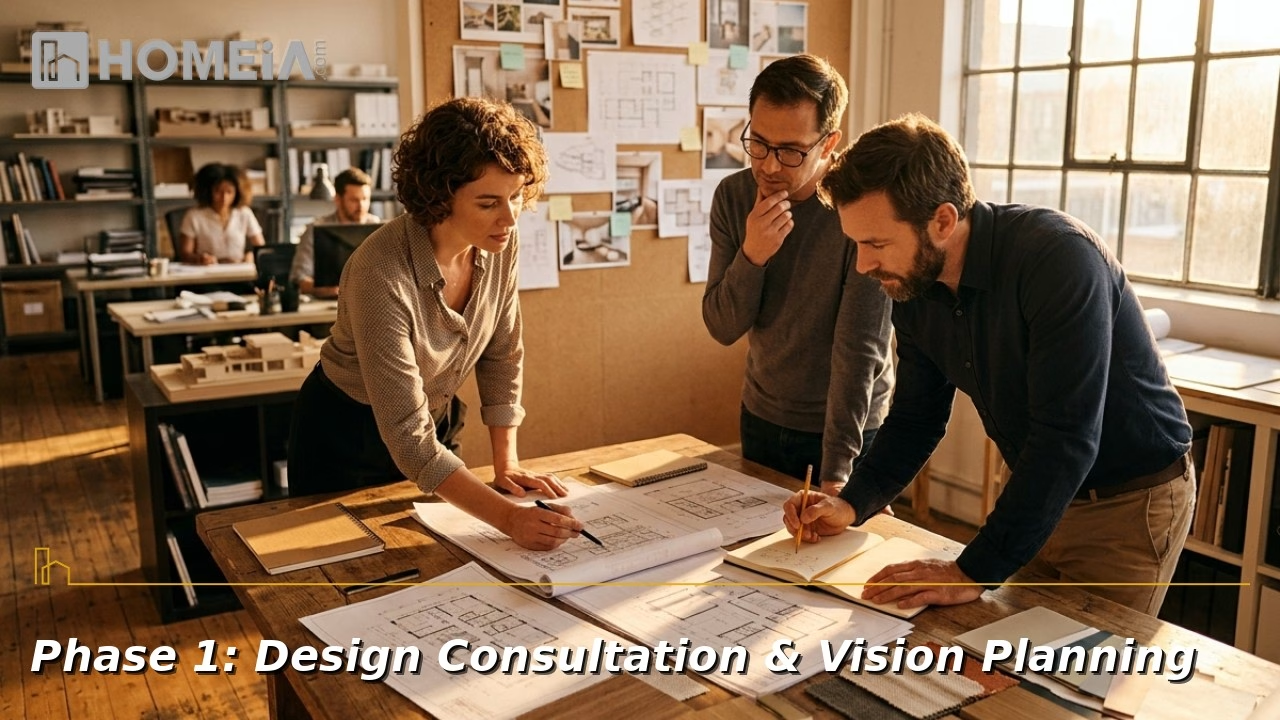
The journey begins with discovery. This is the moment where abstract dreams become a concrete plan, requiring far more than a conversation about square footage and bedroom counts. A skilled builder will conduct an in-depth lifestyle interview, asking how you drink your morning coffee, plan to entertain for the holidays, and where the kids drop their bags after school. Seemingly unimportant, these details the foundation of a home that truly fits your life.
Lot assessment is also part of this phase as studying how sunlight moves across the property, how the natural topography will influence the home’s orientation, and what site conditions may affect the foundation approach. Come to this meeting with your must-have list and inspiration images, but expect to leave with a clear, honest understanding of what is achievable within your preliminary budget.
Truly custom homes begin with a blank sheet of paper, not a catalog of pre-designed floor plans. By the end of this phase, you should have a defined design intent, a realistic budget framework, and a builder who genuinely understands your family’s vision for how you want to live.
Related article
6 Key Things to Look for When Building Your House
Building your own home from the ground up can be a rewarding experience; you have an opportunity to design it according to your tastes and needs. Here we suggest a few things to consider before you jump into the building process…
Phase 2: Architectural Design & Permits
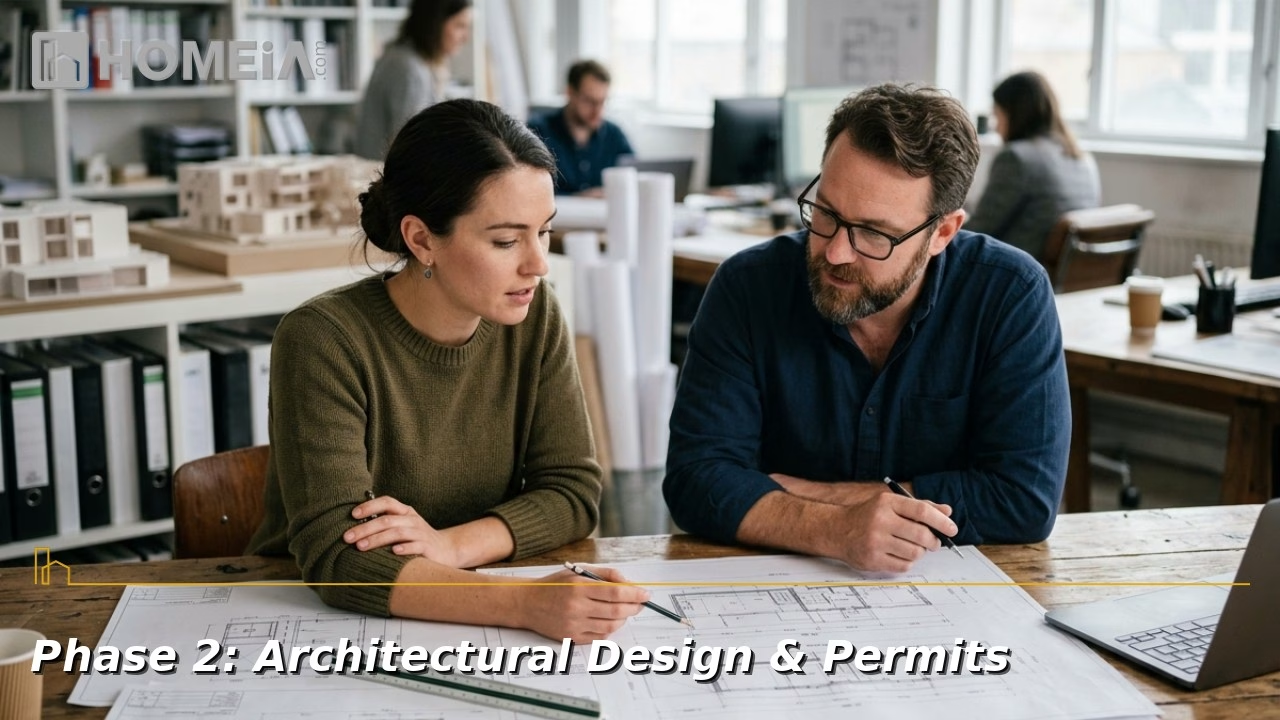
With the vision established, the process moves into the rigorous world of architectural design. This phase unfolds in several sub-stages, progressing from loose schematic sketches to fully developed construction documents capturing every dimension, material, and system in the home. Many are surprised to learn this phase takes three to six months. That investment of time is not overhead. It is insurance for the budget.
Think of each design stage as a gate. When passing through, decisions are locked and the next team picks up with total clarity. Changes made on a screen cost almost nothing. Changes made once framing is standing can cost tens of thousands of dollars and introduce weeks of delays. Every hour invested in design protects the schedule and budget downstream.
Once the construction documents are complete, a qualified builder manages the municipal permit submission on your behalf, coordinating with structural and civil engineers to ensure every detail meets or exceeds local building codes. Permit review timelines vary significantly by municipality and are largely outside the builder’s direct control. A seasoned team uses this waiting period productively, finalizing technical specifications and locking in subcontractor schedules so that the moment approval arrives, construction can begin without hesitation.
| Design Sub-Phase | Focus Area | Typical Duration |
| Schematic Design | Layout, massing, and conceptual sketches | 4 to 8 weeks |
| Design Development | Materials, window placement, and system integration | 6 to 10 weeks |
| Construction Documents | Final blueprints and technical specifications | 4 to 8 weeks |
| Permitting | Municipal review and code compliance | 8 to 16 weeks |
Table 1: Architectural design and permitting phases with typical durations.
Related article
Buying New Construction Homes: What You Need to Know
This article aims to demystify your journey by addressing your most pressing concerns, from identifying budget-friendly locales to preparing for unforeseen delays and costs…
Phase 3: Pre-Construction Planning & Material Selections
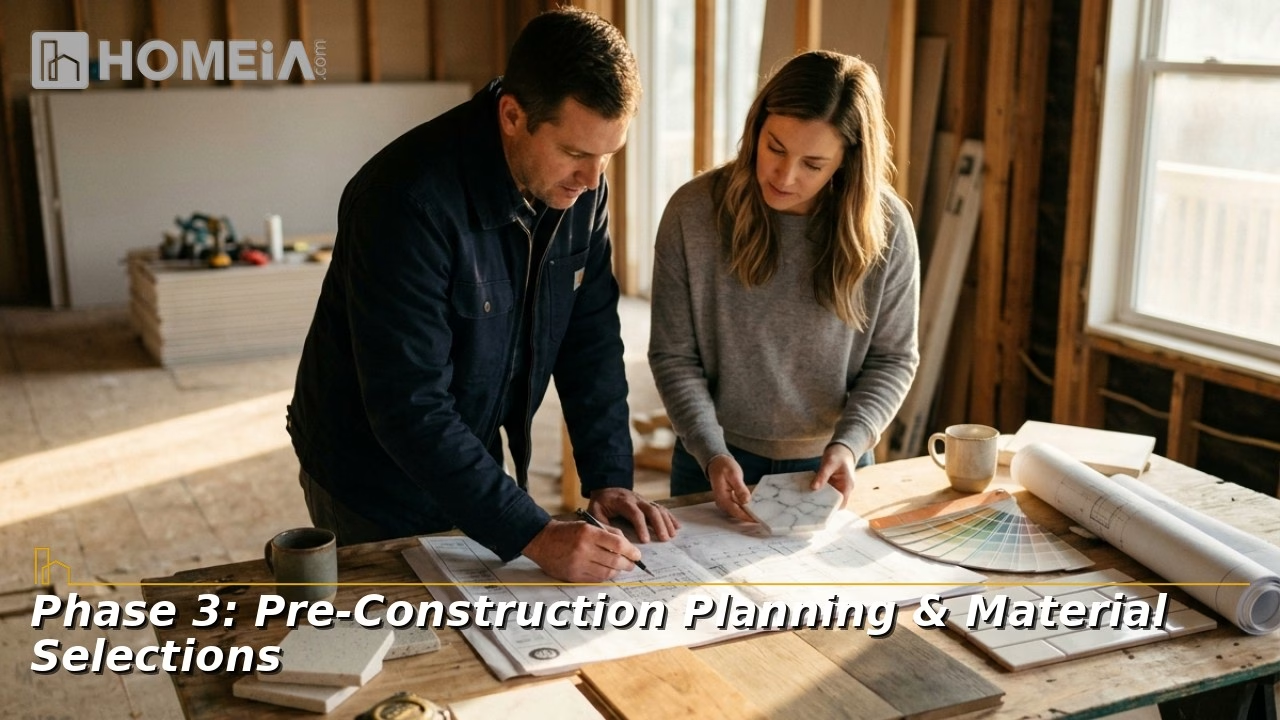
While the city reviews permits, the most creatively satisfying phase of the process begins. In the design studio, clients select everything from hardwood species and cabinetry profiles to marble countertops and plumbing fixtures. By doing so, the vast majority of these decisions are finalized before breaking ground, and that discipline has a direct impact on budget and timeline.
Early selections allow the team to place orders for long-lead items (custom windows, imported stone), and queue up their delivery when the trades need them. Nothing stalls a construction schedule faster than waiting on a cabinet that was ordered two months too late. A dedicated design coordinator manages the finishes schedule to ensure every material, color, and texture reads as a cohesive whole across the entire residence.
This phase is also when the home’s technology and infrastructure backbone is finalized, including networking, home automation, and audio-visual systems. These decisions must be made before framing so the correct conduit runs and wiring pathways can be built into the structure from the start. Completing all specifications during pre-construction gives site supervisors a comprehensive playbook eliminating ambiguity on the job site entirely.
Recommended for you




Phase 4: Construction
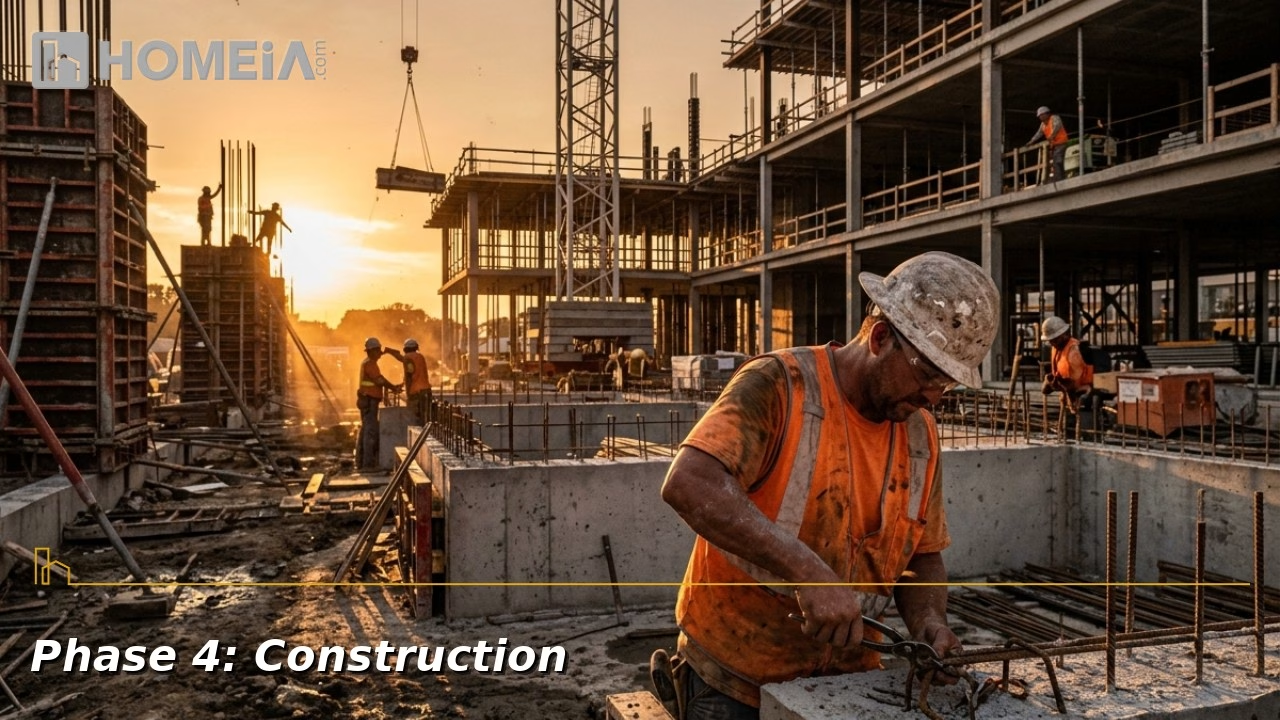
This is the phase where the investment becomes visible. It begins with site preparation: clearing the lot, excavating for the foundation, and pouring concrete footings. Once the foundation is waterproofed and the backfill is complete, framing commences. The structural skeleton of the home rises within weeks. For most clients, this is when the project becomes emotionally real. You can walk the rooms, stand at the window openings, and feel the scale of the spaces you designed.
Following the structural frame, the rough-in stage brings mechanical, electrical, plumbing, and HVAC systems into the wall cavities. This includes all pre-wiring for security, automation, and audio-visual systems specified during pre-construction. After rough-in inspections are passed, insulation and drywall close the walls, with superior air sealing techniques applied to maximize energy efficiency and acoustic performance throughout the home.
With smooth walls primed and ready, the interior transformation accelerates. Flooring, cabinetry, tile, and millwork are installed in coordinated sequences. Paint and trim bring the architectural details into focus. Simultaneously, exterior finishes like cladding, roofing, and stone accents are completed to seal and protect the structure. From permit in hand to construction complete, most luxury custom residences take between 10 and 16 months.
| Construction Stage | Key Activities | Estimated Duration |
| Foundation | Site prep, excavation, and concrete pouring | 1 to 2 months |
| Framing | Structural walls, roof trusses, windows, and doors | 2 to 4 months |
| Rough-Ins | Mechanical, electrical, plumbing, and HVAC | 1 to 2 months |
| Finishes | Drywall, flooring, cabinetry, and painting | 4 to 6 months |
Table 2: Construction stages and estimated timeframes for a luxury custom residence.


Related article
Considerations for Buying an Existing Home or New Construction
We’ll discuss some of the differences between buying an existing single-family home or new construction. And discuss factors that I found interesting with each type of home purchase. Choices await you, from new homes to turn-of-the-century homes and everything in between. Let’s make a few comparisons…
Phase 5: Final Inspections, Walk-Through & Possession
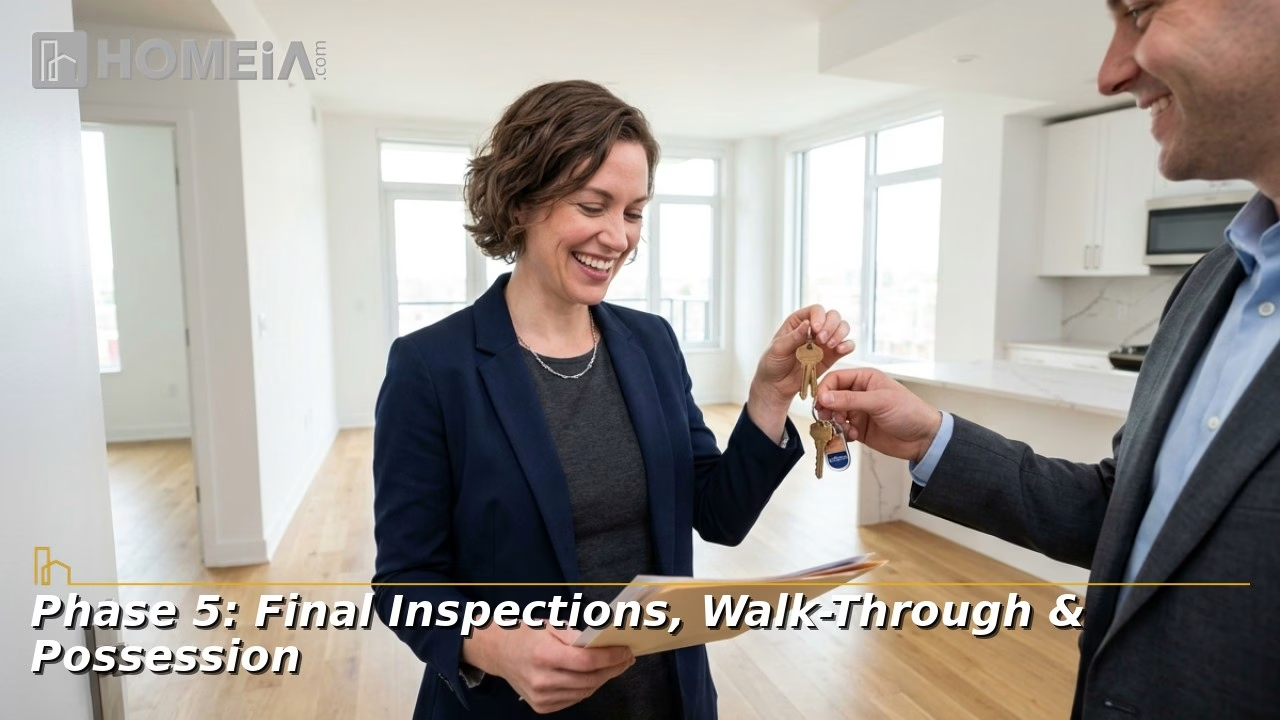
As construction draws to a close, focus shifts entirely to quality and precision. A reputable builder conducts a rigorous series of internal reviews before inviting the client to the formal walk-through. Together, you remain in lock step. These are resolved with the same exacting standards maintained throughout the build. Municipal final inspections are coordinated simultaneously to secure the occupancy permit and finalize all utility connections.
Every system in the home, from HVAC and plumbing to lighting control and security, is tested and calibrated before stepping foot inside. Possession day is not simply a key handover. It is a comprehensive orientation covering the operation and care of every system, finish, and piece of equipment in the home, so you can enjoy it with full confidence from day one.
There is a particular kind of satisfaction that comes with crossing the threshold of a home that did not exist eighteen months ago, one designed from the ground up around the way your family actually lives. That moment marks the end of the construction project and the beginning of the backdrop for your family’s future memories.

Related article
Why You Must Hire an Insured General Contractor for Your Home Construction Project
If you decide to venture out on your own and have a custom built home with a custom home builder, do make sure you do your due diligence and find out as much as possible about your potential builder or in another word, your general contractor…
Bonus: Questions to Ask Before Choosing a Custom Home Builder
The builder you choose will be your closest partner for the better part of two years. These questions will quickly reveal whether a candidate has the depth of experience, process discipline, and communication style your project demands.
1. How do you handle budget transparency throughout the design phase?
A skilled builder provides real-time cost feedback as architectural decisions are made, not a surprise number at the end. Ask to see how pricing updates are presented and how scope changes are handled when they arise.
2. Who will be my primary point of contact during construction?
Understand whether communication runs through the principal builder, dedicated project manager, or rotating crew. Continuity of communication is essential in a project of this complexity.
3. How do you coordinate the architect, interior designer, and trade contractors?
The best outcomes come from teams in sync, not in sequence. Builders who pull everyone together during the design phase prevents costly conflicts from surfacing during construction.
4. Can I visit the job site during construction?
The answer should be yes, with a clear protocol. Scheduled site visits keep you informed and engaged without disrupting the crew’s rhythm. Be cautious of builders who discourage client visits without explanation.
5. What does your warranty program cover?
Professional builders offer tiered warranties including one year on workmanship, two years on mechanical systems, and ten years on structural integrity. Understand exactly what is covered and what the claims process looks like before signing anything.
Those who answer every one of these questions with specificity and confidence are experienced builders. Vague or defensive answers are a meaningful signal to keep looking.
Conclusion: Ready to Build the Home You Have Always Envisioned?
The custom home building process is a significant commitment of time, capital, and trust. But when approached with the right partner and a clear understanding of each phase, it is also one of the most profoundly satisfying investments a family can make. Every phase has a purpose. Every decision builds on the last. And the result is a home that fits your life with a precision no production builder can come close to matching.
The most important decision in this entire process is choosing a builder you trust completely. That relationship is your greatest asset across the coming months. If you are ready to stop imagining and start building, begin by scheduling consultations with experienced luxury builders in your area and asking every question on this list until you find the team that earns your confidence.
Recommended for you




FAQs About The Custom Home Building Process
1. Should I hire an architect or a builder first?
Hiring a builder first typically provides better budget control. Someone involved during the architectural design phase can provide real-time cost feedback, ensuring plans stay within financial parameters before they become expensive construction documents.
2. How large a contingency fund should I set aside?
A contingency of 10 to 20 percent of total construction cost is standard practice. While a well-managed custom build is highly predictable, unforeseen site conditions or late-stage material changes can occasionally affect the final number.
3. Can I make changes to the design once construction has started?
Yes, but it is strongly discouraged. Changes after framing begins trigger formal change orders that affect both cost and schedule. Every revision locked in during the design development phase is a change order you will never have to pay for.
4. What warranties come with a new custom home?
Most professionals offer a tiered warranty: one year on workmanship and materials, two years on mechanical systems, and ten years on structural integrity. Ask any builder to walk you through their warranty process in writing before signing.
5. Why does permitting take so long?
Municipal permitting involves multiple departments reviewing plans for zoning compliance, structural integrity, environmental impact, and code adherence. Qualified builders manage all paperwork and follow up aggressively, but the review timeline ultimately depends on the local authority’s current workload and review cycle.
Share