






7 Most Affordable Places to Live in West Virginia
- Local Editor:Local Editor: Kristin Pietrowski
- Category: USA , West Virginia



Wild and Wonderful West Virginia offers a kind of affordability that feels just as welcoming as its rolling hills, with typical home values around $178,000; far below the national average of around $370,000. Property taxes average 0.53 percent, helping stretch household budgets even further. Beyond the numbers, West Virginia’s communities carry a spirit that’s hard to quantify: the same spirit that brings thousands of people arm-in-arm at WVU games, swaying and singing “Take Me Home, Country Roads” like it’s a second anthem.
Affordability here isn’t just a statistic, it’s part of a lifestyle shaped by geography, culture, and community. Higher-cost college towns contrast with lower-cost former industrial and coal regions, while Washington, D.C.-adjacent counties blend suburban convenience with Appalachian scenery. Across all 55 counties, the range is wide, from scenic rural areas with exceptional value to vibrant small cities with strong job access.
This guide highlights 7 most affordable places to live in West Virginia where your housing dollars stretch furthest without sacrificing the essentials, employment opportunities, healthcare access, and the everyday comforts that make life in West Virginia feel like home.
Key Takeaways
- West Virginia’s housing market remains far more affordable than the national average, giving homebuyers exceptional value compared to most of the country.
- Affordable communities span both college towns and post-industrial cities, each offering a distinct lifestyle and job market.
- Cost of living ranges from 17 percent below national average in rural areas to slightly above average in D.C.-influenced metro zones, making community-level comparison essential.
- Low property taxes play a major role in keeping housing affordable across the state, easing the financial burden for homeowners.
- People naturally gravitate toward communities anchored by major employers including universities, healthcare systems, and manufacturing hubs that keep local economies moving.


Related article
The Pros and Cons of Living in West Virginia
The Pros and Cons of Living in West Virginia include stunning natural landscapes, low cost of living, and a strong sense of community. However, challenges such as limited job opportunities, rural isolation, and infrastructure gaps make it important to weigh your priorities before relocating to the Mountain State…
I. Methodology: How We Chose the Most Affordable Places
Identifying the most affordable places requires more than finding the lowest prices. Affordability must be evaluated holistically, considering whether people can build sustainable lives in communities. Our methodology applied a weighted scoring system, evaluating several critical dimensions.
A. Housing & Affordability (30% weight): Housing dominates affordability calculations. We evaluated median home prices, rental rates, and price-to-income ratios, which show whether homes are priced affordably relative to local incomes. Our team prioritized communities where median home prices fell significantly below West Virginia’s median and where housing costs consumed reasonable portions of median household income. Price-to-income ratios below 3.5:1 received favorable scores.
B. Cost of Living (25% weight): Housing is only one component of true affordability. We examined utility costs, grocery prices, healthcare expenses, and transportation. We reviewed current data on typical monthly expenses for families across these communities, compared with West Virginia and national averages. Communities with cost-of-living indices 15 percent below the national average received favorable ratings.
C. Access & Infrastructure (20% weight): Affordability means little without access to essential services. We evaluated healthcare availability, shopping options, highway connectivity, and broadband access. Proximity to larger employment centers influences community selection. Areas with reliable healthcare and broadband received favorable scores.
D. Community & Safety (15% weight): Cost-of-living calculations ignore quality of life entirely. We reviewed crime statistics and considered community amenities, parks, recreation options, and the general atmosphere residents report in each community. Places with safety ratings above 50/100 received favorable consideration.
E. Economic Resilience & Opportunity (10% weight): An inexpensive location means little if you cannot find employment. We identified major employers, economic diversity, and employment trends. Communities with diversified economies ranked higher than single-industry towns. Regional employment access through commuting corridors enhanced scores.
Data Sources: This analysis draws from 2024-2026 sources: Zillow, the U.S. Census Bureau, the Bureau of Labor Statistics, West Virginia state resources, Redfin, and local economic development reports. We prioritized current data with previous figures used only when current data unavailable. Where sources conflicted, we applied most recent authoritative government data.
7 West Virginia Communities: A Quick Comparison
| City | HOMEiA Score | Median Home Price | Monthly Rent (2BR) | Cost-of-Living | Crime Rate (per 1,000) | Population |
| Clarksburg | 68/100 | $115,000 | $625 | -8% | ~27 | ~15,100 |
| Beckley | 70/100 | $148,000 | $700 | -12% | ~32 | ~16,400 |
| Parkersburg | 73/100 | $140,000 | $750 | -6% | ~20 | ~28,600 |
| Weirton | 75/100 | $165,000 | $849 | -4% | ~10 | ~18,200 |
| Wheeling | 76/100 | $160,000 | $820 | -5% | ~22 | ~25,800 |
| Buckhannon | 77/100 | $158,000 | $775 | -10% | ~13 | ~5,300 |
| Morgantown | 79/100 | $282,000 | $888 | -12% | ~25 | ~30,300 |

Related article
21 Best and Fun Things to do in Morgantown, West Virginia
Whether you are visiting Morgantown on vacation, getting ready to attend WVU, or looking to settle down permanently, you’ll want to check out all of the city’s best attractions…
II. Detailed Community Analysis
1. Clarksburg: Affordable Living with Historic Character
HOMEiA Score: 68/100
- Cost of Living: 8% below U.S. average
- Monthly Rent: $625
- Median Home Price: $115,000
- Crime Rate: ~27 per 1,000 residents
A. Overview and Housing: Clarksburg delivers standout affordability, with median home prices around $115,000, roughly one-third below the WV median. Two-bedroom rentals average $625 monthly, making it one of the state’s most budget-friendly markets. The cost of living runs 8 percent below national average, offering meaningful savings across everyday expenses. The city’s historic manufacturing roots in glass and pottery give Clarksburg a distinctive character. Neighborhoods offer a mix of classic architecture, modest family homes, and newer construction, giving buyers plenty of options.
B. Economy and Employment: The economy is anchored by healthcare, education, manufacturing, and government services. WVU Medicine’s United Hospital Center is a major employer, and local healthcare facilities provide stable jobs. West Virginia University-Clarksburg provides educational opportunities. The city’s manufacturing heritage continues through modernized facilities producing specialized goods. Median household income reflects working-class roots with steady growth in healthcare and service sectors.
C. Access and Infrastructure: Located in Harrison County, Clarksburg benefits from strong regional connectivity. Interstate 79 links residents to Morgantown, Pittsburgh, and Charleston, while Route 50 and Route 19 support local travel. Broadband access has improved through statewide expansion efforts, supporting remote work and digital services.
D. Community and Safety: Clarksburg experiences moderate safety levels, with a crime rate of 27 incidents per 1,000 residents. Property crime is more common than violent crime, and conditions vary by neighborhood. Prospective residents should review local crime patterns when choosing an area.
2. Beckley: Affordable Living in a Coal-Heritage City
HOMEiA Score: 70/100
- Cost of Living: 12% below U.S. average
- Monthly Rent: $700
- Median Home Price: $148,000
- Crime Rate: ~32 per 1,000 residents
A. Overview and Housing: Beckley offers strong affordability, with median home prices around $148,000—roughly 15 percent below the state median. Two-bedroom rentals average $700 monthly, and the cost-of-living runs 12 percent below national average, providing meaningful savings across everyday expenses. Historically a coal-country community, Beckley has diversified its housing stock and economy. Neighborhoods include older working-class homes, renovated properties, and newer construction suitable for both families and investors. The city’s affordability continues to attract residents looking for budget-friendly housing options.
B. Economy and Employment: Beckley’s economy, once centered on coal mining, has shifted toward healthcare, retail, and service industries. Beckley ARH Regional Medical Center is a major employer, and manufacturing and light industry contribute additional opportunities. Remote work accessibility has expanded employment options for residents. Median household income reflects the city’s working-class heritage with steady growth in service-sector roles.
C. Access and Infrastructure: Located in southern Raleigh County, Beckley benefits from several major transportation routes. U.S. Route 19 and Route 60 provide primary connectivity, while Interstate 77 offers regional access. The city sits within reasonable commuting distance of Charleston and other employment centers. Broadband availability generally meets modern standards, though rural areas outside the city vary.
D. Community and Safety: Beckley experiences higher crime levels than many West Virginia cities, with roughly 32 incidents per 1,000 residents. Property crime is more common than violent crime, and safety varies by neighborhood. Prospective residents should review local crime patterns and consider specific areas carefully when relocating.
Related article
The Pros and Cons of Living in West Virginia
The Pros and Cons of Living in West Virginia include stunning natural landscapes, low cost of living, and a strong sense of community. However, challenges such as limited job opportunities, rural isolation, and infrastructure gaps make it important to weigh your priorities before relocating to the Mountain State…
3. Parkersburg: Ohio River Industrial City with Steady Opportunity
HOMEiA Score: 73/100
- Cost of Living: 6% below U.S. average
- Monthly Rent: $750
- Median Home Price: $140,000
- Crime Rate: ~20 per 1,000 residents
A. Overview and Housing: Parkersburg offers moderate affordability, with median home prices around $140,000, representing around 15 percent below the state median. Two-bedroom rentals average $750 monthly, and the cost of living runs 6 percent below national average. As an Ohio River industrial city, Parkersburg has diversified beyond traditional manufacturing into chemical production, healthcare, and service employment. Housing options include riverfront properties, established neighborhoods, and renovated historic homes suited to a range of lifestyles.
B. Economy and Employment: Parkersburg’s economy is supported by chemical production, healthcare, manufacturing, and government services. Huntsman and other chemical manufacturers maintain significant operations, employing thousands. Hospitals and clinics provide stable healthcare positions, and manufacturing facilities continue operating with updated technology. River commerce and transportation contribute additional employment opportunities. The median household income reflects the city’s industrial and chemical sector.
C. Access and Infrastructure: Located along the Ohio River in northwest WV, Parkersburg benefits from strong regional connectivity. Interstate 77 provides north-south access, while U.S. Routes 50 and 21 support local and regional travel. Proximity to Marietta, Ohio and Charleston, West Virginia expands employment options. The Mid-Ohio Valley Regional Airport offers limited service. Broadband availability meets contemporary standards.
D. Community and Safety: Parkersburg demonstrates moderate safety levels, with roughly 20 incidents per 1,000 residents. Property crime is more common than violent crime, and patterns resemble those of other industrial cities. Community policing and neighborhood watch programs support local safety efforts.
4. Weirton: A Steel-Heritage City with Modern Stability
HOMEiA Score: 75/100
- Cost of Living: 4% below U.S. average
- Monthly Rent: $849
- Median Home Price: $165,000
- Crime rate: ~10 per 1,000 residents
A. Overview and Housing: Weirton offers steady affordability, with median home prices around $165,000. Two-bedroom rentals average $849 monthly, and thecost-of-living runs 4 percent below the national average. A former steel town, Weirton has transitioned into a stable community with diversified employment. Housing options includeearly 20th century homes, renovated properties, and newer subdivisions suited for families and professionals.
B. Economy and Employment: Weirton’s economy has shifted from steel production toward healthcare, retail, services, and light manufacturing. Local healthcare facilities provide reliable employment, and specialized manufacturing continues to operate. Retail and service-sector jobs support the broader workforce. Proximity Pittsburgh and Wheeling expands regional employment opportunities. Median household income reflects a mixed, stable economy.
C. Access and Infrastructure: Located in the northern panhandle near the Pennsylvania border, Weirton benefits from strong regional connectivity. U.S. Route 22 provides primary access, and Interstate 70 is reachable just across the state line. Pittsburgh’s employment centers are within reasonable commuting distance, and Wheeling and West Virginia markets are easily accessible by car. Broadband availability has improved significantly in recent years.
D. Community and Safety: Weirton ranks among West Virginia’s safer cities, with roughly 10 incidents per 1,000 residents. Violent crime is notably low, and property-crime levels are moderate for a small industrial community. Community policing and neighborhood engagement contribute to a generally positive safety environment.

Related article
Moving to West Virginia: The Complete Relocation Guide & Checklist
West Virginia offers a blend of scenic mountain landscapes, affordable living, and close-knit communities. From the vibrant college atmosphere of Morgantown to the historic character of Lewisburg, the Mountain State appeals to those seeking outdoor adventure, a slower pace of life, and financial affordability. This guide covers…
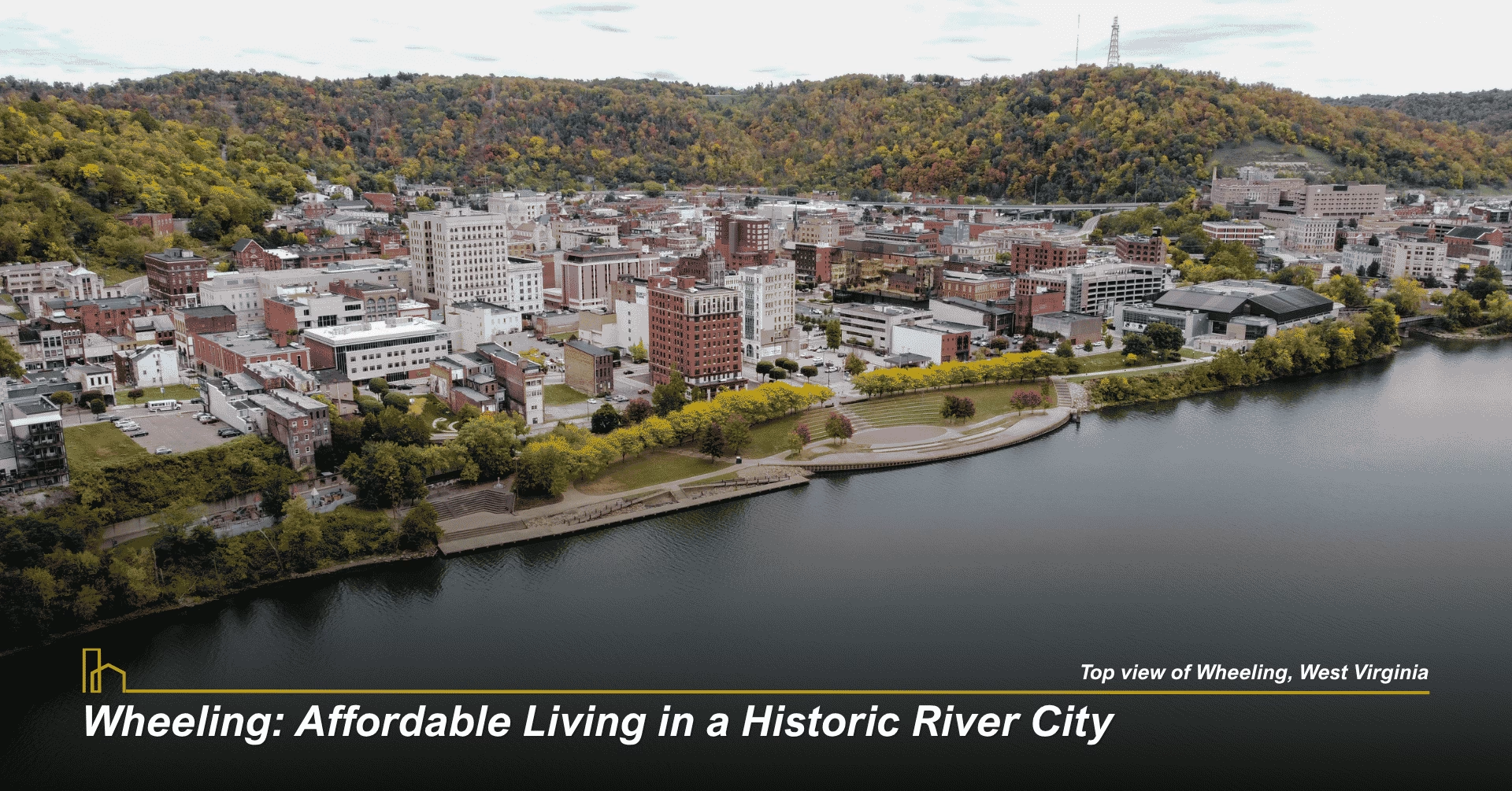
5. Wheeling: Affordable Living in a Historic River City
HOMEiA Score: 76/100
- Cost of Living: 5% below U.S. average
- Monthly Rent: $820
- Median Home Price: $ 160,000
- Crime Rate: ~22 incidents per 1,000 residents
A. Overview and Housing: Wheeling offers solid affordability, with median home prices around $160,000, up approximately 4 percent over the past year. Two-bedroom rentals average $820 monthly, and the cost-of-living runs 5 percent below the national average. This historic Ohio River city maintains cultural and commercial importance as a regional hub. Housing options include Victorian-era neighborhoods with character homes, historic downtown residences, and suburban developments suited for families.
B. Economy and Employment: Wheeling’s economy includes healthcare, education, retail, gaming, and service industries. WVU Medicine Wheeling Hospital and related medical facilities provide substantial employment. West Virginia Northern Community College and Wheeling University contribute to the educational presence. Gaming and hospitality through Wheeling Island Hotel-Casino-Racetrack support service-sector jobs, while retail and regional commerce offer additional opportunities. Median household income reflects a diverse employment base.
C. Access and Infrastructure: Located in the northern panhandle along the Ohio River, Wheeling benefits from strong regional connectivity. Interstate 70 provides east-west access toward Pittsburgh and Columbus, while U.S. Route 40 offers an alternate route. Pittsburgh and other major regional markets are within reasonable commuting distance. Wheeling-Ohio County Airport (HLG) offers limited service. Broadband availability meets contemporary standards.
D. Community and Safety: Wheeling demonstrates moderate safety, with roughly 22 incidents per 1,000 residents. Violent crime exceeds the state average, but community revitalization efforts have improved downtown safety and overall quality of life.
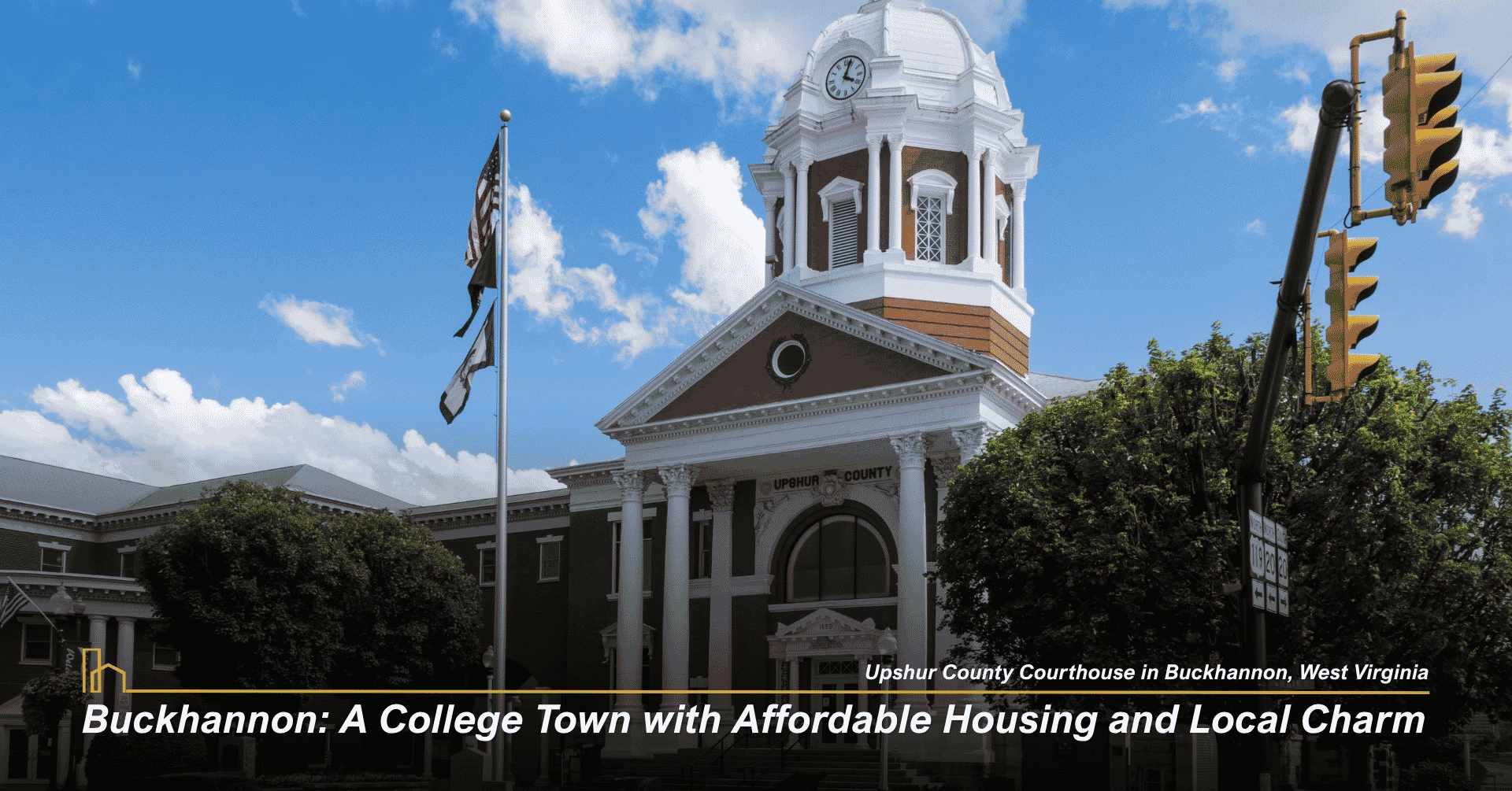
6. Buckhannon: A College Town with Affordable Housing and Local Charm
HOMEiA Score: 77/100
- Cost of Living: 10% below U.S. average
- Monthly Rent: $775
- Median Home Price: $158,000
- Crime Rate: ~13 incidents per 1,000 residents
A. Overview and Housing: Buckhannon offers appealing affordability as a small college town, with median home prices around $158,000, roughly 10 percent below the state median. Two-bedroom rentals average $775 monthly, and the cost of living runs 10 percent below the national average. Home to West Virginia Wesleyan College, Buckhannon maintains steady housing demand and a consistent cultural presence. Housing options include student-oriented apartments, family neighborhoods, and historic properties suited to a variety of households.
B. Economy and Employment: Buckhannon’s economy centers on West Virginia Wesleyan College, which employs hundreds and supports additional service-sector jobs. Academic employment provides stability, while retail and restaurants serve both students and residents. Local clinics offer healthcare positions. Limited economic diversity is a consideration, and median household income reflects student-influenced demographics.
C. Access and Infrastructure: Located in north-central West Virginia in Upshur County, Buckhannon is served by Route 33 and Route 119, with interstate 79 within reasonable driving distance for access toward Pittsburgh and Charleston. The surrounding mountain landscape provides outdoor recreation opportunities. Regional employment centers are accessible by car, and broadband availability is adequate for contemporary needs.
D. Community and Safety: It demonstrates low crime rates appropriate for a college town. Campus security and community policing help maintain a safe environment, and violent crime remains below the state average. Residents generally report a positive sense of safety.

Related article
11 Best Places to Live in Pennsylvania
Pennsylvania has it all: caves, mountains, waterfalls, culture and history. It is the 33rd-largest state by area and the fifth-largest by population. There are a lot of great places to live in the state. Below, you will find descriptions of 11 of them…
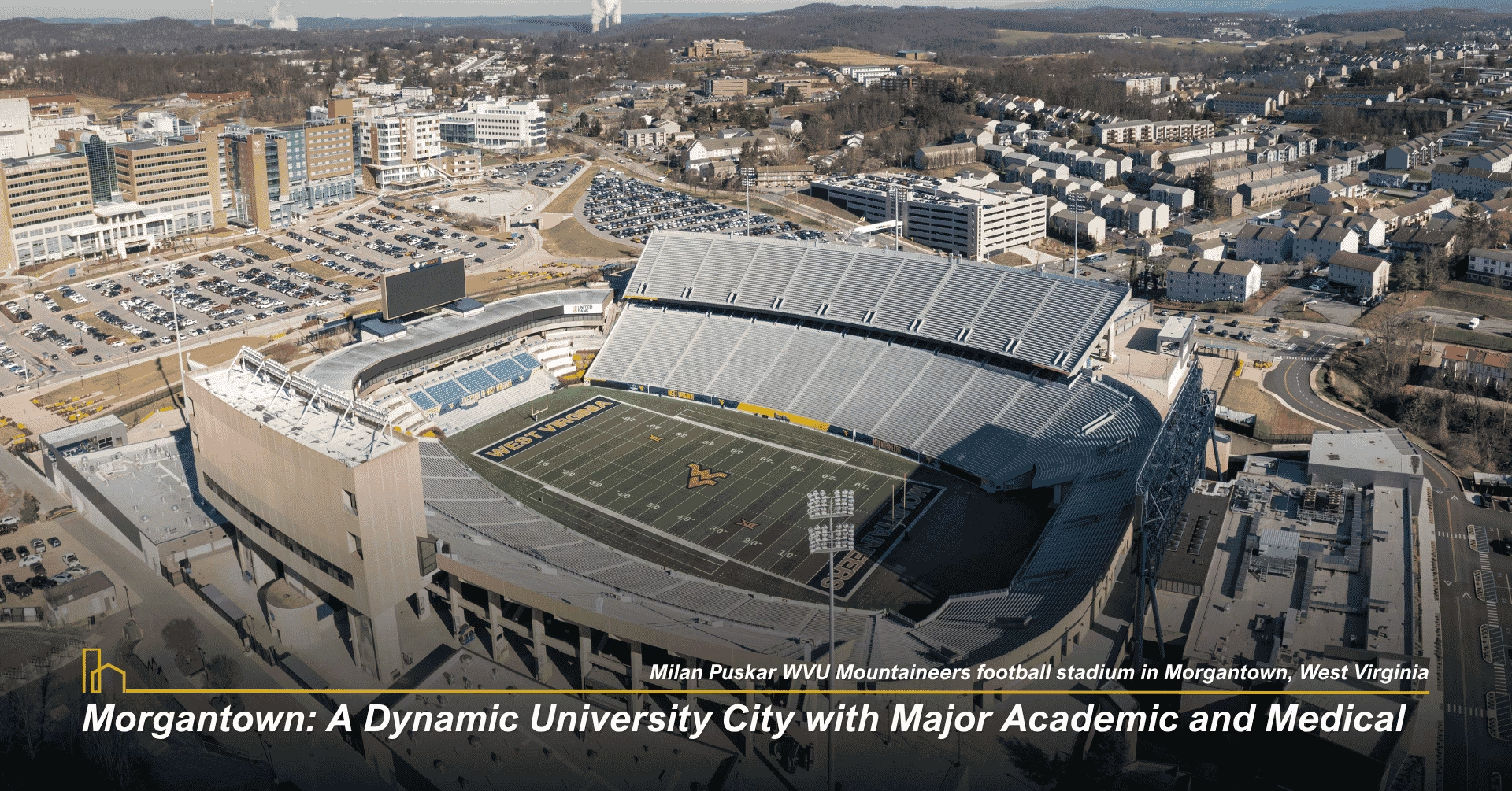
7. Morgantown: A Dynamic University City with Major Academic and Medical Anchors
HOMEiA Score: 79/100
- Cost of Living: 12% below U.S. average
- Monthly Rent: $888
- Median Home Price: $282,000
- Crime Rate: ~23 incidents per 1,000 residents
A. Overview and Housing: Morgantown offers moderate affordability as The Mountain State’s crown jewel with median home prices around $282,000, roughly 61 percent above the state median but still below the national median. Two-bedroom rentals average $888 monthly, and the cost of living runs 12 percent below the national average. West Virginia University dominates the area with comprehensive educational programming and cultural activities year-round. Housing options include student-oriented apartments, family neighborhoods, and upscale residential areas serving a wide range of income levels.
B. Economy and Employment: Morgantown’s economy centers on West Virginia University, employing more than 6,500 faculty and staff and educating approximately 23,600 students system-wide. Healthcare through WVU Medicine and Mon Health provides major employment, and an emerging energy-technology sector contributes additional opportunities. Retail and service-sector jobs support both student and professional populations. Professional employment options exceed those found in most WV cities, and median household income is significantly above the state average.
C. Access and Infrastructure: Located in north-central West Virginia in Monongalia County, Morgantown benefits from strong regional connectivity. Interstates 68 and 79 provide major access routes, and Pittsburgh’s employment centers are within reasonable commuting distance. Morgantown Municipal Airport offers limited service. Broadband availability meets contemporary standards, and the public transit system serves both residents and students.
D. Community and Safety: Morgantown demonstrates moderate safety consistent with college town patterns, with roughly 23 incidents per 1,000 residents. Campus security enhances protection for students and residents, while community policing and neighborhood programs support local safety. Violent crime remains below the national average, and residents generally report a reasonable sense of security despite typical college-town dynamics.

Related article
What is It Like Living in Maryland Today?
From its bustling urban centers to tranquil coastal towns, from its rich historical tapestry to its vibrant arts and culinary scenes, Maryland offers a unique blend of experiences that cater to residents and visitors alike. Let’s take a look at some of Maryland’s most charming features, exploring the cities, natural wonders, cultural events and flavors that make it a must-visit destination…
III. Relocation Checklist
- Review job openings through state job boards, company career pages, and remote-work platforms to ensure your field offers roles that match your experience and compensation needs.
- Visit target cities during different seasons and times of day to assess neighborhood character, access to essential services, traffic patterns, and overall comfort with the local environment.
- Research school quality, parks, recreation programs, and community events through state and local resources to ensure alignment with your lifestyle and family.
- Calculate true cost of living. Use community-specific cost-of-living calculators to estimate housing, utilities, groceries, healthcare, transportation, and taxes for accurate budgeting before relocating.
Conclusion
West Virginia delivers genuine affordability, offering housing costs that stretch budgets further than nearly anywhere else in the country. These seven communities highlight the state-s range of opportunities, from historic industrial cities finding new momentum to energetic college towns anchored by universities and medical centers. Clarksburg and Beckley provide the strongest value for those prioritizing housing costs. Parkersburg, Weirton, and Wheeling balance moderate pricing with stable employment bases and regional access. Buckhannon and Morgantown offer university-driven culture, academic stability, and broader amenities, with higher costs that reflect their demand.
Choosing the right community depends on your priorities, whether you value minimum housing costs, strong employment prospects, educational access, or quality-of-life amenities. Combined with ongoing economic diversification, West Virginia presents a compelling option for individuals and families seeking sustainable lives at lower cost than national alternatives.
Recommended for you




FAQs About the Most Affordable Places to Live in West Virginia
1. What is the median home price in West Virginia?
The median home price in West Virginia is approximately $175,000 as of 2026, significantly below the national median of approximately $370,000. This represents exceptional value for homebuyers, particularly compared to neighboring states like Pennsylvania and Virginia.
2. Are property taxes high in West Virginia?
No. West Virginia’s effective property tax rate of 0.53% ranks among the lowest nationwide. This keeps overall housing costs substantially lower than in high-tax states, even when home prices are modest.
3. Which West Virginia cities offer the best employment opportunities?
Morgantown offers consistent employment through West Virginia University and an emerging energy-technology sector. Parkersburg provides chemical-industry employment. Clarksburg, Beckley, and Weirton provide opportunities in healthcare and manufacturing. These communities offer more diverse employment than purely rural areas.
4. Is it safe to live in West Virginia communities?
Safety varies significantly by community and neighborhood. Weirton and Buckhannon demonstrate lower crime rates, while Beckley experiences higher violent-crime levels. All communities benefit from careful neighborhood research and community engagement before relocation decisions.
5. What is the cost of living in West Virginia compared to the nation?
Overall cost of living runs approximately 17% below the national average, with variation by community. Low housing costs combined with moderate utility and grocery prices create exceptional affordability for families prioritizing budget management.
Share