

Apartment Sofa vs. Modular Sofa vs. Sleeper Sofa: Which Saves the Most Space?
- Local Editor:Local Editor: The HOMEiA Team
- Category: Home Improvement


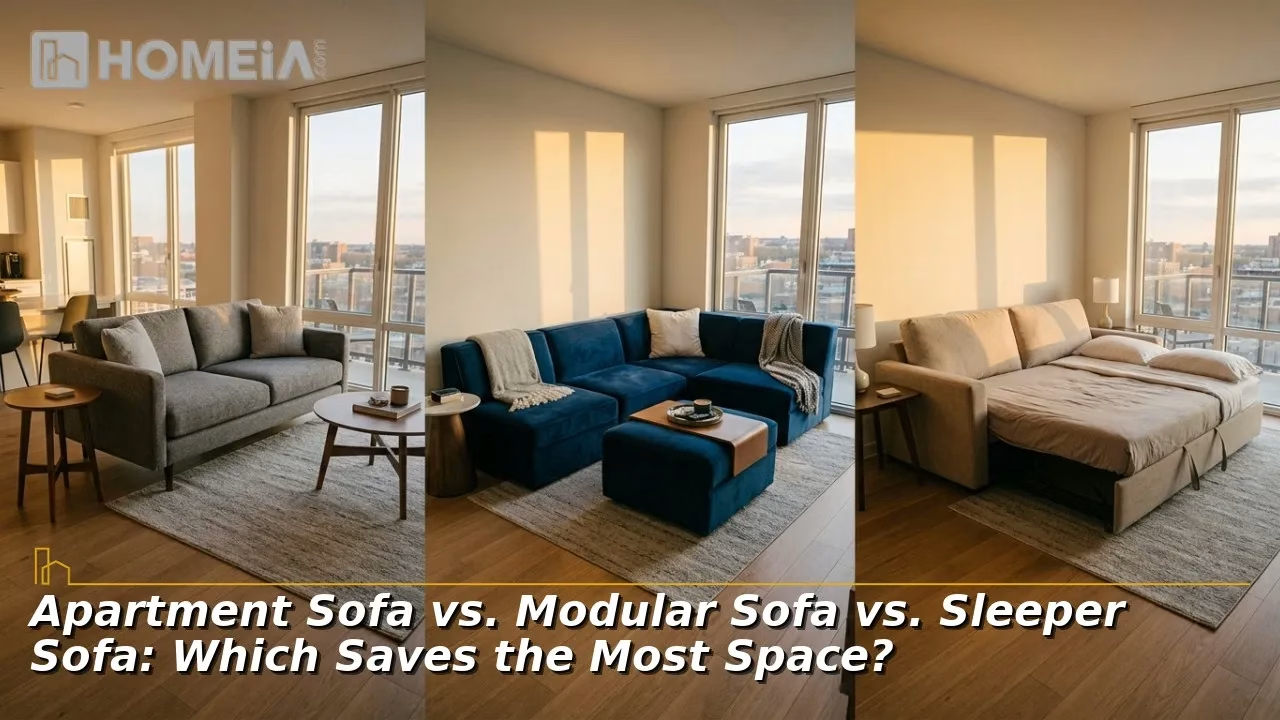
Apartment Sofa vs. Modular Sofa vs. Sleeper Sofa: Which Saves the Most Space? The sofa occupying the least floor area is not always the one that saves the most space. A compact apartment sofa may preserve circulation, a modular sofa may adapt to several floor plans, and a sleeper sofa may eliminate the need for a separate guest bed. The best choice depends on which function the room needs most often.
Whether comparing fabric seating or leather couches, measure every option in each operating mode, not only as it appears in a product image. Include the closed footprint, chaise or ottoman location, open-bed projection, walking routes, doors, drawers, vents, and delivery path. Space-planning guidance from educational institutions emphasizes measuring the room and furniture, accounting for openings, and testing alternative arrangements before committing to a layout.
Key takeaways
- An apartment sofa usually preserves the most open floor area when everyday seating is the main priority.
- A modular sofa offers long-term flexibility because sections can move, separate, expand, or form new layouts.
- A sleeper sofa can save an entire room when overnight accommodation matters, but its open footprint requires planning.
- Measure walls, walkways, doors, elevators, stairs, landings, and tight turns before ordering any sofa.
- Map chaises, ottomans, pullouts, recliners, tables, and open beds with painter’s tape or a scale drawing.
- Go off the room’s most frequent use, then confirm comfort, upholstery care, delivery access, mechanism operation, and future moving needs.

Related article
1. Define the three formats
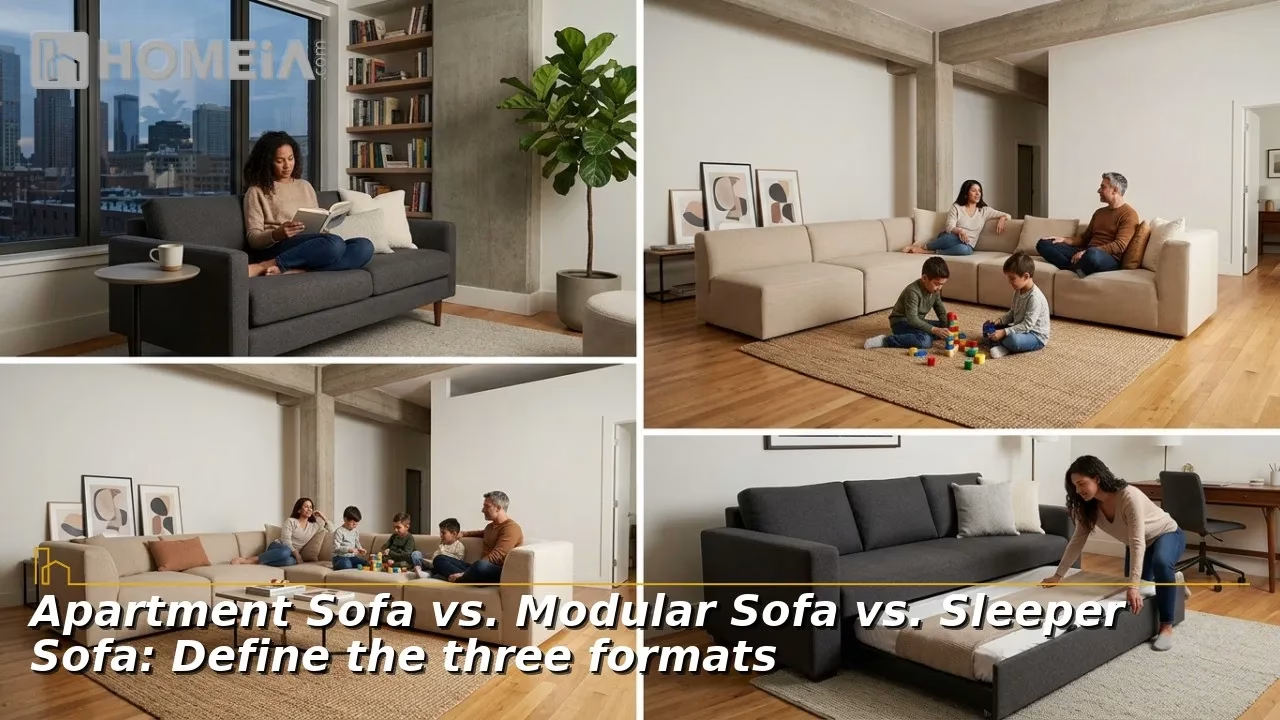
An apartment sofa is a compact conventional piece of furniture designed with shorter width, narrower arms, shallower depth, or a visually lighter frame. It generally offers fixed seating without a hidden bed or rearrangeable modules. “Apartment sofa” is a marketing category rather than a specific size, so compare actual measurements.
Modular sofas consist of individual seats, arms, corners, chaises, or ottomans connected into an arrangement. Some systems can form a straight sofa, L shape, chaise configuration, or separate chairs. Others permit fewer changes than their name suggests, making connector placement and approved configurations important.
Lastly, sleeper sofas convert from seating into a sleep surface. Traditional versions contain a folded frame and mattress, while other designs use fold-down backs, sliding platforms, trundles, or rearranged cushions. Each mechanism needs a different operating zone.
Avoid assuming that one category is always smaller. A deep modular sofa may occupy more floor area than a compact sleeper. Small apartment sofas may conserve floor space but require another room for guests. Evaluate the functions that each piece replaces.

Related article
12 Best Times to Buy Furniture Month by Month
We will look at the furniture sales annual cycle, from the times of year when new models come out to the best times to find a bargain. You’ll learn how to shop at the right times to get the experience you want. We’ll also look at some techniques for getting the best price on any purchase…
2. Decide what saving space means

Start by naming the household’s primary constraint.
- To preserve open floor area: Choose a compact apartment sofa with efficient arms and suitable depth.
- To eliminate a guest room: Choose a sleeper that offers appropriate seating and a usable bed.
- To adapt after a move: Choose modular seating that can form more than one practical arrangement.
- To simplify difficult delivery: Compare a small conventional sofa with separate modular sections.
- To create flexible seating: Use modules or a movable ottoman instead of a fixed chaise.
- To reduce stored guest furniture: Consider a sleeper with integrated bedding storage.
Educational space-planning guidance recommends beginning with size, shape, and function, then inquiring how the occupants will use the room. This prevents shoppers from selecting a sofa based on appearance before verifying that it supports daily life.
An apartment sofa usually wins on everyday footprint. A modular sofa tends to be victorious on long-term adaptability. A sleeper sofa wins when one piece can replace both a sofa and a guest bed.

Related article
Furniture Material Comparisons of Leather vs. Fabric & Solid Wood vs. Engineered
Furniture materials determine durability, comfort, and long-term performance, yet many buyers focus only on appearance. Ignoring what lies beneath the surface can lead to costly mistakes. This guide compares the four most important furniture materials and includes a practical matrix to help you choose the best option for your lifestyle…
3. Measure every operating mode
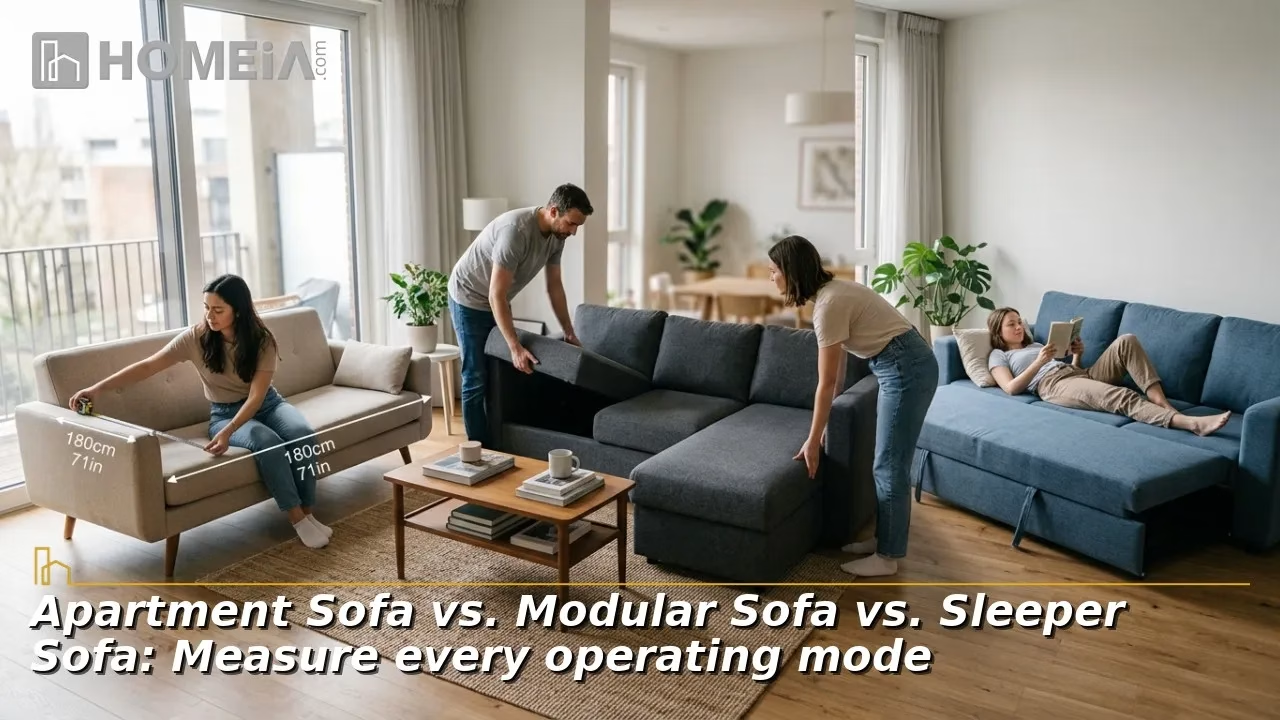
Begin with the room. Measure the usable walls, then account for door swings, windows, floor vents, radiators, baseboard heaters, curtains, built-ins, outlets, and access to adjacent rooms. Mark the proposed sofa footprint with painter’s tape or create a scale drawing.
Penn State educational material recommends measuring furniture, drawing it to scale, including the room’s doorway, and testing alternative arrangements before selecting a layout. This low-cost exercise can reveal conflicts easy to miss when viewing an empty room.
Record these furniture dimensions:
- Overall width, depth, and height
- Seat width, depth, and height
- Arm width and back height
- Diagonal depth for delivery
- Largest individual module
- Carton size, if available
- Chaise, ottoman, or recliner extension
- Fully opened sleeper depth and width
- Space required to operate the mechanism
- Removable legs, cushions, arms, or backs
Next, measure the delivery route. Check the clear opening with each door in place, hallway corners, stair width, landing depth, ceiling slope, elevator opening, elevator interior, and low fixtures. A sofa fitting the room may still fail to reach it.
Furniture layouts also require clear space for access and use. Research from the University of California, Berkeley notes that furniture often needs open space around it to remain accessible and functional. Measure the clearance around the fully opened sleeper or rearranged modular sofa rather than treating open floor area as leftover space.
Recommended for you




4. Choose an apartment sofa
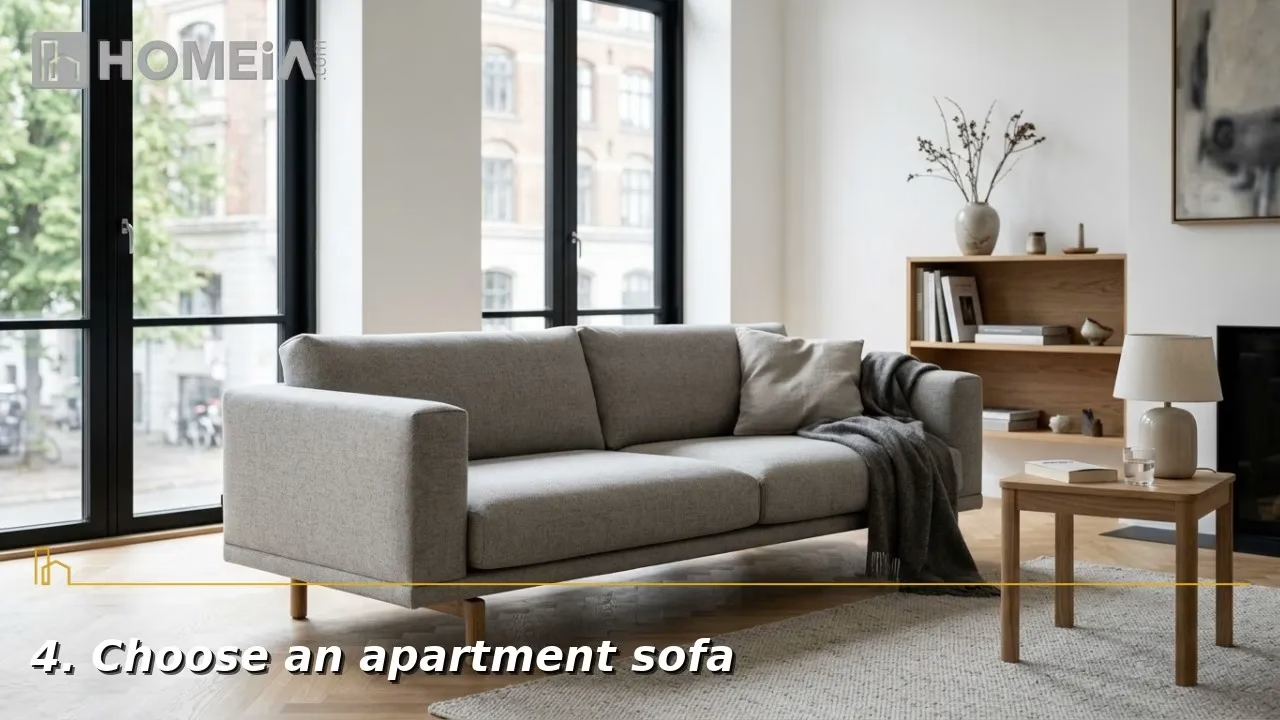
Choose an apartment sofa when daily seating and circulation matter more than conversion. It can work well in a studio with a permanent bed, narrow living rooms, offices, or rentals where sectionals dominate the floor plan.
Look for efficient proportions:
- Narrow arms that preserve usable seat width
- Raised legs that reveal more floor visually
- A lower back where windows or sightlines matter
- Seat depth appropriate for upright sitting or lounging
- Removable legs or backs for delivery
- Durable upholstery suited to the household
- A movable ottoman that can serve several functions
Compact size does not guarantee comfort. Compare the usable seating area, not only the outside width. Thick arms may make a small sofa surprisingly inefficient, while an excessively shallow seat may not support relaxed lounging.
Educational housing departments publish furniture dimensions because a few inches can affect whether a room functions properly. University of Kansas housing data, for example, shows substantial variation in sofa dimensions among residence communities and recommends measuring the actual space when possible. The same principle applies to any apartment or small home.
The main disadvantage is fixed function. Compact sofas cannot normally become guest beds or expand for a growing household. If either need is likely, a slightly larger multifunctional option may save more space down the road.

Related article
Choosing the Right Modern Accent Chair for Your Space: Size, Scale, and Room Layout Explained
That perfect accent chair can fall flat if size and scale are wrong — too small feels toy-like, too large overwhelms the room. Accent chairs aren’t just decor; they balance layout, comfort, and visual weight. This guide breaks down sizing vs. scale, key measurements, and real-world layout scenarios so you can choose confidently and make your space feel right…
5. Choose a modular sofa

Pick a modular sofa when flexibility and movability matter more than achieving the smallest possible footprint. Separate units may travel easily through stairs and elevators. They can also adapt when a room, address, or household changes.
Verify these details before buying:
- Individual size and weight of every module
- Connector type and resistance to drifting
- Appearance of exposed module sides
- Availability of compatible add-on pieces
- Number of useful approved configurations
- Upholstery consistency across later orders
- Replacement-cover and cushion availability
- Clearance required for each planned arrangement
A modular system should fit the current room without depending on a future purchase. Begin with a complete, comfortable arrangement and treat expansion as an option. Also confirm that the proposed modules can form more than one layout that comfortably works in the home.
Modularity can extend the useful life of furniture by allowing components to be rearranged, repaired, or expanded instead of replacing the complete piece. Syracuse University has highlighted modular design as a way to adapt furniture when rooms and routines change.
The limitation is bulk. Connectors, deep seats, wide modules, and corner pieces can consume significant space. Modular does not automatically mean compact, and a large modular configuration may overwhelm small living rooms.

Related article
15 Design Tips to Make a Small Space Feel Bigger
Do you feel cramped in your living space? Don’t despair. Small spaces offer advantages for decorating and cleaning. The tips below will help you make the most of a smaller space…
6. Choose a sleeper sofa

Go with a sleeper when overnight accommodation provides enough value to justify the mechanism, weight, and open footprint. It can be highly efficient in a studio, den, home office, or living room because it combines two major functions.
Match the sleep surface to likely guests:
- Twin for one occasional guest and a smaller footprint
- Full for one adult who wants more room or two short-stay guests
- Queen when two adults visit regularly and the room can accommodate it
- Sleeper sectional when substantial seating and sleeping capacity are both necessary
Evaluate sitting and sleeping comfort separately. Sit long enough to judge cushion support and whether the mechanism can be felt beneath the seat. Open and close the bed, inspect the support system, and confirm the actual sleep-surface dimensions.
Map the open bed on the floor. Plan where the coffee table and ottoman will move at night. Keep a practical route to the bathroom and exit, and ensure that closet doors, balcony doors, drawers, and heating equipment remain accessible.
Do not infer the open footprint from mattress size. Measure from the back of the sofa to the farthest point reached by the open mechanism. Lastly, check side clearance for bedding and space for a person to stand while making the bed.

Related article
5 Key Tips to Select a Great Adjustable Bed for Your Room
As technology advances, adjustable bed options will only continue to improve. If you’ve been considering an adjustable bed for your home, there’s no time like the present! To help you search for your new adjustable bed, we’ve created a list of 5 tips to help you select a great adjustable bed for your home…
7. Match the household
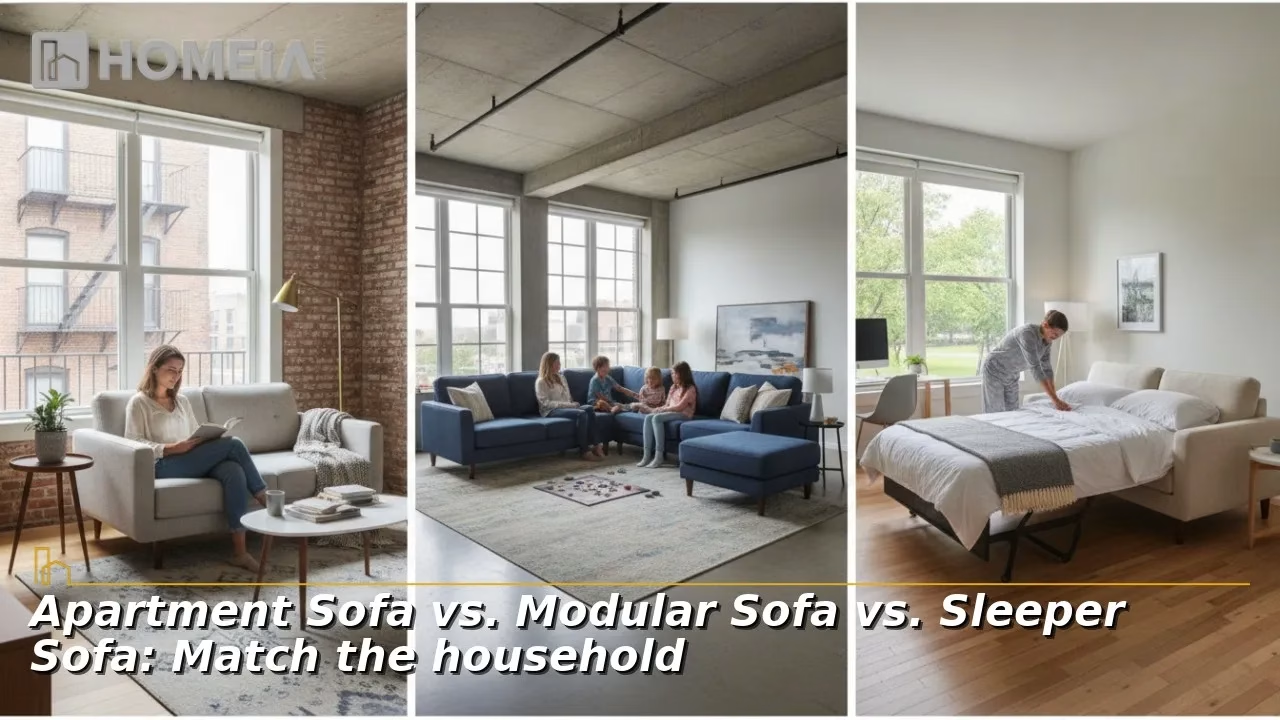
Use common scenarios as a final filter:
- Studio renter with a permanent bed: A compact apartment sofa usually preserves circulation.
- Renter expecting to move: Modular seating may simplify stairs and elevators if each section fits the route.
- Homeowner without a guest room: A sleeper can replace both occasional seating and a guest bed.
- Small family expecting to grow: A well-supported modular system can add seating later.
- Remote worker with a multipurpose office: A compact sleeper can convert the office for overnight guests.
- Frequent host with limited storage: A sleeper with built-in storage can reduce pressure on closets.
Interior planning should separate major activity zones from through-traffic whenever possible. Place the sofa so guests can enter, cross the room, and reach adjacent spaces without cutting through the main seating area.
The best option solves the room’s most frequent problem while maintaining comfortable movement. Decide on function first, confirm every measurement second, and select the upholstery and color only after the format works.
Recommended for you




FAQs About Apartment Sofa vs. Modular Sofa vs. Sleeper Sofa
1. Do modular sofas separate during normal use?
They can if connectors are weak, absent, or installed incorrectly. Ask how modules lock together, whether the floor surface affects movement, and if replacement connectors are available.
2. Is a sleeper sofa suitable for sleeping every night?
Some models are designed for frequent sleep, while others prioritize occasional guests. Evaluate the mattress, support platform, mechanism, warranty, and stated intended use of the specific sofa.
3. Can a sofa fit through a doorway narrower than its overall depth?
Sometimes. Removable legs, a lower back, and favorable diagonal depth may allow the sofa to turn through the opening. Measure every turn and compare the sofa’s delivery dimensions.
4. Is a reversible chaise the same as a modular sofa?
Not necessarily. A reversible chaise may switch sides using a movable cushion or ottoman, while a modular sofa uses several connectable sections. Understand which components can actually move.
5. Which format is easiest to move later?
Small conventional sofas are often straightforward, while modular sofas divide into manageable components. Sleeper sofas can be harder because the internal mechanism adds weight. Measure the future delivery route as carefully as the current room.
Share