







High-Performance Interiors: Acoustic Wood, Non-Toxic Science & Custom Joinery
- Local Editor:Local Editor: The HOMEiA Team
- Category: Home Improvement


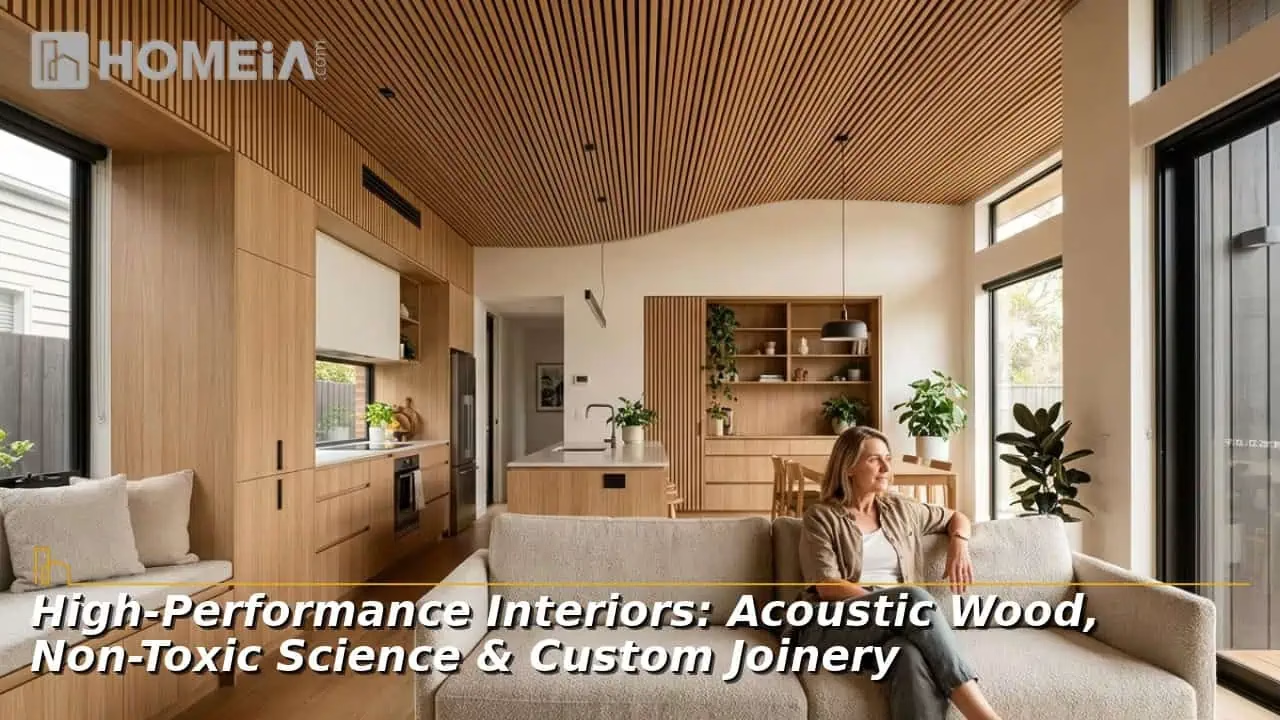
High-Performance Interior Woods: Designing modern indoor spaces requires choosing materials that are appealing, sound quiet, and keep air healthy. Installing acoustic wood slat panels with PET backing dramatically reduces room noise, while choosing low-emission CARB Phase 2 compliant 12mm plywood prevents harmful off-gassing inside your home. For custom builds like campervans, balancing light poplar wood with sturdy Baltic birch provides solid screw holding without overloading vehicle weight. Smart timber choices create quiet, healthy, and long-lasting living environments.

Related article
Best Interior Wall Colors for Selling a House
Before you put up your property for sale, your realtor might suggest that you repaint the interior walls. Your choice among the various shades of a particular color can have a tremendous impact on the first impressions the house makes on your potential homebuyers, and these impressions can make or break the sale…
1. Acoustic Wood Wall Panelling: Physics, Slat Spacing, and Sound Absorption
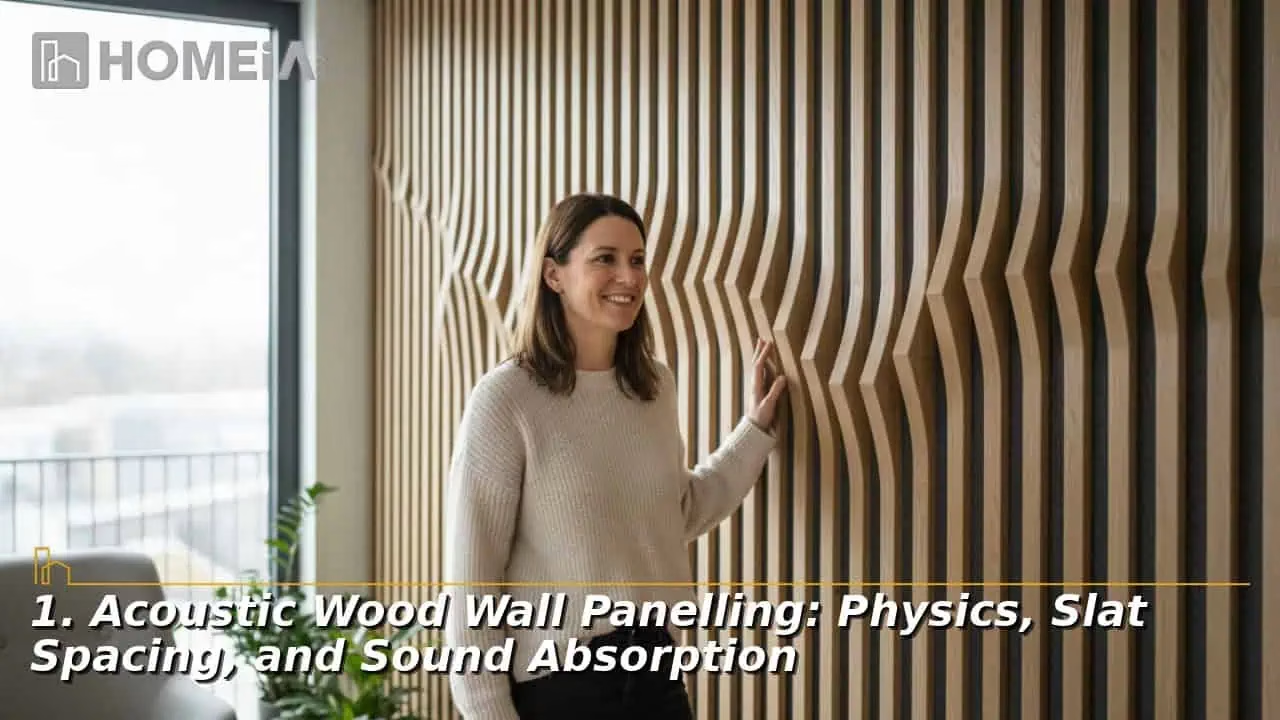
Open floor plans, polished concrete floors, and large glass windows make modern rooms look spacious, even though they reflect sound waves. This creates echoing rooms where conversations sound muddy and noisy. Installing decorative wood slat wall panels, commonly called Akupanels, offers an attractive way to absorb unwanted noise while adding natural warmth to a room.
ACOUSTIC PANEL LAYER STRUCTURE
Wood Slats (27mm wide) | → | Scatter high sound waves |
PET Acoustic Felt (9mm) | → | Traps sound wave energy |
Rear Air Cavity (20–40mm) | → | Absorbs low bass frequencies |
A. How Wood Slats and PET Felt Trap Sound Waves
An acoustic panel works using three distinct sound control steps of sound scattering, friction absorption, and air chamber trapping. When sound waves hit the wood wall, solid wood slats scatter high-frequency sounds so they do not bounce straight back into the room.
Next, sound waves pass through the open gaps between the slats, colliding with a dense layer of polyethylene terephthalate (PET) felt made from recycled plastic fibers. As they travel through these tight felt fibers, friction turns the sound energy into harmless heat.
Finally, leaving a small air gap between the back of the felt and the drywall creates a trapped air chamber, known as a resonator, which absorbs low bass frequencies.
An acoustic panel’s overall noise control efficiency is measured by its Noise Reduction Coefficient (NRC). An NRC rating of 0.00 means a wall reflects all sound like a mirror, while an NRC rating of 1.00 means the wall absorbs 100% of incoming sound. The average NRC score across human speech frequencies is calculated using the below formula:
| NRC = ( α250 + α500 + α1000 + α2000 ) ÷ 4 |
Here, αf represents the sound absorption rating at specific pitch frequencies (250 Hz, 500 Hz, 1000 Hz, and 2000 Hz).
B. Sound Absorption Performance Comparison
| Mounting Method | Slat & Felt Spec | Rear Air Cavity | NRC Rating | Primary Target |
|---|---|---|---|---|
| Direct Surface Mount | 27mm slats, 15mm gaps, 9mm PET felt | 0 mm (flush) | 0.50–0.70 | High pitch (>2000 Hz) |
| Standard Cavity Mount | 27mm slats, 15mm gaps, 9mm PET felt | 20 mm air gap | 0.75–0.90 | Speech & TV (500–2000 Hz) |
| Deep Resonant Cavity | 27mm slats, 13mm gaps, 12mm PET felt | 40 mm + insulation | 0.90–0.95+ | Low bass & echo (125–500 Hz) |
| Perforated Plywood Sheet | 12mm ply, 5mm drilled holes | 60 mm + fiberglass | 0.80–0.85 | Broad room echo control |
To achieve the highest sound control performance in home theaters or living rooms, mount wood slat panels onto 2×2 wooden furring strips. Adding a 20mm to 40mm rear air gap filled with mineral wool insulation raises the NRC score from a modest 0.50 up to an impressive 0.95!
Related article
The Custom Home Building Process: A Complete Step-by-Step Guide
Building a custom home may feel overwhelming, but it follows a clear, structured process. With the right team, each phase, from design to move-in, becomes manageable and rewarding. This guide walks you through every major step, helping you move forward with clarity, confidence, and control as you create a home tailored to your life…
2. Material Science: Formaldehyde Standards, Non-Toxic Glues, and Air Quality

Many homeowners do not realize that new furniture, cabinets, and wall panels can release invisible chemicals into indoor air. This process, called off-gassing, occurs when artificial glues used inside manufactured wood sheets release volatile organic compounds (VOCs) and formaldehyde fumes into your living space over time.
AIR QUALITY CERTIFICATION PYRAMID. BEST TO BASIC LEGAL MINIMUM
| Best | Finnish M1 / French A+ | Lowest chemical emissions, best for bedrooms |
| Standard | CARB Phase 2 / EPA TSCA | Standard safe indoor limit (0.05 ppm max) |
| Legal Minimum | European E1 Standard | Basic legal indoor limit (0.10 ppm max) |
A. Formaldehyde Off-Gassing Standards
To protect family health, international environment agencies enforce limits on how much chemical gas wood panels can release into home air:
- CARB Phase 2 and EPA TSCA Title VI: The strict health baseline in North America. Limits formaldehyde gas release to a maximum of 0.05 parts per million (ppm) for hardwood plywood.
- European EN 13986 Class E1: The baseline European safety standard. Limits formaldehyde gas release to a maximum of 0.10 ppm.
- Finnish M1 and French VOC Class A+: The highest health ratings in the world. These certifications test wood panels inside sealed chambers for 28 days to prove zero chemical odor and ultra-low chemical emissions.
B. Understanding Plywood Glue Lines: MR vs. Phenolic Resin
The internal glues holding wood plies together dictate moisture resistance and chemical safety. Plywood panels generally use one of two main glue types:
- Melamine Urea-Formaldehyde (MR Glue): Commonly referred to as Moisture Resistant glue, this adhesive is classified as Class 1 Interior glue. It is designed for dry indoor rooms like bedrooms and hallway closets, but high humidity can cause the glue line to weaken over time.
- Phenol-Formaldehyde (WBP Phenolic Glue): Considered as Class 3 Exterior glue, this dark adhesive line is completely waterproof and weather resistant. High-grade Baltic birch panels bonded with phenolic resin meet exterior standards while maintaining ultra-low formaldehyde off-gassing levels that meet CARB Phase 2 rules.
C. Air Quality Standards Comparison
| Emission Rating | Testing Method | Max Formaldehyde | Safest Application |
|---|---|---|---|
| EPA TSCA Title VI / CARB Phase 2 | Large chamber test | 0.05 ppm or less | Kitchen cabinets, living room furniture |
| European Class E1 Standard | Small chamber test | 0.10 ppm or less | General construction, subflooring |
| Finnish M1 Environmental Rating | 28-day odor & VOC test | 0.03 mg/m²h or less | Bedrooms, nurseries, sensitive homes |
| French VOC Class A+ Rating | Indoor air testing | Lowest VOC class | Residential wall panels, ceilings |
When buying pre-finished birch panels or custom cabinets, choosing plant-based clear lacquers or low-VOC hardwax oils completely seals the wood surface. This creates a protective barrier that stops moisture absorption while keeping indoor air clean and healthy.
Recommended for you




3. Micro-Architecture: Lightweight Campervan Cabinetry and Screw Holding

Building custom campervan interiors, tiny homes, or mobile offices presents a tough woodworking challenge. Balancing structural strength against strict vehicle weight limits. Building cabinets out of heavy wood burns extra fuel and reduces payload capacity, while building with weak wood leads to broken drawers and pulled screws from road vibration.
VEHICLE WEIGHT VS. STRENGTH BALANCE
| 12mm Baltic Birch | → | Heavy — 24.3 kg/sheet | → | Strong screw holding for beds |
| 12mm Poplar Ply | → | Light — 15.3 kg/sheet | → | Saves 37% weight for upper lockers |
A. Weight Calculations: Birch vs. Poplar
Plywood weight varies dramatically based on the wood species used for internal core layers. Baltic birch plywood is dense and heavy (680 kg/m³), weighing 24.3 kg (53.6 lbs) per 4×8 sheet in 12mm thickness. By contrast, Poplar plywood is much lighter (430 kg/m³), weighing just 15.3 kg (33.7 lbs) per sheet.
To calculate total weight savings (ΔWtotal) when building campervan cabinets, builders use a mass difference equation:
| ΔWtotal = Nsheets × L × W × T × ( ρbirch − ρpoplar ) |
In this formula, Nsheets is panel count, L and W are panel length and width in meters, T is thickness in meters, ρbirch is 680 kg/m³, and ρpoplar is 430 kg/m³.
Substituting Poplar plywood for Baltic birch across a 10-sheet van build saves roughly 90 kg (199 lbs) of vehicle weight!
B. Screw Retention and Hybrid Van Joinery
While Poplar plywood saves impressive fuel weight, its soft wood fibers have lower screw pull-out strength. Driving screws into the edge grain of 12mm poplar can strip the wood fibers during dynamic road shaking.
C. Mobile Wood Material Comparison
| Plywood Type | Density | 12mm 4×8 Mass | Screw Holding | Best Application |
|---|---|---|---|---|
| 12mm Baltic Birch (BB/BB) | 680–720 kg/m³ | 24.3 kg (53.6 lb) | Exceptional (9 plies) | Bed frames, drawer slides, seat benches |
| 12mm Poplar Plywood | 400–450 kg/m³ | 15.3 kg (33.7 lb) | Moderate (needs pocket holes) | Upper lockers, wall lining panels |
| 12mm Eucalyptus Combi Core | 550–620 kg/m³ | 20.1 kg (44.3 lb) | Good (balanced) | Cabinet carcasses, side partitions |
| 3.6mm Flexible Plywood | 500–580 kg/m³ | 4.2 kg (9.2 lb) | Low (non-structural) | Curved ceiling corners, wheel arch covers |
Professional campervan builders use a hybrid construction strategy of dense 12mm Baltic birch for heavy load-bearing structures like bed frames, seat mounts, and heavy drawer slides, while using lightweight 12mm Poplar for upper cabinet doors and ceiling panels.
Additionally, cutting large circular holes (called lightening cutouts) in non-visible rear birch cabinet panels drops sheet weight by up to 35% without losing structural frame strength!

Related article
Aging in Place Home Design: How to Build a Custom Home for Every Stage of Life
Smart custom home design looks beyond today, creating spaces that adapt over decades. By incorporating aging-in-place and multigenerational features from the start, homeowners ensure long-term comfort, safety, and independence. This guide explores practical strategies…
4. Moisture Dynamics, Expansion, and Waterproof Edge Protection
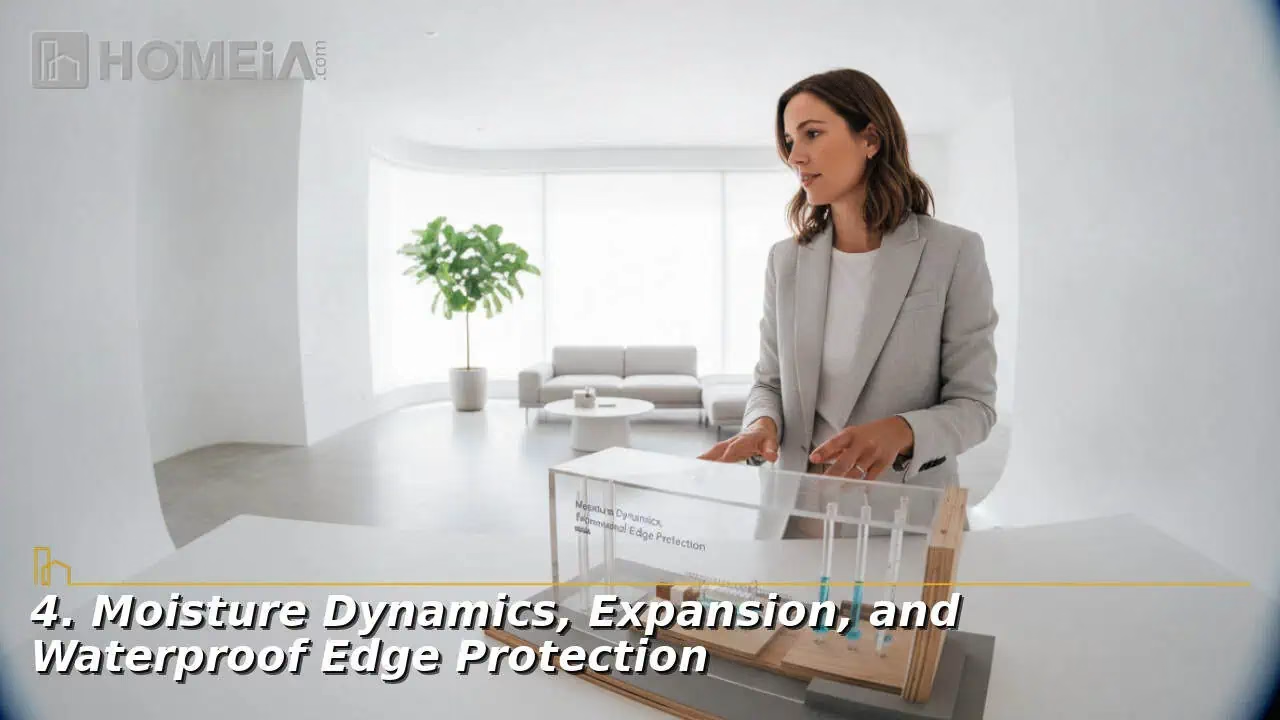
Wood is a living material constantly interacting with surrounding air. When indoor humidity rises during summer or rainy seasons, wood panels absorb moisture vapor and expand. When air turns dry during winter heating, wood releases moisture and shrinks.
PLYWOOD MOISTURE SWELLING PROCESS
| Humid Indoor Air | → | Raw Edge Grain Capillaries | → | Water Enters Plies | → | Edge Swelling & Warping |
A. Calculating Moisture Weight Gain and Panel Expansion
As indoor relative humidity shifts between 30% and 80%, internal wood panel moisture content changes between 8% and 14%. The actual wet mass of a wood panel (Weightactual) is calculated using this moisture formula:
| Weightactual = Weightdry × [ 1 + ( (MCactual − MCdry) ÷ 100 ) ] |
In this equation, Weightdry is the starting panel mass at 8% moisture content, MCactual is the measured wet moisture percentage, and MCdry is 8%.
A standard 24.3 kg Baltic birch sheet gaining 6% internal moisture absorbs over 1.4 liters of water from humid air, increasing total panel weight to 25.7 kg while expanding in panel width.
B. Capillary Action and Sealing Exposed Edges
The face veneers of a plywood panel resist water absorption relatively well. However, when plywood is cut into cabinet parts or wall slats, the internal end-grain plies are exposed.
These end-grain plies act like tiny drinking straws, drawing liquid water deep inside through capillary action up to 20 times faster than flat face veneers! In humid rooms like bathrooms, kitchens, or campervans, unsealed end-grain edges quickly absorb water vapor, causing edge swelling, glue degradation, and panel warping.
To prevent water damage and warping, always seal freshly cut plywood edges using one of these three professional edge protection methods:
- Iron-On Wood Edge Banding: Applying real wood veneer tape with hot-melt adhesive caps exposed end-grain pores.
- Clear Polyurethane Varnish: Brushing two coats of waterproof polyurethane sealer over raw cut edges stops water vapor.
- Epoxy Sealing: Rubbing clear waterproof epoxy resin into cut edges provides maximum protection for bathroom cabinets or boat joinery.

Related article
Key Things to Know Before Hiring an Interior Designer for Your New Home
Hiring an interior designer is one of the best things you can do for your new home, and not only in terms of aesthetics. An experienced interior designer can transform even the blandest of spaces into a beautifully cohesive residence…
5. Summary Checklist for Interior Design and Custom Woodwork
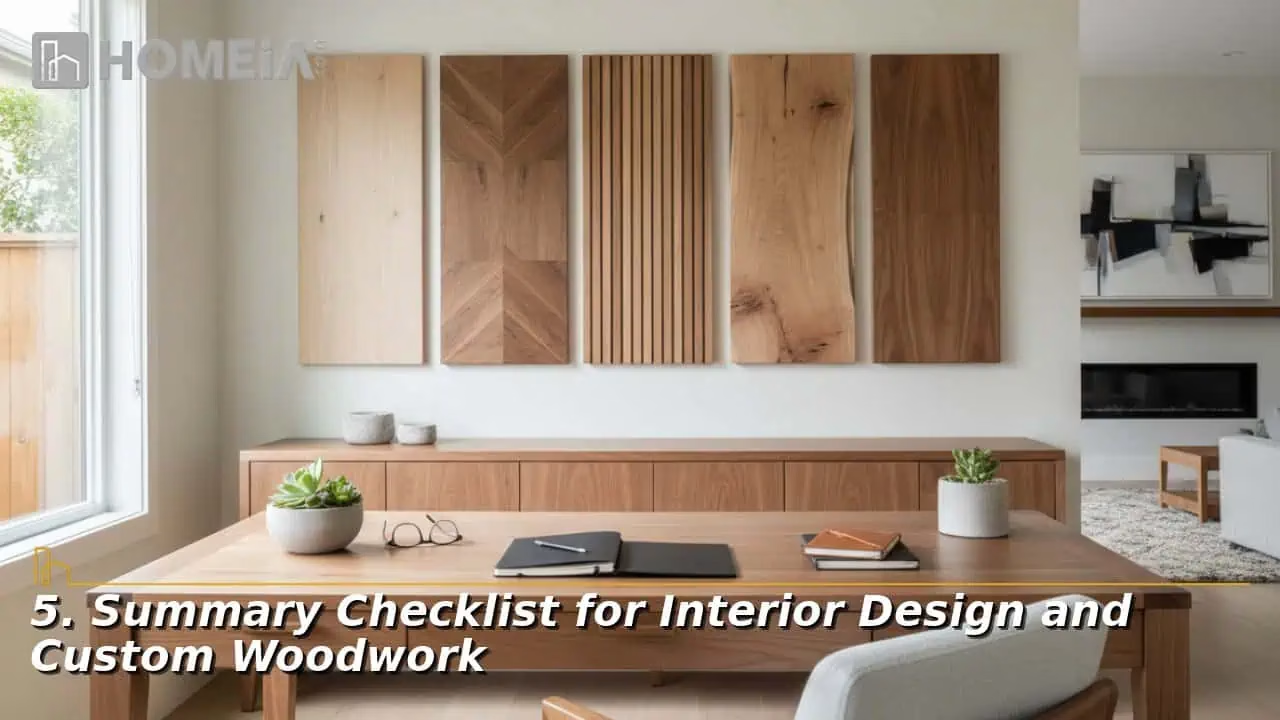
Designing beautiful, healthy, and quiet indoor wood projects requires careful attention to material details:
- Tune Room Acoustics: Mount 27mm wood slat panels over 9mm PET acoustic felt. Leave a 20mm to 40mm rear air gap behind the panels to achieve an NRC rating of 0.85 or higher for home theater echo control.
- Verify Safe Air Quality: Choose interior plywood certified under CARB Phase 2 or EPA TSCA Title VI to ensure formaldehyde off-gassing remains at or below safe 0.05 ppm limits.
- Optimize Van Payload: Use lightweight 12mm Poplar plywood (15.3 kg per sheet) for upper lockers to save fuel weight, but reserve strong 12mm Baltic birch (24.3 kg per sheet) for bed platforms and drawer runners.
- Seal Cut Edges: Coat raw plywood cut edges with edge banding, clear polyurethane, or epoxy to prevent capillary water absorption and edge swelling in humid rooms.
Conclusion
Creating high-performance indoor spaces requires balancing room acoustics, indoor air safety, and smart material selection. By selecting low-emission CARB Phase 2 plywood, installing sound-absorbing wood slat panels, and balancing timber weight in custom builds, you build healthier living spaces. Investing in proper material science and edge protection ensures your interior woodworking stays quiet, safe, and beautiful for years to come.
Recommended for you




FAQs About High-Performance Interior Woods
1. What is the difference between sound absorption and soundproofing?
Sound absorption uses soft porous materials like acoustic PET felt to stop echo and reverberation inside a room. Soundproofing uses heavy mass and airtight seals to block sound from traveling between separate rooms through walls or ceilings.
2. Can I clean acoustic wood slat panels without damaging the PET felt?
Yes. Dust wood slats regularly using a soft microfiber duster or vacuum brush attachment. For light stains on the PET felt background, wipe gently using a damp cloth with mild soapy water, avoiding harsh chemical cleaners.
3. Is Baltic birch plywood completely waterproof for outdoor use?
While high-grade Baltic birch uses waterproof Class 3 phenolic glue lines that will not delaminate in water, the natural birch wood fibers themselves can still absorb water and rot if left outdoors without protective exterior paint, varnish, or oil finish.
4. How do pocket hole joints hold up in lightweight Poplar plywood?
Pocket hole joints work well in Poplar plywood if you use coarse-thread pocket screws designed for softwoods. Avoid fine-thread screws, as fine threads can strip soft poplar fibers during tightening.
5. Why did my new plywood cabinet doors warp after painting only one side?
Painting or sealing only one side of a wood panel creates an uneven moisture balance. The unfinished side absorbs humidity faster than the sealed side, causing varying expansion pulling the panel into a curved, warped shape. Always seal or paint both sides equally.
Share