






7 Most Affordable Places to Live in Oklahoma
- Local Editor:Local Editor: The HOMEiA Team


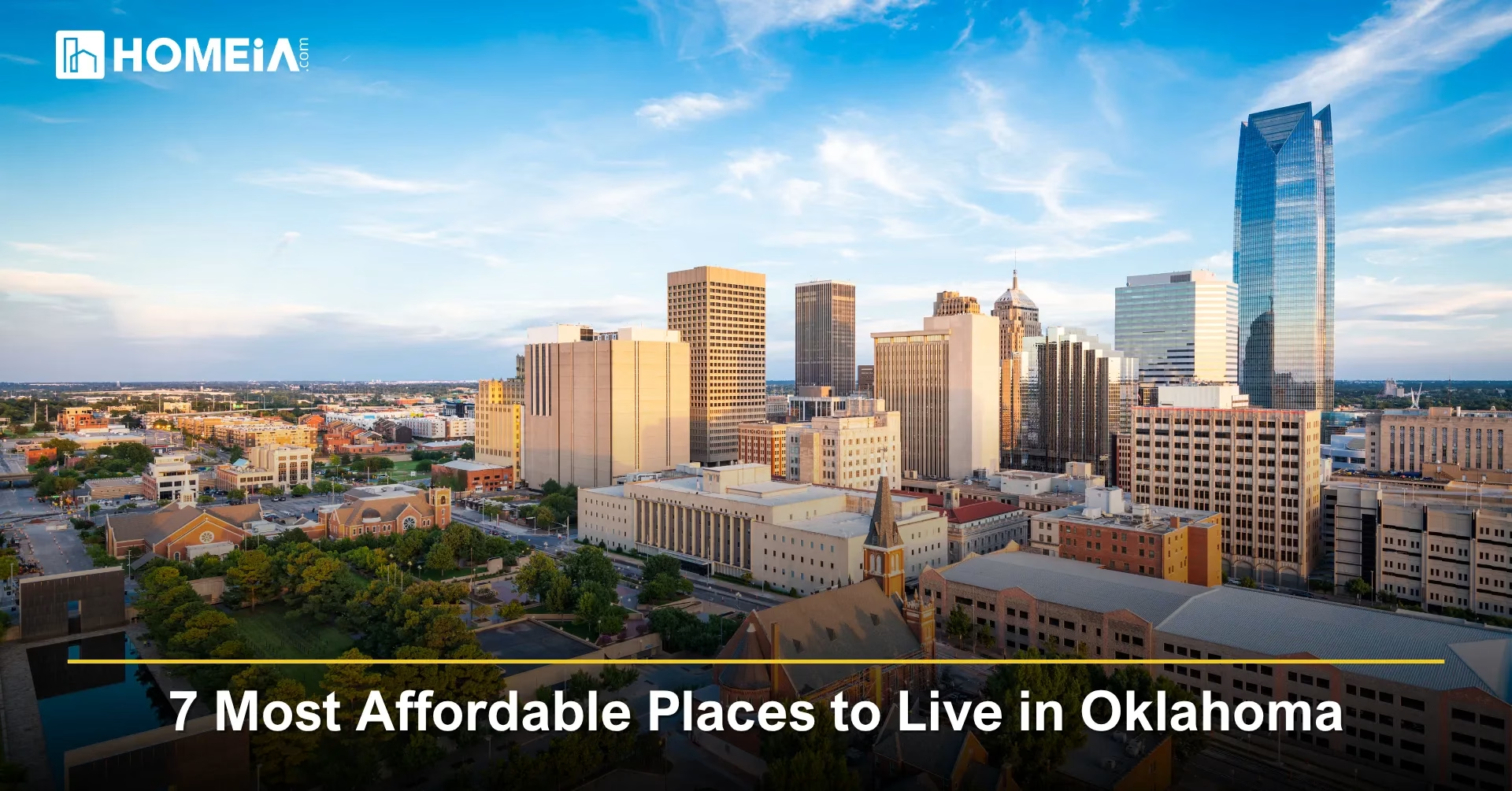
Most Affordable Places to Live in Oklahoma: This State ranks as the nation’s most affordable state. A cost of living index of 86.0, 14 percent lower than the U.S. average, paired with housing costs roughly 28 percent below the national median positions itself as an economical haven. Its relatively low property tax rates and minimal regulatory barriers keep costs grounded compared to coastal states and larger metropolitan areas. However, affordability varies dramatically from region to region. Some cities offer dramatically enhanced value than others when you factor in housing, employment, healthcare access, and overall quality of life.
This guide identifies seven most affordable places to live in Oklahoma where you can actually achieve financial stability without overextending your budget:
Key Takeaways
- Oklahoma ranks as the nation’s most affordable state with a cost of living index of 86.0 and housing costs 28 percent below U.S. median.
- Affordable living spans diverse communities, from college towns to military cities to energy hubs, offering choices for different lifestyles and career paths.
- Safety, school quality, and healthcare access vary dramatically between communities, making thorough research essential before relocation.
- Trade-offs exist. Cheapest cities often mean limited professional jobs or geographic isolation from larger metros and universities.
- True affordability includes utilities (summer air conditioning is essential), tornado insurance costs, and transportation expenses in addition to housing.

Related article
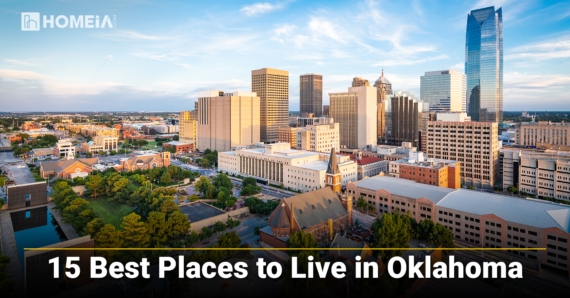
15 Best Places to Live in Oklahoma
Are you planning to relocate to Oklahoma? Whether you are drawn to the cosmopolitan vibes of the cities or the tranquility of rural life, we curated a list of 15 of the best communities to live in Oklahoma for those considering making the Sooner State their new home…
I. Methodology: How We Chose the Most Affordable Places
Identifying the most affordable places goes beyond finding lowest prices. Affordability must be evaluated holistically, considering whether people can build sustainable lives in communities. Our methodology applied a weighted scoring system evaluating several critical dimensions.
- Housing & Affordability (30% weight): Housing dominates affordability calculations. We evaluated median home prices, rental rates, and price-to-income ratios. These show whether homes price affordably relative to local incomes. We prioritized communities where median home prices fell below $200,000 and where housing costs consumed reasonable portions of median household income.
- Cost of Living (25% weight): Housing is only one component of true affordability. We examined utility costs, grocery prices, healthcare expenses, and transportation. Residents benefit from lower-than-average utility costs, though air conditioning expenses spike substantially during summer months requiring budget planning.
- Access & Infrastructure (20% weight): Affordability means little without access to essential services. We evaluated healthcare availability, shopping options, highway connectivity, and broadband access. Smaller cities sometimes struggle with rural broadband, though recent state investments are improving coverage significantly.
- Community & Safety (15% weight): Cost-of-living calculations ignore quality of life entirely. We reviewed crime statistics from the Oklahoma State Bureau of Investigation and considered community amenities, parks, recreation options, and the general atmosphere residents report.
- Economic Resilience & Opportunity (10% weight): A cheap place becomes expensive if you cannot find employment. We identified major employers, economic diversity, and employment trends. Communities with Fortune 500 presence or diversified economies ranked higher than single-industry towns.
Data Sources: This analysis draws from 2024–2026 sources: Zillow, the U.S. Census Bureau, the Bureau of Labor Statistics, the Oklahoma State Bureau of Investigation, Redfin, and local economic development reports. We prioritized current data with 2024 figures used only when 2025–2026 data is unavailable.
7 Oklahoma Communities: Quick Comparison Table
| City | HOMEiA Score | Cost of Living | Avg. Rent (2-Bed) | Home Price to Income Ratio | Income to Rent Ratio | Safety Rating |
| Bartlesville | 72/100 | -10% | $925 | 3.2:1 | 85.5x | 74/100 |
| Durant | 75/100 | -12% | $875 | 3.9:1 | 89.7x | 72/100 |
| Enid | 77/100 | -8% | $950 | 3.3:1 | 79.8x | 71/100 |
| Muskogee | 78/100 | -15% | $850 | 4.2:1 | 73.6x | 65/100 |
| Shawnee | 80/100 | -16% | $912 | 2.9:1 | 73.5x | 70/100 |
| Lawton | 82/100 | -15% | $935 | 2.5:1 | 68.3x | 62/100 |
| Ponca City | 88/100 | -20% | $675 | 2.5:1 | 77.8x | 68/100 |
Related article
7 Most Affordable Places to Live in Kansas
Kansas remains one of the nation’s most affordable places to live, offering low housing costs and a cost of living well below the national average. But true affordability goes beyond cheap homes. This guide highlights communities that combine attainable housing with strong job markets, healthcare access, infrastructure, safety, and long-term…
II. Detailed Community Analysis
1. Bartlesville: Energy Town in Northeast Oklahoma
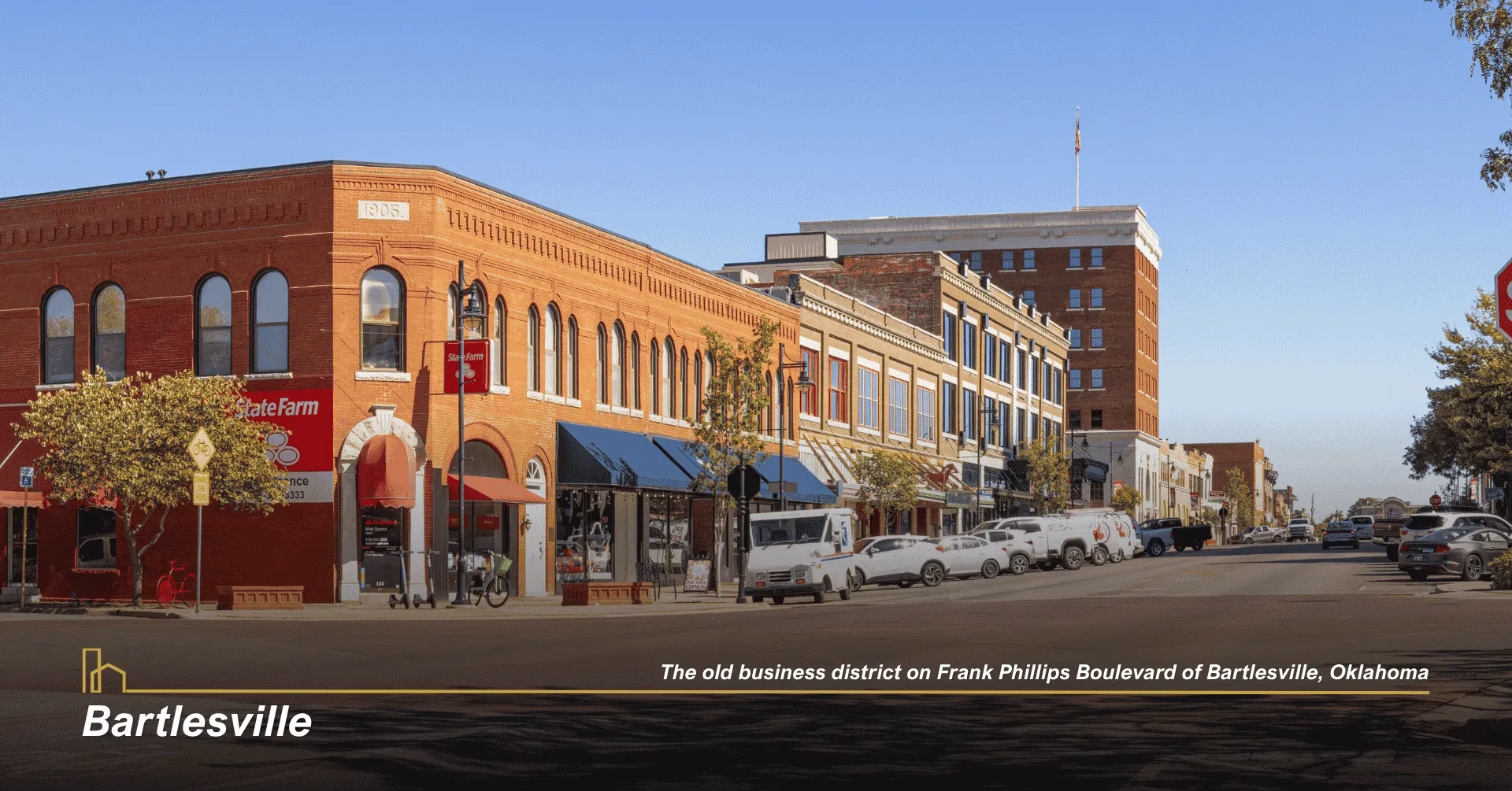
HOMEiA Score: 72/100
- Cost of Living: -10% (10% below U.S. average)
- Monthly Rent: $925
- Home price to income ratio: 3.2:1
- Income to rent ratio: 85.5x
- Safety rating: 74/100
A. Cost of Living & Housing: Bartlesville offers moderate affordability as a mid-size energy town with median home price around $190,000, representing approximately 40 percent below national median. Two-bedroom rentals average $925 monthly. Cost of living runs 10 percent below national average. Homeownership rate of 63.8 percent suggests reasonable affordability for first-time buyers. Housing options include historic neighborhoods with character alongside newer developments suitable for families.
B. Economy & Job Market: Phillips 66 headquartered here dominates the economy, employing thousands directly with stable, high-wage employment. Energy companies and service industries support the primary sector. Bartlesville Community Hospital provides healthcare employment opportunities. Median household income approximately $61,200 runs above state and national median. Heavy dependence on one provider creates vulnerability to energy price fluctuations and industry cycles.
C. Access & Infrastructure: Located 45 miles north of Tulsa with Highway 75 providing north-south connectivity. U.S. Highway 60 runs east-west. Metro employment and amenities lie within reasonable commuting distance for remote workers. Bartlesville Regional Airport (BVO) provides limited service. Broadband meets contemporary standards in this progressive community.
D. Quality of Life & Culture: Woolaroc Museum and Wildlife Preserve provides cultural programming and outdoor recreation opportunities. Parks and green spaces serve families effectively. Progressive community development efforts evident. Spring tornado season attracts common weather risks for the region. Appeals to energy sector workers and families seeking above-average household income combined with small-city amenities.
2. Durant: College Town in South-Central Oklahoma
HOMEiA Score: 75/100
- Cost of Living: -12% (12% below U.S. average)
- Monthly Rent: $875
- Home price to income ratio: 3.9:1
- Income to rent ratio: 89.7x
- Safety rating: 72/100
A. Cost of Living & Housing: Durant offers solid affordability as a college town with a population nearing 20,908. Median home price approximately $228,000 reflects current market conditions, with cost of living running 12 percent below U.S. average. Two-bedroom rentals average $875 monthly, well below national norms. College town character attracts younger demographic composition with student-oriented housing options throughout the community.
B. Economy & Job Market: Southeastern Oklahoma State University uplifts the local economy completely, employing hundreds directly while supporting countless service businesses. Gaming at Choctaw Casino provides significant employment and economic activity. Median household income approximately $42,400 reflects student-influenced demographics. Non-student employment sometimes proves limited, with younger professionals often relocating after graduating.
C. Access & Infrastructure: Located in south-central Oklahoma near the Texas border allows for access to both labor markets. Interstate 75 passes nearby providing north-south connectivity. Ardmore lies approximately 45 minutes north. Choctaw Casino provides entertainment and economic activity. Durant Regional Hospital serves healthcare needs. Small-town vibes with reasonable access to shopping.
D. Quality of Life & Culture: Offers college-town character with younger demographic skew. Southeastern Oklahoma State University hosts cultural events, speakers, athletic activities, and academic programming. Choctaw Casino provides additional entertainment options. Parks and recreation serve families. Friendly, progressive character typical of college towns. Appeals to students and young professionals.
Recommended for you




3. Enid: Progressive Mid-Size City in Central Oklahoma
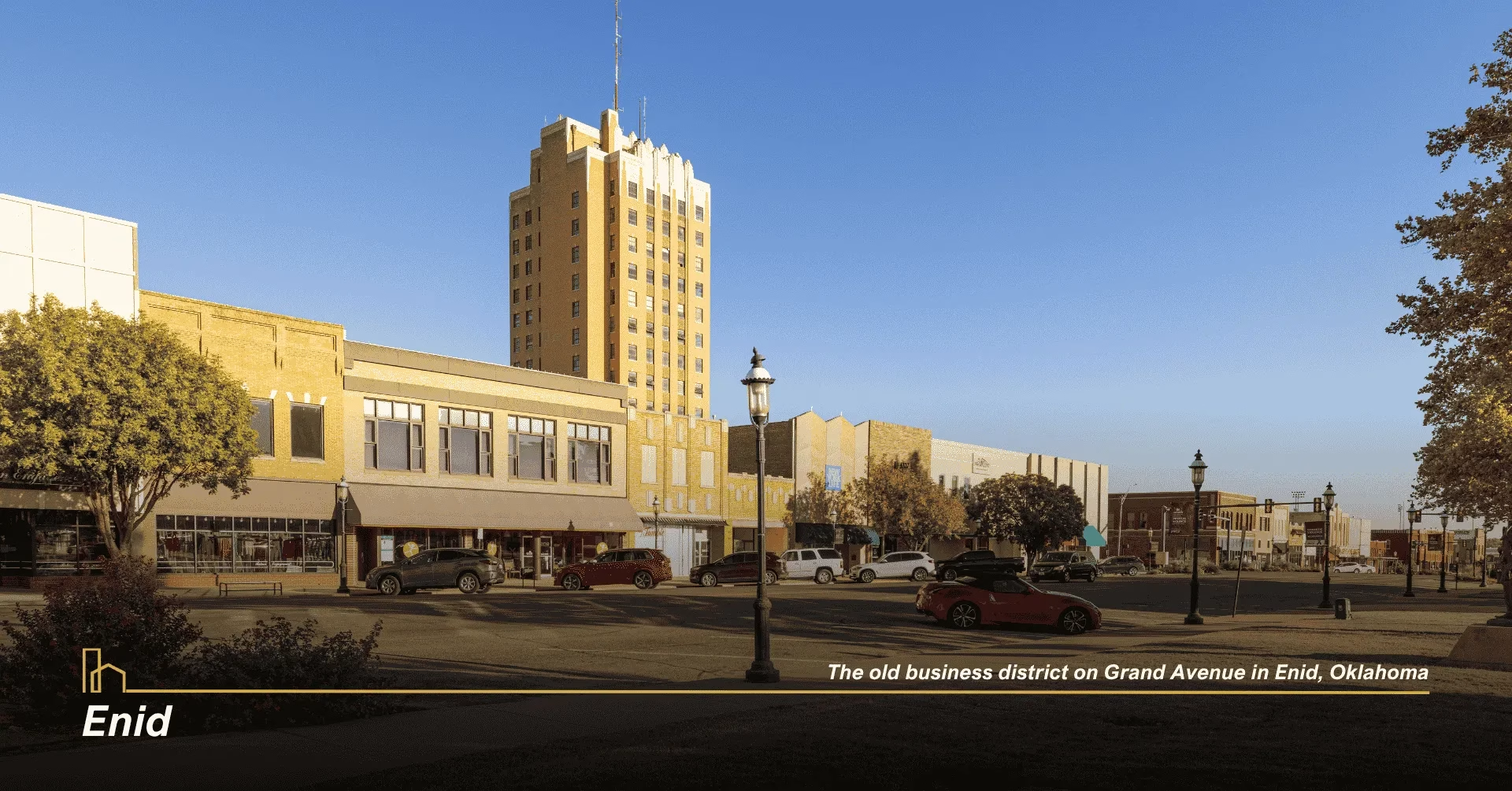
HOMEiA Score: 77/100
- Cost of Living: -8% (8% below U.S. average)
- Monthly Rent: $950
- Home price to income ratio: 3.3:1
- Income to rent ratio: 79.8x
- Safety rating: 71/100
A. Cost of Living & Housing: Here offers moderate affordability as a mid-size city with a population exceeding 51,000. Median home price around $136,000–$164,000 represents significant savings below the national median. Two-bedroom rentals in Enid average $950 monthly. Cost of living runs 8 percent below national average. Provides more robust housing inventory than smaller communities with diverse choices in neighborhoods and price points.
B. Economy & Job Market: Economic opportunities emphasize education and manufacturing sectors. Oklahoma State University–Enid provides educational employment and community programming opportunities. Vance Air Force Base, located on the south side, is an active Air Force installation and a primary direct employer for the region. Manufacturing remains important with several industrial facilities operating. Enid Regional Medical Center offers healthcare employment. Unemployment typically runs near the state average suggesting reasonable job accessibility.
C. Access & Infrastructure: Positioned between Tulsa and Oklahoma City. U.S. Highway 81 provides north-south connectivity while US 412 runs east-west. For remote workers, there exists reasonable accessibility to developed markets. Enid Regional Medical Center provides comprehensive healthcare services. Educational and cultural institutions positively impact the community.
D. Quality of Life & Culture: Presents progressive small-city character with cultural amenities. Enid Philharmonic Orchestra, Enid Symphony, and various museums provide cultural programming. Parks and recreation serve families effectively. Maintains friendly small-town character with reasonable services and shopping. Spring tornado season brings typical weather risks. Ideal for professionals seeking small-city character with moderate employment opportunities.
4. Muskogee: Historic River Town in Eastern Oklahoma
HOMEiA Score: 78/100
- Cost of Living: -15% (15% below U.S. average)
- Monthly Rent: $850
- Home price to income ratio: 4.2:1
- Income to rent ratio: 73.6x
- Safety rating: 65/100
A. Cost of Living & Housing: There exists deep affordability with median home prices around $143,000–$169,000 depending on data source. Rents average $850 for two-bedroom apartments, among the lowest in the Sooner State. Cost of living runs 15 percent below national average. Price-to-income ratio of 4.2:1 indicates home prices are relatively high compared to local earning power, requiring careful evaluation.
B. Economy & Job Market: Employment centers on healthcare and manufacturing. Muskogee Regional Medical Center and Veterans Affairs Medical Center employ hundreds of workers. Georgia-Pacific manufactures paper products, Dal-Tile produces ceramic tiles, and other facilities provide manufacturing employment. Growth remains modest with minimal new job creation expected. Average salary reaches $49,756, well below state and national median.
C. Access & Infrastructure: Located on Arkansas River, 45 miles southeast of Tulsa. U.S. Highway 69 provides north-south connectivity while US 62 runs east-west. Tulsa employment centers within commuting distance for remote workers. Muskogee Regional Medical Center and Muskogee Community Hospital serve healthcare needs. Fort Gibson Lake nearby offers recreational opportunities.
D. Quality of Life & Culture: Celebrates rich history as a river town with cultural significance. Five Civilized Tribes Museum reflects Native American heritage and significance. Parks and river recreation available throughout the year. Crime rates elevated compared to state averages. Suits retirees and established workers seeking deep affordability with historical heritage and stable manufacturing employment.
Related article
7 Most Affordable Places to Live in Missouri
Missouri stands out for its low cost of living, below-average home prices, and no state tax on Social Security income. Affordability varies by location, however. This 2026 guide analyzes seven of Missouri’s most affordable cities, comparing housing and living costs to help you balance budget and lifestyle.
5. Shawnee: Balanced Small City in Central Oklahoma
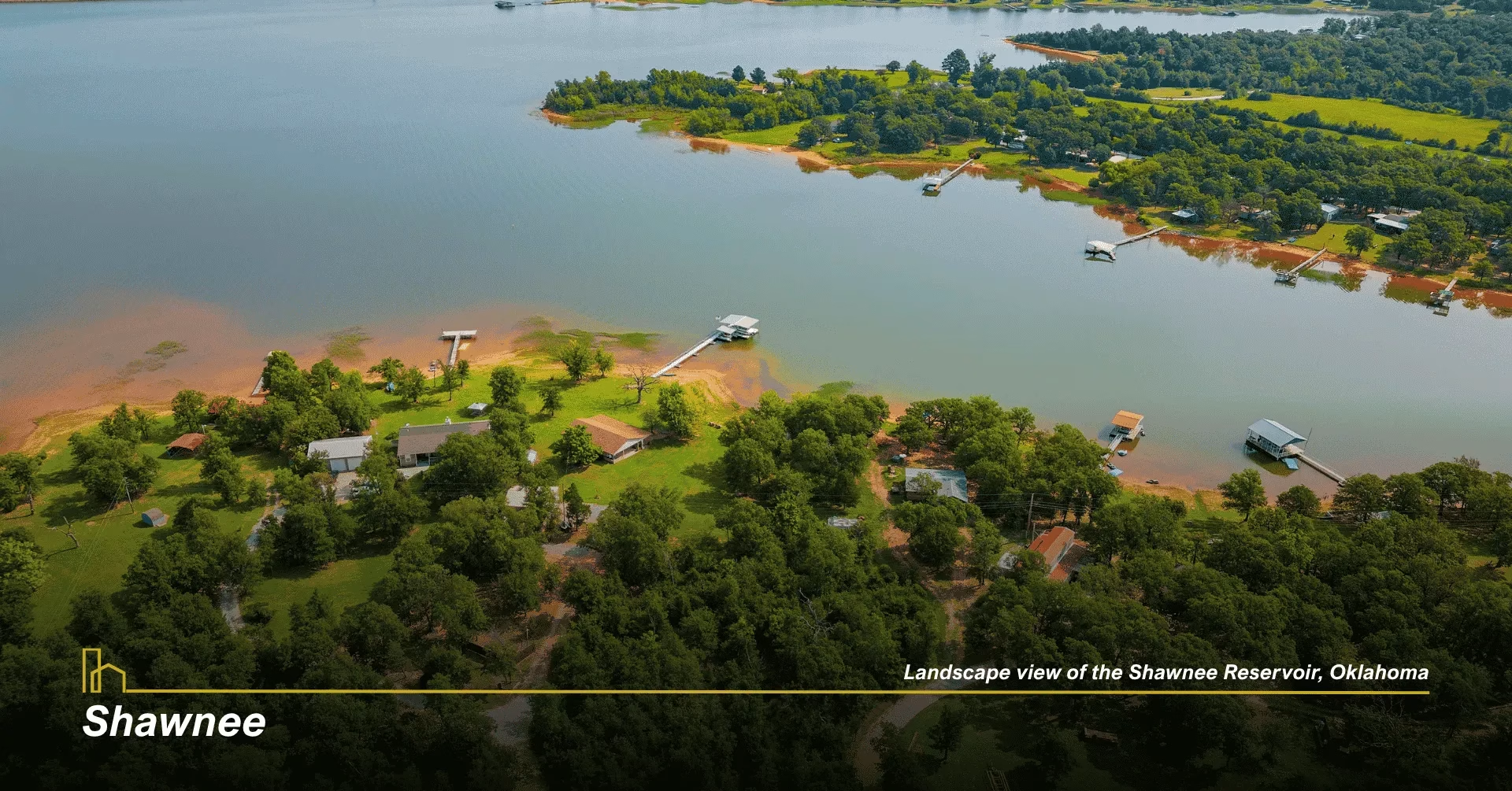
HOMEiA Score: 80/100
- Cost of Living: -16% (16% below U.S. average)
- Monthly Rent: $912
- Home price to income ratio: 2.9:1
- Income to rent ratio: 73.5x
- Safety rating: 70/100
A. Cost of Living & Housing: Shawnee presents the most balanced affordability profile among Oklahoma’s smaller cities. Median home value approximately $179,000, roughly 39 percent below national average. Two-bedroom apartments rent around $912 monthly. Cost of living runs 16 percent below national average and 7 percent below current state average. Homeownership rate of 58.3 percent suggests reasonable affordability for first-time buyers.
B. Economy & Job Market: Employment centers on healthcare, retail, and education sectors. Oklahoma Baptist University employs hundreds and provides cultural programming and educational opportunities. SSM Health operates Shawnee Medical Center. The retail sector provides jobs though typically lower wages. Unemployment stands at a healthy three percent suggesting reasonably accessible employment opportunities.
C. Access & Infrastructure: Sits 30 miles east of Oklahoma City on an exurban edge with Interstate 44 passing nearby offering efficient connectivity. Highway 177 provides additional routing options. For remote workers or commuters, Oklahoma City employment becomes a realistic option. Healthcare access through Shawnee Medical Center covers basic needs. Broadband meets current standards.
D. Quality of Life & Culture: Offers small-town amenities with metro-area proximity. OBU organizes cultural events, speakers, and activities. Parks and recreation serve families effectively. Genuine small-town feel with friendly residents throughout the community. Central Oklahoma weather brings typical spring tornado risk. Appeals to families and professionals seeking affordable housing without isolation.
6. Lawton: Military City in Southwest Oklahoma
HOMEiA Score: 82/100
- Cost of Living: -15% (15% below U.S. average)
- Monthly Rent: $935
- Home price to income ratio: 2.5:1
- Income to rent ratio: 68.3x
- Safety rating: 62/100
A. Cost of Living & Housing: Coveted affordability derives significantly from Fort Sill’s presence and resulting housing market dynamics. Median home price around $142,000–$192,000 depending on data source, representing ideal savings below national median. Homes well below $120,000 remain available in older neighborhoods. Two-bedroom apartments rent around $935 monthly. Cost of living index of 82.5 reflects southwest Oklahoma’s lower expense structure. Utilities run more cost-effective than the national average providing meaningful savings.
B. Economy & Job Market: Fort Sill anchors the economy completely, directly employing thousands with tens of thousands of indirect jobs through defense contracting, housing, food service, and support industries. Comanche County Memorial Hospital and Cameron University provide employment. Military budget decisions directly impact the local economy. Median household income roughly $51,500–$53,600.
C. Access & Infrastructure: Interstate 44 passes directly providing efficient connections toward Texas and surrounding regions. Lawton sits 90 miles southwest of Oklahoma City, within reasonable distance for remote workers. Comanche County Memorial Hospital serves as a primary healthcare facility. For specialized care, Oklahoma City facilities lie within two hours. Rural broadband remains limited in surrounding areas.
D. Quality of Life & Culture: Functions as a military town with armed forces families dominating the population. Wichita Mountains Wildlife Refuge provides outdoor recreation with hiking, lakes, and wildlife viewing opportunities. Summer temperatures exceed 95 degrees regularly. The region sits in Tornado Alley requiring preparedness. Appeals strongly to service members and their loved ones.
Related article
15 Best Cities for Families in Texas
There are many employment opportunities throughout the state and many enjoyable communities to call home. We’ve compiled a list of 15 cities that rank high in education, affordability, and safety; areas of interest for many potential homeowners…
7. Ponca City: Energy Town in Northwest Oklahoma
HOMEiA Score: 88/100
- Cost of Living: -20% (20% below U.S. average)
- Monthly Rent: $675
- Home price to income ratio: 2.5:1
- Income to rent ratio: 77.8x
- Safety rating: 68/100
A. Cost of Living & Housing: Ponca City claims the lowest cost of living in Oklahoma with expenses 20 percent below national average. Median home price approximately $143,000–$149,000, well below the statewide average. Rental availability at $675 monthly makes this highly accessible for renters of all income levels. Price-to-income ratio of 2.5:1 keeps homes reasonably priced relative to local earning power.
B. Economy & Job Market: Functions as regional hubs with economic roots extending beyond energy. Historically anchored oil and gas activities but developed broader economic diversity. Local government, retail, healthcare, and education provide employment alternatives to the energy sector. Median household income of $52,627 runs below state average, reflecting reality that better-paying positions typically exist in larger metros.
C. Access & Infrastructure: Located 50 miles northwest of Tulsa on the periphery of the major metro area. Highway 177 connects to Interstate 44 efficiently. Tulsa employment becomes accessible for willing commuters. Healthcare access includes adequate primary care through local clinics. Broadband improved significantly through recent Oklahoma state investment in rural broadband expansion.
D. Quality of Life & Culture: Offers small-town character while maintaining reasonable access to shopping and services. Outdoor recreation focuses on lakes and parks typical of northwest Oklahoma. Provides genuine affordability without feeling cut off from the wider world. Summer heat runs typical for Oklahoma with air conditioning essential June through September. Appeals to those prioritizing low housing costs above other factors.
III. A Relocation Checklist for Moving to Oklahoma
1. Budget for Summer Air Conditioning
Oklahoma summers are scorching, typically running from June through September with temperatures regularly exceeding 90 degrees Fahrenheit and sometimes reaching 100+. Air conditioning is not a luxury, but rather, an essential for survival and comfort. Budget $150–$250 monthly for cooling costs during peak summer months. Efficient units and proper home weatherization reduce costs substantially. Window coverings, landscaping, and energy-efficient HVAC systems reduce consumption significantly.
2. Understand Tornado Risk
Oklahoma sits in Tornado Alley with spring months bringing elevated risk particularly in April and May. Community shelters or home safe rooms are necessary investments for Oklahomans. Tornado sirens warn of immediate danger. Property damage risk from severe weather should be reflected in homeowner’s insurance costs. Budget time and resources for tornado preparedness including emergency supplies and safe room preparation.
3. Confirm Employment Stability
Many communities heavily depend on single industries or employers. Research dominant employer’s financial health and industry trends carefully before relocating. Military installations can face budget cuts affecting the local economy. Energy towns fluctuate with oil and gas prices and global market conditions. Diversified economies in established communities offer greater stability for career advancement and income security.
4. Check Broadband Availability
Rural areas surrounding these cities often lack reliable high-speed internet necessary for modern work and education. Confirm broadband access at your specific address before committing to relocation. Satellite options exist but carry latency issues problematic for video conferencing. Remote work viability depends critically on confirmed broadband availability in your target location.
Conclusion: Finding Your Affordable Oklahoma Home
Seven regions in-state demonstrate genuine affordability remains available across the state for those willing to research thoroughly and evaluate trade-offs honestly. Each community offers different balances of cost, employment opportunity, and lifestyle amenities. Visit communities in person during different seasons, speak extensively with current residents, research employers thoroughly, and confirm employment stability before relocating. Oklahoma’s significant affordability advantage compared to national averages makes it an increasingly attractive option for those seeking financial stability without geographic compromise or dramatic lifestyle changes.
Recommended for you




FAQs About Affordable Oklahoma Living
1. Is Oklahoma still affordable?
Yes. While housing costs have appreciated in recent years, Oklahoma remains the most affordable state in the nation with a cost of living index of 86.0. Communities outside major metros offer particularly strong value for homebuyers and renters alike.
2. Which Oklahoma city has lowest housing costs?
Ponca City offers the lowest overall costs at approximately $143,000–$149,000 median home price and $675 monthly rent, followed by Enid and Lawton. However, affordability pairs housing, utilities, employment, and lifestyle factors. Evaluate the complete picture rather than housing alone.
3. Are Oklahoma property taxes high?
No. Oklahoma property taxes carry an effective rate of approximately 0.80 percent of home value, significantly below the U.S. average of 1.07 percent. This advantage compounds substantially over decades of homeownership.
4. Is Oklahoma safe?
Safety varies dramatically by community and neighborhood. Bartlesville and Shawnee rank among the Sooner State’s safer cities. Review local crime statistics and talk with residents before choosing.
5. What’s the best Oklahoma city for my situation?
The best community depends on your priorities: lowest costs (Ponca City), military benefits (Lawton), balanced options (Shawnee), college town amenities (Durant), or energy sector employment (Bartlesville). Consider your employment, family needs, and lifestyle preferences.
Share