
Cost of Living in Wyoming vs. Montana
- Local Editor:Local Editor: The HOMEiA Team


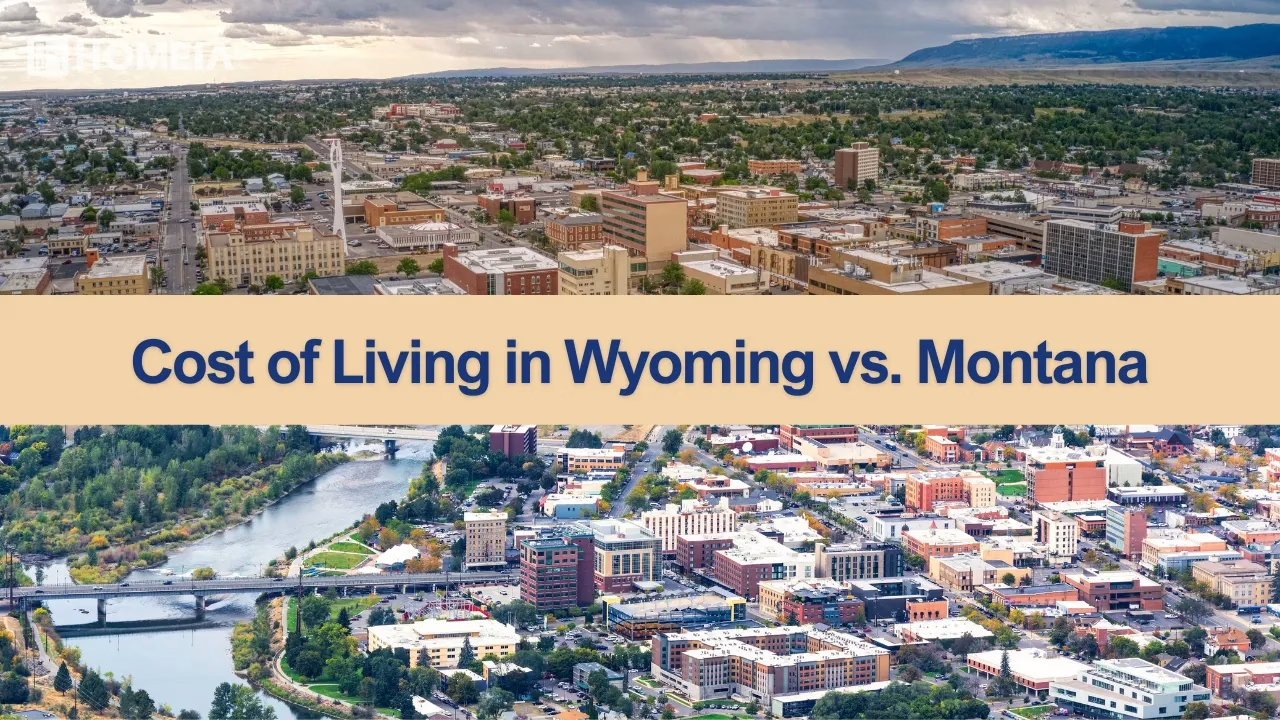
Cost of Living in Wyoming vs. Montana: Wyoming and Montana share the same picturesque scenery and frontier pull, attracting retirees, families, and remote workers to both. That shared appeal is where the similarities end, because their cost structures move in different directions. Wyoming skips income tax entirely, and that same low-tax approach carries over into some of the nation’s lowest property tax rates. Montana takes the opposite path. It pays workers more, with a minimum wage well above the federal floor, and backs that up with a greatly diversified job market. Housing is where these choices show up most clearly, with Wyoming’s homes running well below Montana’s across nearly every market.
This 2026 update draws on MIT Living Wage, Census, Zillow, and state tax records.
Key Takeaways
- Since 2016, only Montana has adopted Medicaid expansion for lower-income adults. Wyoming’s uninsured rate trails its competitor, hovering near 14% of adults.
- Wyoming holds a modest cost of living advantage, with a 2026 index of ~93.7 versus Montana’s ~95.5, a gap closer to 2 points than the 3–4 often cited.
- Wyoming homeowners insurance averages ~$1,000–$1,900/year, versus Montana’s ~$2,400, driven by wildfire and hail exposure.
- Home prices diverge sharply: Wyoming’s average sits around $356,000, versus Montana’s $461,000–$529,000.
- Montana’s $10.85 minimum wage is well above Wyoming’s $7.25 federal floor.
- Wyoming has no state income tax, while Montana levies 4.7%–5.65% graduated.
- Montana’s population (~1.14 million) is nearly double Wyoming’s (~588,000), reflecting a broader job market.
Related article
Moving to Wyoming: The Complete Relocation Guide & Checklist
Wyoming offers a rugged, low-density lifestyle defined by mountains, open plains, and Western independence. With no state income tax and a relatively low cost of living, it attracts newcomers seeking natural beauty, self-reliance, and tight-knit communities. This guide covers climate, costs, and residency basics…
Wyoming vs. Montana at a Glance
| Category | Wyoming | Montana |
|---|---|---|
| Population (2025 est.) | ~588,000 | ~1,145,000 |
| Median Household Income (2024) | ~$75,500–$78,680 | ~$75,300–$81,900 |
| Median Home Price (2026) | ~$342,000–$357,000 | ~$461,000–$529,000 |
| Average Rent (1-BR) | ~$1,000–$1,060/mo | ~$1,350–$1,700/mo |
| Cost of Living Index (2026) | ~93.7 | ~95.5 |
| State Income Tax | None | 4.70%–5.65% |
| Effective Property Tax Rate | ~0.40%–0.60% | ~0.61%–0.83% |
| Average Homeowners Insurance | ~$1,000–$1,900/yr | ~$2,400/yr |
| Living Wage (Single Adult, annual) | ~$41,000–$43,000 | ~$43,000–$45,000 |
| State Minimum Wage (2026) | $7.25 (federal floor) | $10.85/hr |
| Medicaid Expansion | No | Yes (since 2016) |
1. Living Wage Comparison
The MIT Living Wage Calculator, updated February 2026, estimates that a single adult in Wyoming needs roughly $41,000–$43,000 annually to meet basic needs. However, a Montana adult needs approximately $43,000–$45,000. Housing is the primary driver of its higher threshold, since costs run above the national average across most of the state’s populated areas.
The gap widens for families. A single parent with two children in Montana needs $90,000–$95,000 annually, compared to $85,000–$88,000 in Wyoming. Montana’s minimum wage of $10.85/hour, effective January 2026, is well above their $7.25 federal floor, meaningfully benefiting lower-income and service-sector workers. Keep in mind neither state’s minimum wage meets the living-wage threshold for a single adult without supplemental income.

Related article
7 Most Affordable Places to Live in Montana
Montana combines stunning scenery with surprising affordability, featuring low housing costs and no state sales tax. This guide highlights seven of the most budget-friendly Montana communities for 2026, analyzing housing, utilities, and transportation to help you find financial stability without losing Big Sky Country’s authentic outdoor charm.
2. Housing Costs
A. Home Prices
Wyoming’s average home value sits around $356,000–$357,000 as of 2026, up modestly over the prior year, with the state’s market remaining relatively balanced for buyers. Montana’s housing market is considerably more expensive, with a typical home value near $461,000–$529,000. Resort areas including Whitefish can exceed $1 million, while more affordable options remain in cities like Butte, closer to $315,000.
| Market | Median Price Range |
|---|---|
| Cheyenne, WY | ~$315,000–$340,000 |
| Casper, WY | ~$300,000–$325,000 |
| Billings, MT | ~$380,000–$460,000 |
| Missoula, MT | ~$500,000–$550,000 |
| Bozeman, MT | ~$600,000–$700,000 |
Wyoming’s average rent for a one-bedroom apartment ranges from $1,000–$1,060/month. Montana’s one-bedroom units average $1,350–$1,700/month, with overall prices frequently exceeding $1,600. Renters in Wyoming hold a meaningful affordability advantage across most unit sizes.
C. Homeowners Insurance
The Equality State holds a decisive insurance advantage, with average annual premiums of roughly $1,000–$1,900, well below the national average. Premiums in Big Sky Country run significantly higher, averaging approximately $2,400 annually, reflecting elevated wildfire risk, severe hailstorms, and rising construction costs pushing premiums up sharply in 2025. The $500–$1,400 yearly difference (depending on the comparison basis), adds meaningfully to Montana’s total homeownership cost.
D. Property Taxes
Wyoming offers some of the lowest property tax rates in the nation, with effective rates averaging 0.4%–0.6%; on a $350,000 home, annual taxes run approximately $1,400–$2,100. Montana’s 2026 graduated property tax structure taxes primary residences up to $378,000 at 0.76%, with higher tiers above that threshold, producing an effective rate near 0.61%–0.83%. On a $500,000 Montana home, annual taxes run approximately $3,400–$4,150, meaning the property tax gap can compound to $10,000 or more over a decade on comparably priced homes.
Related article
Moving to Montana: The Complete Relocation Guide & Checklist
Bordered by Canada and five U.S. states, Montana offers vast wilderness, outdoor adventure, and a strong sense of community. Home to over a million residents, it combines scenic beauty with affordability, no sales tax, and independent spirit. This guide provides key insights for relocating to the breathtaking Treasure State.
3. Economy and Taxes
A. Economic Landscape
The Cowboy State’s economy, with a GDP of roughly $48–$50 billion, centers on energy extraction, tourism, agriculture, and government services. Consistent employment opportunities has unemployment near 3.4% and a small population base of roughly 588,000 limits job diversity. Montana’s economy provides more options, with a GDP of roughly $70–$75 billion spanning healthcare, education, tourism, agriculture, tech, and manufacturing, and unemployment near a similar level. Montana’s larger labor force offers more employment opportunities across skill levels, though many service-sector wages lag national averages.
B. Tax Comparison
| Tax Category | Wyoming | Montana |
|---|---|---|
| State Income Tax | None | 4.70%–5.65% |
| Sales Tax (state + avg. local) | ~4.00% + local (avg. ~5.4%) | None statewide |
| Effective Property Tax Rate | ~0.40%–0.60% | ~0.61%–0.83% |
| Estate/Inheritance Tax | None | None |
For a household earning $100,000, Wyoming’s lack of income tax saves roughly $4,700–$5,600 annually compared to Montana’s graduated tax. Apply that to $150,000, savings grow to roughly $7,000–$8,500, and at $200,000 the gap reaches $9,500–$11,500. These should be weighed against Montana’s higher minimum wage and broader job market, as well as Wyoming’s sales tax, which Montana does not levy statewide. For homeowners, Wyoming’s lower property taxes and insurance costs further amplify its overall tax advantage.
Recommended for you



4. Safety
Using 2024 FBI data, Wyoming recorded a violent crime rate of approximately 230 per 100,000 residents, compared to Montana’s roughly 290–340 depending on the reporting source. Property crime also ran lower in Wyoming, at roughly 1,500 per 100,000 versus Montana’s 1,900–2,300. Because national NIBRS reporting transitions have introduced some inconsistency across state-level crime data, these figures should be treated as directional. Statewide averages mask considerable local variation in both states, and suburban communities around Billings, Bozeman, Cheyenne, and Casper consistently rank among the safest in the region.
5. Climate and Geography
Wyoming’s high-plains and mountain climate brings frigid winters, bearable summers, and semi-arid conditions, with significant snowfall in the western mountains and wildfire and hail risk that keep insurance premiums relatively moderate. Montana offers geographic diversity, from the Rocky Mountains to the Great Plains, with famously harsh winters and elevated wildfire exposure across much of the western part of the state. This remains the primary driver of its higher insurance premiums. For cost purposes, climate mainly affects insurance and heating bills, and Montana’s colder winters and higher wildfire risk translate into higher annual expenses for most households.
Related article
The 5 Best Places to Live in Wyoming: A City Comparison
Wyoming blends vast natural beauty with small-town living and frontier values. Choosing the right city is key to matching lifestyle goals. This data-driven guide ranks the five best places to live in Wyoming for 2025, evaluating affordability, jobs, safety, amenities, and quality of life across standout communities…
6. Education
Wyoming’s K-12 system ranks roughly in the middle nationally, with graduation rates near 85%–87% and per-pupil spending among the highest in the country. Montana’s K-12 system performs comparably, with graduation rates near 84%–88%. Higher education tuition favors Wyoming. The University of Wyoming charges approximately $5,000–$6,000/year in-state, versus $7,000–$9,000 at Montana State University-Bozeman and the University of Montana. Wyoming’s flagship is notably more affordable for families planning four-year college costs.
7. Childcare
Childcare costs run moderately higher in Montana than Wyoming, though each remains well below the most expensive coastal markets.
| Age Group | Wyoming Average | Montana Average |
|---|---|---|
| Infant (center) | ~$714/mo (~$8,500/yr) | ~$1,200–$1,400/mo |
| Toddler (center) | ~$700–$800/mo | ~$1,100–$1,300/mo |
| Preschool (center) | ~$585/mo (~$7,000/yr) | ~$606/mo (~$7,300/yr) |
For a family with one infant in full-time center care, Montana costs anywhere from $400–$700 more per month than Wyoming, an annual difference of $5,000–$8,000. Factor in a second young child and Wyoming’s annual savings can reach $10,000–$15,000. Both offer subsidized childcare for income-eligible families, though waiting lists are common in major metros.
Related article
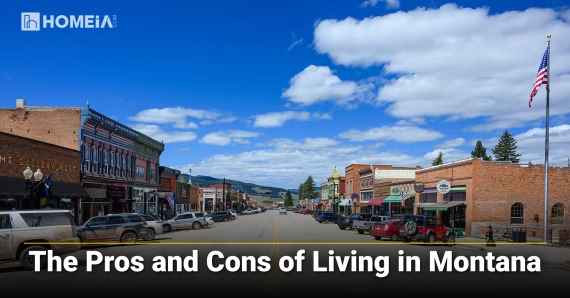
The Pros and Cons of Living in Montana
Montana is more than its majestic mountains and wild beauty—it’s a state where adventure and community thrive. However, challenges like long winters, job scarcity, and isolation exist. This guide explores Montana’s pros and cons, plus its best cities for professionals, families, and retirees seeking life in Big Sky Country.
8. Healthcare
Wyoming has not adopted Medicaid expansion, leaving it with one of the higher uninsured rates in the country, as close to 14% of adults lack coverage and healthcare access is a persistent challenge in rural areas. Montana expanded Medicaid in January 2016, and its uninsured rate is meaningfully lower, at approximately 9%, reflecting improved coverage for lower-income residents. ACA marketplace plans are available in both states, with premiums varying by region. For Medicare-covered retirees, each area provides convenient access to medical facilities in urban and suburban areas, though rural access remains limited in both, and Wyoming’s lack of Medicaid expansion is a more significant coverage gap for working-age, lower-income residents than for retirees.
9. Additional Cost Considerations
A. Gas Prices: Gasoline prices are closely comparable between the states, with WY and MT typically within a few cents of each other, amounting to roughly $50–$150 per year in difference over 15,000 miles of annual driving.
B. Groceries: Grocery costs in both states run near the national average, with Montana running higher in some categories due to transportation distances, representing roughly $360–$720 more per year for a typical family.
C. Transportation: Vehicle registration fees are lower in Wyoming, roughly $30–$50 annually versus $100–$200 in Montana. Auto insurance rates are broadly similar, with the latter running slightly higher due to weather-related claims.
D. Utilities: Wyoming’s residential electricity rates average roughly 12.8–12.9 cents/kWh, notably below the national average, with typical monthly bills around $115–$118. Montana’s rates are comparable, with average bills around $108–$131/month, and both states face substantial winter heating costs.
Conclusion
On overall affordability, Wyoming holds a modest edge, driven by lower home prices, insurance, property taxes, and childcare costs, though the gap is closer to 2 points than the 3–4 sometimes cited. Montana makes a compelling case for specific groups. Employees benefit from a higher minimum wage, job seekers find a more diversified economy, and Montana’s Medicaid expansion provides a healthcare safety net Wyoming lacks. Housing remains the most consequential variable reshaping affordability in 2026, as Montana’s prices strain many budgets while Wyoming’s market stays accessible.
Recommended for you




FAQs About the Cost of Living in Wyoming vs. Montana
1. Is Wyoming really that much cheaper than Montana in 2026?
Yes, though by a smaller margin than sometimes claimed. The cost of living index is approximately 93.7 for Wyoming versus 95.5 for Montana. This gap remains closer to 2 percentage points. Wyoming undercuts Montana substantially in home prices, insurance, and childcare, while Montana’s higher minimum wage and Medicaid expansion are its main offsetting advantages.
2. How much salary do you need in Montana to match a Wyoming lifestyle?
A household earning $80,000 in Wyoming would need approximately $81,500–$82,500 in Montana to maintain comparable purchasing power, based on the roughly 2% cost of living gap, though homeowners may need considerably more given Montana’s higher property taxes and insurance costs.
3. Which state is better for retirees in 2026?
Wyoming appeals to retirees prioritizing affordability, with no income tax and low property taxes and insurance costs that help preserve fixed incomes. Montana’s Medicaid expansion offers significant healthcare access for lower-income seniors, while its higher property taxes and insurance costs can strain retirement budgets.
4. Are people still moving to Wyoming and Montana in 2026?
Yes, though migration has moderated from pandemic-era peaks in both states. Montana has generally added additional net new residents annually than Wyoming. Here reflects an expansive economy, while Wyoming’s growth has been slower given its smaller population base.
5. Which state is better for remote workers in 2026?
Wyoming offers a greater financial case for most remote workers, given lower housing costs, lower insurance, and no state income tax. Montana competes on lifestyle, with vibrant college towns like Bozeman and Missoula and a broader social and cultural scene, at the cost of meaningfully higher housing and insurance expenses.
Share