






7 Most Affordable Places to Live in Washington
- Local Editor:Local Editor: The HOMEiA Team
- Category: USA , Washington


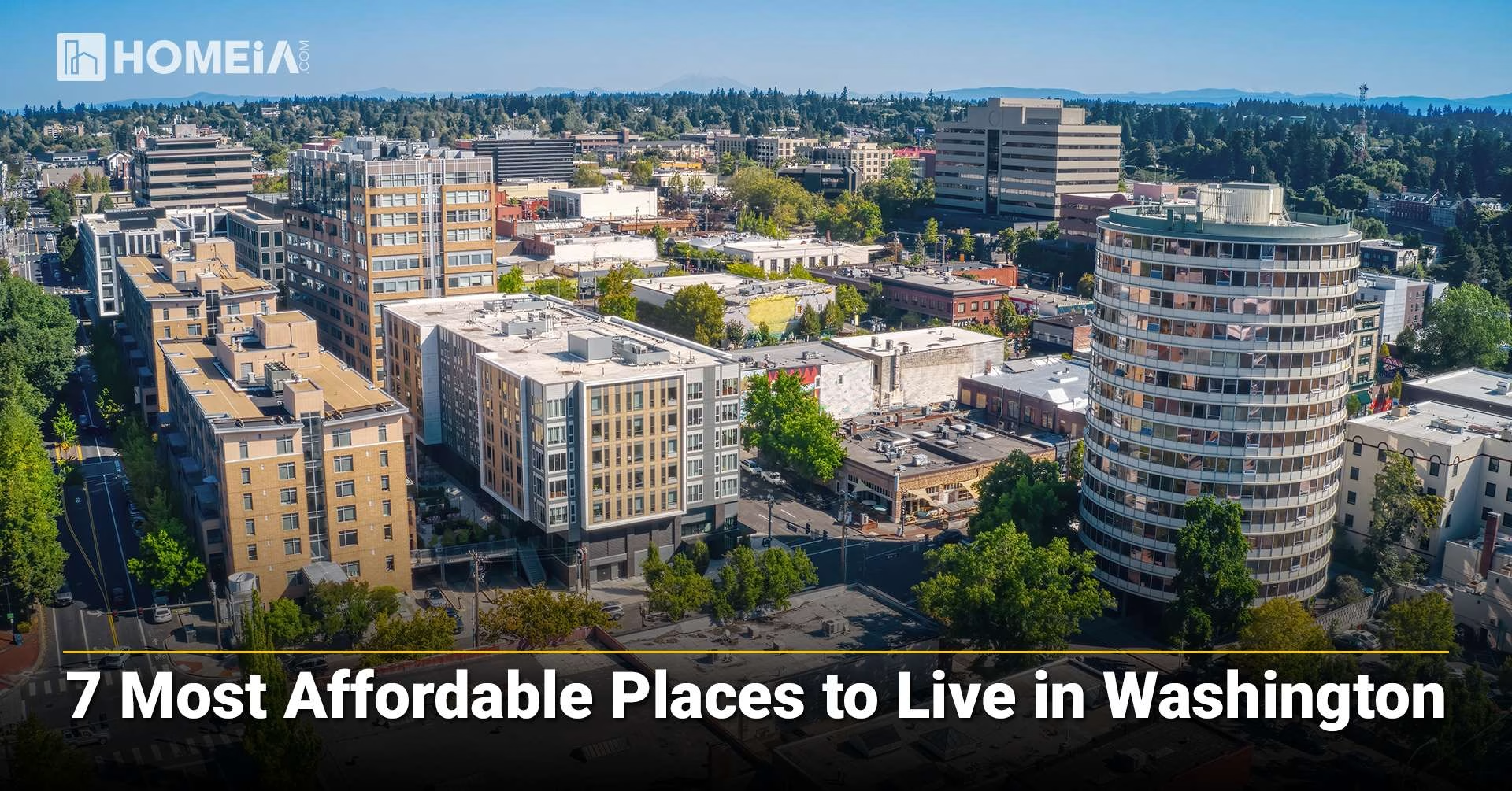
In a state known for its stunning natural beauty and booming tech economy, Washington offers surprising pockets of affordability defying its reputation for high costs. While cities like Seattle and Bellevue command premium prices, the Evergreen State still provides numerous communities where residents can enjoy the Pacific Northwest lifestyle without breaking the bank. With a median home price that varies dramatically across regions and no state income tax, Washington presents compelling opportunities for budget-conscious families, remote workers, and retirees seeking value.
This guide moves past the iconic landmarks of the Space Needle and Puget Sound to provide a detailed, data-driven analysis of the most affordable places to live in Washington. We’ve crunched the numbers on housing, utilities, transportation, and more to bring you seven cities and towns where you can achieve financial stability while enjoying the State of Love and Trust’s unparalleled natural surroundings.
Key Takeaways
- Regional Price Variations: Washington’s affordability varies dramatically from west to east, with communities east of the Cascade Mountains offering significantly lower costs while maintaining access to outdoor recreation.
- Urban-Rural Balance: Affordable living in Washington isn’t limited to remote towns; it includes smaller cities, college towns, and communities with growing job markets, offering choices for every lifestyle.
- Tax Advantages: Washington’s lack of state income tax provides significant savings for working professionals, though this is partially offset by higher sales and property taxes in some areas.
- Climate Considerations: The most affordable communities often come with different weather patterns, from the rainy west side to the drier, more extreme seasons east of the mountains.
- Essential to Research: Safety, school ratings, and employment opportunities vary dramatically from city to city, making it crucial to research specific neighborhoods rather than relying on statewide generalizations.
I. Methodology: How We Chose the Most Affordable Places
Our selection of these seven locations is based on a weighted criterion prioritizing key metrics relevant to residents seeking value. Our goal is to identify places that offer a harmonious balance of affordability, access to essentials, and community, not just the lowest price tag.
- Housing & Affordability (30%): The primary driver for relocation. We’ve examined median home price, average monthly rent, and overall affordability compared to state averages—using crucial ratios like home-price-to-income to gauge true accessibility in a high-cost environment.
- Cost of Living (25%): Beyond housing, this metric evaluates the day-to-day expenses that define a budget, including the cost of groceries, utilities, transportation, and healthcare relative to other parts of the state.
- Access & Infrastructure (20%): Here, affordability can be negated by isolation. This criterion assesses critical access to groceries, healthcare facilities, major employers, and reliable internet and transportation links.
- Community & Safety (15%): A fundamental need. This assesses crime rates and considers the strength of community engagement, social offerings, and amenities that contribute to a high quality of life.
- Economic Resilience & Opportunity (10%): For long-term viability, we evaluate economic diversity, key industries, and employment trends to ensure a community is built for a stable and prosperous future.
Data for this article is compiled from verified 2025 sources, including Zillow, the U.S. Census Bureau, Bureau of Labor Statistics, FBI crime data, and local market reports.

Related article
Our Methodologies to create HOMEiA Score Ratings for Each Group of Content
HOMEiA uses a consistent, data-driven methodology to evaluate U.S. states for livability, affordability, and long-term value. Our analysis centers on key factors such as Housing and Affordability, Cost of Daily Living, Access and Infrastructure, Community Strength, Safety and Quality of Life, Economic Resilience and Job Market…
7 Washington Communities, One State: A Quick Comparison Table
City | HOMEiA Score | Cost of Living | Average Monthly Rent (2-Bedroom) | Home Price to Income Ratio | Income to Rent Ratio | Safety Rating |
|---|---|---|---|---|---|---|
| Yakima | 78/100 | Same as U.S. average | $1,057 | 4.2:1 | 54.5x | 58/100 |
| Spokane Valley | 80/100 | 8% below U.S. average | $1,350 | 4.8:1 | 59.2x | 68/100 |
| Kennewick | 81/100 | 3% below U.S. average | $1,524 | 4.5:1 | 56.8x | 65/100 |
| Longview | 82/100 | 12% below U.S. average | $1,150 | 4.3:1 | 55.1x | 62/100 |
| Moses Lake | 84/100 | 18% below U.S. average | $950 | 3.9:1 | 52.3x | 70/100 |
| Vancouver | 85/100 | 5% below U.S. average | $1,450 | 5.1:1 | 61.5x | 72/100 |
| Bellingham | 87/100 | Among least affordable in the U.S. | $1,500 | 5.3:1 | 63.2x | 75/100 |
II. Detailed Community Analysis: Seven Affordable Enclaves
1. Yakima: The Fruit Basket Value

HOMEiA Score: 78/100
- Cost of Living: Same as U.S. average
- Monthly Rent: $1,057
- Home price to income ratio: 4.2:1
- Income to rent ratio: 54.5x
- Safety rating: 58/100
A. Cost of Living & Housing: Yakima offers some of the most affordable housing in central Washington, with median home values around $281,987 and housing costs approximately 10% cheaper than the U.S. average. An agricultural economy keeps costs manageable, though seasonal employment patterns can affect stability for some workers. Overall cost of living matches the national average, making it 25% lower than the Washington state average.
B. Economy & Job Market: As the heart of Washington’s agricultural industry, their economy revolves around fruit production, food processing, and distribution. Healthcare, education, and retail provide additional employment opportunities, though higher-paying professional jobs may be limited. Median household income is approximately $59,228.
C. Access & Infrastructure: Located along I-82, this serves as a regional hub for central Washington. Essential services including hospitals, community college, and shopping centers can all be found here. While relatively isolated from major urban centers, it offers good connectivity for the region.
D. Quality of Life & Culture: It boasts substantial sunshine annually and access to outdoor recreation in the nearby Cascade Mountains. Proud of its rooted agricultural identity with wineries, farmers markets, and cultural events celebrating its heritage. However, the crime rate is considerably higher than the national average, which should be considered when evaluating neighborhoods. For those seeking other affordable options, you might explore the most affordable places to live in Oregon.
Related article
Moving to Washington: The Complete Relocation Guide & Checklist
Washington offers a lifestyle shaped by natural beauty, innovation, and cultural diversity. Over 8 million residents enjoy access to world-class cities like Seattle alongside forests, mountains, and coastlines. With a strong tech-driven economy, outdoor recreation, and progressive values, this guide covers relocation essentials…
2. Spokane Valley: The Eastern Washington Gem
HOMEiA Score: 80/100
- Cost of Living: 8% below U.S. average
- Monthly Rent: $1,350
- Home price to income ratio: 4.8:1
- Income to rent ratio: 59.2x
- Safety rating: 68/100
A. Cost of Living & Housing: Spokane Valley provides exceptional value in eastern Washington’s largest metropolitan area. Housing costs remain reasonable compared to western Washington, with median home prices in the Spokane area approximately $410,000, offering a good selection of single-family homes and apartments at accessible price points.
B. Economy & Job Market: Economical benefits from proximity to Spokane’s include healthcare, education, and manufacturing sectors. Retail, healthcare, and professional services provide stable employment, with growing opportunities in tech and advanced manufacturing.
C. Access & Infrastructure: As a suburb of Spokane, residents enjoy access to major medical facilities, shopping centers, and entertainment venues. I-90 provides excellent connectivity, and Spokane International Airport (GEG) offers convenient air travel options.
D. Quality of Life & Culture: SV offers four distinct seasons with abundant outdoor recreation opportunities. Their community features numerous parks, trails, and family-friendly amenities while maintaining a lower cost of living than western state counterparts. It’simportant to note that crime rates are higher than average, with property crimes being a particular concern.
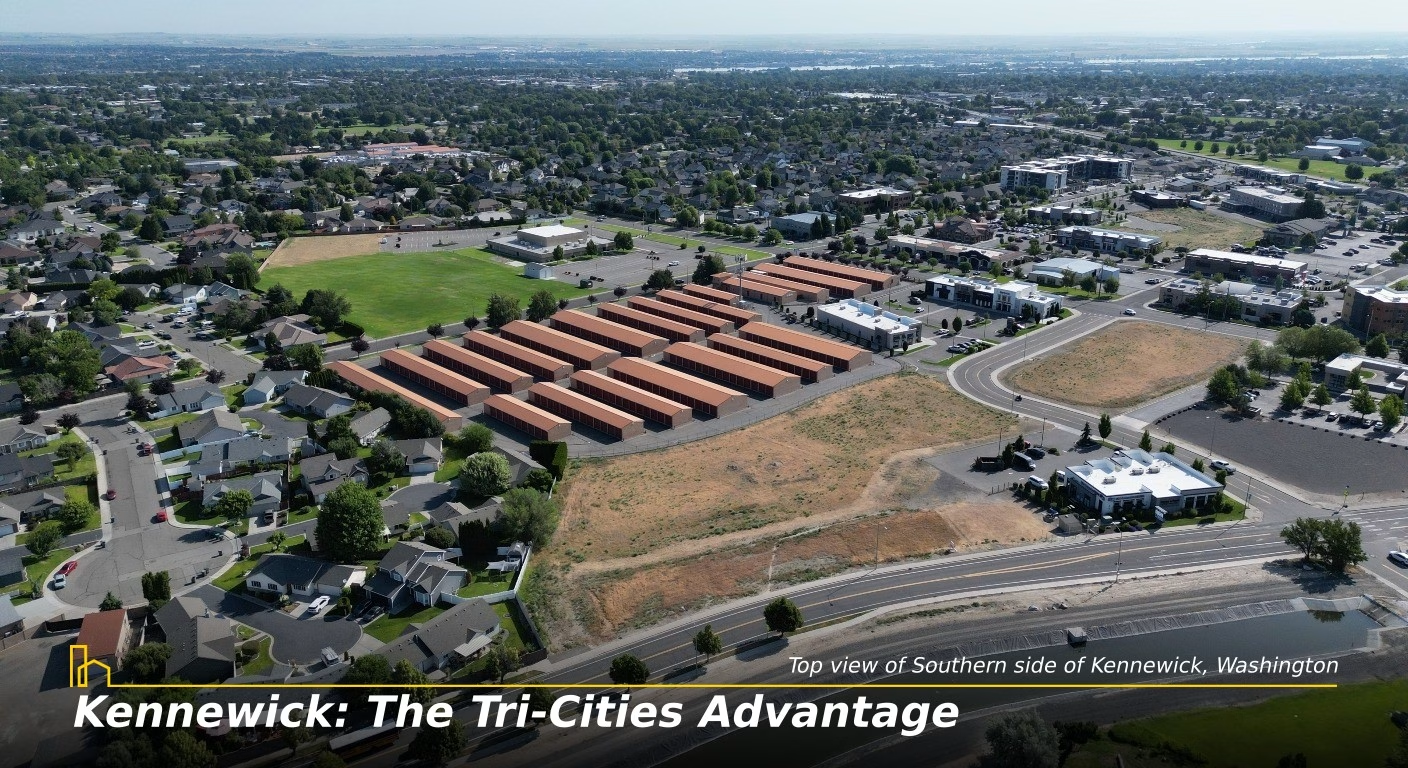
3. Kennewick: The Tri-Cities Advantage
HOMEiA Score: 81/100
- Cost of Living: 3% below U.S. average
- Monthly Rent: $1,524
- Home price to income ratio: 4.5:1
- Income to rent ratio: 56.8x
- Safety rating: 65/100
A. Cost of Living & Housing: Kennewick offers competitive housing prices within the growing Tri-Cities area, having home prices around $504,398. A stable economy and sunny climate make it an attractive option for families and professionals seeking affordability without sacrificing amenities. Cost of living is 28% lower than the Washington state average and 3% less than the national average.
B. Economy & Job Market: Economic prosperity is anchored by the Hanford Nuclear Site and federally funded operations, with approximately 150 companies in the Tri-Cities connected to federal funding. Workers in this cluster earn an average salary of $125,000. Agriculture, healthcare, and bubbling tech sectors also contribute to the economy. This median household income is $72,867.
C. Access & Infrastructure: As part of the Tri-Cities metropolitan area, Kennewick shares resources with Richland and Pasco. The region has exceptional healthcare facilities, higher education options, and reliable transportation infrastructure.
D. Quality of Life & Culture: Kwick enjoys substantial sunny days annually and access to water sports on the Columbia and Snake Rivers. The community entails family-friendly attractions, including parks, museums, and seasonal events. However, crime rates are higher than in many comparable communities, which prospective residents should consider.
Related article
The 5 Best Places to Live in Washington: A City Comparison
Washington blends rugged wilderness with innovative urban life, making community choice essential. This guide ranks the state’s five best places to live using data on jobs, affordability, safety, amenities, and quality of life. From Seattle’s tech-driven energy to Spokane’s quieter appeal, we highlight where you can build…
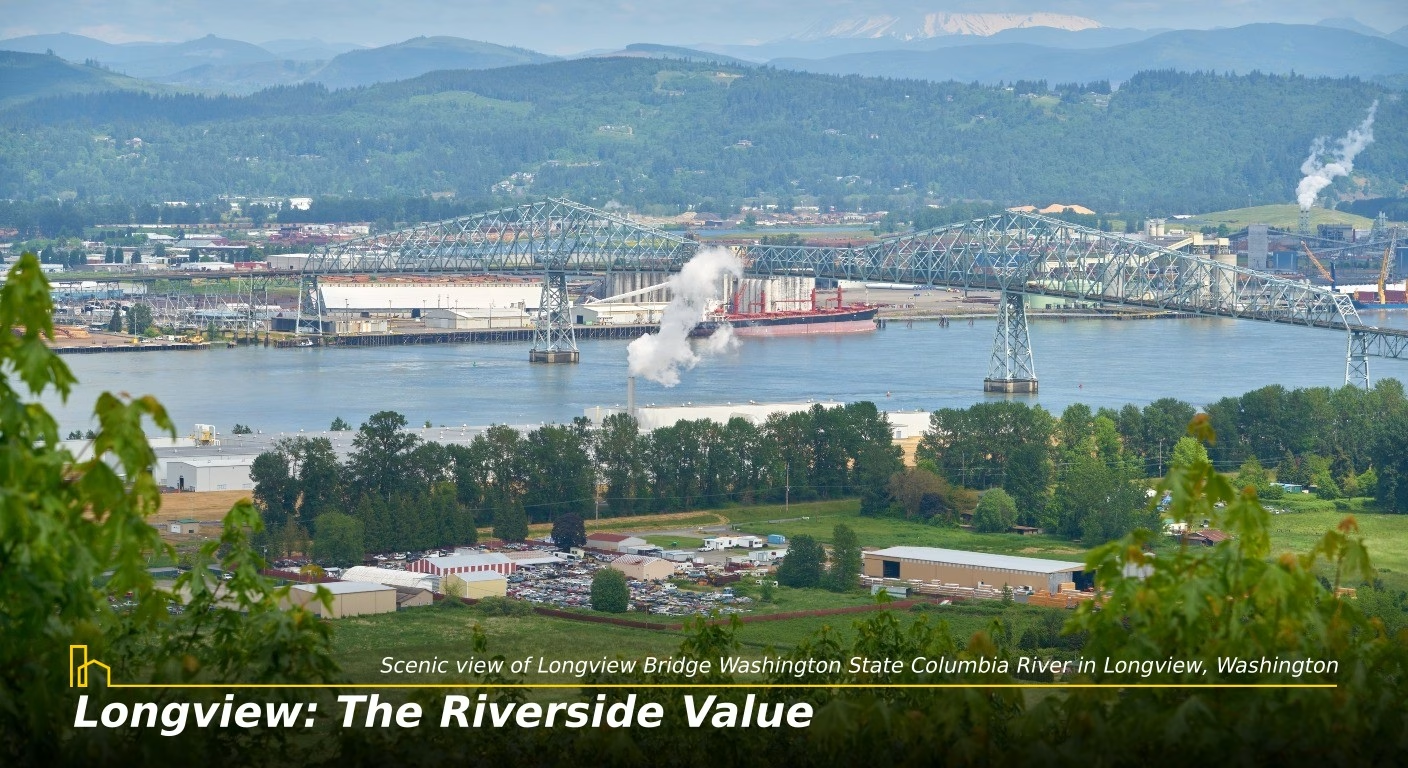
4. Longview: The Riverside Value
HOMEiA Score: 82/100
- Cost of Living: 12% below U.S. average
- Monthly Rent: $1,150
- Home price to income ratio: 4.3:1
- Income to rent ratio: 55.1x
- Safety rating: 62/100
A. Cost of Living & Housing: Longview provides affordable living in southwest Washington with housing costs significantly below Portland metro averages. A median listing home price was approximately $399,900 in mid-2025. Celebrated industrial heritage has created a resilient housing market with desirable value for homebuyers.
B. Economy & Job Market: The economy centers around manufacturing, forestry products, and port operations. Their regional forest products sector supports approximately 42,000 workers statewide, with significant employment in LV. Healthcare and education provide additional employment stability, though the area has faced challenges with economic diversification. Drax’s new pellet production facility represents a $250 million investment supporting 300 direct and indirect jobs.
C. Access & Infrastructure: Located along I-5 and the Columbia River, convenient connectivity to Portland and Seattle markets exists. There are essential services and looking to grow as they continue working on revitalizing its downtown core.
D. Quality of Life & Culture: Here features beautiful riverfront parks and access to outdoor recreation in the nearby Cascade Range.Residents honor their history and are aiming to enhance cultural and recreational offerings.
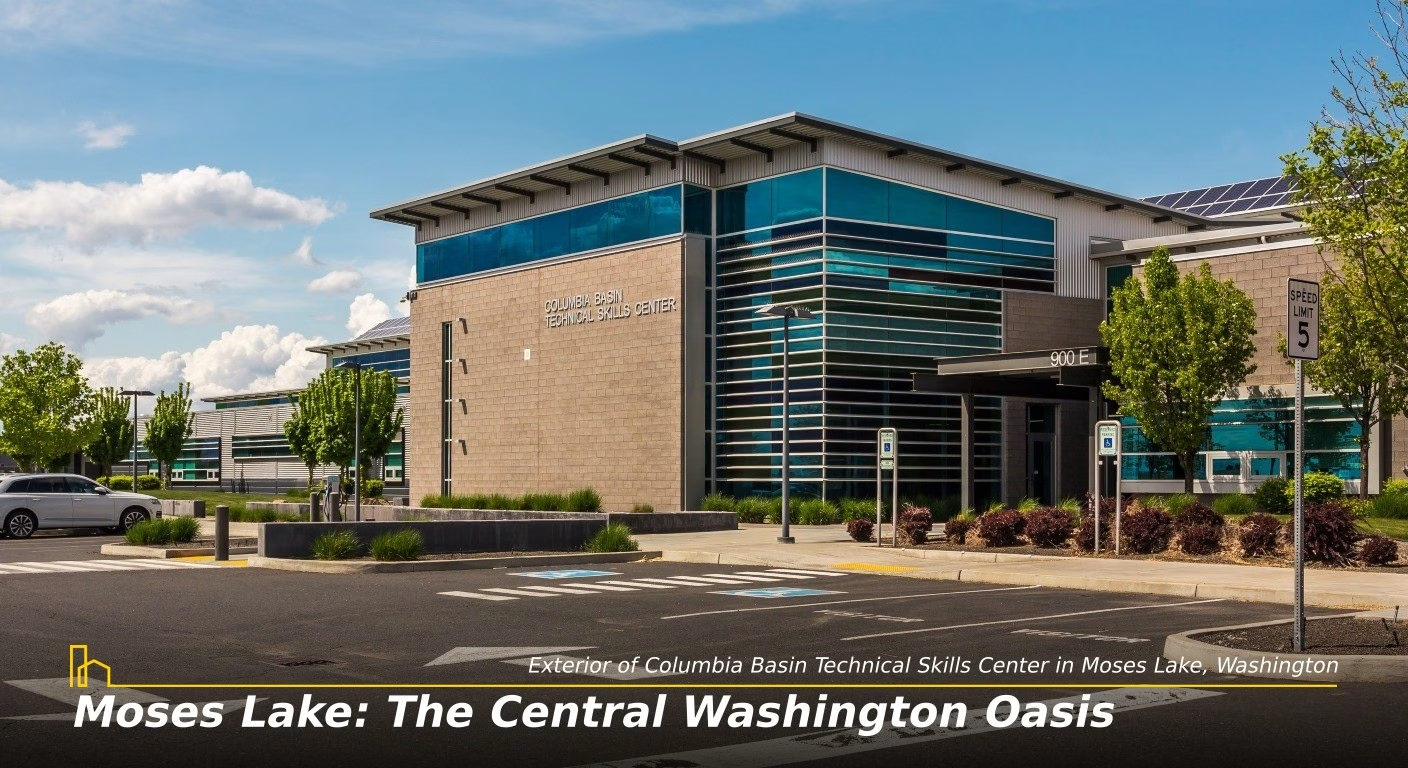
5. Moses Lake: The Central Washington Oasis
HOMEiA Score: 84/100
- Cost of Living: 18% below U.S. average
- Monthly Rent: $950
- Home price to income ratio: 3.9:1
- Income to rent ratio: 52.3x
- Safety rating: 70/100
A. Cost of Living & Housing: Moses Lake offers some of the most affordable housing in the Evergreen State, with an average home value of $369,105 and a cost of living well below national averages. This combination of low prices and sunny climate makes it attractive for budget-conscious residents.
B. Economy & Job Market: Economic prowess is driven by agriculture, manufacturing, and growing technology sectors. Major employers include data centers drawing on the region’s low electricity costs of approximately $0.026 per kilowatt hour from hydroelectric power, food processing facilities, and aerospace manufacturing operations. It has experienced robust economic growth driven by its role as a data center hub.
C. Access & Infrastructure: Located along I-90, ML serves as a transportation hub for central Washington. The city has a regional airport (MWH) and is working to expand healthcare and educational resources through the Moses Lake School District.
D. Quality of Life & Culture: This area’s namesake lake provides unbeatable water recreation opportunities, and the sunny climate supports outdoor activities year-round. The community offers a small-town feel with growing amenities.
Recommended for you




6. Vancouver: The Portland Perk Without the Price
HOMEiA Score: 85/100
- Cost of Living: 5% below U.S. average
- Monthly Rent: $1,450
- Home price to income ratio: 5.1:1
- Income to rent ratio: 61.5x
- Safety rating: 72/100
A. Cost of Living & Housing: Vancouver (not to be confused with the major city across the border) provides the best of both worlds: Washington’s no-income-tax advantage with access to Portland’s job market and amenities. Average home value is $503,275, down 1.0% over the past year. Housing remains more affordable than across the river in Oregon, with the median home price around $539,000 as of early 2025, representing a 41% increase from 2020 levels.
B. Economy & Job Market: Many residents commute to Portland for employment in tech, healthcare, and professional services. Their own economy is growing in healthcare, advanced manufacturing, and retail sectors.
C. Access & Infrastructure: Cherished transportation links including I-5 and I-205 bridges connect Vancouver to Portland. The city has comprehensive healthcare facilities, higher education options, and urban amenities.
D. Quality of Life & Culture: Here offers a high quality of life with access to both urban Portland attractions and Washington’s natural beauty. The community features historic neighborhoods, riverfront parks, and family-friendly amenities. Their population is approximately 92,000, making it a welcoming and safe community.
7. Bellingham: The Coastal College Town
HOMEiA Score: 87/100
- Cost of Living: Ranked as one of least affordable in the U.S.
- Monthly Rent: $1,500
- Home price to income ratio: 5.3:1
- Income to rent ratio: 63.2x
- Safety rating: 75/100
A. Cost of Living & Housing: Bellingham has been ranked fourth as one of the least affordable cities in the country and takes the number one spot in the small city category. Their ratio of home prices to income places it among the ranks of southern California cities in terms of unaffordability. Despite the presence of Western Washington University, housing costs have risen significantly, making it challenging for Washingtonians.
B. Economy & Job Market: This economy benefits from the university, healthcare, and growing innovation sectors. Outdoor recreation tourism and manufacturing also contribute to a diverse employment base. WWU provides cultural and economic stability to the community.
C. Access & Infrastructure: Located between Seattle and Vancouver, BC, residents are spoiled by convenient regional connectivity. The city has comprehensive healthcare, educational resources, and international airport access (BLI). With a population of 92,000, it maintains city amenities while retaining community character.
D. Quality of Life & Culture: It boasts stunning natural surroundings with access to the San Juan Islands, Mount Baker, and the Pacific Ocean. The community features a vibrant arts scene, outdoor recreation, and environmental consciousness. Mayor Kim Lund signed an executive order in November 2024 to increase housing opportunities, focusing on middle housing and developing denser population areas to combat the lack of inventory and improve affordability challenges.
III. A Relocation Checklist for Your Washington Home
- Understand Regional Climate Differences: Western Washington experiences mild, rainy winters while eastern Washington has more extreme seasonal variations with scorching summers and frozen winters.
- Research Employment Opportunities: Job markets vary significantly by region, with tech concentrated in the Puget Sound area and different industries dominating other regions.
- Consider Transportation Costs: While having no state income tax, vehicle registration fees starting at $43.25 plus additional fees, and gas taxes can be higher than national averages, especially for commuting.
- Evaluate School Districts: Overall school quality varies dramatically by district, with some of the nation’s best schools including Bellevue School District ranked as the top public school district in the state and others facing challenges.
- Plan for Outdoor Lifestyle: The state’s natural beauty is a major draw, but access to outdoor recreation varies by location and may require additional transportation or equipment costs.
Conclusion: Your Affordable Washington Future Awaits
From the sunny orchards of Yakima to communities in eastern Washington, these communities prove that you can access the PNW dream at various price points. Washington offers diverse opportunities to build a future where an appreciation for natural beauty is matched by careful financial planning in your chosen home. By carefully considering what each of these communities has to offer, including their specific cost structures and affordability challenges, you can find the spot to plant your roots in the Evergreen State.
Recommended for you




FAQs About the Most Affordable Places to Live in Washington
1. Is it possible to find a home under $300,000 in Washington?
Yes, absolutely. Markets like Moses Lake with average home values around $369,105, Yakima with median values of $281,987, and Longview regularly have homes available below $300,000. These may require some updates but represent excellent value compared to western Washington prices.
Transportation and utilities. Vehicle registration fees start at $43.25 with additional fees based on vehicle weight, location, and taxes. Gas prices can be substantial, especially for commuting. In eastern Washington, heating and cooling costs can be significant due to more extreme temperatures.
3. Are these communities good for remote workers?
It varies. Larger towns including Vancouver, Spokane Valley, and Bellingham have reliable high-speed internet. More remote communities may have service limitations. Moses Lake has grown as a data center hub with substantial technology infrastructure. It’s essential to confirm reliable internet availability at your specific address before moving.
4. How does Washington’s tax structure affect affordability?
Washington’s lack of state income tax provides significant savings for working professionals. However, this is partially offset by higher sales taxes (6.5% state rate plus local additions that vary by jurisdiction) and property taxes that vary by county.
5. How do I choose between these cities?
Prioritize your needs based on accurate cost data:
- For Jobs: Look at Vancouver (Portland access) or Spokane Valley
- For Lowest Cost: Consider Moses Lake or Yakima
- For Families: Vancouver and communities with strong school districts like Bellevue School District (ranked number 1 in Washington)
- For Retirees: Kennewick and Spokane Valley provide good value and healthcare
- For Outdoor Access: Various communities offer exceptional recreation, though some western Washington locations face significant affordability challenges
Always research specific neighborhoods within these cities and verify current housing costs, as conditions and prices can vary significantly.
Share