











South Dakota offers more than prairies and Mount Rushmore, it’s a state shaped by outdoor adventure, strong community values, and a pioneering spirit. But challenges include harsh winters, limited economic diversity, and geographic isolation. This guide delivers a balanced look at life in the 605 and highlights the best cities for young professionals, families, and retirees…
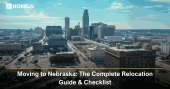
Moving to Nebraska: The Complete Relocation Guide & Checklist
- Local Editor:Local Editor: Jennifer Vig
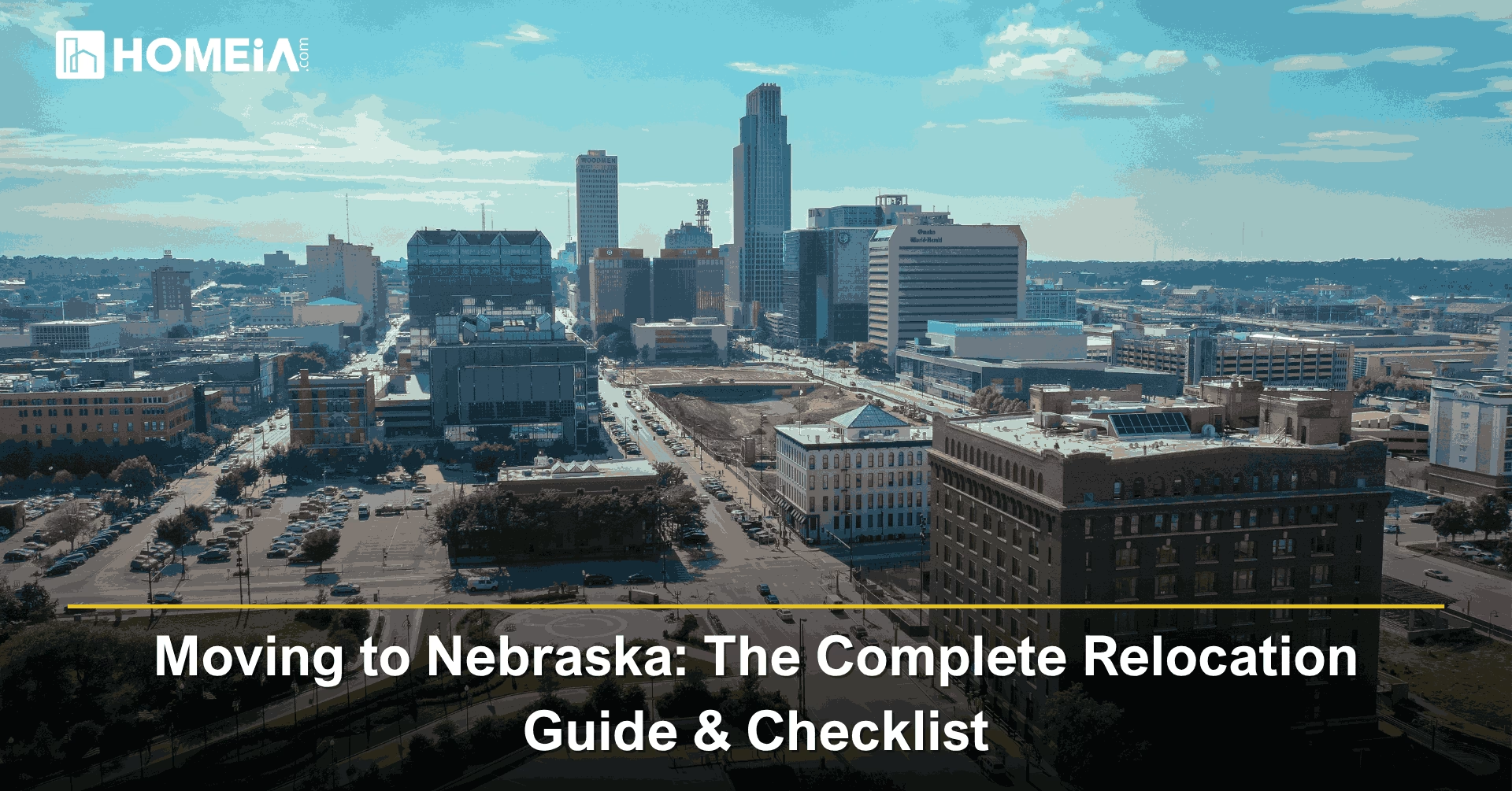
Located in the heart of the country, Nebraska offers a mix of growing cities, open landscapes, and affordable living that surprises a lot of newcomers. Around 2 million people call the Cornhusker State home, drawn by steady job opportunities, lower living costs, and communities that often feel more connected than those in larger metro areas. Omaha and Lincoln drive much of the state’s growth, bringing in major employers, strong healthcare systems, and a food and entertainment scene that continues to expand year after year.
Known for cornfields, cattle, and college football, Nebraska offers far more than many outsiders expect. Affordable living, planned income tax reductions, and access to both outdoor recreation and career opportunities continue attracting people looking for a more grounded and affordable place to call home.
Key Takeaways
- Affordable living: Nebraska’s cost-of-living index is 91.8 (U.S. average = 100), placing many everyday expenses below the national average. Housing and utility costs are especially affordable compared to many other parts of the country.
- Four distinct seasons: Expect hot summers, colorful falls, cold winters, and stormy springs, with the possibility of tornadoes in spring and blizzards during winter months.
- Strong job market: Nebraska’s unemployment rate was 3.1% in February 2026, well below the national average of 4.4%. Average weekly private-sector earnings reached $1,102.89 during the same period.
- Growing cities and stable incomes: Nebraska’s median household income reached $86,140, while the state’s population grew to just over 2 million residents by mid-2025.
- Outdoor recreation and community culture: Nebraska offers 75 state park areas along with one of the largest sandhill crane migrations in the world each spring.
Related article
5 Best Places to Live in Nebraska
Nebraska offers affordability, strong job markets, quality healthcare, and solid schools, with a cost-of-living index below the national average. This guide highlights five top cities that balance housing costs, employment, safety, education, and overall livability—helping you find a community where daily life is both practical and rewarding…
1. Culture and Lifestyle
A. Heritage and Traditions: Nebraska’s identity runs deeper than agriculture, although farming and ranching still shape much of the state’s economy, landscape, and culture. The state served as a major corridor for westward expansion along the Oregon, California, and Mormon trails, and that history can still be seen today at places like Chimney Rock near Scottsbluff.
Across both larger cities and small rural communities, many residents take pride in Nebraska’s strong sense of practicality, resilience, and neighborliness. From Omaha’s Midtown neighborhoods to ranching towns throughout the Sandhills, newcomers often notice a grounded and community-oriented way of life.
College football is more than just a pastime in Nebraska. For many residents, it is a major part of the state’s culture and identity. Memorial Stadium in Lincoln has sold out every home game since November 3, 1962, creating the longest sellout streak in college football history. New residents quickly learn that game days in Nebraska are taken seriously, and wearing red on Saturdays is practically expected.
B. Arts, Sports and Entertainment: Omaha’s Old Market district serves as one of the state’s main hubs for arts, dining, and nightlife, with independent galleries, live music venues, and locally loved restaurants filling its historic brick warehouse streets. The Joslyn Art Museum houses a nationally recognized collection spanning more than 5,000 years, while the Holland Performing Arts Center hosts the Omaha Symphony along with touring Broadway productions throughout the year.
Lincoln’s Haymarket District offers a similar atmosphere on a slightly smaller scale, blending restaurants, shops, entertainment, and historic architecture into one of the city’s most popular gathering areas. Omaha is also home to the College World Series, which has been held in the city every year since 1950 and remains one of Nebraska’s most recognizable sporting traditions.
Related article
The Pros and Cons of Living in Nebraska
Nebraska offers affordability, strong job opportunities, and close-knit communities that reflect deep local pride. However, it also comes with trade-offs like higher property taxes, severe weather risks, and rural isolation for some. This guide provides a balanced look at the pros and cons to help you decide…
2. Food Scene and Nightlife
Nebraska’s food culture starts with beef, and locals take it seriously. Omaha Steaks began here in 1917 and helped turn the city’s beef industry into a nationally recognized brand, but one of the state’s most iconic local foods is the Runza. The sandwich, made with yeast dough filled with ground beef, cabbage, and onions, has been a Nebraska staple since the first Runza restaurant opened in Lincoln in 1949. Today, there are more than 85 locations across the region, and Runzas remain a game-day tradition at Cornhuskers football games.
Beyond those well-known staples, Omaha has developed one of the Midwest’s more diverse food scenes for its size. Along South 24th Street, visitors can find authentic Mexican taquerias, Vietnamese bakeries, and African restaurants that reflect the city’s growing immigrant communities. Lincoln tends to lean more toward farm-to-table restaurants that highlight Nebraska’s agricultural roots, while craft breweries have steadily expanded in both cities over the past decade. Smaller towns across rural Nebraska bring their own traditions as well, from county fair food and church suppers to Wilber’s annual Czech festival.
3. Outdoor Recreation and Natural Beauty
Nebraska rewards people who look beyond the flat-prairie stereotype. The Nebraska Sandhills, located in the north-central part of the state, cover nearly 20,000 square miles and make up the largest intact sand dune ecosystem in the Western Hemisphere. The region is home to more than a thousand lakes and wetlands that support a wide variety of waterfowl and prairie wildlife.
The Platte River migration corridor is home to one of the most remarkable wildlife events in North America. Each spring, from mid-February through early April, more than one million sandhill cranes gather along the central Platte River near Kearney during their annual migration. In 2025, the spring migration reached a record high, with 736,000 cranes counted during a single survey of the central valley.
Fort Robinson State Park near Crawford offers a completely different outdoor experience, covering more than 22,000 acres with opportunities for horseback riding, bison viewing, and overnight stays inside historic cavalry buildings.
Related article
7 Most Affordable Places to Live in Nebraska
Nebraska remains highly affordable, with below-average living costs, manageable home prices, and short commutes. Beyond statewide trends, this guide highlights seven cities that balance affordability with jobs, healthcare, infrastructure, and quality of life—helping residents find places where long-term stability and everyday practicality truly align…
4. Climate
Nebraska has a continental climate with four distinct seasons, each bringing very different weather throughout the year. Summers are typically hot and humid, often with frequent thunderstorms. Fall brings cooler temperatures, colorful scenery, and some of the most comfortable weather of the year. Winters can be harsh at times, with January temperatures in Omaha regularly dropping into the teens. Spring brings warmer weather along with the possibility of severe storms and tornadoes, especially during May and June.
| Season | Temperature (deg. F) | Highlights |
| Spring | 35-70 | Tornado season; sandhill crane migration (Feb-April); wildflowers |
| Summer | 70-92 | Hot and humid; College World Series in June; long daylight hours |
| Fall | 35-70 | Cool and comfortable weather; fall foliage; Cornhusker football; harvest festivals |
| Winter | 12-35 | Cold temperatures with frequent snow; possible ice storms; indoor events and hockey |
New residents moving from warmer climates should plan to invest in quality winter gear early. Nebraska winters often require proper outerwear, winter-ready tires, and an emergency kit in the vehicle, especially when traveling outside larger cities. The western Panhandle is typically colder and drier than the eastern part of the state.
5. Cost of Living and Affordability
Nebraska continues to rank as one of the more affordable states in the country. The state’s overall MERIC cost-of-living index came in at 91.8 for 2025 (U.S. average = 100), with housing costs running roughly 21% below the national average. Utilities and transportation expenses also tend to be lower than what many people are used to paying in other parts of the country.
Everyday costs can feel more manageable here overall, especially with groceries fully exempt from state sales tax. Nebraska’s median household income of $86,140 also tends to stretch further here than it does in many larger metro areas across the U.S.
A. Housing Market
Nebraska’s housing market remains more affordable than many parts of the country, although prices have continued rising steadily in recent years. As of March 2026, the statewide Zillow Home Value Index reached $276,499, reflecting a 3.3% increase year over year.
Home values in Omaha averaged around $294,189, while Lincoln’s median sold price came in near $292,000. Statewide, average rent was approximately $1,081 per month, which remains relatively manageable compared to many larger metro areas across the country.
| Housing Type | Omaha | Lincoln | Nebraska Statewide |
| Avg. Home Value (ZHVI) | $294,189 (Mar 2026) | ~$292,000 (est.) | $276,499 (Mar 2026) |
| Avg. 1-BR Rent | ~$1,098/mo | ~$1,081/mo | ~$1,104/mo avg. |
| Avg. 2-BR Rent | ~$1,245/mo | ~$1,225/mo | ~$1,364/mo |
| Effective Property Tax Rate | ~1.66% (Douglas Co.) | ~1.45% (Lancaster Co.) | ~1.61% statewide avg. |
B. Daily Expenses
Nebraska is the only state in the country served entirely by publicly owned electric utilities. Major providers such as Omaha Public Power District (OPPD), Nebraska Public Power District (NPPD), and Lincoln Electric System (LES) supply electricity across the state.
As of April 2026, residential electricity rates averaged around 11.8 cents per kWh, which was roughly 35% below the national average. Lower utility costs are one of the reasons many residents find everyday living expenses more manageable in Nebraska compared to other parts of the country.
| Monthly Expense | Average Cost |
| Electricity (avg. monthly bill) | ~$105-$110 |
| Groceries (family of 4) | ~$900-$1,000 (sales tax-exempt) |
| Mobile and internet | ~$150-$170 |
| Omaha Metro Transit fare | $1.25-$1.50 per ride |
Recommended for you
6. Jobs and Economy
Nebraska’s strong job market continues to be one of the state’s biggest draws for people considering a move. As of February 2026, the seasonally adjusted unemployment rate was 3.1%, well below the national average of 4.4% during the same period. Average weekly earnings for private-sector employees reached $1,102.89.
Omaha also serves as headquarters for several major companies, including Berkshire Hathaway, Union Pacific Railroad, Kiewit, and Mutual of Omaha, giving the city a surprisingly strong corporate and business presence for its size.
| Employer | Approx. Employment | Sector |
| Berkshire Hathaway (global HQ) | Major Omaha presence | Diversified financial and industrial |
| Nebraska Medicine / UNMC | 5,000+ (Omaha) | Healthcare and research |
| CHI Health | 5,000+ (Omaha) | Healthcare |
| Offutt Air Force Base | 5,000+ (Bellevue) | Military and federal |
| Union Pacific Railroad (HQ) | 2,500-4,999 (Omaha) | Transportation and logistics |
| Mutual of Omaha (HQ) | 2,500-4,999 (Omaha) | Finance and insurance |
| Kiewit Corporation (HQ) | Major Omaha employer | Engineering and construction |
7. Education and Schools
Nebraska’s education system includes 245 public school districts serving roughly 325,000 students across the state. The four-year high school graduation rate reached 88.2% during the 2023–2024 school year, reflecting consistently strong graduation outcomes compared to national averages.
Higher education also plays a major role in the state’s economy and workforce development. The University of Nebraska–Lincoln is a Big Ten research university with approximately 25,000 students, while the University of Nebraska at Omaha and the University of Nebraska Medical Center contribute to the state’s growing research and healthcare sectors. Omaha is also home to Creighton University, a nationally recognized Jesuit institution known for its law, medical, and healthcare programs.
| Institution Type | Number | Approx. Annual In-State Cost |
| Public Universities (NU system) | 4 campuses | $10,000-$13,500 |
| Private Colleges | 15+ | $22,000-$38,000 |
| Community Colleges | 6 | $3,500-$5,500 |
Related article
The 5 Best Places to Live in Iowa: A City Comparison
Iowa blends small-town warmth with modern opportunity, offering both agricultural roots and urban sophistication. This guide highlights the five best Iowa cities to live, based on affordability, opportunity, safety, and quality of life, from bustling Des Moines to scholarly Iowa City, helping you find your perfect Midwestern home.
8. Tax Structure
Nebraska uses a graduated state income tax system, with rates that vary based on income level. For the 2026 tax year, the top income tax rate dropped to 4.55% following legislation signed by Governor Jim Pillen in 2023. Rates currently range from 2.46% at the lowest bracket to 4.55% at the top, with another reduction planned for 2027 that would lower the top rate to 3.99%.
The statewide sales tax rate is 5.5%, although local taxes push the combined rate to around 7.0% in Omaha and 7.25% in Lincoln. One notable benefit for residents is that groceries are fully exempt from state sales tax across Nebraska.
| Tax Type | Rate | Notes |
| Income Tax (2026) | 2.46%-4.55% (graduated) | Drops to flat 3.99% for tax year 2027 (LB 754) |
| Sales Tax | 5.5% state + local | Omaha 7.0%; Lincoln 7.25%; Grand Island 7.5% |
| Grocery Tax | 0% state (groceries exempt) | Prepared food remains taxable |
| Property Tax | ~1.61% statewide eff. avg. | 9th-highest in U.S.; set at county level |
| Vehicle Registration | Varies by age and value | Renewable annually through county treasurer |
Property taxes in Nebraska are generally higher than the national average, with effective rates above the U.S. average of 1.02%. Douglas County, which includes Omaha, has an effective property tax rate of around 1.66%, while Lancaster County, home to Lincoln, sits closer to 1.45%.
Nebraska does offer property tax relief programs for some residents, including the Homestead Exemption for eligible seniors, qualified individuals with disabilities, and qualified disabled veterans.
Related article
9. Best Places to Live
| City | Population (est.) | Avg. Home Value | Key Features |
| Omaha | ~488,837 | $294,189 (ZHVI, Mar 2026) | Fortune 500 HQ; arts and dining; major healthcare |
| Lincoln | ~302,000 | ~$292,000 (ZHVI est.) | UNL Big Ten campus; state capital; startup growth |
| Bellevue | ~66,000 | Suburban Omaha pricing | Offutt AFB; strong schools; Omaha proximity |
| Grand Island | ~53,000 | ~$280,000-$315,000 | Central Nebraska hub; manufacturing; agriculture |
| Kearney | ~34,246 | ~$315,000-$380,000 | UNK campus; I-80 corridor; crane migration gateway |
| Norfolk | ~26,000 | ~$200,000-$270,000 | Northeast Nebraska hub; healthcare and manufacturing |
Omaha’s Midtown and Dundee neighborhoods offer some of the most walkable areas in the state, with local restaurants, shops, and older historic homes adding to their appeal. West Omaha suburbs such as Elkhorn and Papillion continue attracting families looking for newer housing developments and highly rated school districts.
In Lincoln, neighborhoods like University Place and South Lincoln tend to offer a good balance between affordability and location. For remote workers or those looking for a slower pace, cities such as Norfolk, Kearney, and Columbus provide lower housing costs and steady local economies compared to Nebraska’s larger metro areas.
10. Planning Your Move
| Timeline | Essential Tasks | Important Details |
| 2-3 Months Before | Research neighborhoods; create moving budget; begin job search | Compare Omaha vs. Lincoln vs. suburbs based on commute and career needs |
| 6 Weeks Before | Secure housing; hire movers; begin packing | Get multiple quotes; late-fall moves can be challenging due to winter weather |
| 1 Month Before | Arrange utilities (OPPD, LES, or NPPD); submit address changes | Nebraska uses public power exclusively, call your district utility directly |
| 2 Weeks Before | Confirm travel plans; finish packing; donate unused items | Pack a winter-weather essentials box for immediate access on arrival |
| Moving Day | Supervise loading; verify utilities are active | Keep documents, medications, and valuables in personal vehicle |
| After Arrival | Get Nebraska driver’s license; register vehicle; enroll children in school | Complete license and vehicle registration within 30 days of establishing residency |
=> Get the Relocation Guide & Checklist PDF — prepared for both Desktop and Mobile devices.
Related article
11. Transportation
Interstate 80 serves as Nebraska’s main east-west highway, connecting cities like Omaha, Lincoln, Grand Island, Kearney, and North Platte across the state. Nebraska residents also benefit from relatively short commute times, with the statewide average sitting around 18 minutes, one of the shortest averages in the country.
In Omaha, public transportation is available through Metro Transit and the Omaha Rapid Bus Transit (ORBT) system along the Dodge Street corridor. Outside larger metro areas, however, most residents rely heavily on personal vehicles for daily transportation. Eppley Airfield in Omaha and Lincoln Airport provide commercial flight options for both regional and national travel.
12. Legal Requirements and Paperwork
New residents are required to apply for a Nebraska driver’s license within 30 days of moving to the state. Applicants typically need proof of identity or citizenship, proof of a Nebraska address, and a Social Security number. Vehicle registration and title transfers must also be completed within 30 days of establishing residency.
Anyone working in licensed professions such as healthcare, engineering, law, education, or real estate should contact the appropriate Nebraska licensing board before relocating to better understand transfer requirements, timelines, and any additional paperwork that may be needed.

Related article
Top 10 Best Places to Live in Wyoming for Families
Wyoming is known for its big skies, open prairies and cowboy boots — yet it’s more than that. It reminds you that open space matters. In Wyoming, space is allotted for what’s essential, and the rest is left open for all to enjoy. It’s a place where you can relax, breathe in and breathe out…
13. Financial Planning and Money Matters
Before moving, it helps to build a realistic budget that includes expenses such as moving supplies, transportation costs, security deposits, utility setup fees, and basic household items needed during the first few weeks. While Nebraska remains more affordable than many parts of the country overall, property taxes are higher than the national average, so homebuyers should factor those costs into their long-term budget planning. Utility costs and housing prices also tend to feel more manageable for many newcomers, especially compared to moving to North Dakota, where harsher winters and more isolated regional markets can sometimes increase overall living expenses.
Nebraska also offers programs designed to help first-time homebuyers. The Nebraska Investment Finance Authority (NIFA) provides assistance programs that may help eligible buyers with down payments and closing costs. In addition, the state’s ongoing income tax reductions are expected to provide some financial relief for residents over the next several years, with the top tax rate scheduled to decrease to 3.99% by 2027.
14. Insider Tips from Locals
- Learn the weather patterns. Nebraska residents take tornado season seriously, especially during spring and early summer. Newcomers should familiarize themselves with weather alerts and understand the difference between a tornado watch and a warning. Having a basic emergency kit prepared between April and July is a smart idea anywhere in the state.
- Prepare your car for winter. Winters in Nebraska can change quickly, with snow and whiteout conditions developing fast during storms. Many residents keep extra blankets, jumper cables, snacks, an ice scraper, and emergency supplies in their vehicles throughout the colder months.
- Don’t miss the Sandhill crane migration. Every spring hundreds of thousands of sandhill cranes gather along the Platte River near Kearney during one of the most remarkable wildlife migrations in North America. For many new residents, seeing the migration in person becomes one of the experiences that completely changes how they view Nebraska.
- Embrace the sports culture. Husker football deeply woven into Nebraska culture, into Nebraska culture, and game days bring communities together across the state. Even people who are not major sports fans often find that football weekends become an easy way to connect with neighbors, coworkers, and local traditions.
- Explore neighborhoods before signing a lease. Omaha’s neighborhoods can vary significantly in both atmosphere and housing costs. Spending time exploring different areas before signing a lease or buying a home can help newcomers find the right fit and avoid early regrets after moving.
- Take advantage of public utilities. Nebraska’s publicly owned power system simplifies the process of setting up electricity service compared to many other states. Residents can work directly with local providers such as OPPD, LES, or NPPD, and some households may also qualify for weatherization or energy assistance programs.
Conclusion: Nebraska tends to surprise a lot of people once they actually experience it for themselves. Between the affordable cost of living, strong job market, growing cities, and access to outdoor spaces, many newcomers find a balance here that can be difficult to find elsewhere.
While winters and property taxes can take some adjustment, everyday expenses are often more manageable than in many other parts of the country, and many residents feel their income stretches further here overall. For people looking for a slower pace, strong communities, and a practical place to build a life, Nebraska often ends up becoming more than just a temporary stop.
Recommended for you




FAQs About Moving to Nebraska
1. How does Nebraska’s cost of living compare to neighboring states?
Nebraska remains one of the more affordable states in the country, with lower housing costs being one of the biggest advantages for many residents. While property taxes tend to run higher than the national average, groceries are fully exempt from state sales tax, and many everyday expenses still feel more manageable than in larger metro areas across the Midwest.
2. What are the major healthcare systems in Nebraska?
Nebraska’s largest healthcare systems include Nebraska Medicine (UNMC), CHI Health, Methodist Health System, and Bryan Health in Lincoln. Omaha is also home to Children’s Hospital & Medical Center, which serves as a major pediatric referral center for the region. Smaller cities and rural communities are supported by local hospitals and critical access healthcare facilities throughout the state.
3. Is a personal vehicle necessary for daily life in Nebraska?
In most parts of Nebraska, yes. Omaha and Lincoln both offer public transportation options, but outside larger metro areas, most residents rely heavily on personal vehicles for commuting and daily errands. Winter weather also makes having a reliable vehicle especially important during colder months.
4. What is Nebraska’s income tax situation, and is it improving?
Nebraska’s income tax rates have been gradually decreasing in recent years. The top tax rate dropped to 4.55% for 2026, with another reduction planned for 2027 that would lower the top rate to 3.99%. Groceries are already exempt from state sales tax, and property tax relief programs are available for some residents.
5. What should newcomers know about Nebraska winters?
Nebraska winters can be cold, especially during January and February, with snow, ice, and strong winds occasionally creating difficult driving conditions. Residents outside major cities often recommend winter-ready tires, emergency supplies in the car, and paying close attention to weather alerts throughout the season.
6. When does the school year start, and how do I enroll my children?
Most Nebraska schools begin classes in late August or early September. Families moving to the state should contact their local school district before arriving to ask about enrollment requirements, which typically include proof of residency, immunization records, and previous school records.
7. What surprises most people about living in Nebraska?
For many newcomers, the biggest surprise is how much variety Nebraska offers. Omaha has a growing food and entertainment scene, major employers, nationally recognized attractions, and a strong job market, while the rest of the state offers outdoor recreation, smaller communities, and a slower pace of life that many residents end up appreciating more than they expected.
Share