

How to Choose a Garage Door Opener: Match Door Weight, Drive Type, and Living Space
- Local Editor:Local Editor: The HOMEiA Team
- Category: Home Improvement


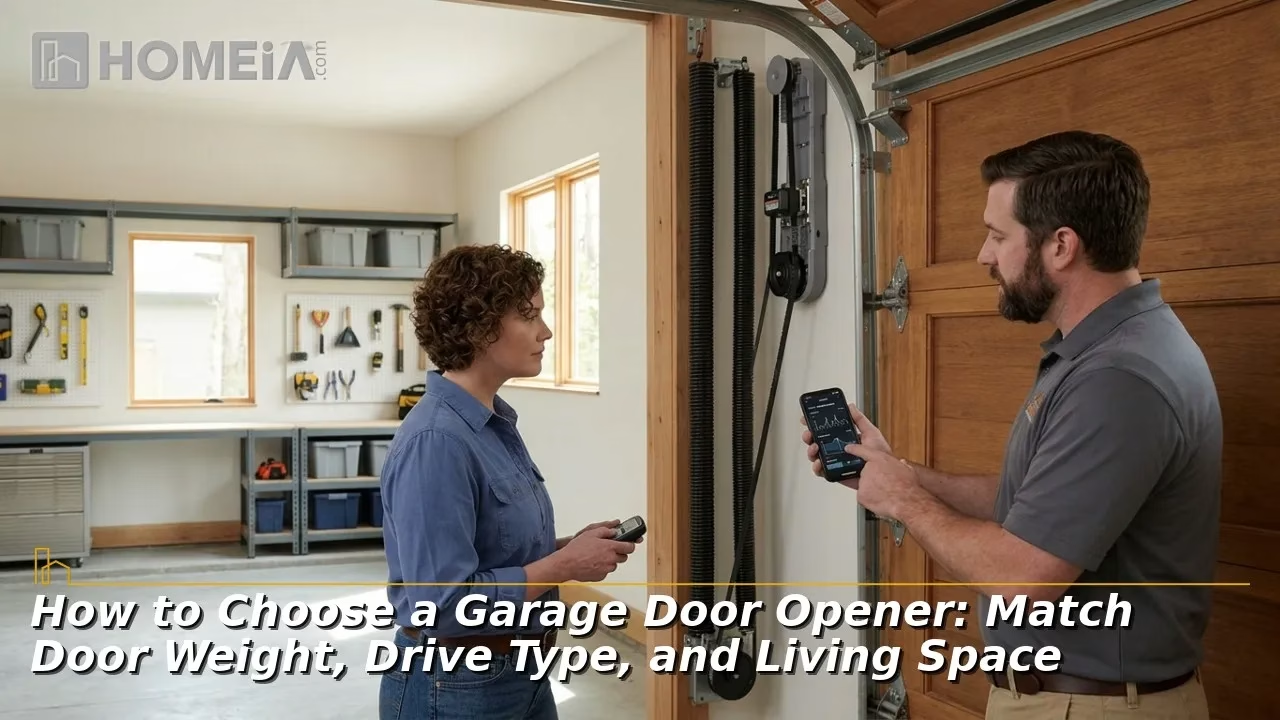
How to Choose a Garage Door Opener: Buying a garage door opener is as simple as choosing the most powerful motor available. An opener must suit the door’s size, construction, balance, track system, ceiling clearance, and location within the home. Mismatched units can be noisy, inconvenient, or incompatible with the existing door.
Homeowners comparing the best garage door opener brands should evaluate beyond brand recognition and evaluate how each model fits the complete garage door system. Record the door dimensions, inspect its movement, identify the spring and track arrangement, and note whether bedrooms or workspaces are located nearby.
From there, compare opener capacity, drive type, mounting requirements, lighting, access controls, backup power, warranty coverage, and safety features. The goal is controlled, reliable movement, not maximum force.
Key takeaways
- Check the door’s size, construction, balance, track arrangement, and available clearance before comparing openers.
- Choose chain drive for value, belt drive for quieter attached garages, or wall mount when preserving overhead space matters.
- Never use a larger motor to compensate for a heavy, crooked, or poorly balanced garage door.
- Confirm rail length, ceiling height, side room, outlet placement, lighting, connected controls, and battery backup.
- Give extra weight to smooth, low-vibration operation when bedrooms, offices, or nurseries adjoin the garage.
- Ask a trained garage door technician to evaluate springs, cables, structural mounting, and uncertain compatibility before installation.

Related article
Garage Door Maintenance Checklist: 10 Simple Tasks to Avoid Costly Repairs
Your garage door works hard every day, yet maintenance is often overlooked until costly repairs arise. Regular upkeep improves safety, extends system lifespan, and prevents sudden breakdowns. This guide offers a simple, homeowner-friendly checklist of 10 quick maintenance tasks—most requiring minimal tools…
1. Inspect the door first
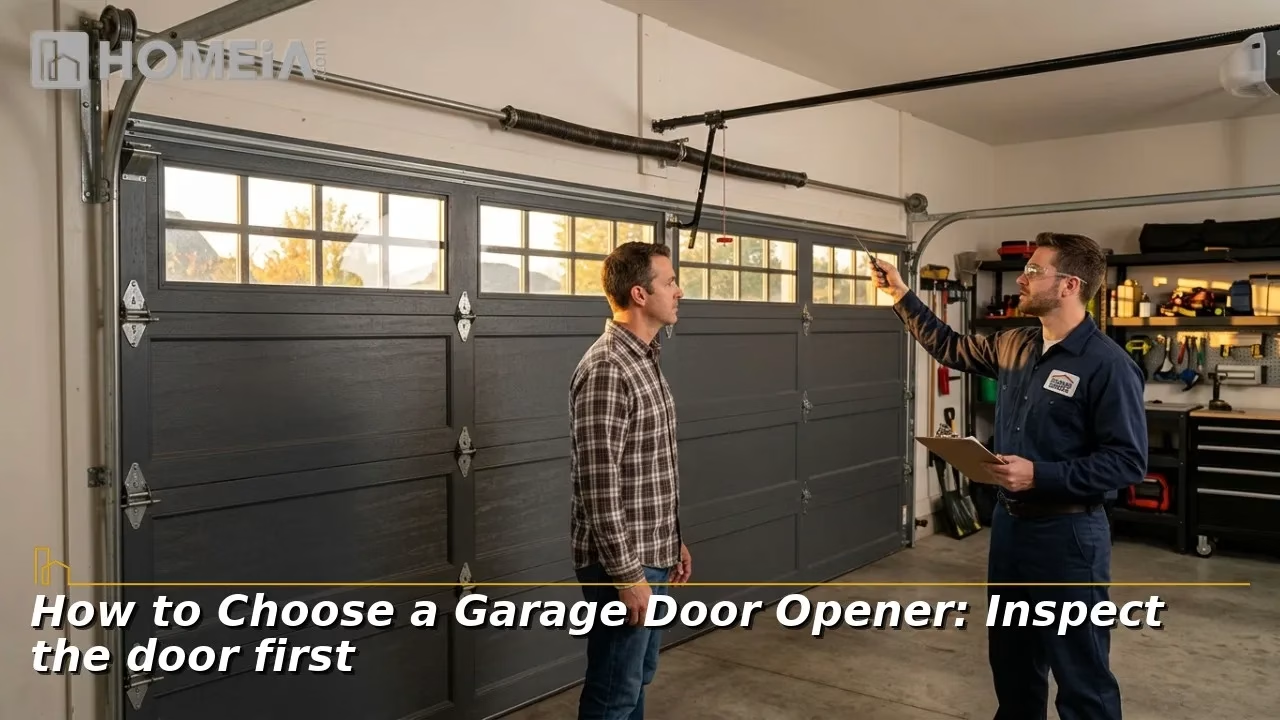
A residential opener is part of a counterbalanced system. The springs carry much of the door’s effective weight, allowing the opener to guide it through a controlled cycle. If the door drops, rises unexpectedly, moves unevenly, or requires significant effort when operated manually, the problem should be corrected before a new opener is selected.
Begin by documenting these characteristics:
- Door type, like sectional or one piece
- Opening width and height
- Door material and insulation
- Approximate door weight, if documented
- Spring and track arrangement
- Highest point reached during travel
- Headroom above the opening
- Side room beside the tracks
- Distance from the opening to the back wall
- Location of a grounded electrical outlet
These details affect the opener’s approved door capacity, rail length, and mounting style. An oversized, solid wood, heavily insulated, full-view glass, or custom-height door may require special reinforcement or professional evaluation.
Check balance only when the door appears intact and can be disconnected according to the owner’s manual. Begin with the door fully closed. After disconnecting the opener, carefully lift the door and note whether it moves smoothly and remains near a partially open position. Stop if the door feels unusually heavy, becomes crooked, or shows damaged springs, cables, rollers, or brackets.
Never adjust springs, cables, bottom brackets, or other components that carry substantial tension. Those parts can release force without warning. Stronger openers do not repair poor balance, and increasing force to overcome resistance can interfere with safe operation.
Related article
How to Quiet an Attached Garage: Opener Noise, Vibration, and Shared-Wall Fixes
A noisy garage door can disrupt bedrooms and home offices, but replacing the opener may not solve the problem. This guide explains how to diagnose noise sources, distinguish vibration from airborne sound, perform safe maintenance, and choose targeted solutions…
2. Compare drive systems
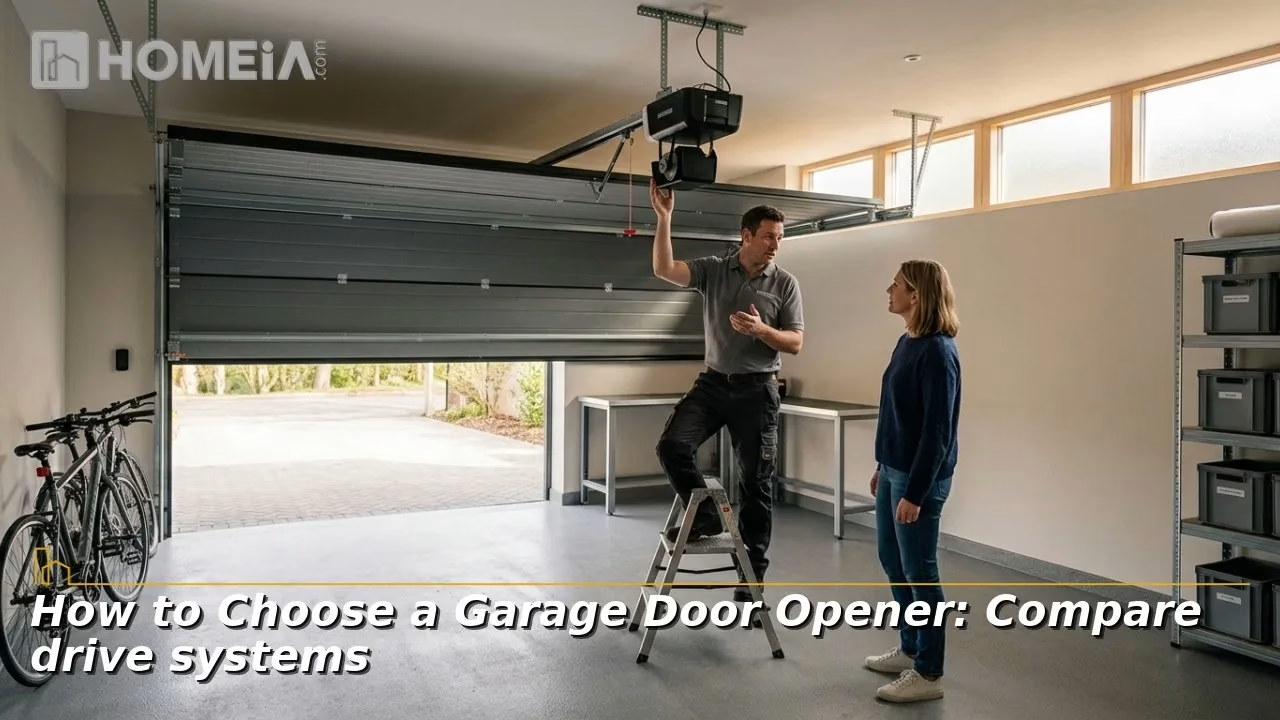
Drive type affects noise, vibration, ceiling use, maintenance, and price. The three most common residential choices suit different homes.
- Chain drive: A metal chain moves a trolley along an overhead rail. This design is often utilized for durability and value. It can create more mechanical sound and vibration than quieter alternatives, so it fits detached garages or locations separated from sleeping and working areas.
- Belt drive: A reinforced belt moves the trolley. With less metal-to-metal movement, belt drive is better suited to an attached garage near a bedroom, nursery, office, or family room.
- Wall mount: This opener is installed beside the door and turns a compatible torsion shaft. It can preserve overhead space for lighting, storage, or a vehicle lift while reducing the need for a ceiling-mounted motor and center rail.
A wall-mounted unit does not fit every door. It normally requires a compatible torsion arrangement, adequate side clearance, and power near the mounting location. Low-headroom tracks and unusual door configurations should be reviewed individually.
Some manufacturers offer other drive designs, including screw and direct-drive variations. Product terminology is not perfectly standardized, meaning the installation manual and approved application matter more than the category name.
Recommended for you




3. Match capacity correctly
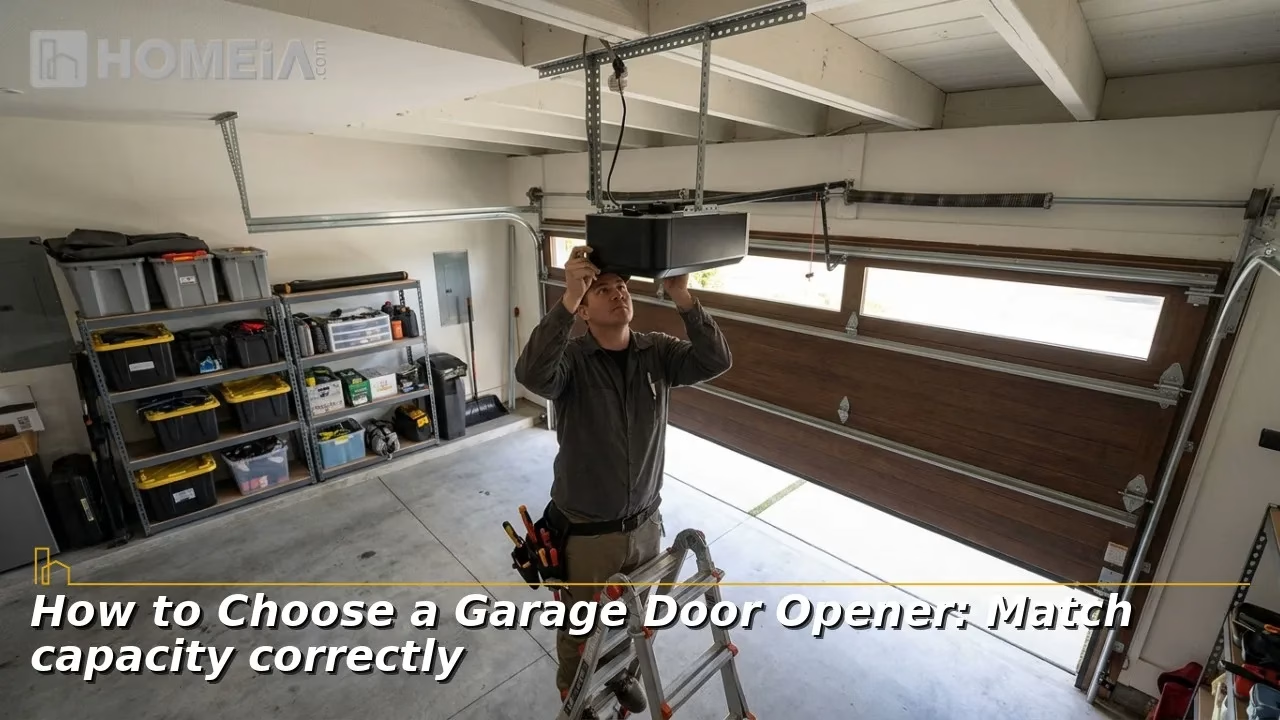
Do not select capacity by garage size alone. A double-width lightweight door and a single solid wood door can impose very different demands. The relevant factors include door construction, weight, height, balance, and cycle frequency.
Use this process:
- Find the door manufacturer’s label and available specifications.
- Identify the opener’s approved door type and maximum dimensions.
- Confirm whether a taller door requires a matching rail extension.
- Check whether the top door section needs a reinforcement bracket.
- Verify that the opener and accessory rail are designed to work together.
- Request a professional assessment when the door weight is unknown.
Power labels may require different methods, especially when comparing AC and DC motors. Treat the stated rating as one specification rather than a universal measure. The manufacturer’s approved door capacity and installation instructions should control the decision.
Extra power is not a substitute for a sound door. If the system binds, jerks, or strains, stop and diagnose the cause. Openers should not force a damaged or unbalanced door through its path.

Related article
6 Tips for Choosing the Best Garage Door for Your Home
When selecting a garage door, it is important to be cautious and thoughtful. Your choice can have significant implications for your home’s functionality and visual appeal. You will also want to prioritize safety, since your garage door acts as a vital barrier safeguarding your home and loved ones from potential intruders…
4. Evaluate the garage and household
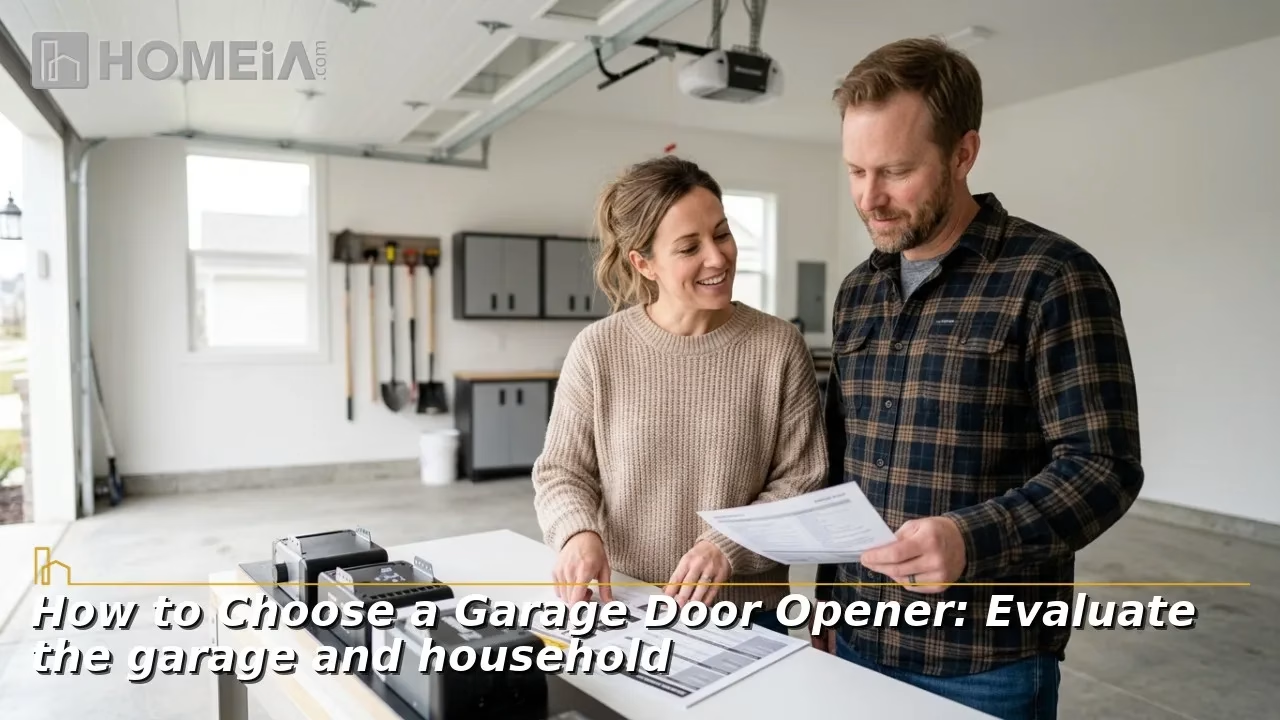
The right opener must support the household’s actual routine. Consider how often the door cycles, whether the garage serves as the main family entrance, and if anyone returns after dark. Integrated lighting, an exterior keypad, multiple remotes, activity alerts, temporary guest access, and cameras can be useful in a frequently used garage.
Connected controls require planning. Ensure the garage receives a reliable wireless signal and that the account can be transferred when the home is sold. After moving into a home, erase unknown remotes, change keypad codes, reset connected accounts, review shared users, and update network credentials.
Battery backup can be valuable in areas affected by severe weather, wildfires, or unreliable power. It can also help households remaining dependent on the garage as a primary exit. California has required a battery-backup function on residential automatic garage door openers sold or installed in the state since July 1, 2019. The law also restricts connecting a replacement residential door to a noncompliant existing opener.
Noise should receive more attention in an attached garage than in a detached structure. A smooth DC motor, belt drive, soft start and stop, and appropriate mounting can reduce disturbance. However, worn rollers, loose hardware, rattling panels, or poor balance can remain noisy regardless of the opener selected. Our guide to quieting an attached garage walks through the full diagnostic process, from separating airborne sound from structure-borne vibration to sealing the shared wall.
Related article
How to Patch a Garage Floor to Make it Beautiful
The good news is that you can fix cracks and holes in your concrete flooring through patching. It is quite a simple task, and you can do it yourself if you love trying out new things. The tools and materials are readily available, and cheap, too…
5. Verify safety and installation
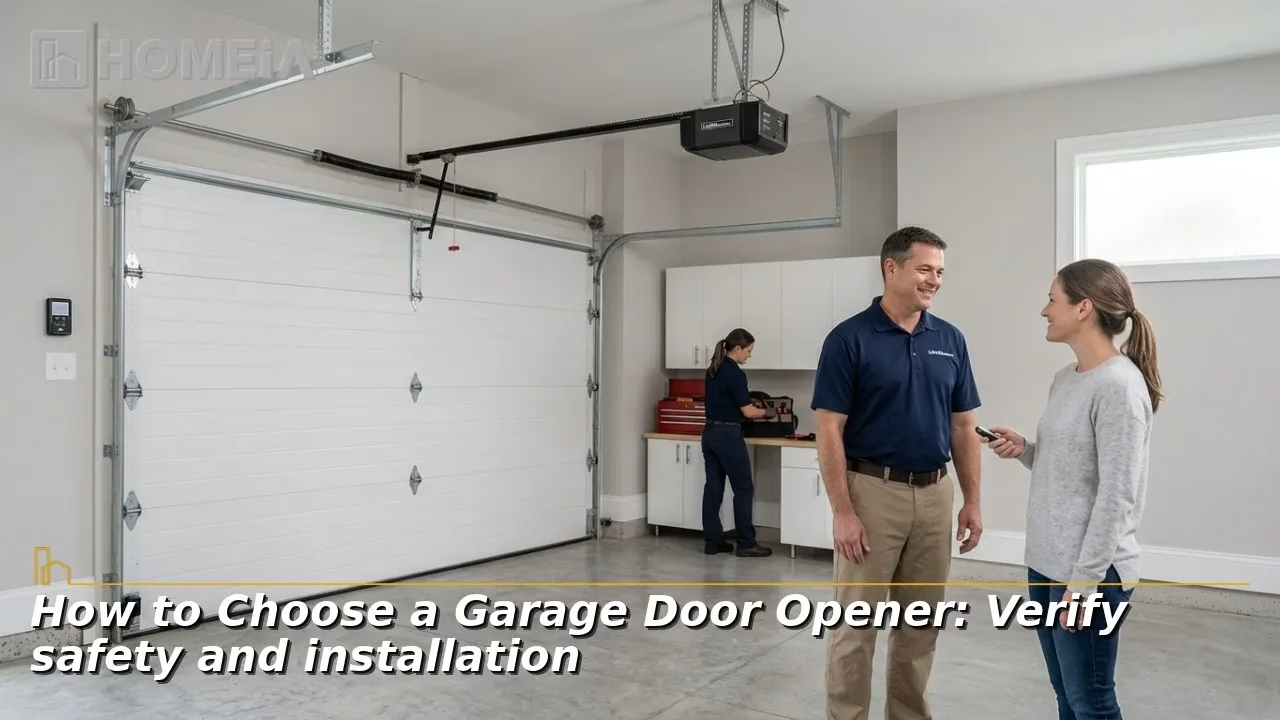
Federal safety requirements and regular testing are essential. The U.S. Consumer Product Safety Commission outlines that residential garage door openers manufactured or imported for sale after January 1, 1991, must have reversing systems. It advises homeowners to test the reversal function with a 2-by-4 laid flat in the door’s path and to disengage the opener if the door does not reverse properly.
Before accepting an installation, confirm that:
- Photoelectric sensors are securely mounted and unobstructed.
- The wall control is out of children’s reach.
- The door can be seen from the wall control.
- Travel and force settings follow the manual.
- Contact reversal and photo-eye tests pass.
- The emergency release is accessible.
- Remotes, keypads, lighting, locks, and backup power work.
- Household members understand basic operation and testing.
The CPSC recommends monthly testing and advises professional inspection when the system does not reverse properly. Keep children away from controls, never walk beneath a moving door, and operate the door only when its travel path is visible and clear.
Professional installation is valuable for a heavy or unusual door, wall-mounted opener, questionable framing, electrical changes, spring work, and any system with uncertain compatibility. The installer should demonstrate safety tests and explain the maintenance schedule before leaving.
Recommended for you




FAQs On How to Choose a Garage Door Opener
1. Can an existing opener be reused with a new garage door?
Possibly. Its capacity, age, rail geometry, reinforcement, safety performance, and compatibility with the replacement door must be verified. California installations must also meet the state’s battery-backup requirements.
2. Does an eight-foot door always need a rail extension?
Many opener packages are configured for a standard-height door, but requirements vary. Check the model’s approved rail and extension components before assuming a universal kit will work.
3. Will a wall-mounted opener fit every sectional door?
No. Typically, it needs a compatible torsion shaft, enough side room, and nearby power. Track arrangement, headroom, and door construction can also affect suitability.
4. Is professional installation worth the cost?
This is especially useful when the door is heavy, the framing is uncertain, the opener mounts beside the door, or springs and cables require work. A professional can also verify safe reversal and system compatibility.
5. Should an old opener without photoelectric sensors be replaced?
An older opener lacking modern entrapment protection should be evaluated promptly. The CPSC advises replacing non-reversing openers and discontinuing automatic use when the required reversal test fails.
Share