







Cost of Living in Missouri vs. Tennessee
- Local Editor:Local Editor: The HOMEiA Team


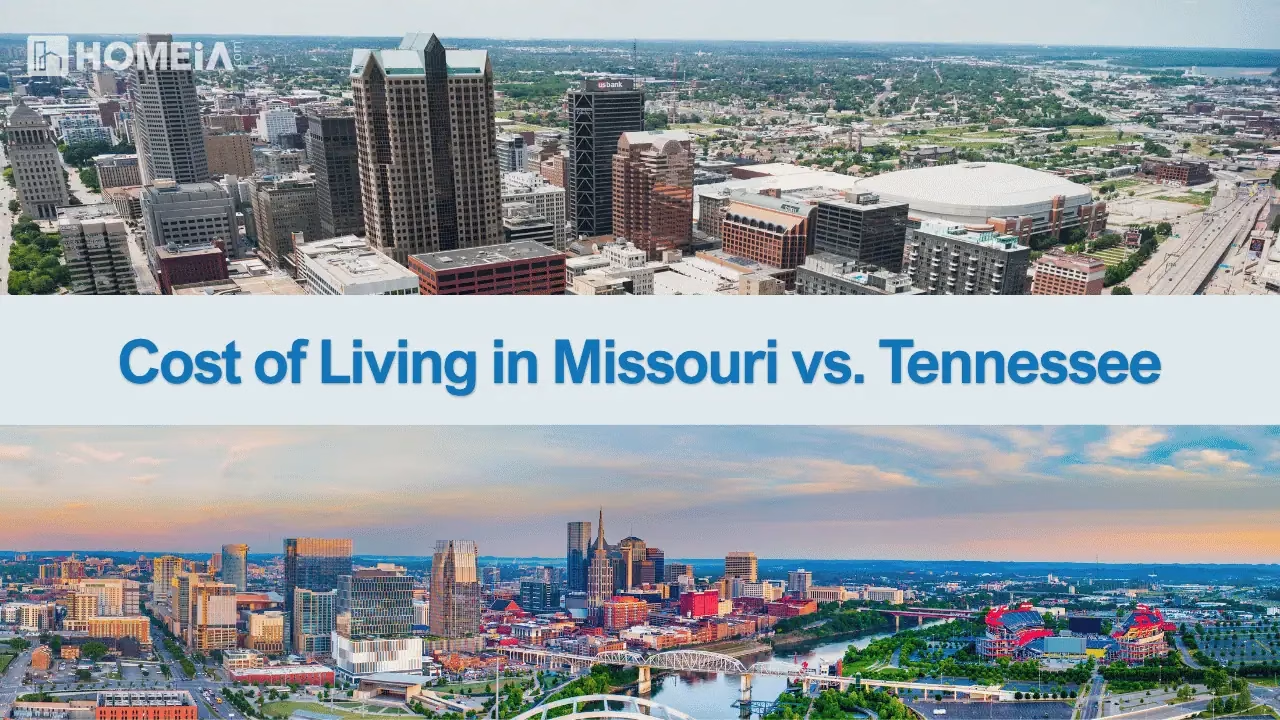
Cost of Living in Missouri vs. Tennessee: Missouri and Tennessee are neighbors in the Mid-South, with both keep landing on the same relocation shortlists for a reason. Tennessee draws attention for possessing no state income tax, a real perk headlining every comparison. Missouri counters quietly, holding an edge in home prices that outweighs the tax difference for a lot of buyers. That tradeoff plays out differently per household, since income level, housing budget, and healthcare needs don’t pull the same direction for everyone. Housing ends up being the biggest factor separating the two.
This comparison draws on the MIT Living Wage Calculator, Census Bureau, Zillow, Redfin, and state tax data.
Key Takeaways
- Both states rank among the more affordable nationally, with Missouri’s index at ~88.6 and Tennessee’s at ~89.1, roughly 11% below the national average.
- Missouri holds a meaningful housing advantage: a median home price around $276,000 versus Tennessee’s ~$383,600.
- Tennessee has no state income tax; Missouri levies a graduated tax with a top rate of 4.7% in 2026.
- Tennessee’s economy is substantially larger, with a GDP of ~$449 billion versus Missouri’s $358 billion.
- Missouri’s $15 minimum wage is more than double Tennessee’s $7.25 federal floor.
- Property taxes run lower in Tennessee (~0.52%) than Missouri (~0.89%), though homeowners insurance runs slightly higher in Tennessee.
- Missouri expanded Medicaid in October 2021; Tennessee has not, leaving it with a meaningfully higher uninsured rate.


Related article
The 10 Best Places to Live in Missouri in 2026
Location, decent wages, a low cost of living, a strong job market, and good schools make Missouri a great place to settle down. A closer look reveals that it is much more than a flyover state. If you’re looking to relocate to the “Show Me State,” consider one of these ten communities and see for yourself…
Missouri vs. Tennessee at a Glance
| Category | Missouri | Tennessee |
| Population (2025 est.) | ~6.2 million | ~7.3 million |
| Median Household Income (2024) | ~$78,390 | ~$75,860 |
| Median Home Price (2026) | ~$276,000 | ~$383,600 |
| Average Rent (1-BR) | ~$1,182/mo | ~$1,279/mo |
| Cost of Living Index | 88.6 | 89.1 |
| State Income Tax | 2%–4.7% graduated | None |
| Effective Property Tax Rate | ~0.89% | ~0.52% |
| Avg. Homeowners Insurance | ~$3,805/yr | ~$4,220/yr |
| Living Wage (Single Adult) | ~$21.50/hr (est.) | ~$22.50/hr (est.) |
| State Minimum Wage | $15/hr | $7.25/hr (federal) |
| Medicaid Expansion | Yes (since Oct. 2021) | No |
1. Living Wage Comparison
The MIT Living Wage Calculator, updated in February 2026, measures the costs needed to meet basic needs. Single adults in Missouri need an estimated $21.50/hour, while a Tennessee adult needs roughly $22.50/hour, with housing driving most of the difference. Food, transportation, and healthcare costs are broadly comparable between the two states.
The gap widens for families. A single parent with two children in Missouri needs an estimated $40–$45/hour, with Tennessee households facing a similar or slightly higher figure. Missouri’s minimum wage of $15/hour, effective January 2026 under voter-approved Proposition A, sits well above Tennessee‘s $7.25 federal floor. This benefits lower-income workers, though still falling short of the living wage threshold for a single adult. Tennessee’s reliance on the federal minimum leaves a wider gap between the statutory floor and the living wage.

Related article
The Pros and Cons of Living in Tennessee
Known for its rich culture, beautiful geography, and booming economy, Tennessee is drawing in people at one of the highest rates in the country, many of them international immigrants…
2. Housing Costs
A. Home Prices
Missouri’s median sales price reached approximately $276,000 in early 2026, up 6.2% year over year, with Kansas City and St. Louis offering urban amenities at comparatively affordable prices. Tennessee’s statewide median sale price sits around $383,600, up about 1% year over year, with rising inventory giving buyers more options.
| Market | Median Price Range |
| St. Louis, MO | ~$250,000–$300,000 |
| Kansas City, MO | ~$270,000–$320,000 |
| Springfield, MO | ~$230,000–$280,000 |
| Nashville, TN | ~$420,000–$470,000 |
| Memphis, TN | ~$216,000 |
| Knoxville, TN | ~$350,000–$400,000 |
B. Renting
The Show-Me State’s average one-bedroom rent runs approximately $1,182/month, while the Volunteer State’s one-bedroom average is near $1,279. Both rental markets have softened as new apartment supply absorbs demand, offering renters favorable conditions in 2026 with modest year-over-year declines or slow growth in many markets.
C. Homeowners Insurance
MO homeowners pay an average of approximately $3,805 annually, while TN averages roughly $4,220/year. This is attributed to tornado, hail, and flood exposure. The former experiences similar severe weather risks but benefits from somewhat lower average premiums. A roughly $400 annual gap is modest compared to insurance differentials in coastal states.
D. Property Taxes
Missouri’s effective property tax rate is approximately 0.89%. On a $276,000 home, annual taxes run roughly $2,450. Tennessee’s effective rate is significantly lower at approximately 0.52%, producing roughly $1,995 annually on a $383,600 home. For a home valued at $350,000 in either state, Missouri taxes would run about $3,115 versus Tennessee’s approximately $1,820, a gap of nearly $1,300 per year that compounds substantially over a decade of homeownership.

Related article
Moving to Missouri: The Complete Relocation Guide & Checklist
Planning a move to Missouri? The Show-Me State draws newcomers with affordable living, welcoming communities, and diverse scenery—from Kansas City to the Ozarks and the Mississippi River. This guide covers costs, jobs, timelines, and top destinations like St. Louis and Lake of the Ozarks to help you relocate confidently…
3. Economy and Taxes
A. Economic Landscape
Missouri’s real GDP reached approximately $358 billion in 2025, ranking 22nd nationally, with major industries including manufacturing, agriculture, healthcare, financial services, and transportation centered around St. Louis and Kansas City. Tennessee is more expansive, with a real GDP of about $449 billion. Thriving industries include healthcare management in Nashville, automotive manufacturing, music and entertainment, and logistics, with growth projected near 2% in 2026.
B. Tax Comparison
| Tax Category | Missouri | Tennessee |
| State Income Tax | 2%–4.7% graduated | None |
| Sales Tax | 4.225% state + local (avg. ~8.2%) | 7% state + local (up to ~9.75%) |
| Effective Property Tax Rate | ~0.89% | ~0.52% |
| Estate/Inheritance Tax | None | None |
For a household earning $100,000, Missouri’s income tax runs roughly $3,500–$4,000 annually, which Tennessee’s zero income tax entirely avoids, though its higher sales tax and insurance costs partially offset that advantage. At $150,000 and $200,000 of income, Tennessee’s tax advantage grows more decisive, since Missouri’s top rate applies to a larger share of income. Missouri’s substantially lower home prices, however, mean buyers’ money stretches farther based on property space for the same monthly payment.
4. Safety
Using 2024 FBI data, Missouri recorded a violent crime rate of around 470 per 100,000 residents. Tennessee’s rate runs higher at roughly 570 per 100,000. Property crime is also elevated in these regions relative to the national average, with Missouri at approximately 2,400 per 100,000 and Tennessee at roughly 2,600. Statewide averages mask significant local variation, and suburban communities around St. Louis, Kansas City, Nashville, and Knoxville consistently rank among the safest in their respective states.
Recommended for you




5. Climate and Geography
Missouri has a continental climate with four distinct seasons. These include unrelenting summers, freezing winters, and tornado risk concentrated in spring and early summer as part of Tornado Alley, along with recurring flood risk along the Missouri and Mississippi rivers. Tennessee has a humid subtropical climate with milder winters, hot humid summers, and higher annual rainfall of 50–55 inches. Tornado risk is concentrated in the western part of the state, while the eastern mountains offer more temperate conditions. For cost purposes, their severe weather exposure drives its higher homeowners insurance premiums, while Missouri’s colder winters add heating costs that Tennessee largely avoids.
6. Education
Missouri’s K-12 system ranks around 24th nationally with a graduation rate near 89%, while Tennessee ranks around 26th with a graduation rate of closer to88%. Higher education favors Missouri on cost: the University of Missouri charges approximately $11,000–$13,000/year in-state, notably below the University of Tennessee-Knoxville’s roughly $13,800, though Tennessee State University offers a more affordable option at about $8,600 annually.

Related article
The 7 Best Places to Live in Nashville, Tennessee
In this comprehensive article, we’ll visit the best places to live in Nashville, TN, exploring each neighborhood’s distinct personality, available amenities, and why it might be the perfect fit for your family’s next home. We’ll also provide specific neighborhood suggestions for dog parents, shopping enthusiasts, and also for arts and music lovers…
7. Childcare
Childcare costs are broadly comparable between the two states, with Tennessee slightly higher for infant care and Missouri slightly higher for toddler care.
| Age Group | Missouri Average | Tennessee Average |
| Infant (center) | ~$13,780/yr | ~$13,900/yr |
| Toddler (center) | ~$11,000–$12,000/yr | ~$7,500–$8,500/yr |
| Preschool (center) | ~$9,600–$10,000/yr | ~$10,000–$11,000/yr |
For a family with one infant, the annual cost difference is minimal, roughly $100–$200. For families with an infant and a toddler, this can yield annual savings of $2,000–$3,000. Each offers subsidized childcare for income-eligible families, though waiting lists are common in major metros.
8. Healthcare
Missouri implemented Medicaid expansion in October 2021 following a 2020 voter-approved initiative and subsequent legal challenges, providing an uninsured rate of approximately 7.6%, slightly below the national average of 8.2%. TN has not adopted Medicaid expansion, and its uninsured rate is higher, estimated between 8.1%–10.2%, leaving coverage gaps for low-income adults. ACA marketplace premiums average approximately $450–$500 monthly in both states, with Tennessee running slightly higher. Tennessee’s concentration of healthcare management and hospital systems in Nashville makes it a national healthcare hub, while MO’s major medical centers in St. Louis and Kansas City provide strong specialty care; both states face rural healthcare access challenges.

Related article
Best Affordable Places to Live in Missouri for Retirees
The lower cost of living in Missouri is a big draw for retirees, but there is so much more this Midwestern state has to offer seniors including beautiful landscapes, a milder climate, thriving communities, and a vibrant cultural scene. Whether you seek a cheaper or finer option, or you want to live over or under the radar, the state of Missouri has certainly got you covered…
9. Additional Cost Considerations
- Utilities: Electricity rates are closely comparable, with Missouri averaging approximately 12–14 cents/kWh and Tennessee 11–13 cents. Monthly bills run roughly $130–$150 in both states, though Missouri’s harsher winters add heating costs Tennessee largely avoids.
- Gas Prices: Gas prices are typically comparable, with Missouri often slightly below the national average and Tennessee occasionally running a few cents higher, a difference of roughly $50–$150 per year over 15,000 annual miles.
- Groceries: Grocery costs are broadly similar, with Missouri’s food index slightly below the national average. Missouri exempts groceries from state sales tax, while Tennessee does not, adding roughly $60–$90 per month for a family of four spending $900 monthly on food.
- Transportation: Both are car-dependent outside major urban cores, with relatively low vehicle registration fees. Auto insurance rates run comparably, with Missouri averaging slightly higher due to urban density and severe weather exposure.
Conclusion
On pure affordability, Missouri holds an edge in housing, with home prices roughly $100,000 below Tennessee’s median, translating to meaningfully lower monthly costs for buyers and renters alike. Tennessee’s lack of state income tax offsets much of this advantage for middle- and higher-income earners, while its larger, more diversified economy offers more opportunities in healthcare, automotive, logistics, and entertainment. Missouri’s Medicaid expansion provides a healthcare coverage edge that Tennessee lacks, though Tennessee’s lower property taxes benefit homeowners.
Recommended for you




FAQs About the Cost of Living in Missouri vs. Tennessee
1. Is Missouri really that much cheaper than Tennessee in 2026?
Missouri maintains modest affordability driven by housing. With a median home price roughly $100,000 lower than Tennessee’s and a cost of living index of 88.6 versus 89.1, Here offers more purchasing power for homeowners. Tennessee’s lack of income tax and lower property taxes partially offset the difference for higher-income households.
2. How much salary do you need in Tennessee to match a Missouri lifestyle?
Households earning $80,000 in Missouri should stay in the $82,000–$85,000 range in Tennessee for comparable purchasing power, accounting for Tennessee’s higher housing costs offset partly by its lack of income tax; renters face a narrower gap than buyers.
3. Which state is better for retirees in 2026?
Tennessee appeals to retirees given its lack of income tax on pensions and Social Security and its lower property tax rate. Missouri’s lower home prices let retirees buy more property space for less money, and its 2021 Medicaid expansion offers a stronger safety net for lower-income seniors needing long-term care coverage.
4. Are people still moving to Missouri and Tennessee in 2026?
Both states continue to attract new residents, though migration has subsided from pandemic peaks. Tennessee’s population reached approximately 7.3 million in 2025, while Missouri’s sits around 6.2 million, with both ranking among the top domestic migration destinations.
5. Which state is better for remote workers in 2026?
Missouri offers the bolstered financial case for most remote workers given its substantially lower housing costs, though its income tax offsets some of that advantage. Tennessee competes for remote workers by prioritizing zero income tax and cultural amenities in Nashville and Knoxville, despite higher home prices.
Share