







The Professional’s Guide to Extended Fresh Flower Care
- Local Editor:Local Editor: The HOMEiA Team
- Category: Home Improvement


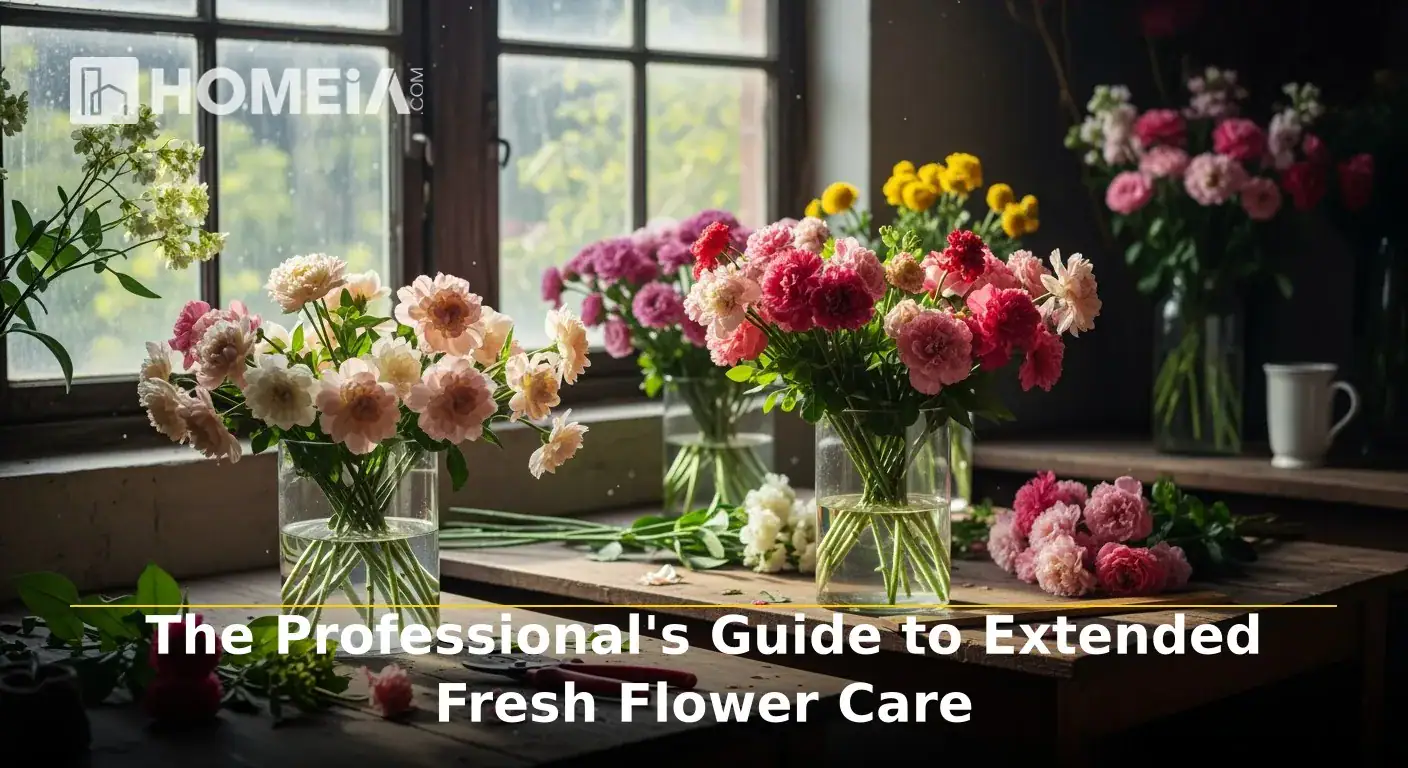
Fresh flowers bring blossoming pleasure and vibrant energy into your home, yet the delight often fades rapidly, replaced by the disappointment of drooping petals and discolored leaves.
You can prevent this quick wilting.
Keeping cut flowers pristine for 10 days, two weeks, or even longer isn’t luck — it’s understanding the basic biology of the bloom. By adopting a few expert-level routines, you can dramatically extend the vase life of virtually any arrangement. This guide distills the science and practical steps needed to turn temporary beauty into prolonged joy.
Key Takeaway
To make your cut flowers last longer, focus on three simple principles: Water, Cleanliness, and Location. Always cut stems at an angle before placing them in water. Regularly change the vase water, removing submerged leaves to prevent bacterial growth. Finally, place the bouquet in a cool spot away from direct sun, heat, and fruit. Mastering these basics will help dramatically extend the life of your beautiful blooms.
Related article As we delve into the world of flower décor, sometime with the assistance of a Flower Arrangements, we’ll explore how the right floral choices can create a warm and inviting atmosphere perfect for showcasing your home’s natural beauty…
The 6 Tips for Home Staging with Flowers and Floral Decor
1. The Core Science: Why Flowers Fade

To master flower preservation, we must first understand the enemy: dehydration and bacteria. A cut flower is engaged in a race against time, desperately trying to pull water up from the vase to replace what it loses through its leaves and petals (transpiration).
A. The Vascular System Blockage
Inside every stem, a network of tiny tubes, the xylem, continuously draws water upward.
- The Air Bubble Seal: The moment a stem is cut, air rushes into the open xylem tubes, causing a bubble (clog) preventing water from reaching the flower head.
- The Bacterial Clog: Bacteria from the air, vase, and decaying leaves multiply rapidly in standing water. These microorganisms are sucked up the stem, forming a slimy, gelatinous clog sealing the xylem permanently. This clog explains why flowers wilt prematurely, even in a full vase.
B. The Role of Metabolism and Temperature
Cut flowers are still metabolically active, consuming stored sugars to maintain their structure. Heat accelerates metabolism. A warm environment makes these plants consume their energy stores and rapidly age. Cool temperatures, conversely, slow down this process, allowing the flower to conserve its energy and last longer.
2. Phase One: Immediate Preparation (The First 24 Hours)

The actions taken immediately after acquiring these beautiful pieces of nature are the most critical in determining their ultimate vase life.
A. Unpacking and Hydration Shock Relief
As soon as your flower delivery arrives, free the flowers from all restrictive packaging. It prevents moisture buildup, allowing them to breathe. If you cannot arrange them immediately, place straight into a deep bucket of lukewarm water. Warm temperature promotes immediate and effective water absorption.
B. The Angled Recut: The Most Critical Step
You must provide a clean, unblocked entry point for water.
- Tools: Use a sharp floral knife or sharp shears. Avoid dull scissors, which crush the vascular tissue and cause damage.
- The Technique: Cut one to two inches off the bottom of the stem at a 45-degree angle. This angled cut maximizes the surface area for water uptake, preventing the opening from sitting flat and sealing against the bottom of the vase.
- Pro Tip: Underwater Cutting: For extremely thirsty flowers including roses, hydrangeas, or those that have severely wilted, perform the cut underwater in a sink or bowl. Doing so prevents air from entering the stem even momentarily, immediately priming the flower to drink.
C. Foliage Management and Vase Hygiene
Before placing the flowers in the vase, prepare both the stem and the vessel:
- Strip the Lower Foliage: Any leaves that will sit below the waterline must be removed. Submerged foliage rots rapidly, turning clean water into a bacterial breeding ground within hours.
- Sanitize the Vase: Your vase harbors germs. Wash it thoroughly with hot water and soap, or ideally, a mild solution of bleach water (1 part bleach to 10 parts water), then rinse completely. Cleanliness is paramount.
- The First Drink: Fill your sanitized vase with fresh, lukewarm water and a packet of commercial flower food.
D. The Conditioning Period
Place your new bouquet in a cool, dimly lit, and draft-free location for the first 12 to 24 hours. A conditioning phase allows flowers to fully rehydrate and recover from the shock of transport before being put on display.
Related article In this article, we explore the art and science of kitchen decoration. From understanding the impact of aesthetics and functionality to offering practical steps to personalize your kitchen, we’ll dive into how you can transform your cooking space into a true reflection of your lifestyle and preferences…
Embracing the Art of Kitchen Decoration and Design
3. Phase Two: Daily Maintenance and Water Management

Consistent routines are what separates a three-day bouquet from a two-week centerpiece.
A. Daily Water Check and Topping Off
Check the water level every day. Even a small drop can expose stem ends to air, reintroducing air bubbles. Simply top off the vase with fresh, cool water daily.
B. The Full Refresh: Every Two to Three Days
This is the non-negotiable step for long-lasting blooms. Every two to three days, dedicate ten minutes to a full overhaul:
- Remove & Dump: Carefully take the flowers out and empty the old, germ-laden water.
- Clean: Wash the vase vigorously with soap and hot water, scrubbing away the slimy residue (bacterial biofilm).
- Recut: Give each stem a fresh, angled snip (about a half-inch) using your clean shears.
- Refill: Add fresh, lukewarm water and new flower food. Never add food to old water.
C. Deadheading and Pruning
Perform a quick visual inspection daily. Remove any wilted flowers, yellowing leaves, or dying petals immediately. These decaying materials release ethylene gas and rapidly contaminate the water, signaling to healthy flowers that it’s time to die.
4. Flower Food: The Essential Cocktail

The small packet of powder accompanying your flowers is vital. It’s a perfectly balanced, engineered solution containing three primary components:
- Sugar (Dextrose): Provides the necessary carbohydrate food source for the flower to maintain its color and structure.
- Acidifier (Citric Acid): Lowers the water’s pH, allowing water to be absorbed more easily and efficiently up the stem.
- Biocide/Germicide (Often a form of bleach): Kills the bacteria, fungi, and mold in the water, preventing clogs.
DIY Flower Food Alternatives
If you run out of commercial food packets, the essential ingredients can be replicated. Ensure the ratios are precise.
| Ingredient | Purpose | Ratio (Per Quart / Liter of Water) |
| Sugar | Food Source | 1 to 2 Teaspoons |
| Acid | Water Uptake Booster | 2 Teaspoons of White Vinegar or Lemon Juice |
| Biocide | Bacteria Killer | 1 to 2 Drops of Bleach (Chlorine Solution) |
Important: Avoid mixing vinegar or lemon juice with bleach, as this can produce harmful gases. Stick to either the Acid + Sugar mix OR the Biocide + Sugar mix. Avoid myths such as aspirin, pennies, or vodka; they are ineffective and can cause harm.
Related article Gardening is not just a hobby – it is a way of life. For many, tending to plants and watching them grow is therapeutic. But as we become more environmentally conscious, there’s a growing need to ensure our gardening practices are sustainable…
Top 12 Tips for Eco-Friendly Gardening Year-Round
5. Environmental Strategy: Placement is Key

Where you place your bouquet is as important as how you care for it.
A. The Temperature Rule: Cool is King
Avoid heat sources at all costs. Don’t place flowers near radiators, direct sunlight, heating vents, or warm electronics. Heat accelerates aging and causes rapid dehydration. The ideal temperature range for maximum vase life is 65°F to 72°F (18.33°C to 22.22°C).
B. The Dehydration Trap: Avoiding Drafts
Keep flowers away from extreme air movement. Constant blasts from fans or open windows quickly desiccate (dry out) petals, causing rapid wilting.
C. The Ethylene Gas Threat: Banish the Fruit Bowl
Ethylene gas is an invisible, odorless plant hormone released by ripening fruit (especially bananas, apples, and melons). Ethylene signals to flowers to age and drop their blooms. Keep your bouquet far away from fruit bowls, compost, and any source of smoke.
6. Flower-Specific Care Requirements

While the general rules apply to all blooms, some popular varieties have specific, high-maintenance needs.
A. High-Maintenance Blooms
| Flower Type | Special Requirement | Rationale |
| Roses | Recutting Underwater | Highly prone to air bubble blockages; underwater cut ensures maximum absorption. |
| Hydrangeas | Smash the Stem | Woody stems are tough to drink through. Crush the bottom 1-2 inches with a hammer to expose more surface area for water uptake. |
| Tulips | Continued Growth | Tulips continue to grow. Keep them in a tall, supportive vase and do not overwater—they will drink and stretch rapidly. |
| Daffodils | Separate Conditioning | Daffodils release a toxic sap that shortens the life of other flowers. Condition them alone for 24 hours, then rinse their stems before mixing. |
| Lilies | Pollen Removal | Remove the pollen-coated anthers as soon as the bloom opens. This prevents staining and significantly extends the life of the flower. |
| Gerbera Daisies | Shallow Water & Straight Pin | Easily rot in deep water. Use only about 1-2 inches of water, and pierce a small hole just under the flower head to allow trapped air to escape. |
B. Low-Maintenance Champions
For maximum return on your flower investment, look for these long-lasting varieties:
- Alstroemeria (Peruvian Lily): New buds open over time, giving them a vase life of up to two weeks.
- Chrysanthemums: Extremely durable, often lasting three weeks or more.
- Orchids (Cut Sprays): Can last up to three weeks and appreciate a light daily misting.
- Carnations: Hardy, budget-friendly, and excellent drinkers that can last two weeks.
Related article In this article, we’ll explore how you can select the best oak coffee table for your home. We’ll cover everything from understanding the nuances of oak as a material, harmonizing it with your living space, and balancing functionality with aesthetic appeal…
How to Select the Best Oak Coffee Table for Your Home — Expert Tips
7. Troubleshooting Common Flower Emergencies

Knowing the remedy can save your bouquet.
| Symptom | Probable Cause | Immediate Fix |
| Drooping Flower Heads | Stem blockage (air bubble or bacteria). | Recut the stems deeply (2 inches) underwater and place immediately in fresh, cold water. |
| Cloudy, Smelly Water | Severe bacterial contamination. | Promptly full refresh: Wash the vase thoroughly with bleach, recut the stems, and add fresh water and new food. |
| Brown/Crispy Petal Edges | Dehydration or heat exposure. | Gently remove the brown edges and relocate the vase to a cooler, sultrier area. |
| Premature Wilting | Ethylene gas exposure or severe shock. | Move the arrangement far from fruit/smoke. If severe, try the underwater cutting method. |
| Leaves Turning Yellow | Submerged foliage rotting (Stem Rot) or lack of light. | Remove all submerged leaves immediately. Ensure the room has bright, indirect light. |
8. Post-Prime Preservation: Drying Your Blooms

When your fresh flowers are finally past their prime, they can transform into long-lasting decor. Preservation should start right before they look fully tired.
The most reliable method is Air Drying (Hanging):
- Remove all leaves from the stems.
- Gather the flowers into small, loose bunches (3-5 stems per bunch).
- Secure the stems with a rubber band.
- Hang the bunches upside down in a dark, dry, and well-ventilated space (like a closet or attic) for one to three weeks. Dark environments help preserve the petal color.
These dried blooms can then be enjoyed indefinitely, offering a beautiful textural element to future arrangements.
Conclusion
The secret to being a successful botanist and maximizing the life of your cut flowers is simply to treat them as the active, drinking organisms they are. By adhering to the trifecta of extended care— daily angled recut, scrupulous vase hygiene, and strategic placement away from heat and fruit—you control the aging process. These expert routines are easy to implement and guarantee these gorgeous, vibrant blooms will brighten your home for far longer than ever imaginable.
Recommended for you




Frequently Asked Questions about Extended Fresh Flower Care
1. Should you mist cut flowers with water?
Yes, misting the petals lightly once or twice a day can be beneficial, especially for humidity-loving flowers like hydrangeas and orchids. It prevents delicate petals from drying out. Avoid misting flowers with very delicate petals (like sweet peas) as water can cause spotting.
2. Can you mix newly purchased flowers with an existing bouquet?
It’s generally not recommended. The older bouquet likely has high levels of bacteria that could significantly shorten the life of the new flowers. Condition these separately in their own clean vase for 24 hours first. Then, combine them in a freshly cleaned vase and fresh water.
3. Is tap water or filtered water better for flowers?
For most flowers, tap water is fine. However, if your tap water is dense (high in minerals) or heavily treated with chlorine, filtered or distilled water can be better. Sensitive flowers including tulips and gerberas benefit from filtered water, as it allows for easier water uptake without mineral blockages.
4. Why are the leaves on my roses turning yellow?
Yellowing leaves are often a sign of stress, commonly from “stem rot” caused by leaves being submerged in water. Ensure all foliage below the waterline is removed. It can also be caused by a lack of light; placing the vase in a brightly lit room (but away from direct sun) can help keep leaves green.
5. How do you safely remove lily pollen without making a stain?
Never use your fingers or a wet cloth. Have a dry, soft brush (like a small paintbrush) for gently flicking the pollen away. If this gets on fabric, let it dry and then use sticky tape to gently lift it off. Avoid rubbing, as doing so sets the stain.
Share