






Moving to Massachusetts: THE Complete Relocation Guide and Checklist
- Local Editor:Local Editor: Edward Thiede III
- Category: USA , Massachusetts
Share


Moving to Massachusetts: Hey there! Thinking about making the move to the great state of Massachusetts? Then you’re in for a real treat, and we’re not talking about Boston Cream Pies. We’re a state infused with a storied past, leading innovation, and community bonding—and excited to welcome you. Whether it’s the top-tier schools, booming job market, vibrant arts scene, or simply the idea of living somewhere with four distinct seasons (and yes, make sure to pack a pair of snow boots) being the main draw, there’s never been a better time finding something to love here.
This comprehensive Massachusetts moving guide will serve as the only piece needed for all necessary information to know before relocating: from the cost of living breakdown and job market analysis to the best cities and towns to live and how to settle in smoothly. Whether you’re coming all the way over from the furthest corner of the West Coast or only a train ride away, we’ll help you make your relocation to the Bay State as seamless as a summer day spent in Southie.
Table of Contents:
- HOMEiA Score: Our Methodology
- 1. What Is It Really Like to Live in Massachusetts?
- 2. Cost of Living & Affordability in Massachusetts
- 3. Jobs, Economy, and Career Opportunities in Massachusetts
- 4. Education Excellence: Why Massachusetts Schools Lead the Nation
- 5. Massachusetts Tax Structure: What You Need to Know
- 6. Best Places to Live in Massachusetts: Comprehensive City Guide
- 7. Planning Your Massachusetts Move: Detailed Step-by-Step Timeline
- Vehicle Registration, Driver’s License & Voting Requirements: Massachusetts New Residents Guide
- 8. Settling In: Essential Practical Steps for New Residents
- 9. Massachusetts-Specific Rules and Legal Requirements
- 10. Financial Planning and Budget Adjustment for Massachusetts Living
- FAQs About Moving to Massachusetts
- 1. Do I Need a Car in Massachusetts?
- 2. How Safe Is Massachusetts Compared to Other States?
- 3. What Are the Biggest Challenges for Massachusetts Newcomers?
- 4. How Much Money Should I Budget for Moving to Massachusetts?
- 5. Is Massachusetts Really as Family-Friendly as People Say?
- 6. What’s the Weather Really Like in Massachusetts?
- 7. What Steps Must I Take After Moving to Massachusetts?
- 8. What Are the Pros and Cons of Massachusetts’s Higher Taxes?
- 9. Do Massachusetts Residents Really Love Sports?
- 10. How Do I Officially Establish Residency in Massachusetts?
HOMEiA Score: Our Methodology

Related article
Our Methodologies to create HOMEiA Score Ratings for Each Group of Content
HOMEiA uses a consistent, data-driven methodology to evaluate U.S. states for livability, affordability, and long-term value. Our analysis centers on key factors such as Housing and Affordability, Cost of Daily Living, Access and Infrastructure, Community Strength, Safety and Quality of Life, Economic Resilience and Job Market…
Mission Table: How This Guide Helps You Relocate to Massachusetts
| Mission Area | How This Guide Helps You |
| Research & Planning | Gives you the inside scoop on Massachusetts cities, living costs, neighborhoods, and what to expect when you move. |
| Financial Preparedness | Helps you budget for Massachusetts cost of living and get your finances ready for Bay State living. |
| Legal & Documentation | Walks you through Massachusetts residency requirements, vehicle registration, and essential paperwork you need. |
| Community Integration | Tips for making friends, finding local resources, and feeling at home in your new Massachusetts neighborhood. |
| Ongoing Support | Answers your relocation questions and provides comprehensive checklists for every step of your Massachusetts move. |
1. What Is It Really Like to Live in Massachusetts?

A. Massachusetts Culture & Lifestyle
Living in Massachusetts means sharing steps with the likes of some of the nation’s most famous members in our history from Paul Revere to JFK. The signature cobblestone streets in Beacon Hill to the leafy suburbs of Brookline and Belmont promote these esteemed New England vibes. Bostonians and Bay Staters alike are passionate about anything and everything in the state, from sports (Red Sox, Patriots, Celtics, Bruins, and Revolution) to politics, environmental sustainability, and social justice. Civic engagement is an essential part of our way of life, and you’ll find that folks here care deeply about keeping their communities close-knit and state politics.
A true cultural melting pot with incredible diversity, we’re home to large immigrant populations and diverse communities from all backgrounds (notably Irish, Caribbean, and Greek), making it one of the most multicultural states in New England. It’s not uncommon to hear dozens of different languages spoken, and their authentic international food, cultural festivals, and traditions have been brought as well.
B. Food Scene: Local New England Favorites and International Flavors
This iconic food scene is second to none especially in the metropolitan area. Nicknamed Beantown, their dishes are anything but bland. Here, Boston Sail Loft and Sam LaGrassa’s are serving up the classics dishes like New England Clam Chowder. Thick, creamy, and sometimes served in a sourdough bread bowl and fresh lobster rolls. In Quincy Market, stalls like Boston Chowda Co and Wicked Lobsta deliver lobster rolls either hot (with drawn butter) or cold (with mayo) time and time again. After a meal like that, dessert is a must. Only a Boston Cream Pie (a sponge cake filled with custard), the official state dessert, can satisfy this craving. Modern Bakery is touted by locals as the best and even the ones found in The Big Concourse at Fenway Park during Sox games are up to par.
Nestled outside the busy city are international cuisine from immigrants who never left their traditional meals behind – and we’re thankful for that. Brockton has a strong Jamaican influence, with Flava Jamaica being home to oxtail that falls right off the bone and Hartley’s providing traditional curried goat and stewed beef flavored with a multitude of traditional herbs and spices.
Scituate is considered “the most Irish town in America” and the food scene plays a key role. The Voyage serves a traditional Irish Breakfast with standouts being fresh Irish rashers and white and black pudding, while Hibernian Tavern has a classic Shepherd’s Pie that comes with Irish brown bread. Restaurants like these are why the town has held this distinction and will never let go.


Related article
The Pros and Cons of Living in Massachusetts
This article presents the Pros and Cons of living in the Bay State, including the best cities for various demographic groups. We’ll provide insights to ease the always-daunting moving process and help find your perfect Massachusetts home…
C. Arts, Entertainment, and Cultural Festivals
Deep-rooted arts and entertainment scenes are highly-regarded here and we’re happy to share with residents and visitors alike. The Boston Symphony Orchestra is internationally renowned, and the Museum of Fine Arts Boston houses one of the largest art collections in the country. The Isabella Stewart Gardner Museum cannot be overshadowed and even the Dr. Seuss National Memorial Sculpture Garden in Springfield is highly-regarded. We’ve got world-class theaters, contemporary art galleries, historic music venues, and entertainment options for every taste.
Music events and culture festivals are a big deal throughout Massachusetts. Boston Calling Music Festival in May has seen notable artists including Ed Sheeran, The Killers, and Tyler, The Creator take the stage while the famous Boston Pops perform Fourth of July concerts with fireworks at the Hatch Shell on the Charles River to round out the summer tentpole music events. Additionally, there are countless cultural celebrations throughout the year, including an iconic St. Patrick’s Day parade in Boston stretching from Broadway Station to East Broadway, Italian feast festivals in the North End such as Saint Anthony’s Feast at the end of August, Caribbean carnivals in Worcester, Boston, and Cambridge, and Oktoberfest celebrations. These are only a few of the many attractions we’re home to.
D. Outdoor Recreation & Natural Beauty
Despite being a densely populated state, outdoor recreation and natural beauty are always a stone’s throw away. The scenic Berkshire Mountains in Western Mass offer world-class hiking trails, skiing resorts, and spectacular fall foliage viewing. Cape Cod and Martha’s Vineyard are summer destinations people flock to due to their pristine beaches, charming coastal villages, and maritime activities. The Appalachian Trail also runs through this region. If staying in the city is more your style, following the Freedom Trail visiting 16 significant historical sites from the American Revolution is also an option.
Warm New England weather allows for hiking mountain trails, bike scenic routes, kayaking at Upper Mystic Lake in Medford and the Charles River, or relaxing on beautiful Nantasket Beach with its fine gray sand or Wingaersheek Beach with a view of the Annisquam Lighthouse. Winter brings opportunities for downhill skiing, cross-country skiing, snowboarding, and ice skating on the Boston Common Frog Pond. Fall foliage season transforms the entire state into a picture-perfect New England postcard with vibrant red, orange, and yellow leaves.
E. Four-Season Climate & Weather Patterns
Massachusetts experiences a true four-season climate that defines the New England experience. Summers are warm and humid with temperatures between 80°F-90°F (26.6°C-32.2°C) . Fall brings crisp, cool weather with stunning foliage. Massachusetts winters are bitterly cold with a heavy jacket needed to combat significant snowfall, ice storms, and temperatures hovering near and below freezing from December through March. This can be swapped out for a windbreaker when Spring arrives with cherry blossoms blooming from mid April to early May.
The climate tends to be unpredictable, meaning residents have needed to become acclimated to this bipolar weather. anything. Winter nor’easters can dump feet of snow and shut down schools and roads, while summer can bring severe thunderstorms, heat waves, and high humidity.
Related article
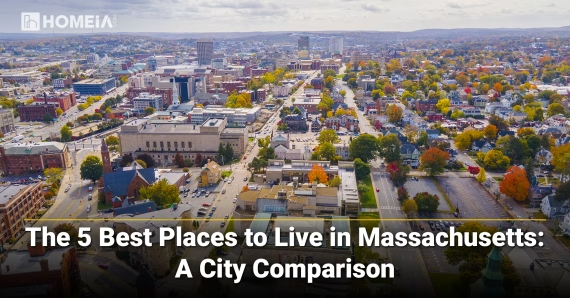
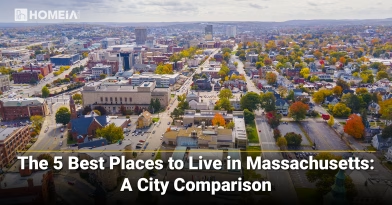
The 5 Best Places to Live in Massachusetts: A City Comparison (updated)
Massachusetts blends historic charm with modern opportunity, offering diverse lifestyles from vibrant cities to family-friendly communities. This guide analyzes the five best places to live in 2026 based on affordability, jobs, safety, and amenities, highlighting standouts like Cambridge and Springfield for future-focused residents…
2. Cost of Living & Affordability in Massachusetts

Massachusetts offers an exceptional quality of life, but not without a premium cost. Overall cost of living here is approximately 27.5% higher than the national average, primarily driven by housing expenses. However, don’t let this discourage you—there are still affordable areas and communities throughout the Commonwealth, especially outside the lavish Greater Boston metropolitan area.
A. Massachusetts Housing Market Overview
Housing represents the largest expense for Massachusetts residents. The statewide median home price is approximately $525,800, with rental costs varying significantly by location. Boston and Cambridge command premium prices, while cities like Springfield, Pittsfield, and smaller towns offer more budget-friendly housing options for families and young professionals.
Here’s a comprehensive look at housing costs across major Massachusetts cities and regions:
| City/Region | Median Home Price | 1BR Apartment Rent | 2BR Apartment Rent | 3BR Apartment Rent |
| Boston | $700,000+ | $1,869 | $2,298 | $6,011 |
| Cambridge | $900,000+ | $2,683 | $3,109 | $5,378 |
| Worcester | $350,000+ | $1,093 | $1,477 | $2,873 |
| Springfield | $250,000+ | $594 | $1,182 | $1,483 |
| Lowell | $400,000+ | $1,297 | $1,717 | $1,854 |

Related article
The Pros and Cons of Living in Boston, Massachusetts
This guide explores Boston public schools, neighborhood comparisons, weather patterns, and safety statistics to help you determine if this dynamic city, with its distinct seasonal changes and rich cultural offerings, aligns with your lifestyle priorities…
B. Utilities and Monthly Living Expenses
Massachusetts utility costs are moderately higher than the national average but remain manageable for most households. Monthly utility expenses typically range from $150-$200 for electricity, natural gas, and water with factors affecting this including location, home size, and energy usage patterns. $50-$100 should also be incorporated into the monthly budget for internet and cable/streaming services.
C. Groceries, Transportation, and Daily Costs
Grocery costs in our state run about 9% higher than the national average. This premium pricing is due to higher quality selections available at local farmer’s markets in Boston (Boston Public Market) and Westborough (Mass Farmers Market) to name a few, organic farms such as Langwater Farm (North Easton), and fresh New England seafood. Transportation expenses vary significantly based on location. Boston residents can rely on the MBTA public transit system by purchasing a reusable Charlie Card to pay. Bus prices begin at $1.40 one way while subway, commuter rail, and ferry (a separate ticket is needed to ride the ferry) start at $2.40 and can increase. Those living in suburban and rural areas will need to rely on having a car.
Current Massachusetts transportation costs include gas prices staying within the $3.50-$4.00 per gallon range, auto insurance averaging $1,200-$1,500 annually depending on driving record and coverage, MBTA monthly passes costing $90 for subway/bus access, and parking in Boston running $200-$400+ monthly. These numbers can be increased or decreased accordingly based on your situation.
Recommended for you




3. Jobs, Economy, and Career Opportunities in Massachusetts

The Bay State prides itself on having a robust, diversified economy with abundant career opportunities throughout multiple industries. The state unemployment rate currently sits around 4.6%, slightly above the national average but well within healthy economic parameters. Massachusetts has continued to add jobs in these recent months, primarily in healthcare, education, and biotech sectors.
A. Major Industries and Growing Employment Sectors
This portion of New England serves as a national leader in several key industries driving economic growth and providing bountiful career opportunities. Healthcare and Biotech have turned Boston into a global hub home to world-renowned medical institutions including Massachusetts General Hospital, Brigham and Women’s Hospital, and Boston Children’s Hospital. Major biotech companies including Moderna, Biogen, Takeda, and dozens of emerging startups provide thousands of jobs in research, development, clinical trials, and pharmaceutical manufacturing.
Education and Research thrive with Harvard University, MIT, Boston University, Tufts University, Northeastern University, and over 100 other colleges and universities making education a massive employment sector. Technology and Innovation flourish as the Greater Boston tech ecosystem rivals Silicon Valley, with prominent companies headquartered here being Wayfair, Akamai Technologies, Thermo Fisher Scientific, and HubSpot.
Financial Services position Boston as a major East Coast financial hub, hosting companies including Fidelity Investments, State Street Corporation, Boston Private, and numerous asset management firms. Advanced Manufacturing includes companies like Raytheon Technologies, General Electric, Boston Scientific, Dassault Systèmes and aerospace manufacturers that provide high-paying engineering, manufacturing, and technical positions having campuses in the state.
B. Metropolitan Job Markets and Economic Centers
| Metro Area | Key Industries | Major Employers | Average Salary Range |
| Greater Boston | Healthcare, tech, finance, education, biotech | Mass General, Fidelity, Wayfair, Harvard, MIT | $65,000-$150,000+ |
| Cambridge | Technology, biotechnology, higher education | MIT, Harvard, Akamai, Biogen, Moderna | $70,000-$160,000+ |
| Worcester | Healthcare, manufacturing, education, tech | UMass Medical, Worcester Polytechnic, Hanover Insurance | $50,000-$90,000+ |
| Springfield | Healthcare, manufacturing, education, insurance | Baystate Medical, Springfield College, MassMutual | $45,000-$80,000+ |
| Lowell | Manufacturing, education, technology | UMass Lowell, Raytheon, pharmaceutical companies | $50,000-$95,000+ |

Related article
Cheapest Places to Live in Massachusetts
Discover the cheapest places to live in Massachusetts with this helpful guide. From Boston’s city life to the peaceful Berkshires, explore affordable towns, top schools, vibrant communities, and diverse lifestyles…
4. Education Excellence: Why Massachusetts Schools Lead the Nation

Massachusetts consistently ranks as having the best public education system in the United States. The Commonwealth leads the nation in student achievement, graduation rates, college readiness, and overall educational outcomes. Schools here are heavily invested in, safe, and focused on preparing students for success in higher education and competitive careers.
A. Public School System Performance and Rankings
Massachusetts public schools achieve exceptional results that attract families from across the country. For fourth grade specifically, the state ranks second nationally for math and fourth for reading performance. With eighth grade, it’s ranked first nationally for mathematics scores and second for reading achievement. This showcases students having the foundation to excel amongst their peers nationally at an early age and having the success being built upon for the crucial grade before entering high school.
Key Massachusetts education statistics show the state ranking first for overall education quality, with an 89.7% high school graduation rate, being well above the national average Adding to this, 94% of students attending college-preparatory programs allowing for average SAT scores to consistently exceeding national benchmarks, with over 95% of schools meeting or exceeding state performance standards.
B. Higher Education: World-Class Universities and Colleges
Massachusetts is home to 114 colleges and universities, including some of the world’s most prestigious institutions. This unprecedented concentration of higher education creates a unique intellectual environment providing unparalleled opportunities for students, families, and working professionals.
| Institution Type | Notable Examples | Enrollment | Rankings/Features |
| Ivy League | Harvard University | 22,000+ | World’s top-ranked university |
| Research Universities | MIT, Boston University, Northeastern | 11,000-25,000+ | Top engineering, technology, research |
| Public Universities | UMass Amherst, UMass Boston | 28,000+ (Amherst) | Flagship public university system |
| Liberal Arts Colleges | Williams, Amherst, Wellesley | 2,000+ each | Top-ranked liberal arts education |

Related article
10 Important Things You Should Prepare for Long-Distance Moving
Moving long distances can be exciting, like an adventure of a lifetime. There is nothing as interesting and energizing as trying out new things and having the opportunity for a fresh start. But let’s be honest: moving is more complex than getting into a car or a bus and leaving for a new place…
5. Massachusetts Tax Structure: What You Need to Know

Understanding taxes is vital for financial planning when relocating to anywhere new, especially Massachusetts. The Commonwealth maintains a relatively straightforward tax system with competitive rates compared to other high-quality-of-life states.
A. Comprehensive Tax Structure Overview
Massachusetts levies a flat 5.0% income tax rate on most earned income, making tax calculations simple and predictable. Certain capital gains face an 8.5% rate while certain investment income may qualify for different treatment. Statewide sales tax rate is 6.25% on most goods and services, with important exemptions including clothing items under $175, groceries, prescription medications, and certain services. Massachusetts property tax rates average approximately 1.12% of assessed value, though rates vary drastically by municipality, with the median annual property tax bill statewide being $5,584.
B. Tax Impact Analysis for New Residents
While Massachusetts taxes are not on the lower end of the spectrum, residents receive substantial value through excellent public schools, maintained infrastructure, comprehensive public services, and strong local government. Tax-advantaged benefits of Massachusetts residency include no taxes on Social Security benefits, generous deductions for seniors, property tax exemptions for veterans, and no estate tax on inheritances under $1 million.
Recommended for you



6. Best Places to Live in Massachusetts: Comprehensive City Guide

A. Boston: Urban Sophistication Meets Historic Charm
Boston serves as the crown jewel of the state – many want to live there and those who cannot wish their city was more like it. —The city offers world-class museums (Museum of Science), diverse dining scenes, professional sports teams, and abundant career opportunities across multiple industries.
Being a trailblazer for the way of life, it offers numerous advantages including a robust job market across healthcare, finance, tech, and education and cultural diversity with neighborhoods representing global communities. Paired with an excelling education system at all levels and rich history dating back to the 17th century, there aren’t many notes to add here. Drawbacks still exist, predominantly regarding high housing costs and competitive rental markets, heavy traffic congestion and limited parking, and harsh winters with significant snow removal challenges.
B. Cambridge: Innovation Hub and Academic Excellence
Considered by some to be Boston’s little brother, Cambridge has done its fair share of growing up. Housing both Harvard University and MIT creates a dynamic environment blending academic excellence with cutting-edge technology innovation. The City of Squares is anything but and possesses a strong reputation due to its thriving biotech and technology job markets, vibrant arts scenes with restaurants and cultural events, exceptional public transportation connections, and diverse intellectual community atmosphere. Considerations include being among the highest housing costs in Massachusetts, limited parking and heavy pedestrian/bicycle traffic, and intense academic calendars that affect city rhythm.

Related article
For High-End Relocations, Luxury Moving Companies Deliver
Luxury moving experts offer personalized service and innovative solutions for transporting anything that requires extra care. Here are a few of the features a high-end moving company may be able to offer…
C. Worcester: Affordable Living with Growing Opportunities
The second-largest city in the state, Worcestet offers affordable housing, family-friendly neighborhoods, and a growing economy. Advantages include a wider variety in affordable housing options than the Boston metro, family-friendly communities with a respected school district, expanding job markets, rich cultural scenes with museums, restaurants, and events, and central locations with easy access to The Hub and other New England cities such as New Haven and Providence. Considerations include limited public transit, smaller arts and entertainment scenes, and ongoing urban revitalization in certain neighborhoods.
D. Springfield: Community Values and Affordability
Springfield is known to have some of the most budget-friendly living expenses in the state while maintaining strong community connections, decent schools, and access to cultural amenities. Hoop City’s advantages include highly-affordable housing and low cost of living, strong sense of community and neighborhood connections, strong public schools and family-oriented services, growing healthcare and education employment sectors, and beautiful historic architecture and parks with the most notable being the Naismith Basketball Hall of Fame. Considerations include limited job markets compared to larger cities, fewer entertainment and dining options, and some neighborhoods experiencing economic challenges.
E. Lowell: Historic Character with Modern Diversity
Lowell combines rich Industrial Revolution history with modern cultural diversity and affordable living. Similar to other cities on this list outside the metropolitan area, advantages include affordable housing and reasonable living costs, incredibly diverse populations with rich cultural offerings, great public schools and community programs, growing technology and manufacturing job markets, and historic national parks and cultural attractions. Considerations include limited public transit connections, a more suburban vibe that may not fit everyone’s ideal way of life, and some areas continuing to recover from economic transitions.

Related article
Important Things to Consider Before Hiring a Moving Company
Whether you’re moving from state to state or just across town, hiring the right moving company will make a world of difference. So, before you hire just anyone, here are a few things that you should definitely consider…
7. Planning Your Massachusetts Move: Detailed Step-by-Step Timeline

| Timeline | Essential Tasks | Detailed Actions |
| 8-12 Weeks Before | Research & Initial Planning | Research Massachusetts cities, neighborhoods, school districts, job markets; calculate comprehensive moving costs including housing, utilities, transportation; research Massachusetts tax implications |
| 6-8 Weeks Before | Documentation & Logistics | Gather important documents (birth certificates, Social Security cards, medical records, school transcripts); research and book reputable moving companies; begin decluttering and packing non-essential items |
| 4-6 Weeks Before | Service Arrangements | Schedule utility connections (electricity, gas, water, internet); research Massachusetts auto insurance requirements; notify current utility providers of disconnect dates; arrange mail forwarding through USPS |
| 2-4 Weeks Before | Final Preparations | Confirm moving company details and timeline; prepare essentials box for initial days; clean current home; arrange temporary lodging if needed; notify banks, employers, and important contacts of address change |
| Moving Week | Execution & Immediate Setup | Oversee professional movers or manage DIY move; conduct final walkthrough of previous home; travel to Massachusetts with essential items |
| Upon Arrival | Official Transitions | Set up essential utilities and internet; register vehicle within 30 days; obtain Massachusetts driver’s license within 30 days; enroll children in Massachusetts public schools; register to vote |
=> Get the Relocation Guide & Checklist PDF — prepared for both Desktop and Mobile devices.
Vehicle Registration, Driver’s License & Voting Requirements: Massachusetts New Residents Guide
I. Vehicle Registration Requirements
A. Registration Timeline: New residents must register their vehicle immediately upon becoming a Massachusetts resident. While the law requires immediate registration, the RMV recommends completing registration within 30 days.
Key Deadlines:
- New residents: Immediately (30 days recommended)
- Vehicle purchases: Within 10 days of purchase
- Vehicle inspection: Within 7 days of registration
B. Required Documents
- Valid driver’s license from any state/territory OR physical Social Security card (original, not laminated)
- Proof of Massachusetts auto insurance (completed and stamped by licensed agent)
- Vehicle title or proof of ownership
- Completed RMV-1 Registration and Title Application
- Two documents verifying state residency (dated within 60 days)
C. Fees and Taxes
- Registration fee: $60 for standard passenger vehicle (2-year registration)
- Title fee: $75 for Certificate of Title
- Sales tax: 6.25%
- Specialty plates: $75 base fee for special registration plates
- Vanity plates: $80 total ($30 registration + $50 vanity fee, renewed annually)
D. Annual Vehicle Inspection
All vehicles must pass yearly inspection:
- Safety inspection: All vehicles ($35 fee)
- Emissions testing: Model year post-2011 vehicles with OBD systems
- Exempt from emissions: Pre-2011 vehicles (must still pass safety)
Recommended for you




II. Driver’s License Transfer
A. Transfer Requirements: New residents must convert their out-of-state license immediately when becoming a resident. No grace period exists.
B. Process
- Complete application online and schedule RMV appointment
- Choose license type: REAL ID or Standard
- Visit RMV Service Center with required documents
C. Required Documents
- Current out-of-state license (must be surrendered)
- Proof of identity (passport, birth certificate)
- Social Security documentation
- Two documents verifying state residency
- Proof of U.S. citizenship or lawful presence
D. Testing and Fees
- No testing required if license is active or expired less than 1 year
- Full testing required if expired more than 1 year
- Cost: $50 for 5-year license
- Delivery: Mailed in 10-14 days
III. Voter Registration and Voting
A. Registration Requirements: Must be a U.S. citizen, Massachusetts resident, 18+ years old, and not incarcerated for felony conviction.
B. Key Deadlines: Registration deadline is 10 days before Election Day (reduced from 20 days by 2023 VOTES Act)
C. Automatic Registration: Effective January 2023, automatic voter registration occurs when you:
- Apply for/renew driver’s license or state ID
- Apply for MassHealth or health insurance
Note: Can no longer opt out during RMV transactions – must contact the local municipality to decline.
D. Voting Requirements
- Generally no ID required to vote in person
- Early voting available for major elections
- Absentee voting: Any registered voter may request mail-in ballot
- Polls open: 7 AM to 8 PM on Election Day
IV. Critical Deadlines Summary
A. Deadline Table
Requirement | Deadline |
|---|---|
| Vehicle Registration | Immediately (30 days recommended) |
| Driver’s License Transfer | Immediately (appointment required) |
| Vehicle Inspection | Within 7 days of registration |
| Voter Registration | 10 days before Election Day |
V. Important Tips for New Residents
A. Task Sequence
- Schedule RMV appointment for driver’s license transfer
- Secure Massachusetts auto insurance
- Complete vehicle registration
- Get vehicle inspection within 7 days
- Verify voter registration status
B. Cost-Saving Tips
- Schedule appointments early to avoid delays
- AAA members can use in-state branches for some RMV services
- Standard license costs less than REAL ID if federal ID not immediately needed
C. Penalties for Non-Compliance
- Unregistered vehicle: Fines up to $500
- No inspection sticker: Traffic violations and insurance rate impacts
- Invalid license: Legal consequences and citations
D. Unique Massachusetts Features
- No voter ID generally required
- Automatic voter registration through RMV
- Combined annual safety and emissions testing
- No grace period for new residents
- REAL ID available for federal purposes (deadline May 7, 2025)

Related article
15 Things People Usually Forget When Moving
Whether or not you decide to hire a professional moving company, this guide includes everything you need for completing your move. It’s always best to have this list handy so you can check off each task and know that you’re on top of everything…
8. Settling In: Essential Practical Steps for New Residents

A. Utilities and Essential Services Setup
The state’s utilities are managed by a combination of public and private providers, with service quality considered favorable throughout the Commonwealth. Electricity and natural gas are typically provided through Eversource or National Grid, depending upon location. Water and sewer services are managed by municipal governments, while internet and cable options include major providers being Comcast Xfinity, Verizon Fios, and various local companies.
| Utility/Service | Provider Type | Typical Monthly Cost | Setup Notes |
| Electricity | Public/Private (Eversource, National Grid) | $100-$150 | Choose competitive supply options; renewable energy programs available |
| Natural Gas | Public/Private (Eversource, National Grid) | $50-$100 | Varies by region and season; budget billing options available |
| Water/Sewer | Municipal | $50-$100 | Billed quarterly or annually; varies by municipality |
| Internet/Cable | Private (Comcast, Verizon, others) | $50-$100 | Multiple high-speed options; bundle packages available |
B. Legal Requirements and Official Documentation
Massachusetts law requires new residents to complete several official tasks within specific timeframes to establish legal residency and comply with state regulations.
| Requirement | Deadline/Details | Important Notes |
| Vehicle Registration | Within 30 days of establishing residency | Safety inspection required; emissions testing in certain areas; bring title, insurance, and ID |
| Driver’s License | Within 30 days of establishing residency | Written and road tests may be required depending on previous state; bring current license and documents |
| Voter Registration | As soon as possible after moving | Can be completed online at sec.state.ma.us; required for local and state elections |
| Address Updates | Immediately upon moving | Notify banks, insurance companies, employers, IRS, and all service providers |
C. Community Integration and Building Social Networks
To feel at home in Massachusetts, we recommend staying active throughout the community. Bay State residents are known for their kindness and hospitality towards those who show genuine interest in local community life. Effective ways to build social connections include joining local sports leagues, fitness classes, or running groups, attending religious services, community centers, or cultural organizations, and participating in school activities if you have children to name a few.

Related article
27 Questions to Ask When Hiring a Moving Company
Hiring a moving company can be pretty daunting. You’re entrusting strangers with all your precious belongings, and you want to make sure they’re adequately insured, experienced, and licensed. In this blog post, we’ll cover some essential questions to ask when hiring a moving company and help you avoid moving mishaps…
9. Massachusetts-Specific Rules and Legal Requirements

A. Vehicle Registration and Environmental Standards
Massachusetts requires all vehicles to be registered within 30 days of establishing residency. Vehicle requirements include the following: annual safety inspections costing around $35, emissions testing in required areas combined with safety inspections, mandatory auto insurance with minimum coverage requirements, registration fees based on vehicle weight and value, and license plate fees and renewal requirements.
B. Residency Establishment and Documentation Requirements
The state recognizes you as a legal resident after living there for more than 6 months during any calendar year. However, you can establish residency earlier through specific actions that demonstrate intent to make Massachusetts your permanent home.
Ways to establish residency include renting or purchasing a home with a Massachusetts address, obtaining employment, registering to vote in elections, enrolling children in public schools, opening bank accounts, registering vehicles and obtaining a driver’s license, and/or filing state tax returns.

Related article
15 Essential Steps for Moving to a New City
If you’re moving to a new city, though, the process is even more complicated. Without the ability to make a quick trip here and there, you’ll need a detailed plan to keep everything running smoothly. This guide to relocation will help you make a plan and check all the boxes so your move will be as painless as possible…
10. Financial Planning and Budget Adjustment for Massachusetts Living

A. Comprehensive Cost of Living Comparison
Living in Massachusetts costs approximately 27.5% more than the national average, with housing representing the largest expense differential. However, higher costs are typically offset by gainful salaries, comprehensive benefits, and exceptional quality of life that includes top-tier schools, healthcare, and public services.
B. Creating a Massachusetts-Adjusted Budget
| Expense Category | Estimated Cost Range | Planning Notes |
| Professional Moving Costs | $1,000-$10,000+ | Varies by distance, services, and belongings volume |
| Security Deposits | 1-3 months’ rent | First month, last month, security deposit common |
| Utility Setup Fees | $100-$300 | Connection fees for electricity, gas, internet |
| Emergency Fund | 3-6 months’ expenses | Higher cost of living requires larger emergency reserves |
Summary: Your Massachusetts Adventure Awaits
Ready to make the move to the Bay State? Massachusetts offers an exceptional combination of history, innovation, education, culture, and natural beauty that creates an unmatched quality of life. Whether you’re seeking career growth, world-class education for your family, vibrant urban living, or peaceful suburban communities, it’s easy to find that perfect fit somewhere in the Commonwealth.
From our nationally-ranked school systems to thriving metropolitan areas, stunning New England landscapes and even rich cultural heritage, we provide opportunities and experiences for everyone. The learning curve for higher living costs and harsh winters is quickly picked up and balanced with the help of incredible benefits of Massachusetts residency: excellent healthcare, top universities, strong job markets, beautiful four-season climate, and welcoming communities throughout the state.
We can’t wait to welcome you home to Massachusetts!
Recommended for you




FAQs About Moving to Massachusetts
1. Do I Need a Car in Massachusetts?
You can live comfortably without a car in Boston, Cambridge, and select inner suburbs thanks to the comprehensive MBTA public transit system. However, if you plan to live in suburban or rural areas, having a personal vehicle will significantly improve your mobility and access to employment, shopping, and recreation.
2. How Safe Is Massachusetts Compared to Other States?
Massachusetts consistently ranks among the safest states in America, with low crime rates particularly in suburban and rural communities. While certain urban neighborhoods have higher crime statistics, overall public safety is excellent. Research specific neighborhoods before moving.
3. What Are the Biggest Challenges for Massachusetts Newcomers?
The primary adjustment challenges include adapting to higher living costs (especially housing), preparing for harsh New England winters with significant snowfall, dealing with Boston-area traffic congestion, and understanding local cultural norms. However, most newcomers easily adapt and find the benefits far outweigh the initial pitfalls.
4. How Much Money Should I Budget for Moving to Massachusetts?
Plan on spending $1,000-$10,000 or more on professional moving costs, factoring in distance, services required, and volume of belongings. Additionally, budget for security deposits (typically 1-3 months’ rent), utility setup fees, vehicle registration costs, and an emergency fund of 3-6 months’ expenses.
5. Is Massachusetts Really as Family-Friendly as People Say?
Absolutely! Massachusetts consistently ranks as one of the most family-friendly states in America. Our neighborhoods are safe, public schools lead the nation in academic achievement, and there are abundant family activities including beaches, mountains, museums, sports events, and cultural festivals throughout the year.
6. What’s the Weather Really Like in Massachusetts?
Massachusetts experiences a true four-season New England climate. Summers are warm and humid (70s-90s°F), perfect for outdoor activities and beach trips. Fall brings spectacular foliage and comfortable temperatures. Winters are a winter wonderland, with all parts good and bad; frigid and snowy (often below freezing December-March) with occasional blizzards. Spring is brief but beautiful with blooming flowers and warming weather.
7. What Steps Must I Take After Moving to Massachusetts?
Essential post-move tasks include: registering your vehicle within 30 days, obtaining a Massachusetts driver’s license within 30 days, updating your address with banks and insurance companies, enrolling children in local public schools, registering to vote, finding local healthcare providers, and connecting with community organizations.
8. What Are the Pros and Cons of Massachusetts’s Higher Taxes?
Higher Massachusetts taxes directly fund public services including top-ranked schools, well-maintained infrastructure, comprehensive public safety, excellent libraries, and quality municipal services, allowing them to continue being successful. While tax rates are above national averages, most residents feel the investment provides exceptional value through improved quality of life and community services.
9. Do Massachusetts Residents Really Love Sports?
Yes! Massachusetts is one of America’s most passionate sports states. Boston teams (Red Sox, Patriots, Celtics, Bruins, and Revolution) have incredibly loyal fan bases, and sports culture permeates daily life. You’ll find sports bars, viewing parties, and community discussions about teams throughout the state.
10. How Do I Officially Establish Residency in Massachusetts?
You become a Massachusetts resident after living here for more than 6 months in any calendar year. Residency can be established earlier by renting or purchasing a home, obtaining employment, registering to vote, enrolling children in school, getting a driver’s license, or registering vehicles. Multiple actions demonstrate clear intent to make here your permanent home.