






Repairing Duplex Roofing: Comprehensive Technical, Legal, and Financial Analysis of Shared Duplex Roofing Systems
- Local Editor:Local Editor: The HOMEiA Team
- Category: Home Maintenance


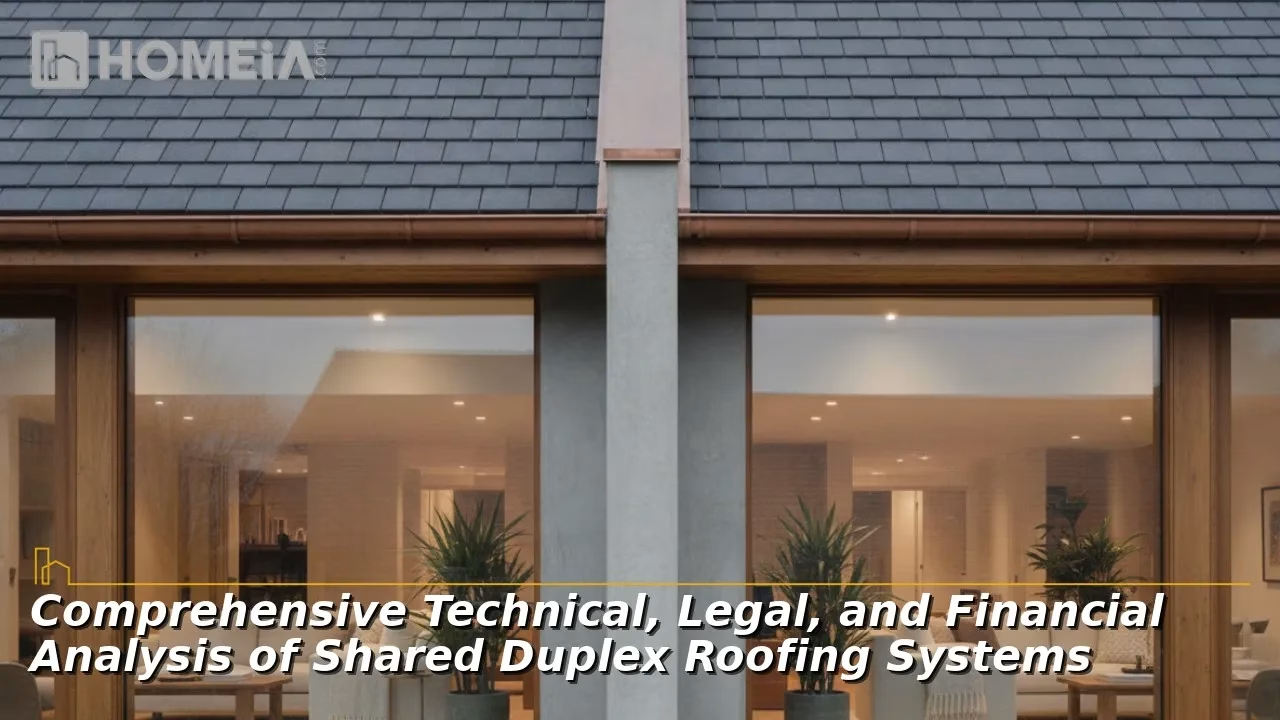
Repairing Duplex Roofing: Comprehensive Technical, Legal, and Financial Analysis of Shared Duplex Roofing Systems. Duplexes combine the benefits of individual homeownership with the structural advantages of a shared building envelope. While they reduce construction costs and optimize urban density, it introduces significant technical, financial, and legal complexities when repairs are needed. The roofing system is the most critical common element, serving as a unified shield over both properties. Unlike detached homes, duplex roofing decisions are tied to an adjacent property owner. A shared roof failure can damage both units, meaning proactive planning, including understanding ownership agreements, building regulations, insurance policies, and construction logistics, is essential to protect property equity and prevent disputes.
Key Takeaways
- Written party wall agreements establish cost-sharing terms and repair timelines before structural problems occur.
- Replacing both sides of a duplex roof simultaneously reduces individual costs through bulk material discounts and shared labor setup fees.
- Insurance claims on shared roofs are subject to policy differences and matching exclusions, which may result in patchwork systems if not coordinated.
- Building codes dictate strict fire-blocking and ventilation requirements at the shared firewall that must be maintained during roof modifications.
- Mechanic’s liens can be used as legal recourse if a neighbor refuses to pay their share of essential repairs.
- Hiring a qualified Roof Replacement Contractor with specific experience in shared systems is critical to executing watertight property-line transitions and preserving warranties.

Related article
5 Common Types of Roof Repairs and The Pros & Cons of Repair vs Replace a Roof
When deciding between repair and roof replacement, consider your long-term objectives, budget, and the condition of your roof. Repairs might be quick and cheaper, but they can also result in recurring problems. On the other hand, replacement offers peace of mind and a long-term solution, but it also comes with a higher price.
1. Understanding Duplex Roof Systems
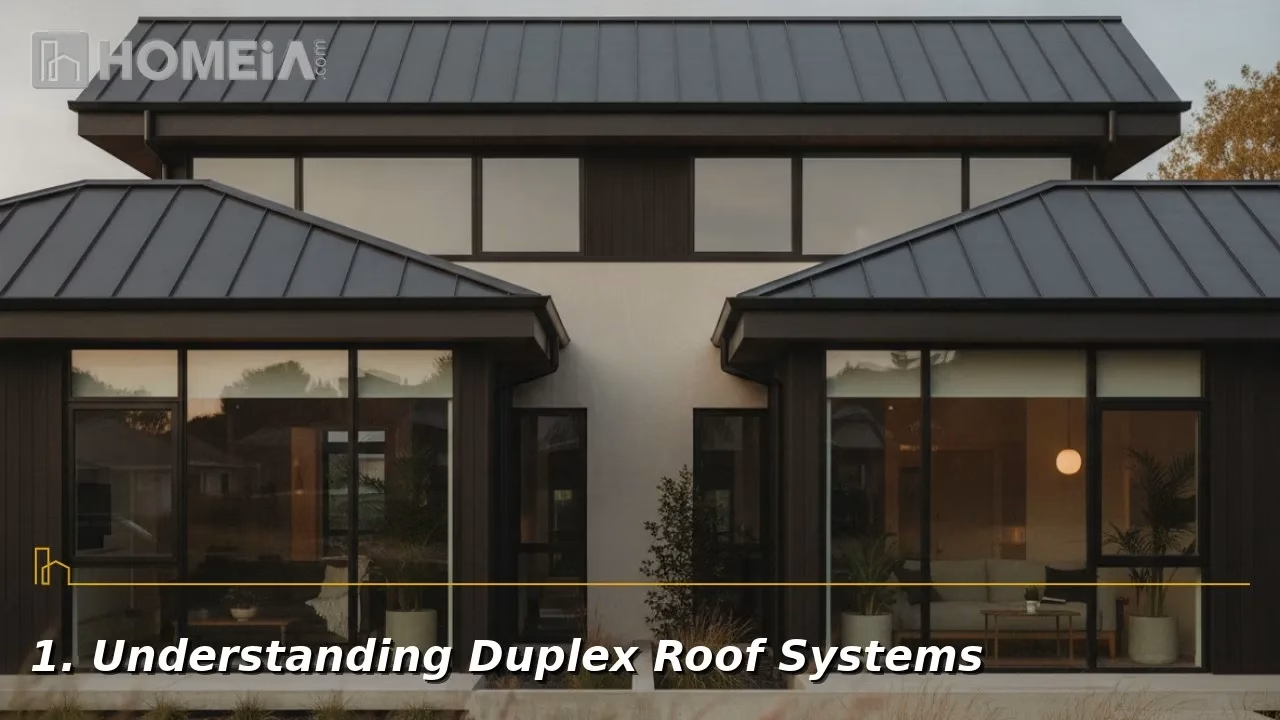
A. Structural Design and Physical Integration: Duplex roofing systems are constructed as a continuous structural envelope spanning two distinct living spaces separated by a common party wall. The roof consists of a continuous deck, underlying protective underlayment, and outer surfacing materials including asphalt shingles or metal panels. The structural support systems (trusses, rafters, and purlins) are often physically integrated or closely buttressed at the boundary line.
B. How Water Behaves Across Property Lines: Water does not recognize property lines. Gravity forces moisture to seek the path of least resistance, often running directly along or across the shared boundary. Any localized repair or modification has immediate physical consequences for the entire structure. Addressing
one side without proper detailing at the joint can channel water onto the neighbor’s decking, leading to rot, mold, and ceiling leaks.
C. Fire Separation Requirements: Modern building codes require strict vertical separation, often using a one-hour or two-hour fire-resistance-rated firewall extending from the foundation to the underside of the roof sheathing. This structural boundary must remain completely intact and uncompromised during any roofing work.
D. Comparison: Detached vs. Duplex Roofs
| Structural Feature | Detached Single-Family Roof | Duplex Shared Roof System |
| Property Boundaries | Located far from the physical roof envelope | Intersects the physical roof deck and framing |
| Structural Autonomy | Complete ownership and control | Shared structural dependence |
| Fire Separation | Standard exterior wall clearances | Strict continuous firewall sheathing required |
| Water Drainage | Self-contained on single property | Shared valleys, parapets, or common gutter lines |
| Access Rights | Restricted to owner’s parcel | Reciprocal easements typically required |

Related article
5 Easy Tips to Plan and Budget for a Roof Remodel
Remodeling or replacing a roof can cost a pretty penny. That’s one reason why you should start planning early for a remodel. But how can you go about budgeting for it? Here’re 5 tips on how to best prepare and plan financially for a roof remodel…
2. Common Duplex Roofing Problems
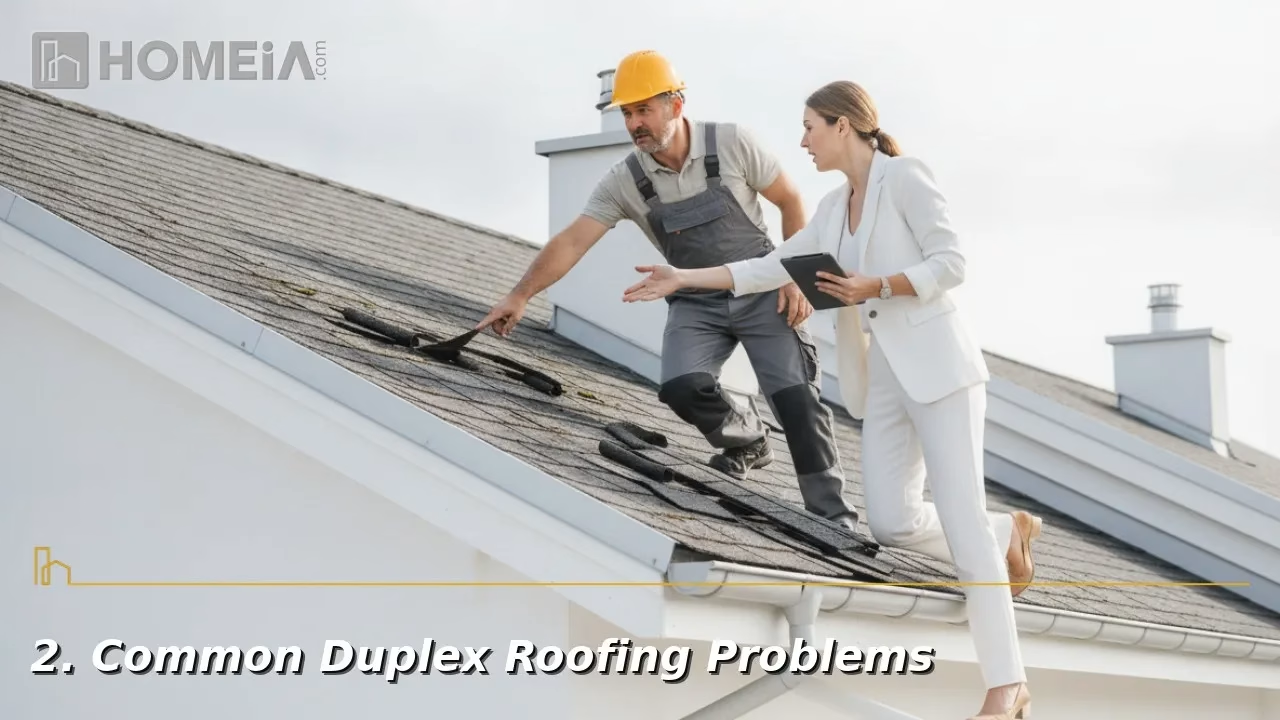
A. Water Infiltration at the Property Line Joint: A shared roof is highly susceptible to several technical and structural issues. The most prevalent concern is water infiltration at the property line joint. When only one side is replaced, the point where new materials meet old shingles creates a vulnerable transition line. If the contractor fails to install a dedicated transition system (such as a continuous metal area divider or specialized step flashing), water seeps behind the raw edge and causes decking rot on both sides.
B. Parapet Walls and Shared Chimneys: Parapet walls and shared chimneys represent major failure points. Coping stones atop parapets can crack ascounter-flashing tucked into masonry mortar joints deteriorates over time. This allows water to track down the interior of the firewall and flood basements or stain upper-floor ceilings.
C. Attic Ventilation Imbalances: Attic ventilation imbalances pose a hidden threat. If one owner seals their attic vents or installs powerful exhaust fans without coordinating with the neighbor, it disrupts the airflow of the entire building. An imbalance creates severe temperature differentials leading to condensation, mold growth, and massive ice dams during winter, causing structural wood decay that compromises the entire framing.
Related article
Roof Restoration: When It’s Worth It and When to Replace Instead
Roof restoration offers homeowners a cost-effective alternative to full roof replacement when the existing structure remains fundamentally sound. Unlike simple repairs or cosmetic coatings, true restoration is a comprehensive process that renews a roof’s performance, extends its lifespan, and addresses underlying issues before they worsen. This guide explains…
3. Responsibility and Governance

A. HOA-Managed Communities: In some communities, duplexes are governed by a homeowners association (HOA) or condominium board. The HOA’s master declaration typically defines the roof as a common area, meaning the association is responsible for organizing, executing, and funding all repairs through collective member dues or specialized capital assessments.
B. Freehold Duplexes with Party Wall Agreements: Freehold or fee-simple duplexes do not have a central association. Individual owners own their respective halves. Cost sharing and maintenance duties are governed by a recorded Party Wall Agreement (PWA) running with the land, binding all current and future owners. StandardPWAs establish that both owners share maintenance costs equally while granting reciprocal easements for contractors to access the neighboring property.
C. Freehold Duplexes without Party Wall Agreements: When no formal PWA is registered, each homeowner is technically responsible for their own side. However, common law holds that an owner can be held liable in civil court if their failure to address a known roof defect causes physical damage to the neighboring unit.
D. Governance Comparison
| Ownership Framework | Governance Document | Cost Allocation | Access & Easement Rights |
| HOA-Managed | Master Declaration and Bylaws | Financed via collective dues | Controlled by association rules |
| Freehold with PWA | Registered Party Wall Agreement | Shared equally or by negligence | Reciprocal easement explicitly granted |
| Freehold without PWA | Deed terms and common law | Individual billing; potential litigation | Subject to neighbor permission |
Recommended for you




4. Repair vs. Replacement Decision
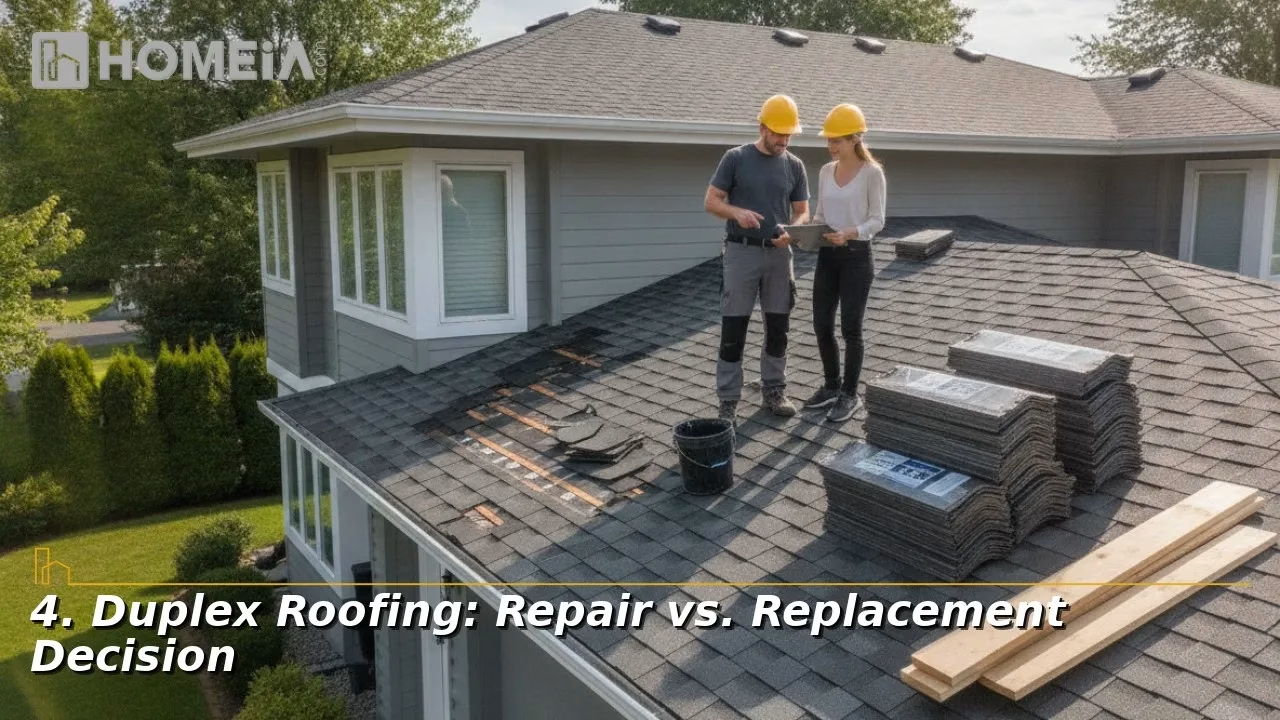
A. When to Repair: If a duplex roof is less than fifteen years old and damage is confined to a small, isolated area (notably a cracked vent boot or damaged flashing around a chimney), a professional repair is the most practical option.
B. When to Replace: If the roofing system has surpassed seventy-five percent of its rated lifespan (typically fifteen to twenty years for standard asphalt shingles), patch repairs represent wasteful spending, as adjacent weathered shingles will continue to fail. If storm damage is extensive, complete replacement is often more cost-effective because partial replacements require creating a complex vertical transition joint, involving specialized metal dividers, coping caps, and extra underlayment, all requiring expensive, specialized labor.
C. Material Options and Costs (2026)
| Material Type | Cost per Sq Ft | Total Cost (2,000 Sq Ft) | Lifespan |
| Architectural Asphalt | $4.50–$7.50 | $9,000–$15,000 | 25–30 years |
| Class 4 Impact-Resistant | $5.50–$9.00 | $11,000–$18,000 | 30+ years |
| Standing Seam Metal | $8.00–$15.00 | $16,000–$30,000 | 40–70 years |
| Clay or Concrete Tile | $10.00–$18.00 | $20,000–$36,000 | 50–100 years |
D. Regional Cost Variations (2026)
| Geographic Region | Cost per Sq Ft | Key Factors |
| Midwest | $5.00–$8.00 | High seasonal demand after spring hail |
| Northeast | $6.00–$10.00 | Higher union labor rates; complex code compliance |
| West Coast | $6.50–$11.00 | Stricter environmental disposal; high overhead |
| South | $4.50–$7.50 | Lower labor costs; year-round storm demand |

Related article
11 Signs Your Commercial Building Needs a New Roof
Roofing maintenance is overlooked until severe damage occurs, putting your business at risk and necessitating expensive repairs. For this reason, it is crucial to conduct routine roof inspections to protect your company. Read on for 11 signs that your commercial building requires a new roof…
5. Pre-Repair Preparation Checklist
A. Document Review: Analyze property deeds, Party Wall Agreements, and HOA rules. This verifies exact property lines, cost splits, and access rights.
B. Neighbor Notification: Send a certified letter outlining the repair schedule and scope. Doing so establishes formal communication, records timelines, and invites joint bids.
C. Baseline Photography: Document both interior attics, exterior roof planes, and shared walls. It provides visual evidence against potential damage disputes.
D. Insurance Verification: Confirm deductible limits, matching policies, and landlord riders. This prevents unexpected denials and coordinates dual-carrier claims.
E. Contractor Check: Confirm active local licensing, commercial liability insurance, and permits. When done, it protects the owner from liability and ensures code-compliant work.

Related article
What Type of Damage to a Roof Is Covered by Insurance?
Let’s take a closer look at what types of damage you can expect to have covered and a few tips in case you have to make a claim…
6. Insurance Considerations
A. Split Approvals and Coordination: Filing insurance claims for a shared duplex roof is complex because the physically connected structure is often covered under two entirely separate policies with different carriers. One carrier may approve a full roof replacement due to storm damage, while the neighbor’s carrier denies the claim or only offers a localized patch. Coordination between owners and adjusters is vital to avoid leaving one side compromised.
B. Matching Exclusions: Many modern insurers explicitly exclude matching coverage. When a policy contains a matching exclusion, the carrier is only obligated to pay for physically damaged shingles. Even if those shingles are discontinued, they leave the homeowner to pay out of pocket for full replacement to avoid a patchwork roof.
C. Occupancy Status and Policy Requirements: If a homeowner rents out one or both sides, a standard HO-3 policy will not cover claims. The owner must secure a landlord policy (such as a DP-3 form) or a hybrid homeowners policy with a rental endorsement to cover landlord liability, property damage, and loss of rental income.
7. HOA and Building Code Requirements
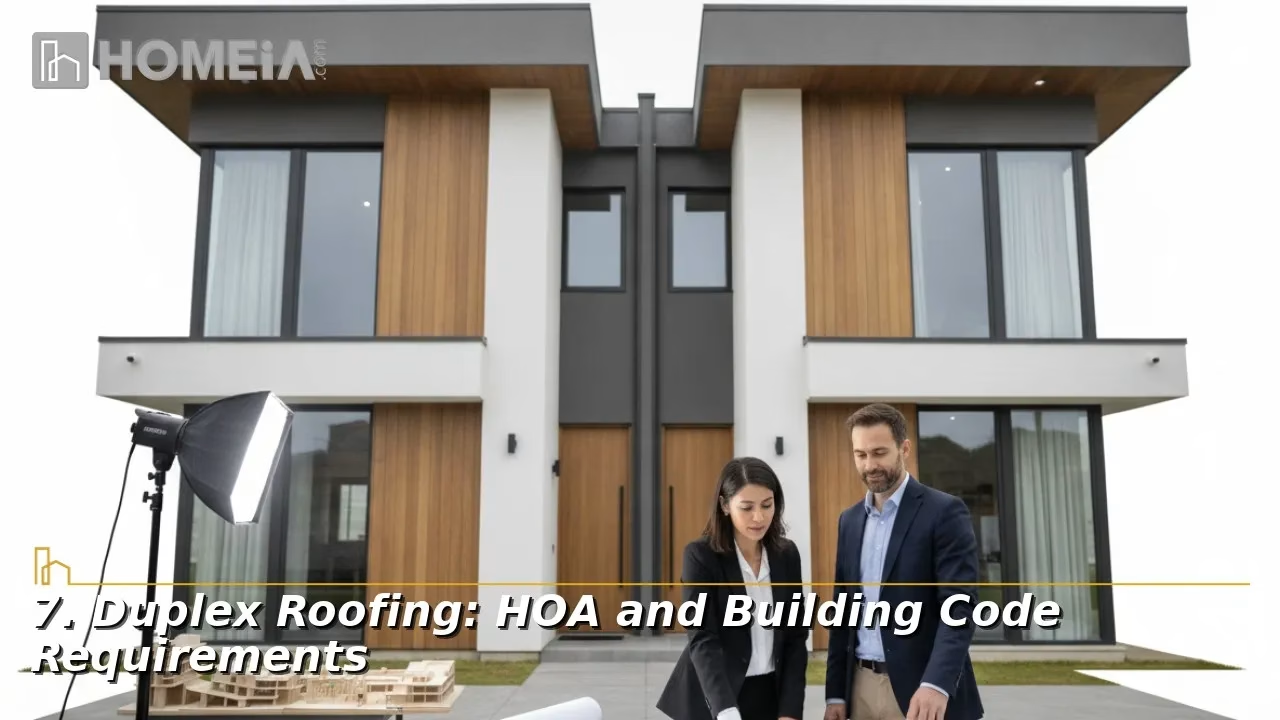
A. Aesthetic Uniformity: HOAs frequently mandate strict aesthetic uniformity across attached units, restricting shingle profiles, materials, and colors. If homeowners install unapproved materials, the HOA may levy fines or legally force reinstallation at the owner’s expense.
B. Fire-Resistance Standards: Municipal building codes enforce safety regulations regarding shared firewalls. For example, minimum one-hour fire-resistance-rated separation walls must extend from the foundation to the underside of the roof deck. To prevent fire from jumping across the roofline, the code mandates either a 30-inch-high parapet wall or continuous fire-resistant protection on the underside of roof sheathing extending 4 feet on each side of the separating wall. No vents, pipes, or penetrations are allowed within this protected zone.
C. Winter Protection Requirements: In severe climates, codes require a double-layer underlayment or self-adhering polymer ice barrier extending from the eave edge to at least 24 inches inside the warm exterior wall line to prevent winter leaks.

Related article
Essential Guide to Roof and Siding Repair: Key Factors You Need to Know
Understanding the nuances of roof and siding repair is essential for any homeowner looking to maintain or enhance the longevity and safety of their residence. This comprehensive guide will equip you with insights and practical roof and siding repair knowledge…
8. Selecting a Qualified Contractor
A. Experience and Insurance Requirements: Hiring a contractor requires verifying that the crew has specific experience managing connected roof envelopes. Ask candidates how they plan to tie a new roof into an older adjacent roof.
Verify licensing, general liability insurance, and worker’s compensation coverage. If a contractor lacks these, accidental damage to the neighbor’s portion can result in lawsuits against the hiring homeowner.
B. Manufacturer-Certified Contractors: Working with a manufacturer-certified contractor is highly recommended. Major shingle manufacturers (GAF, CertainTeed, Owens Corning) restrict their top-tier warranties to credentialed installers. These advanced system warranties cover both material defects and contractor workmanship, backed by the manufacturer even if the contractor goes out of business.
C. Warranty Comparison
| Warranty Feature | GAF Golden Pledge | Owens Corning Platinum | CertainTeed 5-Star |
| Contractor Tier Required | Master Elite | Platinum Preferred | SELECT ShingleMaster |
| Material Defect Coverage | 50 Years (Non-prorated) | 50 Years (Non-prorated) | 50 Years (25 yr non-prorated) |
| Workmanship Coverage | 25 Years | 25 Years | 25 Years |
| Manufacturer Backing | Yes | Yes | Yes |
9. Dispute Prevention Strategies

A. Present Joint Replacement Benefits: In an ideal scenario, present your neighbor with multiple professional estimates showcasing that a joint replacement reduces individual costs by fifteen to twenty percent through shared municipal permit fees, dumpster rental costs, and staging logistics.
B. Review Party Wall Agreements: If the neighbor is uncooperative, review the recorded Party Wall Agreement. Most PWAs grant reciprocal easements for essential maintenance and allow one owner to complete necessary repairs and seek civil reimbursement.
C. Mechanic’s Liens as Legal Recourse: In states like Minnesota, if a neighbor refuses to pay for documented, essential structural repairs, the initiating owner can proceed with the work and file a mechanic’s lien against the neighbor’s half under state statutes. This lien acts as a cloud on the neighbor’s title, restricting them from selling or refinancing until debt is resolved.
10. Preventative Maintenance Schedule
A. Gutter and Downspout Clearing: Twice annually (spring and autumn). Prevents backflow water from rotting shared eaves.
B. Attic Ventilation and Heat Inspections: Annually before winter. Eliminates condensation and heat build-up that causes ice dams.
C. Roof-to-Wall Flashing Inspections: Annually. Identifies cracked caulking and rusted metal before leaks start.
D. Coping Stone and Parapet Inspections: Every two years. Finds hairline cracks in masonry that saturate shared walls.
E. Tree Canopy Control and Trimming: Every two to three years. Keeps abrasive branches away from shingle surfaces.
F. Post-Storm Evaluation: Immediately following severe weather. Spots impact damage or missing tabs before moisture penetrates the deck.
11. When Full Replacement Makes Sense
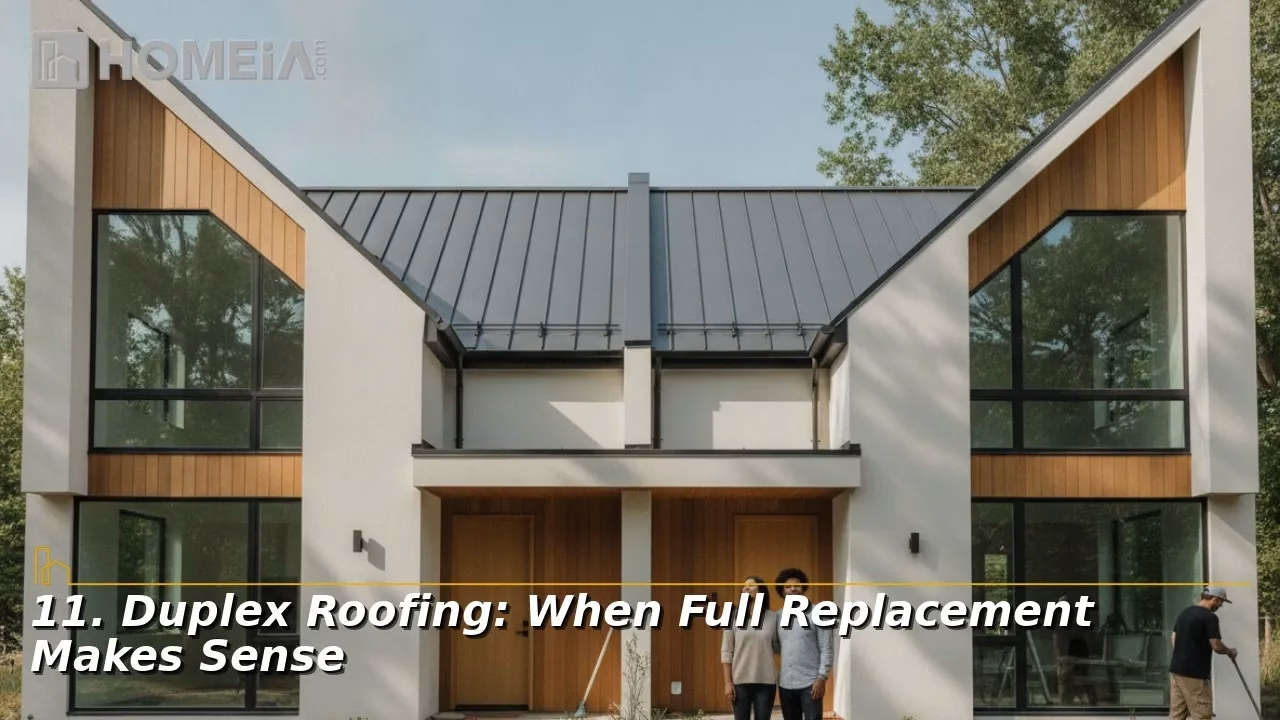
A. Economic Reality of Patching: While localized patching is appealing for short-term budgeting, several factors make complete, dual-sided replacement the only logical path. When a roof reaches the end of its physical lifecycle, patching becomes costly, as adjacent weathered shingles will inevitably fail and leak.
B. Labor Cost Implications: A partial replacement requires creating a complex vertical transition joint along the property line, involving specialized area dividers and extra underlayment. Custom detailing requires intense labor that often offsets the savings of leaving half the roof untouched.
C. Aesthetic and Resale Implications: Mismatched roofing materials and colors on an attached structure severely damage curb appeal and resale value. Complete, unified replacement ensures maximum structural integrity, uniform aesthetics, and provides both owners with a transferrable manufacturer warranty that enhances long-term property values.
Conclusion
Managing a duplex roofing system requires balancing technical construction requirements with legal and social responsibilities. Shared roofing means one owner’s safety and property value depend directly on their neighbor’s cooperation and financial commitment. Success relies on two key pillars: solid legal agreements and expert technical execution. A clear registered Party Wall Agreement or well-funded HOA ensures funding and repair timelines are established before a crisis arises.
On the technical side, partnering with a manufacturer-certified contractor guarantees that any roof work conforms to strict municipal fire codes and manufacturer specifications. By prioritizing open communication, understanding insurance matching exclusions, and scheduling regular preventative maintenance, duplex homeowners can preserve their physical structures, protect their financial equity, and maintain harmonious relationships under a single, secure roof.
Recommended for you




1. Can one side of a duplex roof be replaced independently?
Yes, an owner can replace their half independently, but it is technically complex and financially inefficient. Professional contractors can build a vertical area divider along the property line to create a watertight joint. However, this custom detailing requires intensive labor, and visual mismatch of new shingles next to weathered ones can degrade curb appeal and potentially void the neighbor’s remaining system warranty.
2. What happens if a neighbor refuses to repair their portion?
Check the recorded Party Wall Agreement, which typically authorizes unilateral repairs for essential maintenance and permits suing for cost sharing. If no agreement exists, file a complaint with the local municipal building code enforcement unit. Under state laws like Minnesota Statutes Chapter 514, the owner can complete necessary repairs and file a mechanic’s lien on the neighbor’s property to secure reimbursement.
3. Can different roofing materials be used on each side?
Technically, different materials can meet at a transition joint, but most HOAs and municipal codes mandate uniform exterior materials and colors on attached dwellings. Transitioning between two materials requires specialized transition flashing, foam closures, and custom metal pitch-break trim. This custom metalwork dramatically increases labor costs and introduces significant structural risk, making material matching the safer and more economical option.
4. Does replacing half a duplex roof affect resale value?
A partial, mismatched roof replacement severely hurts resale value and marketability of both units. Prospective buyers and appraisers look for visual and structural cohesion. A duplex with visible patchwork of old shingles on one side and new shingles on the other signals poor neighbor cooperation and impending costs. Conversely, a fully matched, single-material roof installed across both units maximizes curb appeal and boosts property values.
5. Can a roofing contractor work without both owners present?
Legally, a contractor only requires the signature of the owner paying if repairs are restricted to that owner’s physical property line. However, most professional contractors will refuse work without written consent from both owners. Because physical work along the shared wall boundary directly impacts the adjacent roof structure, there is high risk of accidentally causing a leak or disturbing the neighbor’s shingles. Securing mutual consent protects the contractor from liability and ensures smooth construction access.
Share