







Why Two Borrowers with the Same Income Can Afford Completely Different Houses
- Local Editor:Local Editor: The HOMEiA Team
- Category: Mortgage & Finance



Why Two Borrowers with the Same Income Can Afford Completely Different Houses?
Quick Answer: Income alone does not determine mortgage affordability because lenders evaluate risk, not just earnings. Mortgage underwriting focuses heavily on debt-to-income ratios, credit scores, down payment sizes, and cash reserves. When two borrowers earn identical salaries, the individual with less recurring debt, higher credit score, and larger down payment will always qualify for a significantly higher loan amount because they represent a lower risk to the lender.
When planning to buy a home, most buyers assume that income is the ultimate deciding factor in determining how much house they can buy. It seems logical that two households earning identical salaries should be able to qualify for the exact same mortgage loan amount. However, in the world of mortgage underwriting, gross salary is the starting point of a complex financial evaluation.
Lenders do not approve loans based on income alone. Rather, they review a comprehensive picture of a borrower’s financial health, evaluating how effectively that income is managed, existing debt obligations, credit history, and available cash assets. Because of these variables, two buyers with the exact same salary can end up with vastly different home purchasing power. One may easily qualify for a spacious suburban property, while the other could struggle to obtain approval for a modest condo.
Understanding how mortgage lenders evaluate risk beyond your paycheck is essential for navigating the home buying process successfully. By looking past simple salary numbers, you can strategically position yourself to maximize your borrowing capacity.
Key Takeaways
- Gross income only establishes a theoretical baseline for affordability. Actual borrowing power hinges on existing monthly debt obligations.
- Higher credit scores secure lower interest rates, which directly reduces monthly payments and increases the maximum loan amount a buyer can qualify for.
- A larger down payment eliminates the need for private mortgage insurance, lowers the loan-to-value ratio, and reduces lender risk.
- Hidden housing costs such as property taxes, homeowners insurance, and HOA fees vary by location and can drastically cut into a borrower’s maximum loan limit.
- Automated online affordability calculators often fail to account for backend debt ratios, credit tier pricing, and local tax variations, leading to inaccurate expectations.


Related article
5 Best Actions to Increase Your Credit Score in 60 Days
There are other factors that are looked at when trying to qualify for a home, but credit scores is the top factor. This article will discuss credit scores, how they work and 5 of the main actions that you can take to improve your credit score as quickly as possible…
1. Two Borrowers, Same Income, Varying Outcomes

To understand how mortgage qualification factors operate in the real world, consider two hypothetical borrowers, Borrower A and Borrower B. Both earn an identical gross annual income of $120,000, which translates to $10,000 per month. Despite having the exact same salary, their financial profiles lead to completely different homebuying capacities.
| Financial Metric | Borrower A | Borrower B |
| Gross Monthly Income | $10,000 | $10,000 |
| Credit Score | 780 (Excellent) | 680 (Fair) |
| Monthly Car Loan Payment | $0 | $550 |
| Monthly Student Loan Payment | $0 | $400 |
| Monthly Credit Card Minimums | $0 | $150 |
| Total Monthly Non-Housing Debt | $0 | $1,100 |
| Down Payment Amount | $100,000 (20%) | $20,000 (5%) |
| Estimated Interest Rate | 6.25% | 7.00% |
| Private Mortgage Insurance (PMI) | None | Required ($150/month) |
| Maximum Purchase Price | $500,000 | $315,000 |
| Estimated Total Monthly Payment | $2,950 | $2,500 |
These differences matter because Borrower B is carrying $1,100 in monthly debt obligations before even factoring in a mortgage payment. Additionally, Borrower B’s lower credit score results in a higher interest rate. Their smaller down payment triggers mandatory private mortgage insurance. Consequently, Borrower A can safely purchase a $500,000 home, while Borrower B is capped at a purchase price of $315,000, despite earning the exact same salary.
2. Income Is Only One Piece of Mortgage Affordability

When lenders assess your income, they go beyond looking at the top line of your tax return or your base salary. Mortgage underwriting requires analyzing the stability, predictability, and verifiability of that income. A lender needs reasonable assurance that your earnings will continue at the same level for at least the next three years.
Gross income is the starting point, but underwriters carefully categorize your earnings. For example, a steady W-2 salary is viewed as highly stable. On the other hand, income derived from bonuses, commissions, or seasonal work typically requires a two-year track record with the same employer to be considered qualifying income. If you recently shifted to a commission-heavy role, a lender might only count your base salary, severely limiting initial borrowing power.
Furthermore, your employment history plays a major role. Lenders generally prefer to see at least two years of continuous employment within the same line of work. Frequent career changes or gaps in employment can signal risk, even if your current salary matches that of another applicant with twenty years of steady tenure. This variance becomes highly apparent when comparing Ohio mortgage lenders or national institutions.Underwriting systems analyze deep into the consistency of those paystubs to weed out volatile income sources.
Related article
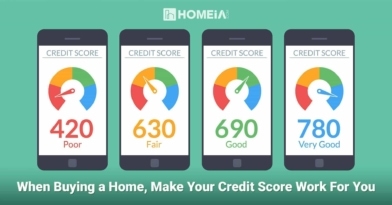
When Buying a Home, Make Your Credit Score Work For You
The huge investment of buying a house impacts your lifestyle and your finances. For buyers, it’s essential to understand how to make a credit score work for you, rather than against you. In this article, we’ll discuss your credit report and credit score and the basics of getting them to work for you. Let’s get started…
3. Debt-to-Income Ratio Often Matters More Than Income

The debt-to-income (DTI) ratio is arguably the most critical metric in mortgage qualification. This mathematical calculation compares your monthly debt obligations to your gross monthly income. Lenders divide this into two distinct categories – the front-end ratio and the back-end ratio.
A. Front-End DTI Ratio
The front-end ratio, also known as the housing ratio, measures the percentage of your gross monthly income that is attributed toward future housing expenses. This includes the principal, interest, property taxes, homeowners insurance, and any homeowners association fees, collectively known as PITI. Under standard conforming loan guidelines, lenders typically prefer to see a front-end ratio of 28% or lower, though some programs allow higher flexibility.
B. Back-End DTI Ratio
The back-end ratio is far more impactful on your ultimate purchasing power. This metric calculates the percentage of your gross monthly income required to cover all recurring monthly debts plus your prospective housing payment. Recurring debts include car loans, student loans, minimum credit card payments, personal loans, and child support.
Most conventional lending guidelines prefer a maximum back-end DTI ratio of 36% to 43%, though certain government-backed loans or strong overall profiles can stretch up to 45% or 50%.
If you earn $10,000 a month and have zero debt, a 43% DTI ratio allows for a maximum monthly housing payment of $4,300. However, if you have $1,500 in student loans and car payments, that $1,500 is deducted directly from your available housing allowance, dropping your maximum permissible housing payment to $2,800. This is why low-debt borrowers can afford significantly expensive homes than high-debt peers with matching incomes.
4. How Credit Scores Affect Buying Power

Your credit score serves as a financial report card, indicating to lenders how reliably you repay borrowed money. In the mortgage industry, credit scores determine the interest rate you receive, which directly dictates a monthly payment amount and ultimate borrowing power.
Lenders use tiered risk-based pricing. Borrowers with exceptional credit scores, typically 740 and above, receive the lowest available interest rates. As credit scores drop, the perceived risk to the lender increases, resulting in higher interest rates to compensate for that risk.
Consider how interest rate tiers alter affordability on a standard $400,000 30-year fixed mortgage:
| Credit Score Range | Tiered Interest Rate | Monthly Principal & Interest | Total Interest Over 30 Years |
| 740 – 850 | 6.25% | $2,462 | $486,590 |
| 680 – 699 | 6.85% | $2,621 | $543,628 |
| 620 – 639 | 7.75% | $2,865 | $631,691 |
A borrower with a lower credit score pays an extra $403 every month for the exact same loan amount compared to a borrower with top-tier credit. Because lenders cap your loan size based on that maximum monthly payment allowance, that $403 premium forces the lower-credit buyer to target an economical home to keep their total payment within acceptable DTI limits.

Related article
Approval Tips for Complicated Self-Employed Mortgage Applicants
This article aims to highlight the hurdles and provide a compass and map for the self-employed individuals out there, guiding them through the intricacies of the mortgage application process with clarity and confidence…
5. The Down Payment Advantage

The size of your down payment changes the dynamic of a mortgage application. Larger down payments reduce the loan-to-value (LTV) ratio, which is the percentage of the home’s value that you are borrowing.
When a borrower puts down 20% or more, they eliminate the need for private mortgage insurance (PMI). PMI is an extra monthly fee added to the mortgage payment solely to protect the lender if the borrower defaults. For a buyer putting down only 3% or 5%, PMI can add anywhere from $50 to several hundred dollars to the monthly payment, depending on credit score and loan size.
Additionally, a larger down payment means you need to borrow less money to purchase the same house. If two buyers want to purchase a $450,000 home, the buyer with a 20% down payment ($90,000) only needs to finance $360,000. The person with a 5% down payment ($22,500) must finance $427,500. A smaller loan naturally comes with a lower monthly payment, making it easier to clear strict underwriter DTI hurdles.
6. Savings and Cash Reserves Matter More Than Many Buyers Realize

Lenders look favorably upon borrowers maintaining healthy financial cushions after closing. These post-closing funds are known as cash reserves, measured in months of prospective housing payments.
If the total mortgage payment will be $2,500 and there is $10,000 left in savings after making your down payment and paying closing costs, you possess four months of reserves. Underwriters view reserves as a critical safety net. If you experience a temporary job loss or medical emergency, reserves ensure the mortgage still gets paid.
A borrower who drains their bank account to clear the down payment poses a high risk. If an unexpected financial shock occurs right after closing, they have no fallback plan. Consequently, an underwriter might restrict a zero-reserve borrower to a lower total loan amount, whereas a borrower with deep cash reserves may be granted flexibility to push their DTI ratios slightly higher.
Related article
5 Best Actions to Increase Your Credit Score in 60 Days
There are other factors that are looked at when trying to qualify for a home, but credit scores is the top factor. This article will discuss credit scores, how they work and 5 of the main actions that you can take to improve your credit score as quickly as possible…
7. Location Can Change Affordability Dramatically

Affordability is highly localized due to the cost of owning a home extending far beyond the list price. Two buyers with matching incomes and credit profiles looking at identical $400,000 homes in different zip codes will experience their own monthly housing expenses.
Property taxes represent a major variable. Some states and municipalities charge negligible property taxes, while others levy significant annual assessments that can add hundreds of dollars to a monthly escrow payment.
Similarly, homeowners insurance rates vary widely by geographic location. Purchasing a home in an area prone to hurricanes, wildfires, or floods will require expensive specialized insurance policies.
Finally, buying a property within a homeowners association (HOA) or condo board introduces mandatory monthly dues. These dues are factored directly into your front-end debt ratio. A $300 monthly HOA fee has the same impact on your mortgage qualification as a $300 car payment, directly reducing the maximum loan amount a lender will approve.
8. Why Interest Rates Can Create Huge Affordability Gaps

Interest rates dictate how much it costs to borrow money, with minor fluctuations altering current buying power. While macroeconomic factors set baseline market rates, your personal financial profile dictates the specific rate an underwriter offers.
When interest rates rise, buying power falls. For example, if you can afford a maximum monthly principal and interest payment of $2,500, look at how your maximum borrowing power shifts depending on the interest rate environment:
- At a 6.00% interest rate, your $2,500 monthly budget supports a $416,900 loan.
- At a 7.00% interest rate, your $2,500 monthly budget supports a $375,700 loan.
- At an 8.00% interest rate, your $2,500 monthly budget supports a $340,700 loan.
A two-percentage-point increase in your personal interest rate strips away more than $76,000 in home purchasing power. This highlights why borrowers securing a lower rate through stellar credit or a rate buy-down can afford different tiers of real estate than someone given a higher rate.

Related article
Bad Credit Loans Made Simple
We invite you to explore the various avenues for securing short-term loans with bad credit, armed with the knowledge and confidence to choose the best path forward. Let’s embark on this journey together, turning financial challenges into opportunities for growth and resilience…
9. How Mortgage Underwriters Really Evaluate Borrowers

Mortgage underwriting is the process of verifying all financial data to evaluate total risk. Underwriters view the big picture, often referred to as the components of qualification: income, debt, credit, assets, employment history, and the property itself.
They do not look at these elements in isolation. Instead, they look for compensating factors. A compensating factor is a financial strength that offsets a weakness in another area.
For instance, if an applicant has a slightly high debt-to-income ratio, an underwriter might still approve the loan if the applicant boasts a pristigious credit score and twelve months of cash reserves. Conversely, an applicant with a perfect DTI ratio might face rejection or stricter limits if they have a low credit score and a history of unstable employment. This holistic evaluation explains why income alone is never a guarantee of borrowing power.
10. Common Affordability Mistakes Homebuyers Make

- Focusing only on salary: Assuming a six-figure income automatically qualifies you for a luxury home without accounting for other underwriting criteria.
- Ignoring debt obligations: Overlooking how minimum credit card payments, student loans, and auto financing shrink your back-end DTI allowance.
- Underestimating closing costs: Forgetting that you need an additional 2% to 5% of the loan amount in cash to cover lender fees, title insurance, and escrow setup.
- Neglecting credit improvement: Failing to check and optimize your credit report in the months leading up to a home purchase, leading to a higher interest rate tier.
- Assuming online calculators are accurate: Relying on basic online tools that ignore localized property taxes, exact insurance rates, and personal credit pricing adjustments.
- Shopping before obtaining pre-approval: Spending time touring homes based on assumptions rather than receiving a verified pre-approval letter from a licensed mortgage lender.

Related article
Mastering Your Credit Score for Business Success
Credit drives business operations and growth, particularly for small-to-mid-size companies. Strong credit scores signal financial reliability, directly affecting borrowing costs, interest rates, and terms for loans, trade credit, leases, and insurance. Timely payments demonstrate business health, reducing risk perception and creating better opportunities. Excellent credit profiles offer competitive advantages by lowering costs and enabling strategic investments…
11. How to Increase Your Home Buying Power

If you want to maximize your mortgage eligibility and ensure you sit on the favorable side of the affordability equation, focus on actions that directly reduce lender risk:
- Aggressively pay down recurring debt: Eliminating minor credit card balances or paying off a small car loan frees up monthly cash flow. This directly lowers your back-end DTI ratio while boosting borrowing limits.
- Improve your credit score: Review your credit reports for errors, pay bills on time, and keep credit card utilization below 10% to secure top-tier interest rates.
- Accumulate a larger down payment: Saving more cash helps you reduce the loan size, lower your LTV ratio, and ideally avoid the added monthly cost of private mortgage insurance.
- Build strong cash reserves: Avoid spending every available dollar on the purchase. Leaving several months of living expenses in savings signals financial security to underwriters.
- Shop for competitive mortgage rates: Gather loan estimates from multiple lenders, brokers, and credit unions to find the lowest possible rate and fee combination for your profile.
Conclusion
When asking why two borrowers with the same income can afford different houses, the answer lies in the multi-faceted risk assessments performed during mortgage underwriting. Income is simply a foundation. True home purchasing power is shaped by your debt-to-income ratio, credit score, the size of a down payment, and geographic location.
Assuming your paycheck is the sole indicator of your housing budget can lead to frustrating surprises when applying for a loan. Rather than relying on generic income rules, take a holistic approach to your finances. By proactively reducing existing debts, optimizing current credit health, and accumulating robust cash reserves, you can dramatically improve your borrowing power and secure a mortgage aligning perfectly with your long-term financial goals.
Recommended for you




FAQs About Why Two Borrowers with the Same Income Can Afford Completely Different Houses
1. Does changing jobs affect mortgage approval?
Changing jobs right before or during the mortgage application process can impact your approval, depending on the circumstances. Lenders prefer a stable two-year employment history. If you move to a similar role with a guaranteed salary in the same industry, lenders usually accept it immediately. However, if you switch fields, move from a salary to a commission-only structure, or become self-employed, underwriters will generally require a new two-year history before counting that income.
2. Can bonuses and commissions count as income?
Yes, bonuses and commissions can count toward your qualifying income, but they are not treated the same as a base salary. Lenders typically require a consistent two-year history of receiving bonus or commission compensation with the same employer to ensure its sustainability. The underwriter will generally average the past two years of these earnings to calculate the qualifying monthly amount as opposed to using the most recent high payout.
3. How do lenders treat self-employed borrowers?
Lenders evaluate self-employed borrowers with strict scrutiny because their income is often less predictable than a standard salary. Underwriters usually require two full years of personal and business tax returns. They calculate qualifying income based on your net profit after business deductions, not gross revenue. If you write off substantial expenses to reduce your tax liability, this may inadvertently lower the income amount a mortgage lender will use for qualification.
4. Can co-borrowers increase affordability?
A co-borrower can significantly increase your home buying power by adding their qualifying income to the application, which lowers the overall debt-to-income ratio. However, a co-borrower also brings their own monthly debt obligations and credit history. Lenders evaluate both profiles and will typically use the lower of the two borrowers’ median credit scores to price the interest rate. This means a co-borrower with poor credit could negatively impact your loan terms.
5. Is mortgage pre-approval the same as affordability?
No, a mortgage pre-approval is not the same as your personal affordability. A pre-approval tells you the maximum amount a lender is legally willing to lend you based on underwriting guidelines. It does not account for personal lifestyle expenses, child care costs, travel goals, or savings targets. You must calculate your own comfort level to determine what aligns with a monthly budget without becoming house poor.
Share