






7 Most Affordable Places to Live in Idaho
- Local Editor:Local Editor: The HOMEiA Team


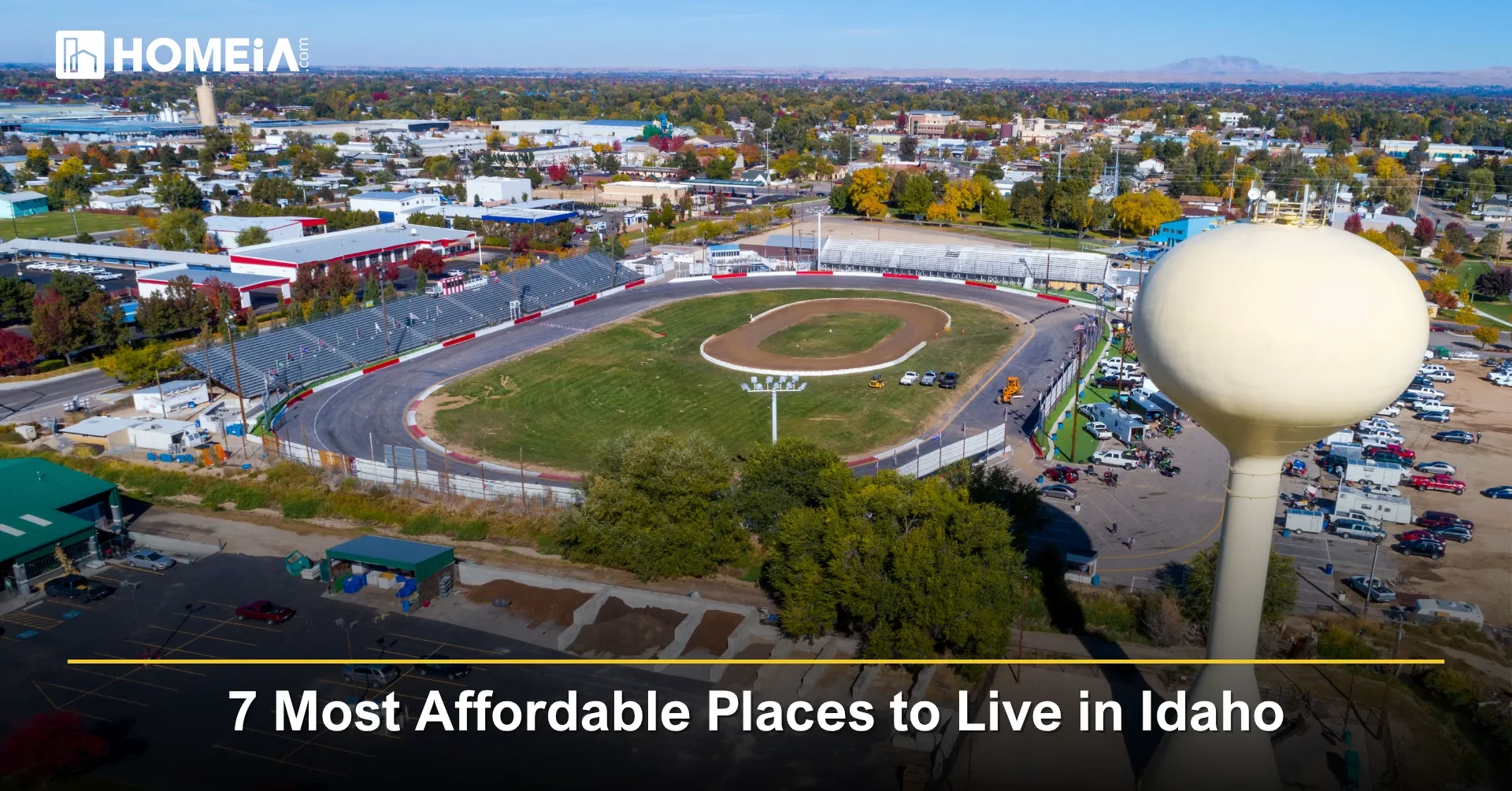
Housing costs are rising nationwide, but Idaho goes against the norm, offering affordable options in select communities outside the Boise metro area. Smaller cities and towns maintain reasonable housing costs paired with lower overall living expenses. However, affordability varies dramatically across its diverse geography. This guide identifies seven of the most affordable places to live in Idaho where you can build a stable life without overextending your budget.
Key Takeaways
- Idaho housing costs vary dramatically as Boise and surrounding areas are expensive while smaller communities remain affordable.
- Southern and eastern Idaho generally offer better affordability than the Treasure Valley and central regions.
- Manufacturing, agriculture, and education drive economies in affordable communities with healthcare becoming increasingly important.
- Winter heating costs and wildfire risk insurance should factor into affordability calculations beyond home prices.
- Many smaller communities have limited professional job markets; remote work changes relocation possibilities significantly.
Related article
The Pros and Cons of Living in Idaho
This guide details both the pros and cons of living in Idaho and highlights the best Idaho cities for young professionals, families, and retirees so you can decide whether the Gem State fits your lifestyle and budget…
I. Methodology: How We Chose the Most Affordable Places
We evaluated seven Idaho communities using a weighted scoring system.
- Housing & Affordability (30%): examines median home prices, rents, and price-to-income ratios.
- Cost of Living (25%): includes utilities, groceries, healthcare, and transportation.
- Access & Infrastructure (20%): assesses healthcare, shopping, broadband, and highways.
- Community & Safety (15%): reviews crime statistics and amenities.
- Economic Resilience (10%): evaluates employers and employment trends.
Data comes from U.S. Census Bureau, Bureau of Labor Statistics, Zillow, Redfin, Idaho Department of Labor, and FBI crime statistics.
7 Idaho Communities: Quick Comparison Table
| City | HOMEiA Score | Cost of Living | Avg. Rent (2-Bed) | Home Price to Income Ratio | Income to Rent Ratio | Safety Rating |
| Pocatello | 71/100 | -10.8% | $1,150 | 3.8:1 | 43.8x | 35/100 |
| Lewiston | 73/100 | -5.7% | $1,148 | 3.2:1 | 44.2x | 40/100 |
| Chubbuck | 74/100 | -14% | $1,100 | 3.9:1 | 45.5x | 42/100 |
| Twin Falls | 76/100 | -12% | $1,565 | 3.1:1 | 40.7x | 52/100 |
| Blackfoot | 77/100 | -14% | $975 | 3.2:1 | 49.2x | 55/100 |
| Idaho Falls | 78/100 | -17% | $1,250 | 3.5:1 | 42.8x | 60/100 |
| Burley | 79/100 | -21% | $950 | 2.8:1 | 50.6x | 58/100 |
II. Detailed Community Analysis
1. Pocatello: College Town in Southeast Idaho
HOMEiA Score: 71/100
- Cost of Living: -10.8% (10.8% below U.S. average)
- Monthly Rent: $1,150
- Home price to income ratio: 3.8:1
- Income to rent ratio: 43.8x
- Safety rating: 35/100
A. Cost of Living & Housing: Pocatello ranks as one of Idaho’s most affordable cities with median home prices around $320,000 and two-bedroom rents averaging $1,150 monthly. The cost of living sits 10.8 percent below the national average. Housing remains manageable relative to local incomes despite the market tightening in recent years. Older neighborhoods offer entry-level homes, while new construction in surrounding areas provides additional options. The rental market is competitive but reasonable for a community this size.
B. Economy & Job Market: Idaho State University drives the local economy, employing thousands directly and supporting countless service businesses. Healthcare, retail, education, and light manufacturing provide stable employment. Growth in alternative energy research at ISU creates emerging opportunities. Unemployment runs around 4.7 percent, leading, professional advancement requiring relocation to larger metros for some. The city benefits from a relatively young, educated workforce due to university presence.
C. Access & Infrastructure: Located in southeast Idaho on Interstate 15, Pocatello provides streamlined connections north to Montana and south toward Utah. Portneuf Medical Center serves as the primary healthcare facility. Broadband access in the city meets current standards, though some rural areas lag. Shopping and services are adequate overall. Winter driving can be challenging with significant snowfall and icy conditions.
D. Quality of Life & Culture: Pocatello offers college town amenities with outdoor recreation readily accessible in the nearby Pocatello Range. Academia attracts cultural events and sporting activities. Crime rates are higher than average at 4.1 per 1,000 residents, though declining over recent years. Winters are fortuitous with substantial snowfall. Appeals to students, young professionals, and those seeking affordability with university resources.


Related article
The 10 Best Places to Live in Idaho
With its safe reputation and friendly residents, Idaho is definitely a state worth considering when finding a new location to settle down on your own or with a family…
2. Lewiston: Riverfront Town in Northwest Idaho
HOMEiA Score: 73/100
- Cost of Living: -5.7% (5.7% below U.S. average)
- Monthly Rent: $1,148
- Home price to income ratio: 3.2:1
- Income to rent ratio: 44.2x
- Safety rating: 40/100
A. Cost of Living & Housing: Lewiston offers moderate affordability with median home values around $333,700 and median gross rent of $1,148 monthly. Cost of living runs about 5.7 percent below the national average, making it moderately affordable despite higher housing costs than some alternatives. A homeownership rate of 67.5 percent suggests meaningful affordability for owner-occupants. Located on the Snake River with scenic surroundings, it attracts retirees and remote workers. Housing stock includes older established neighborhoods and newer developments.
B. Economy & Job Market: Manufacturing, healthcare, and retail dominate employment. Clearwater Paper Corporation operates major facilities in the region. Port of Lewiston connects to navigation channels for barge traffic. Lewis-Clark Hospital provides healthcare stability. Unemployment sits around 3.6 percent. However, manufacturing employment fluctuates with industry cycles. Being located near Washington creates cross-border economic influences. Professional opportunities sometimes require looking beyond the immediate area.
C. Access & Infrastructure: It sits at the confluence of the Snake and Clearwater Rivers near the Washington border. U.S. Highway 12 provides the main regional connection. Air service through Spokane International Airport, about 90 minutes away, offers broader connectivity. Healthcare access through Lewis-Clark Hospital covers most needs. Broadband service is available in town. Winter conditions are milder than the eastern portion despite requiring preparation.
D. Quality of Life & Culture: Their character centers on its riverfront location and heritage as a steamboat era port. Historic downtown offers restaurants and shops with local character. Nez Perce cultural heritage significantly influences the region. Crime rates are elevated at 4.0 per 1,000, though the community maintains strong community bonds and outdoor recreation through river access. Fall colors and spring wildlife viewing attract outdoors enthusiasts. Appeals to those valuing river character.
Related article
Moving to Idaho: The Complete Relocation Guide & Checklist
Idaho attracts newcomers with its blend of affordability, outdoor recreation, and strong sense of community. From rugged mountains and scenic rivers to growing job opportunities in technology, agriculture, and manufacturing, the Gem State offers a lifestyle centered on both opportunity and adventure. While housing costs vary by region, many areas outside of Boise remain relatively affordable. This guide covers housing…
3. Chubbuck: Growing Suburb in Southeast Idaho
HOMEiA Score: 74/100
- Cost of Living: -14% (14% below state average)
- Monthly Rent: $1,100
- Home price to income ratio: 3.9:1
- Income to rent ratio: 45.5x
- Safety rating: 42/100
A. Cost of Living & Housing: Chubbuck offers unparallelled affordability with cost of living 14 percent below the state average. Median home prices around $361,450 remain reasonable for newer suburban communities. Two-bedroom rents average $1,100 monthly. The city’s rapid growth has created a modern housing stock with good condition properties. Housing costs relative to local incomes are favorable. New development adds diversity in home styles and price points. Interstate 15 proximity has driven growth in recent years.
B. Economy & Job Market: Chubbuck benefits from proximity to Pocatello’s major employers while maintaining a lower cost of living. Idaho Central Credit Union headquarters provides significant employment and economic stability. Service industries, retail, and education create additional jobs. Residents commute to Pocatello for work at ISU and healthcare facilities. Remote work accessibility has expanded job possibilities. Current growth trajectory attracts businesses seeking alternatives.
C. Access & Infrastructure: Located adjacent to Pocatello on Interstate 15, this offers convenient regional connectivity while maintaining lower costs than Pocatello. Highway access allows for quick commutes to employment centers. Healthcare services are accessible through Pocatello’s facilities nearby. Broadband availability is consistent in this growing community. Shopping and services continue expanding. The location provides outdoor recreation access without larger community congestion.
D. Quality of Life & Culture: There exists suburban character with family-friendly developments, parks, and schools. The community is currently undergoing rapid growth bringing both service development and infrastructure pressures. Safety ratings are reasonable for a growing community. Outdoor recreation through Pocatello Range access and river canyons provides weekend activities. The blend of suburban convenience with outdoor recreation appeals to young families.
Recommended for you




4. Twin Falls: Hub City in South-Central Idaho
HOMEiA Score: 76/100
- Cost of Living: -12% (12% below national average)
- Monthly Rent: $1,565
- Home price to income ratio: 3.1:1
- Income to rent ratio: 40.7x
- Safety rating: 52/100
A. Cost of Living & Housing: Twin Falls offers solid affordability with median home prices around $344,000 and cost of living 12 percent below national average. Rent averages $1,565 for two-bedroom apartments. The city is the Magic Valley’s commercial center, supporting multiple housing options. Home prices have appreciated but remain accessible compared to the Boise area. The community offers established neighborhoods with older character and newer subdivisions. Affordability is moderate among Idaho communities.
B. Economy & Job Market: The Falls serves as the commercial hub for southern Idaho’s agricultural region. This diversified economy includes agriculture, food processing, manufacturing, healthcare, and education. Twin Falls College and North Canyon Hospital provide major employment. Manufacturing facilities and food processing plants offer working-class jobs. Unemployment remains low at approximately 3 percent. Regional importance creates diverse employment opportunities.
C. Access & Infrastructure: TF sits on U.S. Highway 93 in south-central Idaho with regional connectivity to Boise and surrounding areas. Reliable highway access supports commerce and job accessibility. St. Luke’s Magic Valley Medical Center provides comprehensive healthcare. Broadband availability is reliable in this established commercial center. Shopping and services are extensive. Shoshone Falls nearby provides recreation and scenic appeal. Winter weather is moderate for Idaho.
D. Quality of Life & Culture: Twin Falls offers genuine small-city character with Main Street vitality, parks, and community events. The Shoshone Falls provide stunning scenery and recreation. It is consistently ranked among the state’s safest communities with crime well below state and national averages. Cultural amenities include museums, theaters, and concerts. The community maintains its deeply-rooted local agriculture heritage. Appeals to those seeking safety, affordability, and community connection.
Related article
The 5 Best Places to Live in Montana: A City Comparison
Montana blends rugged wilderness with welcoming communities, offering endless opportunities for outdoor living and growth. This guide spotlights the five best Montana cities to live, based on affordability, opportunity, safety, and quality of life, from vibrant Missoula to scenic Bozeman, helping you find your perfect Rocky Mountain home…
5. Blackfoot: Agricultural Center in Southeast Idaho
HOMEiA Score: 77/100
- Cost of Living: -14% (14% below state average)
- Monthly Rent: $975
- Home price to income ratio: 3.2:1
- Income to rent ratio: 49.2x
- Safety rating: 55/100
A. Cost of Living & Housing: Blackfoot offers desirable affordability with median home prices around $305,000 and cost of living 14 percent below state average. Two-bedroom rents average $975 monthly, among the lowest. The potato capital heritage persists with reasonable home prices reflecting agricultural community roots. Housing stock ranges from older character homes to modern construction. The community provides excellent value. Price-to-income ratios are favorable for locals.
B. Economy & Job Market: Agriculture remains dominant with potato farming, processing, and related industries providing employment. Bingham Memorial Hospital offers healthcare jobs with expansion plans. Food processing and manufacturing facilities employ a significant workforce. Government and retail provide additional opportunities. Agricultural cycles influence employment patterns. The community works as a service hub for surrounding farming regions. Unemployment runs around 3.6 percent.
C. Access & Infrastructure: Proximity to U.S. Highway 26 between Pocatello and Idaho Falls positions it as a regional service center. Highway access enables commuting to larger employment centers. Bingham Memorial Hospital provides healthcare services. Broadband availability is adequate with some rural areas lagging. Shopping and services meet community needs. Access to Portneuf Valley and nearby mountains allows for outdoor recreation.
D. Quality of Life & Culture: This section celebrates its agricultural heritage through events and community character. The Potato Museum reflects regional identity. Community parks and recreation areas serve families. Safety ratings are reasonable for a small town. Outdoor activities through nearby mountains and river valleys provide for hobbies. The community maintains traditional small-town character. Appeals most to those seeking deep affordability with strong community bonds and agricultural heritage.
Related article
Top 10 Best Places to Live in Wyoming for Families
Wyoming is known for its big skies, open prairies and cowboy boots — yet it’s more than that. It reminds you that open space matters. In Wyoming, space is allotted for what’s essential, and the rest is left open for all to enjoy. It’s a place where you can relax, breathe in and breathe out…
6. Idaho Falls: River City in East-Central Idaho
HOMEiA Score: 78/100
- Cost of Living: -17% (17% below state and national averages)
- Monthly Rent: $1,250
- Home price to income ratio: 3.5:1
- Income to rent ratio: 42.8x
- Safety rating: 60/100
A. Cost of Living & Housing: Idaho Falls offers exceptional affordability with moderate home prices around $350,000 paired with cost of living 16-17 percent below state and national averages. Two-bedroom rents average $1,250 monthly. The Snake River provides scenic character affecting property values. Established neighborhoods offer modern homes at reasonable prices. New development adds inventory. The community balances moderate housing costs with affordable expenses, creating genuine affordability.
B. Economy & Job Market: IFserves as an economic hub with Idaho National Laboratory being the major employer, providing high-wage technical and professional positions. Healthcare, government, retail, and education provide employment diversity. INL provides educated workforce and stable employment. Unemployment runs around 3.5 percent. However, these positions require specific education and security clearances. Healthcare and educational employment offer broader accessibility.
C. Access & Infrastructure: Sitting on the Snake River in east-central Idaho means U.S. Highway 26 and 91 grant regional connectivity. The river provides recreation and scenic beauty. Idaho Falls Regional Airport (IDA) offers limited commercial service. Healthcare through Eastern Idaho Regional Medical Center is comprehensive. Broadband availability is consistent. Shopping and services are extensive. Winter weather is cold with significant snowfall.
D. Quality of Life & Culture: There are riverfront parks, cultural amenities, and community events. The falls themselves provide scenic beauty and recreation. Safety ratings exceed Idaho averages with violent crime at 3.5 per 1,000. The community maintains family-friendly character with commendable schools and parks. Cultural programming includes museums, theaters, and festivals. The INL presence brings an educated population. Appeals to families and professionals seeking good balance.
Related article
The 10 Best Places to Live in Salt Lake City, Utah
With amazing opportunities for work, education, and outdoor recreation, it’s no surprise that so many people are choosing to call SLC home. But where should you live if you’re moving to Salt Lake City? Here are some of the best neighborhoods to consider!..
7. Burley: Agricultural Hub in South Idaho
HOMEiA Score: 79/100
- Cost of Living: -21% (21% below national average)
- Monthly Rent: $950
- Home price to income ratio: 2.8:1
- Income to rent ratio: 50.6x
- Safety rating: 58/100
A. Cost of Living & Housing: Burley offers Idaho’s most affordable housing with median home prices around $135,900, nearly 70 percent below the national median. Two-bedroom rents average $950 monthly. Cost of living runs 21 percent below the national average. The small-town setting keeps expenses modest. Entry-level homes and first-time buyer properties are readily available. Housing values have remained stable. No other in-state community offers comparable pricing.
B. Economy & Job Market: Burley serves as Cassia County’s governmental seat and economic center for the agricultural region. McCain Foods operates North America’s largest french fry processing facility. The Pacific Ethanol plant produces a significant portion of Idaho’s transportation fuels. Agricultural employment remains important. Retail, government, and service industries provide additional jobs. The small-town economy is limited, meaning professional advancement often requires relocation.
C. Access & Infrastructure: Burley sits on U.S. Highway 81 in south-central Idaho, providing regional connectivity toward Twin Falls and beyond, being somewhat isolated from major metro areas. Highway access enables commuting to Twin Falls for broader employment. Cassia Regional Hospital provides necessary healthcare. Broadband availability in town is adequate. The location hosts outdoor recreation through nearby mountains.
D. Quality of Life & Culture: The region maintains authentic agricultural heritage with a small-town charm. Community events and local traditions remain strong. Safety ratings are reasonable for a small agricultural town. Parks and recreation areas serve families. Outdoor activities center on hunting, fishing, and hiking in surrounding mountains. Communal values appeal to those prioritizing affordability above all else and valuing agricultural heritage.

Related article
The Pros and Cons of Living in Oregon
Explore the Pros and Cons of living in Oregon, from no sales tax and scenic beauty to rising housing costs. Learn about Oregon’s top cities, lifestyle options, and what to expect before relocating. Find out if this progressive, nature-filled state aligns with your goals…
III. A Relocation Checklist for Moving to Idaho
1. Budget for Heating Costs
Winter heating expenses are significant in all Idaho communities. Budget $400-600 monthly for heating during winter months depending on location. Electric heating costs more than natural gas. Utility costs average $367.80 monthly, significantly lower than the national average of $429, while seasonal variation is substantial. Households comparing Idaho to neighboring Montana should note that Montana’s wildfire-driven homeowners insurance averages roughly $2,400 per year versus Idaho’s $1,000–$1,500—a gap that materially changes the affordability math. This Montana vs. Idaho cost of living comparison details the full breakdown. Weatherization and efficient heating systems reduce costs substantially. Some areas use different fuel types, so confirm heating methods before relocating.
2. Understand Regional Weather Differences
Northern and eastern Idaho experience harsher winters with heavier snowfall than southern regions. Pocatello and Idaho Falls receive substantial snow requiring winter driving skills and vehicle preparation. Lewiston and Twin Falls have milder winters with less snow. Wildfire season affects air quality in certain areas. Mountain passes can close during severe weather. Winter driving conditions require knowledge of ice and snow management. Residents must invest in winter vehicle maintenance and appropriate tires.
3. Secure Employment Before Relocating
Small communities have limited professional job markets. Securing employment before moving eliminates uncertainty about local opportunities. For remote workers, there exists endless affordable options. Confirm stable employment for the household before committing to relocation. Agricultural focuses depend on seasonal economic cycles. Manufacturing employment can fluctuate with industry conditions. Government and healthcare jobs offer more stability than private sector positions.
4. Confirm Internet Availability
Broadband availability varies significantly across Idaho. Urban communities have adequate service, but rural areas often lag. Confirm fiber, cable, or fixed-wireless availability at your specific address. Some areas rely on satellite internet with limitations. Video conferencing and streaming require reliable service. Federal funding is expanding rural broadband access. Check availability through local providers before committing. Work-from-home viability depends on confirmed broadband.
Conclusion: Finding Your Affordable Idaho Home
Seven Idaho communities demonstrate that genuine affordability remains available outside the crowded Boise metro area. Each community offers different combinations of cost, opportunity, and lifestyle. Pocatello and Lewiston provide college town and riverfront options with lower costs. Chubbuck and Twin Falls balance affordability with growing amenities. Blackfoot and Burley offer economical living for those prioritizing cost minimization. Idaho Falls provides pristine overall value with a desirable economic foundation. Visit communities in person during winter, speak with residents, and confirm employment realities before relocating.
Recommended for you




FAQs About Affordable Idaho Living
1. Is Idaho still an affordable state to live in?
Yes, outside the Boise metro area. Treasure Valley housing has appreciated significantly, making it expensive. However, other regions offer genuine affordability with median homes under $350,000 and costs of living 10-20 percent below national averages.
2. What city in Idaho has the lowest housing costs?
Burley offers the lowest home prices at median values around $135,900, nearly 70 percent below the national median. Blackfoot and Pocatello also offer exceptional options.
3. Are Idaho property taxes high?
No. Idaho property tax rates are moderate and among the nation’s lower rates. Combined with low home values in affordable communities, total tax burdens are minimal. Verify specific rates with local assessor offices.
4. Is Idaho a good state for retirees?
Yes, especially in smaller communities with low costs of living. Retirees on fixed incomes can live comfortably. Healthcare access through hospitals in larger communities is important. Rural areas may require travel for specialized care.
5. Which affordable Idaho city is best for families?
Twin Falls offers the perfect balance of affordability, safety, and family services. Idaho Falls provides excellent overall value with good schools and safety. Blackfoot offers deep affordability for budget-conscious families.
Share