







How to Integrate Smart Home Technology When Building a Custom Home
- Local Editor:Local Editor: The HOMEiA Team
- Category: Home Improvement


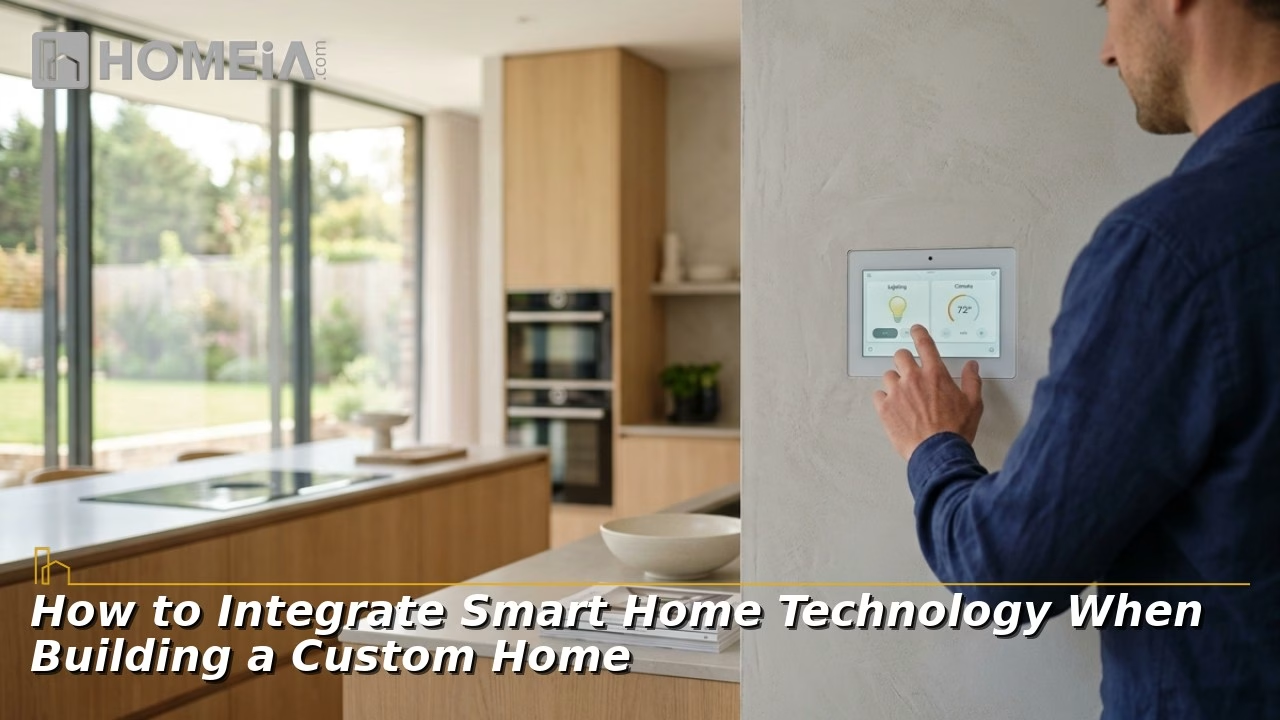
Picture this: you’re standing in your newly framed custom estate, admiring the wall paneling you chose for the gallery hall and the way morning light plays across its surface. Then it hits you. The high-fidelity audio system you dreamed about for the primary suite requires specialized cabling that can no longer be run through those finished structural beams without compromising the architectural design that months were spent on refining.
This is exactly the scenario I work every day to help clients avoid. In my twenty years of building luxury residences, I’ve seen technology evolve from an optional amenity into a fundamental structural requirement. Today, smart home integration is as critical to your daily comfort as the HVAC system or the foundation itself. The good news is that when tech is planned from the get-go, the result is a home that feels effortless, intuitive, and future-ready.
This guide walks you through the essentials ranging from the infrastructure decisions made during framing, the core systems that define a truly intelligent luxury build, all the way to the predictive capabilities that are setting the current standard.
Key Takeaways
- Start before you break ground. Automation must be treated as a core construction scope item during the design phase to avoid retrofit costs that run 3 to 5 times higher.
- Build a hardwired backbone. Relying solely on wireless is a mistake. A CAT6A or fiber optic infrastructure is essential for stability and performance in a high-end build.
- Embrace invisible design. Modern luxury means tech that is felt rather than seen, using flush drywall speakers, hidden displays, and recessed controls.
- Adopt predictive AI. Today’s homes use millimeter-wave sensors to detect micro-movements, anticipating needs before being instructed.
- Insist on universal standards. The Matter protocol ensures your systems communicate seamlessly across brands, eliminating vendor lock-in for good.

Related article
1. Why Smart Home Planning Must Start Before Breaking Ground
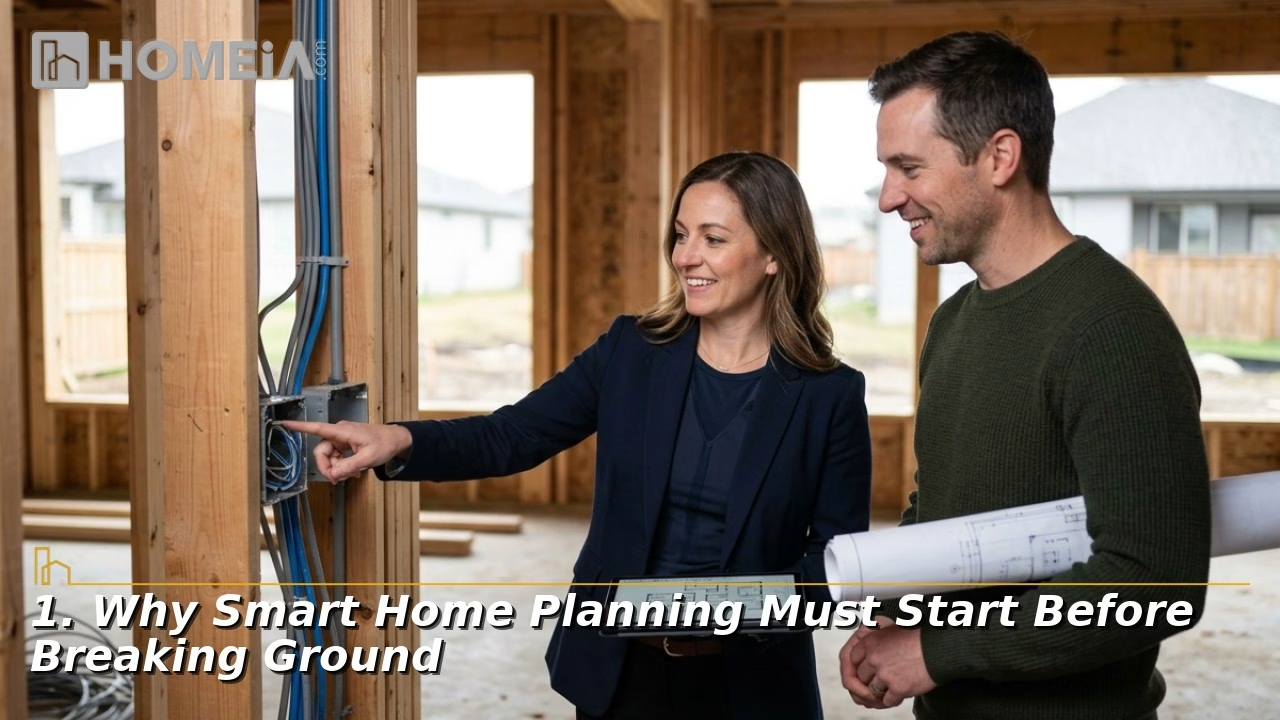
The most costly mistake I see homeowners make is treating automation like furniture that can be selected and placed after move-in. In a luxury custom build, your home’s intelligence must be woven into the bones of the structure during the framing and rough-in phases. Once drywall goes up, that window closes.
Before walls are closed, we can install the complete physical backbone the home depends on including structured wiring panels, dedicated conduit runs, and low-voltage pathways that keep your home adaptable for decades. Mapping out during this phase saves roughly 40 to 60 percent compared to retrofitting an existing structure. More importantly, it preserves the clean architectural lines, the integrity of your wall paneling, and the refined design details that define a luxury home.
This phase is also the only time to properly coordinate between your architect, mechanical engineers, and automation integrators. A critical element is designating a dedicated equipment room with adequate power, ventilation, and cooling. Without it, your home’s control hub ends up in a cramped utility closet where it will overheat and underperform. When this is a construction scope item from day one, every keypad, sensor, and speaker sits perfectly flush with the design rather than looking like it was added as an afterthought.
| Integration Phase | Cost Multiplier | Structural Impact | Final Aesthetic |
| Pre-Construction | 1.0x | Built into blueprints | Completely seamless |
| Rough-In (Framing) | 1.2x | Installed before walls close | High-quality finish |
| Post-Handover (Retrofit) | 3.0x to 5.0x | Invasive cutting and patching | Visible patches or conduits |
Table 1: The impact of timing on home automation integration costs and quality.

Related article
Aging in Place Home Design: How to Build a Custom Home for Every Stage of Life
Smart custom home design looks beyond today, creating spaces that adapt over decades. By incorporating aging-in-place and multigenerational features from the start, homeowners ensure long-term comfort, safety, and independence. This guide explores practical strategies…
2. The Core Systems Worth Building In from Day One
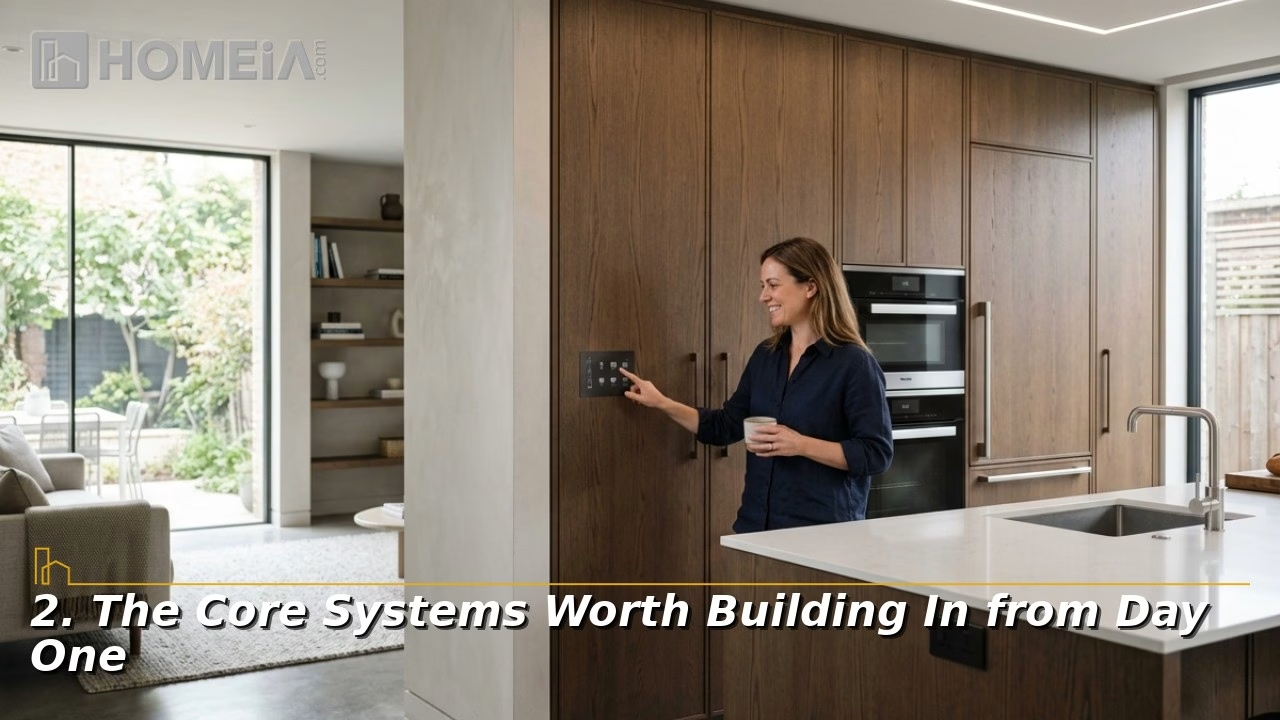
A robust luxury smart home begins with a hardwired CAT6A or fiber optic backbone run to every room. This dedicated infrastructure ensures your high-bandwidth devices do not compete with household Wi-Fi traffic. Paired with strategically placed Wi-Fi 7 access points, you achieve zero dead zones throughout the estate, including outdoor living areas and rooms with heavy stone finishes blocking wireless signals.
Lighting control and circadian automation have moved well beyond a luxury perk. Scene-based lighting paired with automated shading now functions as a health system, shifting color temperatures from cool morning light to warm evening tones to support your body’s natural rest cycles. We layer this with multi-zone smart thermostats and radiant floor integration to maintain precise comfort in every room while eliminating the energy waste of whole-home temperature management.
Security and entertainment receive equal attention. Biometric access control leveraging 3D facial recognition and palm vein sensors provides unmatched protection. AI-powered cameras differentiate between familiar faces and unknown visitors, delivering proactive alerts rather than reactive notifications. Whole-home audio is built directly into the architecture through in-ceiling and in-wall speakers that are plastered over and painted to disappear entirely. The result is pristine, room-filling sound with no visible hardware cluttering the space.
Recommended for you




3. AI-Powered Homes: From Smart to Self-Managing
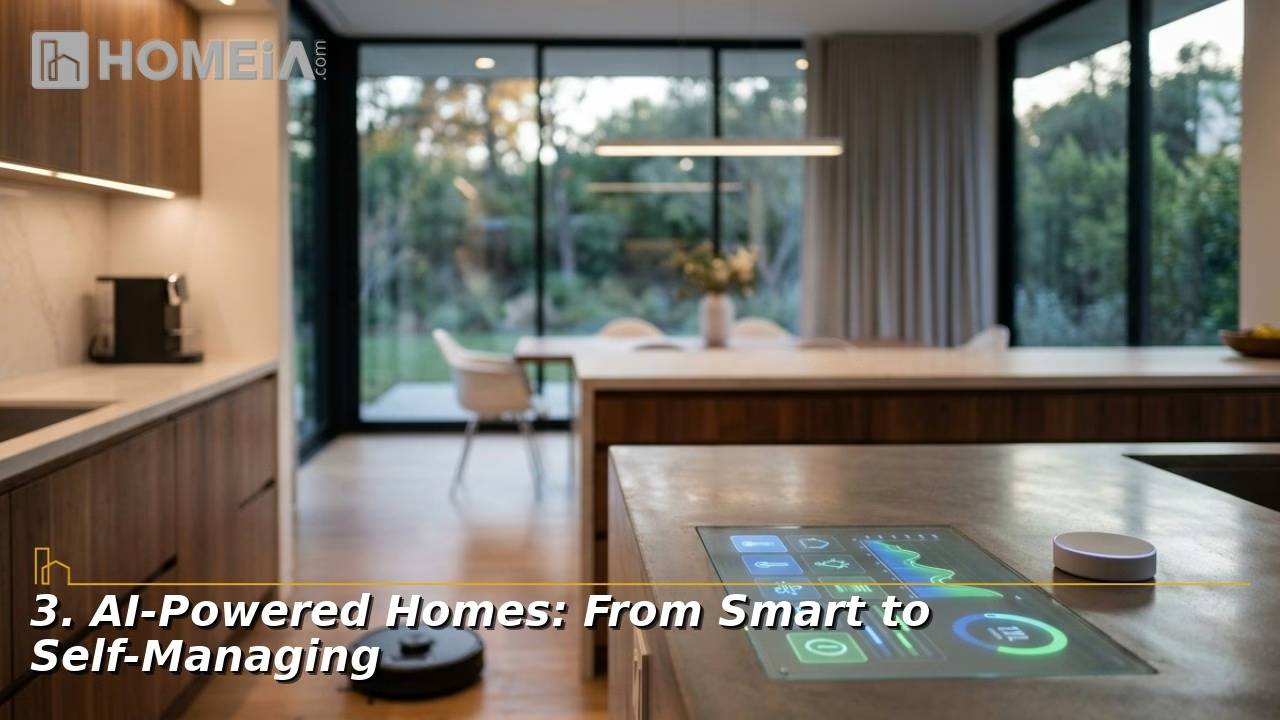
The definition of a smart home has fundamentally shifted. We have moved from app-controlled gadgets to predictive, self-managing ecosystems powered by ambient AI. Rather than waiting for you to adjust a setting, the home memorizes household routines and anticipates your needs before even being aware of them.
Climate management is a clear example. The system no longer follows a static schedule. It analyzes real-time weather forecasts alongside your recorded thermal preferences to pre-cool or pre-heat the home during off-peak energy hours, optimizing both comfort and cost without any input from you.
The sensor machinery behind this capability is a genuine generational leap. Millimeter-wave presence sensors detect the micro-movements of a human chest breathing. This entails lights and climate zones never reset or turn off simply because you are sitting still. Voice interaction has evolved as well. Ambient AI now understands conversational context and natural language without requiring repetitive trigger phrases, creating an interaction that feels less like commanding a device and more like speaking to the home itself.
| Feature | Legacy Smart Home | Predictive AI Home |
| Primary Input | Voice commands or app taps | Habit learning and ambient sensors |
| Sensor Accuracy | PIR (detects gross motion only) | mmWave (detects breathing and micro-movement) |
| Climate Action | Follows a static schedule | Predictive adjustments based on weather data |
| Maintenance | Reactive: fix after failure | Proactive: electrical noise analysis prevents failure |
Table 2: Comparing reactive legacy technology with the predictive AI capabilities available today.
Related article
The Custom Home Building Process: A Complete Step-by-Step Guide
Building a custom home may feel overwhelming, but it follows a clear, structured process. With the right team, each phase, from design to move-in, becomes manageable and rewarding. This guide walks you through every major step, helping you move forward with clarity, confidence, and control as you create a home tailored to your life…

The philosophy guiding every high-end build today is what I call invisible intelligence. Luxury is no longer about showcasing screens and devices. It is about how completely technology disappears into the design while delivering a superior experience.
Audio is delivered through flush drywall speakers that are finished, plastered, and painted to be indistinguishable from the surrounding wall. Spacious televisions are concealed behind motorized artwork panels or ceiling lifts revealing the screen only when you call for it. In the kitchen, charging drawers are built into custom cabinetry with integrated ventilation to prevent device overheating, while recessed outlets are set directly into the island or hidden behind faux panel fronts to preserve the unbroken lines of your stone countertops.
Control panels have evolved as well. We replace long rows of plastic switches with single elegant keypads finished in brushed brass, matte black, or book-matched wood grain that sit perfectly flush with the drywall. The result is a home where every technological system enhances the architectural vision rather than competing with it. Guests experience the comfort and intelligence of the home without ever identifying the culprit responsible for it.


Related article
Considerations for Buying an Existing Home or New Construction
We’ll discuss some of the differences between buying an existing single-family home or new construction. And discuss factors that I found interesting with each type of home purchase. Choices await you, from new homes to turn-of-the-century homes and everything in between. Let’s make a few comparisons…
Bonus: Questions to Ask Your Builder About Smart Home Integration
Selecting the right builder is as important as selecting the right technology. When you interview candidates, these questions will quickly reveal whether they treat technology as a foundational element or an afterthought.
1. Does your pre-construction process include a dedicated smart home infrastructure review?
This review should involve both the architect and an independent automation consultant. Coordinating these disciplines before a single wall goes up is non-negotiable in a luxury build. If a builder cannot describe this process in detail, that is a red flag.
2. Do you work with dedicated low-voltage and automation contractors?
Smart home integration is a specialized trade requiring deep familiarity with high-end control platforms. This work should never be handed off to a general electrician. Ask to see examples of their automation contractor’s past luxury projects.
3. What is your strategy for future-proofing the home?
The answer should include empty conduit pathways and oversized fiber runs designed to accommodate hardware that does not yet exist. If a builder only talks about what they are installing today, they are not thinking far enough ahead.
4. Is the system modular and expandable after move-in?
Confirm that you can add, upgrade, or swap out features after you have taken possession of the home without requiring a major renovation. A truly well-designed system allows for expansion rather than constriction.
A seasoned builder will answer every one of these questions with confidence and specificity. Anyone who hesitates or deflects does not have the depth of experience your project demands.
Conclusion: Building the Intelligent Home You Deserve
As you approach the design phase of your custom home, the most important mindset shift you can make is understanding that tech is a construction decision made at the beginning of the process, not a finishing choice at the end.
The most successful luxury builds share a common thread of the network backbone, invisible audio system, and AI sensor network were all specified before a single wall went up. This proactive approach eliminates costly retrofits, preserves your architectural vision, and ensures the home functions as a cohesive, self-managing sanctuary from the day you receive your keys.
If you are ready to begin building a home that is as intelligent as it is beautiful, we invite you to reach out for a custom home consultation. We will guide you through every technological decision with the same precision and care brought to every square foot of your build.
Recommended for you




FAQs About How to Integrate Smart Home Technology When Building a Custom Home
1. Will smart home integration increase my property value?
Yes. Professionally integrated smart systems can increase resale value by up to 10 percent in the luxury market. More importantly, these systems are increasingly viewed as a baseline expectation by high-end buyers.
2. Are there insurance benefits for smart home systems?
Many premium insurers offer policy discounts ranging from 5 to 29 percent for homes with professional-grade security monitoring, fire detection, and water leak prevention systems.
3. How do I protect my privacy in a connected home?
We prioritize local-first platforms implementing voice and video data on a dedicated on-site processor rather than routing it through a cloud server. We also recommend network segmentation so that guest devices are completely isolated from your security, access, and home management systems.
4. What does ongoing maintenance look like?
We recommend a monthly connectivity audit and a seasonal professional review covering firmware updates, security patch installations, and battery backup testing for the central equipment rack.
5. Does the Matter protocol solve cross-brand compatibility issues?
It does. Matter 1.5 allows devices from different luxury brands to communicate locally with near-zero latency, permanently ending the ecosystem lock-in that once forced homeowners to commit to a single manufacturer.
Share