





Moving to Idaho: The Complete Relocation Guide & Checklist
- Local Editor:Local Editor: The HOMEiA Team


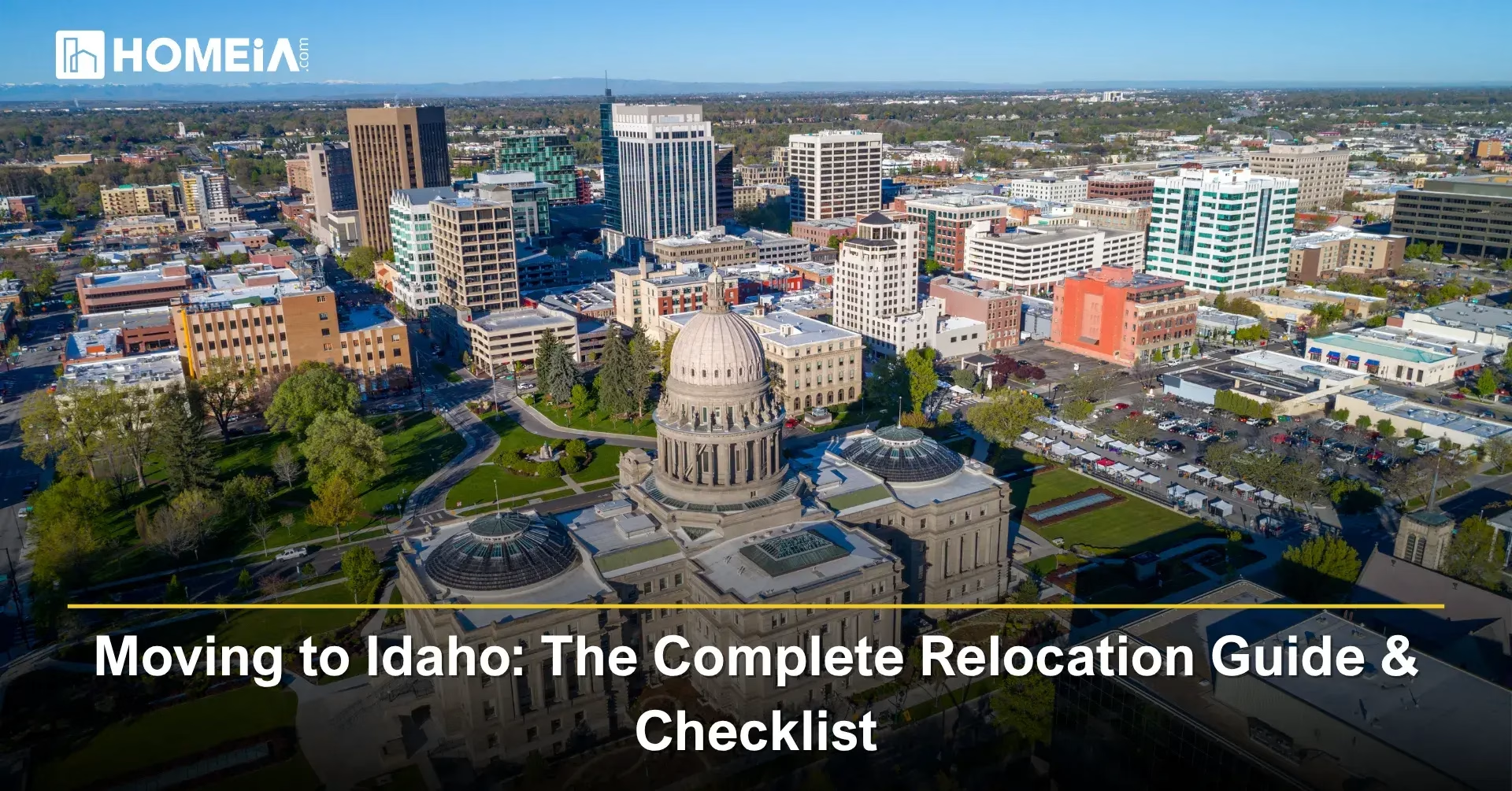
Moving to Idaho: Idaho attracts those seeking affordable living, outdoor adventure, and genuine community. Bordered by mountains and blessed with wide-open space, it holds stunning natural beauty, reasonable housing costs outside Boise, and authentic neighbors. With a 5.3 percent flat income tax, developed agriculture and technology sectors, and world-class skiing, hiking, and fishing, the Gem State appeals to those championing affordability and outdoor lifestyle. This moving to Idaho guide covers housing, climate, jobs, taxes, and legal requirements for relocating to the Mountain West.
Key Takeaways
- Mountain Lifestyle: Idaho’s outdoor recreation is embedded in daily life. Skiing, hiking, fishing, and camping are minutes away for most residents.
- Affordable Outside Boise: Housing varies dramatically. Twin Falls, Pocatello, and eastern cities offer solid affordability; Boise and Coeur d’Alene are pricier.
- Healthy Job Market: Unemployment was 3.6 percent in March 2026, well below the national average of 4.3 percent.
- True Seasons: There exist crisp winters with an average of 36.5 inches of snow statewide, warm summers reaching the 90s in southern regions, and spectacular fall. Spring arrives late.
- Community Focus: Its culture emphasizes self-reliance, family, and outdoor pursuit. Newcomers are welcome if you engage with local values.
Related article
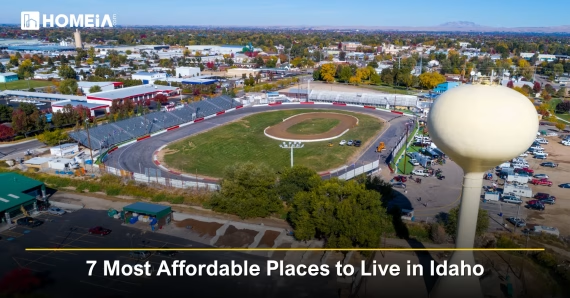
7 Most Affordable Places to Live in Idaho
Idaho continues to offer pockets of affordability despite rising housing costs nationwide. While prices in and around Boise have increased significantly, many smaller cities and towns still provide attainable housing, lower living expenses, and strong community appeal. This guide highlights seven Idaho communities where affordability, quality of life, and long-term financial stability remain within reach…
I. Methodology: How We Built This Guide
Our relocation recommendations are based on comprehensive analysis of factors impacting a move to here. We compiled data from verified current sources, including the U.S. Census Bureau, Bureau of Labor Statistics, Zillow housing reports, Idaho State Tax Commission, and local economic development agencies.
Our evaluation criteria use the following weighted framework:
- Housing & Affordability (30%): Median home prices, rental costs, property taxes, and utility averages for accurate budgeting.
- Access & Logistics (25%): Relocating goods and vehicles, mountain terrain, highway connectivity, and winter driving realities.
- Legal & Administrative Requirements (20%): Driver’s licensing, vehicle registration, voter registration, and address changes.
- Community & Lifestyle Integration (15%): Idaho’s cultural values, regional differences, outdoor recreation access, and building social networks.
- Economic Preparation (10%): Job search guidance and financial planning specific to Idaho’s economy.
II. What Is It Really Like to Live in Idaho?
1. Culture & Lifestyle
A. Idaho Values and Self-Reliance: Idaho’s identity centers on independence, hard work, and outdoor lifestyle. Communities value family, faith, and neighbors helping neighbors. Possessing a conservative backbone, attitudes vary by region. Boise skews progressive while rural areas are traditional. What unites the state is respect for the land and outdoor access. Newcomers are welcomed if they embrace these values authentically.
B. Arts, Sports, and Entertainment: Boise has a growing arts scene with galleries, theaters, and live music. The Basque Block preserves authentic culture. Minor league baseball (Boise Hawks and Idaho Falls Chukars) and outdoor sports dominate more than professional teams. College football and basketball at Boise State inspires passionate loyalty. Smaller cities emphasize local fairs, rodeos, and community festivals. Live music appears at breweries and local bars rather than concert halls.
Related article
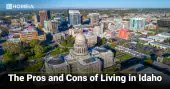
The Pros and Cons of Living in Idaho
This guide details both the pros and cons of living in Idaho and highlights the best Idaho cities for young professionals, families, and retirees so you can decide whether the Gem State fits your lifestyle and budget…
2. Food Scene & Nightlife
Their food culture reflects agriculture. Potatoes, local beef, trout, and seasonal game feature prominently. Breweries have grown significantly as small towns continue to expand their craft operations. Coffee culture is prominent in major metros. Wineries dot the Snake River Valley. Boise offers cocktail bars and late-night dining. Smaller cities focus on brewery patios and community events. Outdoor adventure often replaces traditional nightlife.
3. Outdoor Recreation & Natural Beauty
Outdoor access throughout the state is exceptional. The Sawtooth National Recreation Area contains over 700 miles of trails, 40 peaks over 10,000 feet, and 300-plus mountain lakes. Craters of the Moon showcases rare geology. Rivers offer world-class fishing and rafting. Snow sports, hiking, camping, fishing, and backcountry skiing define resident recreation.
- Summer: Hiking, camping, fishing, and boating. Mountain lakes are accessible. River rafting is popular.
- Fall: Spectacular fall colors. Hunting season. Hiking continues with excellent weather.
- Winter: Skiing central to life. Bogus Basin and Sun Valley are premier destinations. Snowmobiling and ice fishing are enjoyed by locals.
- Spring: Late spring thaw brings river activity. High country trails open. Fishing season intensifies.
4. Climate & Weather
Here, climate divides into northern and southern regions, but elevation matters most. Southern Idaho is dry high desert as the northern portion is cooler with greater precipitation.
| Region / Season | Temperature | Precipitation |
| Southern ID – Spring | 45–65°F | Light rain |
| Southern ID – Summer | 80–95°F | Very dry |
| Southern ID – Fall | 50–75°F | Light rain |
| Southern ID – Winter | 20–40°F | Light to moderate |
| Northern ID – Spring | 40–60°F | Moderate rain |
| Northern ID – Summer | 70–85°F | Dry |
| Northern ID – Fall | 45–70°F | Increasing rain |
| Northern ID – Winter | 15–35°F | Heavy snow |
Southern Idaho receives 12–14 inches of rain annually and is high desert. Winters are milder. Northern Idaho receives more precipitation and heavier snow. Idaho statewide averages approximately 36.5 inches of snow annually, with significant regional variation (southern areas receive far less than the north). Spring arrives later as snow persists into April in northern areas. Summers are warm and dry. Winter driving in northern and central Idaho requires skills and snow tires.
Recommended for you




5. Cost of Living & Affordability
A. Housing Market
| City | Median Home | 1-Bed Rent | 3-Bed Rent | Property Tax |
| Boise | $499,000 | $1,450 | $2,000 | 0.5% |
| Coeur d’Alene | $605,000 | $1,350 | $1,850 | 0.5% |
| Twin Falls | $370,000 | $900 | $1,200 | 0.5% |
| Pocatello | $340,000 | $850 | $1,100 | 0.5% |
| Idaho Falls | $398,000 | $900 | $1,250 | 0.5% |
| Idaho avg | $479,000 | varies | varies | 0.5% |
Boise is most expensive, driven by remote work migration and job growth. Coeur d’Alene commands premium prices for lifestyle access while average home values have risen notably in recent years. Twin Falls, Pocatello, and Idaho Falls offer best affordability. Property taxes are among the nation’s lowest at 0.5 percent average, ranging from 0.31 to 0.75 percent by county.
B. Daily Living Expenses
| Category | Monthly Cost |
| Utilities | $100–150 |
| Internet | $60–100 |
| Groceries (single) | $300–400 |
| Transportation/Car | $150–250 |
| Healthcare | $150–300 |
Overall cost of living in the Spud State is approximately at the national average with their cost of living index sitting near 99.9 on a scale where 100 equals the national average. Utilities are roughly 20 percent below the national average. Housing outside Boise is significantly lower than Pacific Northwest or Mountain West comparables. Groceries benefit from agricultural production. No state sales tax on food provides additional savings, with the food tax credit providing up to $155 per person (or up to $250 with itemized receipts) to offset the 6 percent sales tax paid on groceries.

Related article
The 10 Best Places to Live in Idaho
With its safe reputation and friendly residents, Idaho is definitely a state worth considering when finding a new location to settle down on your own or with a family…
6. Jobs & Economy
Economic prosperity is agriculture-based historically despite being increasingly diversified in recent years. Albertsons (Boise headquarters) is a major employer with approximately 285,000 employees nationally. Micron Technology manufactures semiconductors and employs over 6,000 workers in Boise, with a new fab under construction projected to create additional thousands of jobs by the end of the decade. St. Luke’s Health System is a major healthcare provider. Battelle Energy Alliance operates the Idaho National Laboratory with more than 6,400 employees, though the lab has experienced staffing adjustments in early 2026. Agriculture remains significant. Idaho produces nearly one-third of U.S. potatoes. Science and tech account for 25 percent of state revenue.
The job market is healthy. Unemployment was 3.6 percent in March 2026, well below the national average of 4.3 percent. Most sectors gained jobs in early 2026. Twin Falls posted substantial growth. Remote work opportunities have attracted tech workers to affordable areas. Before moving, secure employment or have substantial savings.
7. Education & Schools
A. Higher Education
- Boise State University: In-state $9,364. Out-of-state approximately $27,788 (2025–26 rates, following a 3.5 percent increase approved for Fall 2025).
- University of Idaho (Moscow): In-state $9,400. Out-of-state approximately $28,320 (2025–26 rates).
- Idaho State University (Pocatello): In-state $8,914. Out-of-state approximately $28,240 (2025–26 rates).
All four public universities saw a 3.5 percent tuition increase for Fall 2025. Idaho’s community college system serves every region with vocational and transfer programs.
B. K-12 Education
Idaho’s K-12 system shows regional variation. Boise schools receive greater funding than rural districts. Suburban schools in this area (Eagle, Meridian, Nampa) have commendable ratings. Rural schools struggle with funding as school quality varies significantly by district. If K-12 education is of importance, research specific districts carefully. Homeschooling is popular in rural Idaho while private schools are available in larger towns.
Related article
Top 10 Best Places to Live in Wyoming for Families
Wyoming is known for its big skies, open prairies and cowboy boots — yet it’s more than that. It reminds you that open space matters. In Wyoming, space is allotted for what’s essential, and the rest is left open for all to enjoy. It’s a place where you can relax, breathe in and breathe out…
8. Tax Structure
| Tax Type | Rate | Notes |
| State Income Tax | 5.3% | Flat rate, signed into law March 2025 |
| State Sales Tax | 6.0% | Food tax credit available |
| Property Tax | 0.5% (avg) | Among lowest in nation |
| Vehicle Registration | 6% sales tax | Variable by county |
Idaho’s tax structure is competitive nationally. A 5.3 percent flat income tax was signed into law by Governor Brad Little in March 2025, effective retroactively to January 1, 2025, reduced from the prior rate of 5.695 percent. For movers weighing Idaho against neighboring Montana, the tax picture shifts considerably: Montana has no general sales tax but higher property taxes and insurance costs. This Montana vs. Idaho cost of living comparison lays out the full tax and insurance differences.
The 6 percent sales tax applies to food, but a food tax credit allows filing for reimbursement of $155 per person automatically, or up to $250 per person with itemized grocery receipts. Property tax at approximately 0.5 percent is among the nation’s lowest. Overall tax burden is reasonable for middle-income earners.
9. Best Places to Live
| City | Population | Median Home | Best For |
| Boise | ~238,000 | $499,000 | Jobs, culture, amenities |
| Meridian | ~140,000 | $535,000 | Suburbs, schools |
| Nampa | ~118,000 | $417,000 | Affordable suburbs |
| Coeur d’Alene | ~58,000 | $605,000 | Recreation, lakes, scenic |
| Twin Falls | ~56,000 | $370,000 | Affordability, outdoor life |
| Pocatello | ~58,000 | $340,000 | College town, affordability |
| Idaho Falls | ~70,000 | $398,000 | Government jobs, family |
- Boise: Capital and largest city. Reliable job market, growing tech sector, cultural amenities. Expensive and crowded compared to other Idaho cities.
- Meridian and Nampa: Growing suburbs. More affordable than Boise (though Meridian has become notably pricier in recent years). Respectable schools and family community.
- Coeur d’Alene: Northern gem. Mountain and lake recreation, four distinct seasons, growing job market, higher housing costs that has become the state’s most expensive markets.
- Twin Falls: Magic Valley hub. Affordable, small-town feel, streamlined outdoor access, good job market.
- Pocatello: College town with Idaho State University. Affordable housing, younger population, growing culture.
- Idaho Falls: Eastern center. Government and energy employment, family-oriented, Yellowstone access.
- Compare affordability: For a side-by-side ranking of seven Idaho cities on rent, home prices, and cost-of-living ratios, see this guide to the most affordable places to live in Idaho.
Related article
The 5 Best Places to Live in Montana: A City Comparison
Montana blends rugged wilderness with welcoming communities, offering endless opportunities for outdoor living and growth. This guide spotlights the five best Montana cities to live, based on affordability, opportunity, safety, and quality of life, from vibrant Missoula to scenic Bozeman, helping you find your perfect Rocky Mountain home…
10. Planning Your Move
| Timeline | Actions |
| 12–8 Weeks Before | Research neighborhoods. Secure employment or verify remote work. House hunt online. Get mortgage pre-approval. |
| 6–8 Weeks Before | Visit Idaho in person. Tour neighborhoods. Schedule viewings. Meet agents. Get moving quotes. |
| 4–6 Weeks Before | Make an offer or sign a lease. Book movers. Declutter and pack. Gather documents. |
| 2–4 Weeks Before | Arrange utilities. Update address with institutions. Get DMV documentation. Mail forwarding. |
| 1–2 Weeks Before | Finalize details. Final walkthrough. Confirm utilities. Pack remaining items. |
| Moving Day | Oversee movers. Final walkthrough. Turn off/on utilities. Unpack essentials. |
| Within 30 Days | Driver’s license and vehicle registration. Register to vote. Insurance. Healthcare providers. |
=> Get the Relocation Guide & Checklist PDF — prepared for both Desktop and Mobile devices.
11. Transportation
Most Idahoans drive. Public transit exists only in Boise (Valley Transit). Outside Boise, personal vehicles are essential. Rural roads require winter driving skills and snow tires November through March. The mountain passes close occasionally during heavy snow.
Vehicle registration is assessed at 6 percent sales tax on vehicle value plus county fees. Winter tires or all-season tires with tread are mandatory in northern Idaho and mountain passes. Boise International Airport (BOI) serves the state with major connections.
12. Legal Requirements & Paperwork
- Idaho Driver’s License: Apply within 30 days. Need proof of identity, citizenship/legal presence, and Idaho address. Cost is $35 for a standard 4-year Class D license for adults 21 and over, or $60 for an 8-year license (ages 21–62).
- Vehicle Registration: Register within 30 days with proof of ownership, insurance, driver’s license, and address. No emission testing statewide.
- Voter Registration: Register at DMV or online at idahossos.gov. Same-day registration available on election day.
- Address Changes: Update with USPS immediately. Notify bank, insurance, utilities, and subscriptions within two weeks.
13. Financial Planning for Your Move
Budget one month of expenses as an emergency fund. Get mortgage pre-approval if buying. First-time homebuyer programs exist through state nonprofits and credit unions.
For rentals, expect credit checks and first month, last month, plus security deposit. Some communities offer rental assistance programs.
Budget $2,000–$5,000 for typical out-of-state moves. Employers sometimes offer moving assistance. Get insurance quotes from providers before moving.
14. Insider Tips from Idaho Residents
- Prepare for Real Winter: Invest in winter tires, snow shovels, and ice scrapers. Winter driving requires skills. Northern Idaho and mountain areas get serious snow.
- Understand Regional Differences: Boise is night-and-dayfrom small towns. Visit multiple regions in different seasons before deciding.
- Engage with Community Values: Idaho communities value self-reliance, family, and outdoor pursuit. Newcomers who embrace these values integrate well.
- Outdoor Recreation Is Part of Life: Idaho residents spend time outside. If you do not hike or fish, you will feel disconnected from the community.
- Boise Is Growing Fast: The capital region is changing rapidly with remote work migration, traffic, and rising costs. It ranked second in the nation for population growth in 2025 at 1.4 percent, bringing the statewide population to approximately 2.03 million.
- Snow Can Be Heavy: Even southern Idaho gets snow. Prepare for road closures and winter driving.
- Summer Heat Is Real: Southern Idaho summers reach 95–100°F. Interior homes without air conditioning become uncomfortable.
Conclusion
Moving to Idaho works well for those valuing affordable living, outdoor recreation, and authentic community. The state offers low housing costs outside Boise, property taxes among the nation’s lowest, consistent job markets in major cities, and immediate access to mountains, rivers, and forests. However, winters are real, Boise is expensive and growing, and rural Idaho requires self-reliance. Select your region carefully as Boise heroes jobs and amenities; Meridian and Nampa provide suburban options, Twin Falls and Pocatello value affordability and outdoor life; Coeur d’Alene champions recreation and scenery, while eastern Idaho offers small-town charm. Research neighborhoods thoroughly, visit in winter to understand snow, and connect with locals before committing. Here rewards those embracing outdoor lifestyle and community values. For the right person, moving to the Potato State offers affordable, authentic living with exceptional outdoor access.
Recommended for you




FAQs About Moving to Idaho
1. Is Idaho a good state to move to?
Idaho is exceptional for those valuing outdoor recreation, affordable living, and tight-knit communities. It is less appealing for those disliking winter, preferring urban amenities, requiring extensive public transit, or seeking progressive culture outside Boise.
2. What salary is needed to live comfortably in Idaho?
In Boise, budget $55,000–$65,000 for a single person. In Twin Falls, Pocatello, or Idaho Falls, $40,000–$50,000 is adequate. Lower property taxes and no food sales tax stretch income further.
3. What is Idaho’s state income tax?
Here has a flat 5.3 percent income tax, signed into law in March 2025 and effective retroactively to January 1, 2025. Combined with low property taxes and a food tax credit offsetting the 6 percent sales tax on groceries, overall tax burden is reasonable.
4. What are the biggest pros and cons of living in Idaho?
- Pros: Affordable housing outside Boise, lowest property taxes in the nation, strong outdoor recreation, healthy job market, food tax credit, small-town community.
- Cons: Winter weather, Boise and Coeur d’Alene becoming expensive, limited public transit outside Boise, rural isolation, summer heat in southern Idaho.
5. What is the best city for newcomers to Idaho?
Boise provides jobs and amenities but is expensive. Meridian and Nampa offer suburban options. Coeur d’Alene offers recreation but at a premium price. Twin Falls and Pocatello offer affordability. Consider what appeals most: urban amenities, outdoor recreation, affordability, or small-town community.
6. Is Idaho expensive compared to neighboring states?
Housing is generally less expensive than Oregon, Washington, or Colorado outside major metros. Idaho’s property tax is lower than all surrounding states. Income tax is competitive nationally at 5.3 percent flat. Overall cost of living sits near the national average, slightly below or at parity depending on source. Compared to Utah specifically, Idaho holds a modest overall affordability edge driven by lower housing and childcare costs, though Utah’s lower income tax rate partially offsets that for higher earners — our Cost of Living in Utah vs. Idaho comparison breaks down housing, taxes, childcare, and utilities side by side.
7. How long does it take to become an Idaho resident?
You are legally an Idaho resident once establishing residency. For driver’s license and voter registration, obtain this within 30 days. For taxes, you are a resident immediately. For tuition purposes, residency requires one year.
Share