






Retiring in Florida vs. Texas: A Full Cost of Living Comparison
- Local Editor:Local Editor: The HOMEiA Team


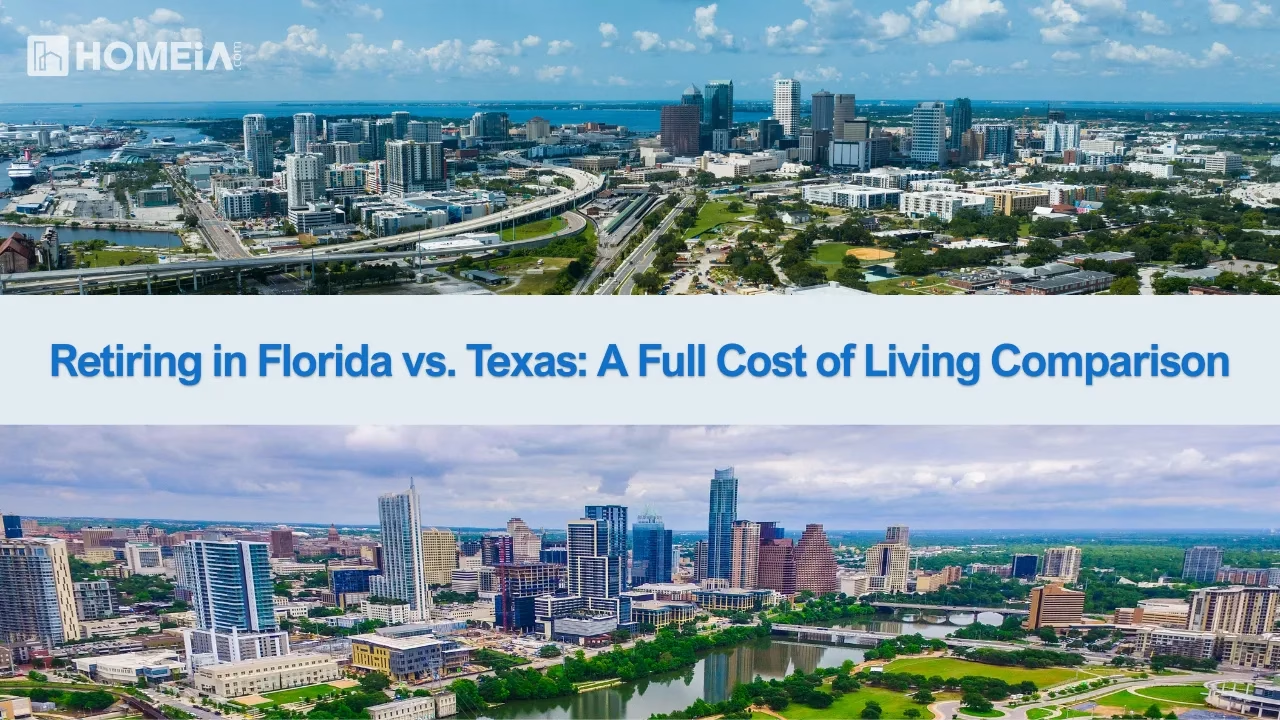
Retiring in Florida vs. Texas: Florida and Texas rank among the most popular retirement destinations in the United States, and for good reason. Both impose no state income tax, provide warm climates, and attract retirees with diverse lifestyle options ranging from coastal living to sprawling suburban communities. Yet, the decision between them is far from simple. Tax-free status at the state level does not guarantee overall affordability, as property taxes, insurance premiums, and everyday expenses vary dramatically. A retiree on a fixed income, a snowbird splitting time between states, and a senior relocating to be near family will each arrive at a different answer.
This deep dive draws on 2025 to 2026 data from the MIT Living Wage Calculator, U.S. Census Bureau, Zillow, Redfin, Insurify, and state-specific sources to provide a practical, retirement-focused picture of what life actually costs in each state.
Key Takeaways
- Texas holds a meaningful overall cost-of-living advantage, with an index around 92.1 versus Florida’s 102.2, roughly a 10% gap that translates into thousands of dollars in annual savings for retirees.
- Florida homeowners pay the most expensive insurance premiums in the nation, averaging approximately $7,136 per year in 2026, roughly double Texas’s $3,899 average.
- Texas home prices remain lower at a statewide median of roughly $335,000 compared to Florida’s $381,000 median, with both markets showing signs of softening in 2025 and 2026.
- Neither state taxes Social Security, pensions, or retirement distributions, making both highly attractive from a retirement-income perspective.
- Texas property tax rates averaging 1.40% to 1.81% are roughly double Florida’s 0.78% to 0.89%, a significant ongoing cost for retiree homeowners that partially offsets Texas’s lower home prices.
- Florida’s higher minimum wage ($14.00 per hour versus Texas’s $7.25) benefits retirees working part-time in retirement, though neither wage reaches the living wage threshold.
- Both states remain top migration destinations, though domestic migration has moderated: Texas added 391,243 net new residents and Florida added 196,980 in the year ending July 2025.

Related article
Affordable Assisted Living Places in Florida
Join us as we tour this beautiful state’s affordable communities offering a great place to retire while receiving high-quality assisted living care. The following sections will guide you through the choices available and the key factors you must consider, helping you make an informed decision about your or your loved one’s assisted living needs…
At-a-Glance Comparison Table
| Category | Florida | Texas |
| Population (2025 Est.) | 23.46 million | 31.71 million |
| Median Household Income | $75,630 | $81,490 |
| Median Home Price | ~$381,000 | ~$335,000 |
| Average Rent (1-BR) | $1,684/mo | $1,238/mo |
| Cost of Living Index | ~102.2 | ~92.1 |
| State Income Tax | None | None |
| Effective Property Tax Rate | 0.78% to 0.89% | 1.40% to 1.81% |
| Average Homeowners Insurance | ~$7,136/yr | ~$3,899 to $4,350/yr |
| Living Wage (Single Adult) | $50,117/yr | $45,290/yr |
| State Minimum Wage | $14.00/hr | $7.25/hr |
1. Living Wage Comparison
The MIT Living Wage Calculator, updated in February 2026, provides a baseline for understanding what is needed financially to satisfy basic expenses in each state. A single adult in Florida must earn approximately $24.09 per hour ($50,117 annually) to cover basic living expenses. In Texas, the same person needs roughly $21.77 per hour ($45,290 annually). The primary driver of Florida’s higher requirement is housing, costing about $18,245 per year for a single adult in Florida compared to $14,679 in Texas. Food costs also remain higher in Florida at roughly $4,614 versus $3,888 per year in Texas.
For retirees, these figures are particularly relevant for those planning to work part-time during retirement or having limited fixed incomes. Florida’s state minimum wage of $14.00 per hour as of January 2026 sits far above Texas’s $7.25, which remains at the federal floor. Retirees working 20 hours per week in Florida earn approximately $14,560 annually, compared to just $7,540 in Texas at the same hours, a meaningful difference for seniors supplementing Social Security or pension income. However, neither state’s minimum wage reaches the necessary living wage threshold, underscoring the importance of adequate retirement savings or additional income sources.


Related article
5 Best Places to Live in Texas
Texas is famous for its wide, open spaces, booming economy, the unique blend of urban and rural lifestyles, and delicious food. The Lone Star State has it all: rolling hills with breathtaking scenery for miles, vast deserts, and bustling metropolitan areas…
2. Housing Costs
Housing represents the largest expense for most retirees, with significant differences between Florida and Texas.
A. Home Prices: The Sunshine State’s average home value fell to approximately $377,578 as of May 2026, down about 3.3% over the prior year, according to Zillow. Redfin’s median sale price for homeowners sat at roughly $395,595. The softening is most pronounced in starter homes and mid-range properties, as rising insurance costs have deterred some buyers.
The Lone Star State’s statewide median home price came in at roughly $335,000 for full-year 2025, a modest decline from 2024. This market entered 2026 with the highest housing inventory since 2009, strongly favoring buyers. Metro medians paint a clearer picture:
| Market | Median Price Range |
| Miami-Dade, FL | $455,000+ |
| Orlando, FL | $368,000 to $410,000 |
| Tampa, FL | $325,000 to $345,000 |
| Jacksonville, FL | $297,000 to $315,000 |
| Austin, TX | $415,000 to $430,000 |
| Dallas-Fort Worth, TX | $350,000 to $395,000 |
| Houston, TX | $280,000 to $295,000 |
| San Antonio, TX | $265,000 to $285,000 |
For those in their golden years looking to downsize or purchase with cash, Texas generally offers more affordable entry points, particularly in inland markets.
B. Renting: Rent in both markets has been declining as new apartment supply absorbs demand. FL’s average rent was approximately $2,395 per month, with one-bedroom units averaging $1,684. TX one-bedroom apartments averaged roughly $1,238 per month. Fort Myers and Naples in Florida led national rent decline rankings in early 2026, down about 3.0% year-over-year, joined by San Antonio at minus 2.7%. Those preferring renting over buying, know that 2026 is a favorable window to negotiate, with Texas offering more affordable monthly rent options across most markets.

Related article
7 Best Places to Live in Florida
Florida continues to attract a record number of newcomers with its diverse metropolitan markets offering something for everyone. From Naples’ luxurious Gulf Coast lifestyle to Jacksonville’s urban-suburban blend, from the military enclaves of Pensacola to the tourism destinations in Orlando, each locale provides unique advantages…
C. Homeowners Insurance: Insurance is where Florida’s affordability picture deteriorates most sharply for retirees. Florida carries the most expensive homeowners insurance in the country, averaging approximately $7,136 annually in 2026. This represents about 181% above the national average. Coastal and Gulf properties routinely exceed $6,500 to $10,000 per year. Market reforms enacted since 2023 are beginning to stabilize rates, with early signs of carrier re-entry appearing in 2026.
Texas homeowners insurance averages roughly $3,899 to $4,350 per year, driven by hail, hurricane risk, and flooding. The insurance gap between these rivals can reach $3,000 to $5,000 per year for comparable homes, making Florida’s total housing cost substantially higher than list price alone suggests. For those on fixed incomes, this recurring annual expense is critical and can permanently raise the cost of living in Florida.
D. Property Taxes: Texas property taxes present a significant counterpoint to its lower home prices. An effective rate averaging 1.40% to 1.81% positions Texas among the highest in the nation. Voters approved Proposition 13 in November 2025, raising the school homestead exemption to $140,000 and expanding benefits for seniors and disabled homeowners. On a $335,000 Texas home, annual taxes still run approximately $4,690 to $6,065.
On a comparable Florida home at roughly $381,000, taxes average $2,972 to $3,392 at the 0.78% to 0.89% effective rate. Florida’s Save Our Homes cap limits annual assessment increases for primary residences, providing additional protection for long-term homeowners. Over a 10-year period, this compounds to approximately $17,000 to $30,000 in additional Texas costs on similarly priced homes, a meaningful consideration for people planning to stay put for the long term.

Related article
The 10 Cheapest Places to Live in Texas
They say everything is bigger in Texas, and for good reason. From some of America’s largest and active metropolitan cities to the host of recreational activities for people of all ages across the state to the many bigger-than-life personalities who call Texas home, Texas has plenty to offer for everyone. here’s the list of 10 lowest cost of living places…
3. Economy and Taxes
A. Economic Landscape: Florida’s economy reached approximately $1.85 trillion in Q3 2025, with Florida TaxWatch ranking it first in the nation for economic growth. GDP growth is projected at roughly 2.7% for 2026. Primary economic drivers include tourism, healthcare, real estate, and financial services. Unemployment sat at approximately 3.9% to 4.0% in 2025.
Texas reached a GDP of approximately $2.7 trillion in 2025, growing above the national average. The Dallas Federal Reserve’s 2026 outlook projects roughly 1.8% job growth. A record labor force of more than 15.8 million workers spans energy, tech, manufacturing, financial services, and aerospace, with unemployment near 4.1%. For retirees working part-time or launching a small business in retirement, Texas’s economy offers broader opportunities.
B. Tax Comparison
| Tax Category | Florida | Texas |
| State Income Tax | None | None |
| Sales Tax | 6% + local (avg. 7.05%) | 6.25% + local (up to 8.25%) |
| Effective Property Tax Rate | 0.78% to 0.89% | 1.40% to 1.81% |
| Social Security Tax | None | None |
| Pension/Retirement Tax | None | None |
| Estate/Inheritance Tax | None | None |
For a retiree with a $400,000 home, this property tax difference can amount to $2,500 to $4,000 per year more in Texas than in Florida. However, Florida’s higher insurance costs, often $3,000 to $5,000 more per year, can offset or exceed the property tax advantage for coastal properties. The net effect depends heavily on location. An inland Florida retiree may pay less overall than a Texas counterpart, while a coastal Florida retiree may pay significantly more.
For retirees with substantial investment income, both offer a significant advantage: no state tax on capital gains, dividends, or interest. This makes either particularly attractive for retirees living off investment portfolios.
Recommended for you




4. Safety
Using 2024 FBI data, Florida recorded a violent crime rate of approximately 267.1 per 100,000 residents, compared to Texas’s roughly 389.4. Property crime rates were also lower in Florida at about 1,420.4 versus Texas’s 2,040.5. Homicide rates stood at roughly 3.9 per 100,000 in Florida versus 5.2 in Texas. FL holds a measurable safety advantage across most crime categories.
Statewide averages mask significant local variation. These regions contain some of the safest communities in the nation alongside high-crime urban cores. Retirees relocating to either state should research specific cities and ZIP codes. Planned suburban communities, from Frisco and The Woodlands in Texas to Weston and Parkland in Florida, consistently rank among the safest in the country.
5. Climate and Geography
Florida’s more than 8,000 miles of tidal shoreline and 825 miles of sandy beaches are defining attractions, but they come with acute hurricane and flood exposure. Florida faces a 28% annual probability of a major storm landfall, and roughly 24% of its properties face substantial flood risk. These climate realities are the primary driver of the state’s insurance crisis, as most major national carriers have restricted or exited the market since 2022.
Texas offers greater geographic diversity, from Gulf Coast beaches to the Hill Country, Panhandle plains, and western deserts. Its climate risks are distributed differently: Gulf Coast hurricane exposure, flash flooding, tornadoes in North Texas and the Panhandle, blistering heat statewide, and occasional winter storms. The 2021 grid failure was a stark vulnerability reminder, though ERCOT has invested substantially in weatherization since then.
For retirees, the climate difference matters most through insurance. Florida’s hurricane exposure has created a crisis affecting all coastal markets. Texas insurance rates, while above the national average, are materially lower than Florida’s in most non-coastal areas. If you prioritize lower fixed monthly costs, inland Texas locations offer meaningful savings. For those prioritizing coastal lifestyle and year-round warmth, Florida’s beaches remain unmatched despite the insurance premium.

Related article
5 Best Places to Live in Fort Lauderdale, Florida
This lovely region on Florida’s southeastern coast is gaining acclaim as a premier destination for families looking to plant roots in a locale that promises a high quality of life, economic prosperity, and a warm, inclusive community…
6. Education
Florida earned the Heritage Foundation’s top national ranking for K-12 education freedom for the fourth consecutive year in 2025, due to its expanded Education Savings Account program serving over 180,000 students. Texas jumped to No. 9 after enacting its own universal education savings account program. Florida’s high school graduation rate of approximately 88% outperforms Texas’s 84%.
Higher education tells a meaningful story for retirees with grandchildren or those planning to fund college education. The University of Florida charges approximately $6,381 per year in in-state tuition and fees for 2025-26, while Florida International University charges roughly $6,168 annually. Florida also offers the Bright Futures Scholarship, which covers 75% to 100% of tuition for qualifying graduates.
Texas public university in-state tuition ranges from approximately $9,860 to $16,492 depending on the campus, with UT Austin at roughly $11,000 to $12,000. Texas froze in-state tuition for 2025-26 and 2026-27. For people planning to help with grandchildren’s college costs, Florida’s lower tuition represents a meaningful advantage, particularly when Bright Futures is factored in.
7. Childcare
While childcare may seem less relevant for this demographic, many provide childcare for grandchildren or work in childcare-related fields. Center-based infant care in Florida averages approximately $13,439 per year, or roughly $1,120 per month. In Texas, the same care averages roughly $9,324 to $10,000 per year.
| Age Group | Texas Average | Florida Average |
| Infant (center) | $9,324 to $10,000/yr | $13,439/yr |
| Toddler (center) | ~$10,921/yr | ~$11,379/yr |
| Preschool (center) | ~$9,957/yr | ~$9,873/yr |
If you provide paid childcare services or help cover childcare costs for grandchildren, Texas offers significant savings. Each offers subsidized childcare programs for income-eligible families, though waiting lists are common in each major metro.

Related article
3 Most Affordable & Safe Neighborhoods to Live in San Antonio, Texas
With an advantageous tax structure, a low cost of living, and a warm, diversified climate, San Antonio blends financial attractiveness and cultural life, making it a dynamic and cheap Texas destination…
8. Healthcare
Healthcare access and affordability are paramount for those no longer working. Texas has the highest uninsured rate of any state, at approximately 16.6% to 16.7% of residents, according to 2024 Census ACS data. Florida’s uninsured rate is nearly 10.2%, also above the national average of roughly 8.2%. Neither state has adopted Medicaid expansion, limiting coverage for low-income adults.
For retirees on Medicare, both provide convenient access to medical facilities in most urban and suburban areas. Florida’s concentration of geriatric specialists and elder-care infrastructure is significantly more developed due to its substantial senior population. For retirees who are not yet Medicare-eligible and need to purchase ACA marketplace plans, monthly premiums average approximately $488 in Florida versus roughly $435 in Texas.
For lower-income retirees who fall into the Medicaid coverage gap, earning too much for Medicaid but too little for subsidized ACA coverage, neither state offers a clear advantage, as they have declined to expand Medicaid. This is a critical consideration for someone with limited retirement savings who may need to bridge coverage before Medicare eligibility at age 65.
9. Additional Cost Considerations
Utilities: Electricity rates are closely comparable. Florida averages approximately 14.86 to 15.80 cents per kilowatt-hour in 2026; Texas averages 13.5 to 15.41 cents. Monthly electric bills run approximately $134 to $142 in Florida and $138 to $152 in Texas, attributed to substantial summer cooling loads. Summer electricity costs are astronomical, with Texas ranking third and Florida ranking fourth nationally for summer cooling costs.
Gas Prices: Texas consistently offers lower gas prices. As of mid-2026, Florida averaged approximately $3.86 to $4.02 per gallon of regular gas versus Texas’s roughly $3.55 to $3.92. Over 15,000 miles of annual driving, the difference amounts to roughly $200 to $400 per year, modest but meaningful for retirees on fixed incomes.
Groceries: Florida grocery costs run approximately 9% to 15% higher than in Texas. For retired couples spending $600 per month on food, that gap represents roughly $50 to $90 per month, or around $600 to $1,080 yearly.
Transportation: Florida charges nearly $225 per year for vehicle registration versus Texas’s roughly $65, and Florida’s toll road network adds additional commuting costs for residents. Auto insurance rates vary significantly by specific location within each state, but both rank among the higher-cost states for car insurance.
Related article
7 Affordable Places to Live in Sarasota, Florida
Whether you’re seeking the cultural vibrancy of downtown, the suburban tranquility of Lakewood Ranch, or the serene beauty of The Meadows, Sarasota offers a quality of life that caters to a myriad of preferences and budgets…
Conclusion
On pure affordability, Texas holds the advantage for most retirees. Lower home prices, insurance, childcare, and everyday costs grant most households meaningfully more disposable income. The 10-point cost of living index gap translates to thousands of dollars in real annual savings. Texas’s higher property taxes are a significant counterweight, but for many, the insurance savings from avoiding Florida’s coastal exposure can offset much of that difference.
Florida makes a compelling case for specific retiree profiles. Those seeking a coastal lifestyle, year-round warmth, and beach access will find Florida unmatched. Retirees who need specialized geriatric care or want to be near a dense senior community network benefit from Florida’s mature elder-care infrastructure. College-bound grandchildren benefit from Florida’s lower in-state tuition and the Bright Futures Scholarship.
The most pressing variable reshaping Florida’s affordability in 2026 is homeowners insurance. The ongoing crisis has added $3,000 to $8,000 per year to coastal and southern Florida homeownership costs. Any retiree buying in Florida must underwrite insurance as carefully as the mortgage itself. Neither state is the universal winner. The right choice depends on income, health needs, lifestyle priorities, and tolerance for natural disaster risk. Run your own numbers before relying on statewide averages.
Recommended for you




FAQs About the Cost of Living in Florida vs. Texas for Retirees
1. Is Texas really that much cheaper than Florida for retirees in 2026?
Yes, Texas maintains a meaningful overall affordability advantage for most retirees. The cost of living index sits at roughly 92.1 for Texas versus 102.2 for Florida, representing about a 10% gap. Texas consistently undercuts Florida in rent, groceries, and gas. The major reversal is homeowners insurance: Florida averages roughly $7,136 per year versus Texas’s $3,899. When total housing costs, including mortgage plus property taxes plus insurance, are compared, the gap narrows considerably in some scenarios, particularly for buyers in coastal Florida versus inland Texas.
2. How much salary do you need in Texas to match a Florida retirement lifestyle?
A retiree with $60,000 in annual income in Florida would need approximately $54,000 to $55,000 in Texas to maintain the same standard of living, based on the roughly 10% cost-of-living differential. That figure shifts depending on the housing situation and healthcare needs. Retirees who own a home in coastal Florida with high insurance costs can see Texas savings compound to $5,000 to $8,000 per year, further reducing the required income equivalent. Always model your specific budget, including insurance, property taxes, and healthcare, before relying on statewide averages.
3. Which state is better for retirees in 2026?
Both offer zero state income tax on all retirement income, including Social Security, pensions, and distributions. Texas wins on overall affordability, lower housing costs, and lower insurance. Florida wins for retirees prioritizing coastal lifestyle, beach access, and dense senior community infrastructure. TX’s higher property taxes hurt fixed-income retirees, though Proposition 13 now provides senior homeowners school-tax exemptions of up to $140,000. FL’s property tax is lighter, and its homestead protections are robust. The choice depends on lifestyle priorities and financial circumstances.
4. Are people still moving to Florida and Texas in 2026?
Yes, both states remain top migration destinations. Texas added 391,243 net new residents in the year ending July 2025, followed by Florida with 196,980. However, both states have seen their migration surges moderate from pandemic peaks. United Van Lines now classifies both states as balanced migration markets. Florida led all states in net international migration with 178,674 new arrivals in 2025, partially compensating for the domestic migration slowdown.
5. Which state is better for remote-working retirees?
Texas offers the more reliable financial case for most remote-working retirees. Lower housing costs, lower rent, and no income tax allow retirees to capture more of their income as savings. Austin, Dallas, and the Houston suburbs provide robust infrastructure for remote work. Florida competes for retirees prioritizing coastal living, walkable urban neighborhoods in Tampa or St. Petersburg, or proximity to Latin American business connections in Miami. Florida’s key challenge for remote-working retirees is insurance: buying a home in coastal Florida can add several hundred dollars per month in premiums permanently raising the cost of living. Inland Florida markets like Gainesville, Ocala, and Tallahassee have meaningfully lower insurance exposure and are worth considering for cost-conscious retirees.
Share