






White Acoustic Wall Panels: Materials, NRC Ratings and Design Guide
- Local Editor:Local Editor: The HOMEiA Team
- Category: Home Improvement


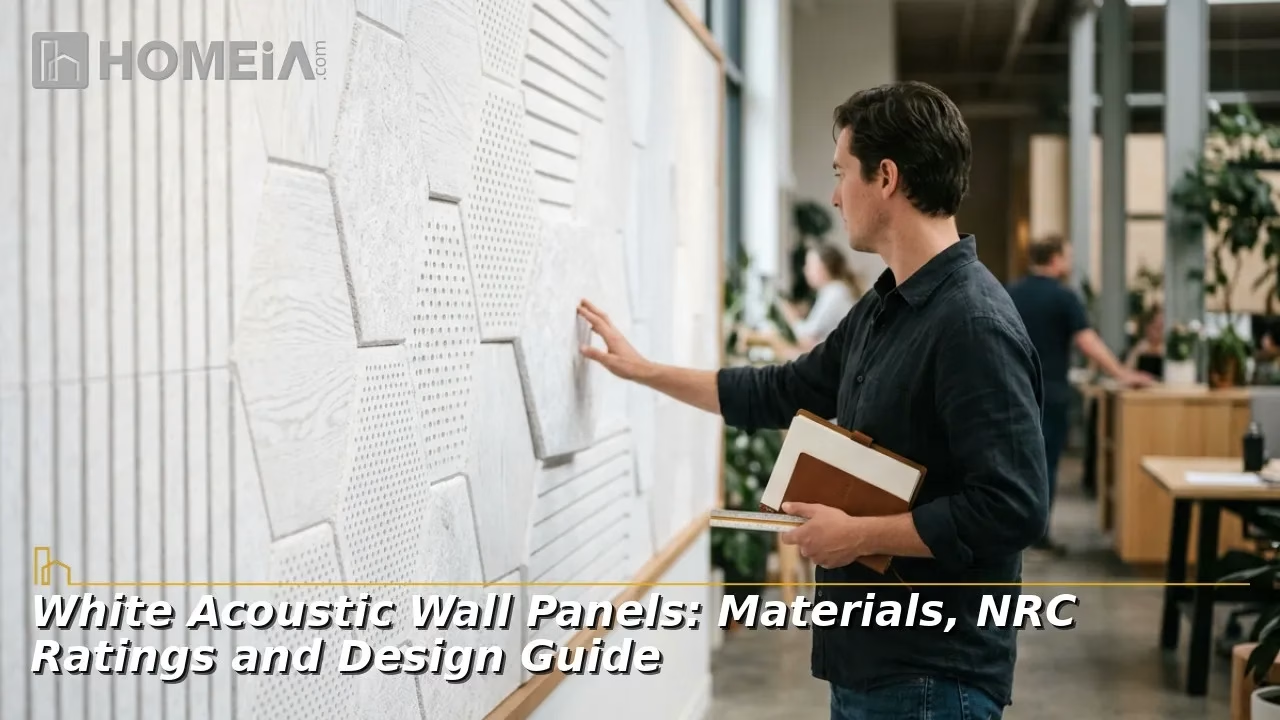
Most people shopping for white acoustic wall panels are trying to solve two problems at once: a room that echoes, and a wall treatment that will not make the space feel darker or smaller. This guide covers what white acoustic wall panels are made of, how their sound absorption ratings compare across materials, which thickness and shape to choose, the total amount needed, and where they work best room by room. It also settles a common misconception in the category, which is the difference between absorbing sound inside a room and blocking sound from getting in. By the end you should be able to write your own specification rather than guessing from a product listing.
Key Takeaways
- Color has no effect on acoustic performance. White panels absorb as well as black, gray or wood ones of the same construction.
- Thickness and the air gap behind the panel drive results far more than brand or price.
- 1 inch panels control voice range echo. 2 inch and thicker panels reach lower frequencies.
- Fabric wrapped fiberglass gives the most absorption per dollar. Acoustic foam gives the least.
- Panels reduce echo inside a room. They do not stop noise passing through a wall.
- Budget for 15 to 30 percent coverage of your wall area.
- White shows dust and scuffs sooner than darker finishes, so specify cleanable fabric in busy rooms.
Related article
How to Install Acoustic Wall Panels: DIY vs. Hiring a Professional
Acoustic panel performance depends heavily on proper installation. This guide covers five mounting methods, the importance of air gaps, the mirror method for precise placement, DIY versus professional installation, and common mistakes that can reduce acoustic performance and waste money…
1. Why Designers Specify White

There are three practical reasons white dominates commercial and residential panel specifications.
- Light reflectance. White fabric and felt reflect a significant share of the light interacting with them. In a room with one window, swapping dark wood slat panels for white ones can noticeably reduce how much artificial light is needed during the day.
- The panels disappear. On a white or off white wall, a white panel reads as architecture rather than as equipment. This matters in living rooms, bedrooms and conference rooms where clients do not want the space to look like a recording studio.
- Small rooms feel larger. A dark accent wall pulls visually inward. White panels covering 20 percent of a wall keep the room feeling open, which is why they are the default in rooms that need to feel larger, home offices, nurseries and apartments.
The trade-off is apparent, white shows dust, fingerprints and scuffs sooner than wood or charcoal fabric. In a hallway, playroom or restaurant, specify a tightly woven polyester fabric or a PET felt panel that tolerates vacuuming and spot cleaning. For bedrooms or home offices, this is rarely an issue.
2. What NRC Actually Measures

NRC stands for Noise Reduction Coefficient. This is a number from 0.00 to 1.00 averaging how much sound a material absorbs across four mid range test frequencies (250, 500, 1000 and 2000 Hz).
- An NRC of 0.80 means the panel absorbs roughly 80 percent of the sound energy that reaches it in that range.
- Values above 1.00 appear on some product sheets. This is a quirk of the test method, not magic. Treat anything above 0.95 as excellent.
- NRC ignores low bass. A panel with a great NRC may do very little for a subwoofer or traffic rumble.
Two things matter more than most buyers expect:
- Thickness. Doubling panel thickness from 1 to 2 inches typically produces better gain than upgrading material quality at the same thickness.
- The air gap. Mounting a panel with a cavity behind it lets the panel work on lower frequencies, which is covered in our guide to installing acoustic wall panels. The same panel can perform significantly better on a standoff clip than glued flat to drywall.

Related article
How to Hire an Audio Visual Installer: Vetting, Licensing, Quotes and Red Flags
Hiring an audio visual installer involves evaluating both physical installation skills and technical software expertise. This guide explains installer roles, AV integrators, licenses, certifications, quotes, red flags, and essential questions to ask before hiring for a home theater or conference room project…
3. White Acoustic Wall Panels: Material Comparison
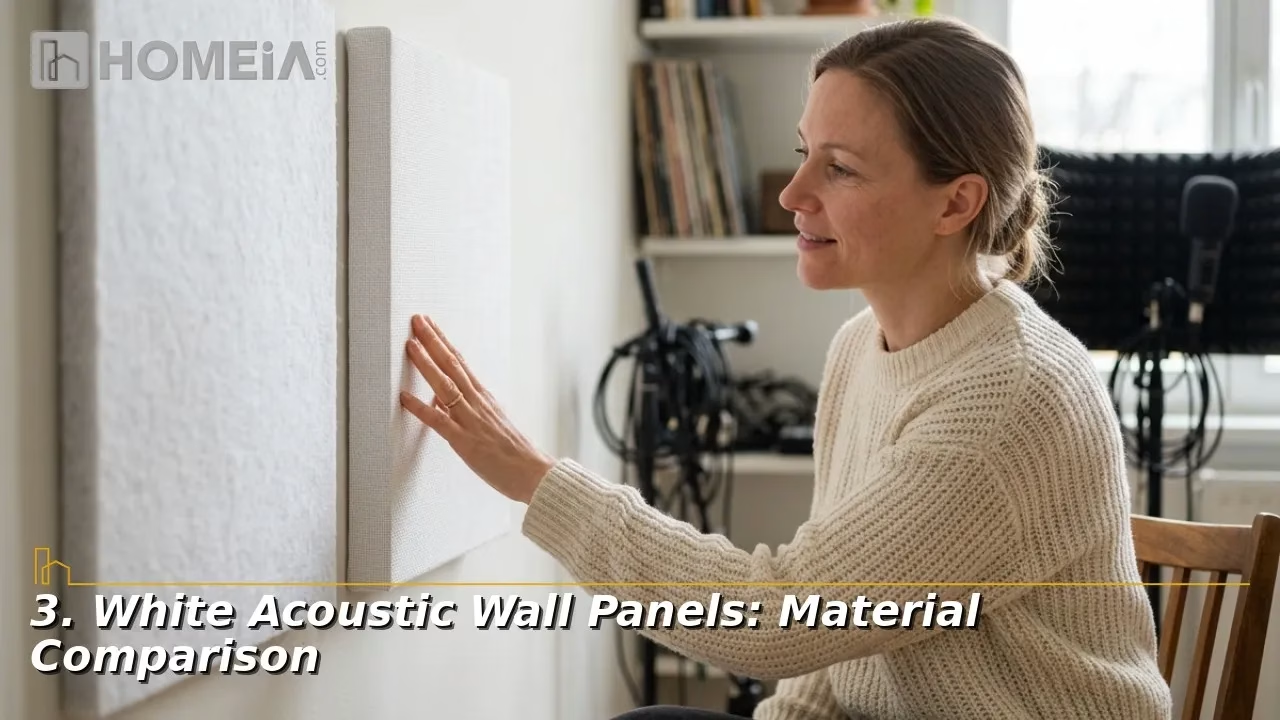
Values below are typical published ranges for 1 and 2 inch panels. Always review the manufacturer’s test data, because construction and density vary between suppliers.
| Material | Typical NRC (1 in) | Typical NRC (2 in) | Look in white | Best for | Notes |
| Fabric wrapped fiberglass (6 lb board) | 0.70 – 0.80 | 0.95 – 1.05 | Clean matte fabric | Home theaters, studios, offices | Best absorption per dollar. Needs a frame or edge treatment. |
| PET felt (recycled polyester) | 0.40 – 0.55 | 0.75 – 0.85 | Soft, slightly textured | Offices, kids rooms, rentals | Non-irritant, cuttable with a knife, easy to handle. |
| Perforated or slatted MDF with backing | 0.50 – 0.70 | 0.70 – 0.85 | Painted white slats | Living rooms, feature walls | Decorative first, acoustic second. Backing material does the work. |
| Melamine foam | 0.45 – 0.60 | 0.70 – 0.80 | Bright white, porous | Utility rooms, budget builds | Better than polyurethane foam. Check fire rating. |
| Polyurethane acoustic foam | 0.25 – 0.40 | 0.50 – 0.65 | Yellows over time | Temporary or low budget use | Weakest option. Common in cheap online kits. |
If you want one rule, follow that a 2 inch fabric wrapped panel in white will outperform almost any 1 inch alternative, and it will cost less than a decorative wood slat system of the same area.
4. Shapes, Sizes and How Many You Need
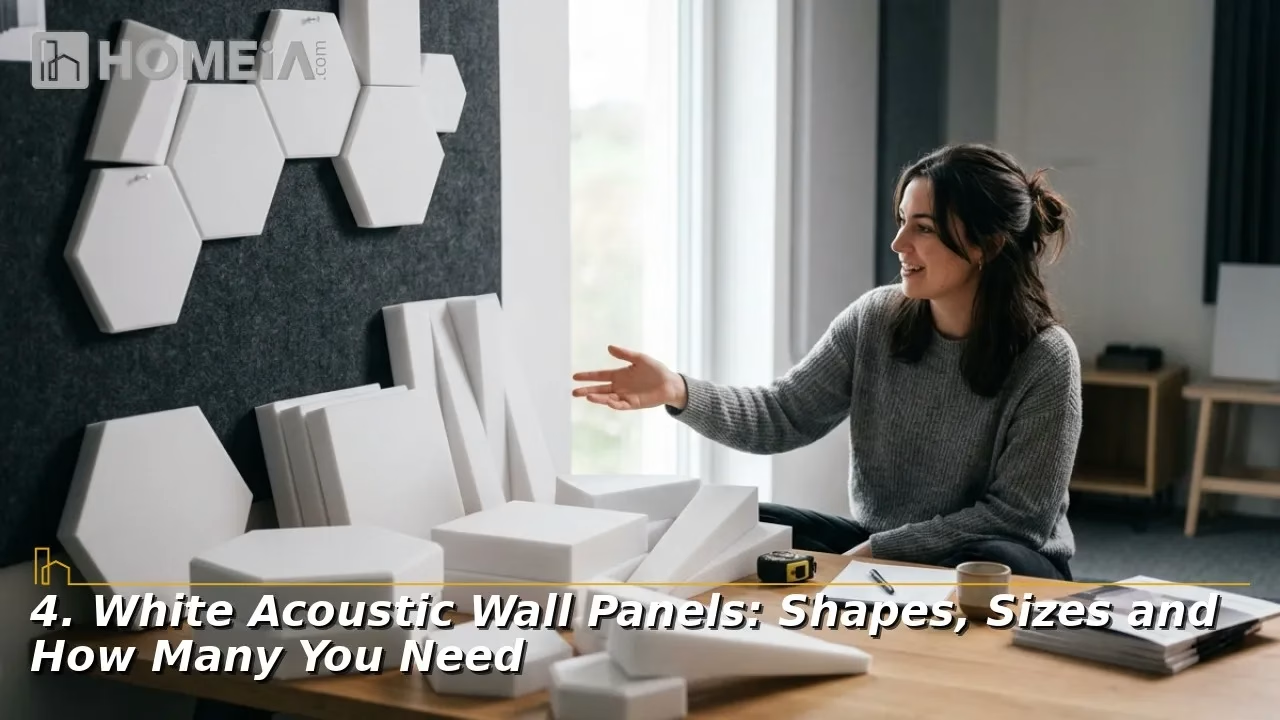
Rectangular panels are the efficiency play. Geometric shapes are the design play.
A. Standard formats
- 2 ft x 2 ft (4 sq ft): flexible, good for grids and small walls
- 2 ft x 4 ft (8 sq ft): fewest mounting points per square foot of coverage, best value
- 12 in hexagons, triangles and diamonds: roughly 0.7 to 1.0 sq ft each, used for patterned clusters
- 14 in circles: about 1.1 sq ft each, softer look for bedrooms and nurseries
B. Coverage math
Work from wall area, not floor area.
- Measure the total square footage of the walls you are treating.
- Multiply by your coverage target.
- Divide by the square footage of one panel.
| Room type | Coverage target | Example: 400 sq ft of wall | Panels needed (2 x 4 ft) |
| Living room, bedroom | 15 percent | 60 sq ft | 8 |
| Home office, video calls | 20 – 25 percent | 80 – 100 sq ft | 10 – 13 |
| Conference room | 25 percent | 100 sq ft | 13 |
| Home theater, studio | 30 – 40 percent | 120 – 160 sq ft | 15 – 20 |
Over treating is a real risk. Rooms with 60 percent coverage sounds unnaturally dead and unpleasant to talk in. Start at the lower end of the range, live with it for a week, then add.
Recommended for you




5. Absorption Is Not Soundproofing
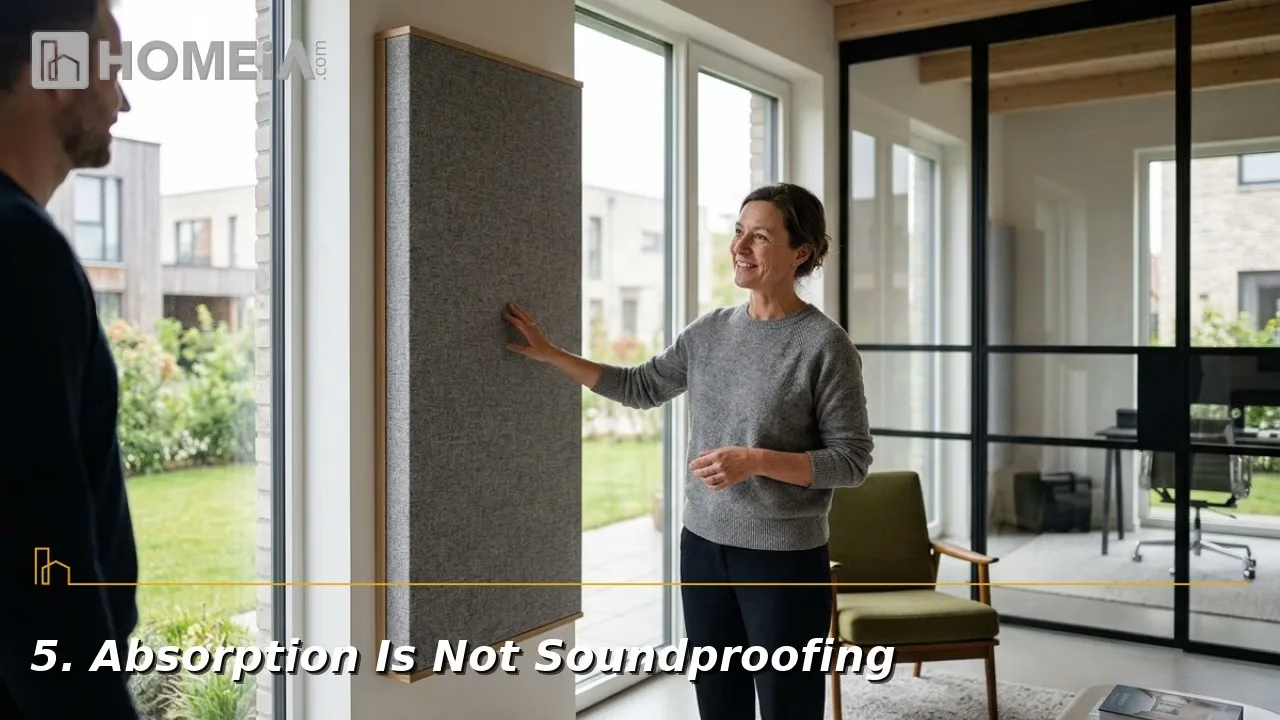
This is the single most common and expensive misunderstanding in the category, so it deserves plain language.
- Acoustic panels absorb. They soak up sound waves already bouncing around inside your room, reducing echo, reverberation and harshness. Your voice on a video call sounds clearer. Your TV dialogue becomes easier to follow.
- Soundproofing blocks. It stops sound energy from passing through a wall, floor or door. That requires mass, decoupling and airtight sealing, which means additional drywall, resilient channel, mass loaded vinyl, acoustic caulk and solid core doors.
A wall of white acoustic panels will not quiet a noisy neighbor, barking dog outside, or footsteps from the apartment above. If that is your problem, you need construction work aimed at blocking sound, not panels. If your problem is that your own room sounds like a bathroom, panels are the right answer. For a worked example of the blocking side of that distinction, our guide to quieting an attached garage walks through sealing, mass, cavity treatment, and structural decoupling for a shared wall — the same principles that apply to any room-to-room noise problem.
6. White Acoustic Wall Panels: Room by Room Specification
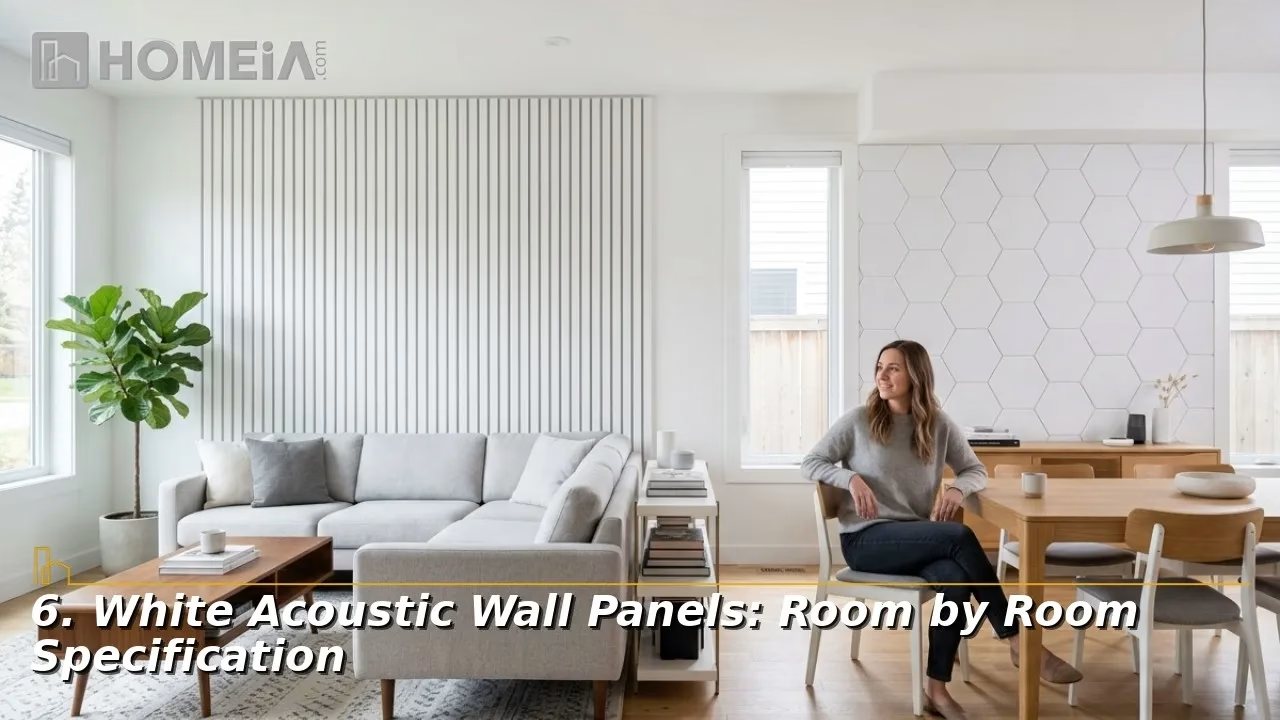
- Home office and video calls. The highest return use case, and a natural companion to other home office improvements. Treat the wall behind your monitor and the wall to one side. 1 inch PET felt or fabric wrapped panels at 20 to 25 percent coverage will clean up your microphone significantly.
- Home theater or media room. Use 2 inch panels. Prioritize the first reflection points on the side walls, then the rear wall. White works well on the side and rear walls, though many designers still specify dark panels on the screen wall to control light bounce.
- Conference rooms. White panels are close to a default specification. Glass-walled rooms are the worst offenders because glass reflects nearly everything. Treat the ceiling or the two walls opposite each other, and verify the panels carry a Class A fire rating.
- Bedrooms and nurseries. Circles and soft geometric shapes at 15 percent coverage. Focus on the wall opposite the largest hard surface.
- Open plan living. Ceiling clouds usually beat wall panels, because there is rarely enough uninterrupted wall left after windows, doors and furniture.
Related article
Structural Wood Remodeling Playbook: Framing, Deck Spans, Subfloors & CNC Precision
Successful home improvement projects begin with careful planning, accurate measurements, and the right materials. Selecting an appropriate plywood thickness, providing adequate structural support, and following sound building practices are essential for both safety and durability. Whether you’re constructing furniture, installing subfloors…
7. A Short Specification Checklist

Before you order, confirm each of the following.
- Thickness chosen for the frequency range you care about (1 inch for voice, 2 inch or more for music and theater)
- Published NRC data from the manufacturer, not a marketing claim
- Mounting method decided, including whether you want an air gap, and whether you will install them yourself or hire a professional
- Fire rating appropriate to the room, especially for commercial or rental property
- Fabric or felt that can be vacuumed and spot-cleaned
- Coverage calculated from wall area, at the lower end of the range to start
- Panel count rounded to a layout that looks deliberate, not leftover
Recommended for you




FAQs About White Acoustic Wall Panels
1. Can I paint white acoustic panels to match a different wall color?
Usually not without a cost. Paint fills the pores that absorb sound, and testing has shown absorption losses of up to about 30 percent on painted panels. Foam suffers the worst. If you must change color, order the panel in the color you want, choose a fabric wrapped panel and have it re-wrapped, or use a printable acoustic film. If painting is unavoidable, a thin sprayed coat of water based matte paint on a paintable mineral wool or fiberglass panel limits the loss, but you should still expect some reduction.
2. Do white acoustic panels turn yellow over time?
It depends on the material. Polyurethane foam yellows noticeably within a few years, especially in direct sunlight, and it cannot be reversed. Polyester fabric and PET felt hold their color better. If the panels will sit in a sunny room, ask the supplier for a lightfastness rating and avoid foam. Positioning panels away from direct afternoon sun also helps.
3. Do acoustic panels need a fire rating?
For most homes there is no legal requirement, but in commercial spaces, rentals and multi-family buildings there usually is. Look for a Class A rating under the ASTM E84 surface burning test, which is the standard most commercial specifications call for. Bare foam panels sold in budget online kits often carry no rating at all, which can create a code problem in an office or a leased suite.
4. How long do acoustic panels last?
A well made fabric wrapped fiberglass or PET panel will perform for 10 to 20 years or more, because the absorbing core does not degrade in normal indoor conditions. What fails first is the surface. Fabric fading, dust embedding, or edges getting knocked. Foam is the exception and often needs replacing within 5 to 8 years as it discolors and crumbles. Vacuum panels gently with a brush attachment once or twice a year to extend their life.
5. Do acoustic panels add resale value to a home?
Not as a line item on an appraisal, but they can help with the presentation. Buyers respond to rooms that feel calm and sound comfortable, and a dedicated home office or media room that sounds professional tends to show better than one that echoes. Because white panels read as an architectural finish rather than as equipment, they are far less likely to put off a buyer than a wall of black foam wedges, which most buyers read as something they will need to remove.
Share