






Cost of Living in Montana vs. Idaho
- Local Editor:Local Editor: The HOMEiA Team


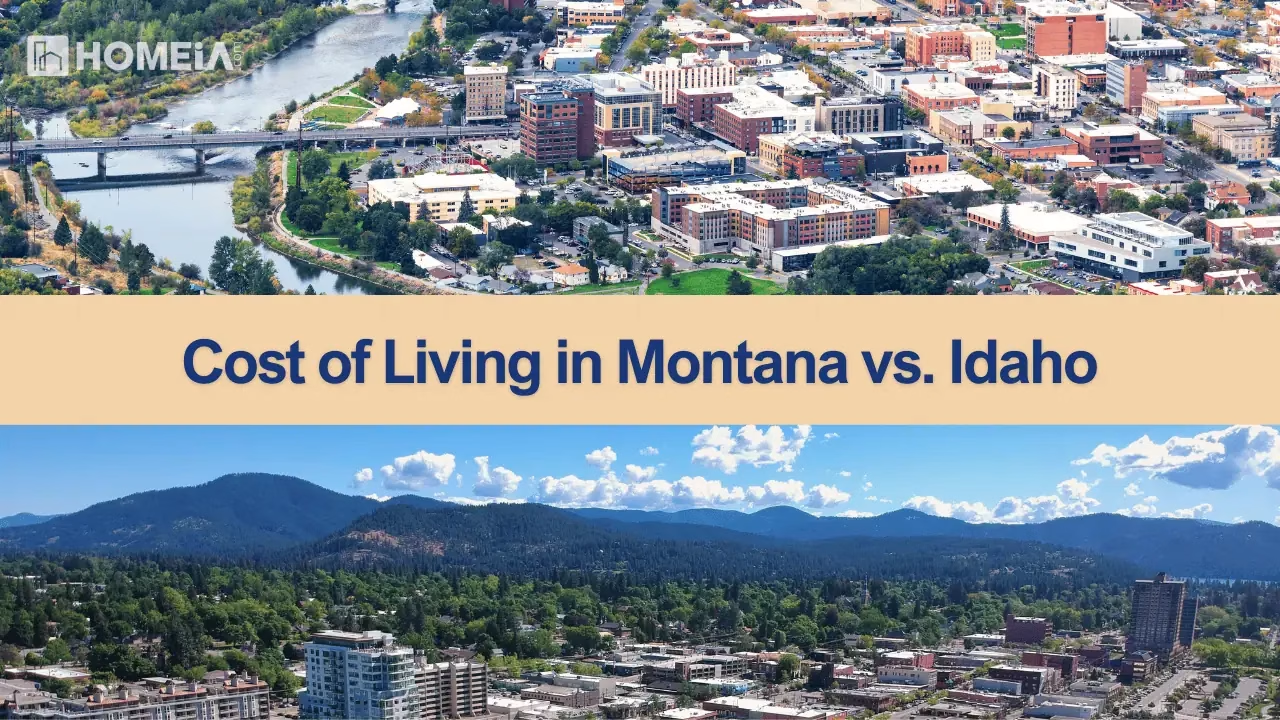
Cost of Living in Montana vs. Idaho: Montana and Idaho are two of the most compared states in the Mountain West. Both boast striking landscapes and a slower pace of life. However, their cost structures are total opposites. Montana skips sales tax entirely, though its property taxes and insurance run higher, driven largely by wildfire risk. On the other hand, Idaho has a lower cost-of-living index and has ranked among the fastest-growing states in the country. Home prices are close between the two. The real differences appear in insurance, childcare, and taxes instead.
This update draws on MIT Living Wage, Census, Zillow, and Redfin data.
Key Takeaways
- Idaho holds a modest cost of living advantage, with a 2026 index of ~99.9 versus Montana’s 95.5, a gap closer to 4.5% than the often-cited 2.5%.
- Both states have expanded Medicaid Montana since 2016, Idaho since 2020.
- Montana homeowners insurance averages ~$2,400/year, versus Idaho’s ~$1,000–$1,500, driven by wildfire and hail risk.
- Home prices are broadly comparable: Montana’s median runs ~$461,000–$529,000, Idaho’s ~$468,000–$549,000.
- Montana has no general sales tax. Idaho levies 6%.
- Idaho’s effective property tax rate (~0.49–0.53%) is among the lowest nationally, versus Montana’s ~0.61–0.83%.
- Idaho’s population grew ~10.4% from 2020–2025, among the fastest in the nation, versus Montana’s ~5.6%.
Related article
The 5 Best Places to Live in Montana: A City Comparison
Montana blends rugged wilderness with welcoming communities, offering endless opportunities for outdoor living and growth. This guide spotlights the five best Montana cities to live, based on affordability, opportunity, safety, and quality of life, from vibrant Missoula to scenic Bozeman, helping you find your perfect Rocky Mountain home…
Montana vs. Idaho at a Glance
| Category | Montana | Idaho |
| Population (2025 est.) | ~1.14 million | ~2.03 million |
| Median Household Income (2024) | ~$75,300–$81,900 | ~$81,650 |
| Median Home Price (2026) | ~$461,000–$529,000 | ~$468,000–$549,000 |
| Average Rent (1-BR) | ~$934–$947/mo | ~$1,450/mo (2-BR avg) |
| Cost of Living Index (2026) | ~95.5 (U.S. = 100) | ~99.9 (U.S. = 100) |
| State Income Tax | 4.7%–5.65% graduated | 5.3% flat |
| Effective Property Tax Rate | ~0.61%–0.83% | ~0.49%–0.53% |
| Average Homeowners Insurance | ~$2,400/yr | ~$1,000–$1,500/yr |
| Living Wage (Single Adult, annual) | ~$46,000–$48,000 (est.) | ~$45,000–$47,000 (est.) |
| State Minimum Wage (2026) | $10.85/hr | $7.25/hr (federal floor) |
| Medicaid Expansion | Yes (since 2016) | Yes (since 2020) |
1. Living Wage Comparison
The MIT Living Wage Calculator, updated February 2026, measures what it costs to meet basic needs in each state. For an adult with no children, Montana’s living wage is approximately $22–$23/hour, or roughly $46,000–$48,000 annually, whereas Idaho’s is approximately $21.50–$22.50/hour, or roughly $45,000–$47,000 annually. Housing and healthcare costs, which run above the national average in many areas of Montana, drive the state’s slightly higher threshold.
For families, this gap only grows. A single parent with two children in the former needs roughly $48–$50/hour (about $100,000–$104,000 annually), compared to $46–$48/hour (about $96,000–$100,000) in the latter.
Montana’s minimum wage rose to $10.85/hour effective January 1, 2026 under its annual cost-of-living adjustment formula, well above Idaho’s $7.25 federal floor. Neither’s minimum wage reaches the living-wage threshold for a single adult without supplemental income.


Related article
The 10 Best Places to Live in Idaho
With its safe reputation and friendly residents, Idaho is definitely a state worth considering when finding a new location to settle down on your own or with a family…
2. Housing Costs
A. Home Prices
Montana’s statewide median home value sits at approximately $461,000–$529,000, though prices vary sharply by region, from around $315,000 in Butte to over $1,000,000 in resort towns like Whitefish.
Idaho’s statewide median comes in near $468,000–$549,000, with Boise and Coeur d’Alene the most expensive markets and eastern cities like Pocatello being more affordable. These markets have cooled from pandemic peaks, giving buyers more negotiating leverage in 2026.
| Market | Median Price |
| Boise, ID | ~$500,000–$550,000 |
| Coeur d’Alene, ID | ~$500,000–$600,000 |
| Idaho Falls, ID | ~$400,000–$450,000 |
| Missoula, MT | ~$550,000–$650,000 |
| Bozeman, MT | ~$650,000–$750,000 |
| Billings, MT | ~$450,000–$500,000 |
| Great Falls, MT | ~$350,000–$400,000 |
B. Renting
Rental markets in both states have leveled as new apartment supply absorbs demand. Montana one-bedroom units average roughly $934–$947/month, while Idaho’s market runs slightly higher, with two-bedroom units averaging around $1,450/month statewide. Boise and Missoula remain the most expensive rental markets in each state, while smaller cities offer economical alternatives.
C. Homeowners Insurance
Insurance is where Montana’s affordability picture faces its biggest challenge. Their average annual premium has climbed to roughly $2,400, driven primarily by wildfire risk, with close to a third of properties carrying elevated wildfire exposure, among the highest share of any state. Idaho homeowners pay considerably less, with typical annual premiums in the $1,000–$1,500 range, leaving a gap of roughly $1,000–$1,400 per year that meaningfully lowers Idaho’s total homeownership cost.
D. Property Taxes
Montana moved to a graduated property tax structure for 2026 with 0.76% on the first $378,000 of market value, 0.90% on the portion between $378,001 and $756,000, and 1.10% above that, yielding an effective rate near 0.61% on owner-occupied housing. On a $500,000 home, annual taxes run approximately $3,800–$4,150. Idaho’s effective rate of roughly 0.49–0.53% produces annual taxes of about $2,450–$2,650 on a comparably priced home, a 10-year gap of roughly $10,000–$15,000. The Treasure State’s lack of sales tax partially offsets this for households with substantial taxable purchases.
Related article
Moving to Montana: The Complete Relocation Guide & Checklist
Bordered by Canada and five U.S. states, Montana offers vast wilderness, outdoor adventure, and a strong sense of community. Home to over a million residents, it combines scenic beauty with affordability, no sales tax, and independent spirit. This guide provides key insights for relocating to the breathtaking Treasure State.
3. Economy and Taxes
A. Economic Landscape
Economic prosperity in Big Sky Country centers on agriculture, energy, tourism, and an expanding tech sector, with unemployment near 3.4% in 2026 and a smaller labor pool of roughly 1.14 million residents.
Idaho’s economy has diversified into tech manufacturing, healthcare, and federal research, led by employers such as Micron Technology, HP Inc., and Idaho National Laboratory. Unemployment stays near 3.7% and a larger population base of roughly 2.03 million. The Gem State ranked among the fastest-growing states in 2025, signaling continued economic momentum, while Montana’s growth has maintained consistency.
B. Tax Comparison
| Tax Category | Montana | Idaho |
| State Income Tax | 4.7%–5.65% graduated | 5.3% flat |
| Sales Tax (state + avg. local) | 0% (no general sales tax) | 6% (up to 9% in resort areas) |
| Effective Property Tax Rate | ~0.61%–0.83% | ~0.49%–0.53% |
| Estate/Inheritance Tax | None | None |
For a household earning $100,000, Idaho’s flat tax costs around $4,500, while Montana’s graduated tax on the same income costs approximately $4,100, giving Montana a modest income-tax edge that grows to roughly $500–$800 at $150,000 of income.
Montana’s lack of sales tax can save a typical family $1,500–$2,000 annually on taxable purchases, but its higher property taxes add back $1,000–$1,500 on a $500,000 home. Idaho’s lower property taxes and insurance costs often offset its income and sales tax disadvantage for homeowners overall.
Recommended for you




4. Safety
Using 2024 FBI data, Montana recorded a violent crime rate of 320–340 per 100,000 residents, compared to Idaho’s roughly 250–270. Property crime ran higher in Montana as well, at roughly 2,100–2,300 versus Idaho’s 1,800–2,000.
Both regions report crime rates below the national average in many categories, though statewide figures mask considerable local variation, and reporting-methodology differences (including the national transition to NIBRS) mean these figures should be read as directional.
Montana’s larger cities, notably Billings, Missoula, and Great Falls, experience higher crime rates than smaller towns, while suburban communities around Boise, Missoula, and Billings rank among the safest in the region.
5. Climate and Geography
Montana spans dramatic terrain from the Rocky Mountains to the Great Plains, with white winters, soothing summers, and wildfire risk affecting close to a third of properties, along with severe winter storms and occasional flooding.
Idaho’s geography runs from the Rocky Mountains to the high desert and Snake River Plain, with a climate ranging from snowy mountain winters to milder conditions in the Treasure Valley. Wildfire risk is meaningful but relatively lower than Montana’s.
For cost purposes, climate matters most through insurance: Montana’s wildfire exposure has driven rising premiums statewide, while Idaho’s comparatively lower exposure keeps rates materially generous in most areas.
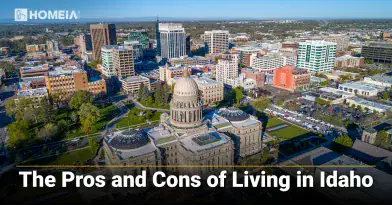
Related article
The Pros and Cons of Living in Idaho
This guide details both the pros and cons of living in Idaho and highlights the best Idaho cities for young professionals, families, and retirees so you can decide whether the Gem State fits your lifestyle and budget…
6. Education
Montana’s K-12 system ranks in the middle tier nationally, with graduation rates near 86%–88% and per-pupil spending roughly in line with the national average, though rural districts face funding challenges. Idaho ranks lower on national K-12 assessments, with per-pupil spending among the lowest in the country and graduation rates near 80%–82%, though the state has expanded school choice through charter schools and education savings accounts.
Higher education favors Montana: Montana State University and the University of Montana charge roughly $7,500–$8,500 in in-state tuition and fees, compared to $8,500–$9,500 at Idaho’s public universities. Each participates in the Western Undergraduate Exchange, offering reduced tuition to residents of select western states.
7. Childcare
Childcare is one of the more underappreciated cost gaps between the two states. Center-based infant care in Montana averages roughly $15,000–$17,000/year, compared to $9,000–$11,400 in Idaho.
| Age Group | Montana Average | Idaho Average |
| Infant (center) | ~$15,000–$17,000/yr | ~$9,000–$11,400/yr |
| Toddler (center) | ~$14,000–$16,000/yr | ~$9,000–$11,400/yr |
| Preschool (center) | ~$7,300/yr | ~$7,000/yr |
For a family with an infant in full-time center care, Idaho saves roughly $4,000–$7,000 annually; with two children, savings can reach $8,000–$14,000 per year. These areas practice subsidized childcare for income-eligible families, though waiting lists are common in major metros in both.
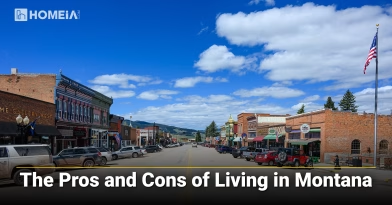
Related article
The Pros and Cons of Living in Montana
Montana is more than its majestic mountains and wild beauty—it’s a state where adventure and community thrive. However, challenges like long winters, job scarcity, and isolation exist. This guide explores Montana’s pros and cons, plus its best cities for professionals, families, and retirees seeking life in Big Sky Country.
8. Healthcare
Montana and Idaho have adopted Medicaid expansion under the Affordable Care Act, Montana effective January 2016 and Idaho effective January 2020 following a 2018 ballot initiative. Montana’s uninsured rate was almost 9% in 2024, while Idaho’s ran slightly higher, closer to 9.3%, with a notable rise in child uninsurance in Idaho over the prior two years.
These states experienced modest increases in uninsured rates between 2023 and 2024, consistent with a national decline in Medicaid coverage that year. For ACA marketplace plans, monthly premiums average somewhat higher in Montana than in Idaho for both individual and family coverage.
Idaho’s 2027 Medicaid work-requirement rules could tighten eligibility going forward, while Montana’s expansion program continues without similar requirements at this time.
9. Additional Cost Considerations
- Gas Prices: Montana has generally offered slightly lower gas prices than Idaho, with the difference typically amounting to $100–$200 per year for a household driving 15,000 miles annually.
- Groceries: Montana grocery costs run modestly above the national average, while Idaho’s run closer to or slightly above the national average. The Treasure State’s lack of sales tax means groceries are untaxed at the register, while Idaho’s 6% sales tax applies to most grocery purchases.
- Transportation: Montana charges higher vehicle registration fees than Idaho, and auto insurance also runs somewhat higher in Big Sky Country. Idaho’s toll-free road network offers a modest additional savings relative to states with extensive tolling.
- Utilities: Electricity rates are broadly comparable between the states, with both facing meaningful heating costs during cold winters.
Conclusion
On overall affordability, Idaho holds a modest edge, driven mainly by lower insurance, property taxes, and childcare costs, though the gap is nearly double than the roughly 2.5% sometimes cited.
Montana makes a compelling case for specific groups. Retirees benefit from no sales tax, service workers gain from a higher minimum wage, and outdoor enthusiasts value the state’s public lands.
The most consequential variable reshaping affordability in 2026 is homeowners insurance, where Montana’s wildfire-driven costs have added meaningfully to expenses in many areas.
Recommended for you




FAQs About the Cost of Living in Montana vs. Idaho
1. Is Idaho still cheaper than Montana in 2026?
Yes, Idaho holds a modest affordability advantage. The 2026 cost of living index is roughly 99.9 for Idaho versus 95.5 for Montana, a gap closer to 4.5% than 2.5%. Idaho undercuts Montana in insurance, property taxes, and childcare, while Montana’s lack of sales tax is its main offsetting advantage.
2. How much salary do you need in Montana to match an Idaho lifestyle?
Based on the roughly 4.5% cost of living gap, a household earning $80,000 in Idaho would need approximately $83,000–$84,000 in Montana for comparable purchasing power, though this varies significantly by region and household composition.
3. Which state is better for retirees in 2026?
These states offer favorable tax treatment for retirees, and neither taxes Social Security benefits at the state level in a way that materially disadvantages retirees. Montana’s lack of sales tax benefits retirees with significant taxable purchases, while Idaho’s lower property taxes and insurance costs benefit those prioritizing lower fixed housing expenses.
4. Are people still moving to Montana and Idaho in 2026?
Yes, though at slower rates than during the pandemic boom. Idaho grew close to 10.4% from 2020 to 2025, among the fastest in the nation, while Montana grew by roughly 5.6% over the same period. Both states remain popular migration destinations, though affordability concerns have moderated the pace of inflows.
5. Which state is better for remote workers?
Idaho offers the more reliable financial case for most remote workers, given lower housing, insurance, and property tax costs alongside robust infrastructure around Boise and the Treasure Valley. Montana competes on lifestyle and its lack of sales tax, though wildfire-driven insurance costs are a key consideration for buyers in high-risk areas like the western mountain valleys.
Share