






8 Warning Signs Your Air Conditioner Needs Professional Repair
- Local Editor:Local Editor: The HOMEiA Team
- Category: Home Maintenance


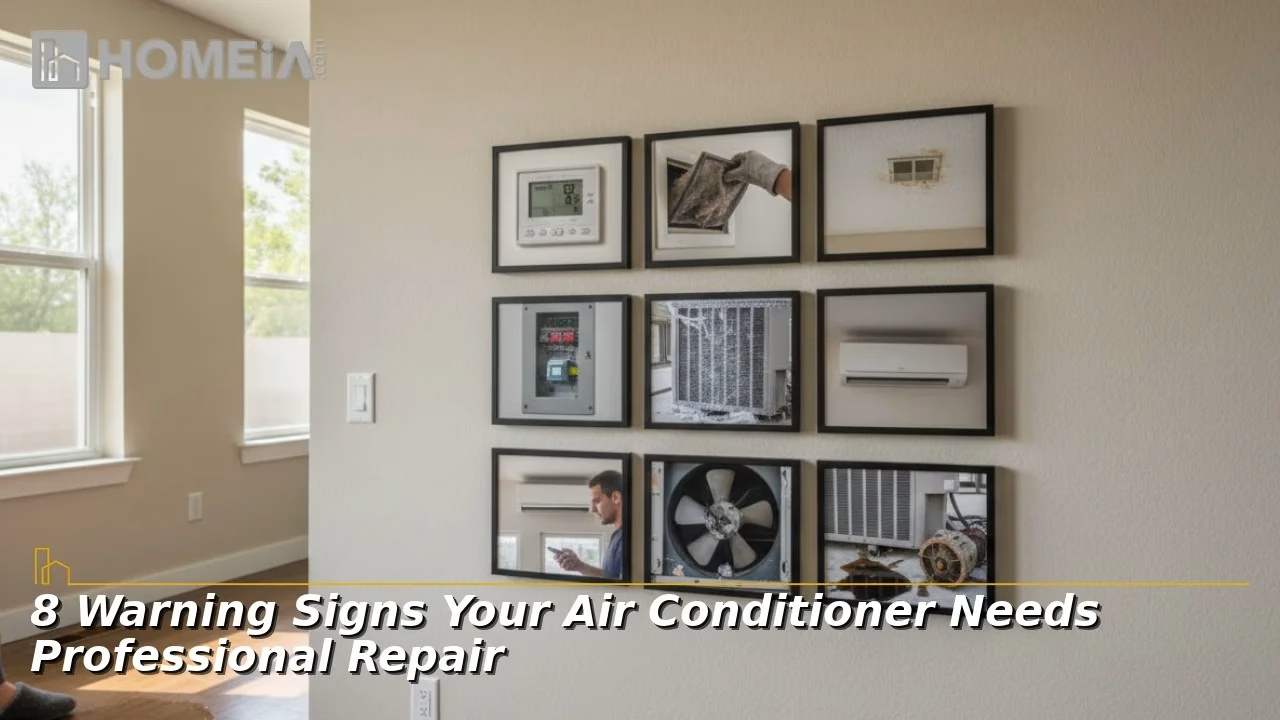
Warning Signs Your Air Conditioner Needs Professional Repair: Air conditioners rarely fail all at once. Long before a unit needs repairs, it spends weeks, sometimes months, dropping hints that not everything is right. A faint rattle, slightly higher electric bill, rooms that never quite cool down. The problem is that these early signals are easy to ignore, and a small, inexpensive fault left unattended can balloon into a failed compressor or a full system replacement.
Some cooling issues are genuinely DIY-friendly. A clogged filter, a tripped breaker, or a thermostat set to the wrong mode are some. But others point to electrical, mechanical, or refrigerant problems that need trained hands and proper tools. When the symptoms below appear, the smartest move is to stop troubleshooting and call a professional air conditioner repair service before a minor fault snowballs into a major, expensive one.
This guide walks through eight of the most common warning signs that your AC needs professional attention, what’s likely happening behind each one, and a quick rule of thumb for deciding whether to repair or replace.
Key Takeaways
- Act early on warning signs: Catching issues like warm air, weak airflow, strange noises, or rising energy bills early almost always means a simple repair instead of an emergency replacement.
- Some symptoms are urgent: Burning electrical smells, grinding or banging noises, and refrigerant leaks require immediate professional attention and may warrant shutting the system off entirely.
- Know your system’s age: Most central air conditioners last 15 to 20 years with proper maintenance. Systems beyond 15 years are living on borrowed time.
- Use the $5,000 rule: Multiply your unit’s age by the repair cost. If the result exceeds $5,000, replacement is usually the wiser investment.
- Don’t ignore efficiency losses: A sudden spike in energy bills with no change in usage often signals a developing problem before it becomes a breakdown.
- Choose a qualified professional: Look for licensed, insured contractors with EPA Section 608 certification to handle refrigerant safely.
Related article
What You Can Do if Your Air Conditioner Breaks Before Selling Your House
Homebuyers expect to step into a perfectly temperature-controlled environment and be able to trust that the existing HVAC will continue to work for a while. So, if your A/C is not functioning when selling your house; here’re a few solutions that could help you sell your home quickly…
1. Warm Air Coming from the Vents
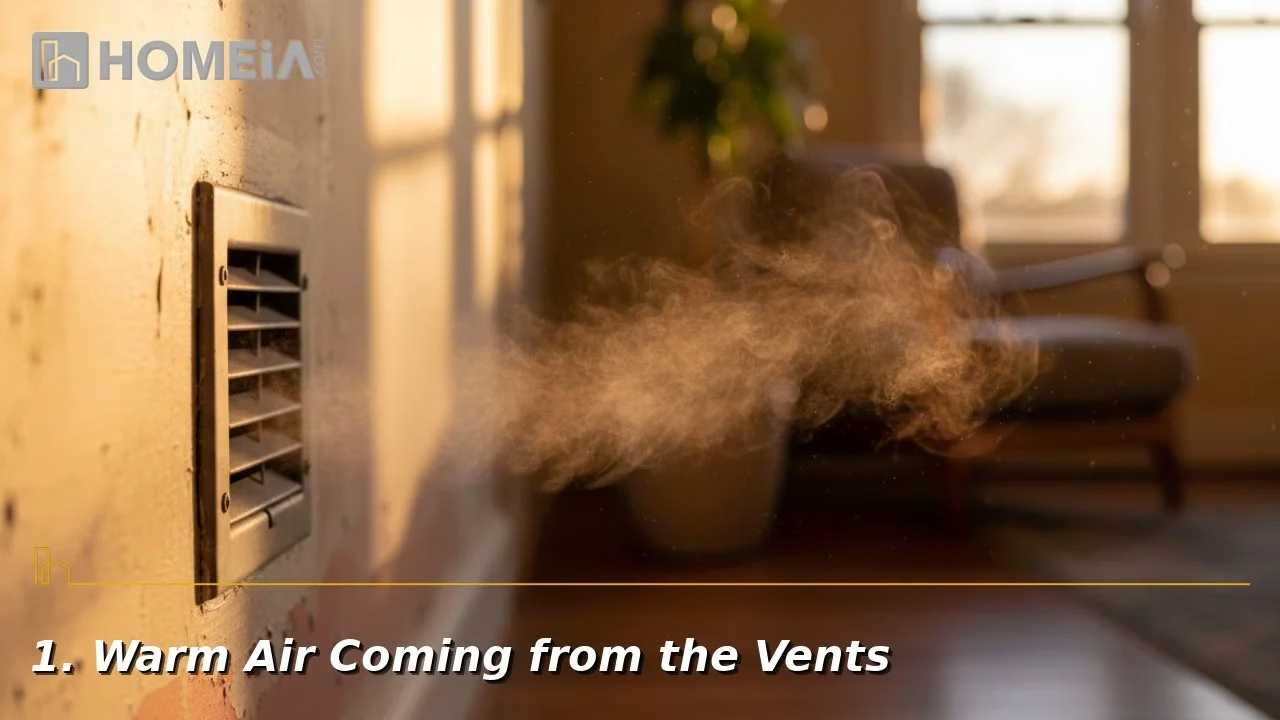
You set the thermostat to cool, the system is running, and yet the air drifting out of the vents is room temperature, or worse, warm. This is one of the clearest signs that there’s an issue.
A few causes are simple, the thermostat may be switched to “heat” or “fan,” or a filter may be so clogged that airflow has collapsed. But persistent warm air after you’ve ruled those out usually points to deeper issues, including low refrigerant from a leak, failing compressor, or frozen evaporator coils. Refrigerant, in particular, isn’t a “top-up and forget” fix. If levels are low, there’s a leak somewhere, and handling it requires EPA Section 608 certification under the Clean Air Act. This is a job for a technician, not a DIY project.
2. Weak Airflow or Uneven Cooling
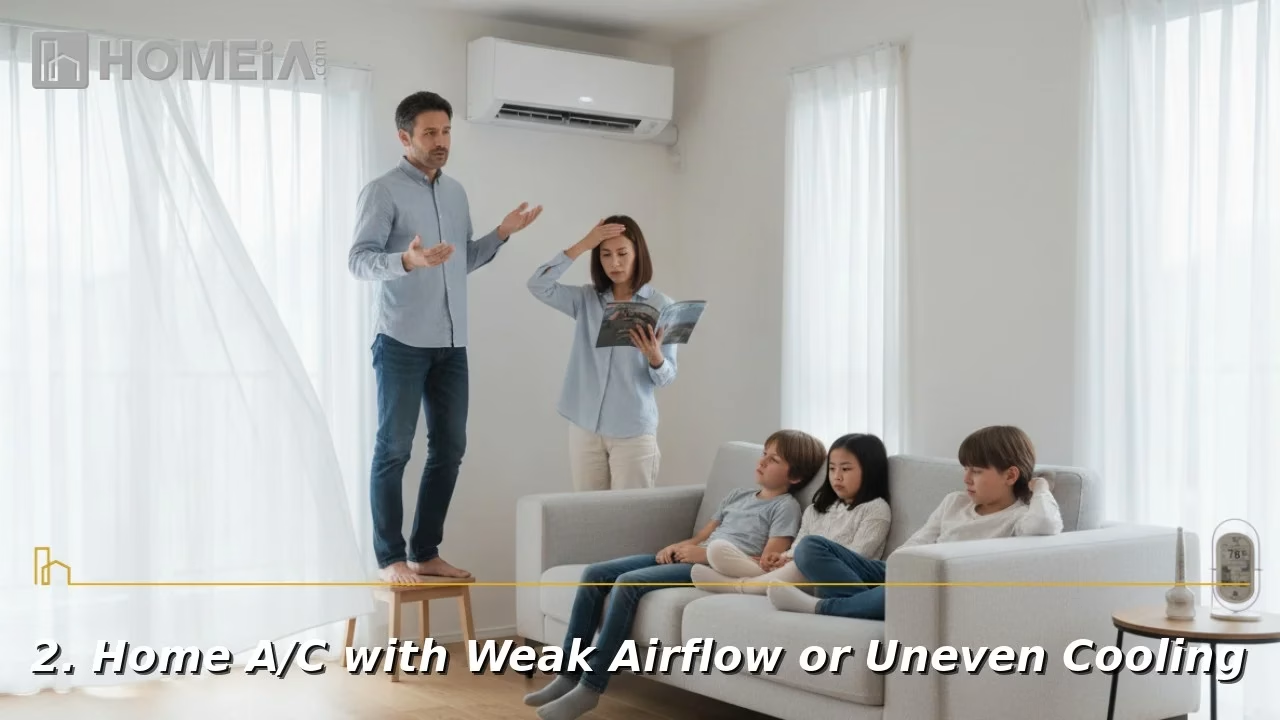
When some rooms feel comfortable and others stay stubbornly hot, or when airflow from the vents has dropped to a trickle, your system is struggling to move conditioned air through the home.
A dirty air filter is the first thing to check while also being the easiest to fix. If a fresh filter doesn’t help, the problem may be a failing blower motor, leaky or blocked ductwork, or a unit that was undersized for the home to begin with. Uneven cooling that has gradually worsened warrants a professional inspection, because ductwork and blower issues tend to compound and quietly drag down efficiency along the way.

Related article
How to Choose an HVAC System for Your Home
A reliable HVAC system ensures a comfortable home environment regardless of the weather outside. If you’re building a home or replacing an old system, you’ll find that there are plenty of HVAC options on the market. Here’s a comprehensive guide to making an informed decision…
3. Strange Noises: Grinding, Squealing, or Banging
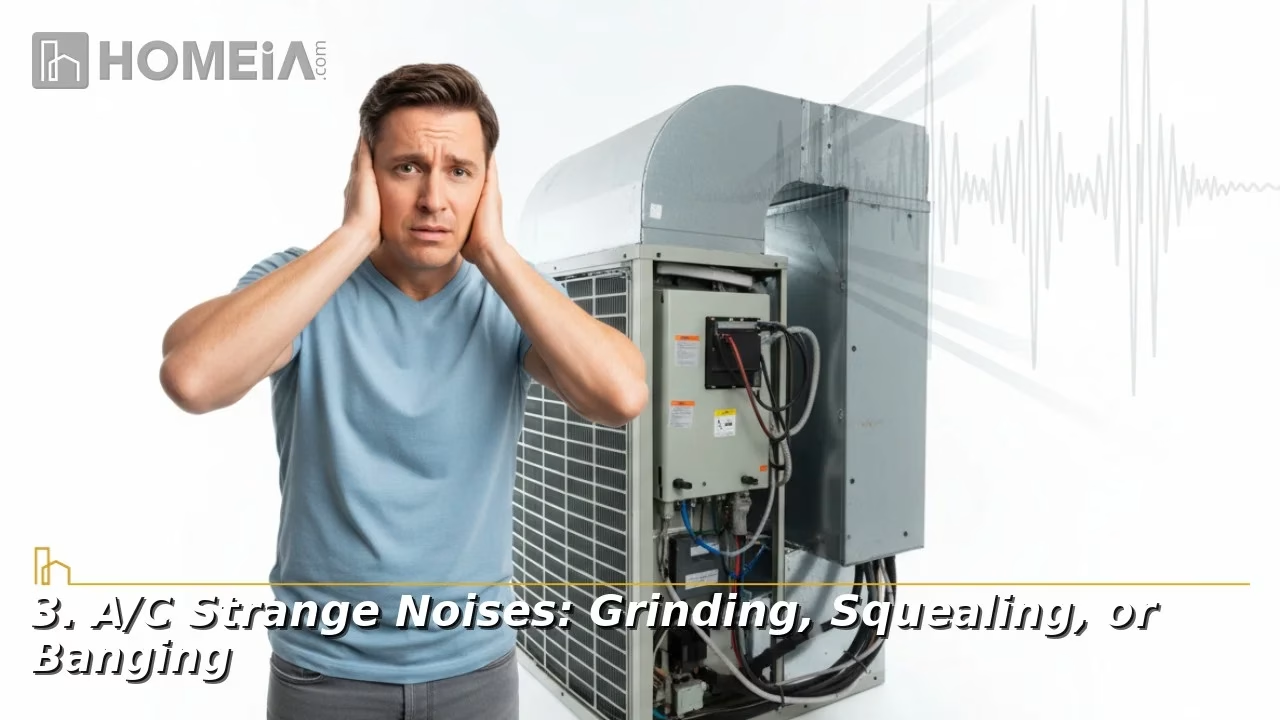
Healthy air conditioners run with a steady, predictable hum. Sudden or unusual sounds are mechanical warning bells, and the type of noise often hints at the cause.
The table below identifies what different sounds typically indicate and how urgently they need attention:
| Sound | Likely Cause | Urgency Level |
| Grinding | Worn motor bearings | High: stop running the unit |
| Squealing | Belt issue or motor problem | High: schedule service promptly |
| Banging / Clanking | Loose or broken part inside the unit | Urgent: shut off and call immediately |
| Rattling | Loose panel or debris in unit | Moderate: inspect and service soon |
None of these should be ignored. Running a unit that makes mechanical noise is the fastest way to turn an affordable repair into a motor or compressor replacement.
4. Unpleasant or Musty Odors
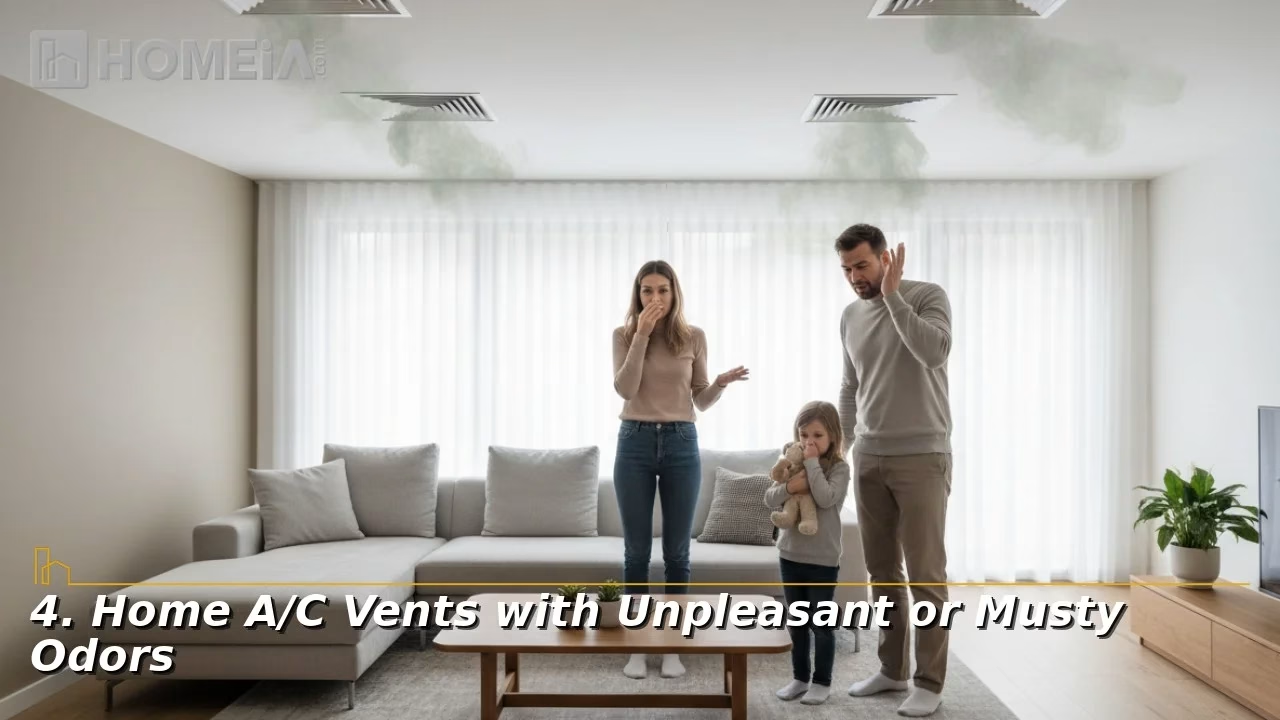
Your AC shouldn’t add a smell to your home. When it does, it’s telling you something.
A musty, earthy odor often indicates mold or mildew growing inside the unit or ductwork, a comfort issue and an indoor air quality and health concern, especially for households with allergies or asthma. A sharp, burning, or electrical smell is more urgent. This can signal overheating wiring or motor components, and the system should be shut off and inspected promptly. Odors are one of those symptoms where a quick professional diagnosis protects both your equipment and the air your family breathes.
Recommended for you




5. Frequent Cycling On and Off (Short Cycling)

An air conditioner is designed to run in steady cycles. Under normal conditions, properly sized central AC runs for approximately 10 to 20 minutes per cooling cycle, then shuts off until the indoor temperature rises again. When it switches on and off every few minutes, known as short cycling, it’s working harder, wearing out faster, and never properly cooling or dehumidifying the home.
Short cycling can stem from a number of issues. Since the possible causes range from simple to serious, this is a symptom that genuinely benefits from a technician’s diagnostics. Left alone, short cycling places heavy strain on the compressor, the single most expensive component in the entire system.
Common causes of short cycling include:
| Cause | Explanation |
| Dirty air filter | Restricted airflow forces the system to cycle off prematurely |
| Low refrigerant | Causes pressure imbalances that trigger the safety cutoff |
| Malfunctioning thermostat | Inaccurate temperature readings send false signals to the system |
| Oversized unit | Cools the space too quickly without completing a full dehumidifying cycle |
| Electrical problems | Faulty wiring or capacitor issues interrupt normal operation |
6. Rising Energy Bills With No Change in Usage
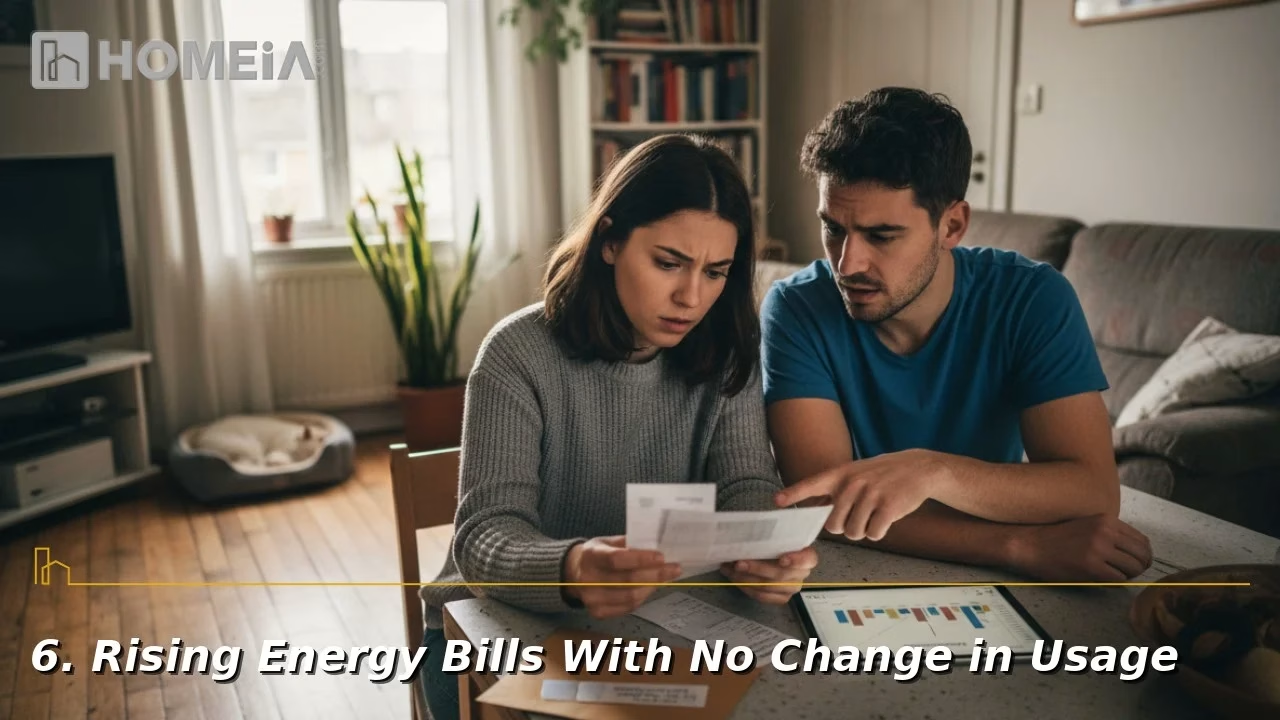
If your electric bill climbs noticeably from one season to the next without any change in how you use the AC, the system itself is likely losing efficiency.
As components wear, dirt accumulates, or refrigerant slips below the proper level, your air conditioner has to run longer and work harder to hit the same temperature, with that extra effort appearing on your bill. Research highlighted that improper refrigerant charge can reduce system efficiency by 10 to 20 percent. Over time, replacing an aging system with a modern high-efficiency unit can reduce cooling energy costs by 20 to 40 percent. A sudden spike in energy bills is a useful early-warning signal, because it often surfaces a developing problem before it becomes a breakdown. A professional tune-up can pinpoint what’s eating the efficiency and frequently pays for itself in lower monthly costs.

Related article
24 Frequently Asked Questions About Home Air Conditioner Care
We’ll explore various topics, from distinguishing among different types of air conditioners and determining the appropriate AC unit size for your home to optimizing temperature settings for energy efficiency and recognizing when your AC unit needs servicing. Let’s dive in!…
7. Water Leaks or Excess Moisture Around the Unit
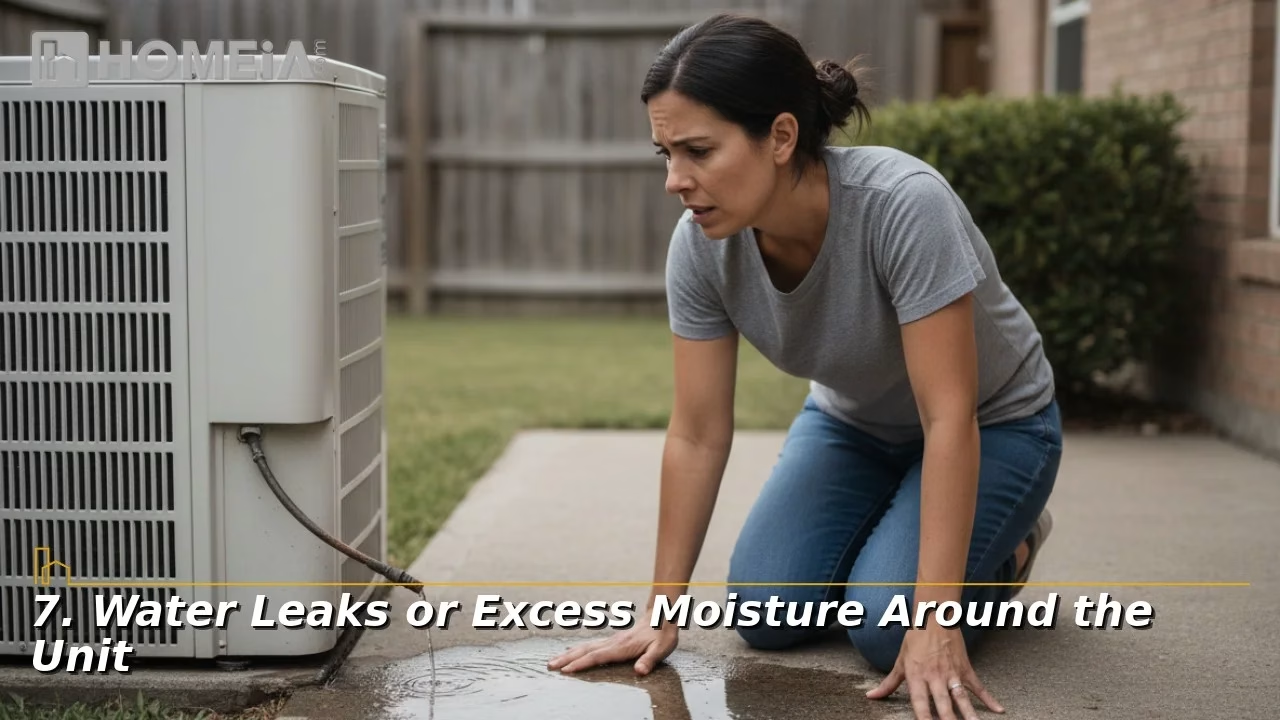
Some condensation around an AC system is normal. Pooling water, active dripping, or persistent moisture is not.
The usual culprit is a clogged or cracked condensate drain line, which backs water up and out of the unit. In other cases, leaking refrigerant can cause ice to form on the coils before melting into puddles. Beyond the equipment damage, standing water near an indoor unit is a fast track to mold growth and can damage floors, walls, and nearby structures. Moisture problems rarely fix themselves and tend to worsen, so it’s worth getting them addressed quickly.
8. The System Is Aging and Breaking Down Often
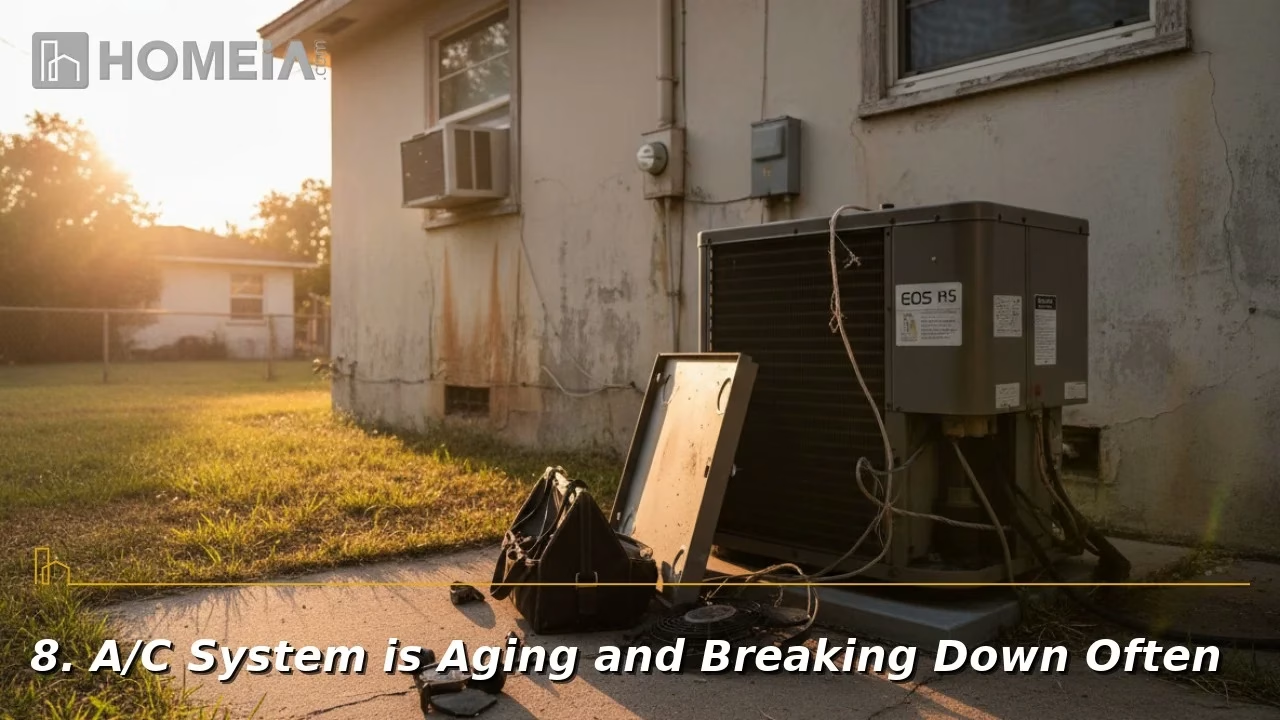
A single repair on an otherwise solid system is routine maintenance. A pattern of breakdowns on a unit that’s well into its second decade is a different story.
Most central air conditioners last roughly 15 to 20 years with proper maintenance. As a system approaches and passes that range, parts wear out more frequently, efficiency declines, and the repair calls start stacking up. When you find yourself scheduling service every season, the math begins shifting away from “fix it again” and toward “replace it.” That brings us to the question every homeowner faces.
A. Repair or Replace? A Quick Rule of Thumb
Deciding between another repair and a full replacement comes down to a few practical factors: the system’s age, the cost of the repair, and how often it’s failed. Two widely used industry guidelines can help frame the decision:
| Rule | How It Works | Example |
| The $5,000 Rule | Multiply the unit’s age (years) by the repair cost ($). If the result exceeds $5,000, replacement is usually the wiser investment. | 12-year-old unit + $500 repair = $6,000: lean toward replacement. 5-year-old unit + $500 repair = $2,500: worth fixing. |
| The 50% Rule | If the repair cost exceeds 50% of the price of a comparable new system, replacement is generally more cost-effective. | New central AC averages $4,500-$8,500 installed (2025). A $3,000+ repair may warrant replacement instead. |
Efficiency matters too. Modern systems carry SEER2 ratings, the updated federal standard taking effect January 1, 2023. Minimum SEER2 requirements are 13.4 in northern states and 14.3 in southern and southwestern states. High-efficiency units well above those minimums can meaningfully lower energy bills compared to aging systems. For most, the honest answer comes from a trustworthy technician who’s willing to recommend a repair when a repair makes sense.
Related article
Increasing Your Property Value Through HVAC Upgrades
Among the top projects with a high return on investment is hiring heating and cooling companies to determine if your HVAC (heating, ventilation and air conditioning) system needs repair or complete replacement. A brand-new air conditioner or a smoothly functioning furnace will make your home more valuable to any buyer…
B. How to Choose a Reliable HVAC Professional
The quality of the company you call matters as much as how quickly you call. A few things to be mindful of:
A reputable contractor is licensed and insured, provides a written estimate before any work begins, and relays honest repair-versus-replace advice rather than pushing a new system you don’t need. All HVAC technicians who work with refrigerants must hold EPA Section 608 certification under the Clean Air Act, a legal requirement, not merely a credential to look for. Local, established companies with a long track record and verifiable reviews tend to be the safest bet. It’s also worth asking whether the technicians are the company’s own employees rather than rotating subcontractors, since that usually means more consistent, accountable work.
Conclusion
Your air conditioner is good at telling you when it needs help like warm air, weak airflow, odd noises, strange smells, short cycling, rising bills, leaks, and age-related breakdowns are all signals worth taking seriously. Catching these signs early almost always means a lesser repair instead of an emergency replacement at the worst possible moment.
When the symptoms suggest more than a simple filter swap, bring in a qualified professional. Wherever you live, the principle is the same: listen to what your AC is telling you, and don’t wait for a warning sign to become a breakdown.
Recommended for you




FAQs About the Warning Signs Your Air Conditioner Needs Professional Repair
1. How long should a central air conditioner last?
Most central air conditioners last between 15 and 20 years with proper maintenance. Lifespan varies based on usage, climate, maintenance frequency, and installation quality. Units in humid or hot climates may wear out faster. Once a system reaches 15 years, it’s best to start planning for replacement.
2. When should I replace my AC instead of repairing it?
Two common industry guidelines can help. The “$5,000 rule” suggests multiplying your unit’s age by the repair cost. If the result exceeds $5,000, replacement is usually better. The “50% rule” says that if repair costs exceed half the price of a new system, replacement is generally more cost-effective. Also consider replacing if your unit is over 15 years old, uses R-22 refrigerant (fully phased out as of January 1, 2020), or requires frequent repairs.
3. What does it mean when my AC short cycles?
Short cycling means your air conditioner turns on and off every few minutes instead of running steady 10- to 20-minute cycles. Common causes include a dirty air filter, low refrigerant, malfunctioning thermostat, or an oversized unit. Short cycling stresses the compressor, the most expensive component to replace, and should be addressed promptly.
4. Can a refrigerant leak be dangerous?
Yes. Refrigerant leaks can pose health risks if inhaled in enclosed spaces, with symptoms including dizziness, shortness of breath, nausea, headaches, and respiratory irritation. Running an AC with a refrigerant leak can also damage the compressor and harm the environment. If you suspect a leak, indicated by hissing sounds, ice buildup on coils, oily residue, or poor cooling, shut the system off and call a professional immediately.
5. How can I tell if a repair technician is qualified?
Look for EPA Section 608 certification, which is legally required under the Clean Air Act for anyone handling refrigerants. Also confirm the contractor is licensed and insured in your state, provides written estimates, and has verifiable reviews from local customers. Avoid technicians pushing for replacement without thoroughly diagnosing the issue.
Share