







Beat the California Heat: What Homeowners Need to Know About SEER2 in 2026
- Local Editor:Local Editor: The HOMEiA Team



California summers remain unrelentless. When July pushes temperatures past 100°F across the Central Valley and inland regions, your air conditioner transitions from something of convenience to an essential lifeline. If your system is struggling to keep up, cycling on and off more than usual, or spiking your monthly utility bills, a replacement is likely on the horizon.
Shopping for a new cooling system in 2026 has transformed over these past few years. If you’ve started researching options, you’ve probably encountered a newer term: SEER2. This updated efficiency metric has fundamentally changed how residential cooling equipment is tested, labeled, and sold across California. Understanding this before you consult heating system replacement professionals will help you make a smarter investment, one that keeps your family comfortable and your energy bills manageable for the next 15 to 20 years.
Key Takeaways
- 14.3 SEER2 minimum: California’s mandatory efficiency floor for all new central AC installations.
- More rigorous testing: SEER2 uses up to five times more static pressure than the old standard, producing ratings that better reflect real-world performance in home duct systems.
- Section 25C tax credit eliminated: The federal credit expired for installations after December 31, 2025, under the One Big Beautiful Bill Act (OBBBA), signed July 4, 2025.
- TECH Clean California, fully reserved: Single-family heat pump HVAC incentives have been fully reserved statewide since November 14, 2025. HEEHRA single-family rebates are also fully reserved as of February 24, 2026. Utility rebate programs through PG&E, SCE, and SDG&E remain active.
- Duct integrity matters: Even a high-efficiency unit will underperform in a leaky duct system, meaning infrastructure quality is nearly as important as the equipment rating.

Related article
How to Choose an HVAC System for Your Home
A reliable HVAC system ensures a comfortable home environment regardless of the weather outside. If you’re building a home or replacing an old system, you’ll find that there are plenty of HVAC options on the market. Here’s a comprehensive guide to making an informed decision…
1. What Is SEER2 and Why Did the Rating System Change?
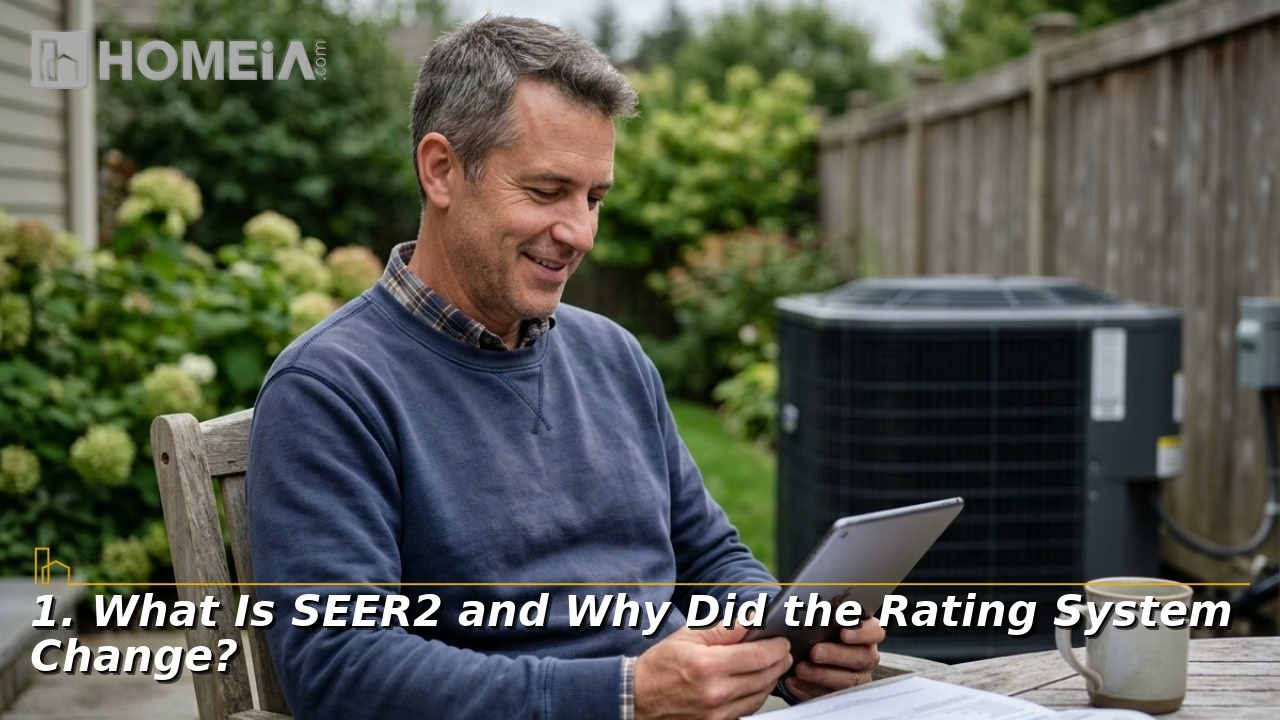
SEER (Seasonal Energy Efficiency Ratio) has been the industry benchmark for decades. It measures how much cooling a system delivers per unit of electricity consumed over an entire average season, similar to a car’s highway MPG rating. A higher number means better efficiency and lower monthly operating costs.
The problem with the original SEER standard was that it tested equipment in a controlled setting that didn’t reflect what happens inside a real home. In actual residential ductwork, bends, registers, and grilles create meaningful airflow resistance that the old tests simply ignored. This produced ratings that were consistently optimistic.
The U.S. Department of Energy addressed this gap by introducing SEER2, which uses the updated M1 test procedure. The new protocol applies external static pressures up to five times higher than the old method. Doing so creates a far more realistic simulation of typical home duct systems. Because the testing conditions are tougher, the resulting SEER2 numbers look slightly lower on paper, but the physical equipment is essentially as efficient as before. It’s a labeling update, not a performance downgrade.

Related article
10 Signs Your Air Conditioning Needs Expert Repair
Maintaining a cool indoor space is essential. In order to avoid problems, you need to be prepared for when your trusty AC unit inevitably goes down. Air conditioning issues can occur at very inconvenient times, so it’s wise to be informed when you might need a fast AC repair service. In this article, you’ll learn the top 10 tell-tale signs that your AC unit needs expert repair…
2. The SEER-to-SEER2 Conversion: What the Numbers Mean

Across the board, a system’s score drops roughly 4.5% to 5% when converted from SEER to SEER2. A useful rule of thumb is to multiply any old SEER rating by 0.95 to get its approximate SEER2 equivalent. For example, a 14.3 SEER2 unit cools your home similarly to a unit that would have been labeled 15 under the old system. This number remains smaller despite its performance being identical.
Using the 0.95 multiplier:
- 14 SEER → ~13.4 SEER2
- 16SEER → ~15.2 SEER2
- 18SEER → ~17.1 SEER2
Old SEER Rating | SEER2 Equivalent | What It Means |
|---|---|---|
| 14.0 SEER | 13.4 SEER2 | Previous southern-state baseline; no longer compliant for new installations in California. |
| 15.0 SEER | 14.3 SEER2 | The current legal minimum for all new residential central AC in the Southwest region. |
| 16.0–18.0 SEER | 15.2–17.1 SEER2 | Mid-efficiency sweet spot with strong savings and improved humidity control for local homes. |

Related article
24 Frequently Asked Questions About Home Air Conditioner Care
We’ll explore various topics, from distinguishing among different types of air conditioners and determining the appropriate AC unit size for your home to optimizing temperature settings for energy efficiency and recognizing when your AC unit needs servicing. Let’s dive in!…
3. What SEER2 Rating Is Required for California Homes?
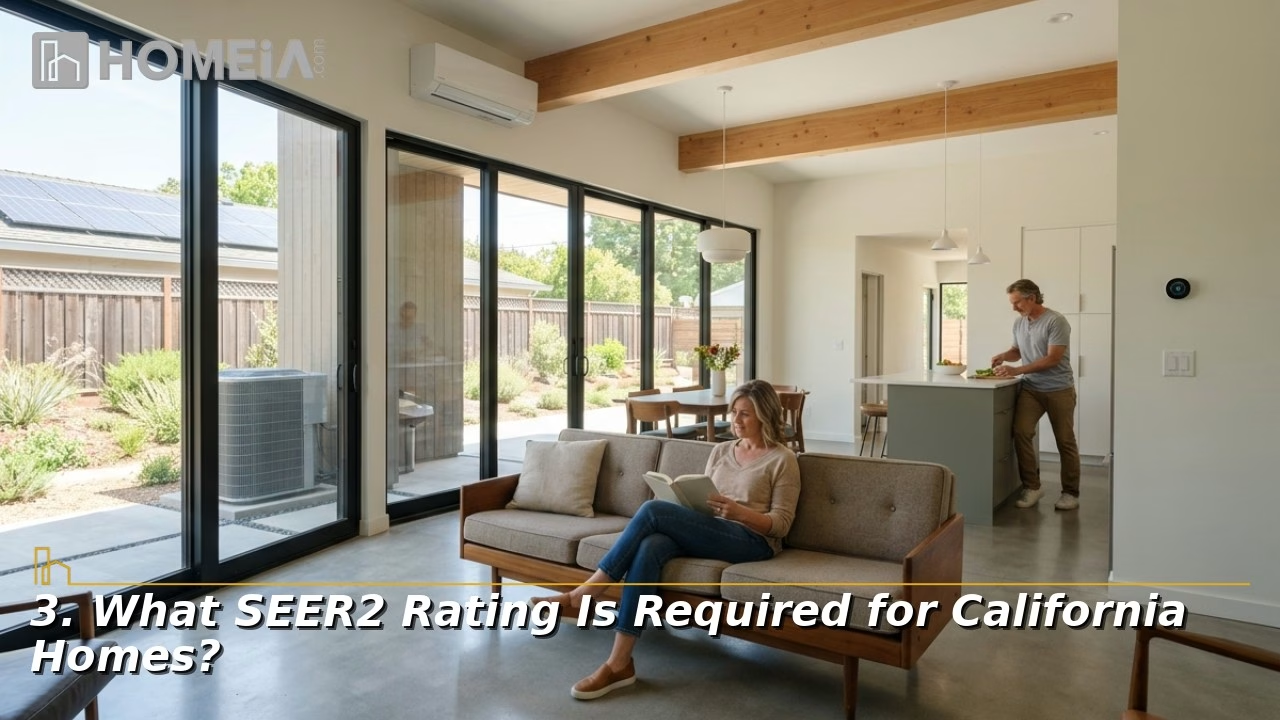
When the DOE updated these regulations, it divided the U.S. into regional climate zones. Since California’s vast desert and inland valley areas demand intensive, long-cycle cooling, the state is classified in the Southwest region. That designation carries a strict 14.3 SEER2 minimum for all new central air conditioning installations, noticeably higher than the 13.4 SEER2 floor in cooler northern states. Distributors are legally prohibited from selling or installing split-system units below this threshold anywhere in-state.
It’s important to treat that minimum as a floor, not a finish line. In a climate where cooling systems run six or seven months a year, upgrading even one efficiency tier above the baseline pays back meaningfully over the system’s lifetime. The higher your SEER2 rating, the less electricity you consume every single month the heat is on.
Recommended for you




4. How Much Can a Higher SEER2 System Save on Your Energy Bill?

Because California’s summer climate is so demanding, home cooling represents a disproportionately large share of household energy costs compared to national averages. When you factor in a system lifespan of 15 to 20 years, the long-term cost of operation matters far more than the upfront price difference between efficiency tiers.
- 14.3 → 17 SEER2: A typical 2,000–2,500 sq ft home can expect a roughly 16% to 19% reduction in cooling energy consumption.
- 14.3 → 20 SEER2: An estimated 28% reduction in cooling energy use, though actual results vary based on home size, insulation, and usage patterns.
- Always request a home-specific operating cost estimate from your contractor. Layout, shading, and local utility rates all affect real-world savings.
SEER2 Tier | Efficiency vs. Minimum | Best For |
|---|---|---|
| 14.3–15.0 SEER2 | Baseline | Budget-conscious buyers or homeowners preparing a property for short-term resale. |
| 16.0–17.0 SEER2 | 11%–16% more efficient | The best overall value for most California homeowners. Optimal savings with moderate upfront cost. |
| 18.0–20.0+ SEER2 | 20%–28%+ more efficient | Long-term residents seeking maximum monthly savings and whisper-quiet variable-speed comfort. |
Related article
Increasing Your Property Value Through HVAC Upgrades
Among the top projects with a high return on investment is hiring heating and cooling companies to determine if your HVAC (heating, ventilation and air conditioning) system needs repair or complete replacement. A brand-new air conditioner or a smoothly functioning furnace will make your home more valuable to any buyer…
5. Federal Tax Credits and 2026 Incentive Options

A. Section 25C: Eliminated for 2026
The widely publicized Inflation Reduction Act Section 25C credit for high-efficiency central air conditioners was eliminated for property placed in service after December 31, 2025, under the OBBBA. If you are purchasing and installing a central cooling system in 2026, this federal credit is not available on your tax return.
B. What’s Still Available
TECH Clean California
Important 2026 Update: Single-family heat pump HVAC incentives through TECH Clean California are fully reserved statewide as of November 14, 2025. HEEHRA single-family rebates are also fully reserved as of February 24, 2026. Contact a TECH-enrolled contractor to check waitlist status and monitor techcleanca.com for any new funding availability.
Utility Rebates
PG&E, SCE, SDG&E, and many local municipal utilities continue to offer active rebate programs. Options include Golden State Rebates for qualifying air conditioners and smart thermostats, PG&E’s Energy Savings Assistance Program, and SCE’s demand response thermostat rebates. Confirm current offerings at your utility’s website or through a licensed contractor.
Manufacturer Rebates
Factory-authorized dealers may provide seasonal cash-back promotions on qualifying premium systems. Availability changes frequently, so always verify with your contractor at the time of purchase.

Related article
Optimize Your Window for Energy Efficiency: Homeowners’ Guide
Windows serve as standout architectural pieces providing natural light, ventilation, and views, yet they represent serious weaknesses in a home’s thermal envelope. These openings allow substantial heat transfer, the desired warmth during winter months and despised heat infiltration during summer…
6. Choosing the Right SEER2 Tier for Your Home
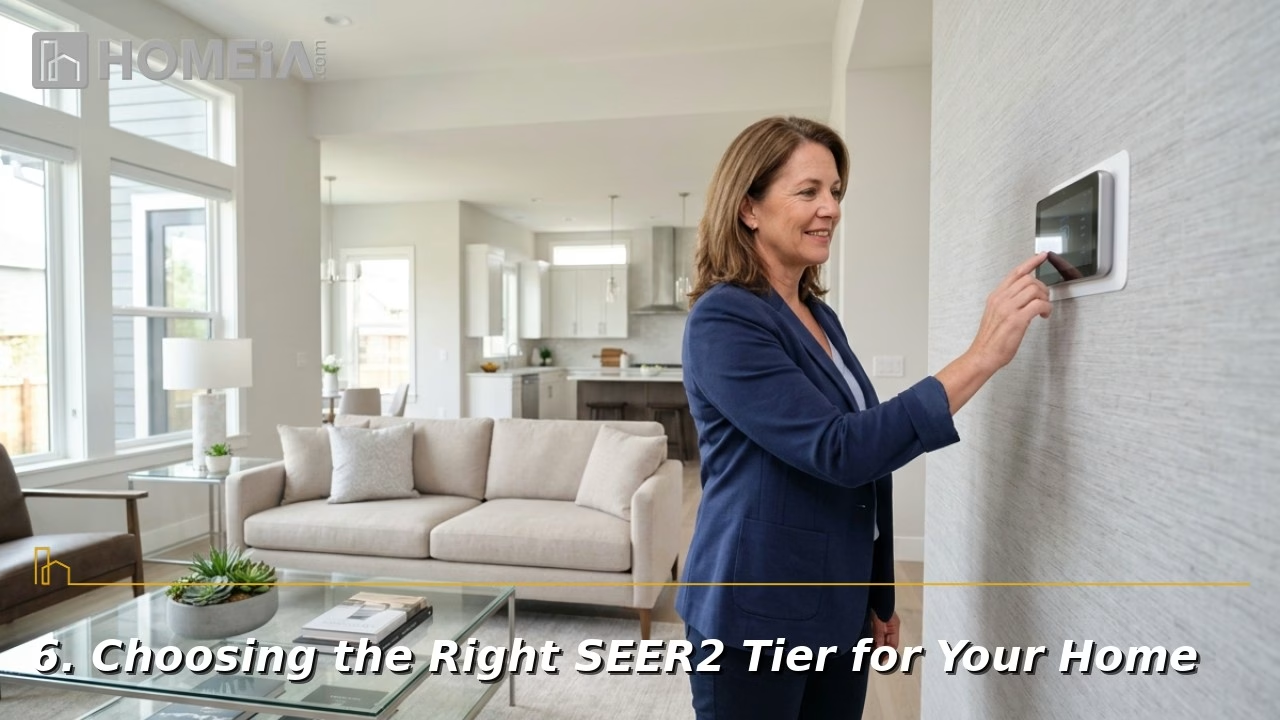
A. 14.3201315 SEER2: Entry Level
- Best for budget-constrained buyers or when an emergency replacement is needed quickly.
- Still a significant performance upgrade over equipment that is 10 to 15 years old.
B. 16201317 SEER2: Best Overall Value
- The optimal choice for most California homeowners balancing upfront cost and long-term savings.
- Two-stage compressors reduce energy draw during milder morning and evening conditions.
C. 18201320+ SEER2: Premium Efficiency
- Ideal for homeowners planning to stay in their property for 10 or more years.
- Variable-speed technology continuously adjusts output for maximum comfort and the lowest possible operating costs.
A note on ductwork: The efficiency tier you choose only matters if your duct system can deliver it. A 20 SEER2 unit connected to a leaky, unsealed duct system will frequently underperform a modest 16 SEER2 unit paired with professionally sealed ductwork. Before finalizing your equipment choice, ask a contractor to evaluate your ducts as part of the overall system assessment.
Conclusion: California’s 2026 cooling landscape has changed on multiple fronts. Stricter efficiency minimums, a new testing standard, an expired federal tax credit, and shifting rebate availability are all part of these changes. Understanding such shifts before you buy puts you in a better position to choose the right system at the right price. Work with a factory-authorized contractor, verify current incentives, and invest in duct quality alongside your equipment. The right decision now pays dividends on every utility bill for the next two decades.
Recommended for you




FAQs About What Homeowners Need to Know About SEER2
1. Does the SEER2 change affect my existing AC unit?
No. The updated DOE mandate applies only to new equipment manufactured and installed after the enforcement dates. If the current system is running reliably and keeping your home comfortable, you have no legal obligation to change it.
2. Can I still purchase and install an older SEER-rated system in California?
No. Contractors throughout the Southwest region are legally restricted to installing split-system central air conditioners meeting or exceeding the 14.3 SEER2 threshold. Distributors in California have already cleared older non-compliant inventory, so any new central system purchased today will carry an updated SEER2 label.
3. How do I find out what efficiency rating my current unit has?
Start by checking the yellow EnergyGuide sticker on the exterior casing of your outdoor condenser unit. If that label has faded from years of sun exposure, locate the manufacturer’s specification plate on the unit to retrieve the model number. Contact a licensed technician who can look up the full technical specifications for you.
Reviewed against primary sources including the U.S. Department of Energy, AHRI, Carrier, IRS Fact Sheet 2025-05 (OBBBA), TECH Clean California’s public reporting portal, and utility program pages for PG&E, SCE, and SDG&E. All information current as of June 2026.
Share