






Affordable Living in the Digital Age: Is West Virginia the Remote Worker’s Paradise?
- Local Editor:Local Editor: Kristin Pietrowski
- Category: USA , West Virginia


Affordable Living in the Digital Age: Is West Virginia the Remote Worker’s Paradise? Remote work has finally severed pay from geography, giving rise to true location freedom: earning a big-city salary while living somewhere far more affordable. Engineers, designers, analysts, and consultants have led the shift.
Early hot spots in the West and South filled up quickly, driving housing costs higher and pushing remote workers to look elsewhere. Today, savvy professionals are searching for overlooked regions with low housing costs, reliable infrastructure, and genuine support for remote living.
West Virginia has stepped into that gap. With rugged mountains, historic towns, and a deliberate mix of cash incentives and community support, the state is actively courting remote professionals and delivering on that promise.
Key Takeaways
- West Virginia’s Ascend program pays remote workers $12,000 in relocation incentives over two years.
- Participants can convert remaining payments into a lump sum if they purchase a home in the state.
- Members receive two years of free outdoor recreation passes, gear rentals, and coworking space access.
- The state’s cost of living is roughly 20% below the national average, and it has one of the lowest effective property tax rates in the U.S.
- Six Ascend communities, including the newly added capital city of Charleston, offer a wide range of lifestyles.
- Remote professionals should weigh low housing costs against the state’s elevated utility rates.


Related article
The Pros and Cons of Living in West Virginia
The Pros and Cons of Living in West Virginia include stunning natural landscapes, low cost of living, and a strong sense of community. However, challenges such as limited job opportunities, rural isolation, and infrastructure gaps make it important to weigh your priorities before relocating to the Mountain State…
1. The Macroeconomic Case for Remote Relocation in West Virginia
West Virginia makes a strong economic case for remote workers. According to cost-of-living databases, the state’s overall index sits at 79.4, versus a national baseline of 100.0. Its housing index is even lower at 39.3, meaning real estate here runs roughly 60 percent cheaper than the national average.
The gap shows up clearly in home values: the typical U.S. listing tops $414,500, while West Virginia’s median home value sits between $155,600 and $178,719. That low cost of entry represents a genuine wealth-building opportunity. Relocating from high-cost states like California, New York, or Massachusetts frees up substantial capital for retirement savings, college funds, or additional real estate.
West Virginia also offers one of the most favorable tax structures for property owners in the country. Annual property tax bills in West Virginia average about $1,063, which is more than 75% below the national average of $4,316. This is paired with competitive homeowners’ insurance, averaging only $1,009 annually, the fourth-lowest rate in the nation.
Retirees benefit as well: West Virginia has phased out state income tax on Social Security benefits, with the exemption fully effective in 2026 across all income tiers. This positions the state as a genuinely competitive tax haven for families and retirees alike.
| Cost Category | West Virginia Annual Average | U.S. National Average | National Rank | Primary Driver |
| Property Tax | $1,063 | $4,316 | 49th (Lowest in US) | Low median home values |
| Homeowners Insurance | $1,009 | $2,267 | 46th (4th Lowest in US) | Competitive base premiums |
| Cost of Living Index | 79.4 | 100.0 | Highly Competitive | Low 39.3 housing index |
These favorable metrics are largely insulated from broader market swings. Because the state’s housing stock is older and new construction has slowed regionally, existing home values have maintained a steady upward trajectory. Remote buyers aren’t just saving on living expenses; they’re building equity in an asset that continues to appreciate.
Related article
Moving to West Virginia: The Complete Relocation Guide & Checklist
West Virginia offers a blend of scenic mountain landscapes, affordable living, and close-knit communities. From the vibrant college atmosphere of Morgantown to the historic character of Lewisburg, the Mountain State appeals to those seeking outdoor adventure, a slower pace of life, and financial affordability. This guide covers…
2. Inside Ascend West Virginia: The Nation’s Best Relocation Package
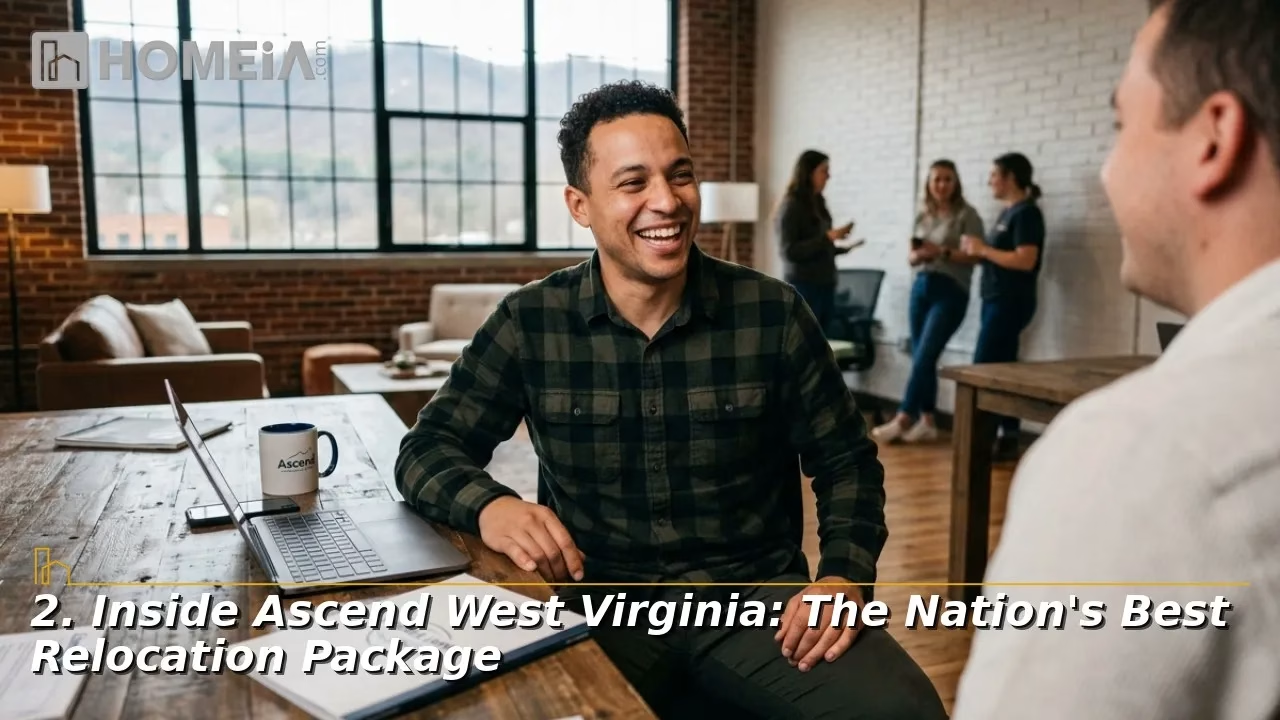
Ascend West Virginia, the state’s signature talent-attraction program, is the primary catalyst behind the relocation wave. Founded in April 2021 by West Virginia native and Marshall University President Brad D. Smith and his wife, Alys, the initiative brings together the private sector, state government, and academia. Funded by a $25 million gift to WVU’s Brad and Alys Smith Outdoor Economic Development Collaborative.
The core offer is straightforward: selected participants receive $12,000 in incentives, paid in equal monthly installments over a two-year period. A lucrative homeownership clause sweetens the deal: purchase a home in West Virginia at any point during residency, and the remaining payments accelerate into a single lump-sum payout upon verification, giving buyers immediate closing liquidity.
Ascend also integrates relocators into the state’s outdoor recreation economy, offering two full years of free guided adventures, including whitewater rafting, downhill skiing, and mountain ziplining. A state-of-the-art gear rental library adds more than $1,200 in free equipment, making it easy for remote workers to swap the home office for the state’s famous trails during lunch breaks or weekends.
The program also addresses the professional isolation common among remote employees, providing free memberships to modern coworking spaces equipped with fiber-optic connectivity and video conferencing. Structured social gatherings, networking events, and group outdoor excursions help newcomers build a genuine sense of community from day one.
For veterans, the program expands through the Ascend Heroes initiative, offering the same $12,000 package with broader eligibility. Standard applicants must verify full-time remote employment outside West Virginia; veteran participants may also qualify through self-employment or a traditional full-time local position, creating a flexible transition pathway into a state that deeply values service and resilience.
Related article
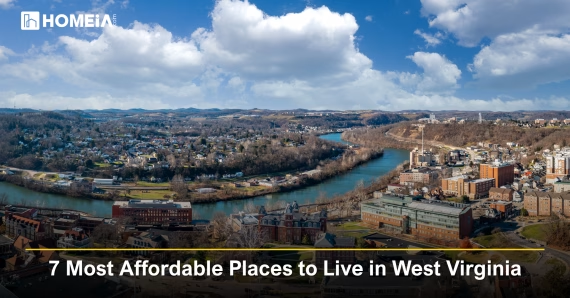
7 Most Affordable Places to Live in West Virginia
West Virginia combines some of the nation’s most affordable housing with low property taxes, scenic landscapes, and close-knit communities. While living costs vary across the state, many towns offer exceptional value without sacrificing access to jobs, healthcare, or everyday amenities. This guide highlights seven of the most…
3. Regional Diversity: Exploring the Six Ascend Communities

West Virginia is not a uniform state; its geography, culture, and housing markets vary widely, from the booming Eastern Panhandle to the historic river towns of the west. Ascend West Virginia lets participants choose from six distinct communities, each with its own real estate market and lifestyle.
A. The Morgantown Area: Morgantown, home to West Virginia University, is the educational and economic engine of the north, a vibrant college town with a strong arts scene and excellent healthcare. The market is competitive: a $365,000 median listing price and $1,250 average rent, offset by access to 200+ mountain biking trails, 1,400 climbing routes, and 94 paddling runs.
B. The Eastern Panhandle: Home to historic Martinsburg and Shepherdstown, the Eastern Panhandle is the state’s fastest-growing region, ideal for professionals who occasionally commute to Washington, D.C. or Baltimore. Martinsburg’s average home value of $312,978 undercuts the pricey suburbs of northern Virginia and Maryland, pairing colonial architecture with close proximity to metropolitan job hubs.
C. The New River Gorge: Centered on Fayetteville and Beckley, the New River Gorge region delivers world-class outdoor adventure right next to America’s newest national park: whitewater rafting, rock climbing, and hiking all within reach. Real estate in this southern region is exceptionally affordable, with Beckley listings hovering around $165,000 and rents near $950.
D. The Greenbrier Valley: Anchored by the historic town of Lewisburg, the Greenbrier Valley offers a laid-back, but refined pace of life. Its pristine farmlands, historic homes, and active fine arts community have repeatedly earned it a spot among the best small towns in America, with the Greenbrier River and hundreds of miles of hiking trails nearby for quiet, focused living.
E. Greater Elkins: Set within the Monongahela National Forest, Elkins is a classic Appalachian mountain town for remote workers craving a slower, more deliberate pace. A rich heritage of traditional Appalachian music, wood crafting, and community-centric living comes paired with immediate access to pristine wilderness.
F. The Charleston Area: Recognized as the sixth Ascend community, Charleston is the state capital and civic heart of West Virginia — a blend of capital-city infrastructure and mountain calm, with riverfront walking paths, live summer concerts, and the Clay Center for the Arts.
Charleston’s housing market is highly attractive, with a median listing price of $152,000 and average monthly rent of $980. The city has actively welcomed remote professionals through municipal efforts like the Roots initiative, giving relocators access to strong local networks, entrepreneurial ecosystems, and robust public amenities.
| Ascend Region | Median Listing Price | Average Monthly Rent | Primary Appeal |
| Morgantown Area | $365,000 | $1,250 | University town, medical hub, active culture |
| Eastern Panhandle | $312,978 | $1,700 | D.C. commuter access, rapid growth |
| Charleston Area | $152,000 | $980 | Capital amenities, historic charm |
| New River Gorge | $165,000 | $950 | National Park access, rafting, climbing |
| Greenbrier Valley | $289,000 | $1,100 | Historic elegance, arts, river access |
Recommended for you




4. Developer Initiatives and the Remote Worker Home Development Act
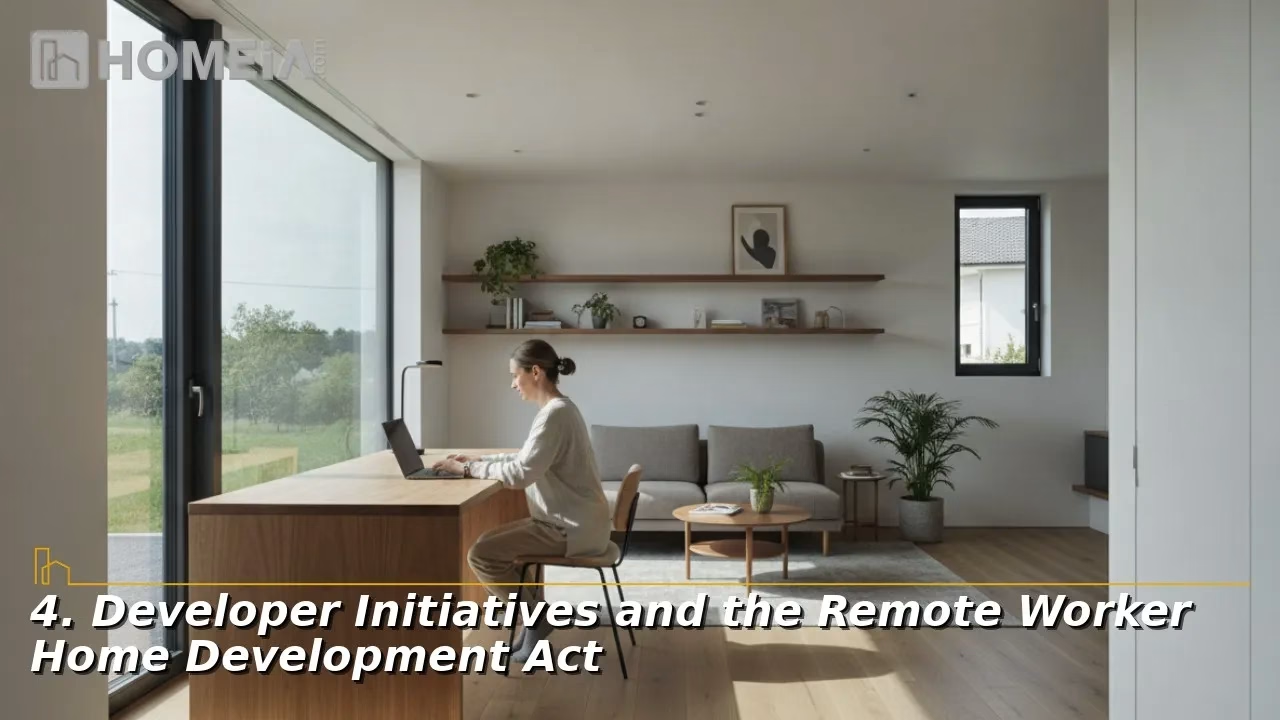
Recognizing that digital workers need modern, technologically reliable housing, the West Virginia Legislature has taken proactive steps to support remote-work-friendly development through the Remote Worker Home Development Act — legislation designed to incentivize builders to create residential subdivisions tailored to digital professionals.
Under the act, developers can establish certified “Remote Worker Ready” subdivisions. To qualify for the program’s tax benefits, developments must meet strict infrastructure standards:
- All subdivision utilities must be buried underground to improve storm resilience and reduce the risk of service disruptions.
- The subdivision must include dedicated fiber-optic cabling to ensure ultra-high-speed, symmetrical internet access.
- Each individual home must be pre-wired with Category 7 or better ethernet.
- Every home must include a dedicated, sound-insulated office space with backup electrical power to support uninterrupted work.
The act rewards developers with favorable tax treatment: property taxes on a subdivision remain at the original agricultural or vacant-land rate until each newly built home sells for the first time. Once a home is purchased, only that parcel is reassessed at the higher improved rate, protecting developers from heavy tax burdens during construction.
Developers also receive a direct state income tax credit equal to the added construction cost of home office spaces and backup power systems. These incentives apply to new rental construction as well. For remote workers, the takeaway is simple: relocating to West Virginia doesn’t mean sacrificing the digital reliability a competitive career requires.

Related article
21 Best and Fun Things to do in Morgantown, West Virginia
Whether you are visiting Morgantown on vacation, getting ready to attend WVU, or looking to settle down permanently, you’ll want to check out all of the city’s best attractions…
5. Crucial Financial Reality Check: The Carrying Cost Factor

A complete real estate picture requires looking beyond headline purchase prices and relocation bonuses. West Virginia offers one of the most affordable homeownership entry points in the country, but remote workers should budget for one major carrying cost: utilities.
Despite being energy-rich, West Virginia has some of the highest, most regressive utility costs in the nation, ranking first for utility costs as a share of household income. The average monthly bill is $715, consuming 13.59 percent of the average resident’s monthly paycheck. Water bills are especially high, averaging $123 a month, driven largely by infrastructure upgrade fees known as Distribution System Improvement Charges (DSIC).
Rates have also climbed sharply over the past decade. Data from the West Virginia Public Service Commission shows that between 2015 and 2025, the average household electricity rate surged 73%, natural gas rose 51%, and water climbed 45%, driven by aging coal-fired power plants, volatile fuel costs, and ongoing grid maintenance.
- Average Monthly Utility Bill: $715
- Electricity: $141
- Natural Gas: $90
- Water (including DSIC): $123 (second highest in the nation)
- Sewer, Trash, Internet, & Connectivity: $361
For remote workers accustomed to mild coastal climates or efficient urban apartments, winter utility costs can be a genuine shock. In older, uninsulated historic homes, sub-zero temperatures can push monthly electric bills to $900 or more, easily surpassing a standard mortgage payment in the region.
To mitigate this carrying cost, remote professionals relocating to the state should consider a few practical strategies:
- Look for properties built under the Remote Worker Home Development Act, which include modern insulation, double-pane windows, and high-efficiency HVAC systems.
- Before purchasing an older home, schedule a comprehensive energy audit to identify leaks, drafty windows, and outdated heating systems.
- Use federal and state weatherization programs, which offer financial assistance to seal air leaks, insulate attics, and replace inefficient appliances.

Related article
5 Best Places to Live in Kentucky
Kentucky blends urban amenities with natural beauty and tradition. This guide provides data-driven analysis of the best places to live in Kentucky, evaluating economic opportunity, affordability, safety, and education. From vibrant Louisville to historic Lexington, discover premier destinations for your future…
6. Economic and Demographic Proof: The Ascend Metrics
The viability of West Virginia as a remote-work destination isn’t just a marketing pitch — it’s backed by measurable outcomes. Since its April 2021 launch, Ascend West Virginia has received more than 65,000 applications from remote professionals worldwide. Nearly 1,000 new residents have relocated, with a 96-97% retention rate, clear evidence that participants are building lasting lives in the state.
The demographic profile of Ascend participants reflects a meaningful infusion of high-value human capital into local communities. The average individual salary of an Ascend relocator exceeds $97,000, well above the state’s median household income. And participants rarely relocate alone: each brings an average of 1.9 accompanying family members, who support local businesses, enroll in local schools, and often pursue homeownership themselves.
This influx has had a stimulative effect on regional housing markets. Program tracking shows that 36% of Ascend participants purchase a home within their first two years of residency, contributing to steady property appreciation, particularly in the mid-range and upper-tier segments of the market.
Conclusion
West Virginia has positioned itself as a premier destination for digital professionals seeking a balanced, affordable lifestyle. Through Ascend West Virginia, modern development standards, and competitive home prices and tax rates, the Mountain State offers a genuine opportunity to build wealth while enjoying world-class outdoor recreation and a slower, more grounded pace of life.
Utility costs remain an important consideration, but thoughtful property selection, energy audits, and newer construction can significantly reduce those expenses. For remote workers ready to escape the financial strain of high-tax coastal cities, this guide to the most affordable places to live in West Virginia highlights seven communities where community, nature, and affordability intersect. Almost Heaven is waiting.
Recommended for you




FAQs About Remote Work and Relocation in West Virginia
1. Are the financial incentives received through Ascend West Virginia taxable?
Yes, the $12,000 relocation incentive is legally classified as taxable income. Because the funds are part of a state-backed talent-attraction program, participants receive a Form 1099-MISC at the end of each tax year. Relocators should consult a certified public accountant to plan for both state and federal tax obligations.
2. What happens to my program status if I lose my remote job during the two-year residency?
The Ascend team takes a supportive, community-focused approach to career transitions. If a participant is laid off or leaves their employer, program guidelines provide a grace period to secure another remote role or local employment. Coordinators work directly with participants, connecting them to professional resources, corporate partners, and entrepreneurial support networks.
3. Does the program provide integration services for accompanying family members?
Yes. Family support is a core part of the Ascend program. Local coordinators offer customized onboarding for accompanying spouses, partners, and children, including introductions to school boards, job-matching services for trailing spouses, and connections to community organizations, volunteer networks, and youth sports programs.
4. Can self-employed business owners and freelancers qualify for Ascend West Virginia?
Yes. Self-employed professionals, freelancers, and independent business owners are eligible if they meet the program’s core residency and operational requirements. Applicants must demonstrate that business is fully remote-capable and provide documentation such as tax returns, active client contracts, or business registration documents to verify income and remote status.
5. How does the Ascend Heroes veteran initiative differ from the standard program?
Ascend Heroes offers more flexible employment pathways for veterans. While standard applicants must verify remote work for an out-of-state employer, veterans may qualify through traditional remote work, a remote-capable self-employed business, or a full-time local position. This structure supports a smoother transition into the state’s workforce and reflects West Virginia’s emphasis on service and community resilience.
Share