






Aging in Place Home Design: How to Build a Custom Home for Every Stage of Life
- Local Editor:Local Editor: The HOMEiA Team
- Category: Home Improvement


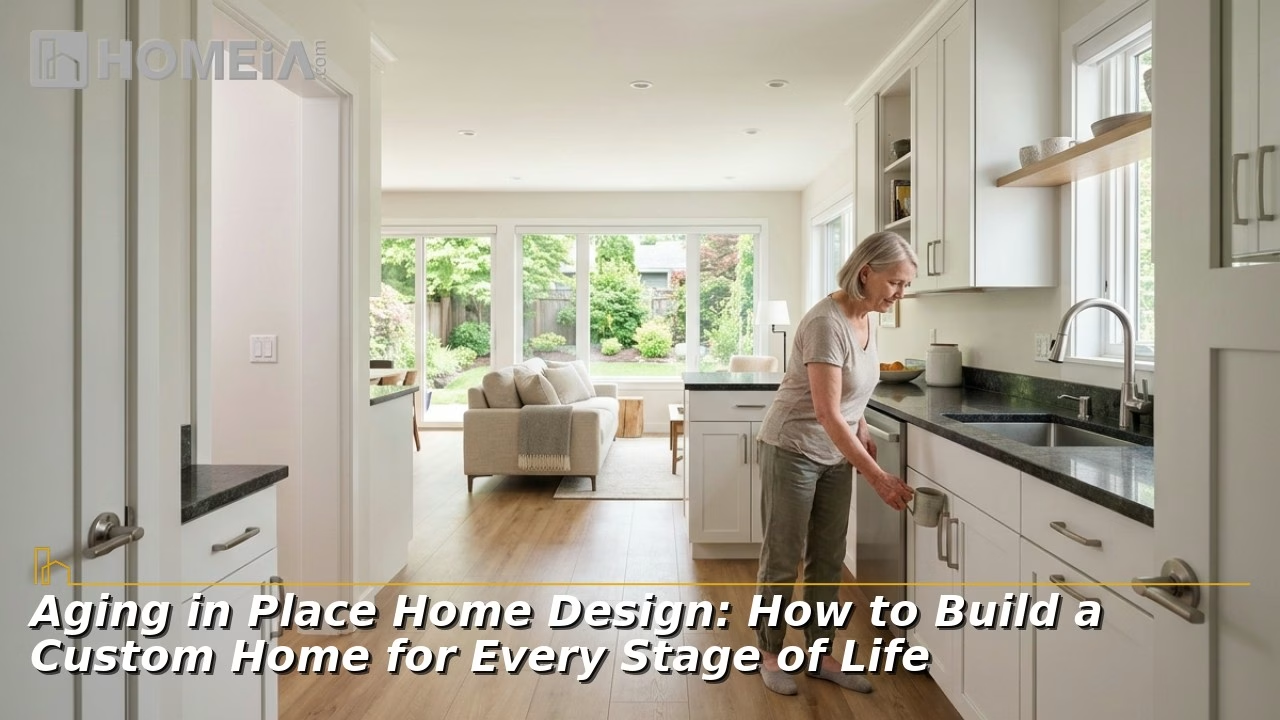
The innovative custom home investments are ones that serve a family not only today, but ten, twenty, and thirty years from now. When the design process begins, the conversation is naturally focused on the immediate needs of a growing household. However, a truly exceptional residence is one that adapts gracefully as the people inside it evolve. Most families do not think seriously about aging or multigenerational living until a life event forces the conversation. By then, the home is already built, and the window to do so is closed.
By integrating aging in place design principles from the initial sketch, you ensure that your home remains a sanctuary of independence through every stage of life. Builders like Cook Custom Homes have made this long-view approach central to how they work, treating generational adaptability as a design standard rather than an optional upgrade. This guide contains the specific features and design strategies that allow a custom home to serve your family across every chapter, maintaining a balance between down-to-earth and luxury.
Key Takeaways
- The most effective accessibility features are invisible. When done well, universal design is indistinguishable from high-end architecture.
- Designing essential living spaces on the main level preserves independence for every generation without sacrificing grandeur.
- A successful multigenerational suite requires a private entrance, dedicated kitchenette, acoustic separation, and independent HVAC zoning.
- Wider doorways and reinforced walls built during initial framing cost a fraction of what they cost to retrofit later.
- Voice-controlled systems, flexible floor plans, and elevator-ready shafts are the most valuable future-proofing tools available in a new build.
Related article
1. Universal Design: Accessibility That Looks Like Luxury
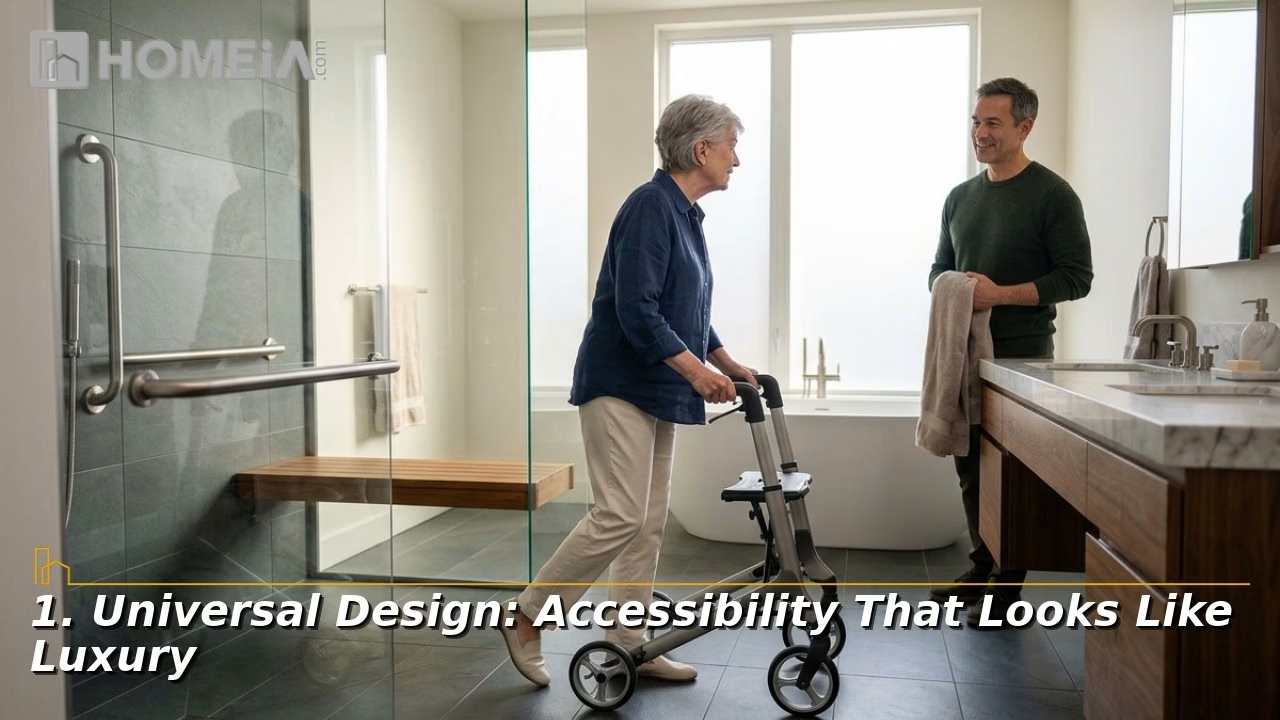
The core philosophy of universal design is to create environments that work beautifully for everyone, at every age and ability level. This is not about medical-grade modifications that signal limitation. It is about thoughtful, high-quality design decisions that happen to serve the full spectrum of human experience. The distinction is that these features cost almost nothing when built in from the start but become pricey to retrofit into a finished home.
In practice, we specify a minimum 36-inch width for all interior doorways. While this comfortably accommodates a wheelchair or walker, it also makes the home feel more expansive and simplifies the movement of furniture. Curbless shower entries eliminate a tripping hazard while creating the sophisticated, continuous floor line defining a modern wet room. Lever-style door hardware and rocker light switches are easier to operate for a toddler or a parent with limited hand strength, while being a clean, contemporary design choice to any visitor. One of the most important invisible investments we make is installing reinforced timber blocking inside bathroom walls during framing. It remains hidden behind tile permanently, while providing structural support for grab bars at any point in the future, eliminating the need for a disruptive tear-out later.
| Universal Feature | Luxury Aesthetic Benefit | Long-Term Practical Benefit |
| 36-Inch Doorways | More expansive, grand room entries | Full mobility access without renovation |
| Curbless Showers | Seamless modern wet room aesthetic | Eliminates trip hazards and thresholds |
| Lever Hardware | Clean, contemporary design profile | Operable with a single finger or elbow |
| Wall Blocking | Completely invisible behind tile | Ready for safety rails with no renovation |
Table 1: Universal design features and their dual aesthetic and functional value.
2. Single-Level Living & Strategic Layout Planning
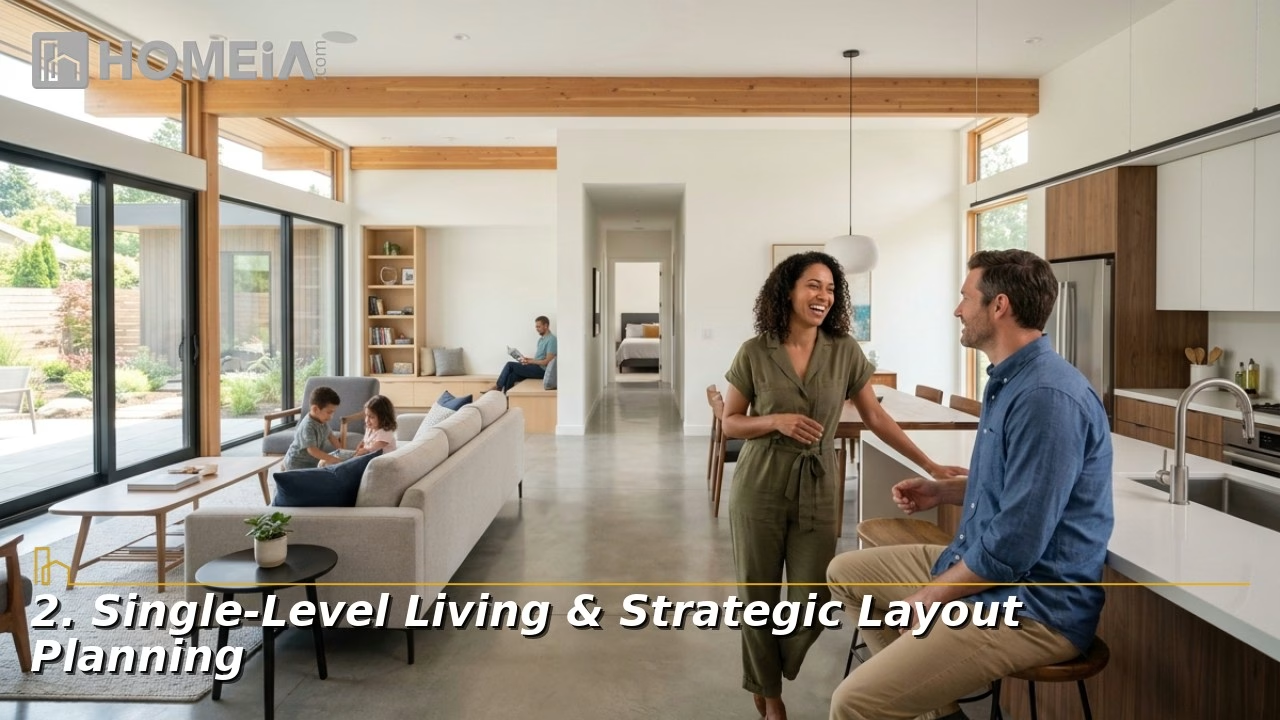
Effective aging in place design is built around a main-floor-everything philosophy. Even in a sprawling two-story estate, we design the primary bedroom suite, laundry facilities, kitchen, and all primary social spaces on one level. This ensures the homeowner can enjoy complete independence without ever being required to navigate stairs. Additionally, guests of any mobility level can move freely through the social core of the home without assistance or modification.
Single-level functionality does not mean sacrificing the grandeur of a multi-story home. A well-designed residence can reserve upper levels entirely for secondary bedrooms, home offices, or bonus spaces while keeping the essential living core fully accessible on the ground floor. For clients wanting the option of a second-floor primary retreat, we build in an elevator-ready shaft during construction. This means framing and running power to a stacked closet system that can accept a residential elevator cab at any point in the future. Adding this feature during the build costs approximately $3,000 to $5,000. Retrofitting an elevator into an existing finished home routinely exceeds $50,000 in structural remediation alone. It is one of the highest-return future-proofing investments available in a custom build.
Related article
The Custom Home Building Process: A Complete Step-by-Step Guide
Building a custom home may feel overwhelming, but it follows a clear, structured process. With the right team, each phase, from design to move-in, becomes manageable and rewarding. This guide walks you through every major step, helping you move forward with clarity, confidence, and control as you create a home tailored to your life…
3. The Multigenerational Suite: Privacy Without Separation
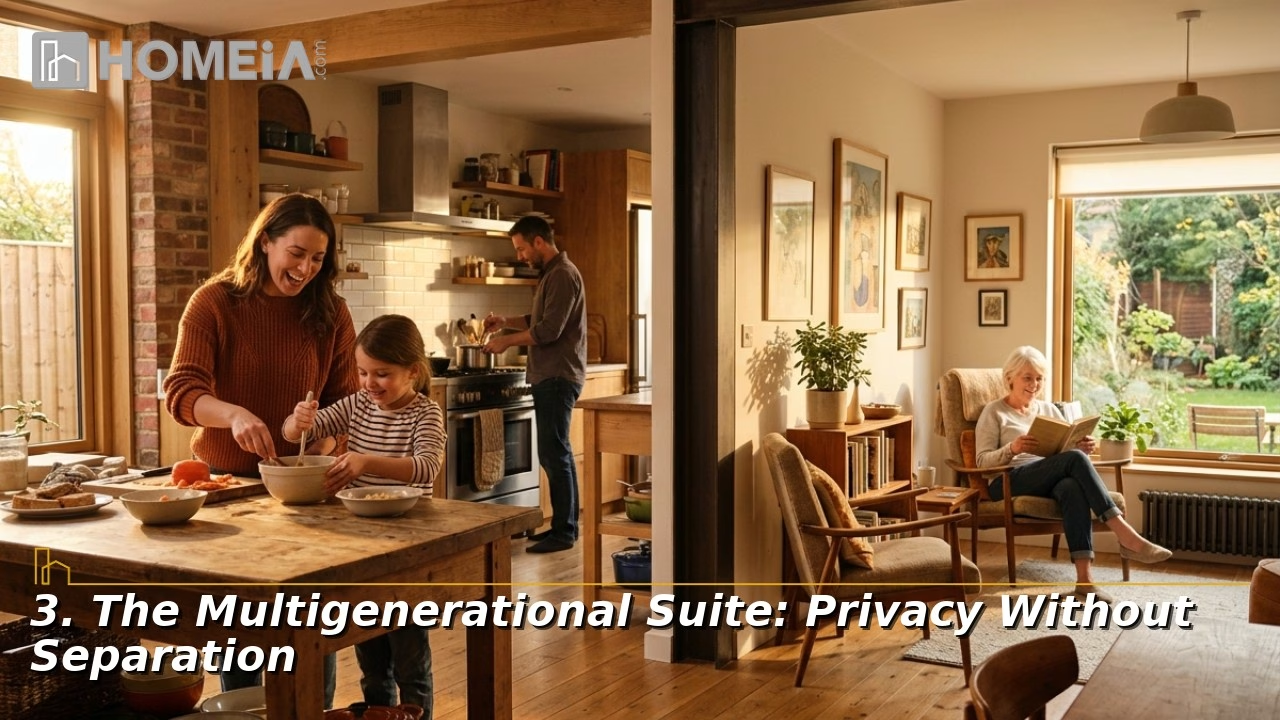
The multigenerational suite has become one of the most requested features in the luxury custom home market. Whether it is designed to house aging parents or provide a long-term landing pad for adult children, a successful suite must balance togetherness with genuine autonomy. It should never feel like a basement apartment or a converted spare bedroom. Vibes should be a complete, dignified home within a home.
Four design principles make the difference between a suite that works and one that creates friction. First, a private exterior entrance allows the occupant to come and go independently without passing through the main residence. Second, a dedicated kitchenette enables private meals and independent food storage. Third, acoustic separation is non-negotiable. We use sound-dampening assemblies and staggered-stud wall construction to prevent sound transmission between the suite and the main residence. Fourth, separate HVAC zoning lets the suite occupant control their own temperature entirely. When all are applied, the suite becomes a space where an elderly parent or an adult child can live with complete dignity while remaining connected to the family under one roof.
Recommended for you




4. Bathroom Design for Long-Term Safety and Comfort
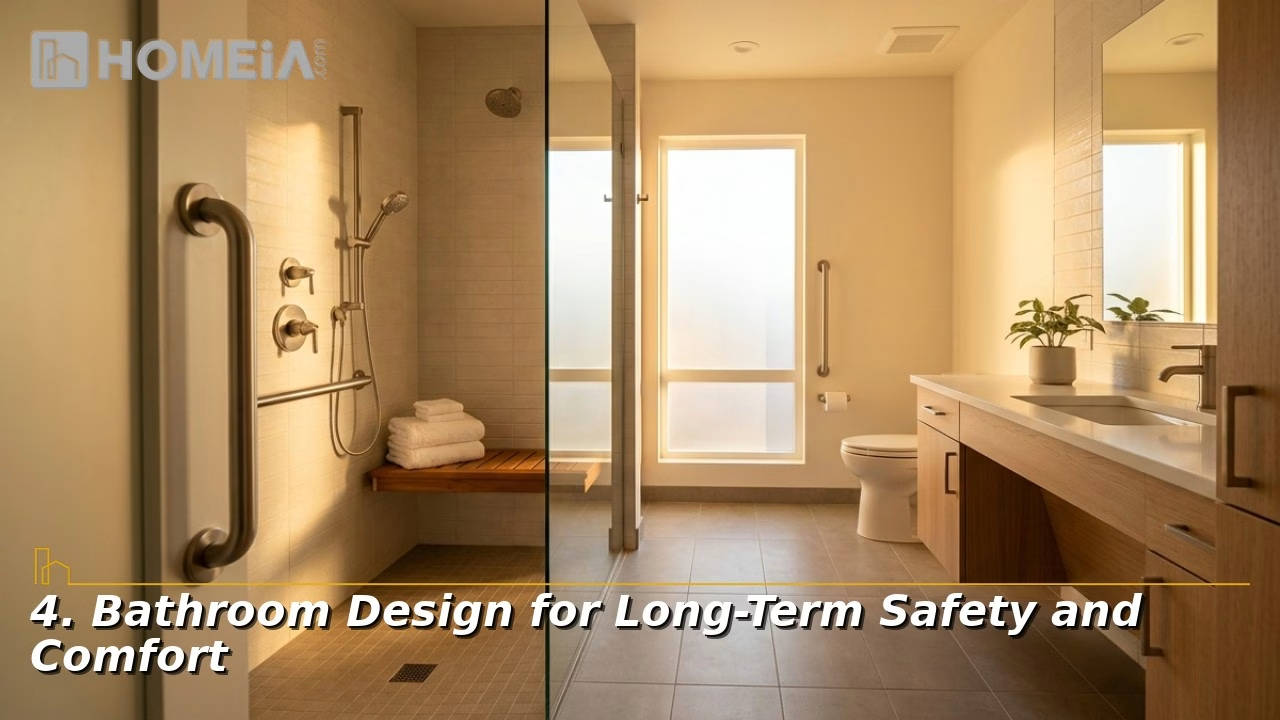
The bathroom is statistically the highest-risk room in any home. It is also the space where thoughtful design decisions deliver the greatest impact on long-term safety and independence. We approach high-performance bathroom design through the wet room concept, in which the shower, bathtub area, and floor exist as one continuous, fully waterproofed tiled environment. This configuration is simultaneously the most luxurious layout available and the most accessible, eliminating potential for fall risks.
Within the wet room, we include built-in bench seating and a hand-held shower head on an adjustable rail to provide flexibility across different needs and abilities. Slip resistance is handled through the tile specification itself. We select premium large-format tiles with a high dynamic coefficient of friction replicating the appearance of natural stone while providing superior grip underfoot. Comfort-height toilets set at 17 to 19 inches reduce strain on the knees and back and are now a standard specification in any well-designed master bath. Wider vanity clearances allow for comfortable seated use if needed. Layered LED task lighting at the vanity and within the shower improves visibility while being an effective environmental change for fall prevention. None of these choices need to announce themselves. Paired with custom millwork and curated fixtures, they disappear completely into a space of genuine elegance.
| Bathroom Feature | Implementation Detail | Long-Term Benefit |
| Wet Room Layout | Continuous floor waterproofing throughout | Removes all thresholds and fall risk |
| Hand-Held Shower | Adjustable rail with secondary head | Allows seated or assisted bathing |
| Comfort-Height Toilet | Seat height set at 17 to 19 inches | Reduces knee and back strain |
| Layered Task Lighting | Recessed LEDs at vanity and shower | Improves visibility and prevents falls |
Table 2: Bathroom design features that deliver both accessibility and luxury.

Related article
Things You Shouldn’t Underestimate After Buying a New Home
Nothing is more fulfilling than finally buying the home of your dreams. When you get the keys and step over the threshold, you may feel like you’ve reached the finish line. But your work is not quite done. Here’re a few steps to take once the home is yours. If you tackle them right away…
5. Future-Proofing Beyond Mobility: Technology and Flexibility
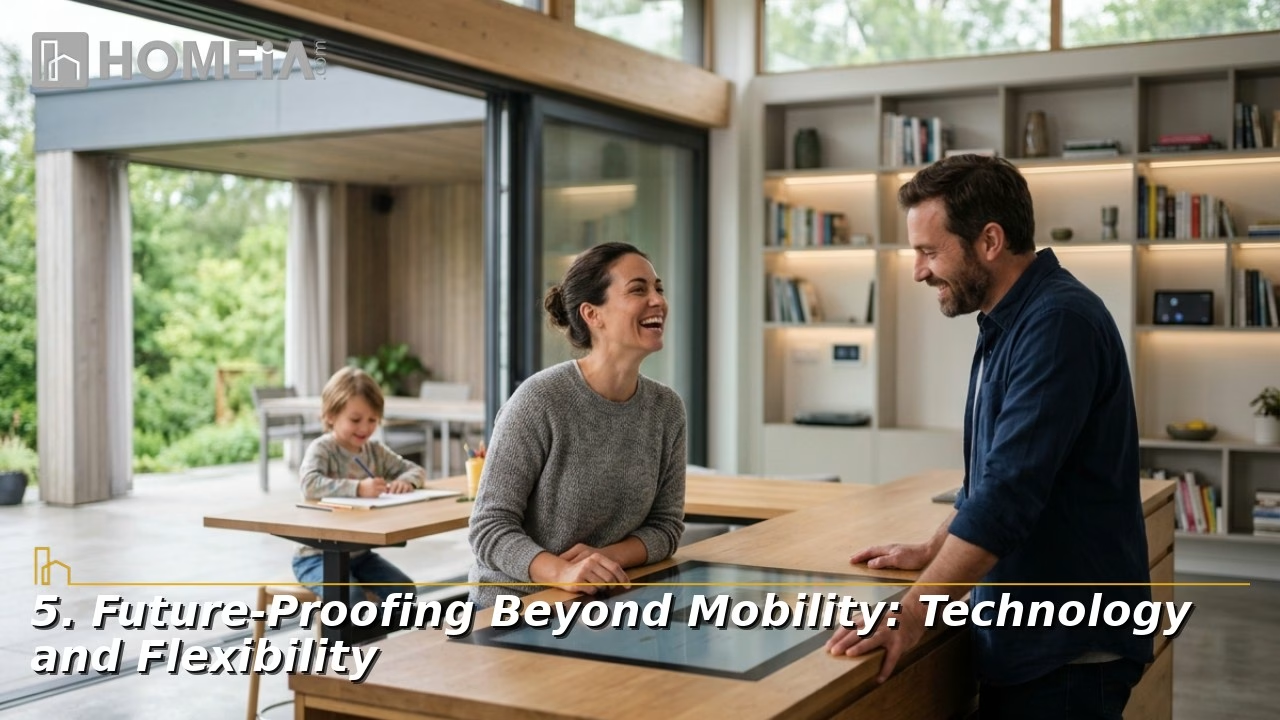
True future-proof design extends well beyond physical accessibility to include technology integration and spatial adaptability. Smart home systems have become a critical layer of long-term independence for modern families. Voice-controlled lighting, climate, and automated locks allow a homeowner to manage their entire environment without having to wander. Remote monitoring systems provide real-time awareness for family members living elsewhere. AI-powered sensors can now detect irregular movement patterns or extended immobility and send automated alerts. This adds a meaningful layer of passive safety to the home.
At the layout level, we design hallways to a minimum of 42 to 48 inches in width. This accommodates strollers, moving carts, and mobility aids without ever feeling like a concession to accessibility. It comes across as generous, well-proportioned architecture. Flex rooms are a key pillar of any high-performance custom build. Spaces designed with concealed plumbing rough-ins and additional electrical capacity behind the walls allow a den to transition from a bedroom or hobby room to a care space without any structural work. Future-proofing is not a plan for decline. It is a commitment to building a home flexible enough to meet whatever life brings, on terms you choose rather than ones imposed by a structure that was never designed to adapt.


Related article
Considerations for Buying an Existing Home or New Construction
We’ll discuss some of the differences between buying an existing single-family home or new construction. And discuss factors that I found interesting with each type of home purchase. Choices await you, from new homes to turn-of-the-century homes and everything in between. Let’s make a few comparisons…
Bonus: Questions to Ask Your Builder About Aging in Place Design
Not every luxury builder understands universal design as a structural discipline. These questions will quickly reveal whether a candidate is equipped to deliver a home that performs across every stage of life.
1. Do you specify reinforced wall blocking in bathrooms as a standard practice?
This should be a default inclusion in every bathroom, not an upgrade. A builder requiring you to request it separately has not internalized aging in place design as a structural priority.
2. How do you approach elevator-ready shaft planning?
Ask whether they include the framing, pit, and power rough-in as a standard offering during the design phase. The answer reveals how proactively they think about the home’s long-term viability versus its immediate completion.
3. What is your standard interior doorway width?
The answer should be 36 inches minimum throughout the home. Builders who default to 32-inch doorways and offer 36-inch as an upgrade are treating accessibility as optional rather than foundational.
4. How do you acoustically separate a multigenerational suite from the main residence?
Look for specific answers about wall assembly techniques, staggered-stud construction, and door specifications. Vague references to using insulation is not sufficient for a true privacy-first suite.
Builders who answer these questions with precision and confidence have built this way before. One who hesitates or treats these as uncommon requests does not have the depth of experience your project requires.
Conclusion: Building a Home That Serves Every Generation
Designing for aging in place is not a concession to limitation. It is the most generous way to utilize a custom home budget. Building a residence expansive enough in its thinking to serve your family with the same quality of life at every age. The features of the greatest significance include reinforced walls, the curbless entries, the flex rooms, and the elevator shaft, cost a fraction of their retrofit price when built in from the beginning. After construction is complete, the window to do them right is gone.
A custom home is the only housing type that gives you full control over every one of these decisions before a single wall goes up. By pairing universal design principles with luxury finishes and intelligent tech you create a residence that adapts to life rather than fighting it. If you are ready to build a home designed to serve your family with distinction for decades, we invite you to begin with a design consultation. Let us show you how thoughtful planning today creates a foundation for independence, comfort, and connection for every generation of your family.
Recommended for you




FAQs About Aging in Place Home Design
1. Does aging in place design hurt resale value?
On the contrary, professionally integrated universal design features consistently increase a home’s value. Luxury buyers are increasingly seeking forever-livable homes. Curbless showers, wide hallways, and elevator-ready shafts are now viewed as premium upgrades rather than accessibility concessions.
2. What does an elevator-ready shaft actually cost to include?
Roughing in a shaft during construction, including framing, the pit, and dedicated power, typically adds $3,000 to $5,000 to the build budget. Adding the elevator cab later costs $30,000 to $50,000 depending on finishes and the number of stops. The alternative, retrofitting a shaft into a finished home, regularly exceeds $50,000 in structural work alone.
3. Are there zoning restrictions on multigenerational suites?
Yes. Local jurisdictions vary significantly in their rules regarding Accessory Dwelling Units. Some allow full kitchens while others permit kitchenettes. Reviewing local zoning and any HOA requirements during the design phase, before construction documents are finalized, is essential.
4. How do I make a multigenerational suite feel integrated with the main home?
Use the same high-end finishes, trim profiles, cabinetry lines, and flooring in the suite as throughout the rest of the residence. Continuity of materials ensures the suite reads as a cohesive part of the home rather than a secondary addition built to a different standard.
5. What role does smart technology play in aging in place safety?
AI motion sensors can detect irregular movement patterns or prolonged immobility and alert designated family members automatically. Voice-activated systems allow residents to control lighting, climate, locks, and communication from any room without needing to reach a device, providing a meaningful and dignified layer of daily independence.
Share