






Moving to South Carolina in 2026: Why It’s America’s #1 Relocation Destination
- Local Editor:Local Editor: Casey McKenna-Monroe
- Category: USA , South Carolina


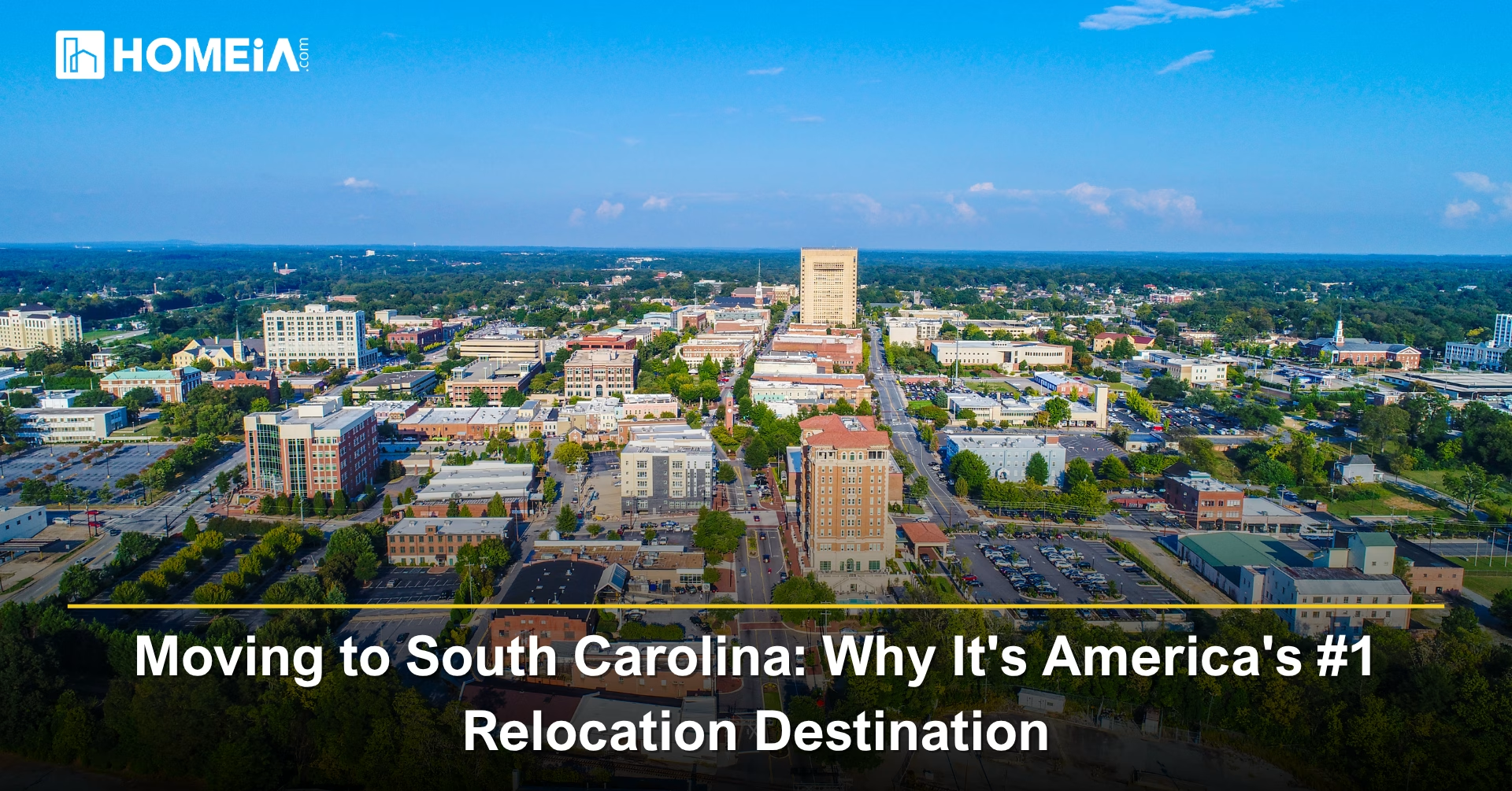
More Americans are moving to South Carolina than to any other state for the third consecutive year. With a 1.97 in-to-out migration ratio, nearly two people arrive for every one who leaves. Maintaining status as the number one inbound migration ranking is the result of years of long-term focus on economic growth, tax reform, and growing awareness of the Palmetto State’s exceptional quality of life.
Stretch your dollars further and enjoy the cultural uniqueness of Charleston’s historic sights to the parks around Greenville. This guide explores the economic and lifestyle drivers that have made South Carolina the most sought-after destination in America.
Key Takeaways
- Growth Leader: South Carolina is the fastest-growing state this year with a 1.5 percent annual population growth rate.
- Migration Magnet: The state boasts a 1.97 inbound-to-outbound ratio, the highest in the nation for three years running.
- Tax Benefits: A new flat income tax rate and a 100 percent exemption on Social Security income save taxpayers money.
- Economic Powerhouse: Area Development Magazine ranked it the 2nd-best state for business, thanks to massive investments from BMW, Boeing, and Volvo.
- Affordability: Median home prices remain approximately 15 percent below the national average while offering superior coastal and mountain access.
- Education Reform: Expanded school choice laws give qualifying families flexible funding through the Education Scholarship Trust Fund.

Related article
Our Methodologies to create HOMEiA Score Ratings for Each Group of Content
HOMEiA uses a consistent, data-driven methodology to evaluate U.S. states for livability, affordability, and long-term value. Our analysis centers on key factors such as Housing and Affordability, Cost of Daily Living, Access and Infrastructure, Community Strength, Safety and Quality of Life, Economic Resilience and Job Market…
Methodology: How We Built This Guide
This guide draws on a thorough, multi-factor analysis of everything that shapes a move to the Palmetto State. All data comes from verified sources, including the U.S. Census Bureau, the Bureau of Labor Statistics, Zillow housing market reports, FBI crime statistics, and South Carolina state agencies. Each recommendation and city profile was weighted across five key criteria:
- Housing & Affordability (30%): A close look at median home prices, rental rates, and average utility costs to give you a realistic budgeting baseline before you arrive.
- Access & Logistics (25%): A practical review of what it takes to move your belongings and vehicles into the state.
- Legal & Administrative Requirements (20%): A clear walkthrough of every step needed to establish official residency, including vehicle registration, driver’s license transfers, and voter registration.
- Community & Lifestyle Integration (15%): Honest insight into local culture, community events, and ways to build your social circle and feel at home in a new city.
- Economic Preparation (10%): Focused guidance on job searching and financial planning tailored to South Carolina’s key industries and regional economy.
1. Why Are So Many People Moving to South Carolina?

State leaders implemented a “build-the-basic” strategy years ago that is paying off by attracting people to live in the South. By focusing on reliable infrastructure, a nuclear-dominant energy grid, and aggressive tax reform, the state has created an environment where both businesses and families can thrive.
A. Business Growth
In 2025, Area Development magazine ranked South Carolina the 2nd best state for business in the country, runner-up only to Georgia. It’s placed in the top four in all 18 years of the magazine’s ranking. This consistent top-tier status reflects a relentless focus on workforce development, permitting speed, and site readiness.
Advanced manufacturing is paving the way forward for the state’s economy. BMW in Spartanburg, Volvo in Berkeley County, and Boeing in North Charleston are massive employers fueling a deep supply chain of high-paying jobs. A heavy military presence adds stability, with Fort Jackson in Columbia and Parris Island in Beaufort.
Along the coastline, tourism and hospitality contribute to job market opportunities. This market sector supports one out of every ten jobs in the Palmetto State.
B. Fleeing High-Cost States
South Carolina is attracting new wealth and talent as an exodus from high-cost states like California, New York, New Jersey, and Maryland drives people southward. These movers are often trading sky-high mortgages and double-digit state income taxes.
The state’s tax environment is a strong pull factor. Beyond the low property taxes for primary residences, South Carolina finalized a move to a flat individual income tax rate in 2026. Individuals making less than $30,000 will pay a flat 1.99%, while any earners above that market will pay 5.21%, down from the former 6%.
This simplified system replaces the prior three-bracket system and places the state among the most competitive in the Southeast.
Its cost of living is the larger draw for these Northeast and West Coast migrants. Movers often report that the decision to relocate was a “mathematical necessity.” When you compare a median home price in California approaching $875,000 to South Carolina’s 2025 median of roughly $340,000, the equity gained from a move can fund a comfortable retirement or provide a massive down payment on a dream home. This trend is particularly strong among remote workers who no longer feel the need to pay “city prices” for a lifestyle they can enjoy more fully in the Palmetto State.
C. Warm Weather
For many, the warm climate and four-season mild weather are the finishing touches on a move that makes financial sense.
In the Lowcountry, summertime temperatures swell above 90F, with high humidity adding to the mix. Winter drops average temperatures into the lower 50s, which is perfect for hitting one of the Grand Strand’s world-class golf courses or playing a round of tennis.
As you shift toward the Upstate region, the weather dynamics change. Winter’s chilly evenings surprise newcomers, as average low temperatures dip into the low 30Fs. Occasional snowfalls grace the region, but blizzards are rare. Average highs in the mid-70F make summers especially pleasant.
Between the two regions, South Carolina enjoys prime outdoor conditions year-round.


Related article
7 Cheapest Places to Live in South Carolina
South Carolina offers an affordable lifestyle with low property taxes, living costs below the national average, and access to coastal charm and growing job markets. However, affordability varies widely across communities. This guide highlights seven budget-friendly cities and towns where residents can balance housing costs, quality of life, and long-term financial stability…
2. Best Places to Live in South Carolina This Year

South Carolina’s known for its Atlantic Coast beaches and Lowcountry living. But did you know its highest point rises 3,500 feet in the Blue Ridge Mountains? The Palmetto State’s diverse lifestyle choices surprise people who don’t know much about it. It’s created unique communities with character that stands out.
A. Charleston
Charleston continues to be one of the most desirable mid-sized cities in the country. Walkable neighborhoods are part of the Holy City’s historic charm. A world-class culinary scene draws visitors seeking to taste the famous 12-layer Coconut Cake or Carolina Gold rice. While it is the state’s most expensive metro, the quality of life and beach access at Sullivan’s Island or Folly’s Island make it a top choice for professionals and families. A booming job market, particularly in the tech and aerospace sectors, adds to its modern appeal.
B. Greenville
Greenville is the fastest-growing inland city in South Carolina. This Upstate hotspot is the hub for the state’s manufacturing and healthcare sectors. What really adds to its appeal is the Main Street, complete with a natural waterfall in its heart. The integration of parks with businesses and neighborhoods has become a national model for urban planning. People jump on the Swamp Rabbit Trail to access the downtown shops, the Greenville Zoo, and local towns like Traveler’s Rest. Greenville’s lifestyle of outdoor recreations, art festivals, and trendy restaurants pairs well with prices well below those of comparable hubs like Charlotte or Atlanta.
C. Columbia
As the state capital and home to the University of South Carolina, Columbia benefits from a diverse yet stable economy. A new Scout Motors plant plans to add 4,000 manufacturing jobs, helping expand the job market. The Midlands region’s growth has been more stable, but attractions like the Riverbanks Zoo, the Saluda River, and Lake Murray are drawing attention to the Midlands Region. An art museum and street art installations add to the creative vibes found in Columbia. Another perk is that it has some of the most affordable real estate in the state.
D. Myrtle Beach
Myrtle Beach has evolved from a tourism destination into a major relocation hub for retirees and remote workers. The famous Grand Strand is 60 miles of uninterrupted sand, and over 10 miles of that falls inside Myrtle Beach. Unlike Charleston, locals can live beachside and walk to the shops and attractions waiting in downtown Myrtle Beach. This year, Myrtle Beach was ranked as the number one city in the U.S. for inbound moves, with 2.41 inbound moves for every one outbound move. It appeals to those seeking value and sunshine.
E. Hilton Head Island
Hilton Head Island is the state’s premium coastal destination. The island’s resort-style lifestyle makes waves with its world-class golf, packed social calendar of seafood and wine festivals, and luxury real estate. Spring is the busiest season for the part-time residents and visitors, who flock here in April for the RBC Heritage PGA Tour. The gated communities appeal to ultra-high-net-worth individuals and retirees who want a private environment. The island’s commitment to land conservation preserves its unique “Lowcountry” aesthetic even as demand grows.
Related article
The 9 Best Places to Live in South Carolina for Families
South Carolina offers far more than the coastal appeal of Charleston and Myrtle Beach. Across the Midlands and Upstate, families find affordable living, strong job markets, outdoor recreation, and welcoming communities. This guide explores the best places to live based on schools, lifestyle, opportunity, and overall quality of life…
3. South Carolina Cost of Living: How Much Can You Really Save?

The cost of living in South Carolina is roughly 5 to 6 percent below the national average, but the real savings appear when you look at specific categories like housing and taxes. South Carolina consistently ranks among the states with the lowest effective property tax rates in the nation. This is largely due to the “4 percent assessment ratio” applied to primary residences. It shields homeowners from the higher 6 percent tax assessment paid by commercial property owners and second-home investors. For a detailed comparison with a high-tax Northeast state, see our Cost of Living in New York vs. South Carolina breakdown.
South Carolina vs. California: A Real Numbers Comparison
For those moving from the West Coast or the Northeast, the numbers highlight the financial benefit of choosing the Palmetto State.
| Metric | South Carolina | California |
| Median Home Price (2025 Data) | $339,975 | $873,900 |
| State Income Tax Rate | 5.29% (Flat) | 13.3% (Top Rate) |
| Effective Property Tax Rate | 0.57% | 0.75% |
| Avg. Monthly Utility Bill | $384 | $450+ |
| Overall Cost of Living Index | 94.7 | 142.3 |
New residents also benefit from grocery and transportation costs that are generally lower than or equal to the national average. For example, comparisons like moving a Tennessee often highlight how nearby Southern states differ significantly in housing and tax structure.
While utility bills can spike during the humid summer months due to high air conditioning use, the overall monthly expenditure for a family of four is lower than in traditional high-cost markets.
Recommended for you



4. South Carolina Housing Market This Year
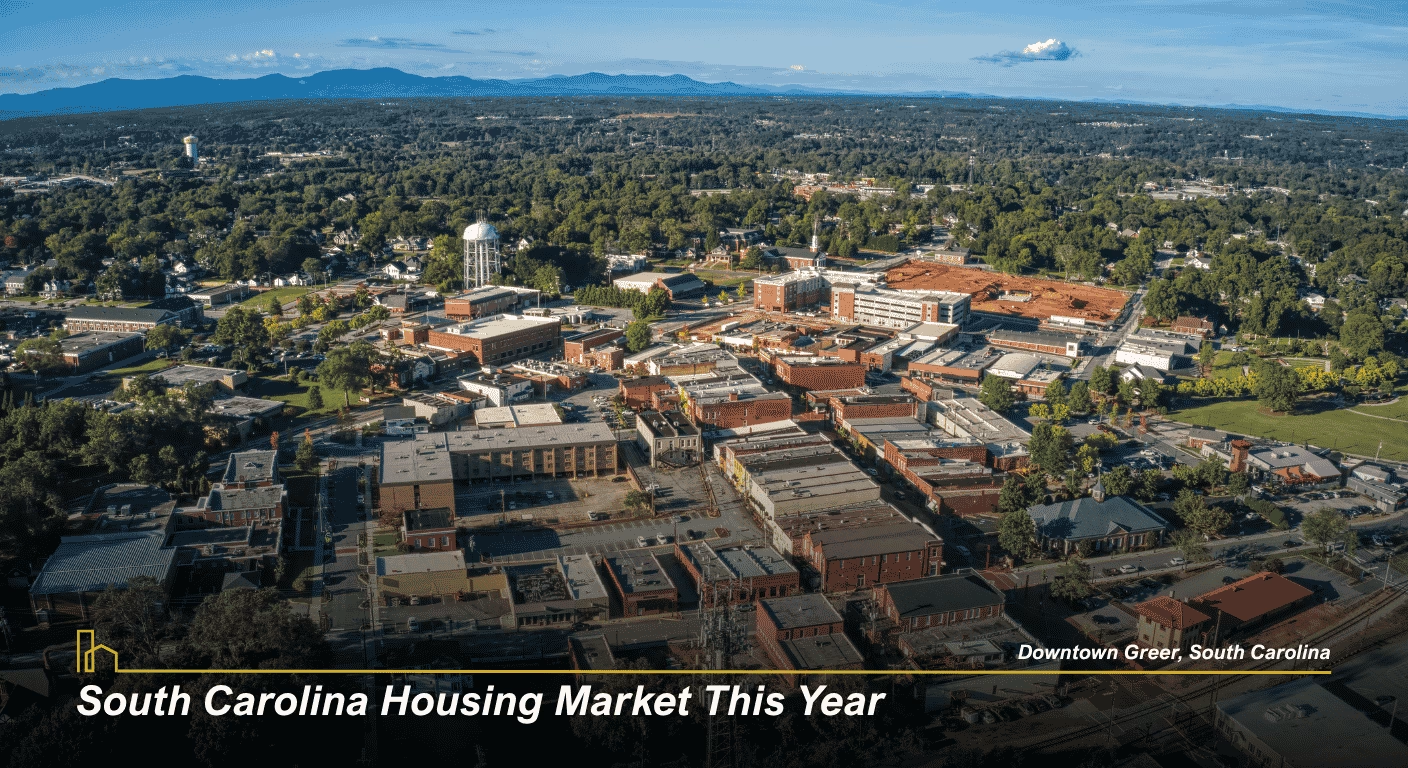
Sustained demand fuels the South Carolina new construction boom.
Areas surrounding Charleston, Greenville, and Columbia are seeing a boom in residential development to keep up with the influx of new residents. In fact, ranked Columbia 18th nationally for anticipated housing market growth for 2026.
Over the last five years, the number of available homes for sale across the Palmetto State increased by 15.7%, while median prices increased by a more modest 1.5%. It signals a housing market that still presents a strong value proposition compared to its neighboring states, Florida and North Carolina.
Housing market growth has not been equal across South Carolina. Spartanburg, Columbia, and Beaufort report high growth in listings, but there’s been a pullback in Charleston, the greater Augusta metro, and around Myrtle Beach.
Homes are spending an average of 70 to 80 days on the market before going to pending status, which gives buyers more time to make strategic decisions than they had during the “frenzy” years of the early 2020s.
A. Is Now a Good Time to Buy a Home in South Carolina?
The short answer is yes. While home values have appreciated, year-over-year price growth has been modest statewide. Real population increases, and a thriving job market support the case for continued measured expansion.
South Carolina is a great Southeast state for buyers from expensive markets to acquire significant square footage and land at a better price per square foot.
B. What to Know Before You Buy
Buyers in coastal areas should be aware of rising flood insurance premiums and the importance of “freeboard” elevation. The Lowcountry is at higher risk of flooding during storm events due to its low elevation.
Working with a local agent is essential. Micro-markets like the Upstate experience very different pricing and inventory dynamics than the Lowcountry. Even within a metro like Charleston, the pace of home sales and pricing growth in Summerville is unlike that in Mount Pleasant.
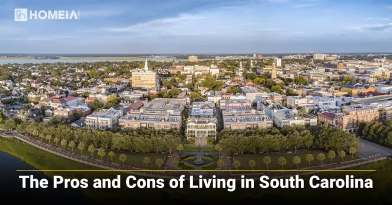
Related article
The Pros and Cons of Living in South Carolina
South Carolina offers more than coastal charm and Lowcountry scenery. From Charleston to Summerville and Hilton Head Island, the state combines economic growth, favorable taxes, and warm weather. This guide explores the real advantages and trade-offs of living in the Palmetto State.
5. What to Know Before Moving to South Carolina

South Carolina’s subtropical climate promises days ideal for fishing, hiking, golf, and pickleball. Being subtropical does mean intense heat and humidity in July and August.
Hurricane season runs from June through November. Coastal residents need to know their flood zones and insurance requirements.
While you’ll save on housing property taxes, part of the funding for local school systems comes from a property tax on your vehicle. Expect to pay more for personal property taxes for this reason.
South Carolina’s more rural nature makes owning a car necessary for most residents. Charleston, Columbia, and Myrtle Beach are a few cities with some public transportation, primarily through bus networks and shuttles.
This is a common consideration across the region — you can also check out our guide to moving to North Carolina for a similar breakdown of lifestyle and transportation factors.
South Carolina Relocation Checklist
- Research neighborhoods: Each city has its own distinct vibe. Choose the one that fits your work-life balance.
- Mortgage pre-approval: Get pre-approved by an SC-based lender to show sellers you are serious.
- Legal Residence Application: Apply for the 4 percent primary residence tax discount immediately after closing on a home.
- Homestead Exemption: If you are 65 or older, apply for the $50,000 reduction in fair market value for taxes once you have been a South Carolina resident for one year.
- Utility setup: Contact Duke Energy or Dominion Energy SC to establish service.
- DMV requirements: Transfer your driver’s license within 90 days and register your vehicle within 45 days.
- Vehicle taxes: Pay your annual county vehicle property tax before you register your vehicle in South Carolina. You’ll need the receipt to receive your new plates.
- Flood insurance: If moving to the coast or Lowcountry, research your specific FEMA zone and the “50 percent rule” for renovations.
=> Get the Relocation Guide & Checklist PDF — prepared for both Desktop and Mobile devices.

Related article
Best Places to Live in South Carolina for Retirees
South Carolina continues ranking among the best retirement destinations in the country thanks to its affordability, mild climate, access to healthcare, and relaxed lifestyle. From coastal communities to quiet inland towns, retirees can find a balance of comfort, recreation, and financial stability suited to long-term living…
6. Is South Carolina the Right Move for You?

For retirees, South Carolina is nearly perfect. The combination of low taxes, no Social Security tax, and world-class healthcare in cities like Charleston makes it an ideal place to live on a fixed budget. Families find value thanks to the rapid expansion of school choice options and the abundant outdoor lifestyle that keeps kids active year-round.
Remote workers and first-time homebuyers will find that South Carolina has one of the best quality-of-life-to-cost ratios in the nation. While the state is growing rapidly, it has managed to maintain its Southern hospitality and sense of community.
If all these advantages sound right to you, South Carolina could be your perfect state:
- Economically strong and growing
- Naturally beautiful with over 56 state parks
- Lower average housing costs
- High quality of life
Conclusion: Final Thoughts on Moving to South Carolina
Three consecutive years as America’s number one relocation destination are no coincidence. It is a testament to South Carolina’s ability to offer a place where people can work, live, and retire without being priced out of their dreams. The improvements in infrastructure and the business climate ensure that this growth is sustainable in the long term.
As you plan your move, remember that South Carolina is a state of diverse regions and unique cultures. Whether you choose the Blue Ridge Mountains of the Upstate or the salt marshes of the Lowcountry, you are joining a community that is looking toward the future. Explore HOMEiA’s city guides to find your perfect spot in the Palmetto State.
Recommended for you




FAQs About Moving to South Carolina
1. How is the vehicle property tax calculated for new residents?
New residents must pay an annual personal property tax on their vehicles based on the vehicle’s fair market value. You must pay this tax at your local County Auditor’s office and receive a paid receipt before you can register your vehicle or receive South Carolina license plates at the DMV.
2. What is the 4 percent assessment ratio for primary residences?
South Carolina rewards permanent residents by assessing their homes at only 4 percent of the fair market value. This status also exempts the homeowner from the school operating portion of their property tax bill. (Note: This exemption does not apply to personal vehicles.) You must apply for this “Legal Residence” status at the County Assessor’s office: it is not automatic.
South Carolina fully exempts 100 percent of Social Security benefits from state income tax. Additionally, residents 65 and older can deduct up to $15,000 of other taxable income. Military retirement pay is 100 percent exempt from South Carolina Individual Income Tax at any age, one of the most generous military retirement tax treatments in the Southeast.
4. What is the Homestead Exemption?
The Homestead Exemption provides a further tax break for residents who are 65 or older, totally disabled, or legally blind. It exempts the first $50,000 of the home’s fair market value from property taxes. To qualify, you must have been a legal resident of the state for at least one full year.
5. What are the “universal school choice” options in South Carolina?
Beginning in the 2025–2026 school year, South Carolina relaunched its school choice framework after an earlier version was struck down by the state Supreme Court. Eligible families can access the Education Scholarship Trust Fund (ESTF), which provides a $7,500 scholarship per student for tuition at private or charter schools, tutoring, curriculum, and other approved educational expenses.
For 2025–2026, the program is available to up to 10,000 students from households earning up to 300 percent of the federal poverty level. For 2026–2027, capacity expands to 15,000 students with the income threshold rising to 500 percent of the federal poverty level, making approximately 85 percent of South Carolina children eligible.
6. What is the “50 percent rule” for coastal properties?
This is a FEMA requirement for homes in flood zones. If the cost of improvements or repairs to a structure equals or exceeds 50 percent of the building’s value, the entire home must be brought up to current flood codes. This may include elevating the structure above the base flood elevation.
7. How does the 2026 flat income tax affect new movers?
Beginning with tax year 2026, South Carolina implemented a two-tier, flat individual income tax after Governor McMaster signed H.4216 in March 2026. This makes the state significantly more attractive to high-earners from states like New York or California, where top marginal rates can exceed 10 or 13 percent. The law also includes revenue-trigger provisions that could reduce the rate further in future years. For some earners, income taxes are potentially reaching as low as 1.99 percent.
Share