






How Pets Affect Indoor Air Quality (And What Every Owner Can Do About It)
- Local Editor:Local Editor: The HOMEiA Team
- Category: Home Maintenance


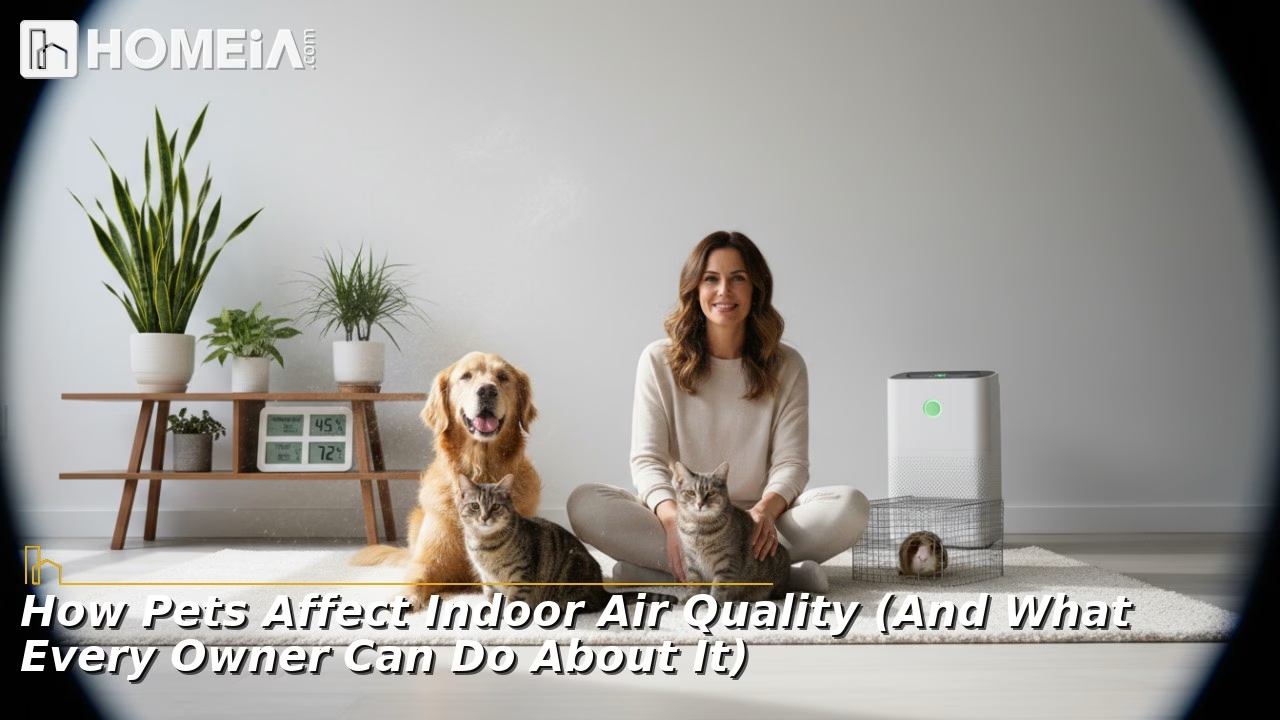
Pets fill our homes with love, laughter, and life. But they also bring something less welcome: a steady stream of hair, dander, odors, and invisible particles floating through the air you breathe every day. If you have ever noticed your home smells pet-like, that family members sneeze more often, or your HVAC filter looks filthy after only a few weeks, your furry friend is likely the cause. Fear not. With the right tools, from pet air purifiers to smarter cleaning habits, you can enjoy your pet and still breathe clean, healthy air at home.
Key Takeaways
- Pet dander, not fur, is the primary allergen. It consists of microscopic skin flakes carrying proteins triggering reactions and can stay airborne for hours.
- Cat allergen (Fel d 1) persists in a home for four to six months after a cat is removed, and has been detected in nearly every U.S. home, including those pet-free.
- Pet hair clogs HVAC filters, restricts airflow, and raises energy bills. Owners should change filters every one to two months instead of the standard three.
- HVAC filters rated MERV 11–13 capture fine dander particles without overloading most residential systems.
- HEPA air purifiers have strong clinical backing. A randomized trial found they reduced early asthmatic responses from 88% to 29% in cat-allergic patients.
- Hard flooring traps up to 14 times fewer allergens than carpet and is far easier to clean.
- Keeping indoor humidity between 40 and 50 percent reduces allergen viability and prevents dust mite and mold growth.
- Regular outdoor brushing and weekly bathing of your pet significantly lowers dander shed indoors.
- Making the bedroom a strictly pet-free zone is one of the most effective strategies for allergy sufferers.
- You do not have to rehome your pet to breathe clean air. A layered approach of filtration, grooming, and cleaning makes a measurable difference.

Related article
Safe, Eco-Friendly Pest Control: Protecting Your Family and Pets
Homeowners today are more mindful of what they use around their families and pets. Harsh chemical sprays are becoming a thing of the past as modern pest control shifts toward safer, eco-friendly methods. These treatments combine science and strategy — known as Integrated Pest Management (IPM), can solve your pest problems without compromising a home’s safety. You can have…
1. What Is Pet Dander, and Why Does It Linger?

Most people believe they are allergic to pet fur, but the real culprit is pet dander , microscopic flakes of skin that animals shed every day. These flakes carry proteins from a pet’s saliva, skin glands, and urine that trigger allergic reactions in sensitive people. The primary cat allergen, Fel d 1, is produced in sebaceous and salivary glands and deposited on fur during grooming. Up to 60% of airborne Fel d 1 rides on particles smaller than five microns, small enough to stay suspended for hours and penetrate deep into the lungs.
What makes dander especially stubborn is how long it sticks around. Studies show Fel d 1 remains elevated in homes for four to six months after a cat is removed, and concentrations in carpet can reach around 25 times the threshold needed to sensitize a new sufferer. The main dog allergen, Can f 1, works similarly. Both proteins hitchhike on clothing, which is why detectable levels have been measured in schools, offices, and homes that have never had a pet.
Despite persistent marketing, no cat or dog breed is truly hypoallergenic. Controlled studies comparing low-allergen breeds with standard ones have found no consistent difference in measurable allergen levels. Individual variation from animal to animal, especially in cats, are far more significant than breed.

Related article
Room-by-Room Residential Window Guide: Best Styles, Privacy, Light, and Ventilation for Each Space
Windows are your home’s most complex exterior feature, balancing light, airflow, insulation, and moisture protection. Because each room has different needs, a one-size-fits-all approach falls short. This guide takes a room-by-room strategy, offering expert recommendations on window styles, glass, and hardware to…
2. How Pet Hair Hurts Your HVAC System
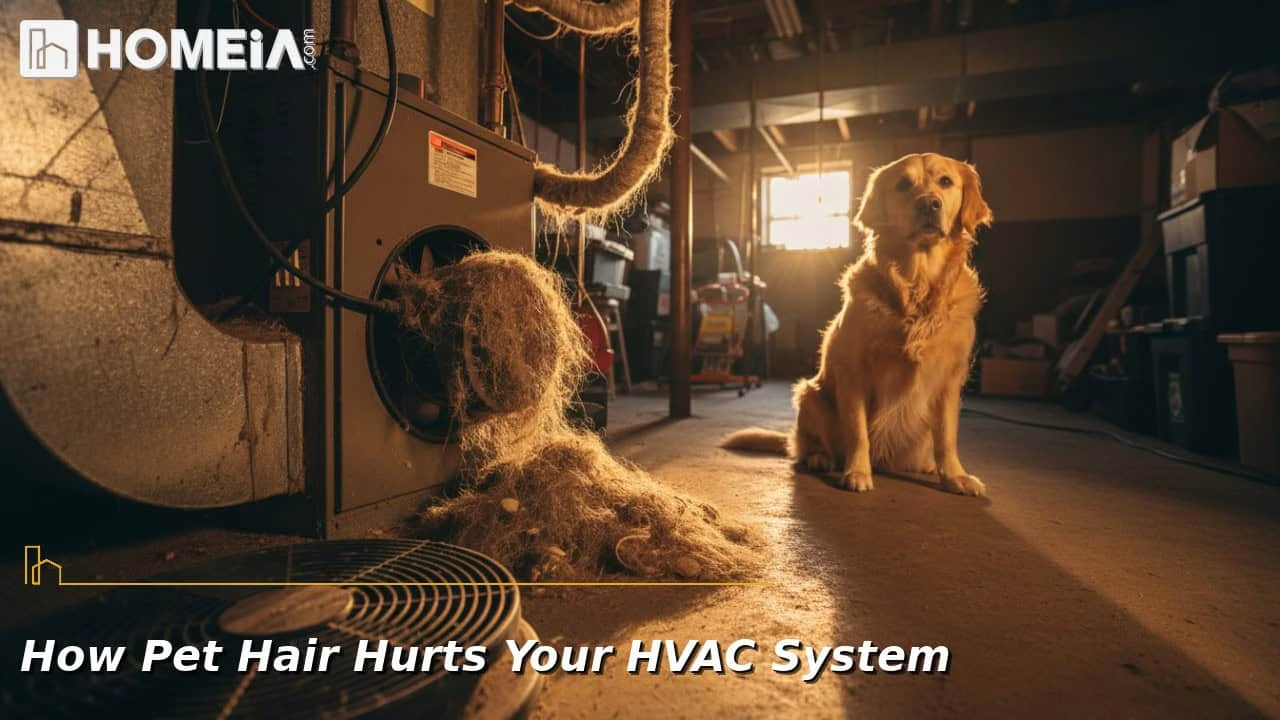
Pet hair is visible and a nuisance, but its real damage is invisible. Hair circulates through your home’s air, pulling into your heating and cooling system, and builds up inside your HVAC filter. Think of a clogged filter like breathing through a thick scarf. Your system has to work overtime to push air through. Doing so leads to higher energy bills, uneven temperatures room to room, and added wear on your equipment. In serious cases, a blocked filter can cause the evaporator coil to freeze and shut down your air conditioning entirely.
Standard advice is to change your HVAC filter every three months. If you have a pet, especially a heavy shedder, experts recommend changing it every one to two months. Households with multiple pets or an allergy sufferer may need a fresh filter as often as once a month. The American College of Allergy, Asthma and Immunology recommends filters with a MERV 11–13 rating for these households, which capture fine dander without overloading most residential blowers. If your system allows it, upgrading to a four-inch media cabinet filter provides much greater surface area, lower resistance, and longer filter life.

Related article
10 Key Elements of a Relaxing Bedroom Setup
We’d all benefit from channeling some of Jonathan Scott’s wisdom onto us. As such, we’ve got plenty of calming bedroom setup tips – read on to peruse our list of 10 key elements of a relaxing bedroom setup…
3. Pet Odors Are a Chemical Problem, Not Just a Smell Problem
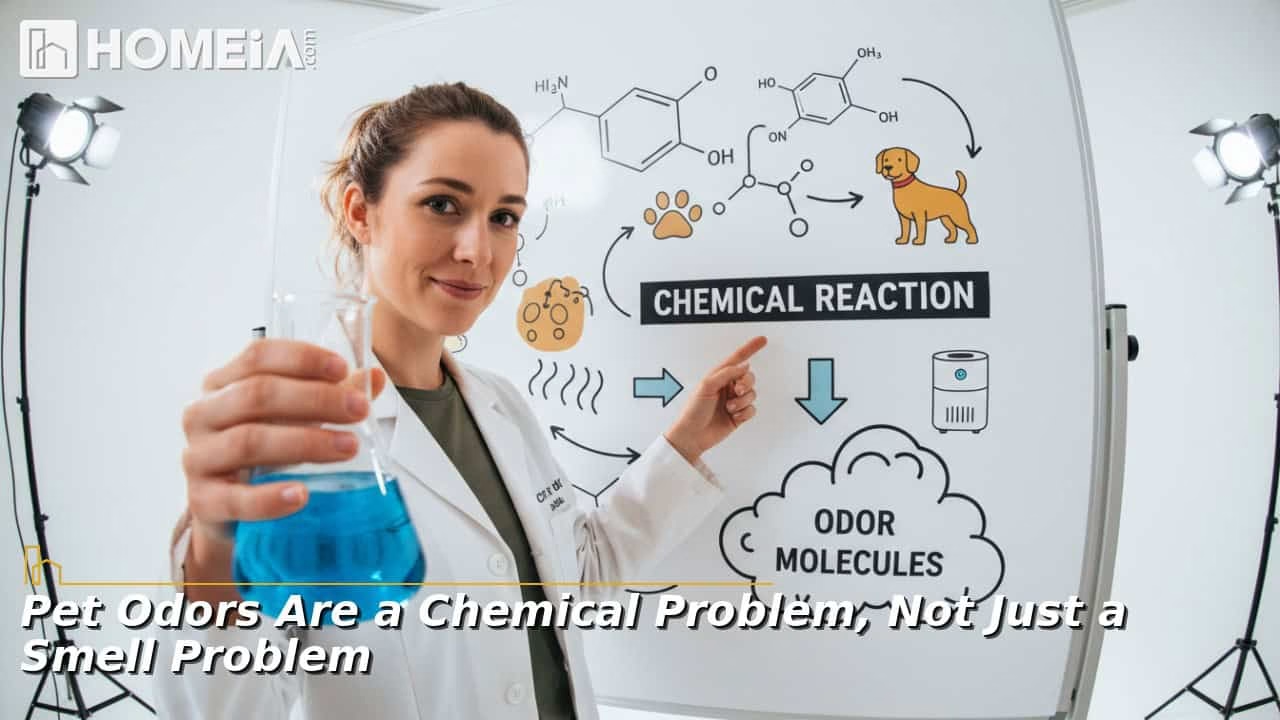
Pet odors come from natural skin oils, saliva, waste accidents, litter boxes, and wet fur. These smells are not only unpleasant, but caused by real volatile organic compounds (VOCs) and bacteria that build up in soft materials like carpet, upholstery, and pet bedding. Research on cat urine has found that it releases VOCs that can irritate the eyes, nose, and throat. Standard cleaning products often mask the smell on day one while leaving behind the compounds that cause odors to return by day fifteen.
Cat litter boxes present a separate air quality issue. Bacterial breakdown of urine converts it to ammonia gas, and levels inside a poorly maintained box can reach irritant concentrations within days. Litter dust itself, especially clay and silica-based products, can stay airborne for up to 30 minutes and carry allergens with it. The most effective response is to clean litter daily, ventilate the area away from HVAC returns, and use enzyme-based cleaners rather than masking sprays. Combining with an air purifier that includes an activated carbon filter to remove odor compounds from the air.
Recommended for you




4. The Role of Air Purifiers in a Pet-Friendly Home
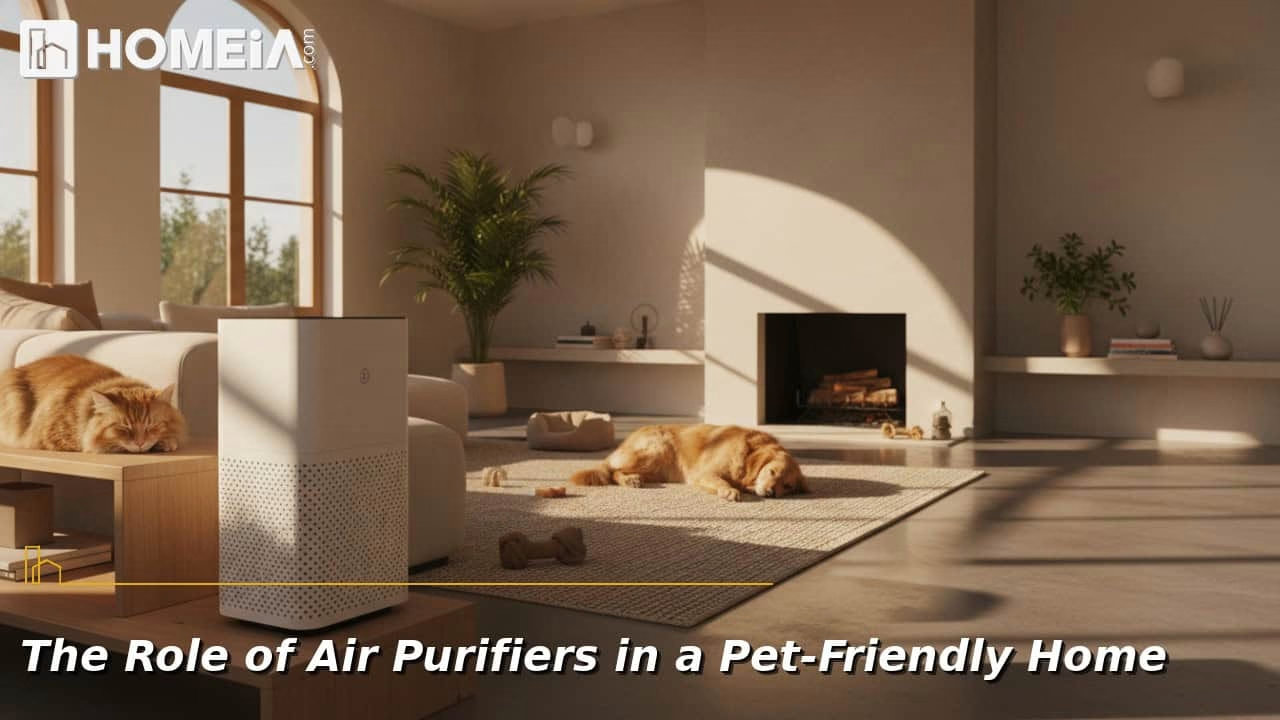
HEPA air purifiers have become one of the most well-supported tools for pet owners dealing with allergens. True HEPA filters capture 99.97% of particles at 0.3 microns, more than small enough to trap pet dander. The clinical evidence is evident as a randomized controlled trial published in a peer-reviewed journal found that a HEPA air cleaner reduced early asthmatic responses in cat-allergic patients from 88% with a placebo unit down to 29% with the active purifier. Separately, a 2025 study found a 52% reduction in rhinoconjunctivitis symptoms and dramatically lower airborne Fel d 1 levels in the room.
For best results, place a HEPA purifier in the rooms where your pet spends the most time. To properly size, aim for a Clean Air Delivery Rate (CADR) for smoke of at least two-thirds of your room’s square footage, and target a minimum of five air changes per hour in the bedroom. Many models also include activated carbon filters to absorb odor-causing gases that a HEPA filter alone cannot capture. Avoid ozone generators and ionizers entirely, the EPA and American Lung Association warn they can worsen asthma and respiratory symptoms.

Related article
Smart Pest Control: How Technology is Revolutionizing Home Pest Management
Imagine a pest control system that detects problems before you even see a single bug. This isn’t science fiction — it’s the reality of smart pest control. With IoT sensors, AI-powered monitoring, and precision tools, pest management is now smarter, more efficient…
5. Flooring, Furniture, and Surfaces
One of the most impactful decisions a pet owner can make is what covers their floors. Wall-to-wall carpet is the worst offender as allergen concentrations in carpet have been measured at up to 14 times higher than on hard surfaces, and standard vacuuming barely disturbs what is trapped deep in the fibers. Hard flooring , hardwood, tile, or luxury vinyl plank , does not hold allergens the same way and can be cleaned thoroughly with a damp mop. If removing carpet is not feasible throughout your home, prioritize the bedroom first.
Upholstered furniture presents a similar challenge. Dander clings to fabric just like it does to carpet. Using washable slipcovers, wiping furniture with a damp cloth regularly, and vacuuming upholstery with a sealed HEPA vacuum at least twice a week are practical steps that make measurable differences. Always use a sealed HEPA vacuum rather than an unsealed model , regular vacuums can aerosolize fine dander back into the air as they run.

Related article
6 Planet-Friendly Products for Home Cleaning
In this article, we will look at six sustainable choices for planet-friendly home cleaning products that won’t blow your budget. These nature-based, eco-friendly products will leave your home spotless and your conscience squeaky clean…
6. Practical Habits That Genuinely Work

- Groom your pet regularly. Brush your pet outside every few days to remove loose hair and dander to stop the spread indoors. Bathing your pet weekly can reduce airborne allergen levels by up to 84%, though levels rebound within 48–72 hours as the animal re-grooms. The allergic family member should never be the one doing the bathing or brushing.
- Vacuum frequently with a HEPA-sealed vacuum. Run it on carpets and upholstered furniture at least twice a week. On hard floors, use a damp mop rather than a dry sweep. Leave the room for an hour after vacuuming while settled particles resettle.
- Control indoor humidity. Keep relative humidity between 40 and 50 percent, conditions that are unfavorable for dust mites, mold, and allergen viability. A basic hygrometer from any hardware store shows where you stand. Use a dehumidifier if humidity runs high, especially in basements.
- Create a pet-free bedroom. Designating the bedroom as a pet-free zone, door closed even when you are out, ensures that roughly eight hours of every day are spent breathing air with significantly lower allergen levels. It is the single most consistent recommendation from every major allergy organization, and it costs nothing.
Recommended for you




FAQs About How Pets Affect Indoor Air Quality
1. Can I have a pet if someone in my home has asthma?
Yes, in most cases. Asthma and pet ownership can coexist with the right precautions. A HEPA air purifier, regular grooming, frequent HVAC filter changes, and a pet-free bedroom for the asthma sufferer can significantly reduce the allergen load. Consult an allergist or pulmonologist who can identify your specific triggers and create a personalized management plan.
2. Do “hypoallergenic” breeds really cause fewer allergy problems?
Not reliably. No cat or dog breed is truly allergen-free. Controlled studies comparing hypoallergenic breeds with standard ones have actually found no consistent advantage in measured allergen levels. The difference, if any, is modest and varies from animal to animal. If you have allergies and are considering a pet, spend time with the specific animal before bringing it home to gauge your individual reaction.
3. How do I get rid of pet odors that keep coming back?
Recurring odors mean the biological source has not been fully eliminated. Standard sprays and air fresheners mask the smell while leaving behind the bacteria and VOCs that cause it to return. Use enzyme-based cleaners designed to break down biological waste at the molecular level. These are especially effective on urine accidents in carpet and upholstery. Pair with an air purifier that includes an activated carbon filter to remove odor compounds from the air.
4. Is outdoor air better than indoor air when you have pets?
In most cases, yes. The EPA notes that indoor air can contain concentrations of pollutants two to five times higher than outdoor air, and in homes with heavy pet activity that gap can be wider. Opening windows when outdoor air quality permits is a simple, free way to dilute indoor pollutants. If outdoor pollen is high or air quality is poor in your area, weigh that trade-off carefully before ventilating.
5. How long does pet dander stay in a home after a pet is removed?
Longer than most people expect. Cat allergens can remain detectable for four to six months after a cat leaves, and in carpets and upholstered furniture they can persist for years because Fel d 1 is both sticky and extremely lightweight. If you move into a home where pets previously lived and you have allergies, a thorough deep clean of carpets and upholstery alongside HVAC duct cleaning and a HEPA air purifier running continuously can help clear lingering allergens faster.
Share