






The 5 Best Places to Live in New Jersey: A City Comparison
- Local Editor:Local Editor: The HOMEiA Team
- Category: USA , New Jersey


New Jersey remains a vital socioeconomic bridge between New York City and Philadelphia. It supports over 9.2 million residents through its dense urbanism and affluent suburban planning. So far this year, the state’s economy is defined by its top-ranked K-12 education system and rapid transition toward a knowledge-intensive labor market. While the statewide cost of living is 12% to 22% above the national average, this figure masks extreme local variation: a typical Princeton home costs $939,418, while Morristown offers entry points near $655,000 for townhouses. This report provides a data-driven comparison of the five best places to live in New Jersey in 2026, evaluating housing, safety, and infrastructure to help professionals, families, and retirees match their strategic needs to the state’s top-performing communities.
Key Takeaways
The 2026 residential landscape in New Jersey is defined by several dominant trends influencing the five communities profiled in this analysis. Understanding these findings is essential for strategic relocation planning:
- Exceptional Lifestyle Diversity: The municipalities on this list represent the full spectrum of modern living, from the ultra-dense waterfront urbanism of Jersey City and Hoboken to the balanced historic heart of Morristown, the intellectual atmosphere of Princeton, and the premier suburban environment of Ridgewood.
- Volatility in Affordability: Monthly rents for one-bedroom units vary by over 50% across the list, spanning from $2,519 in Morristown to above $3,785 in Hoboken. Median home values show a similar spread, ranging from about $654,778 to over $1.16 million.
- Safety as a Competitive Asset: The Garden State remains one of the top five safest states in the nation, recording a violent crime rate of 2.64 per 1,000 residents, which is well below the national average of 4.43. Ridgewood and Princeton lead the way in reporting some of the lowest crime statistics in the United States.
- Knowledge-Sector Dominance: The regional labor market is increasingly tilted toward pharmaceuticals, biotechnology, financial technology (FinTech), and artificial intelligence (AI). The Einstein Alley corridor between Princeton and Rutgers Universities has solidified New Jersey’s reputation as the Medicine Chest of the World.
- Infrastructure and Connectivity: Long-term municipal value is heavily influenced by the progress of the Gateway Program. While the cutover activities at the Portal North Bridge in early 2026 created short-term service modifications, the project is viewed as an upgrade to the Northeast Corridor’s capacity and reliability.

Related article
Our Methodologies to create HOMEiA Score Ratings for Each Group of Content
HOMEiA uses a consistent, data-driven methodology to evaluate U.S. states for livability, affordability, and long-term value. Our analysis centers on key factors such as Housing and Affordability, Cost of Daily Living, Access and Infrastructure, Community Strength, Safety and Quality of Life, Economic Resilience and Job Market…
I. Methodology: How We Chose the Best
The 2026 municipal rankings implement a multi-factor composite index designed to capture the realities of livability for professional and family demographics. This framework favors a data-driven approach weighing various socioeconomic indicators according to their impact on long-term residential stability and asset appreciation.
Criterion | Weight | Data Points Evaluated |
|---|---|---|
| A. Employment & Economy | 25% | Unemployment rates, concentration of high-growth sectors (AI, Bio), and median household income. |
| B. Housing & Affordability | 25% | Median sale prices, 1-BR average rents, price-to-income ratios, and inventory levels. |
| C. Quality of Life & Culture | 20% | Niche school ratings, walkability, density of cultural institutions, and green space access. |
| D. Access & Infrastructure | 15% | Proximity to transit hubs, fiber-optic availability, and Gateway Program impact. |
| E. Safety & Community | 15% | Violent and property crime rates per 1,000 residents, civic engagement indicators. |
The data synthesized in this analysis is drawn from the U.S. Census Bureau’s American Community Survey (ACS), the Bureau of Labor Statistics (BLS), real-time housing market reports from New Jersey Realtors, Zillow, and Realtor.com, and safety rankings provided by SafeWise and the FBI’s Uniform Crime Reporting program. The HOMEiA Score for each city is a proprietary composite index (0 to 100) that reflects a municipality’s performance across these weighted criteria as of February 2026.
II. The 5 Best Cities: A Portrait of New Jersey’s Diversity
1. Jersey City, NJ: The Urban Powerhouse
HOMEiA Score: 78/100
- Cost of Living: ~45% above U.S. average
- Monthly Rent: $3,186
- Home price to income ratio: 6.7:1
- Income to rent ratio: 2.55x
- Safety rating: 62/100
A. Employment & Economy: Jersey City is New Jersey’s second-largest city and its most formidable economic engine outside of Manhattan. Wall Street West hosts major operations for Goldman Sachs, JP Morgan Chase, and Citigroup on their waterfront. In 2026, economic growth is enhanced by SciTech Scity, a 13-acre innovation campus that includes Edge Works, an eight-story hub for digital health and climate tech startups. This project has created over 3,500 jobs and generates $30 million in annual output.
The city is also witnessing the development of “The Cove,” a massive 1.4-million-square-foot life sciences hub for biomanufacturing and research. This flagship destination is expected to become NJ’s next great life sciences hub, situated along the Hudson River waterfront. Despite these high-end developments, the city exhibits significant income disparity, with a citywide median household income of $97,710.
B. Housing & Affordability: JC’s housing market is a study in contrasts. Luxury waterfront districts like Paulus Hook and Newport see home values reach $908,891. However, the citywide average remains near $654,778, offering greater accessibility for buyers compared to Princeton or Ridgewood. The home-price-to-income ratio of 6.7:1 is the highest on this list, highlighting an affordability gap for median earners not in the high-paying finance sector.
The rental market is equally ranked. While the citywide average rent for a one-bedroom is $3,186, luxury units in the Powerhouse Arts District can exceed $4,300 per month. The income-to-rent ratio of 2.55x is the least favorable among the top five cities, indicating that a significant portion of the population is rent-burdened, spending over 35% of gross income on housing.
C. Quality of Life & Culture: Jersey City is one of the most ethnically diverse cities in the world, a fact that accentuates its vibrant culinary scene. From globally acclaimed pizza at Razza to the Indian food corridor near Newark Pedestrian Plaza, the dining options are unparalleled. Liberty State Park, sneakily larger than New York’s Central Park, offers stunning views of the Statue of Liberty and the Manhattan skyline. Cultural life is further supported by the Liberty Science Center and a burgeoning gallery scene in the Powerhouse Arts District.
D. Access & Infrastructure: Transportation is their ultimate superpower. PATH trains provide 24/7 service to Manhattan, with trips to the World Trade Center taking as little as 10 minutes. The city is also served by NY Waterway ferries and the Hudson-Bergen Light Rail. Infrastructure development this year is focused on the Gateway Program’s Hudson Tunnel Project, which aims to double rail capacity into Manhattan by 2035. The Gateway Development Commission recently received full reimbursement for federal funding for this $16 billion project, ensuring that construction on the tunnel and related bridges proceeds through the year.
E. Safety & Community: Its safety profile varies dramatically by neighborhood. Waterfront, Paulus Hook, and Downtown areas are generally safe and well-policed, with a violent crime rate of approximately 4.56 per 1,000 residents. The overall crime has lessened in recent years, with significant decreases in homicides and robberies reported in the past 3 years. Community engagement is growing in revitalized areas, where neighborhood associations are active in managing public spaces and organizing cultural festivals to increase overall satisfaction and interactivity.
Related article
7 Most Affordable Places to Live in New Jersey
Despite its reputation for high taxes and expensive housing, New Jersey remains a state of distinct regional markets rather than a single housing landscape. While North Jersey commands premium prices driven by proximity to New York City, South Jersey offers significantly lower housing costs and a more affordable lifestyle. This guide highlights seven communities that deliver the strongest combination of affordability, value, amenities, and long-term livability…
2. Hoboken, NJ: The Urban Waterfront Hub
HOMEiA Score: 82/100
- Cost of Living: ~75% above U.S. average
- Monthly Rent: $3,785
- Home price to income ratio: 4.8:1
- Income to rent ratio: 3.97x
- Safety rating: 74/100
A. Employment & Economy: Hoboken functions as a premier satellite of NYC’s economy, similar to Jersey City. In 2026, their economy is positioned in finance, tech, and media. Major local employers include Newell Brands and a growing number of fintech startups prioritizing Hoboken’s youthful demographic. The median age of 31.9 reflects a workforce dominated by early-to-mid-career professionals. With a median household income of approximately $180,579, residents are among the highest earners in the state. Local labor markets reflect significant stability, with an unemployment rate tracking near 2.6%.
B. Housing & Affordability: This city renter-dominant haven, with roughly two-thirds of households occupying rental units. As of February 2026, the average rent for a one-bedroom apartment is $3,785, marking a 2.7% increase from the previous year. The ownership market is equally competitive, with a median home sale price of $897,000. Standard average home values citywide are approximately $834,359, reflecting a 2.0% annual decrease that has slightly improved the entry point for buyers. However, inventory remains exceptionally tight, with active listings down nearly 11% year-over-year.
C. Quality of Life & Culture: The city packs an outsized cultural punch into its 1.25 square miles. The waterfront promenade along the Hudson River provides world-class views of New York’s skyline and is the city’s primary outdoor recreational asset. Hoboken is renowned for its culinary and nightlife density, with Washington Street serving as the primary corridor for boutiques, cafes, bars, and nightlife. Quality of life is also defined by municipal innovation in green infrastructure, with the completion of Northwest Resiliency Park transforming the city into a national model for flood mitigation.
D. Access & Infrastructure: Transit is a defining strategic advantage. Hoboken Terminal is a well-connected hub where PATH trains reach Midtown Manhattan in 15-20 minutes and the World Trade Center in nearly half that. The city is also served by NY Waterway ferries, NJ Transit rail and bus lines, and the Hudson-Bergen Light Rail. In early 2026, the city’s transit infrastructure was tested by the Portal North Bridge cutover. Between February 15 and March 14, NJ Transit diverted Midtown Direct trains to Hoboken, utilizing the city as the primary gateway into New York via cross-honoring on PATH and ferries. This temporary surge in traffic solidified their position as the most resilient transit node in the region.
E. Safety & Community: It possesses a favorable safety profile for an urban center of its density. The overall crime rate is approximately 17.2 per 1,000 residents, with a violent crime rate of 1.53 per 1,000. Most incidents are property-related or associated with active nightlife districts. The city’s small footprint fosters a small town in the big city atmosphere, where community engagement in local governance is exceptionally high among the professional population.
Recommended for you




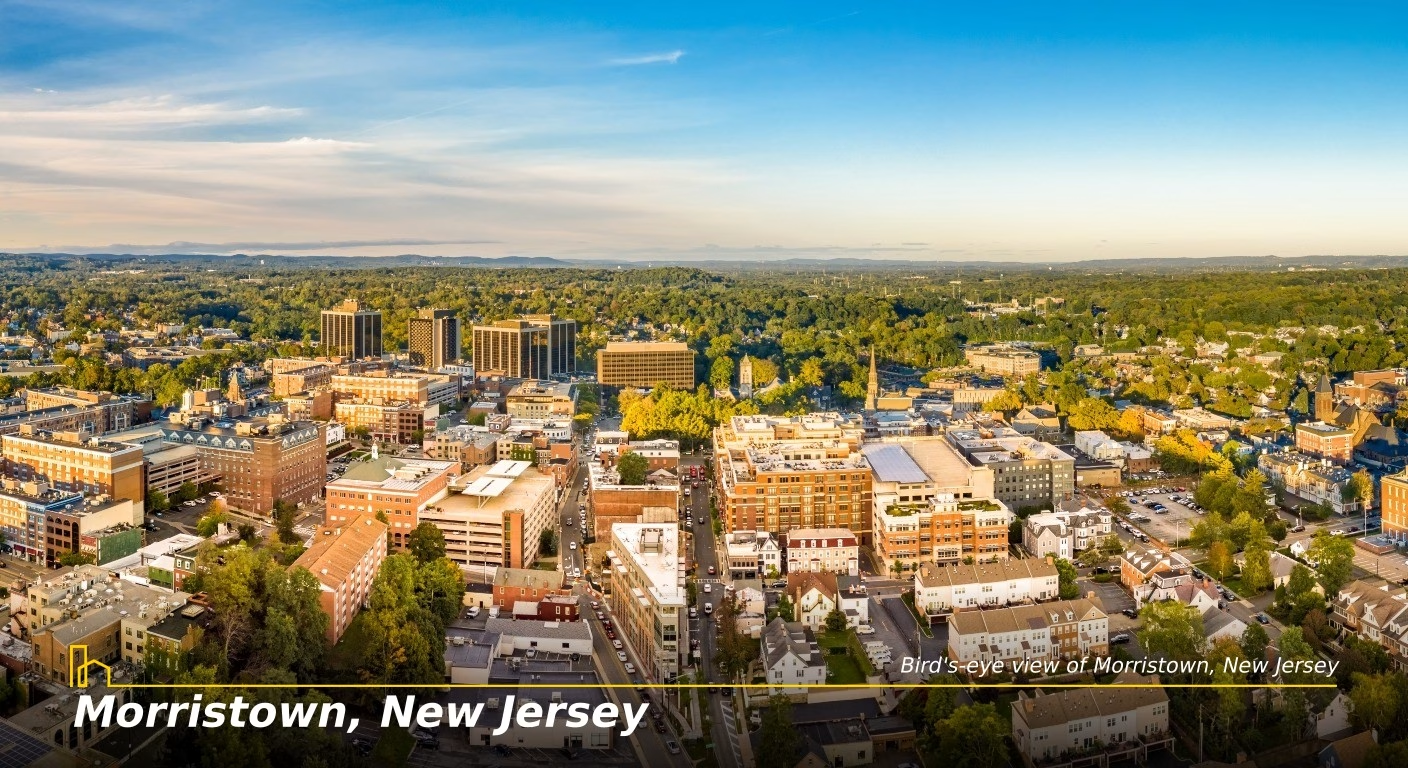
3. Morristown, NJ: The Balanced Historic Hub
HOMEiA Score: 84/100
- Cost of Living: ~7.2% above U.S. average
- Monthly Rent: $2,519
- Home price to income ratio: 5.4:1
- Income to rent ratio: 4.0x
- Safety rating: 78/100
A. Employment & Economy: Morristown serves as the primary regional center for professional services, legal firms, and healthcare in Morris County. The local economy is led by Morristown Medical Center (Atlantic Health System), a Level I Trauma Center and one of the highest-ranked hospitals in the Tri-state area. The broader region is a hub for major corporations like Honeywell, Bayer, and Deloitte. In 2026, their median household income stands at $121,340, significantly above the national median, supporting a comfortable lifestyle given its relatively modest cost-of-living premium. Morris County recorded a local unemployment rate of 3.7% so far this year.
B. Housing & Affordability: Here offers the ideal balance of affordability and urban amenity on this list. While typical home values are around $860,793, up 4.6% year-over-year, the median sale price for townhomes and condos in the walkable core remains near $655,000. It’s a highly attractive entry point for buyers seeking an urban experience without the price tag of outer Manhattan. The rental market is flourishing, with an average one-bedroom rent of $2,519. The income-to-rent ratio of 4.0x indicates that typical households devote around a quarter of their gross income to rent.
C. Quality of Life & Culture: Revolutionary War heritage merged with a modern, high-energy lifestyle effortlessly coexist. The Morristown National Historical Park preserves the site of the Continental Army’s winter encampments, while the Mayo Performing Arts Center (MPAC) produces elite entertainment in the downtown district. Morristown Green is the town’s vibrant heart, surrounded by a dense concentration of restaurants and bars that have made the town a regional nightlife destination for young professionals and empty nesters alike. A diverse population creates a multicultural texture that is unique among New Jersey’s most affluent suburbs.
D. Access & Infrastructure: Morristown station on NJ Transit’s Morris & Essex Lines provides rail service to New York Penn Station in approximately one hour. However, earlier this year, commuters on this line faced significant service adjustments due to the Portal North Bridge cutover. During the month-long construction window (Feb 15 – March 14), weekday Midtown Direct trains were diverted to Hoboken, requiring a transfer to PATH or ferry. The town is also a major highway nexus, with I-287 and Route 24 providing access to Newark Liberty International Airport (EWR) in roughly 30 minutes.
E. Safety & Community: There exists a respectable safety profile, though its role as an urban nightlife hub leads to slightly higher crime rates than purely residential suburbs. The total crime rate is approximately 11.2 per 1,000 residents, with the downtown district being well-patrolled and actively managed. The community is known for its high level of engagement, with a robust local government and active civic organizations maintaining their historic character while encouraging high-density modern development.

Related article
The Pros and Cons of Living in New Jersey
The Pros and Cons of Living in New Jersey include excellent schools, access to NYC, beautiful beaches, and strong job markets. However, high property taxes and living costs can be challenging. This diverse state offers urban, suburban, and coastal lifestyles, making it appealing to families, professionals, and retirees alike…
4. Princeton, NJ: The Prestigious College Town
HOMEiA Score: 88/100
- Cost of Living: ~40% above U.S. average
- Monthly Rent: $2,631
- Home price to income ratio: 5.0:1
- Income to rent ratio: 6.0x
- Safety rating: 91/100
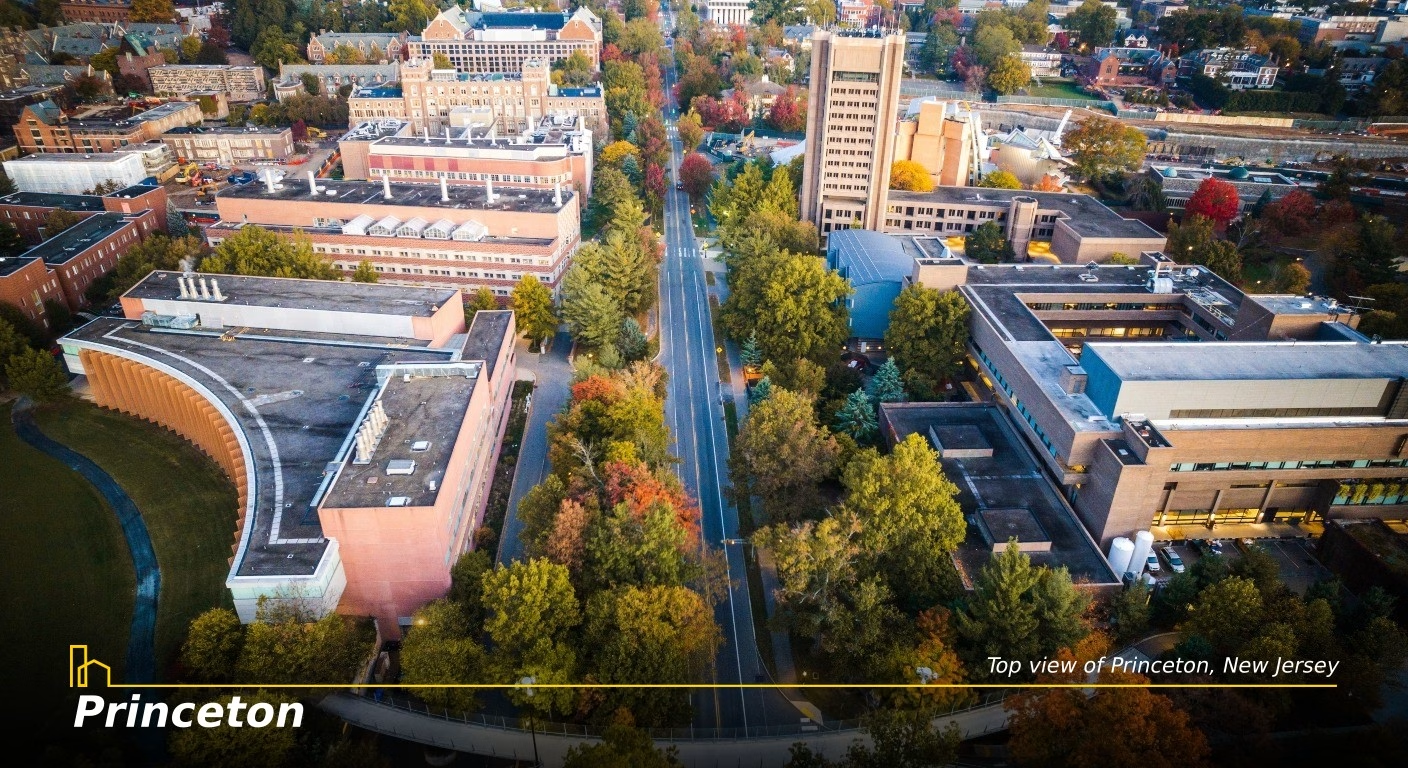
A. Employment & Economy: Princeton’s economy in 2026 is anchored by Princeton University, which functions as the largest employer and a global magnet for talent. However, its economic profile has evolved into a knowledge-intensive hub for high-growth industries. This sits at the heart of Einstein Alley, a corridor dense with major pharmaceutical and biotech firms, including Bristol-Myers Squibb and Johnson & Johnson. A significant development this year is the full operational status of the NJ AI Hub, a Strategic Innovation Center (SIC) formed between Princeton University, Microsoft, CoreWeave, and the NJEDA.
B. Housing & Affordability: The typical home value in Princeton reached $939,418 in January 2026, a 2.7% increase year-over-year. Their market remains characterized by extreme supply tightness, and over half of Princeton’s housing stock is now valued above $1 million. Rentals are priced at a premium, with one-bedroom units averaging $2,631 per month, a 2.6% decrease from the previous year. While this positions it in the highest tier of housing costs, the median household income of $192,079 creates an income-to-rent ratio of 6.0x. Here suggests that dual-income professional households spend approximately 17% of their gross income on housing.
C. Quality of Life & Culture: This Ivy League hub offers an aesthetic and cultural experience refined and intellectually vibrant. The walkable downtown district, centered on Nassau Street, features independent bookstores, farm-to-table restaurants, and galleries. Residents have convenient access to the Princeton University Art Museum and the McCarter Theatre Center. Recreational opportunities are integrated into the town’s geography, with the Delaware & Raritan Canal towpath providing miles of space for cycling and kayaking. The public school system remains a cornerstone of appeal, consistently receiving A+ ratings from Niche.
D. Access & Infrastructure: Transportation is optimized for regional connectivity. NJ Transit’s Princeton Junction station on the Northeast Corridor line provides a 70-minute commute to New York Penn Station and a 45-minute commute to Philadelphia. In 2026, the town also benefited from the NJ AI Hub’s high-performance computing infrastructure, spurring municipal investments in robust fiber-optic networks. Healthcare is led by the modern Penn Medicine Princeton Medical Center. The town also hosts specialized tech development platforms, notably the NJ HAX Plasma Forge, which explores innovations in clean energy.
E. Safety & Community: The Home of the Tigers remains one of the safest communities in New Jersey. Violent crime is recorded at a negligible 0.33 per 1,000 residents, while property crime stands at 13.63 per 1,000. This safety record is a product of both a highly professional municipal police force and a civically engaged population that participates in active neighborhood associations and community oversight. Their social fabric is reinforced by annual traditions like the Communiversity Street Fair and public lecture series that bridge academia and the broader community.

Related article
The 8 Safest Neighborhoods to Live in New York City in 2026
Let’s embark on an exploration of some of New York City’s most attractive residential districts — those that notably contribute to the city’s culture and real estate landscape. If you are seeking a new haven amid the city’s vibrant and thriving aura, below are the top 8 safest places in New York City…
5. Ridgewood, NJ: The Premier Family Suburb
HOMEiA Score: 90/100
- Cost of Living: ~60% above U.S. average
- Monthly Rent: $2,632
- Home price to income ratio: 5.6:1
- Income to rent ratio: 6.59x
- Safety rating: 95/100
A. Employment & Economy: Ridgewood is an affluent commuter community in Bergen County, with a workforce largely composed of senior professionals in finance, law, consulting, and media commuting over the bridge. Locally, the economy is driven by the healthcare sector. The Valley Health System, the region’s largest employer, has recently enhanced its regional impact with the completion of a state-of-the-art campus in nearby Paramus, freeing up legacy space for potential village redevelopment. Bergen County hosts a high concentration of Fortune 500 headquarters, with LG Electronics, Samsung, and KPMG providing residents with high-level corporate career opportunities within a short drive. Median household income is approximately $208,211.
B. Housing & Affordability: The housing market is one of the most prestigious and highest-valued in the state. As of January 2026, the average home value is $1,161,944, a 7.6% increase year-over-year. Affordability is constrained by historic demand for the town’s school system and sparse inventory, with many homes in neighborhoods like the Old Country Club or The Heights exceeding $1.2 million. The rental market is relatively small but upscale, with one-bedroom apartments averaging $2,632 per month. Because the town’s household incomes are astronomical, the income-to-rent ratio of 6.59x is the most favorable on this list.
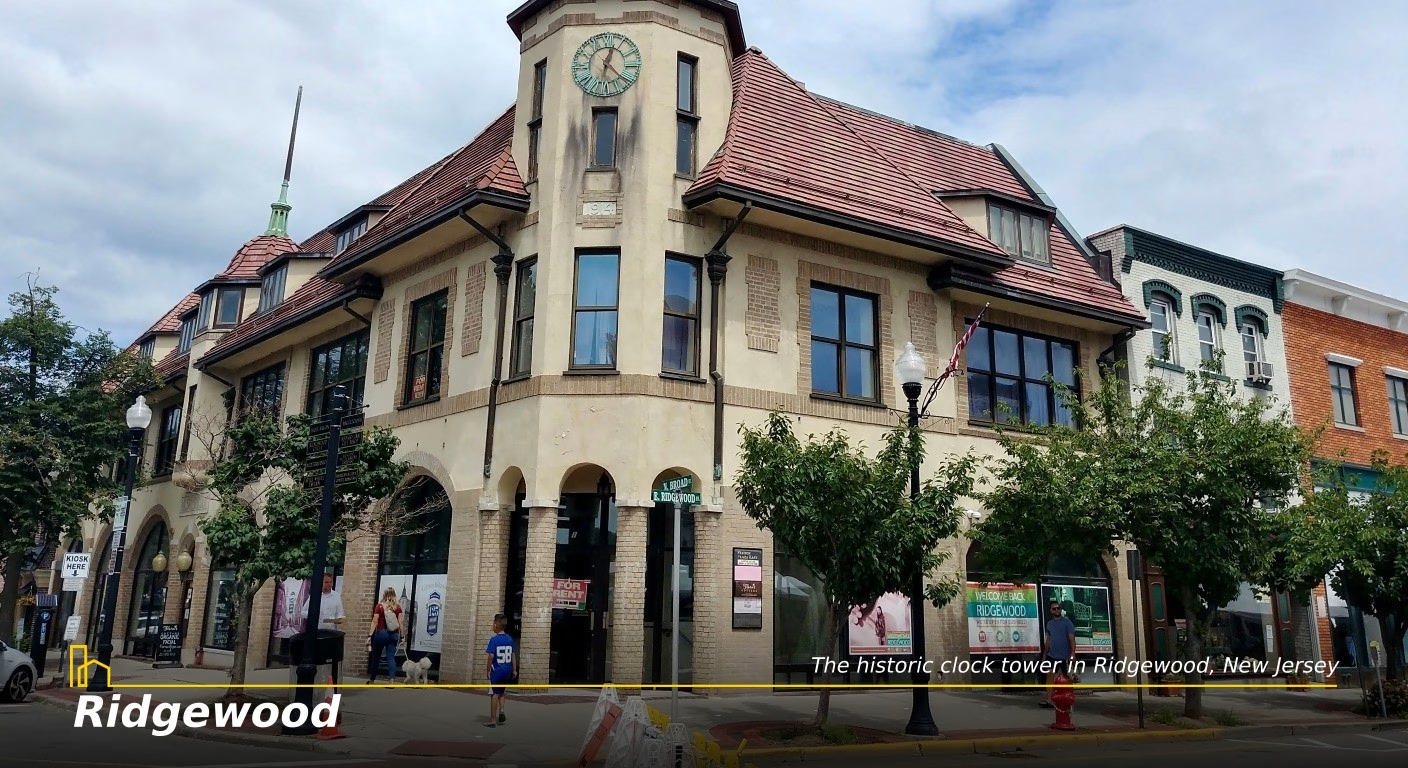
C. Quality of Life & Culture: Quality of life is centered on historic downtown around Van Neste Square. This area features a high concentration of independent boutiques and high-end restaurants providing the village with a unique identity. The public school system is the village’s primary draw, consistently earning A+ ratings from Niche and ranking among the top systems in the nation for college readiness. Recreational facilities are abundant and well-funded, including Graydon Pool and proximity to the Ramapo Valley County Reservation for hiking. A median age of 41.6 years highlights a community of established families and professionals.
D. Access & Infrastructure: Commuting from Ridgewood is primarily served by the Bergen County Line rail service to Hoboken Terminal, where riders connect to PATH trains into Manhattan. The door-to-door commute to Midtown typically runs 60-75 minutes. The city is also strategically located near major highways, including Route 17 and the Garden State Parkway. Infrastructure is supported by reliable fiber-optic internet, a critical utility for its high concentration of hybrid workers. The transition of Valley Hospital to its new campus has modernized healthcare access while maintaining reliable local emergency services.
E. Safety & Community: This is a national leader in public safety. The violent crime rate is a measly 0.31 per 1,000 residents, while property crime is recorded at only 7.76 per 1,000. This safety profile, combined with top-tier education, makes it the primary choice for high-net-worth families in the New York region. Community pride is evident in long-standing traditions like the momentous Fourth of July parade and the vibrant downtown farmers market, which serve as major events for local engagement and community satisfaction.
Comparative Data Table
City | HOMEiA Score | Cost of Living (% vs. U.S.) | Monthly Rent (1-BR Avg) | Typical Home Value | Income to Rent Ratio | Safety Rating (/100) |
|---|---|---|---|---|---|---|
| Jersey City | 78 | +45% | $3,186 | $654,778 | 2.55x | 62 |
| Hoboken | 82 | +75% | $3,785 | $834,359 | 3.97x | 74 |
| Morristown | 84 | +7.2% | $2,519 | $860,793 | 4.0x | 78 |
| Princeton | 88 | +40% | $2,631 | $939,418 | 6.0x | 91 |
| Ridgewood | 90 | +60% | $2,632 | $1,161,944 | 6.59x | 95 |
Synthesis of Findings
The 2026 residential landscape in New Jersey is defined by a high-stakes balance between economic access and quality of life. For high-income professionals in finance and tech, Jersey City and Hoboken offer unparalleled transit connectivity and urban energy, though the cost of living premium is significant. Families prioritizing elite public education and maximum safety continue to find Princeton and Ridgewood to be the most compelling options. Morristown remains the most balanced choice, offering an urban-suburban hybrid experience with a cost of living remarkably low relative to its local income levels, ranking it as one of the most affordable high-income hubs in the country.
Recommended for you




FAQs About Living in New Jersey‘s Best Cities
1. What industries are driving the New Jersey job market in 2026?
Dominant sectors include pharmaceuticals, biotech, AI, and FinTech. The Einstein Alley corridor in Princeton and the Wall Street West financial district in Jersey City are primary centers for these high-median-salary roles.
2. Which of these cities is most affordable for first-time homebuyers?
Jersey City and Morristown offer the most accessible entry points, with median home values around $655,000 in several neighborhoods. While Morristown offers generous income-adjusted affordability, Jersey City provides a wider variety of negotiable townhouse and condo options.
3. Are these cities safe for families?
Yes. New Jersey is the third safest state in the nation as of 2026. Ridgewood and Princeton report exceptionally low crime rates, while Hoboken and the downtown areas of Jersey City and Morristown are well-policed and generally considered safe for pedestrians and families.
4. What is the status of the commute to New York City?
Hoboken and Jersey City offer the quickest commutes into NYC, with PATH trains reaching Manhattan in 10 to 20 minutes. Morristown and Princeton typically offer 60 to 70-minute rail commutes, though early 2026 saw significant service adjustments on the Morristown and Northeast Corridor lines due to the Portal North Bridge cutover.
5. What should remote workers consider when choosing a New Jersey city?
Remote workers should prioritize municipalities with reliable fiber-optic infrastructure and walkable daily amenities. Princeton’s NJ AI Hub and Jersey City’s newer developments offer the state’s fastest internet connectivity. Morristown and Princeton are particularly appealing for their ability to offer a remote work lifestyle.
Share